

You have probably seen the ad already. A wooden grocery store. A puzzle your kid already asked for. A price that looks like the brand finally lost its mind.
That is why people search Melissa and Doug scam after they click. The page looks like the toy company they already trust. The address bar is doing different work.
Melissa & Doug is a real 1988 toy company. The problem is the copycat shops that borrow the red oval, the product photos, and a 70% banner. If you already paid a lookalike checkout, the rest of this is about getting the card back.
Overview
The trap starts in a Facebook or Instagram ad. A real wooden toy sits under a 70% outlet banner. The click opens a lookalike shop. Checkout takes a real order’s name, address, phone, and card. Then the shop can vanish, and the next ad uses a new extra word in the URL.
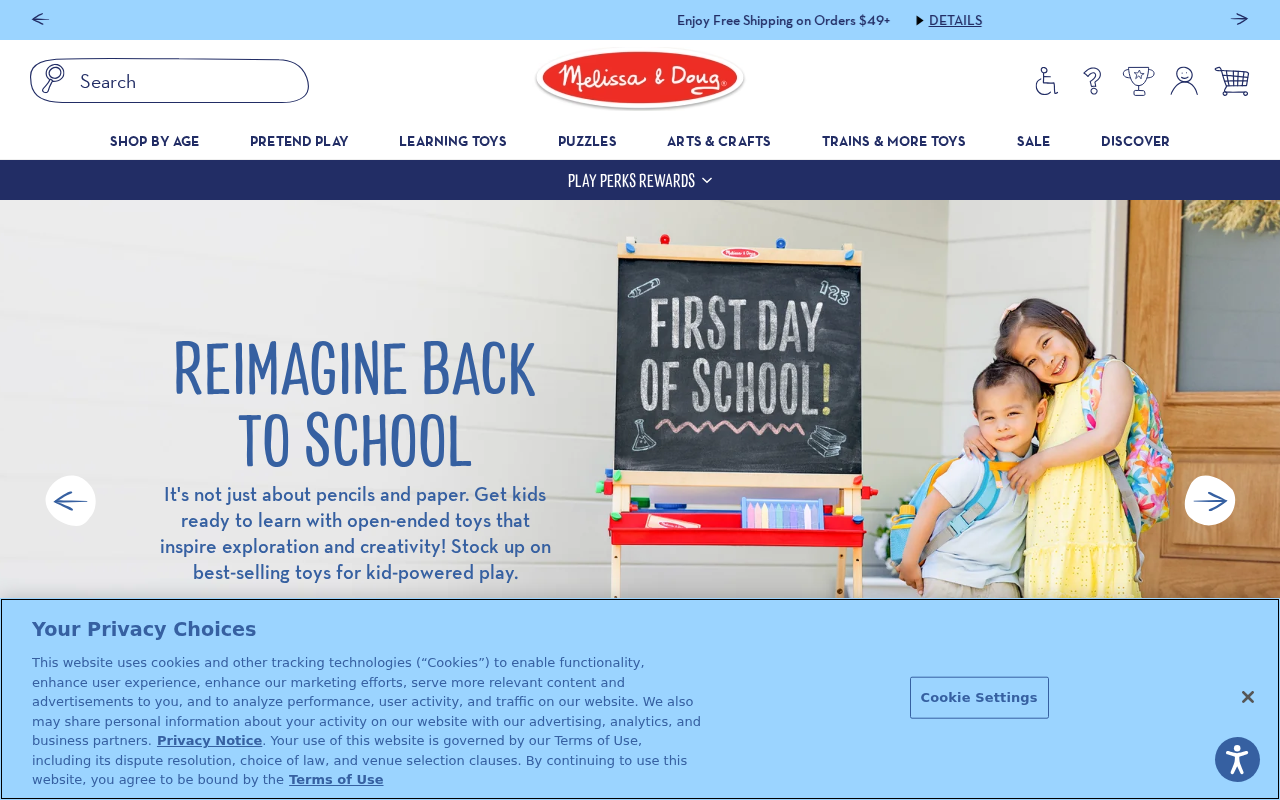
Melissa & Doug is a real 1988 toy company. The official shop is melissaanddoug.com. Spin Master Corp. completed a $950 million cash purchase of the brand on January 2, 2024. That company is not going out of business on a sponsored post. The problem is the clone checkout that borrows the red oval and the catalog.
The 70% ad is the bait
Most people never type a random mart domain. They search a toy name, or they tap a sponsored post. The copy in this cluster is warehouse clearance, factory outlet, going out of business, 50% or 70% off, free shipping worldwide. The picture is a real Melissa & Doug product already in the house, so the click feels like a shortcut, not a new store.
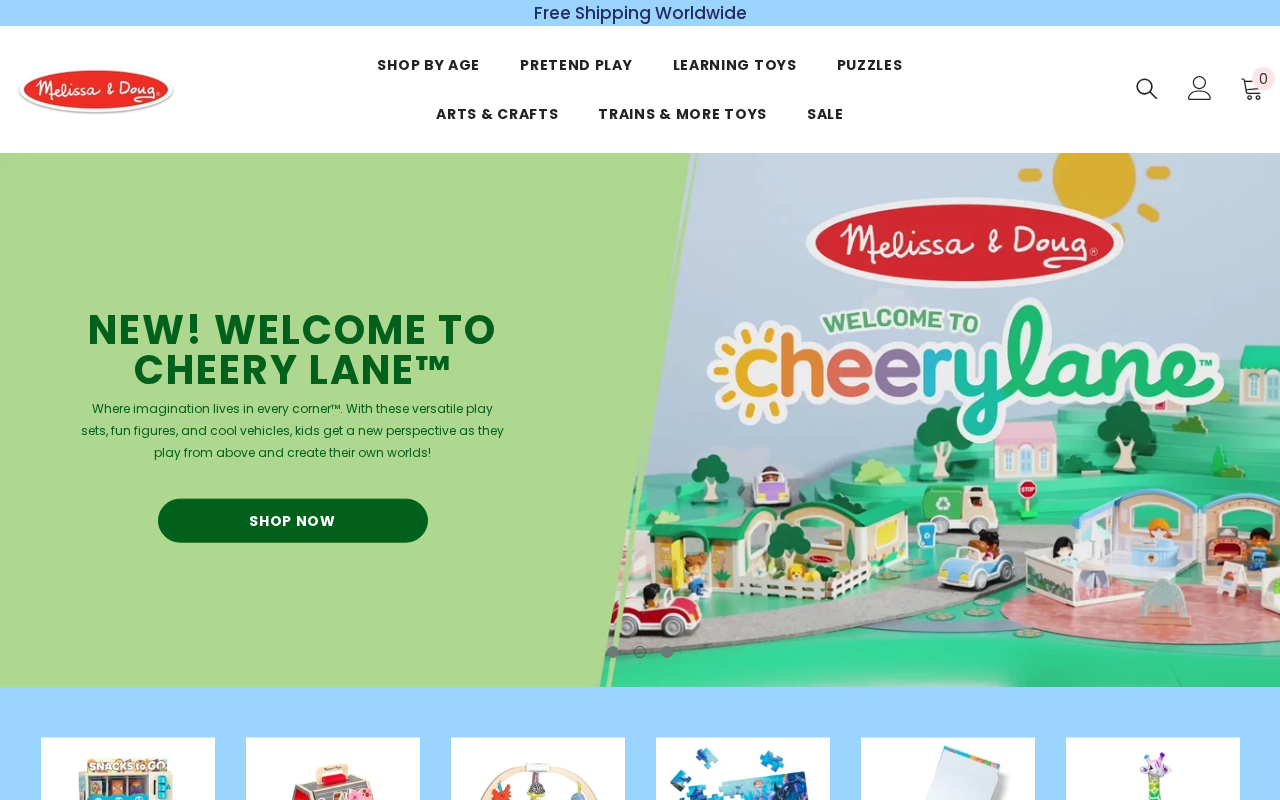
The live impersonation is melissaanddougmart.com. The page title calls itself “Melissa & Doug Toys Outlet: Top Preschool Wooden Toy Deals.” A top strip says “Free Shipping Worldwide.” A second banner says shoppers can enjoy up to 70% off all toys. The body repeats “ENJOY 70% OFF SITEWIDE” and tells people to use code PLAYJULY2026 at checkout. That code is a deadline costume. It is not leftover July inventory from Wilton.
Official August 2026 promotions on the real site were ordinary brand offers: free standard shipping on orders $49 and up (with listed exceptions, not worldwide), a 15% educator discount through ID.me, and a free surprise Cheeries figure on orders $49 and up while supplies last. Those are not a warehouse wipeout. A sitewide 70% on a domain registered last month is the hook.
The prices on that clone are the official prices with 70% taken off, almost to the penny:
- Deluxe Grill & Pizza Oven Play Set: $56.10 on the clone, struck through $186.99. The official product page is $186.99.
- Wooden Cool Scoops Ice Creamery: $39.60 on the clone, struck through $131.99. The official product page is $131.99.
- Dinosaur Adventure Tracks Floor Puzzle: $7.50 on the clone, struck through $24.99. The official homepage still listed that puzzle at $24.99.
- Sticker WOW! PAW Patrol bundles: $5.40 on the clone, struck through $17.99.
- Wooden Chocolate Factory Play Set: $21.30 on the clone, struck through $70.99.
- Sort, Stock, Select Wooden Vending Machine: $26.40 on the clone, struck through $87.99.
$186.99 times 30% is $56.10. $131.99 times 30% is $39.60. $24.99 times 30% is $7.50. This is not a warehouse finding extra stock. It is a spreadsheet. A $186.99 grill for $56.10 is a reason not to open a second tab.
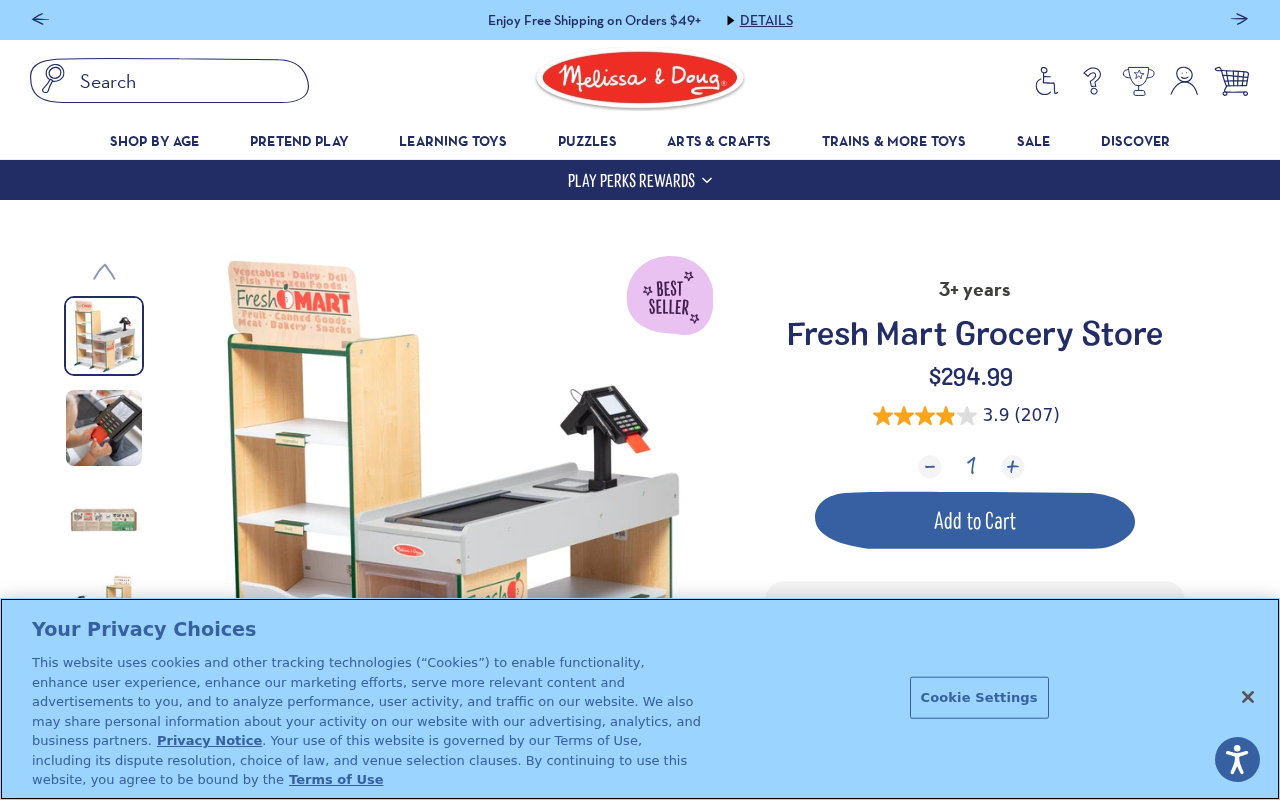
The same Fresh Mart Grocery Store that parents already know is a useful price check. On the official product page the Fresh Mart Grocery Store is $294.99. Authorized retailers can discount it. A random outlet selling the whole wooden store for pocket change is not a clearance event.
The clone also copies current official campaigns so the bait feels current. It runs a “NEW! WELCOME TO CHEERY LANE” block with the same “imagination lives in every corner” line the brand uses. It repeats the Melissa & Doug x Van Leeuwen ice-cream collaboration and says the limited set is “only available here.” On the official homepage, that exclusive is sold by the real company. A July 2026 domain cannot be the only place that collaboration exists.
The clone checkout takes a real order
The header logo is the real red oval. The catalog is the real catalog: Pretend Play, Learning Toys, Puzzles, Arts & Crafts, Cheery Lane, Van Leeuwen, Sticker WOW, wooden play kitchens. The photos are not crude. They only need to look like the last time you shopped the real site. The tell is sitting in the address bar the whole time. Extra words such as mart, toy, outlet, shop, or sale are doing the work.
NameSilo registered melissaanddougmart.com on July 7, 2026. The record expires July 7, 2027. Ownership is hidden. The shop sits on Shopify and Cloudflare.
The form looks like every other Shopify cart: name, ship-to address, email, phone, card. That familiarity is the last trust cue. Once it is submitted, the operators have a payment and a household file. If the shopper also created an account with a reused password, the damage can move into email and other stores. A padlock only encrypts the trip to whoever runs the page. HTTPS is not a background check.
The Maryland BBB report is the aftermath in one charge. A shopper told BBB Scam Tracker (ID 1132574) they searched for a Melissa and Doug toy, paid $45.57 on what they thought was the official site, never got an email confirmation, and later found the site gone. The card printed Payfly*MC-GSUITS.SHOP HK HK. The report is dated December 15, 2025. BBB Scam Tracker reports are consumer allegations, not court findings. The toy company in Wilton does not bill under a Hong Kong clothing-shop string.
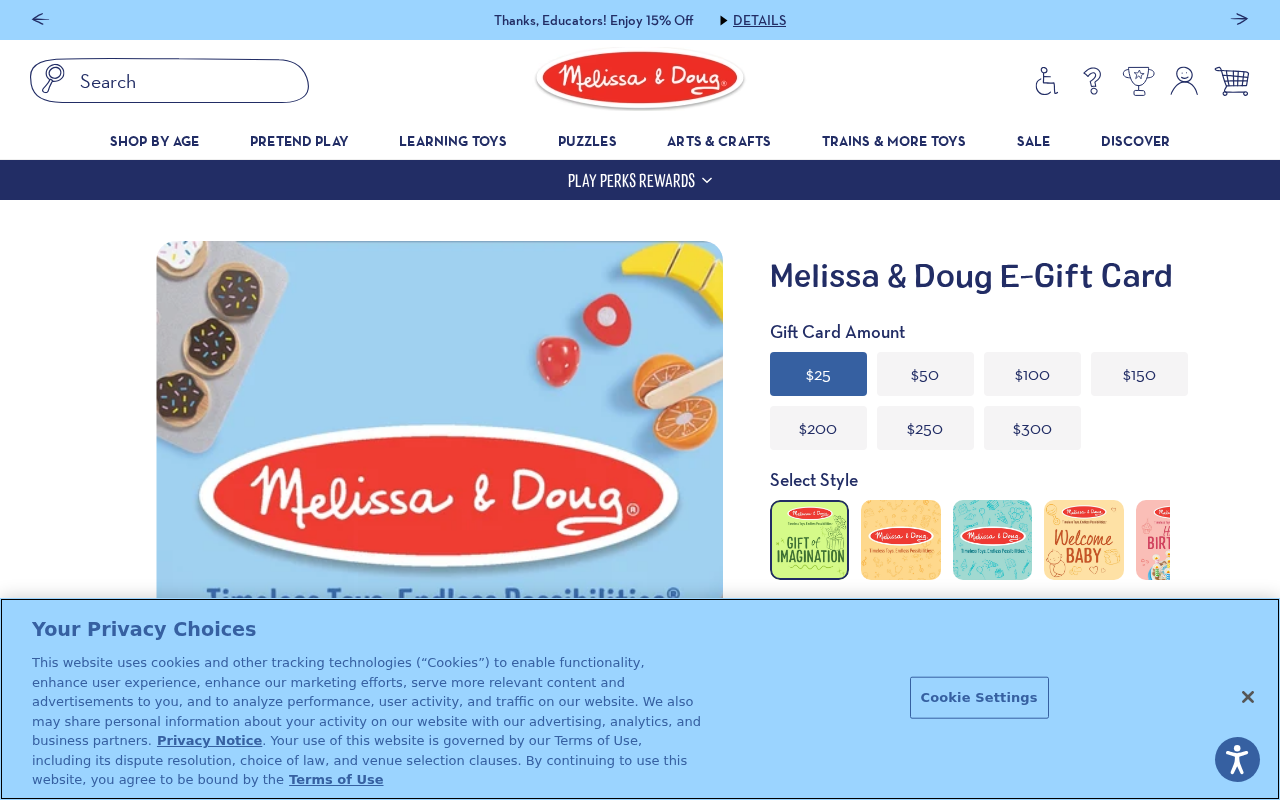
Official e-gift cards exist, and that fact is easy to twist. The official e-gift card page sells amounts of $25 to $300, issued by Melissa & Doug, LLC. They do not expire, carry no fees, and redeem on the official site and Melissa & Doug retail stores. If a social ad or a lookalike shop is selling a “Melissa & Doug gift card” at a strange discount, or asking you to pay for a prize with a gift card, that is still a clone checkout.
The shop can vanish
These are disposable storefronts. The template, the stolen photos, and the 70% story can move to the next spelling as soon as the old one is flagged. Remembering one bad address is not enough.
- melissadougtoy.com: the Maryland shopper’s $45.57 charge, no package, a vanished shop, a processor name that is not Melissa & Doug.
- melissaanddougtoy.online: a public score of 0, an April 7, 2026 registration, an invalid SSL certificate, a young domain, and phishing reports.
- melissadoug.shop: checked on August 11, 2026, scored 35 out of 100, with a BitDefender warning. The page title was simply “Melissa & Doug.” The description said “Order Now And Enjoy Free Shipping!”
- melissaanddoug.site: public profile text has described it as an outdoor and indoor play-toy shop advertising 50% off, wholesale, and factory-outlet language.
- melissaanddoug.it.com: titled “Melissa & Doug Wooden Preschool Toys | Discount Play Collection,” checked on July 24, 2026, and later listed as a fingerprint match for the mart domain. Content analysis for melissaanddougmart.com listed hosts such as cdn1.intercartclothing.com and sa.intercartclothing.com next to Shopify. The same clothing CDN hosts sat on that .it.com spelling.
melissaanddoug.com is the company. Type it. Bookmark it. The official phone on the contact page is 1-800-284-3948 (U.S. and Canada, Monday through Friday, 9am to 5pm ET). Official sweepstakes rules name the sponsor as Melissa & Doug, LLC, 10 Westport Road, Wilton, CT 06897. Official exclusives stay on that domain and the White Plains flagship. They do not move to a domain registered last month.
If you have to argue with the URL to make the logo make sense, close the tab. The next ad will use a different extra word: mart, toy, shop, outlet, sale.
How The Scam Works
1. The ad or the search result does the first lie
Most people do not type a random mart domain. They search a toy name, or they tap a sponsored post. The ad copy in this cluster is warehouse clearance, going-out-of-business, factory outlet, 50% or 70% off, free shipping. The picture is a real Melissa & Doug product. The brand is already in the house, so the click feels like a shortcut, not a new store.
The live melissaanddougmart.com page is built for that click: 70% off sitewide, a summer-play paragraph, and a coupon field waiting for PLAYJULY2026.
A sponsored label is not a vetting badge. Ads can run for a few days, take cards, and die before the comment thread fills up.
2. The landing page borrows the real store
The clone uses the red oval, the familiar category names (Pretend Play, Learning Toys, Puzzles, Arts & Crafts), Cheery Lane, Van Leeuwen, Sticker WOW, and the wooden play-kitchen sets parents already know. The photos are not crude. They do not need to be. They only need to look like the last time you shopped the real site.
The tell is sitting in the address bar the whole time. Extra words such as mart, toy, outlet, shop, or sale are doing the work. melissaanddoug.com is the company. melissaanddougmart.com is a July 2026 registration with a NameSilo privacy wall.
3. The price is the pressure
A $186.99 grill for $56.10 is not a coupon. It is a reason not to open a second tab. The same 70% cut is applied across stickers, puzzles, and large wooden sets, so the whole catalog looks like it fell off a truck.
Official toys do go on sale. Target, Walmart, and Amazon have discounted Fresh Mart well below $294.99 at times. That is still a named retailer you can call. A brand-new outlet domain marking every SKU down by the same percentage is a different story.
The code PLAYJULY2026 adds a deadline costume. Use it now. Summer is ending. The cart will not wait. That is the point of the code. It is not evidence of leftover July inventory.
4. Checkout asks for a real order’s worth of data
The form looks like every other Shopify cart: name, ship-to address, email, phone, card. That familiarity is the last trust cue. Once it is submitted, the operators have a payment and a household file. If the shopper also created an account with a reused password, the damage can move into email and other stores.
The Maryland BBB report is useful here. The shopper said they checked that the site was “secure” before paying. A padlock was not enough. The charge later printed as Payfly*MC-GSUITS.SHOP HK HK. The toy company in Wilton does not bill under a Hong Kong clothing-shop string.
5. The confirmation, if any, is theater
Some clones send nothing. That is what the BBB reporter described: a printed confirmation page, no email, no updates after ten days, then a dead URL. Other shops in this genre send a tracking number for a cheap parcel, or they stall with customs language. Either way, the clock is running on the card dispute. Every extra day helps the operator more than the buyer.
If a box does arrive, it may be the wrong item, a thin copy, or a toy with no serious safety paper trail. The U.S. Consumer Product Safety Commission has been warning in 2026 about fake children’s products sold through online shops and social listings. The August 5, 2026 CPSC alert on counterfeit squishy toys is not a Melissa & Doug recall.
Unknown sellers skip the testing, labels, and manufacturer marks federal toy rules require. Lead, phthalates, small parts, and mystery fillings show up in that channel. A wooden brand name on a clone page does not certify the object in the box.
6. The shop can vanish and reopen
melissadougtoy.com took a card in 2025 and was gone when the buyer came back. melissaanddougmart.com did not exist before July 7, 2026. melissaanddougtoy.online was registered April 7, 2026. These are disposable storefronts. The template, the stolen photos, and the 70% story can move to the next spelling as soon as the old one is flagged.
That is why a clean antivirus scan of the page is not a purchase green light. A shop can process a card without dropping a virus. The loss is still the charge, the address, and the card number.
7. A fake giveaway is a second door, not the main store
The official brand does run sweepstakes. Those contests have rules pages on melissaanddoug.com. The December 2025 and later official rules require an Instagram account and send winners through the published process. They name the Wilton sponsor. They do not ask a stranger in a DM for a credit card to “release” a prize.
If an account that looks like Melissa & Doug messages you about a giveaway and then wants a card, a “shipping fee,” or a gift-card code, stop. Check the official site’s own sweepstakes page. If the contest is not there, the message is not from Wilton.
What To Do If You Have Fallen Victim to This Scam
Move in this order. The first hour matters more than a polite email to a shop that may already be packing up.
Save the proof before it disappears. Screenshot the ad, the full URL, the product page, the 70% banner, the cart total, the confirmation screen, and the charge as it printed on the card. Write down dates, amounts, and the merchant descriptor. If a package arrives, photograph the label, the contents, and any invoice before you throw the box out. The BBB reporter still had a printed confirmation after the site died. That is the kind of file a bank wants.
Call the card issuer or payment service the same day. Say you paid a website impersonating Melissa & Doug, not the official shop. Ask for a dispute or chargeback, a merchant block, and a replacement card if the full number and security code were typed. Do not wait to “see if it ships.” The December 2025 report sat ten days with no email. Ten days is a long time on a card-network clock.
Read the statement for the real merchant name. Look for Payfly, a .SHOP string, a city or country that is not Connecticut, or any descriptor that is not Melissa & Doug. One charge can be followed by a second, smaller test charge. Ask the issuer to watch the merchant.
Change reused passwords. If the clone collected an account password, change that password on email first, then on banking and shopping logins that shared it. Turn on two-factor authentication. Do not use a “login” button on the suspicious page to test whether your real Melissa & Doug account works. That button can be a harvest form.
Treat later refund texts as a second scam. A message about a delivery fee, a customs hold, or a “we need one more payment to release your toys” is not customer service. The official Care team is on 1-800-284-3948. Use that number from the official contact page.
Tell the real company, then file the public reports. Call 1-800-284-3948 and say which domain took the money, so they can warn other shoppers. File at ReportFraud.ftc.gov. File with the FBI’s Internet Crime Complaint Center. Add the domain to BBB Scam Tracker if you want it next to the existing melissadougtoy.com file. Report the ad to Meta, Google, TikTok, or whoever served it.
If you shared enough identity data, freeze credit. A checkout that took a name, address, phone, and card is already a lot. A fraud alert or a credit freeze at Equifax, Experian, and TransUnion is the boring step that stops a new account from opening later. It is worth the hour.
Do not send a child’s toy from an unknown seller into a playroom just because it arrived. If the item looks off, smells chemical, lacks a manufacturer mark, or has no age grading, keep it away from kids and talk to CPSC or the retailer you thought you were buying from. A delivered box does not make the store official.
If you only clicked and did not pay, still close the page, skip any download it offered, and run a full scan with a tool you already trust. Then type melissaanddoug.com yourself if you still want the toy.
The Bottom Line
Melissa & Doug is a 1988 toy company, now under Spin Master, with a real shop at melissaanddoug.com, a Wilton address, a published 1-800 line, a White Plains flagship, and official e-gift cards from $25 to $300. That company is not a scam.
melissaanddougmart.com is a July 7, 2026 NameSilo domain selling the same catalog at a flat 70% off with code PLAYJULY2026. Other spellings have already taken cards and vanished. One shopper’s $45.57 charge printed as Payfly*MC-GSUITS.SHOP HK HK.
If a wooden toy is 70% off and the URL needed an extra word to fit the logo, you are not in the official store. Close it. Type the real address. If you already paid, call the card issuer first and keep the screenshots.

Join the discussion
0 commentsShare your experience or ask a question about this article.
Discussion
Start the conversation
Have a question or something useful to share? Add the first comment.