

A familiar television doctor appears to lean toward the camera and share a weight-loss discovery that supposedly costs almost nothing. The answer, viewers are told, has been sitting in their kitchen all along.
The supposed revelation is a baking soda drink, sometimes mixed with lemon, honey, or apple cider vinegar. The ad promises the exact recipe, but every click seems to move the viewer farther away from it.
That delay is the first clue. The Dr. Oz Baking Soda Trick Scam is not really about a household ingredient. It is a sales story designed to make an expensive and changeable supplement feel like the end of a medical investigation.
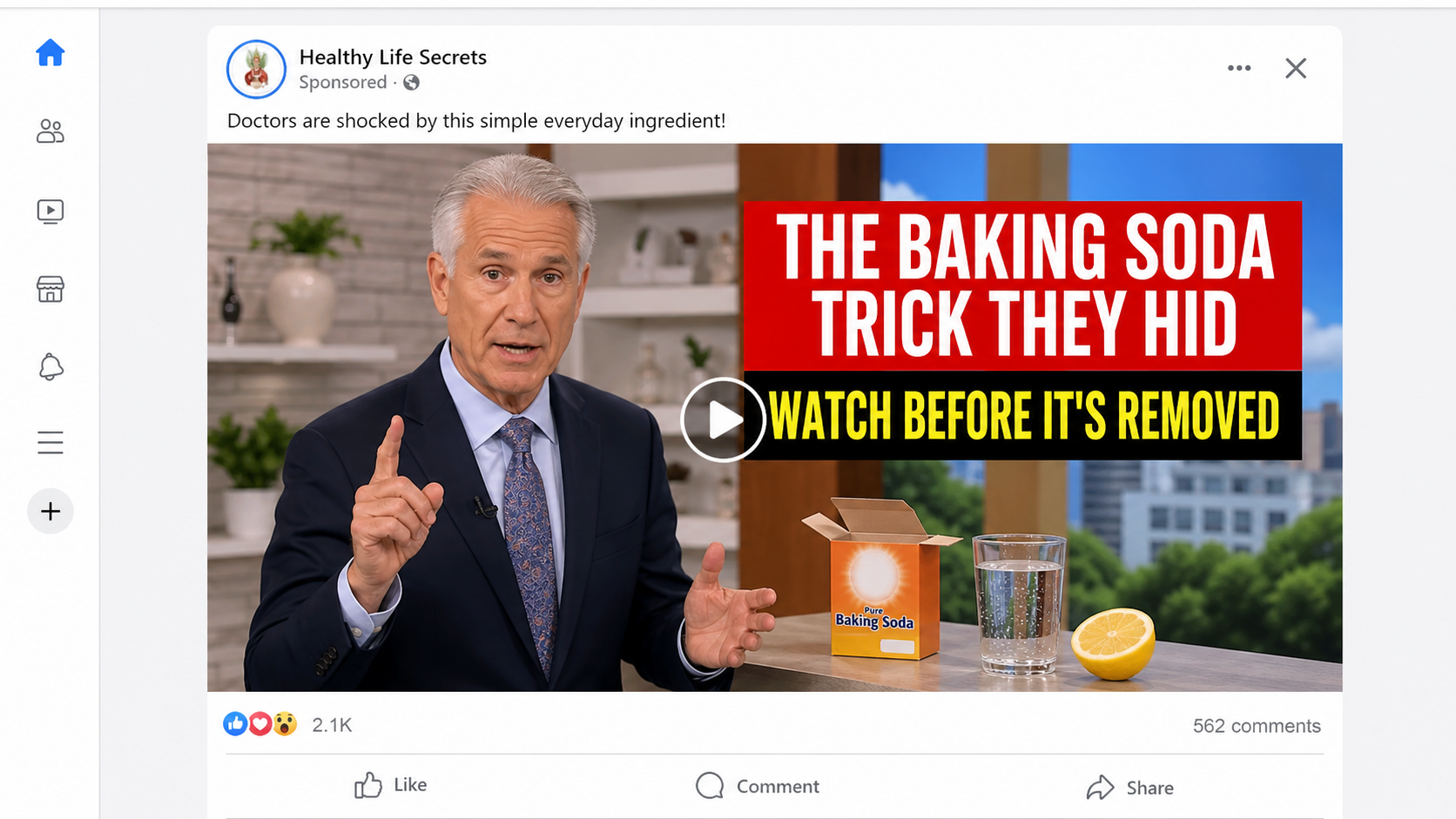
The opening video may look like a clipped television segment, a podcast interview, or a warning recorded backstage. Familiar mannerisms, confident medical language, and urgent captions make the endorsement feel spontaneous.
After the click, the viewer may enter a long presentation filled with dramatic weight-loss stories. One documented version claims a woman went from 208 to 134 pounds and suggests that more than 115,000 American women have already tried the method.
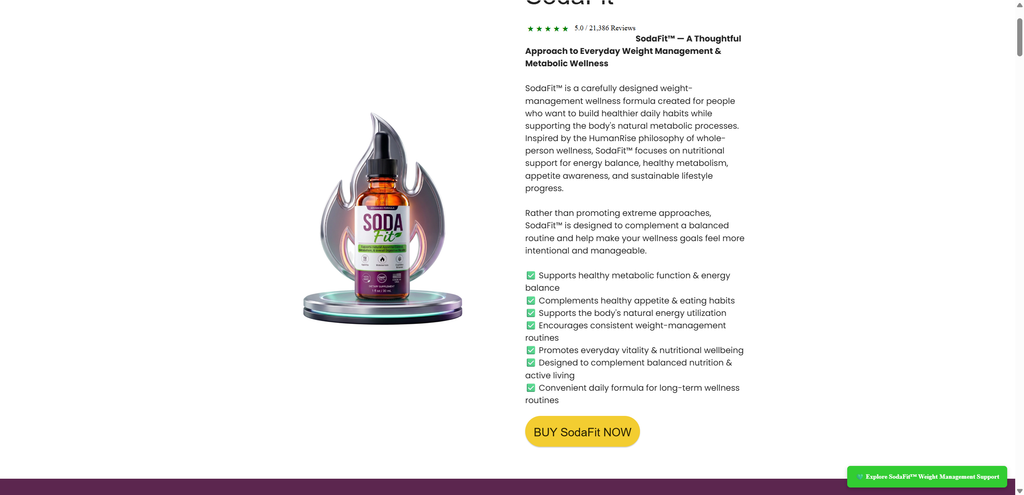
The promised kitchen recipe eventually gives way to a bottle. In one current version that bottle is SodaFit, but the same basic narrative can point to another brand when the campaign changes its links, inventory, or affiliate offer.
Overview
The Dr. Oz endorsement is the trust shortcut
The campaign borrows Dr. Mehmet Oz’s name, appearance, or television history to make an unsupported claim feel medically reviewed. Viewers may see altered footage, an AI voice, a misleading thumbnail, or an unrelated clip placed beside new narration.
We found no verified Dr. Oz program, official post, or authenticated statement introducing a baking soda recipe that melts body fat. A familiar face inside a paid advertisement is not evidence that the person recorded or approved the message.
The FTC has repeatedly warned that scammers use manipulated celebrity endorsements to sell health products. It has also brought previous cases involving fake news pages, Dr. Oz imagery, unsupported weight-loss promises, and unauthorized recurring charges.
The free recipe is bait for a paid supplement funnel
The advertisement invites people to discover a cheap trick made with ordinary ingredients. That lowers resistance because the viewer expects useful information, not a bottle offer.
The presentation then introduces a hidden cause of weight gain, delays the exact recipe, and suggests that ordinary baking soda is incomplete. A proprietary liquid or capsule becomes the supposedly reliable way to reproduce the effect.
One documented SodaFit route displayed per-bottle prices of approximately $49, $59, or $69. A per-bottle figure does not necessarily equal the final card charge when several bottles are selected.
The bottle can change while the story remains intact
SodaFit is not the permanent identity of the campaign. Related baking soda and metabolism funnels have used names such as AlkaSlim, SlimSoda, EvoSlim, and Ignitra. A seller can swap the destination without remaking the emotional opening.
That does not prove every named product belongs to one company. It shows why the celebrity story, advertising operator, checkout merchant, brand owner, and fulfillment company must be investigated separately.
- The social ad claims Dr. Oz revealed a hidden baking soda trick.
- The video uses urgency, medical language, and dramatic testimonials.
- A fake news-style page or long presentation delays the promised recipe.
- The household trick becomes a reason to purchase a supplement.
- SodaFit is one documented destination, but the bottle can rotate.
- Per-bottle pricing may hide the total price of a multi-bottle package.
- Current SodaFit redirects do not provide a transparent seller trail.
- Auto-ship cannot be assumed unless the exact checkout terms prove it.
There Is No Verified Dr. Oz Baking Soda Weight-Loss Recipe
Baking soda is sodium bicarbonate. It has legitimate household uses and can be used as an antacid under appropriate directions. Those real uses make the story sound more plausible, but they do not establish that it burns fat.
The viral recipe changes from page to page. Some versions use water and baking soda. Others add lemon, honey, apple cider vinegar, or an unexplained white powder. If one discovery produced the advertised result, its essential ingredients and instructions should not change with each advertisement.
The Dr. Oz attribution is equally unstable. A real medical recommendation should be traceable to an official video, article, transcript, or verified account. The funnel instead asks viewers to trust footage hosted by an advertiser and then follow an unrelated link.
Dr. Oz has discussed many health topics during a long television career. That history does not authenticate every clip that uses his name. A genuine appearance about one ingredient also would not endorse a later supplement that was inserted into an affiliate funnel.
What Baking Soda Actually Does in the Body
Sodium bicarbonate can neutralize stomach acid temporarily. That is why it appears in some antacid products and medical contexts. Neutralizing acid is not the same biological process as reducing body fat.
Fat loss does not occur because a drink makes the body more alkaline. The body regulates blood pH tightly through the lungs, kidneys, and other systems. A social media narrator cannot turn that complex physiology into a reliable fat-burning switch.
More baking soda is not better. Sodium bicarbonate adds sodium and can interact with medicines. MedlinePlus advises people with high blood pressure, heart failure, kidney disease, sodium restrictions, pregnancy, or other medical concerns to speak with a clinician.
Large or inappropriate amounts can cause vomiting, diarrhea, fluid or electrolyte problems, and dangerous changes in body chemistry. People should not copy a mystery dose from a sales video, especially after a large meal or while taking medication.
The safety question becomes even harder when the funnel switches from kitchen ingredients to drops or capsules. Buyers need the complete Supplement Facts panel, exact amounts, warnings, named manufacturer, lot details, and evidence supporting any weight-loss claim.
Why the Supplement Name Keeps Changing
A recipe story is reusable. The operator can keep the same fear, celebrity, before-and-after photos, and hidden-cause explanation while changing only the final order button.
Our separate baking soda weight-loss funnel investigation documented a route where an EvoSlim page led buyers toward Ignitra. That mismatch is a direct example of why the advertised bottle cannot be treated as the identity of the complete campaign.
MalwareTips has also examined SodaFit, SlimSoda, EvoSlim, Ignitra, and AlkaSlim. These pages show recurring transparency problems, but they should not be collapsed into one unproven company claim.
The lasting warning belongs in the story. When an unauthorized celebrity video promises a free kitchen trick but leads to whichever supplement happens to be available, the buyer is not receiving the transparent comparison needed for an informed health purchase.
How the Dr. Oz Baking Soda Trick Scam Works
Step 1: A fake Dr. Oz video stops the scroll
The campaign begins on Facebook, Instagram, TikTok, YouTube, or a similar advertising platform. The thumbnail suggests that Dr. Oz is revealing information that doctors, drug companies, or television executives tried to suppress.
Some ads use an AI-generated voice and lip movement. Others combine real footage with a false caption or voiceover. The viewer recognizes the person before noticing that the account, URL, and words do not belong together.
Step 2: The click opens a trusted-looking story
The destination may imitate a news report, daytime television page, consumer investigation, or health magazine. Familiar colors, navigation bars, reporter photos, and comment sections create the feeling that an independent publisher checked the claim.
The browser address is the decisive detail. A page can resemble CNN, FOX News, CBS, Today, or another outlet while being hosted on a disposable sales domain with no relationship to that organization.
Step 3: A long video delays the actual recipe
The narrator promises the ingredient is coming soon, then introduces personal stories, medical villains, and repeated warnings not to close the page. Delaying the answer increases the viewer’s emotional investment.
Comments displayed below the video may look like social media reactions but behave like static page text. If visitors cannot open profiles, sort comments, reply, or verify dates, the section is not proof of real customer activity.
Step 4: Pseudoscience turns an antacid into a fat-loss switch
The story may claim weight gain comes from acidity, a blocked enzyme, dormant metabolism, toxins, insulin resistance, or another single hidden cause. Real biological terms are mixed with conclusions that the presentation does not demonstrate.
Baking soda then becomes symbolic evidence. Because viewers recognize it and know it can affect acidity, the larger metabolism claim may feel intuitive even though the page supplies no reliable clinical trial for the advertised result.
Step 5: The homemade trick becomes a supplement order
The recipe is described as difficult to prepare correctly, incomplete on its own, or dependent on a precise blend. The convenient solution is a proprietary product such as SodaFit.
This is the commercial turn. A person who clicked for a cheap kitchen recipe is now asked to buy a bottle containing a much longer ingredient list. The page must prove the finished formula, not merely repeat facts about baking soda or individual botanicals.
Step 6: Price cards make a bundle look cheaper
The sales page may emphasize a price per bottle while preselecting a three-bottle or six-bottle option. A large discount, free shipping, countdown clock, and limited-stock warning encourage the buyer to act before calculating the full total.
Read the order summary immediately above the payment button. Confirm the bottle quantity, complete charge, shipping, taxes, upsells, return conditions, and whether any box authorizes future shipments.
Step 7: Redirects and rotating merchants complicate cancellation
During our August 2026 check, sodafit.shop displayed an “Applying Discount” message and redirected visitors to a tracking path on mwebxara.com. The destination then returned a 403 Forbidden response to our verification request.
That behavior does not prove every SodaFit buyer enters a subscription. It does mean the public doorway does not present one stable seller, checkout, support channel, and set of refill terms that can be independently reviewed.
If later charges appear, the merchant name on the card statement may be more useful than the bottle label. Save it exactly, including abbreviations and phone numbers, because that descriptor identifies the entity the bank can trace.
Company, Address, and Fulfillment Checks
The bottle name is not a legal company
“SodaFit” is a product name. A buyer still needs the legal entity accepting the payment, its registration jurisdiction, and the entity responsible for refunds and privacy requests.
The active sodafit.shop doorway reviewed by MalwareTips did not provide those answers before redirecting. A Trustpilot profile listed only the United States and the website, not a verifiable street address or named legal operator.
A warehouse address is not a manufacturer
A return label may lead to a fulfillment warehouse, shared suite, virtual mailbox, or logistics company. That location can receive bottles without owning the brand, developing the formula, or controlling the advertising.
Search any address found in the terms, package, receipt, and return authorization. If different documents name different places, ask which location is the headquarters, which is the manufacturer, and which only processes returns.
Support that appears after payment is too late
A transparent seller provides a working phone number, monitored email, cancellation procedure, and return address before the card is charged. A generic contact form or affiliate redirect is not equivalent to accountable support.
One current Trustpilot reviewer alleged that a full refund was refused and only 80% was offered. That is one unverified consumer report, not proof of every order experience, but it reinforces the need to save the exact policy shown at checkout.
The supply chain must be traceable
Do not assume a supplement is safe or unsafe based only on a polished bottle image. Ask for the Supplement Facts panel, serving size, exact amounts, manufacturer, importer, lot number, expiration date, allergen warnings, and testing documentation.
Private-label supplements can be produced in the United States or overseas, including China. Country of origin alone is not the verdict. The problem is an unidentified factory, missing importer, unverifiable certificate, or formula that cannot be connected to the bottle received.
FDA registration language is often misused. Dietary supplements are not approved by the FDA for effectiveness before sale, and a claim that a facility is registered does not prove that the specific formula burns fat or matches its label.
Subscription and Refill Risks
Supplement funnels sometimes place continuity terms inside small checkout text, post-purchase upsells, or preselected boxes. Buyers may believe they made a one-time purchase and later discover another shipment or charge.
We could not independently verify an active SodaFit checkout that proves mandatory auto-ship for every order. The current redirect blocked a stable review of the final merchant and terms. Calling SodaFit universally subscription-based would therefore go beyond the available evidence.
The correct response is to verify the exact transaction. Take screenshots of the final order page, search for “subscription,” “membership,” “continuity,” “monthly,” “refill,” and “cancel,” then compare those words with the receipt and card statement.
If six bottles arrive after the buyer expected one, check whether the page displayed a six-bottle package using a per-bottle price. A bundle dispute and a recurring-billing dispute are different, and the card issuer needs the accurate version.
Warning Signs to Watch For
- The endorsement cannot be found on Dr. Oz’s verified channels.
- The ad account has an unrelated name and little posting history.
- The page imitates a news organization on an unrelated domain.
- The recipe changes between baking soda, lemon, honey, and vinegar.
- A long video refuses to provide the promised instructions quickly.
- The comments are static and cannot be independently verified.
- The bottle appears only after an emotional medical presentation.
- The checkout emphasizes a per-bottle amount instead of the total.
- A countdown resets after the page is refreshed.
- The company, address, manufacturer, and support trail do not match.
- The order button redirects through unrelated tracking domains.
- Refill and cancellation terms are missing or difficult to understand.
What to Do if You Have Fallen Victim to This Scam
- Call the card issuer immediately. Explain that the purchase followed a deceptive celebrity health advertisement. Confirm the exact amount, merchant descriptor, and whether any additional authorization is pending. Ask what evidence is required for a dispute.
- Cancel in writing. Send a clear cancellation request to every support address on the receipt, bottle, checkout, and card statement. State that you cancel the order and any refill, membership, or continuity program. Request a written response and return authorization.
- Document what you were promised. Save the social ad, video URL, fake news page, recipe claims, product page, package selection, order summary, refund policy, confirmation email, and card statement. Record dates and take screenshots before links disappear.
- Separate a bundle problem from a subscription problem. If you expected one bottle but received six, document the selected quantity and total shown before payment. If a later charge appears, dispute that recurring transaction separately and explain whether you ever accepted continuity terms.
- Stop using the product if you feel unwell. Keep the bottle, label, lot number, and ingredient panel. Contact a qualified healthcare professional or Poison Control for symptoms or interaction concerns. Do not stop prescribed medication because of an advertisement.
- Secure accounts and monitor statements. Change any password reused on the sales page, enable multifactor authentication, and review card activity for unfamiliar descriptors. Ask the bank whether replacing the card is appropriate if the merchant continues charging it.
- Scan the device with Malwarebytes. If the funnel downloaded a video player, browser extension, app, or notification prompt, run a complete Malwarebytes scan. Remove unfamiliar extensions and revoke notification permissions from suspicious domains.
- Use AdGuard and report the advertisement. AdGuard can reduce malicious ads, pop-ups, trackers, and known scam destinations that lead back into the funnel. Also report the ad to the platform, the transaction to the FTC, and adverse supplement reactions to FDA MedWatch.
Recovery scammers may contact victims and promise a guaranteed refund for an upfront fee. A real card dispute does not require paying a stranger, installing remote-access software, or sharing a verification code.
Frequently Asked Questions
Did Dr. Oz create a baking soda trick for weight loss?
We found no verified Dr. Oz program, article, or authenticated statement introducing the viral baking soda recipe as a fat-loss method. The association comes from ads and reposted content, not a reliable primary source.
Does baking soda burn belly fat?
No reliable evidence shows that drinking baking soda directly burns body fat. Sodium bicarbonate can temporarily neutralize stomach acid, but that medical use does not establish a metabolism or weight-loss effect.
Why does the ad sell SodaFit instead of providing a recipe?
The free recipe creates curiosity and lowers resistance. The presentation then reframes the household mixture as incomplete and positions SodaFit or another proprietary supplement as the convenient finished solution.
Are SodaFit, AlkaSlim, SlimSoda, EvoSlim, and Ignitra the same company?
We have not established that one legal company owns every brand. They have appeared in similar or connected weight-loss funnels, which is why each checkout merchant, address, policy, and package must be verified separately.
Will every order include six bottles or automatic refills?
No. Multi-bottle bundles and continuity billing are common risks in this market, but they should not be claimed for a specific order without the checkout and receipt. Read the total quantity and every refill term before paying.
What if sodafit.shop redirects me to another domain?
Stop before entering payment details. A redirect can be legitimate affiliate tracking, but the final page must still identify the seller, total charge, refund policy, contact information, and any recurring terms. If those details are missing, do not order.
The Bottom Line
The Dr. Oz Baking Soda Trick Scam uses a familiar doctor and an ordinary kitchen ingredient to make a rotating supplement funnel feel like a medical discovery. We found no verified Dr. Oz endorsement and no reliable evidence that baking soda burns fat.
SodaFit is one bottle connected to the story, not the story itself. The same framework can point to AlkaSlim, SlimSoda, EvoSlim, Ignitra, or another brand while the fake interview, hidden recipe, price pressure, and weak seller trail remain.
Do not judge the offer by the celebrity, recipe, or price per bottle. Verify the legal seller, complete card charge, refill terms, manufacturer, formula, and refund process in writing. If those basics cannot be confirmed, close the page.

Join the discussion
0 commentsShare your experience or ask a question about this article.
Discussion
Start the conversation
Have a question or something useful to share? Add the first comment.