

SlimSoda sounds like the name of the viral trick promised in the advertisement. A scoop of baking soda, a short morning ritual, and apparent advice from famous women make the route to the bottle feel less like shopping and more like discovering a secret.
This SlimSoda review checks what happens when the story is stripped away. The sales page, formula descriptions, testimonials, policy links, order redirect, and business identity reveal an offer that changes shape whenever the buyer looks for a firm answer.
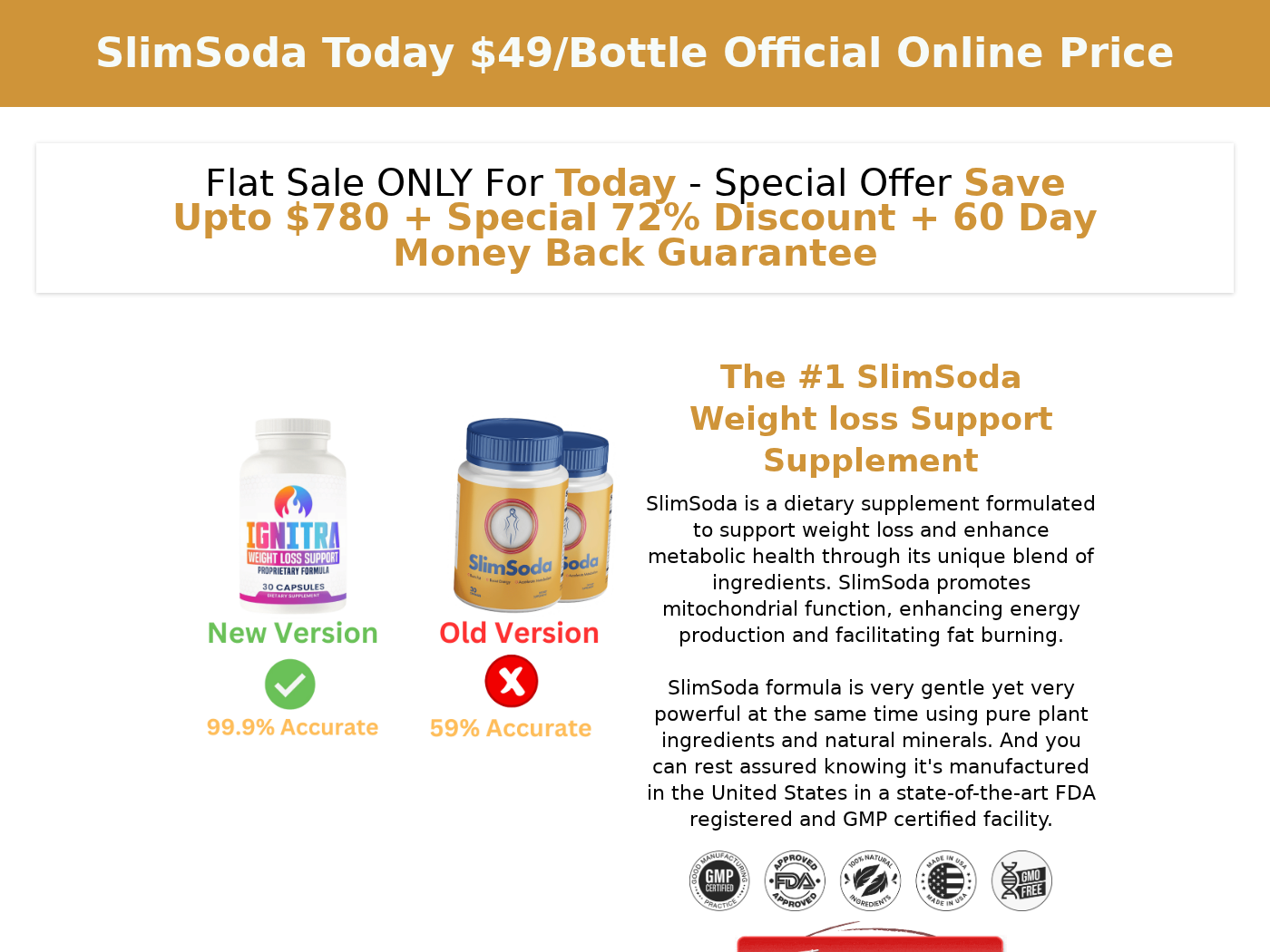
The landing page promotes SlimSoda as a $49 weight loss supplement with a 72% discount and a 60-day guarantee. It places a SlimSoda bottle next to Ignitra and describes Ignitra as the new version with 99.9% accuracy.
That comparison is not accompanied by a clinical report, a clear reformulation notice, or a legal explanation connecting the brands. The percentages appear as marketing graphics, not as results supported by a cited trial of either finished product.
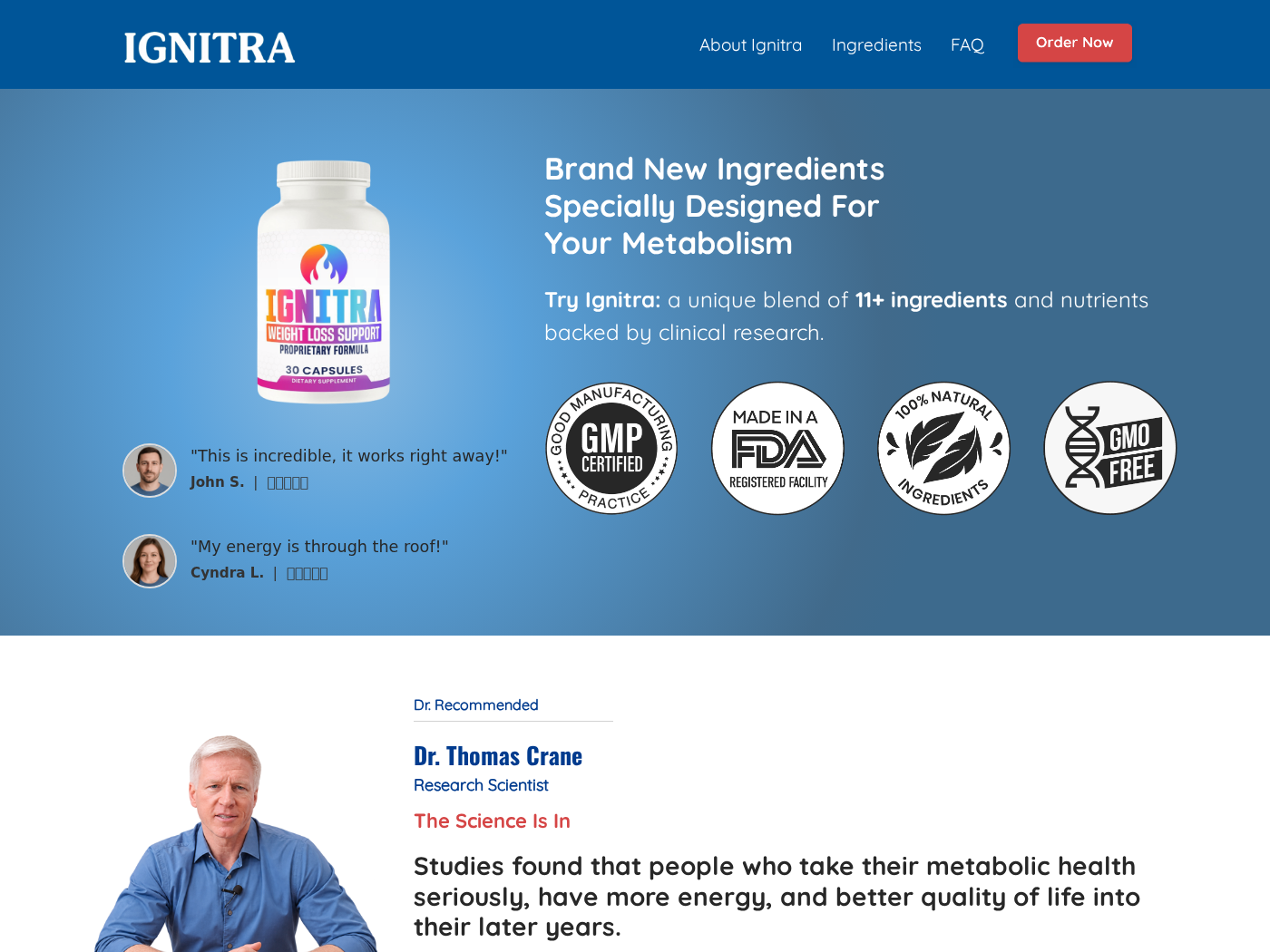
Clicking toward purchase does not produce a SlimSoda shopping cart. It opens the same Ignitra page reached through the EvoSlim funnel, showing that more than one product name is being used to feed buyers into one downstream offer.
Overview
SlimSoda is the product reveal inside a fake baking soda campaign
The bottle is introduced after social advertisements claim that a baking soda shot can unlock rapid weight loss. Some versions misuse AI-generated or edited depictions of Oprah Winfrey and obesity specialist Dr. Ania Jastreboff to make the story sound medically credible.
Neither public figure was found to have authentically endorsed SlimSoda. The same deceptive theme has already appeared in the MalwareTips reports on the Oprah baking soda shot scam and the fake Dr. Ania Jastreboff campaign.
The formula changes from section to section
One ingredients section lists gymnema, banaba, bitter melon, cinnamon, licorice, juniper, chromium, and cayenne. The FAQ instead says each capsule contains chicory inulin, resistant potato starch, Bifidobacterium infantis, Clostridium butyricum, and Akkermansia muciniphila.
Those lists describe different products. A buyer cannot screen for interactions, compare doses with research, or even know whether the advertised bottle matches the parcel when the seller’s own page cannot maintain one ingredient account.
The visible promise is a one-time charge, but the final page still matters
SlimSoda states that the purchase is one-time, without hidden autoshipments or extra charges. There is no adequate evidence on the page reviewed to describe the current visible offer as a confirmed refill subscription.
The caution is that the final destination is Ignitra rather than SlimSoda. Buyers must read the actual checkout, not the bridge page. If the payment screen adds a membership, trial, automatic shipment, or future charge, that new term should end the transaction.
- SlimSoda is promoted through a fake baking soda weight loss narrative.
- The page claims $49 per bottle, a 72% discount, and savings up to $780.
- Ignitra is shown as a new version without a verifiable explanation for the change.
- The order link leads to Ignitra, not to a clearly labeled SlimSoda checkout.
- The page provides two incompatible ingredient lists.
- Its testimonials duplicate names and wording found on the EvoSlim page.
- Privacy and disclaimer links returned 404 pages during the review.
- The FAQ denies autoship, so a subscription should not be asserted without further proof.
What Makes the SlimSoda Baking Soda Story So Persuasive
The advertisement is designed around recognition. Viewers know baking soda, recognize a television personality, and may have heard of GLP-1 medicines. The campaign combines those familiar elements into a new claim that feels easier to believe than an unknown supplement advertisement.
The celebrity clip provides social permission. The apparent doctor supplies technical authority. The household recipe makes the discovery feel accessible. Each piece answers a different objection before the viewer realizes that a commercial product is waiting at the end.
The story often suggests that an industry, television network, or pharmaceutical interest tried to suppress the secret. This gives the advertiser a convenient explanation for why the claim is missing from credible medical guidance and why the viewer must act before the video disappears.
SlimSoda itself is not baking soda. The page describes capsules filled with herbs, fibers, probiotics, or minerals, depending on which section is read. The recipe is therefore a curiosity hook, not a transparent description of what the customer is asked to swallow.
A real weight management decision needs medical history, current medicines, realistic nutrition and activity changes, and evidence appropriate to the individual. A social advertisement cannot replace that process with a universal kitchen shortcut.
The SlimSoda Page Contains Signs of a Cloned Funnel
SlimSoda and EvoSlim use nearly identical layouts. Both announce a $49 bottle, 72% discount, $780 saving, 60-day guarantee, limited stock, and a claim that 93% of customers select six bottles.
Both pages also display testimonials from Miah H. in New Jersey, Melissa T. in Texas, and Jhon K. in Ohio. The stories repeat the same experiences while swapping only the product name. That pattern is difficult to reconcile with independent product-specific reviews.
The replacement product is also the same. Each page labels Ignitra as the new version and sends the order button to an Ignitra sales presentation. The product name that captured the search or social click is therefore not the product name shown at the end.
The SlimSoda page moves between mitochondrial support, gut microbiome claims, natural GLP-1 activity, appetite control, glucose metabolism, and broad fat-burning language. These themes are presented together even though the ingredient lists supporting them do not match.
The privacy policy and disclaimer links returned 404 pages during this review. A supplement seller collects names, addresses, payment details, and potentially health-related interests. Broken legal links leave buyers without a reliable explanation of data use or the page’s own limitations.
Its refund directions repeat a serious omission. Customers are told to contact the seller at a blank field to obtain an RMA, pay shipping, and return the item within 14 days after authorization. A countdown guarantee with no complete contact route is poor consumer protection.
How the SlimSoda Scam Funnel Works
Step 1: The ad turns a famous person into a salesperson
A sponsored video appears to show a celebrity discussing dramatic weight loss or revealing a recipe that worked after other methods failed. Synthetic voice and altered lip movement can make ordinary footage say something the person never said.
The account publishing the clip is usually less recognizable than the person inside it. Check the page creation date, ad disclosure, profile history, and official accounts before trusting any endorsement.
Step 2: A doctor-shaped explanation makes the recipe sound clinical
An apparent specialist describes hormones, metabolism, insulin, gut bacteria, or mitochondria. Technical words create the feeling of medical validation even when the video provides no study, dose, patient criteria, or finished-product trial.
The advertiser does not need the real doctor’s cooperation when AI can imitate a voice and synchronize new speech with old footage. A convincing face is not evidence of consent or endorsement.
Step 3: A fake news page continues the illusion
The click opens a long page designed to resemble a trusted news or health publisher. Headlines, interview formatting, network-style colors, and urgent updates make the commercial script look independently reported.
The page has one practical purpose, moving the reader toward the supplement. The links do not lead to a balanced archive or outside reporting. They repeat the pitch or send the visitor closer to payment.
Step 4: SlimSoda is revealed as the shortcut
The story finally introduces SlimSoda as an easier version of the recipe. Rather than measuring ingredients or changing daily habits, the viewer is told to take one capsule and allow the formula to support appetite, metabolism, and fat use.
The emotional journey makes the bottle feel pre-approved. The shopper may not notice that the supplement page uses softer words than the video or that its ingredients change later on the same page.
Step 5: Six bottles become the default choice
The page says most customers choose six bottles and frames that package as the best saving. A buyer who planned to test one bottle is made to feel that a small order is wasteful or unlikely to work.
Large bundles transfer the risk to the customer. If the formula is unclear, the product causes discomfort, or support is unresponsive, the buyer has more money and more merchandise tied up in the return process.
Step 6: SlimSoda quietly turns into Ignitra
The order link passes through affiliate tracking and opens Ignitra. The destination presents its own bottle, ingredients, badges, testimonial figures, and doctor-style recommendation rather than a transparent SlimSoda cart.
A visitor can continue without recognizing the switch because both pages use similar weight loss language. The new name may also appear on the receipt or parcel, complicating a later claim that the delivered item was not what the advertisement promised.
Step 7: The customer must untangle the brands to seek help
When results fail or the charge is disputed, the buyer may search for SlimSoda support while the transaction belongs to Ignitra or a payment processor. Broken policy links and incomplete RMA directions add another layer of friction.
The safest response is to document the entire path before paying. Without screenshots, it can be difficult to prove which bottle, price, guarantee, and billing terms were displayed at each stage.
Company, Address, and Fulfillment Checks
The seller hides behind product names that keep changing
SlimSoda captures the click, Ignitra is labeled the replacement, and a tracking domain connects the two. The page does not clearly identify the legal company that owns the brands, wrote the advertising, selected the manufacturer, and must honor the guarantee.
A brand is artwork and marketing. Accountability requires a legal entity whose name matches the terms, receipt, card descriptor, and support correspondence. If those records do not align, do not place a large order.
Broken policy pages are a serious warning
The linked privacy and disclaimer pages returned 404 responses during the investigation. That leaves the buyer without stable documents explaining data handling, liability, dispute procedures, or the relationship between the page and the downstream merchant.
Save copies of every applicable policy at checkout. A footer link is not protection when it does not open, and a seller should not collect payment information while basic legal pages are missing.
A warehouse cannot answer who formulated the product
Even if a parcel arrives from a real US fulfillment center, that address may only store and ship inventory for many internet brands. It does not prove that researchers, company officers, customer support, or manufacturing operations are located there.
Search every address in the confirmation and return instructions. Determine whether it is a warehouse, virtual suite, house, mailbox, or unrelated company. Call support before ordering and ask which exact brand and order prefix the agent can locate.
An unstable label can make a supplement dangerous
Gymnema, bitter melon, licorice, chromium, cayenne, probiotics, and fibers raise different questions about medications, blood sugar, digestion, blood pressure, pregnancy, and allergies. A buyer needs the actual amounts and warnings, not a menu of possible ingredients.
Supplements may be mass-produced in the US, China, or elsewhere. Country alone does not prove safety or fraud. Hidden sourcing, no consistent Supplement Facts panel, no traceable finished-product manufacturer, and no credible test results are the sharper reasons to walk away.
SlimSoda Pricing, Guarantee, and Recurring Billing Questions
The page builds the offer around $49 per bottle but does not present the purchase as a simple $49 experiment. It repeatedly recommends six bottles, celebrates a claimed $780 saving, and says stock or today’s discount may disappear.
A 60-day guarantee does not erase the upfront risk. The return language requires prior authorization, an RMA in the parcel, customer-paid postage, acceptable physical condition, and shipment to the supplied address within 14 days of receiving the RMA.
The promise also says no questions asked, yet the conditions can determine whether a refund is approved. Buyers should obtain written answers about opened bottles, partial bundles, original shipping, return postage, deadlines, and the entity issuing the credit.
SlimSoda’s current FAQ denies hidden autoshipments. That is evidence against calling this specific visible page a proven subscription trap. It does not excuse a buyer from reading the downstream Ignitra checkout, which is the page that requests payment.
After any purchase, monitor the card for the exact authorized total and for later charges. If a new transaction appears, identify its descriptor, contact the merchant in writing, and notify the card issuer promptly rather than waiting for another shipment.
Warning Signs to Watch For
- A familiar celebrity appears in an unverified baking soda weight loss video.
- The apparent medical explanation lacks a real study of the product being sold.
- SlimSoda and Ignitra are called old and new versions without a transparent reformulation record.
- The order button changes the brand at the point of purchase.
- Two sections list different categories of active ingredients.
- Testimonials are cloned from the EvoSlim page with the name replaced.
- Privacy and disclaimer links lead to missing pages.
- The RMA instructions contain a blank where support contact details should appear.
- Seller-controlled urgency claims encourage a six-bottle commitment.
- The legal company accepting responsibility is not clearly disclosed.
SlimSoda is concerning because the contradictions reinforce one another. A false endorsement opens the door, cloned content creates credibility, the formula shifts, the brand changes at checkout, and the refund trail becomes incomplete precisely when the buyer needs clarity.
What to Do if You Have Fallen Victim to This Scam
- Save evidence before the pages change. Capture the sponsored post, account name, fake interview, SlimSoda page, Ignitra redirect, checkout, guarantee, broken policy links, receipt, shipment tracking, and product label. Keep the original page addresses and purchase date.
- Match the advertisement to the delivered item. Photograph every side of the bottle and compare its name, serving size, ingredients, quantity, lot number, and manufacturer with the final checkout. Do not consume a product whose label is missing or materially different.
- Review the authorization for recurring terms. Search the checkout and confirmation for autoship, continuity, membership, refill, renewal, and trial language. The SlimSoda page promises one-time payment, so retain that screenshot if billing later tells a different story.
- Open a written refund request immediately. Use the contact information on the transaction receipt or delivered package. Include the order number, amount, product received, date, and the 60-day guarantee. Ask the seller to provide the RMA and return address in writing.
- Keep control of the return shipment. Do not send the parcel until support confirms the authorized destination and conditions. Use tracking and, when appropriate, signature confirmation. Keep photos of the contents, mailing label, receipt, and final delivery scan.
- Escalate billing problems to the issuer. If the seller charged the wrong quantity, delivered Ignitra instead of the authorized item, refused the promised refund, or began unauthorized renewals, ask the card issuer about a dispute. Describe facts rather than only calling it a scam.
- Clean up the ad trail on your device. Remove notification permissions granted to unfamiliar sites and delete suspicious browser extensions. Run Malwarebytes to check for adware or unwanted software, then use AdGuard to reduce malicious ads and deceptive redirects.
- Warn the platforms and regulators. Report the advertisement for impersonation and misleading health claims. US buyers can also file detailed complaints with the FTC and state attorney general. Include the advertiser profile and destination chain, not only the product name.
Frequently Asked Questions
Is SlimSoda a legitimate weight loss supplement?
SlimSoda is displayed on a functioning marketing page, but that page contains inconsistent formulas, cloned testimonials, broken legal links, and a redirect to Ignitra. Those problems prevent a confident recommendation.
Is SlimSoda the same product as SodaSlim?
The names are similar, but internet campaigns frequently rotate and reverse words. Do not assume two bottles are identical. Compare the exact domain, label, ingredients, seller, and checkout attached to the advertisement you saw.
Did Oprah or Dr. Ania Jastreboff promote SlimSoda?
No authentic connection was found. Ads that make them appear to discuss SlimSoda or a baking soda weight loss shot should be treated as manipulated media or footage placed into a false commercial context.
Why does SlimSoda redirect to Ignitra?
The page functions as an affiliate bridge into the Ignitra offer. Although it calls Ignitra a new version, it does not provide a transparent company statement, matching formula comparison, or clear checkout showing how the two products relate.
Will SlimSoda enroll me in automatic refills?
The page reviewed says the purchase is one-time and has no hidden autoship. Recurring billing is therefore not confirmed. Check the final Ignitra payment terms and keep proof of the exact authorization.
What should I do if SlimSoda charged me more than expected?
Save the order pages and receipt, contact the seller in writing, and ask for an itemized correction. If the merchant does not resolve an unauthorized amount, contact the card issuer within its dispute deadline.
The Bottom Line
SlimSoda is sold through a deceptive story that borrows famous faces and medical language, then lands on a page with contradictory ingredients, duplicated reviews, missing policies, and an Ignitra order destination. That is not the transparent path expected from a trustworthy supplement seller.
The visible page says one-time payment, so recurring refills should not be invented as a confirmed fact. The proven warning is already serious enough: the SlimSoda offer changes products before checkout and fails to give buyers one stable formula, company identity, or refund route.








