

At first glance, the Berberine X NAD+ 10-in-1 Microneedle Patch looks like a breakthrough in modern weight loss science. It promises rapid fat burning, appetite control, balanced blood sugar, anti-aging benefits, and even cardiovascular support — all from a small adhesive patch you wear on your skin. The website claims it’s “clinically proven,” “FDA approved,” and “made in Canada.”
But as with many trendy “miracle patches” flooding the internet, the reality behind the Berberine X NAD+ Patch is far less impressive — and far more concerning. Beneath the glossy marketing and fake scientific claims lies a familiar scam structure that’s become increasingly common in 2024 and 2025: rebranded microneedle patches with grand promises, zero clinical backing, and deceptive online stores that vanish as quickly as they appear.
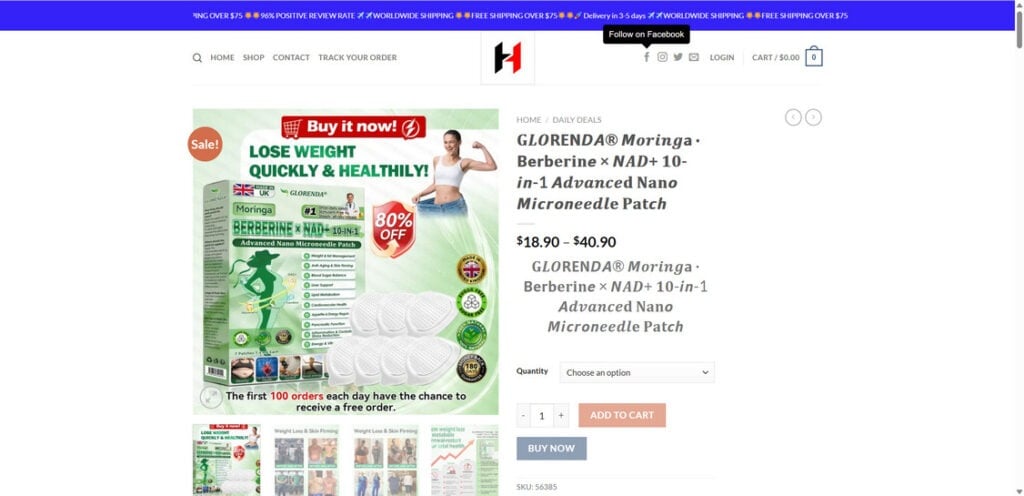
If you’ve seen this product on Facebook, TikTok, or websites claiming “80% OFF – Limited Time Only,” you’re not alone. These patches are being sold under dozens of different names, using identical images and copied descriptions.
Let’s take a detailed look at what the Berberine X NAD+ Patch really is, how the scam works, and what red flags every consumer should recognize before wasting money on another fake “weight loss revolution.”
Scam Overview
The Berberine X NAD+ Patch is marketed as a cutting-edge “Advanced Nano Microneedle Patch” designed to deliver natural weight-loss ingredients through the skin. The packaging lists a long list of supposed benefits:
- Weight and fat management
- Anti-aging and skin firming
- Blood sugar balance
- Appetite control
- Cardiovascular and liver support
The patch supposedly combines Berberine, Moringa, and NAD+ (nicotinamide adenine dinucleotide), along with other herbal ingredients. It claims to use “microneedle nanotechnology” for “deep transdermal absorption,” implying that these natural compounds can reach your bloodstream and mimic the effects of GLP-1 drugs like Ozempic.
The Problem: None of This Is Scientifically Proven
No patch — regardless of what it contains — can safely or effectively replicate the function of injectable GLP-1 agonists such as Ozempic or Mounjaro. These drugs are peptides that require precise dosing and injection to survive digestion and reach hormone receptors.
There are no clinical studies supporting the claim that Berberine or NAD+ can be effectively absorbed through the skin, let alone in quantities sufficient to influence metabolism or fat loss.
Fake “Made in Canada” and “Clinically Proven” Labels
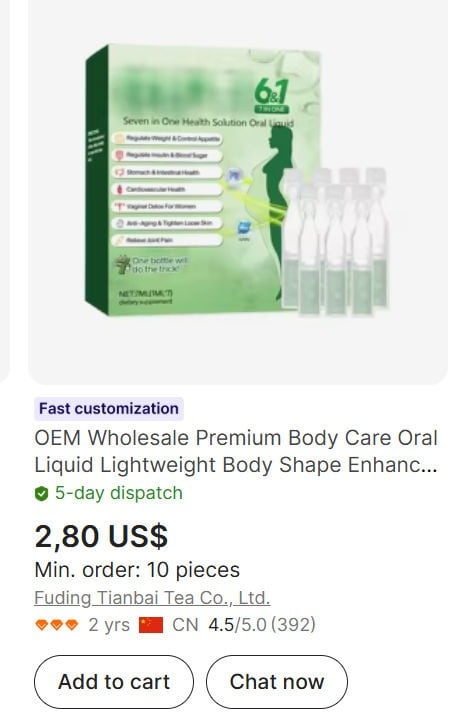
Most listings display “Made in Canada” or “GMP Certified” badges, but there’s no registration record for this product in Canada’s medical or supplement databases. Reverse image searches reveal the same packaging on Alibaba and AliExpress, listed for under $3 per unit and shipped from manufacturers in China.
The “clinically proven” label is completely fabricated — there are no legitimate human trials, no peer-reviewed papers, and no documented research behind this product.
Identical Listings Under Different Names
The same patch has been found under multiple brand names, including:
- GFOUK Moringa Berberine Patch
- Berberine NAD Microneedle Patch
- Moringa Slim Patch
- Berberine x NAD+ Nano Patch
- NAD+ 10-in-1 Microneedle Slim Patch
Each store changes only the logo and URL, while everything else — from product photos to reviews — stays identical. This is a major sign of a recycled scam network.
Manipulative Pricing and Discounts
Nearly every store lists the same dramatic pricing pattern:
- Regular price: $80.90
- Discounted to $18.90 or $28.90
- Claims of “80% OFF – Only a Few Left!”
In reality, this is a psychological trick known as anchoring. There’s never been an original $80 version; it’s a false comparison to create a sense of value and urgency.
Fake Doctor Endorsements and Reviews
Many listings feature photos of “doctors” or “nutritionists” holding the patch. These images are stock photos from Shutterstock or AI-generated composites. None of these supposed experts have verifiable credentials, and no medical professional or regulatory body endorses these products.
The “reviews” displayed on the websites are also copied word-for-word across different stores. Some even include grammatical errors and mismatched product names, showing they were mass-generated or recycled.
The Multi-Site Scam Network
The same operators use multiple Shopify or WooCommerce stores — all built with cheap templates — to sell the same product. When one store receives too many refund requests or scam reports, it’s taken down, and a new one launches the next day with a slightly modified name.
For instance, “GFOUK Moringa Berberine Patch” may reappear as “BioSlim NAD+ Patch” or “VitaDerm Microneedle Slim Patch.” The domain changes, but the content, product images, and pricing remain identical.
This rotation keeps the scam alive and makes it nearly impossible for consumers to track the perpetrators.
How the Scam Works
The Berberine X NAD+ Patch scam follows a predictable yet effective pattern, refined from earlier “GLP-1 patch” and “microneedle fat loss” hoaxes.
Step 1: The Hook – Social Media and Ad Targeting
Ads featuring “miracle transformations” flood TikTok, Facebook, and YouTube. They often show before-and-after photos or stock videos of people celebrating rapid weight loss.
Headlines like these are common:
- “Lose 15 Pounds in 2 Weeks – No Diet Needed!”
- “10-in-1 Fat-Burning Patch Doctors Don’t Want You to Know About!”
- “GLP-1 Results Without Needles or Prescriptions!”
The goal is to create curiosity and urgency. These ads redirect to small, generic-looking web shops with countdown timers and emotional marketing copy.
Step 2: The Landing Page Illusion
Once on the website, users are bombarded with fabricated science. Claims like “NAD+ activates fat metabolism through microneedle diffusion” sound convincing but lack real evidence.
The site layout often includes:
- Fake certification badges (GMP, FDA, ISO)
- Pseudo-scientific diagrams showing “fat cell reduction”
- Limited-time sale banners
- “100% satisfaction guarantee” badges
These are all stock graphics reused across similar scams — designed purely to look credible to the average shopper.
Step 3: False Testimonials and Photos
Scrolling further, you’ll find testimonials supposedly from satisfied customers. These images are lifted from unrelated online blogs, weight loss forums, or even AI generators.
Some listings include “Day 1 vs. Day 30” transformations that use photos of entirely different people. Reverse image searches confirm that many come from unrelated skincare or fitness websites.
Step 4: The Checkout Trap
The “Buy 2, Get 1 Free” or “Limited Inventory” upsells are meant to increase the average order value. Many buyers also report hidden shipping insurance fees or automatic subscriptions added at checkout.
Once payment is made, the transaction is processed by an offshore intermediary. Refunds are almost impossible.
Step 5: Poor Quality or No Delivery
Customers who do receive a product often describe it as cheap plastic patches with no noticeable effects. In other cases, the order never arrives. The “customer service” emails listed on these sites are generic and unresponsive.
By the time users realize they’ve been scammed, the website has vanished.
Red Flags to Watch Out For
Here are the biggest signs that the Berberine X NAD+ Patch and similar “microneedle slimming patches” are not legitimate products.
1. Unrealistic Weight Loss Claims
Any patch claiming to burn fat, regulate hormones, and control appetite — without diet or exercise — is making impossible promises.
2. “10-in-1 Miracle” Marketing
The product is said to solve everything from weight loss to liver detox and anti-aging. Legitimate supplements never claim to do ten unrelated things at once.
3. GLP-1 Comparisons Without Proof
Using GLP-1 terminology like “Ozempic-like” or “Mounjaro-style results” is a trick to ride the popularity of real prescription drugs. These patches contain no such ingredients.
4. Fake “FDA Approved” or “Clinically Proven” Labels
The patch is not FDA-approved, nor is it supported by any recognized clinical trial. Those logos are decorative fakes.
5. Disease-Related Health Claims
Claims about curing obesity, improving blood sugar, or treating diabetes make it a regulatory violation — no over-the-counter cosmetic patch can legally claim these effects.
6. Stock or Reused Before-and-After Photos
Many images appear across multiple sites with different brand names. None are verifiable or linked to real customers.
7. No Independent Studies
There are no peer-reviewed trials or third-party lab tests for this patch. Everything is based on marketing copy, not research.
8. Aggressive Ads and Flash Discounts
Real medical or supplement companies don’t rely on 80% flash sales or timers that reset every time you reload the page.
9. Hidden Company Identity
Most sites have no address, phone number, or legitimate business registration. The “contact us” section usually links to an unmonitored Gmail or Outlook address.
10. Overpromising Without Lifestyle Changes
Claims of “effortless fat loss” without diet, exercise, or lifestyle adjustments are the hallmark of false advertising.
What To Do If You Bought the Berberine X NAD+ Patch
If you’ve already purchased this patch, here’s what you should do immediately:
1. Take Screenshots
Document the entire purchase process, including the ad, website, product listing, and your order confirmation email.
2. Contact Your Bank or Credit Card Provider
Report the transaction as a scam or deceptive sale. Request a chargeback and explain that the product was misrepresented.
3. Cancel Recurring Payments
If you notice any ongoing charges, block the merchant through your bank. These scams often include hidden “subscription renewals.”
4. Avoid Returning to the Listed Address
Some scammers insist on sending returns to a foreign warehouse in China. This is a tactic to delay refunds — avoid wasting money on international shipping.
5. Report the Website
Submit a complaint to your national consumer protection agency, such as:
- FTC.gov (United States)
- IC3.gov (International fraud reporting)
- econsumer.gov (cross-border e-commerce scams)
6. Warn Others
Share your experience on forums, social media, or scam-reporting platforms. Public awareness reduces the reach of these deceptive sellers.
FAQ
Is the Berberine X NAD+ Patch legit or a scam?
Most versions being pushed online follow a high-risk pattern: exaggerated “10-in-1” claims, recycled product photos, vague company details, and “clinically proven” language without verifiable studies. When the same product is sold across many sites under different names, it is usually a sign of a coordinated, deceptive marketing network.
Why is this patch sold under so many different names?
Because the same generic patch is often sourced from wholesalers and then rebranded by multiple drop-ship stores. The storefront changes, but the images, copy, and “discount” structure stay the same. This makes it harder for buyers to track complaints and easier for sellers to rotate domains if refunds pile up.
Can a patch really cause weight loss without diet or exercise?
A patch that promises major fat loss with no lifestyle change is a classic red flag. Sustainable weight loss comes from a calorie deficit and behavioral consistency. Products claiming effortless results are usually relying on marketing, not evidence.
Does berberine work through the skin?
Berberine has research as an oral supplement in certain contexts, but that is not the same as “effective transdermal delivery.” Claims that a sticker-like patch reliably delivers berberine at meaningful doses into the bloodstream typically come without proof. If a site does not provide independent lab testing and human clinical data for that exact patch, treat it as unproven.
What about NAD+ in a patch?
“NAD+” is a popular buzzword. Even if a product claims it contains NAD+ or NAD+ boosters, the important question is dose, delivery method, stability, and evidence. Most scam-style sites do not provide those details, and they do not link to legitimate clinical trials for the actual patch being sold.
Is this a GLP-1 alternative like Ozempic or Mounjaro?
No patch should be treated as a GLP-1 drug substitute. Real GLP-1 medications are prescription therapies with controlled dosing and well-studied safety profiles. If a patch implies “GLP-1-like” results without providing rigorous proof, it is marketing meant to borrow credibility from popular drugs.
The site says “FDA approved.” Is that possible?
Be skeptical. Many scam pages use “FDA approved” loosely or incorrectly. For most supplements and wellness products, the FDA does not “approve” them the way it approves prescription drugs. If they cannot provide a verifiable approval, registration, or official documentation that matches the exact product name and manufacturer, assume the claim is misleading.
What does “clinically proven” actually mean here?
Often, it means nothing. Scam pages use phrases like “clinically proven” or “doctor recommended” without linking to:
- A real clinical trial
- The study authors and publication
- The exact product tested
- The dosage and outcomes
If none of that is present, it is just persuasive wording.
Are the before-and-after photos reliable?
Usually not. Many patch scams use stock images, AI-generated pictures, or photos pulled from unrelated pages. If you see dramatic transformations with no names, no dates, and no verifiable source, treat them as advertising assets, not evidence.
Why do these sites use countdown timers and “Only 11% inventory left” bars?
Urgency tools push impulse purchases. A timer that resets, constant “final restock” warnings, or aggressive “80% off today only” pricing are common tactics to prevent careful research.
How can I tell who really runs the store?
Check for transparency signals:
- Real company name and registration
- Physical address that matches the company
- Working phone number
- Clear returns policy with a realistic return address
- Independent reviews outside their site
If you only see a generic email, vague policies, or mismatched addresses, that is a major warning sign.
What if I already ordered and now I regret it?
Do this quickly:
- Screenshot the product page, checkout page, order confirmation, and any claims (FDA, clinical, GLP-1, etc.).
- Email the seller requesting cancellation and refund, and keep records.
- If they stall or refuse, contact your bank or card issuer and request a chargeback for misrepresentation or non-delivery.
- Watch your statements for additional charges and dispute them immediately.
What if the package arrives but it’s low quality or not as advertised?
Document everything:
- Photos of the packaging and product
- Any missing instructions, missing ingredients list, or inconsistencies
- Shipping label details
Then request a refund in writing. If you get excuses like “return to our overseas warehouse at your cost,” escalate to a chargeback.
Is it safe to use microneedle or “nano needle” patches at home?
Anything that breaks or irritates the skin can cause reactions, especially if ingredients are unclear or manufacturing quality is unknown. If you have sensitive skin, allergies, diabetes, or you are pregnant or breastfeeding, avoid experimenting and talk to a medical professional first.
The Bottom Line
The Berberine X NAD+ Patch may look scientific and sophisticated, but it’s part of a growing wave of deceptive health product scams designed to exploit trending keywords like “GLP-1,” “berberine,” and “microneedle.”
It’s not clinically proven. It’s not FDA approved. It doesn’t work — and it’s not made where it claims to be.
From fake doctor endorsements and stolen images to nonexistent studies and disappearing stores, everything about this product signals a scam.
If you’re serious about weight loss or blood sugar management, talk to a licensed medical professional — not an online ad promising miracles.
When you see “Lose 10 Pounds in 10 Days” or “10-in-1 Advanced Patch,” remember: real health solutions don’t come in a mystery sticker.









I order this and used it 4 times the last 2 times I have looks like chemical burns where the patches was they are swollen itching and it’s been 2 weeks now and red area where patches was are still there . They are pain full and itch I would like my money back and I will send all the rest of patches back . I can send pictures of this red and swollen if needed ..
Hi Charity – please have a doctor or pharmacist look at those areas first. Skin that is still red, swollen, painful and itchy two weeks after the patches came off is not something to wait out, and a professional can tell whether it’s a contact reaction or something that needs treatment. It’s also worth reporting the reaction to the FDA through MedWatch (fda.gov/medwatch), since that’s how these products get flagged. On the money side, we’re an independent review site and not the seller, so we can’t refund you – contact your card issuer, explain that the product caused a skin reaction and was sold on misleading claims, and ask them to reverse the charge and block further billing. Photos of the reaction and the original ad will help your case with both the bank and the FDA. Take care of yourself first.
To whom it may concern I just received more of your patches and I do not wish to have anymore sent to me. Please do not charge me for any more patches after this shipment. I am way overstocked and I am not losing any weight.
Hi Sally, just to clarify, we do not sell or ship patches, so we cannot cancel the subscription for you. Contact your bank or card issuer immediately and ask them to block future charges from the merchant. Also dispute any shipments or charges you did not clearly authorize.
Hi Sally, just to clarify, we do not sell or ship these patches, so we cannot cancel the subscription.
This sounds like a recurring shipment or subscription issue with the seller. Contact your bank or card issuer and ask them to block future charges from that merchant. Also dispute any shipments or charges you did not clearly authorize.
I bought some and it arrived. Is it safe to try it?
Thomas, I can’t tell you if it’s “safe” to use, because these patches often have unclear sourcing and inconsistent labeling, and safety depends on your health conditions and medications.
What I can say is:
If the product was marketed with exaggerated “10-in-1” or rapid weight loss claims, that’s a major red flag.
Do not use it if you have any medical conditions, take prescriptions, or have sensitive skin without checking with your doctor or pharmacist first.
If you believe the advertising was misleading, your safest move is to seek a refund via your card issuer/PayPal dispute rather than relying on the seller.
Shaoke not shake was part of the delivery system
Thanks for the correction – and the detail matters, because that switch of names is where the extra charge usually hides. On these checkouts a second product with a similar-sounding name is added on a post-purchase screen or pre-selected in the cart, so the confirmation email does not match what you thought you were buying. It is worth reading that email line by line and noting anything you did not deliberately choose.
If there is an item on it you did not select, ring your card issuer, dispute that item as an unauthorised charge, and ask them in the same call to revoke the merchant’s recurring authorisation and issue a new card number – the second product is very often the entry point for a subscription rather than a one-off.
I have just bought this product on line but guess I should not use it .?
Ordered from nationalhealthserviceuk.com
Purchased 2 boxes £19.97
Somewhere along the line Shake was part of the delivery
Then delivered to my door through Yodel
Two things, and the first is the one that matters: no, I would not take it. A site trading as nationalhealthserviceuk.com has nothing to do with the NHS, which does not sell supplements or weight-loss products at all. Impersonating the NHS to sell something ingestible tells you everything about how much care went into what is in the box – there is no traceable manufacturer, no batch documentation, and nobody to recall it if a batch is contaminated. That is a genuine risk rather than a theoretical one, and it is not worth £19.97 to find out.
So: do not use it, keep the packaging, and if you have already taken any and feel unwell, speak to a pharmacist or ring 111.
The second thing, and you have half-spotted it already, is the extra product appearing “somewhere along the line”. That is a post-purchase addition or a pre-ticked box, and it is usually a subscription rather than a one-off. Check the confirmation email against what you meant to buy.
What to do now. Ring your card issuer, dispute the charge as not as described – the seller is impersonating the NHS – and ask them to cancel any continuous payment authority for that merchant and issue you a new card number; if it was a debit card, you can instruct the bank to cancel a continuous payment authority and they must comply. If it was a credit card, note that the Consumer Contracts Regulations also give you 14 days to cancel a distance purchase.
Then report it: the advertising to the ASA at asa.org.uk, the product to the MHRA through its Yellow Card scheme, the misuse of the NHS name to NHS England, which does pursue this, and the seller through Citizens Advice on 0808 223 1133 so Trading Standards has it. If you want to check anything else before paying next time, post it here first – happy to look.