

It looks so simple in the ad.
A purple packet. A quick pour. A dramatic foam-up. Then a shiny “after” shot that makes it feel like your toilet basically cleans itself while you walk away.
Fizz Clean Toilet Foam is popping up all over social media and across multiple websites, usually with the same promise: effortless cleaning, fast results, and a bathroom that stays fresh without scrubbing.
But once you slow down and look closer, the story gets more interesting.
Because the product is only one piece of what people are actually buying.
Overview
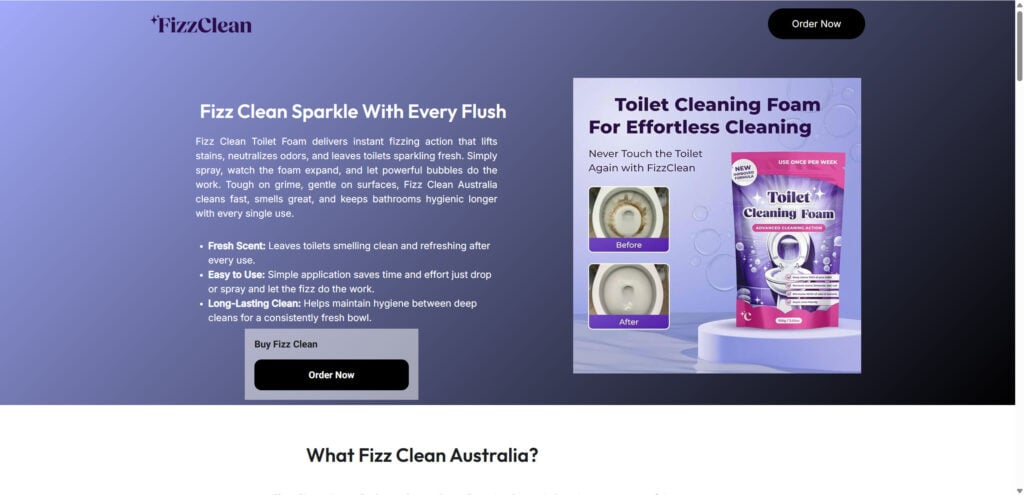
Fizz Clean Toilet Foam is marketed as an “effortless” toilet cleaner that uses foaming or fizzing action to lift stains, neutralize odors, and leave your bowl sparkling with minimal work.
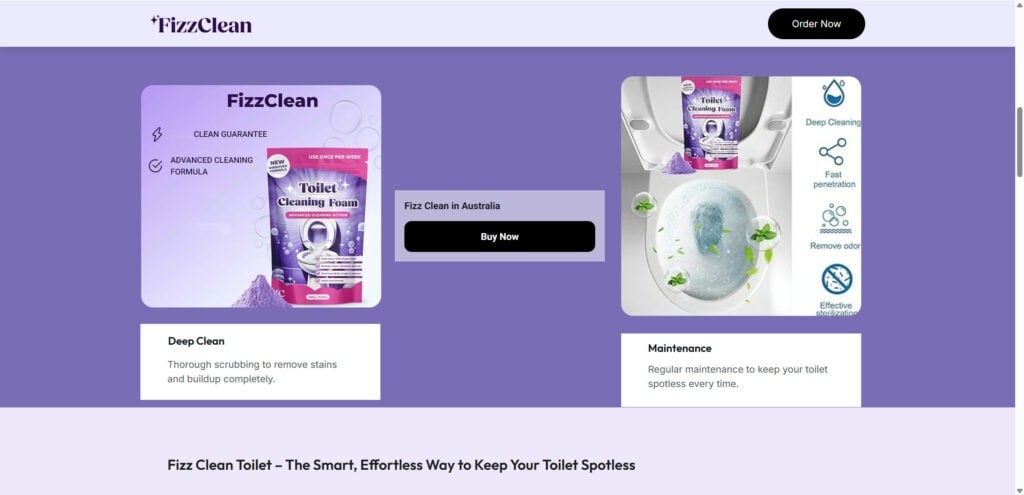
On sales pages, you will often see claims like:
- “Never touch a toilet again”
- Deep cleaning in about 20 minutes
- Removes rust stains and tough buildup
- Deodorizes with a fresh scent
- Safe for plumbing and septic systems
- Easy to use, just pour and flush
The messaging is designed to hit a very real pain point: toilets get dirty fast, and nobody wants to scrub stubborn stains.
So the pitch is a dream. Pour, wait, flush, done.
But when a product is sold mostly through aggressive ads and fast-checkout landing pages, it is worth separating three things:
- What the product actually is
- What it can realistically do
- What the buying experience often looks like once you pay
What Fizz Clean Toilet Foam appears to be
Based on how the product is presented and how similar items show up on wholesale marketplaces, Fizz Clean Toilet Foam is best understood as a private-label toilet cleaning powder or foam formula that many sellers can brand with their own logo.
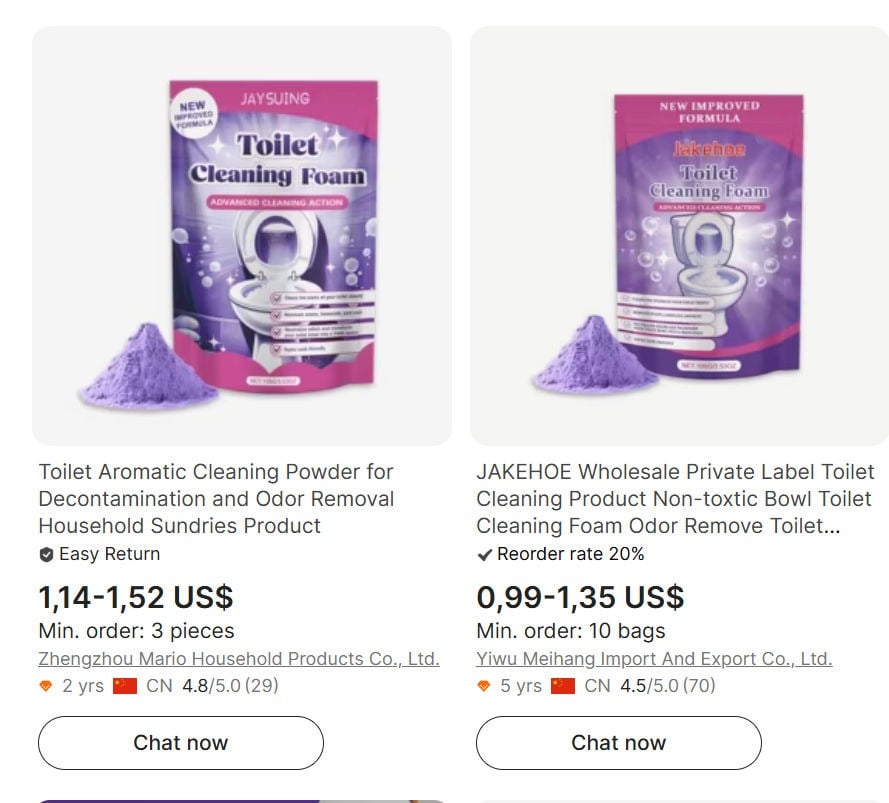
That matters because it explains why you can find:
- Nearly identical purple packets sold under different names
- Similar “Toilet Cleaning Foam” packaging
- The same marketing angles reused across multiple sites
In other words, you are not always dealing with one stable brand with one official store.
You are often dealing with a product template that can be rebranded and sold by multiple storefronts.
Why the results in ads look so dramatic
Toilet cleaner marketing is famous for dramatic before and after photos, and foam cleaners take that even further because foam is visually satisfying.
A few reasons the ads can look “too perfect”:
- Lighting and camera angles make stains look darker in the “before” image
- Some “before” photos show extreme buildup that most households do not have
- The “after” photo may be a different toilet, or cleaned using more than one method
- The foam itself creates an illusion of action, even when chemistry is mild
Foam can help, but foam is not magic.
What these products can realistically do
A toilet cleaning foam or powder can genuinely help with:
- Mild grime and organic buildup
- Some odor reduction
- Routine maintenance between deeper cleanings
- Light discoloration when used regularly
It may also help a bit with mineral buildup depending on the formula, but that is where expectations should become more realistic.
Many tough toilet stains are not “dirt.” They are mineral deposits.
Common examples:
- Limescale and hard water buildup
- Rust stains
- Mineral rings that have hardened over time
Removing those usually requires:
- The right type of acid-based cleaner (and enough contact time)
- Mechanical action, meaning scrubbing or a pumice stone used carefully
- Repeated treatments, not one quick pour
So when a product promises to erase heavy rust stains in 20 minutes without scrubbing, that claim deserves skepticism.
Not because it is impossible in every case, but because it is not a reliable, universal result.
The biggest selling point is convenience
Fizz Clean Toilet Foam is often positioned as an “effortless” solution, and convenience is the hook.
Most buyers are hoping for one of these outcomes:
- A fast clean without scrubbing
- A cleaner-looking bowl with less effort
- Less odor and better freshness between deep cleans
- A product that feels simpler than sprays and brushes
Those are reasonable goals.
The problem is when the marketing pushes beyond “convenient cleaner” and into “instant transformation, no effort, guaranteed.”
That is where disappointment often begins.
The “FizzClean” brand identity can be confusing
Some sales pages use “FizzClean” heavily and present it as a recognizable brand, sometimes even attaching a location-specific identity like “Fizz Clean in Australia.”
That can create the impression you are buying from a local company with local fulfillment.
But a branding layer is not proof of local stock, local shipping, or local support.
If the operation behind the page is a dropshipping funnel, the brand identity can be mostly surface-level.
Price and value are where the questions get loud
On some checkout pages, the pricing is presented in “packages,” usually something like:
- 2x packs at a higher per-unit price
- 3x packs presented as “popular”
- 4x or 5x packs promoted as “best seller”
- Large discount messaging like 50% off, 60% off, 70% off, up to 75% off
The goal is to push you toward buying more units than you planned.
This matters because many complaints around products like this are not only about performance.
They are about billing.
People report issues such as:
- Being charged for more units than expected
- Purchasing one pack, then noticing multiple packs on the confirmation
- Seeing unexpected recurring charges that look like subscriptions
- Being offered partial refunds like 15% or 30% to “keep the product”
Those patterns are not about toilet foam chemistry.
They are about how the sale is structured.
A quick reality check on the “never touch the toilet again” claim
Even if a toilet foam works well for routine maintenance, it cannot replace all cleaning.
Toilets have:
- Under-rim areas where buildup forms
- Waterline rings that harden
- Exterior surfaces that need wiping
- Bases and bolts that collect dust and grime
A pour-in cleaner can help the bowl.
It cannot clean the entire toilet without some manual work.
So when a landing page pushes the fantasy of never touching a toilet again, it is leaning into marketing more than reality.
Why the same product appears on wholesale sites
When you see near-identical “toilet cleaning foam” packets on supplier platforms for around $1 to $2 per pack, it suggests a private-label product that sellers mark up heavily.
That does not automatically mean every seller is dishonest.
But it does mean:
- The product is not unique to one brand
- Multiple storefronts can sell the same item
- The story around the product may be the real “value,” not the formula
And when the story is doing most of the work, you should pay extra attention to:
- The refund policy
- The shipping origin and timelines
- The exact billing terms on checkout
The reviews and reputation mismatch
Some sales pages show glowing “verified buyer” reviews directly on the checkout page. Others claim huge numbers of happy customers.
But external review platforms can tell a very different story, including low ratings and complaints.
A mismatch like that is not proof of anything by itself.
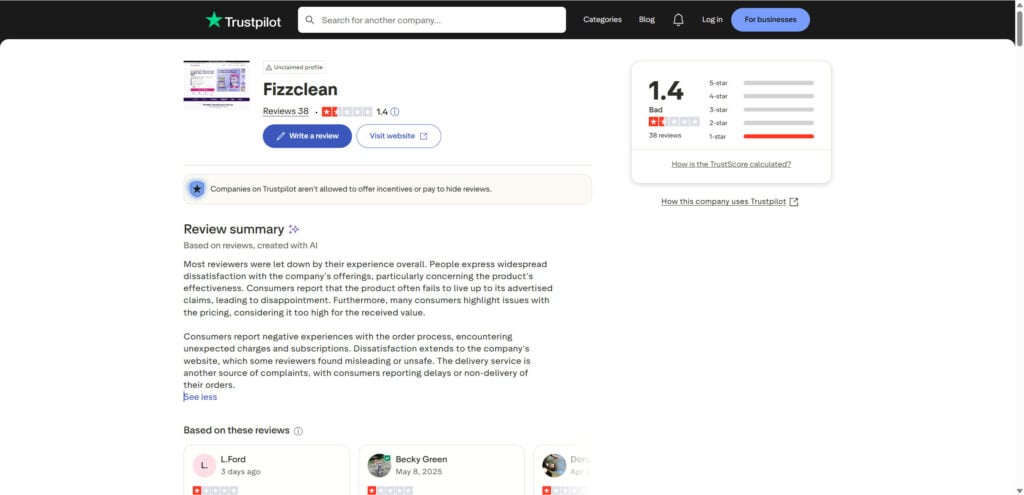
It is simply a sign you should not rely on on-page testimonials as your only source of truth.
Who might still like it
To be fair, a product like Fizz Clean Toilet Foam can still be “fine” for some households if:
- You treat it like a basic cleaner, not a miracle product
- Your toilet stains are mild to moderate
- You are using it to maintain, not to rescue a severely stained bowl
- You buy it from a reputable marketplace with easy returns and clear billing
But if you are buying it because the ad promises a dramatic transformation without scrubbing, the odds of disappointment go up.
And if you are buying it from a funnel-style site that pushes urgency, bundles, and vague billing terms, the risk is not only about cleaning results.
It is about the purchase experience.
How The Operation Works
Fizz Clean Toilet Foam does not spread primarily because people discover it on a store shelf.
It spreads because ads push it into your feed, and the checkout experience is designed to convert fast.
When a product is sold on multiple sites with similar claims and similar packaging, you are often looking at a repeatable sales machine.
Here is how that machine typically works, step by step, and why so many buyers report the same types of problems.
Step 1: A simple problem is turned into a high-emotion pitch
The ads focus on a relatable frustration:
- Toilet stains that will not go away
- Rust rings that look embarrassing
- Odors that come back quickly
- A bathroom that never feels truly clean
Then the ad offers relief.
Not a normal cleaner.
A “smart, effortless” solution.
The emotional hook is powerful because it targets:
- Frustration
- Disgust
- Time pressure
- The desire for an easy win
Step 2: The ad shows a satisfying visual trick
Foam is marketing gold.
It looks like something is happening, even before the chemistry has done anything meaningful.
Common visuals include:
- Foam expanding and filling the bowl
- Brown stains dissolving dramatically
- A clear “before” ring that disappears in the “after”
- A timer that suggests results in minutes
Even if the product works modestly, the ad makes it feel like a breakthrough.
Step 3: You are sent to a long landing page, not a normal store
Many buyers do not land on a regular ecommerce catalog.
They land on a single product page designed like a funnel.
Typical elements include:
- Minimal navigation so you cannot easily browse away
- Repeated “Order Now” buttons
- Big benefit claims, repeated several times
- A wall of testimonials
- A “limited stock” bar
- A discount timer
- Multiple bundle options
The point is to keep you scrolling until you buy.
Not to help you compare, research, or think.
Step 4: The page uses trust cues that feel official
To reduce skepticism, these pages often include:
- “Money back guarantee” messaging
- “Thousands of happy customers”
- “Verified reviews” shown inside the page
- Badges like “safe checkout” and payment logos
- Claims like “rated #1” for a region
These elements can be real or meaningless depending on the seller.
A badge on a page is not proof of a trustworthy company.
It is proof the page designer knows what makes people feel safe.
Step 5: The pricing is engineered to push bigger orders
This is one of the most important parts of the operation.
Instead of offering one clear price, the checkout often presents bundles:
- 2 units at $25.59 each
- 3 units at $21.95 each
- 4 units at $18.95 each with “best seller” labeling
- 5 units at $15.29 each with a bigger discount
The page makes the higher quantity feel smarter.
It uses:
- “Save 50% off”
- “Save 60% off”
- “Save 70% off”
- “Save 75% off”
This does two things:
- Raises the average order value for the seller
- Creates more opportunities for billing confusion
And billing confusion is where many buyers report problems.
Step 6: The checkout can include add-ons and pre-checked boxes
Some funnel checkouts include upsells like:
- Extra packs added automatically
- Shipping “protection”
- Priority processing
- A second product offer after payment
- A subscription-like offer presented as a “deal”
Sometimes these are obvious.
Sometimes they are subtle, especially on mobile.
This is where victims report:
- Ordering 1 pack and getting charged for multiple packs
- Seeing a higher total than expected after clicking through
- Getting a later charge that looks like a monthly subscription
Not every checkout does this the same way, but the pattern is common enough that it should be on your radar.
Step 7: The product is fulfilled through a third party, often from China
When the storefront is not holding inventory, it forwards your order to a supplier.
That supplier ships the product, often internationally.
This is why many buyers see:
- Long shipping times
- Tracking numbers that take days to update
- Packages that arrive from overseas logistics channels
- Minimal documentation inside the package
This is not always a problem by itself.
But it becomes a major problem when you want a refund.
Step 8: Customer support becomes a script, not a solution
When complaints begin, many buyers experience a familiar pattern:
- Slow replies
- Generic responses
- Requests to “wait a bit longer”
- Troubleshooting suggestions that do not address the issue
- Partial refund offers instead of full refunds
The most common partial refund pattern reported is:
- “We can refund 15% if you keep the product”
- “We can refund 30% if you keep the product”
That sounds like kindness.
But it often functions as a pressure tactic.
It shifts you away from a full refund and makes the situation feel “resolved,” even if you are still unhappy.
Step 9: The refund policy looks good until you try to use it
Many of these sites highlight guarantees.
But the fine print frequently includes conditions like:
- Returns must be shipped to an international address, often in China
- The buyer must pay return shipping
- The product must be unopened or unused
- You must request approval first
- Strict time windows apply
- A restocking fee may apply
For a low-cost item, shipping back to China can cost more than the product itself.
That is why many buyers never complete the return.
And why the partial refund offer starts to look like the “best” option, even when it is not fair.
Step 10: The storefront can rotate, rebrand, or disappear
Because the product is not unique to one seller, it can be sold through multiple domains.
If one storefront gets too many complaints, the operation can:
- Change the domain
- Rename the product slightly
- Launch a new page with the same creative assets
- Keep running ads under a new identity
This is why you may see the same purple packet presented as a different “brand” elsewhere.
The product stays.
The storefront changes.
Step 11: The real profit is not in toilet foam, it is in conversion
A basic private-label cleaner can be cheap to source.
The profit comes from:
- High markups
- Bundle pushes
- Upsells
- Subscription traps
- Refund friction
That is why the sales page is so intense.
A normal household cleaner does not need a countdown timer and a stock bar.
A high-pressure funnel does.
The simplest way to understand the operation
If you are trying to make sense of all this, here is the cleanest summary:
- The product is a generic private-label cleaner
- The marketing is the main differentiator
- The checkout is designed to maximize revenue quickly
- The refund process is where many buyers feel trapped
That is why people can have two different experiences:
- One person gets a basic cleaner and shrugs
- Another person gets unexpected charges, slow shipping, and refund resistance
The difference is not only the foam.
It is the seller and the funnel behind it.
What To Do If You Bought This
If you already purchased Fizz Clean Toilet Foam and you are unhappy, the goal is to stay calm and get organized. Most of the leverage comes from documentation and fast action.
Here is a step-by-step plan that works in the real world.
- Save evidence immediately
Take screenshots of:- The product claims on the page
- The guarantee language
- The pricing and bundle selection you chose
- The checkout total
- The refund policy and return instructions
Save your order confirmation email and any receipts.
- Check your bank or card statement for the exact merchant name
The name on the charge might not match “FizzClean.”
Write down:- Merchant name
- Date
- Amount in $
If you see more than one charge, screenshot that too.
- Look for signs of a subscription or recurring billing
Common signs:- A second charge days or weeks later
- A smaller “membership” style charge
- A monthly charge you do not recognize
If you see recurring charges, treat it as urgent.
- Email support and keep it simple
Ask for:- A full refund
- Confirmation of how many units you were billed for
- Confirmation that no subscription exists on your order
Keep the message short and firm. Do not argue.
- If they offer 15% or 30%, do not accept if you want a full refund
Partial refunds are often used to close the case cheaply.
You can reply with one sentence:
You want a full refund under their stated policy. - If they demand a return to China, ask for a prepaid label
Say you will return it, but you need:- A prepaid shipping label
- A clear return address
- A written confirmation of the deadline
If they refuse, keep that refusal. It matters later.
- If support stalls, escalate to your payment provider
Options include:- Credit card dispute for “item not as described” or “unauthorized charges”
- PayPal dispute if you used PayPal
- Your bank’s chargeback process
The earlier you escalate, the better.
- If you were charged for multiple units you did not agree to, say that clearly
Use direct language:- You did not authorize the extra units
- The checkout was misleading
- You want the additional charges reversed
Keep it factual.
- Cancel the card if you see repeated charges and support is unhelpful
If you suspect recurring billing and it will not stop, ask your bank about:- Blocking the merchant
- Issuing a new card number
Do this especially if multiple attempts appear.
- Do not return the product without tracking
If you decide to ship it back:
- Use tracking
- Photograph the package
- Keep the receipt
- Save the tracking number screenshot
Without tracking, sellers can claim it never arrived.
- Report the storefront if billing is deceptive
You can file complaints with:
- Your card issuer
- Consumer protection agencies in your country
- The ad platform if the ad was deceptive
This does not always get your money back, but it creates pressure.
- If you simply wanted a toilet cleaner that works, switch to safer buying channels
If you still want a foam-style cleaner, buy from:
- Established retailers
- Marketplaces with strong buyer protection
- Stores with easy local returns
That alone removes most of the risk.
The Bottom Line
Fizz Clean Toilet Foam is marketed as a fast, effortless solution that makes toilet cleaning feel almost automatic. For light maintenance, a foaming cleaner can be helpful.
But the bigger issue is not whether foam can clean.
It is how this product is being sold: across multiple sites, with heavy hype, bundle pressure, and a buying experience that many customers describe as frustrating once payments and refunds enter the picture.
If you choose to try it, the safest move is simple: buy only from a source with clear billing, transparent shipping, and easy returns.
Because when the checkout is the real trap, the foam is just the bait.
FAQ
What is Fizz Clean Toilet Foam?
Fizz Clean Toilet Foam is marketed as a pour-in foaming toilet cleaner designed to fizz, lift grime, reduce odors, and help remove stains with minimal scrubbing.
Does Fizz Clean Toilet Foam actually work?
It can help with routine maintenance and light stains, especially if used regularly. For heavy limescale, rust stains, or long-term mineral buildup, results are often limited and may still require a stronger cleaner and manual scrubbing.
Is Fizz Clean Toilet Foam the same as a well-known brand cleaner?
Not necessarily. The packaging and product type appear similar to private-label “toilet cleaning foam” powders sold by multiple suppliers, which can be rebranded and sold under different names.
Why is it sold on multiple sites with similar claims?
That is common with dropshipping and private-label products. Multiple storefronts can sell the same or very similar product with different branding, pricing, and refund policies.
Why do some people say they were charged for multiple units?
Some checkout pages push bundles heavily, and buyers report confusion about quantities, add-ons, or changes in totals during the checkout flow. Always double-check the final order summary before paying and save a screenshot.
Can it come with unwanted subscriptions or recurring charges?
Some buyers report unexpected recurring charges depending on the site selling it. If you see a second charge you do not recognize, contact your bank or payment provider quickly and ask whether it is tied to a subscription or merchant billing agreement.
Where does it ship from?
Depending on the seller, it may ship internationally and often arrives through overseas fulfillment channels. That can mean longer delivery times and more complicated returns.









The Fizz Clean Toilet Foam was promised to be a wonder solution for cleaning toilets. I ordered 5 packets and waited a long time before I received the materiel. Great was my experience when I spread the powder in the bowl and waited 1 hour to see the reaction zero 0 and nothing. I then understood that I had been fouled.
Shame on you!
That is the test done properly – powder in the bowl, an hour of patience, and nothing to show for it. These “fizzing” cleaners are typically sodium bicarbonate with a little citric acid and dye, which produces the bubbles you see in the advert for about twenty seconds and has almost no cleaning power against limescale or staining. The video works because the camera cuts away and returns to a bowl that has been cleaned off camera.
Five packets and a long wait for that is worth disputing. Ring your card issuer, dispute the charge as not as described, and if there is any recurring element ask for a new card number. What actually shifts limescale, for a fraction of the price, is a citric-acid or descaling product from any supermarket, left overnight – and never mixed with bleach.
Thanks for reporting back; a reader who has actually tried it is more convincing than anything we can write.
Ich bin leider auf dieses Angebot reingefallen.
Ganz korrekt ist die Bezahlung per PayPal nicht gelaufen.
Sonst sieht man die Aufstellung der gekauften Ware.
War aber leider nicht der Fall.
Die Betrag wurde ohne Kontrolle meinerseits sofort vom PayPal Konto abgebucht
Wie blöd muss ich eigentlich gewesen sein 69€ zu bezahlen.
Mit freundlichem Gruß M-L.
Hallo Marina, danke, dass Sie Ihre Erfahrung geteilt haben.
Machen Sie sich bitte nicht fertig. Genau so funktionieren viele dieser Angebote: Der Bezahlvorgang ist unklar, es fehlt eine saubere Bestellübersicht, und der Betrag wird abgebucht, bevor man überhaupt merkt, was genau passiert ist. Das ist ein großes Warnzeichen.
Wenn Sie per PayPal bezahlt haben, würde ich den Fall so schnell wie möglich als „Artikel nicht wie beschrieben“ oder „irreführender Kauf“ melden. Bewahren Sie bitte alle E-Mails, Screenshots und die Zahlungsbestätigung auf. Ihr Kommentar wird anderen helfen, vorsichtiger zu sein.