

Mounja Patches are introduced through a story that seems to connect a popular podcast, a respected exercise researcher, a sticky kitchen recipe, and the name of one of the most discussed prescription medicines in the world.
The pieces look familiar because they were borrowed for that purpose. This Mounja Patches investigation follows the fake video story, checks the real people and medicine being imitated, and explains why an unknown patch should not inherit the credibility of Mounjaro by sounding similar.
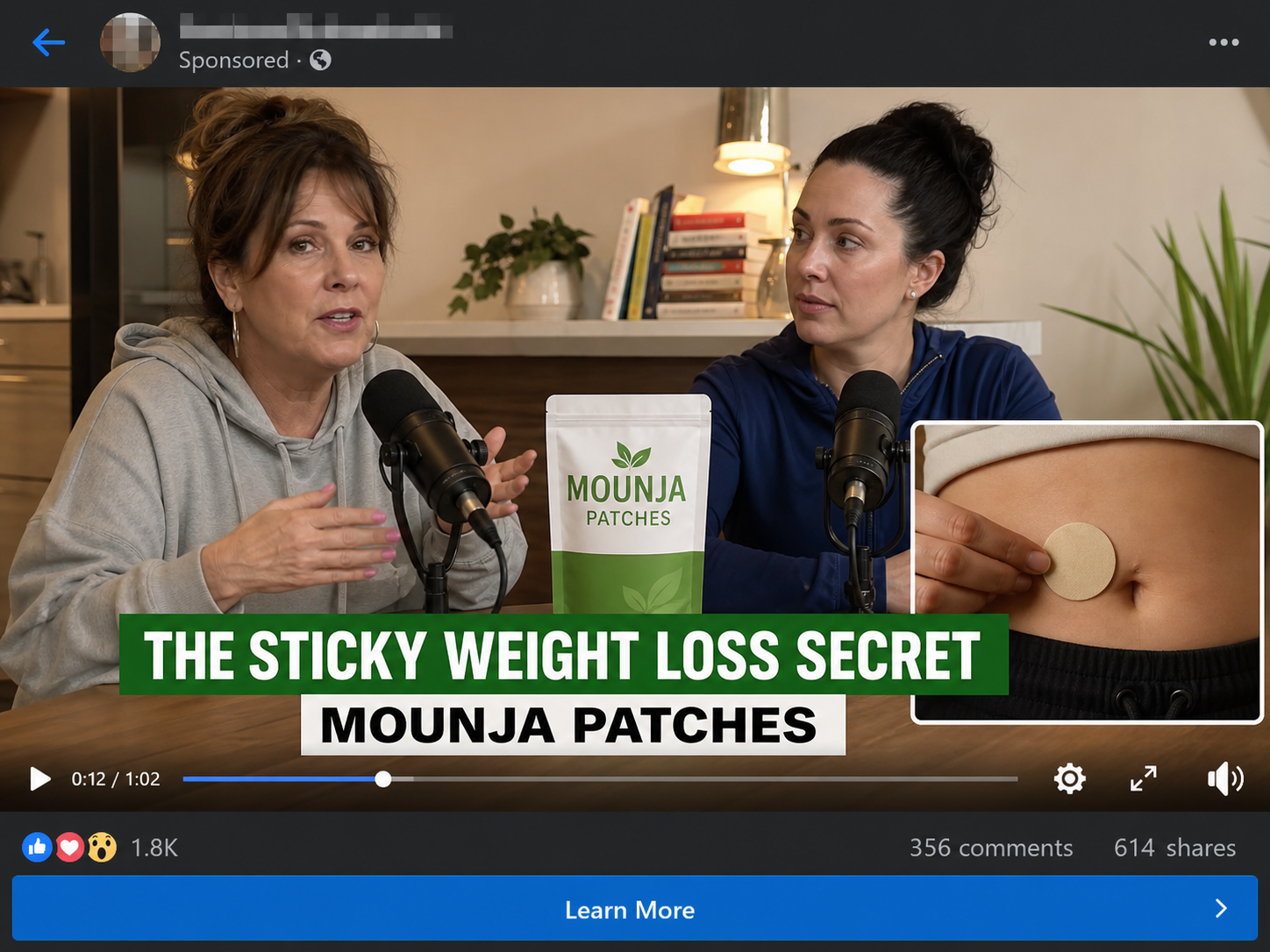
The social advertisement is built to resemble a short clip pulled from a real wellness interview. It can show an apparent host and expert discussing a sticky weight loss secret while product graphics introduce a patch that was never part of the original conversation.
The advertiser may combine footage associated with Mel Robbins and Dr. Stacy Sims, then add synthetic speech or false subtitles. Dr. Sims has publicly warned that AI-generated scams use her work to push products with which she has no connection.
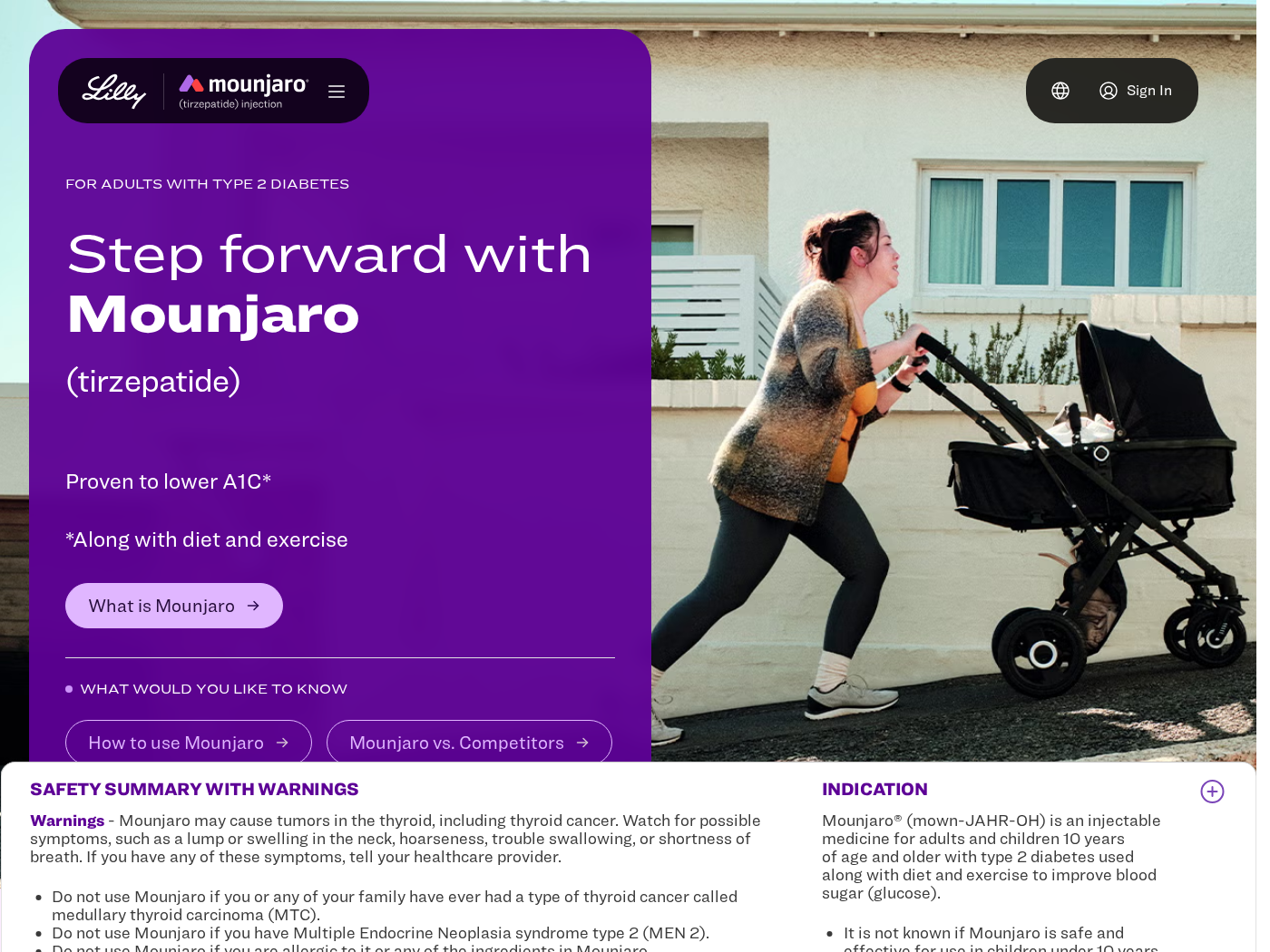
The official Mounjaro page tells a very different story. Mounjaro is prescription tirzepatide supplied as an injection for type 2 diabetes. It is not a honey mixture, homemade paste, adhesive patch, or generic supplement that can be recreated in a kitchen.
Overview
Mounja Patches are the product reveal in a fake Sticky Mounjaro story
The campaign begins with a so-called Sticky Mounjaro recipe, often involving honey, spices, gelatin, or another ordinary ingredient. The name is chosen to sound close to Mounjaro while remaining vague enough to attach to a homemade trick or patch.
This is part of a broader family of deceptive weight loss stories, including the Japanese Mounjaro recipe scam. The recipes and products change, but the core tactic remains borrowed drug recognition followed by an unrelated offer.
The celebrity and expert endorsements are not authentic
Ads have used manipulated depictions of Mel Robbins and Dr. Stacy Sims. Other versions may rotate in Oprah Winfrey, Kelly Clarkson, Adele, Dolly Parton, Kathy Bates, or another recognizable woman associated with weight loss headlines.
No authentic endorsement connecting those people to Mounja Patches was found. Dr. Sims explicitly says scammers have used AI-generated videos to promote products she is not connected with. Her real interview material is not permission to sell an unknown patch.
No verifiable official seller or formula was found
A stable official Mounja Patches website, complete ingredient panel, legal company, manufacturer, support number, and return address could not be verified during this investigation. Product pouches shown in ads are not enough to establish what an adhesive patch contains.
The absence of a stable seller also prevents a broad claim that every version uses automatic refills. Some funnels may introduce subscriptions or large quantities at checkout, but the billing terms must be documented from the exact payment page rather than guessed.
- The campaign misuses the name recognition of Mounjaro without selling Mounjaro.
- AI-generated or edited video makes public figures appear to endorse a patch.
- The Sticky Mounjaro recipe is a curiosity hook, not an approved treatment.
- Mounjaro is prescription tirzepatide injection, not an adhesive supplement patch.
- No stable official formula, manufacturer, or legal seller was verified.
- The package images do not prove ingredients, dosage, absorption, or clinical testing.
- Subscription and quantity terms can only be confirmed at the exact checkout.
- People with medical conditions should not replace prescribed care with this offer.
The Real Story Behind Sticky Mounjaro and the Fake Podcast Clips
The original wellness conversations used in these campaigns cover legitimate topics such as exercise, menopause, strength, body composition, nutrition, and healthy aging. Scammers extract a recognizable frame, replace the audio, and surround it with a commercial narrative.
Because the setting is real, the manipulation can be difficult to spot. The room, microphones, gestures, and clothing match authentic footage. Only the words, product connection, captions, or sequence have been altered.
The phrase Sticky Mounjaro exploits two ideas at once. Sticky suggests a homemade honey-like recipe or adhesive patch. Mounjaro evokes a prescription medicine known to affect blood sugar and weight, even though the advertised product is not that medicine.
Mounjaro contains tirzepatide and is available by prescription as a prefilled injection in specific strengths. A seller cannot transform an unknown transdermal patch into tirzepatide simply by using a similar name or discussing GLP-1 pathways.
A real transdermal medicine requires evidence that the active ingredient crosses the skin at a controlled dose, remains stable, and is safe in the intended population. An advertisement showing a patch on an abdomen provides none of that information.
What We Could Verify About Mounja Patches
Dr. Stacy Sims has placed a scam warning on her own website. She says AI-generated videos are pushing products she is not connected with and advises people to question material that does not appear on reputable channels.
The official Mounjaro information from Lilly identifies the product as tirzepatide injection used with diet and exercise to improve blood glucose in people with type 2 diabetes. It includes prescription dosing and important safety warnings that do not resemble the casual patch pitch.
No credible evidence was found that Mounja Patches contain tirzepatide. An unknown botanical patch, vitamin patch, or adhesive sticker is not a substitute for a prescription medicine, even if the package uses leaves, medical colors, appetite language, or a similar-sounding name.
No finished-product clinical trial was located showing that Mounja Patches deliver a disclosed active ingredient through human skin and produce the weight loss implied by the advertising. General research about an herb or transdermal technology does not establish performance of this specific product.
The seller trail is unstable. Ads and landing pages can disappear, change domains, or reveal a different supplement after the viewer has watched the full story. Without a verifiable legal entity, buyers cannot assess complaints, manufacturing history, or refund performance before paying.
Product images in social posts may be generated, composited, or created solely for the current campaign. A polished pouch can be produced before any trustworthy formula, inventory, or customer support operation exists.
How the Mounja Patches Scam Works
Step 1: A fake clip appears inside a trusted social format
The ad resembles a short podcast segment, television interview, or personal confession. Familiar microphones, studio lighting, captions, and reaction counts make the content feel like a genuine clip shared by viewers.
The publishing account may not belong to the person shown. Look for a Sponsored label, a generic page name, a recent creation date, and a destination domain unrelated to the public figure’s official website.
Step 2: AI changes what the people appear to say
Synthetic audio can place a product claim into a real person’s voice. Lip movement may be altered, subtitles may contradict the original conversation, or sentences from several clips may be stitched together.
Small errors can include unnatural blinking, warped teeth, inconsistent earrings, changing hands, flat emotion, odd pauses, or words that never appear on the official episode. Better deepfakes may avoid obvious glitches, so source verification matters more than visual guessing.
Step 3: The Sticky Mounjaro recipe opens a curiosity gap
The viewer is told that a honey mixture, kitchen paste, bedtime trick, or sticky ingredient recreates the effect of an expensive medicine. The full recipe is delayed while testimonials and scientific language build anticipation.
The promise is intentionally flexible. If one recipe stops performing, advertisers can replace honey with gelatin, baking soda, coffee, salt, or another familiar item without changing the structure of the campaign.
Step 4: A fake news or interview page extends the deception
The ad click may open a page styled like a major broadcaster, magazine, or health publisher. Logos, breaking-news banners, and an interview transcript make the promotion look independently verified.
The page is an advertorial. Buttons lead toward one offer, critical sources are missing, and the apparent journalists or comment sections cannot be verified through the real publication’s website.
Step 5: Mounja Patches replace the free recipe
After the viewer waits for the secret, the campaign says the useful ingredients are already concentrated inside an adhesive patch. The free trick has completed its job by creating curiosity and linking the offer to the Mounjaro name.
The patch may promise appetite control, metabolism support, continuous delivery, or all-day fat burning. Without a full label and absorption evidence, those claims are marketing language rather than proof of a controlled transdermal dose.
Step 6: Checkout hides the important commercial terms
The purchase page may preselect several pouches, add shipping or handling, offer upgrades, or introduce monthly refills. These practices vary, and none should be attributed to every Mounja Patches funnel without capturing the exact checkout.
The buyer should stop if the total changes, the merchant is not identified, the continuity language is buried, or the return policy appears only after card details are entered. Screenshots should be taken before any authorization.
Step 7: The campaign vanishes when buyers need support
Ads can be removed after enough reports, and temporary domains can be replaced. The customer may be left with a generic pouch, an unfamiliar statement descriptor, and no working number connected to the name used in the original video.
This disappearing trail is why the absence of a verifiable company matters before purchase. A money-back badge cannot issue a refund, receive a return, or answer a medical question.
Company, Address, and Fulfillment Checks
There is no company to hold accountable
A Mounja Patches logo is not a legal identity. The reviewed campaign did not provide a stable company name that could be matched across advertising, terms, checkout, receipt, packaging, and the card statement.
If the seller will not disclose the entity taking payment, do not order. An anonymous operator can rotate the domain and product name while complaints remain attached to a brand that no longer exists.
Addresses in ads may be fake or borrowed
Scam pages often copy an address from a fulfillment center, unrelated supplement company, virtual mailbox, or residential property. A real building on a map does not prove the advertiser operates there or that returns sent there will be accepted.
Verify the address through independent records and ask support to confirm it in writing. Never mail a health product to an address found only inside a fake news page or social comment.
Support numbers can be disposable dead ends
A phone number may route to a generic call center, a voicemail box, or an agent who recognizes only the payment processor. Email addresses may stop responding after the refund deadline begins to close.
Call before purchase and ask the agent to name the exact product, legal seller, billing descriptor, refill terms, and return location. If those answers are vague, the support channel is decoration rather than protection.
An untraceable patch can be physically dangerous
Skin products can cause irritation, allergic reactions, burns, or interactions, and an undisclosed active ingredient creates additional risk. A patch also encourages the false belief that continuous delivery is happening when no dose or absorption data has been shown.
Unknown products may be mass-produced overseas or domestically under weak oversight. Do not guess the country. Demand the manufacturer, ingredient amounts, adhesive materials, lot, expiration date, warnings, and independent testing. Without them, the patch should not go on the skin.
Why Mounja Patches Are Not the Same as Mounjaro
Mounjaro is a registered brand for tirzepatide injection. It comes in defined strengths and is used under medical guidance with warnings, contraindications, and monitoring. The product name does not refer to a family of home remedies.
Mounja Patches remove letters from the name and replace the injection with an adhesive product. That linguistic similarity is the main bridge. No verified ingredient panel or regulatory record showed that the patches contain tirzepatide or deliver an equivalent medicine through skin.
Even if a patch contains herbs associated with appetite or metabolism, it remains a different product. Evidence for one oral ingredient does not prove transdermal absorption, and evidence for prescription tirzepatide does not transfer to a botanical sticker.
People taking diabetes medicines face special risk from vague blood sugar claims. Adding an unknown product or replacing prescribed treatment can cause harm. Discuss any supplement or patch with the clinician managing the condition and show the complete label.
The correct comparison is therefore not whether the advertisement feels similar to a Mounjaro success story. It is whether the exact Mounja Patches formula, dose, delivery method, manufacturer, and seller can be independently verified. They could not be verified here.
Warning Signs to Watch For
- A sponsored clip makes a podcast host or expert appear to recommend a patch.
- The product does not appear on the public figure's official website or real episode.
- Sticky Mounjaro is described as a secret kitchen recipe or hidden medical discovery.
- The ad uses a name similar to Mounjaro while selling an unrelated patch.
- The product reveal occurs only after a long video or fake news article.
- No complete ingredient amounts or transdermal absorption evidence are shown.
- The legal company, manufacturer, support line, and return address cannot be verified.
- The checkout may use a different merchant name or preselected quantity.
- Money-back and FDA-style graphics appear without accountable documentation.
- The campaign pressures viewers to act before the ad or supply disappears.
The Mounja Patches campaign does not need to prove that the patch is Mounjaro. It only needs the viewer to feel the association long enough to enter payment details. That borrowed credibility is the central deception.
What to Do if You Have Fallen Victim to This Scam
- Stop using an unidentified patch. Remove it if you develop irritation, dizziness, nausea, breathing trouble, swelling, or another concerning reaction. Wash the area and contact a clinician, poison center, or emergency service according to the severity. Keep the pouch for identification.
- Photograph and preserve everything. Save the ad, fake podcast clip, account, advertorial, checkout, receipt, card descriptor, package, patch, ingredient panel, lot code, and tracking label. Record the date each page was accessed.
- Compare the order with the authorization. Check how many packages were selected, the total, shipping, and any monthly language. Look for charges under an unfamiliar merchant name and note every date and amount separately.
- Demand cancellation and refund in writing. Use the contact details on the receipt or card record, not a number inside the fake article. State the order number, exact charge, requested cancellation, and reasons. Ask for written confirmation that future shipments are stopped.
- Speak with the card issuer quickly. Report unauthorized quantities, recurring transactions, goods not received, or a denied promised refund. Ask whether the issuer can block the merchant token or replace the card if further charges are likely.
- Do not return patches blindly. Get the return address and authorization from the merchant in writing. Photograph the contents, use tracking, and retain delivery proof. A borrowed or false address can cause the parcel to disappear without creating refund evidence.
- Secure the browser and device. Revoke notification permissions granted during the funnel and remove unfamiliar apps or extensions. Run Malwarebytes to detect unwanted software, then use AdGuard to reduce malicious social redirects and fraudulent advertising.
- Report the impersonation. Report the ad for manipulated media, public figure impersonation, and misleading health claims. US consumers can submit the evidence to the FTC and state attorney general. Also notify the real person's official team when its reporting channel is available.
Frequently Asked Questions
Are Mounja Patches real?
Images of pouches and patches appear in advertising, but a stable official seller, formula, manufacturer, and clinical record could not be verified. A visible product image does not prove the contents or promised effect.
Did Mel Robbins or Dr. Stacy Sims endorse Mounja Patches?
No authentic endorsement was found. Dr. Sims has publicly warned that AI-generated scams misuse her work to sell products she is not connected with.
Are Mounja Patches the same as Mounjaro?
No. Mounjaro is prescription tirzepatide injection. An unknown adhesive patch with a similar name is not Mounjaro and should not be assumed to contain or deliver tirzepatide.
What is the Sticky Mounjaro recipe?
It is a rotating marketing story that attaches the Mounjaro name to honey, gelatin, baking soda, or another household ingredient. It is not an official Lilly medicine or validated substitute for prescribed treatment.
Do Mounja Patches create a subscription?
The exact billing terms vary by funnel, and no stable checkout was verified for a universal answer. Read the final authorization for refills, continuity, membership, and preselected quantities before paying.
Can a weight loss patch work through the skin?
Some medicines can be delivered transdermally, but each product needs evidence for its ingredient, dose, adhesive, absorption, stability, and safety. No such finished-product evidence was verified for Mounja Patches.
The Bottom Line
Mounja Patches are marketed through a false chain of trust. AI-manipulated public figures introduce a Sticky Mounjaro secret, a fake editorial page turns it into apparent news, and an unverified patch inherits the reputation of a prescription medicine it is not.
Do not place an unknown patch on your skin or authorize payment until the legal seller, formula, manufacturer, billing terms, and return path are independently clear. The fame of the people in the video and the similarity of the product name are not medical evidence.








