

The caller says a Citibank account was opened in your name. They know the last four digits of your Social Security number, but the card ending they read is wrong.
Correcting that small mistake feels harmless. It may be exactly what the caller wants, because the false detail turns a frightened customer into the source of the missing information.
Overview
The call mixes accurate and inaccurate personal details
A recent consumer report described a Citibank Fraud Call from someone claiming to be in Citi’s fraud department. The caller said a person had opened an account in New York using the recipient’s identity.
The caller reportedly knew the correct last four digits of the recipient’s Social Security number but gave the wrong last four digits for the card. They repeatedly asked whether the account belonged to the recipient and warned that the victim might be responsible for the charges.
The recipient did not confirm or correct the information. After ending the call, they contacted Citi through a number found independently. Citi reportedly confirmed that no such account existed.
The wrong number may be a question disguised as proof
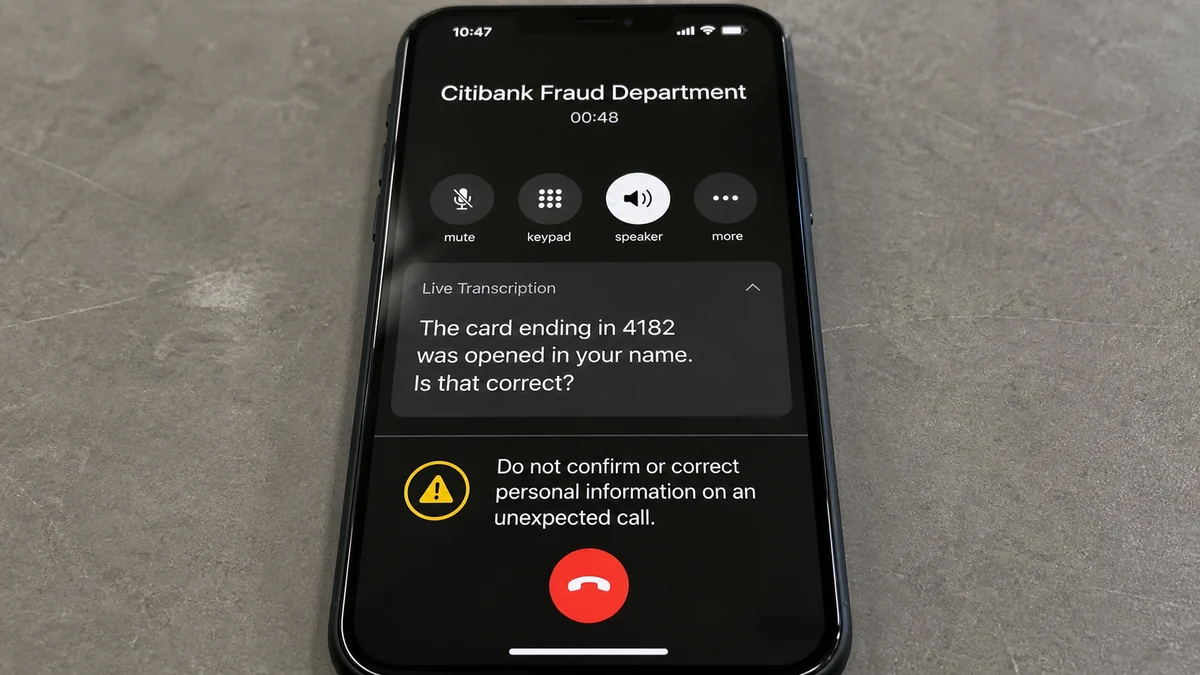
People naturally correct mistakes about themselves. If a caller says, “The card ends in 4182,” the response may be, “No, mine ends in 7319.” The scammer has just collected information without asking for it directly.
The same technique can target an address, birth date, account type, employer, mother’s maiden name, security answer, or recent transaction. Each false statement invites the victim to replace it with accurate data.
Even a simple yes or no is useful. It helps the caller test breached records, connect a phone number to a bank relationship, and decide which story to use next.
A verified caller label does not verify the bank employee
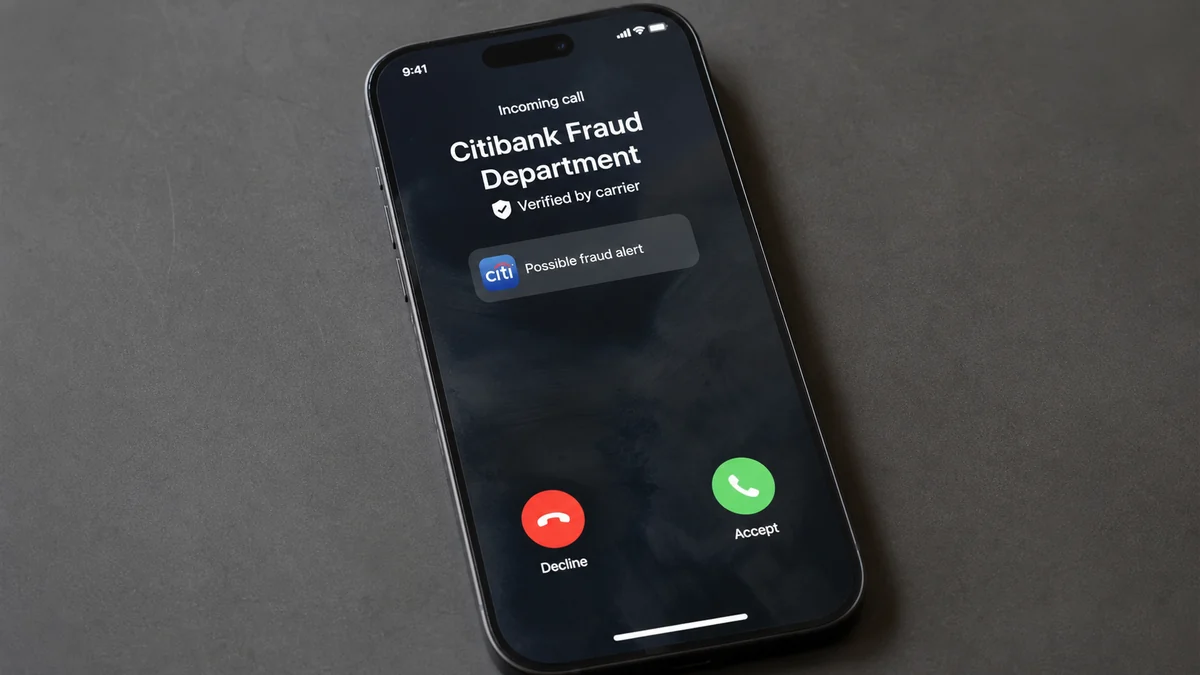
The consumer said the call displayed “verified by carrier.” That label can indicate information about the route or caller-ID authentication, but it does not identify the individual speaking or prove employment at Citi.
Citi’s own scam guidance warns that criminals can fake phone numbers, email addresses, and URLs. It advises customers to stop, hang up, and call the company directly.
Keep these rules beside the phone:
- Do not confirm or correct personal information during an unexpected call.
- Do not trust a caller because some details are accurate.
- Do not trust a bank name, familiar number, or carrier label on the screen.
- Ask for no more than the caller’s claimed department and reason, then hang up.
- Use the number on the back of the card or the bank’s official application.
- Never share a password, PIN, one-time code, or full card number.
- Check the account independently before accepting the emergency story.
Why Deliberately Wrong Information Is So Effective
Direct questions create suspicion. A stranger asking for the last four card digits sounds like a stranger collecting data. A supposed fraud specialist reading digits aloud sounds like an employee verifying an internal record.
The victim’s urge to correct the record completes the attack. The caller can remain calm and helpful while the recipient volunteers the exact answer.
This is sometimes called elicitation. The attacker makes statements or asks conversational questions that encourage the target to reveal information without noticing the value of each response.
Fear strengthens the technique. The victim is thinking about identity theft, criminal charges, a fraudulent account, and financial liability. Correcting a card number feels like a minor step toward resolving a much larger problem.
The caller may also use partial truth. Correct Social Security digits can come from a breach, stolen application, exposed tax document, compromised email, data broker, or earlier scam. They do not authenticate the rest of the story.
A criminal may intentionally alternate correct and incorrect details. Correct facts establish authority. Incorrect facts collect updates. The conversation becomes a live process for cleaning and enriching stolen records.
Silence is safer than correction. A real bank can verify the account after the customer calls through an official channel, where authentication begins from a trusted number and application.
How the Citibank Wrong-Digits Call Scam Works
Step 1: The attacker starts with partial identity data
A list may contain the victim’s name, phone number, address, email, Social Security fragments, bank relationship, or card issuer. Some details may be old or wrong.
The scammer does not need a complete record. The call is designed to confirm which fields are accurate and persuade the victim to supply the rest.
Step 2: The call is labeled as Citi or fraud detection
Caller ID may show Citibank, Citi Fraud Department, a local number, or a label such as verified by carrier. The display reduces the chance that the recipient will ignore the call.
Caller ID describes data presented by the telephone network. It is not an employee badge and should not replace independent callback.
Step 3: A frightening new-account story creates urgency
The caller says someone opened an account, applied for credit, made a purchase, or visited a branch using the victim’s identity. Responsibility for future charges is used as pressure.
The victim is told that the issue can be stopped if a few details are verified immediately. The call therefore frames information disclosure as fraud prevention.
Step 4: Incorrect digits invite the victim to correct them
The caller reads a false card ending, address, transaction amount, or date. The victim may reflexively provide the real value.
If the victim only says the information is wrong, the scammer can ask which account is real or whether another card might be affected. The conversation keeps narrowing the possibilities.
Step 5: The scam escalates to credentials or money
After establishing trust, the caller may request a one-time code, online banking login, PIN, complete card number, remote-access application, or transfer to protect funds.
A code is not a case number. It usually authorizes a login, password reset, new device, digital wallet, or transaction.
Step 6: The collected data supports later attacks
Even if no money moves during the first call, corrected identity information can be sold or reused. A later caller may know more and sound even more convincing.
The data can support account recovery attempts, password resets, SIM-swap fraud, credit applications, targeted phishing, or impersonation of the victim to another company.
What “Verified by Carrier” Can and Cannot Mean
Modern telephone networks use caller-ID authentication technologies intended to reduce spoofing. A label may indicate that a carrier received certain identity information about the calling number.
It does not prove the caller’s job title, business purpose, honesty, or authority over a bank account. A criminal can place a call from a number they control and still tell a false story.
Labels also vary by phone, carrier, application, and country. Words such as verified, likely business, or caller verified may be interpreted more strongly than the underlying system justifies.
A legitimate business number can be compromised or used by an unauthorized person. Calls can also be forwarded, originated through third-party systems, or placed from accounts opened with false information.
The safest bank verification therefore happens outside the inbound call. Hang up, open the official application, and call the number printed on the physical card or recent statement.
Do not use the call log to return the call. Citi warns that an incoming number may lead back to the impostor rather than the legitimate company.
If the caller offers to remain connected while the customer dials another number, disconnect completely. A supposed internal transfer keeps the scammer in control of the same conversation.
How to Respond Without Giving the Caller More Data
Do not confirm whether you bank with Citi. Do not state that the card number is wrong, name the real issuer, or identify which account you use.
If you choose to speak briefly, collect only the claimed department, reason for contact, and reference number. Do not trust the reference number; it merely gives the real bank something to check.
Say, “I will contact the bank independently,” then hang up. You do not need the caller’s permission and do not need to defend the decision.
Open the Citi application or use the number on the card. Ask whether an account application, fraud alert, new device, transfer, or contact note exists.
Check credit reports independently if the story involved a new account. Do not follow a credit-monitoring link sent by the caller.
Tell a trusted person about the call before taking financial action. Impersonators often demand secrecy because a second perspective breaks the emotional script.
If the caller phones again, do not resume the verification. Repeated contact after an independent denial is additional evidence of an impersonation attempt.
What Attackers Can Do With One Corrected Detail
The last four digits of a card are not usually enough to spend from an account by themselves. Their value comes from how they fit with other information the criminal already has.
A corrected card ending can identify which breached record belongs to the person who answered. It may also reveal which issuer, account, or replacement card is currently active.
The attacker can use that confirmation in a second call. A new caller may quote the accurate digits, mention the earlier “case,” and sound more credible than the first impersonator.
Accurate fragments can also sharpen phishing messages. Instead of sending a vague alert, the criminal can reference the right bank and card ending before linking to a counterfeit sign-in page.
A correction about an address, email, or phone number may help with an account-recovery attempt. Combined with a stolen password, it can support a reset request or make a social-engineering call to another company more persuasive.
The conversation itself provides behavioral information. The caller learns whether the target answers unknown numbers, reacts to urgency, follows instructions, challenges suspicious details, or has another person nearby.
That is why an unsuccessful money request should not be dismissed as harmless. A caller who collected verified data may return with a different bank story, a text message, or a fake investigator promising to resolve the first incident.
Tell the real bank exactly which details were confirmed, corrected, or denied. This helps its fraud team assess the exposure and gives the customer a clearer plan for monitoring accounts and follow-up contact.
Company, Address, and Fulfillment Checks
Contact Citi through a first-party channel
Use the official Citi application, citi.com typed directly, or the number on the back of the card. Do not use a callback number, text link, or search advertisement supplied during the call.
Ask the real representative whether the claimed account, branch visit, fraud case, or card ending exists. A genuine concern should be visible in Citi’s systems.
The caller’s number is not a company address
A local number, recognizable service number, or carrier label does not identify the person. Caller ID can be manipulated, and numbers can be acquired or compromised.
Record what appeared on screen for reporting, but do not use the display as proof that Citi initiated the conversation.
Verify any account through independent records
Check the official banking app, statements, credit reports, and communications opened from known portals. Do not let the caller supply the only evidence of the alleged account.
If a credit report shows a real unfamiliar inquiry or account, contact the listed institution using independent details and follow the identity-theft process.
Real fulfillment does not require correcting secrets
A legitimate fraud review can continue after the customer calls back through the bank’s known number. The bank does not need the customer to correct a stranger’s records during an unsolicited call.
If the call ends without the victim sharing information or money, nothing valuable was lost. The real bank can still investigate every genuine alert.
Warning Signs During a Citi Fraud Call
- The call is unexpected and describes a new account or urgent fraud.
- The screen shows Citibank, a local number, or verified by carrier.
- The caller knows a Social Security fragment or home address.
- One important detail is wrong and the caller waits for a correction.
- The recipient is warned about responsibility for charges.
- The caller asks yes-or-no questions about private information.
- A one-time code is described as verification or cancellation.
- The caller objects when the victim wants to hang up.
- A callback number is supplied instead of using the card.
- The customer is asked to move money, install software, or share a screen.
- The supposed case is absent from the official application.
- Citi denies the story after an independent callback.
The FTC’s spear-phishing warning describes the same combination of a bank caller ID, partial card information, and requests to verify personal details.
MalwareTips’ Pueblo County banking text scam begins with a message instead of a call. Both depend on the victim using contact details chosen by the impersonator.
What to Do if You Have Fallen Victim to This Scam
- End the call. Do not correct another detail, provide a code, transfer money, or call the number back. Block repeat contacts after preserving evidence.
- Contact Citi independently. Use the official application, citi.com, or the number on the card. Explain exactly what information the caller knew and what you disclosed.
- Secure the account. Change online credentials if exposed, replace affected cards, remove unknown devices and payment recipients, and enable transaction alerts.
- Protect one-time codes. If a code was shared or a prompt approved, tell Citi immediately what action it may have authorized. Do not assume the code merely verified identity.
- Check for identity theft. Review credit reports for unfamiliar inquiries and accounts. If Social Security information was exposed, follow a recovery plan through IdentityTheft.gov.
- Consider a credit freeze. Contact Equifax, Experian, and TransUnion through their official sites if a new-account attempt is possible. A freeze can restrict new credit opened in your name.
- Preserve evidence. Save caller ID screenshots, time, duration, voicemail, number shown, claimed account digits, questions asked, reference numbers, and notes from the real bank.
- Report the call. File at ReportFraud.ftc.gov. The FTC also accepts caller-ID spoofing details, and serious account fraud can be reported at IC3.gov.
- Tell Citi about the impersonation. Use the bank’s official fraud and scam reporting route. Do not forward sensitive evidence to an address provided by the caller.
- Scan devices when software was involved. A voice call alone does not infect a phone. If an app, profile, attachment, extension, or remote-access tool was installed, remove it and run a full Malwarebytes scan.
- Block malicious follow-up links. AdGuard can reduce access to known phishing pages, malicious advertisements, and tracking redirects. It cannot authenticate a voice caller or carrier label.
- Warn household members. Scammers may call another person connected to the same address or account. Share the false story without exposing full Social Security or card details.
- Ignore recovery offers. A stranger who promises to erase breached data or recover money for an upfront fee may be continuing the scam.
Frequently Asked Questions
Can a scam call show Citibank on caller ID?
Yes. Citi warns that phone numbers can be faked. A familiar display should lead to an independent callback, not automatic trust.
What does verified by carrier mean?
It may reflect caller-ID authentication or carrier information. It does not verify the speaker’s identity, job, honesty, or authority over a bank account.
Why would the scammer give the wrong card digits?
The mistake may invite the victim to correct it and reveal the real digits. It can also test whether stolen records are current.
Should I confirm that the Social Security digits are correct?
No. Do not confirm or correct private data on an unexpected call. Contact the bank independently and let its normal authentication process handle the issue.
What if Citi says no account was opened?
Preserve the call details, report the impersonation, and review credit reports if identity data was exposed. Do not continue speaking with the original caller.
What if I gave only the last four card digits?
Tell Citi what was disclosed and monitor the account. The digits may be combined with other stolen data, so treat follow-up calls and messages as higher risk.
The Bottom Line
The Citibank wrong-digits call is convincing because the scammer appears to know private information. The inaccurate detail may not be a mistake at all. It can be bait for the victim to complete the stolen record.
Do not confirm, correct, or debate personal data during an inbound fraud call. Hang up and contact Citi through the application, known website, or number on the card.








