

The order looks ordinary: a hard-to-find baseball cap, a familiar Shopify checkout, and a price low enough to feel like a useful find rather than an impossible bargain.
Then one small detail in the order record changes how the entire purchase should be read. It is where the reported Dakavos scam begins, and it is easy to overlook until the seller points to “proof.”
Overview
A low-priced cap leads to a store with a huge catalog
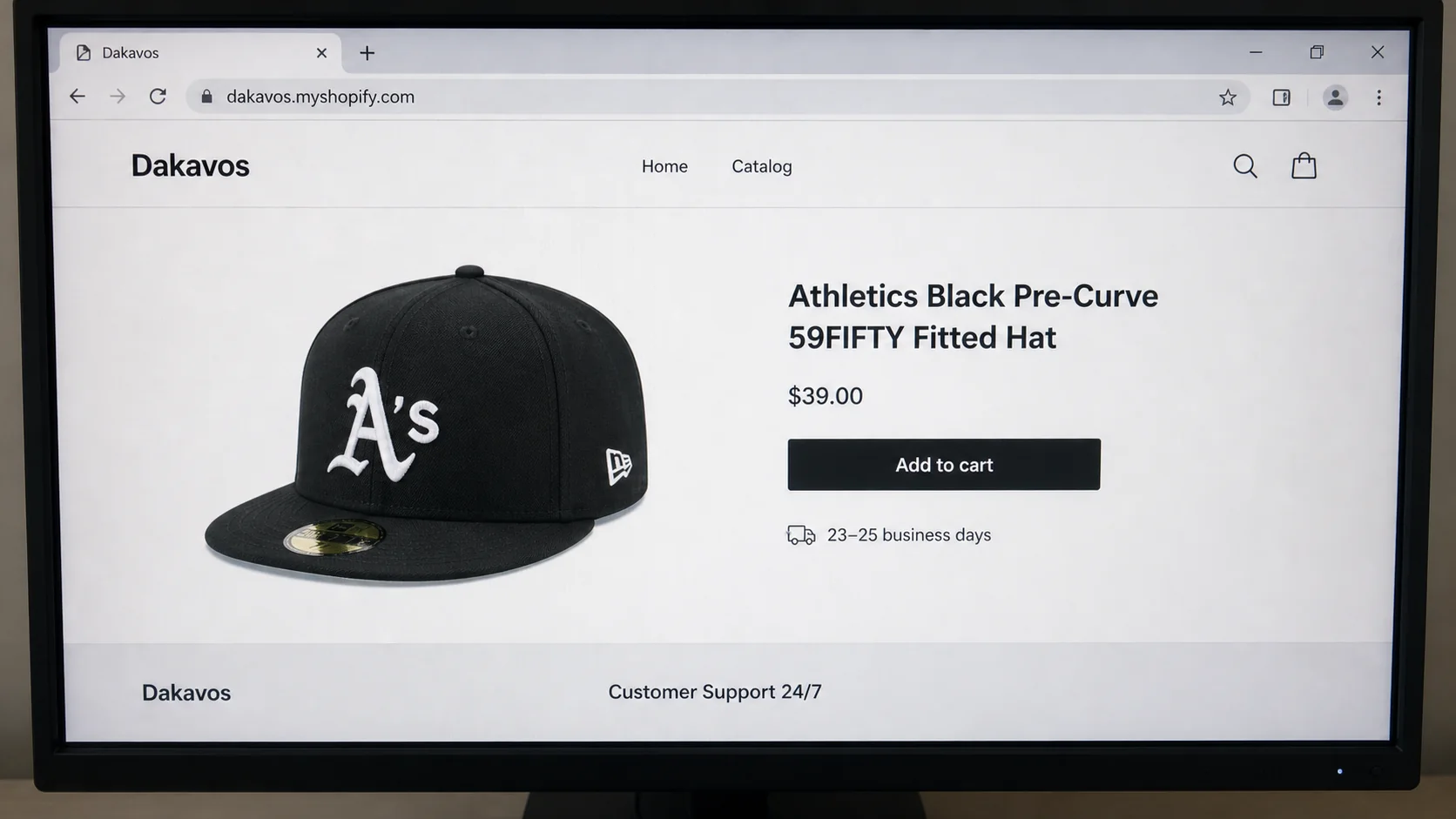
Dakavos is a live Shopify storefront that advertises thousands of hats, clothing items, and other branded products. When the site was reviewed, one fitted cap was listed at $39, free shipping was advertised, and delivery was estimated at 23 to 25 business days.
The storefront looks functional. It has product pages, a cart, a tracking page, refund language, a privacy policy, and contact details. Those elements can make an unfamiliar shop feel established, even though a template and a large imported catalog do not prove that orders are being fulfilled as promised.
The complaint is about where the package went
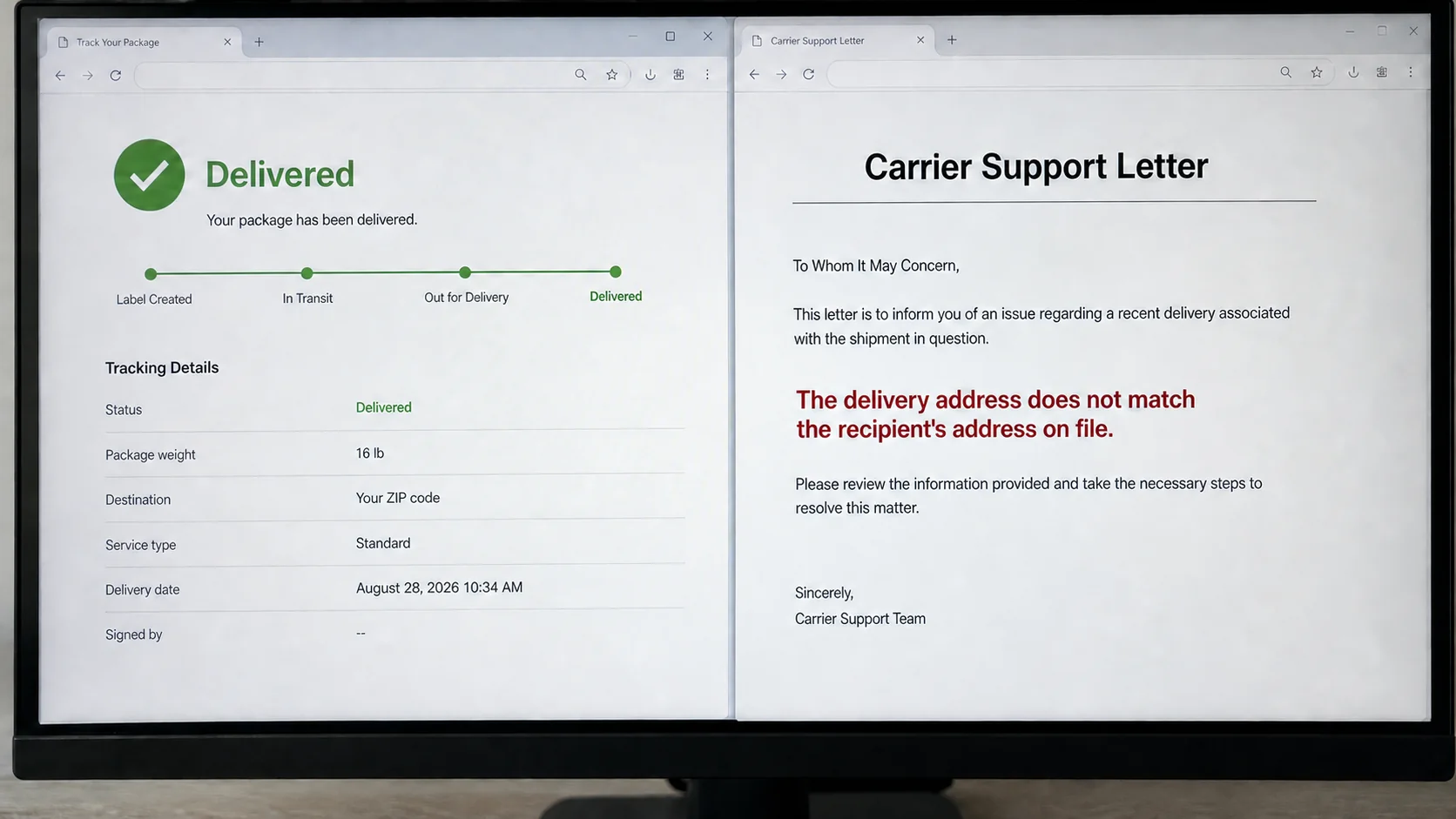
In a recent consumer report, a shopper said a cap order produced a UPS tracking number and eventually showed a delivered scan. The package had reportedly reached the same ZIP code as the buyer, but the buyer never received it.
The shopper contacted UPS and was told that the recipient and delivery address did not match the order. UPS would not reveal the unrelated destination, but it reportedly provided a letter confirming that the shipment was not addressed to the buyer.
The shopper then submitted that evidence in a PayPal dispute and said the claim was resolved in the shopper’s favor.
The tracking number can be real while the proof is false
This is not the same as inventing a random tracking number. The stronger version uses a real shipment that travels through the carrier network and receives a genuine delivery event. The deception is the connection between that shipment and the victim’s purchase.
PayPal’s published rules say online proof of delivery can include the city, state, or ZIP code, delivery date, and carrier identity. A seller may therefore hope that a delivered scan in the correct ZIP code is accepted before anyone checks the full destination.
A recent report is not an independent court finding about every Dakavos order. However, the alleged pattern is specific, verifiable, and consistent with tracking-number scams seen across short-lived online stores. Warning signs include:
- The payment recipient uses an unrelated personal email address.
- The store phone number appears to belong to someone else.
- Tracking shows only a city or ZIP code, not the buyer’s address.
- The parcel weight makes no sense for the ordered product.
- The seller treats a delivered scan as the end of the discussion.
- The catalog is enormous, inconsistent, or filled with copied retail descriptions.
- Policies promise support but do not identify a clear legal operator.
Why a Delivered Scan Can Be Misleading
Carrier tracking follows a parcel, not a shopping promise. It can confirm that a label entered the network, moved through sorting centers, and ended at a destination. It does not automatically prove that the box contained the item you bought or that the destination was your home.
A buyer normally sees a shortened destination for privacy. The public tracking page may show the city, region, or ZIP code without the full street address. That is enough for ordinary reassurance, but it also creates room for a merchant to attach an unrelated local delivery to a disputed order.
Package weight is an important clue. The Dakavos complainant said the shipment weighed 16 lb even though the order was for one baseball cap. A cap, packing material, and ordinary retail box should not approach that figure. A large mismatch suggests the tracking event may belong to another shipment.
A seller may obtain a suitable number in several ways. It can reuse information from another order, buy tracking data from a third party, send a cheap parcel to an unrelated address, or coordinate a shipment that only needs to reach the right postal area.
The buyer does not need to determine which method was used before opening a dispute. The carrier mismatch is the important fact.
The useful question is narrower: does the carrier confirm that this tracking number was addressed to this buyer at this delivery address? If the answer is no, the green check mark is not proof of fulfillment.
That distinction should be stated clearly to the payment provider. “I did not receive it” can sound like porch theft or a carrier error. “The carrier confirmed that the shipment was addressed to a different recipient and location” challenges the seller’s evidence directly.
How the Dakavos Tracking Scam Works
Step 1: A hard-to-find product appears at an attractive price
The shopper finds a specific cap, jersey, shoe, or collectible through search results or a shopping ad. The price is low enough to feel like a deal but not so low that it immediately looks impossible.
Dakavos product pages use familiar product names, polished photos, many size options, and retail-style descriptions. The presentation reduces the friction that normally comes with buying from an unknown store.
Step 2: A template storefront supplies the missing trust
The site displays a cart, policy pages, SSL language, a money-back promise, and a support block. Shoppers may read the presence of these pages as evidence that Shopify or another platform has vetted the merchant.
Shopify explains that customers are buying from the individual business, not from Shopify itself. The platform provides store technology, while the merchant remains responsible for products, policies, and fulfillment.
Step 3: Checkout sends money to a less convincing identity
The payment screen may reveal a personal address, a free email provider, or a recipient name that does not match the storefront. That mismatch can be dismissed as a small-business arrangement or a payment processor detail.
It should instead trigger a pause. The business name, payment recipient, order confirmation, and support identity should tell one coherent story. If they do not, save screenshots before continuing.
Step 4: The buyer is given a real carrier number
A tracking number is sent after the order. Because it works on the carrier’s official website, the buyer relaxes and waits through the store’s long delivery window.
The real tracking page is persuasive precisely because it is not a fake page. Every normal scan increases the appearance that merchandise is on the way.
Step 5: The parcel is delivered somewhere in the buyer’s ZIP code
The tracking status eventually changes to delivered. The buyer checks the porch, mailbox, neighbors, building office, and carrier notices but finds nothing.
If the public page shows the expected ZIP code, the seller can point to it as proof. The buyer may initially blame a driver, a neighbor, or package theft instead of questioning whether the shipment was ever addressed correctly.
Step 6: The delivered status is used against the dispute
The merchant can submit the tracking record to PayPal or a card issuer. A simple claim that the item never arrived may be weakened by the carrier’s green delivered event.
The buyer needs carrier confirmation that connects the number to a different address or recipient. A weight discrepancy, delivery photo, service level, and shipping date can also show that the parcel does not match the order.
Step 7: The store keeps selling while complaints are handled one at a time
Some buyers challenge the payment and recover funds. Others accept the delivered scan, miss a deadline, or decide that the purchase value is not worth the effort.
A storefront can remain profitable as long as enough victims stop before obtaining carrier evidence. If complaints grow, the same catalog and policy language can be moved to a new store name or domain.
What the Live Dakavos Store Shows
The Dakavos site was still accessible when this article was prepared. Its catalog page claimed more than 16,000 products and stretched across hundreds of pages. A very large catalog is not proof of fraud, but it makes manual product curation and reliable stock control less plausible for an otherwise lightly identified shop.
Product pages used descriptions associated with recognizable sports merchandise and often priced items around the same narrow range. Some pages included source-like image information in their data, another reason not to assume that the store photographed or physically holds every listed item.
The site advertised free shipping and estimated 23 to 25 business days for delivery. Long windows can be legitimate for international fulfillment, but they also postpone the moment when a customer begins a dispute. Buyers should note the payment provider’s deadline on the purchase date rather than relying only on the merchant’s estimate.
The refund policy said eligible returns could be requested within 30 days of delivery, yet the process depended on the store reviewing and approving a request before providing instructions. The policy did not solve the more basic problem described in the complaint: a delivered scan attached to an address that was not the buyer’s.
The footer repeated “DAKAVOS CONTACT” and “Customer Support 24/7,” then listed an email, phone number, and Austin address. Repetition and round-the-clock claims are visual reassurance, not evidence that a staffed support operation exists.
Most importantly, the live store does not rebut the reported carrier mismatch. A polished site can coexist with poor fulfillment or deceptive tracking. The transaction record remains more useful than the homepage design.
Company, Address, and Fulfillment Checks
The storefront identifies a brand but not a clear legal operator
The reviewed pages repeatedly use the name Dakavos, but the visible policy text does not clearly identify a company registration, responsible legal entity, or named operator behind the U.S. storefront.
A brand label is not the same as a business identity. Before paying, look for a company name that also appears on the receipt, payment account, tax details, and customer service replies.
The listed Austin address needs independent verification
The site publishes a street address in Austin, Texas. A real address can belong to a residence, mailbox, unrelated company, or third-party service, so its existence alone does not establish that Dakavos operates there.
Do not visit an address or contact its occupants based only on a storefront claim. Compare it with public business records and the return instructions supplied through the protected dispute process.
The phone and email trail should match the merchant
The consumer report said the listed phone reached a voicemail explaining that the number did not belong to Dakavos. It also said the PayPal recipient used a Hotmail address. Those are allegations from one shopper, but each is independently testable by the platforms handling the order.
Do not publish or harass the person who answers an apparently misused number. An unrelated person may be another victim of the storefront’s contact information.
The carrier address is the decisive fulfillment check
The order address, label destination, parcel weight, delivery photo, and recipient name should align. If the carrier confirms that the label was for another destination, the seller’s tracking number does not prove delivery of your order.
Ask for written confirmation that protects the unrelated recipient’s privacy while stating the essential fact: the shipment was not addressed to you. That document can be more valuable than repeated conversations with the seller.
Red Flags to Check Before Buying
- The shop appears only as a platform subdomain and has little independent history.
- The catalog contains thousands of unrelated or highly specific products.
- Prices cluster below normal retail levels without explaining condition or sourcing.
- Contact details do not match the payment recipient.
- A support number belongs to an unrelated person or never reaches the business.
- Shipping takes several weeks despite stock claims.
- Refunds require prior approval but no clear return location is supplied.
- Tracking reveals only the correct ZIP code and an implausible package weight.
One warning can have an innocent explanation. Several warnings affecting identity, payment, and fulfillment create a much stronger risk picture.
Search the exact store name, email address, phone number, and street address before paying. Also search a sentence from the refund policy in quotation marks. Identical wording across unrelated shops can reveal a cloned operation.
Reverse-search product images and compare descriptions with established retailers. Copied material does not prove that no item will arrive, but it means the page itself offers little original evidence of inventory.
Check the product count as well. A lightly identified shop that claims immediate access to many thousands of specific branded items should be able to explain its suppliers, stock status, and fulfillment location. Generic “in stock” labels across a massive catalog are not the same as warehouse evidence.
What to Do if You Have Fallen Victim to This Scam
- Save the order record now. Capture the product page, cart, confirmation, payment recipient, policies, emails, tracking page, package weight, and every support exchange. Web stores and product pages can change quickly.
- Check tracking only on the carrier’s official site. Type the carrier address yourself. Do not use a delivery link sent in a late support message if its domain is unfamiliar.
- Ask the carrier the right question. Request confirmation of whether the shipment was addressed to your name and exact delivery location. Explain that you do not need the unrelated recipient’s private address.
- Open a payment dispute promptly. PayPal says an Item Not Received dispute generally must be opened within 180 days, but deadlines and eligibility can vary. Include the carrier letter and weight mismatch, then escalate the dispute within the stated case window if the seller does not resolve it.
- Contact the card issuer if a card funded the payment. PayPal notes that card dispute rights may be broader in some situations. Do not run two conflicting claims without asking each provider how to proceed.
- Report the merchant to Shopify. Shopify says customers should contact the store first and can use its order-issue form after the specified waiting period. The report helps connect complaints to the hosted shop.
- Secure any information entered outside trusted checkout pages. Change reused passwords and watch financial statements. If you downloaded a file or browser extension, run a full Malwarebytes scan to check for common threats.
- Block follow-up phishing and recovery pitches. AdGuard can stop many known malicious pages and advertising redirects. It cannot recover a payment, so ignore anyone who guarantees a refund for an advance fee.
Frequently Asked Questions
Is Dakavos a legitimate store?
Dakavos is a functioning Shopify storefront, but that fact does not verify its operator or every fulfillment claim. A recent shopper reported a package sent to a different address and said carrier evidence was needed to win a PayPal dispute.
Can a real UPS tracking number still be part of a scam?
Yes. The number can describe a real parcel delivered somewhere else. Confirm whether the label matches your name and complete address rather than relying only on city or ZIP code.
Why would the package weight matter?
Weight helps connect the shipment to the product. A reported 16 lb parcel is inconsistent with one baseball cap and supports the argument that the tracking record belongs to a different delivery.
What evidence should I send to PayPal?
Send the order confirmation, seller details, tracking page, carrier letter, package-weight mismatch, and support messages. State that the shipment was addressed to someone else, not merely that it was missing from your porch.
Does Shopify guarantee purchases from Shopify stores?
No. Shopify provides commerce technology, while the merchant is responsible for the sale. Shopify offers forms for reporting order and merchant issues, but the payment dispute usually belongs with the payment provider or card issuer.
Should I call the phone number listed on the site?
You can test a published business number without sharing sensitive information, but do not harass anyone who says the number is unrelated. Preserve the mismatch as evidence and use official dispute channels.
The Bottom Line
The reported Dakavos scam is effective because the tracking number may be genuine. The missing piece is not the carrier scan but the link between that parcel, that recipient, and the buyer’s address.
If a shipment is marked delivered but never arrives, check the weight and ask the carrier to confirm the destination. A green status in the correct ZIP code is not enough when the label belongs to someone else.








