

The idea arrives at exactly the right moment: a computer has supposedly found order inside the lottery’s chaos. For a struggling viewer, that sounds worth hearing.
The presentation surrounds its secret with charts, testimonials, and a confident inventor. The details become less convincing once probability replaces excitement.
Overview
The promise behind Lottery Unlocked
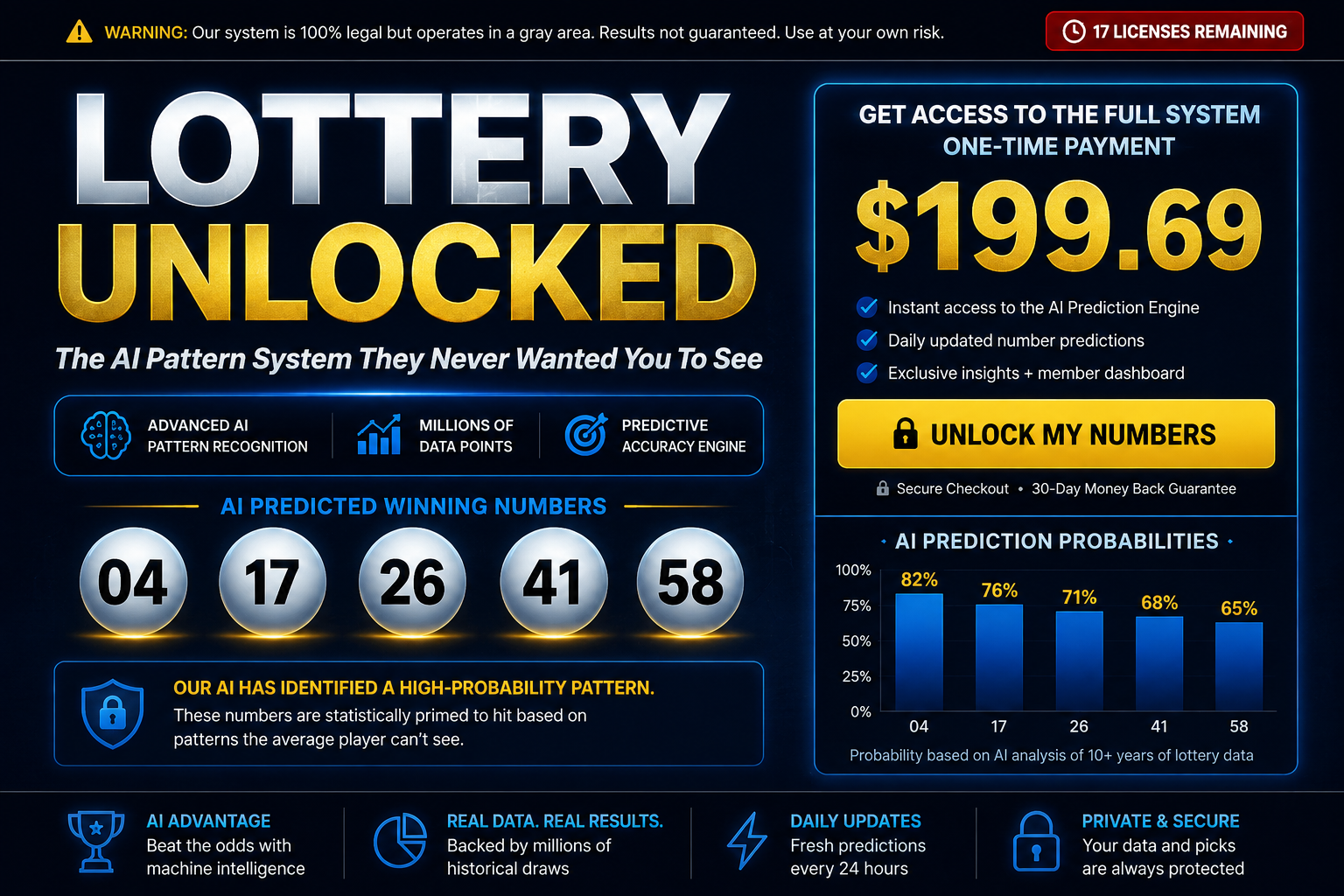
Lottery Unlocked is sold as an artificial intelligence system that allegedly studies previous drawings and selects numbers with a greatly improved chance of winning.
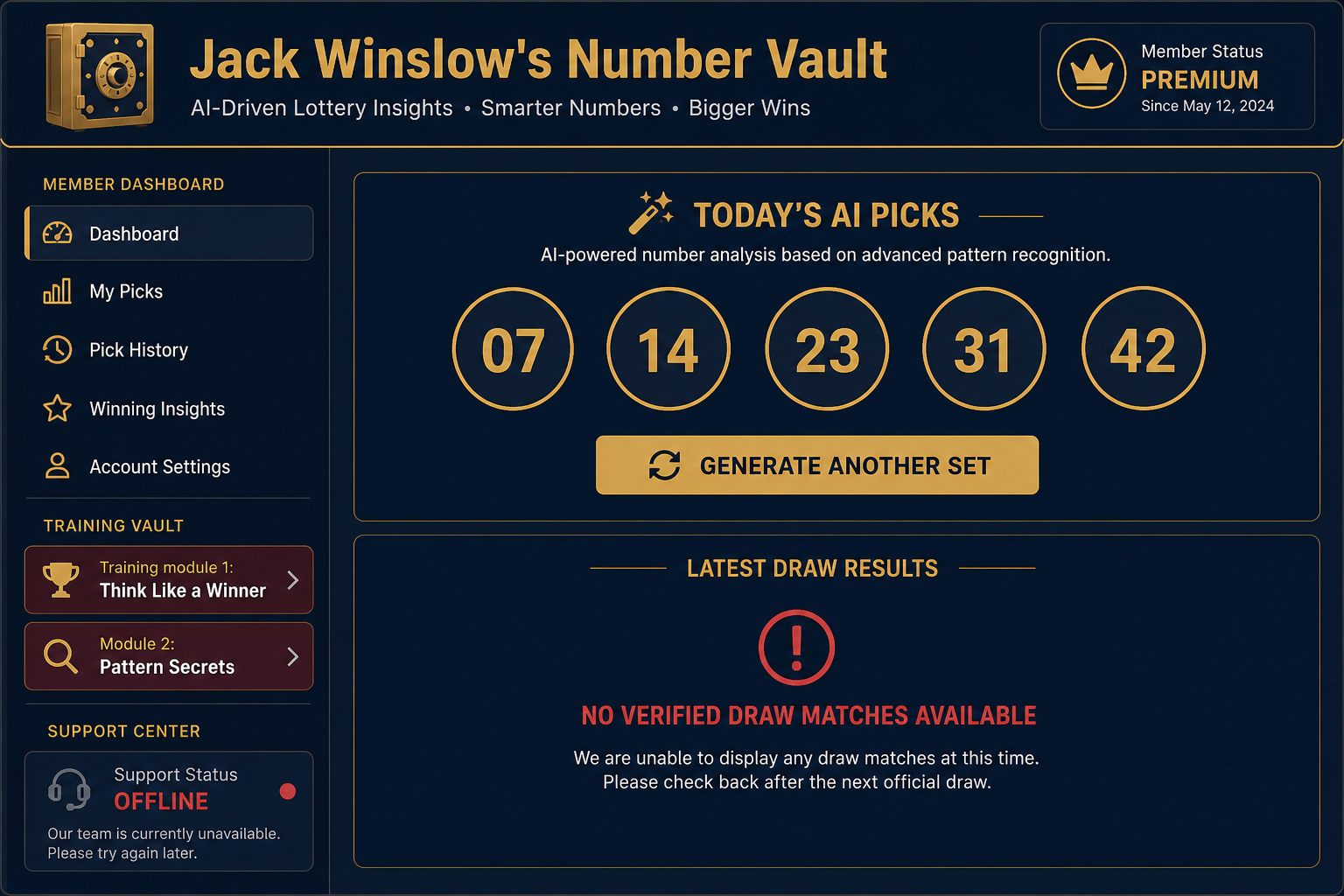
The pitch has used a character named Jack Winslow, who is described as an ordinary person who discovered a hidden pattern and escaped financial hardship.
Access has been advertised for $199.69, far below an invented higher value. Buyers are told they receive number predictions, software, or a protected method.
Why the central claim fails
Properly operated lottery drawings are designed so previous results do not determine the next winning combination. Historical frequency cannot create a dependable future advantage.
Artificial intelligence can summarize old numbers or generate new ones. It cannot discover a predictive signal when each valid combination retains the same draw probability.
The presentation provides no independently tested model, documented prediction record, or verifiable winners. It offers marketing demonstrations controlled by the seller.
The strongest warning signs
- A secret AI loophole supposedly defeats a random drawing.
- The inventor’s winning history cannot be independently confirmed.
- Testimonials rely on dramatic clips rather than lottery records.
- Scarcity claims suggest the system stops working if widely used.
- An invented high price makes $199.69 appear unusually cheap.
- The operator, support structure, and refund responsibility remain unclear.
Lottery Unlocked does not become credible because it produces number combinations. Any person, spreadsheet, or random generator can do that without predicting a drawing.
The meaningful test is whether selections outperform chance across many preregistered drawings. The sales material does not provide such evidence.
Without transparent testing, the buyer is paying for hope packaged as mathematics. The only certain transaction is the charge collected by the seller.
How the Lottery Unlocked Scam Works
Step 1: A video ad turns financial stress into curiosity
The first advertisement may show luxury purchases, relieved families, or excited winners. It suggests that recent success came from software rather than ordinary chance.
Viewers hear that the method is legal, simple, and unknown to most players. The story avoids asking them to understand probability at the beginning.
Words such as AI, prediction engine, probability mapping, and pattern recognition create a scientific atmosphere. None of those labels demonstrates forecasting power.
The advertisement then sends interested viewers to a longer presentation. That page controls the evidence, pacing, and path toward checkout.
Step 2: Jack Winslow becomes the relatable discovery story
The sales video introduces an apparent creator who understands overdue bills, unrewarding work, and the feeling that wealthy people know hidden rules.
He supposedly finds a lottery secret, tests it, wins repeatedly, and decides to share it. This arc turns an anonymous product into a personal rescue story.
Yet the claimed wins are not supported by official prize records, dated tickets, tax documents, or independent reporting connected to the same individual.
A name and narrated biography are not verification. Modern editing tools can combine stock performers, synthetic voices, and fabricated screenshots into a persuasive character.
Step 3: The presentation misrepresents what patterns can prove
Every historical lottery dataset contains streaks, repeated numbers, long absences, and clusters. Random sequences naturally produce results that look meaningful after the fact.
A seller can choose whichever pattern appears impressive, then ignore the many observations that produced nothing. This is selection, not prediction.
For a fair drawing, a number that appeared often is not “hot” in a way that forces another appearance. A missing number is not owed a return.
AI can make these descriptions sound sophisticated. The quality of the language does not change the independence of the next draw.
Step 4: Testimonials create the impression of repeated winners
Promotional clips may show people celebrating checks, vehicles, or account balances. The viewer is not given enough information to authenticate the prize or method.
Edited lip movements, synthetic narration, licensed footage, and staged performances can turn unrelated material into an apparent Lottery Unlocked endorsement.
Even a genuine small winner would prove little. Lottery players win lower-tier prizes every day without prediction software.
A valid test must compare many documented advance selections with all later outcomes. Isolated success stories cannot measure whether the system beats chance.
Step 5: Scarcity and conspiracy language interrupt careful thinking
The page may claim only a small number of licenses remain. Another explanation says too many users would expose the loophole or reduce accuracy.
That reasoning makes little sense. One buyer’s number selection cannot change the physical drawing, although shared numbers could divide a prize among winners.
References to forbidden knowledge or secrets hidden by lottery officials reframe missing evidence as proof that powerful institutions fear the product.
A countdown pushes the visitor toward payment before checking official odds, consumer warnings, or the alleged inventor’s history.
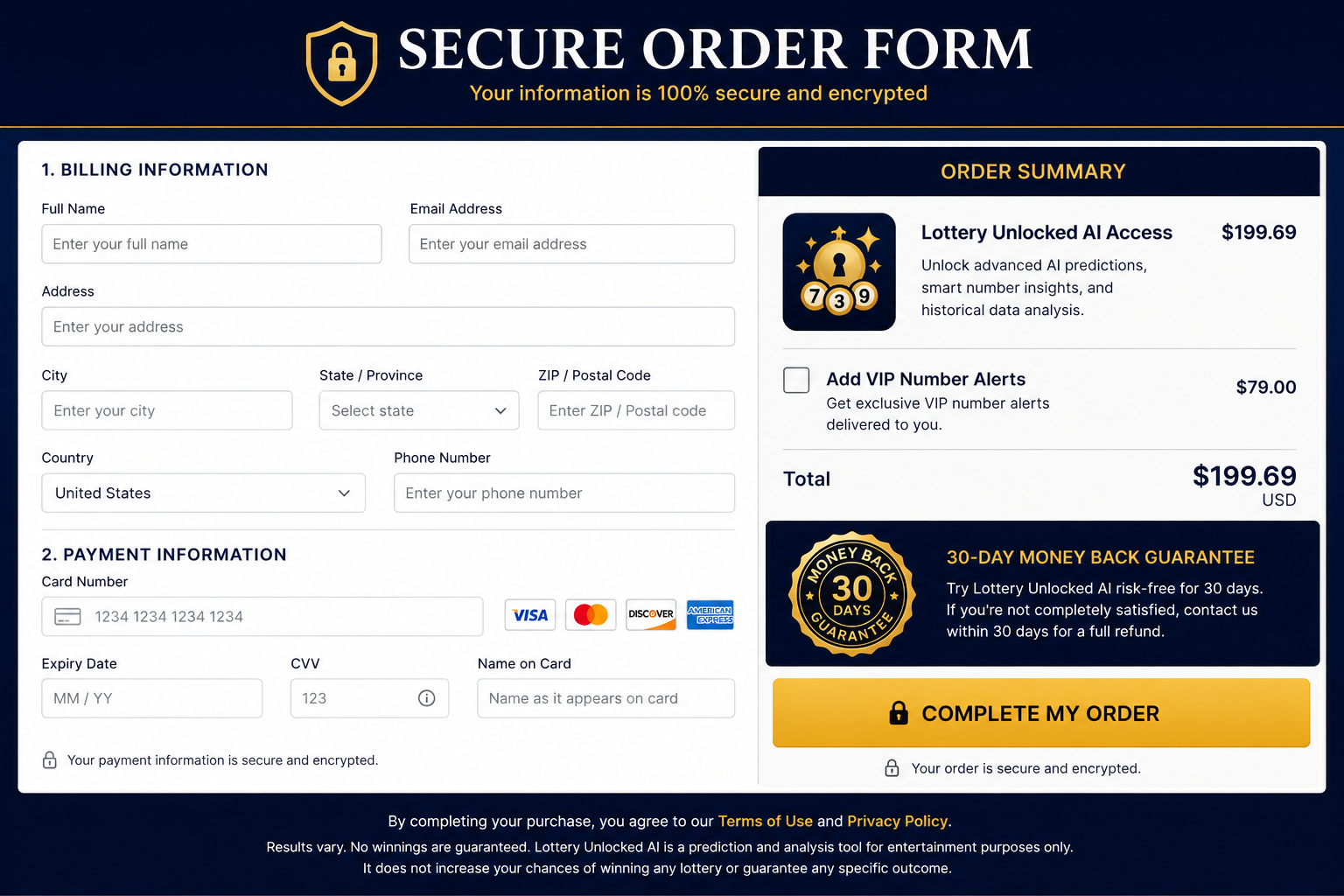
Step 6: The checkout monetizes the dream
The $199.69 price is presented beside a much larger crossed-out figure. That comparison is created by the seller and does not establish market value.
Card and contact details are collected before buyers can inspect a meaningful prediction record. Optional alerts, memberships, or premium features may increase the total.
A refund seal reduces hesitation, but the responsible legal entity and practical refund route matter more than a badge.
The checkout may include small disclaimers that contradict the main presentation. “Results vary” cannot repair repeated claims that a hidden system reliably produces winners.
Step 7: Random number output is delivered as if it were insight
After paying, a member page can generate polished number sets, lessons, and charts. Producing output makes the purchase feel tangible.
However, random picks and historical summaries remain easy to create. Their existence does not show that the numbers have better odds than a standard quick pick.
When combinations lose, the seller can blame timing, user choices, skipped modules, or insufficient play. The claim retreats whenever reality tests it.
Continued subscriptions or upgrades may be offered as the next solution. Chasing earlier losses can then make the original purchase much more expensive.
Why AI Cannot Reveal the Next Winning Numbers
A past drawing is not a signal from the next one
In an independent lottery, the machine does not remember which balls appeared last week. Each drawing starts under the same published rules.
Historical data can detect a mechanical bias only if one genuinely exists and persists. Regulated lotteries test equipment specifically to protect randomness and fairness.
Large datasets always contain eye-catching coincidences
With years of drawings, some numbers will appear unusually often for a period. Other combinations will form visual sequences or repeat close together.
Finding those events afterward is easy. Predictive value requires rules fixed before the next data arrives, followed by transparent long-term testing.
Prediction claims need results that cannot be edited later
A credible test would publish selections with trustworthy timestamps before every drawing. All failures must remain visible alongside wins.
The record would compare performance with random selections and account for how many tickets were purchased. Lottery Unlocked does not provide that standard of evidence.
The Numbers Behind the Fantasy
Jackpot odds vary by game, but major lotteries commonly involve chances measured in many millions to one. Buying software does not alter the ticket rules.
Purchasing more combinations increases the chance only because more tickets are entered. It also increases the amount spent and still leaves an overwhelming likelihood of losing.
A small prize can be emotionally powerful, yet it may not cover previous ticket costs. Marketing often highlights the win while ignoring cumulative spending.
No legitimate analysis should describe a lottery as income. Prizes are uncertain events, not wages, investment returns, or dependable household cash flow.
People experiencing financial pressure are especially vulnerable to the opposite message. The system presents gambling as a planned escape rather than a high-variance purchase.
How to Evaluate Any Lottery Prediction Product
Ask for the complete dated prediction history, including every losing drawing. Screenshots selected by the seller are not a complete record.
Check whether claims refer to jackpots or any prize. A system can advertise “winners” when users merely matched enough numbers for a minor payout.
Compare the claimed success with random picks using the same number of tickets. More entries can create more small wins without improving per-ticket odds.
Search the named creator in official winner records and independent reporting. Affiliate reviews repeating the sales script do not count as confirmation.
Read the checkout terms for recurring charges, arbitration, refund exclusions, and optional additions. Save the version shown before payment.
Finally, decide whether the product offers entertainment or promises reliable profit. The second claim requires evidence far beyond a polished video.
Risks Beyond the Initial Purchase
The buyer shares contact and payment information with an opaque operator. That can lead to additional offers aimed at someone already interested in rapid financial improvement.
Follow-up callers may sell premium number packages, private coaching, prize-release assistance, or recovery services. Each story asks the victim to double down.
Fake lottery representatives can also claim the buyer won and must pay taxes or processing fees. Genuine prizes do not require gift cards or cryptocurrency.
Repeated play creates another danger. Someone trying to justify the software cost may buy more tickets than planned and chase losses.
Set a firm entertainment budget, if you play at all. Never borrow, use bill money, or treat generated numbers as financial guidance.
Company, Address, and Fulfillment Checks
The creator’s identity should be independently traceable
A narrated person called Jack Winslow is not enough. Look for a verifiable professional history, official records, and accountable business ownership outside the sales funnel.
When every favorable reference leads back to affiliates or seller-controlled pages, the claimed expert has not been independently established.
The merchant must match the refund promise
Find the legal entity on the checkout, terms, receipt, and card statement. Different or missing names make a refund harder to pursue.
Test the listed telephone number and email before buying. A decorative guarantee has little value when support cannot identify the exact product.
An address may reveal only a mailbox
Search any listed location. It may belong to a virtual office, forwarding service, residence, or unrelated tenant rather than a software developer.
An address mismatch does not identify the operator by itself, but it weakens claims of transparency and established support.
Digital delivery does not prove predictive value
Receiving login credentials, videos, or generated numbers may satisfy a narrow delivery claim. It does not prove the system improves lottery odds.
The promised result is predictive performance. That requires a complete, independently verifiable record, not merely access to a member page.
What to Do if You Have Fallen Victim to This Scam
- Freeze new spending. Do not buy premium predictions, coaching, winner verification, tax assistance, or recovery packages connected to the offer.
- Preserve the claims. Save advertisements, videos, checkout pages, disclaimers, receipts, generated numbers, support messages, and the card-statement merchant name.
- Request a refund in writing. Quote the advertised promises and keep the response. Do not provide extra identity documents unless your bank confirms they are necessary.
- Contact the payment provider. Describe the unsupported prediction claims, unclear merchant identity, undisclosed upsells, or recurring charges and ask about dispute options.
- Cancel recurring payments. Tell the issuer to stop future billing from the merchant when the operator does not provide reliable cancellation.
- Secure your card and accounts. Replace the card if advised, change reused passwords, and enable multi-factor authentication.
- Ignore prize follow-ups. Never pay a fee to release winnings, verify a ticket, process taxes, or join a private winner list.
- Check downloaded material. Remove unfamiliar apps or extensions and scan the device with Microsoft Defender and Malwarebytes if files were installed.
- Limit malicious advertising. AdGuard can reduce exposure to known deceptive pages and trackers, but no filter can make a lottery predictor reliable.
- Report the campaign. Notify the ad platform, payment processor, consumer-protection agency, and the lottery organization whose name or imagery was misused.
Frequently Asked Questions
Is Lottery Unlocked a real AI prediction system?
It may generate number sets, but no credible evidence shows those selections predict independent lottery drawings better than chance.
Is Jack Winslow a verified lottery winner?
The sales character’s repeated-win story is not supported by independently verifiable records presented with the offer.
Can AI find hot or overdue lottery numbers?
AI can identify past streaks. In a fair independent drawing, those patterns do not make a number due or guarantee another appearance.
Does buying more number combinations improve the system?
More tickets increase coverage while raising spending. That is not evidence that the predictions are superior to randomly chosen combinations.
What if the software produced a small win?
Small prizes occur naturally. Compare total winnings with every ticket purchased and require many preregistered predictions before claiming an advantage.
Should I pay a fee to unlock a reported prize?
No. Verify tickets directly with the official lottery. Do not send fees through gift cards, cryptocurrency, wire transfers, or unfamiliar payment pages.
The Bottom Line
Lottery Unlocked uses AI language, a dramatic inventor, selected testimonials, and artificial scarcity to sell confidence where reliable prediction is not demonstrated.
No software can turn an independent lottery drawing into dependable income. Keep the $199.69, distrust paid loopholes, and verify every prize through the official lottery.








