

A recruiter says your application stood out and the hiring manager wants to move quickly. The company name checks out, the position sounds ordinary, and the first request is only for a few contact details.
The Winter Environmental job scam relies on that quiet plausibility. The message borrows the identity of a real business, then moves the applicant onto a communication path the business does not control.
Overview
The message impersonates a legitimate employer
Winter Environmental is a real environmental and specialty contracting company. Reports describe job messages that use its name while directing applicants to an email address designed to resemble, but not match, the real company domain.
This distinction matters. A genuine company can be named in a fraudulent recruitment message without participating in the scheme.
A small spelling change redirects the conversation
One reported version used a pluralized variation of the company’s domain. At a glance, the extra letter looks like part of the business name rather than the separate destination it actually creates.
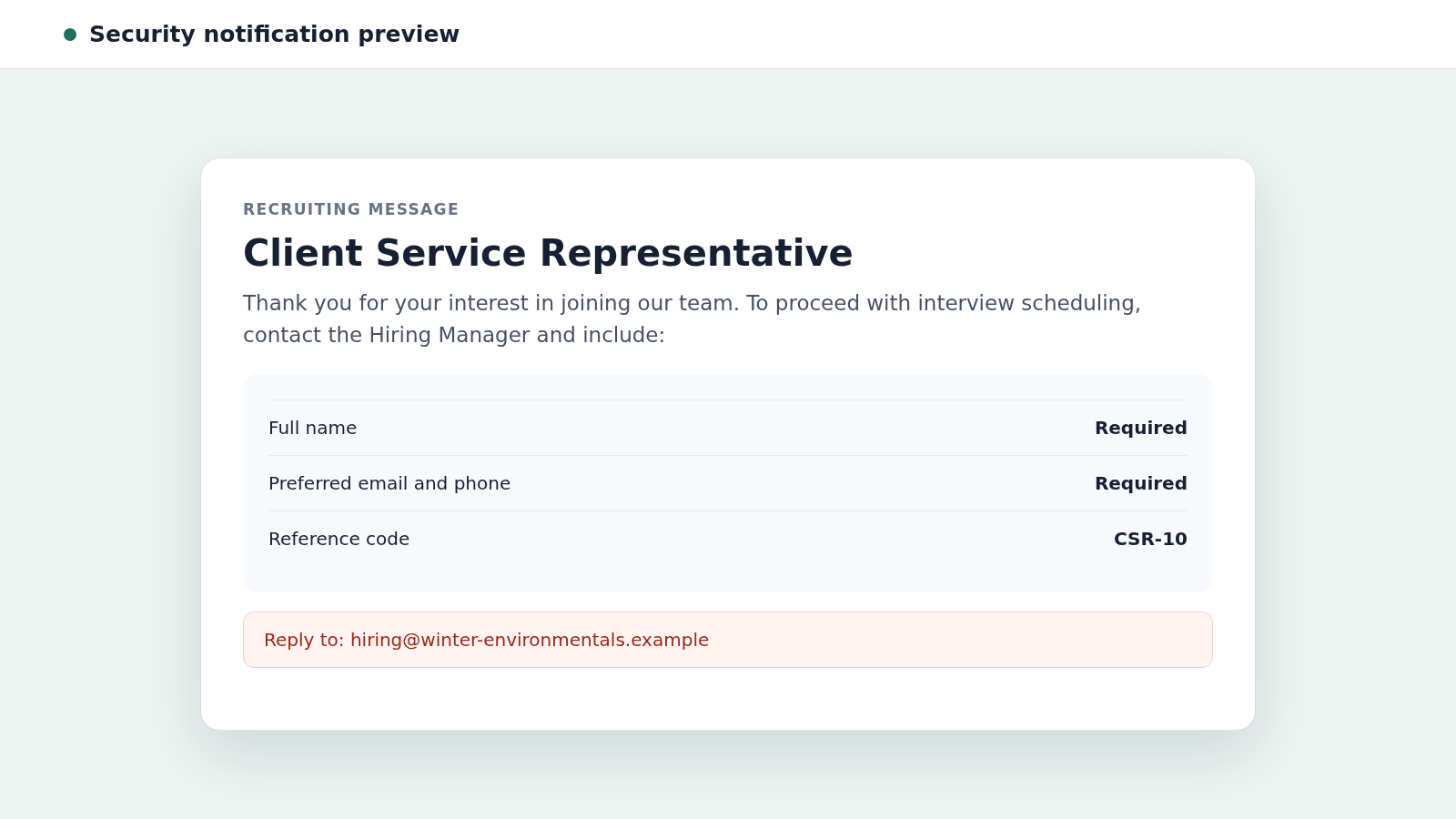
The message asked the applicant to contact a supposed hiring manager and provide a full name, preferred email address, telephone number, and reference code. Those modest requests make the first step feel low risk.
The real danger usually arrives after the first reply
Fake recruiters often progress from contact details to identity documents, bank information, counterfeit checks, equipment purchases, or payments for training and background checks. The exact demand can change after trust is established.
The operation may seek:
- Full name, address, telephone number, and date of birth
- Social Security number and copies of identification
- Bank details for supposed payroll or direct deposit
- Passwords or codes for a fake applicant portal
- Money for equipment, software, training, or screening
- Gift cards or transfers to a supposed approved vendor
- Labor performed before the applicant discovers the job is fake
A real job application can involve sensitive information later, but legitimate employers provide verifiable contacts, written terms, and secure onboarding. They do not need secrecy or an applicant-funded transaction to begin an interview.
What the Fake Winter Environmental Message May Say
The email may thank the recipient for applying to a Client Service Representative or similar position. It says the application has been received and asks the person to contact a hiring manager to schedule an interview.
To make the handoff feel organized, the message may include a manager’s name and a reference code such as CSR-10. It can also remind the applicant to check spam folders for future interview messages.
That language is deliberately routine. There may be no immediate threat, unrealistic salary, or obvious request for money in the first message.
The clearest clue can be the destination address. A plural word, added hyphen, substituted letter, or unrelated free email provider may separate the scammer’s mailbox from the real company’s domain.
An applicant who recently used a job board may assume the email is connected to that application. Criminals exploit the fact that active job seekers expect unfamiliar recruiters to contact them.
How the Winter Environmental Job Scam Works
Step 1: The scammer identifies active job seekers
Criminals can find applicants through public profiles, breached data, resold contact lists, or fake job advertisements. In some cases, the message arrives after a person applied for a real-looking listing.
Timing gives the email credibility. A recipient submitting many applications may not remember every employer name or domain used during the search.
Step 2: A real company identity is copied
The sender borrows Winter Environmental’s name, job language, location, or branding. Public business information is easy to copy and does not prove that the sender represents the organization.
The impersonation also gives the applicant something reassuring to find in a web search. The real company’s existence becomes cover for the fake contact.
Step 3: A lookalike email address receives the reply
The message moves communication to an address with a subtle domain change or to a generic mailbox. The local name may include hiring, careers, recruitment, or a plausible employee name.
Once the applicant replies, the scammer has a confirmed active address and telephone number. The conversation can continue outside the original job platform’s warnings and moderation.
Step 4: A quick interview creates emotional commitment
The supposed interview may happen entirely through email, text, or chat. Questions are often generic, and the recruiter may praise every answer or offer the role unusually quickly.
Speed prevents independent verification. It also turns the applicant from a cautious candidate into someone who feels selected and does not want to lose the opportunity.
Step 5: Onboarding collects valuable identity data
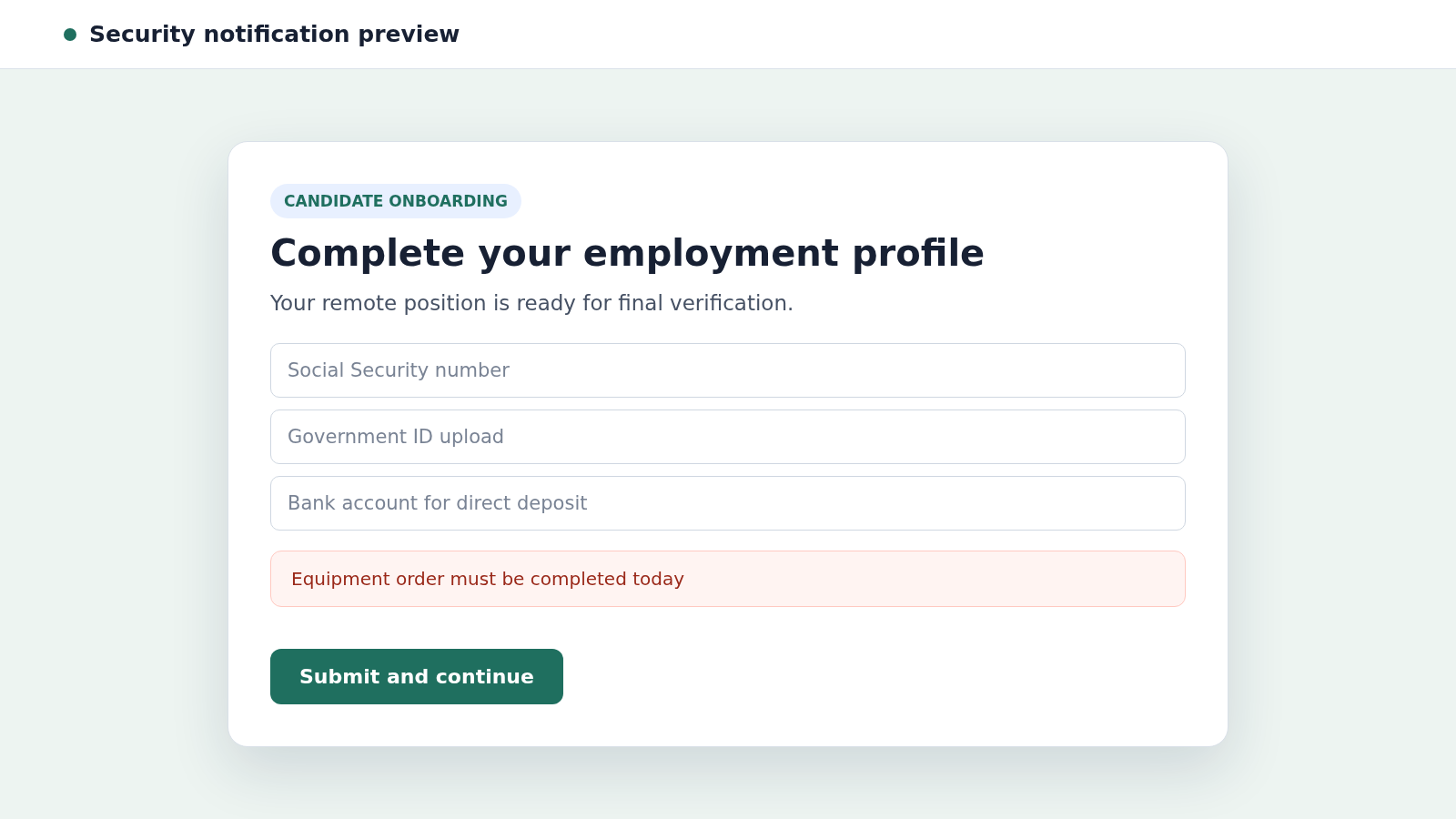
After the fake offer, the criminal requests payroll forms, a Social Security number, identification, address, bank account, or a selfie. These are framed as normal employment records.
Real employers collect sensitive data through controlled onboarding after their identity and offer are established. Sending documents to an unverified mailbox gives the recipient no reliable custody trail.
Step 6: An equipment or check story introduces money
A common job scam sends a counterfeit check and instructs the new hire to buy equipment from a designated vendor. The bank may show provisional funds before discovering that the check is fraudulent.
The applicant sends real money while the incoming deposit is later reversed. Other versions demand upfront payment for a background check, training, software, insurance, or a work permit.
Step 7: Pressure keeps the applicant from verifying
The recruiter may say the position must be accepted today, the equipment order is overdue, or the finance department needs immediate confirmation. Questions are treated as signs that the applicant is uncooperative.
Requests for secrecy are especially revealing. A genuine hiring team does not need a candidate to hide a payment or avoid calling the company’s published office.
Step 8: The identity and contact are reused
Even when no payment occurs, a completed fake application can supply enough information for account fraud, targeted phishing, or new employment scams. Copies of identification create longer-term risk.
A second criminal may later claim to recover the lost money or finish the background check. Knowledge of the fake role makes the follow-up sound connected and official.
Why the Fake Recruitment Can Feel Believable
Job searching naturally involves unfamiliar people, forms, and deadlines. Behavior that would feel suspicious in a banking conversation may seem ordinary when presented as human resources work.
The scammer also chooses roles that can plausibly be remote and easy to describe. Customer service, data entry, administrative support, and project coordination require no detailed technical interview in the criminal’s script.
A reference code and named hiring manager create the appearance of an internal process. Neither detail is difficult to invent.
The message may be polished and free of spelling errors. Modern templates and writing tools make grammar a weak authenticity test, so the address and hiring process deserve more weight.
Warning Signs the Job Offer Is Fake
- The sender’s domain differs slightly from the real company domain.
- The recruiter moves immediately to text or an encrypted chat app.
- You receive an offer without a meaningful live interview.
- The salary is unusually high for basic remote work.
- The employer sends a check to buy equipment.
- You must pay a vendor, trainer, or background-check service.
- The recruiter requests gift cards, crypto, or a personal transfer.
- Sensitive identity documents are requested through ordinary email.
- The supposed manager refuses a call through the published office.
- You are told to keep the job or payment confidential.
- The offer contains no verifiable team, office, or reporting details.
One unusual detail may reflect a small company’s process. A cluster of mismatched addresses, rushed hiring, and applicant-funded purchases is much stronger evidence of fraud.
How to Verify a Winter Environmental Job Offer
Do not use the contact details in the unexpected message. Find the company’s official website independently and navigate to its careers information from there.
Compare the entire domain after the @ symbol. A single extra letter, plural ending, misplaced hyphen, or alternate top-level domain creates a different mailbox controlled by someone else.
Call the company’s published main number and ask whether the recruiter, opening, and reference code are real. A legitimate hiring process should survive that simple cross-check.
Search for the exact role on the official careers page. A missing listing is not absolute proof of fraud, but it gives the employer another reason to confirm the opening directly.
Ask for a live conversation with the hiring manager using a verified business channel. Do not let the supposed recruiter supply a second unverified number as proof of the first.
What a Real Employer Will Not Ask You to Do
A legitimate employer does not send a new hire a check and require purchases from a special vendor. Equipment is supplied directly or purchased through an established, documented reimbursement policy.
You should not have to buy gift cards, send cryptocurrency, forward money, or pay to release wages. A paycheck is compensation, not the beginning of a payment chain.
A real hiring team will not ask for your email password or one-time security code. Access to personal accounts has no role in verifying employment eligibility.
Sensitive forms may be part of genuine onboarding, but only after you confirm the employer and offer. The collection method should be secure, purposeful, and explained.
Company, Address, and Fulfillment Checks
Compare the exact email domain
Read the characters after the @ symbol slowly. Company names in the display field and email signature can be copied; control of the correct domain is harder to fake.
Verify the office through an independent listing
Call a number from the official company website. Do not rely on the number in the message, because a fake recruiter can answer its own verification call.
Confirm the position and reporting line
Ask the real business whether the job title, manager, location, and reference code belong to an active opening. Vague answers from the recruiter should not replace employer confirmation.
Inspect how equipment and payroll are handled
Real fulfillment does not require an applicant to circulate money. A counterfeit check, private vendor, or upfront fee breaks the normal separation between employer expenses and employee wages.
What to Do if You Have Fallen Victim to This Scam
- Stop the conversation. Do not send more forms, money, gift card codes, or explanations. Block the sender after preserving the evidence.
- Contact the bank immediately. Report checks, transfers, card payments, or deposited funds connected to the job. Ask what can be stopped and whether the account number should change.
- Do not spend a suspicious check. A displayed balance can be provisional. Tell the bank that the check came from a suspected employment scam and wait for its fraud team.
- Protect your identity. If you shared a Social Security number or identification, create a plan at IdentityTheft.gov and consider appropriate credit freezes or alerts.
- Secure exposed accounts. Change reused passwords, protect the connected email, enable strong authentication, and review active sessions and recovery details.
- Scan files and software. Use Malwarebytes for a full check if the recruiter sent documents, archives, applications, meeting tools, or other downloads.
- Reduce phishing exposure. AdGuard can help block known malicious pages and deceptive ads, but it cannot recover information already submitted.
- Tell the impersonated company and job platform. Provide the fake address, listing, message, and reference code so they can investigate and warn other applicants.
- Report the fraud. File a report at ReportFraud.ftc.gov and notify local authorities when money, checks, or identity documents are involved.
- Watch for follow-up scams. Ignore anyone promising a guaranteed job or recovery for a fee. The information you shared can make later approaches sound unusually personal.
Frequently Asked Questions
Is Winter Environmental a fake company?
No. The company is real. The scam involves people impersonating it, which is why the exact sender and hiring channel matter.
Does a reference code prove the job is genuine?
No. A scammer can invent a code and repeat it consistently. Confirm it through the company’s independently published office or careers channel.
Why did the message arrive after a real application?
The listing may have been fraudulent, applicant data may have been exposed, or the timing may be coincidence. Verify the sender regardless of when it arrived.
Can I deposit the check just to see whether it clears?
Do not treat an available balance as proof. Banks can reverse counterfeit checks later, leaving you responsible for money sent onward.
Is it safe to send my ID after receiving an offer?
Only after independently confirming the employer, offer, and secure onboarding process. Ordinary email to a lookalike domain is not a safe route.
What if I replied but shared only my name and number?
The immediate risk is lower than sharing financial data, but expect targeted follow-ups. Block the sender and scrutinize new recruitment or recovery messages.
The Bottom Line
The Winter Environmental job scam succeeds by placing a false hiring path beside a real company identity. A plausible role and polite message cannot make a lookalike email address genuine.
Verify the domain, opening, recruiter, and interview through the company’s independently published contacts. Never pay to start a job, circulate money from a check, or send identity documents before the employer is confirmed.

Join the discussion
0 commentsShare your experience or ask a question about this article.
Discussion
Start the conversation
Have a question or something useful to share? Add the first comment.