

Six messages are supposedly waiting somewhere outside your inbox, and a plain system notice offers one quick way to release them.
The email looks routine enough to interrupt a busy morning, especially when important replies, invoices, or customer questions may be among the missing mail.
Overview
The warning invents a temporary mail-delivery problem
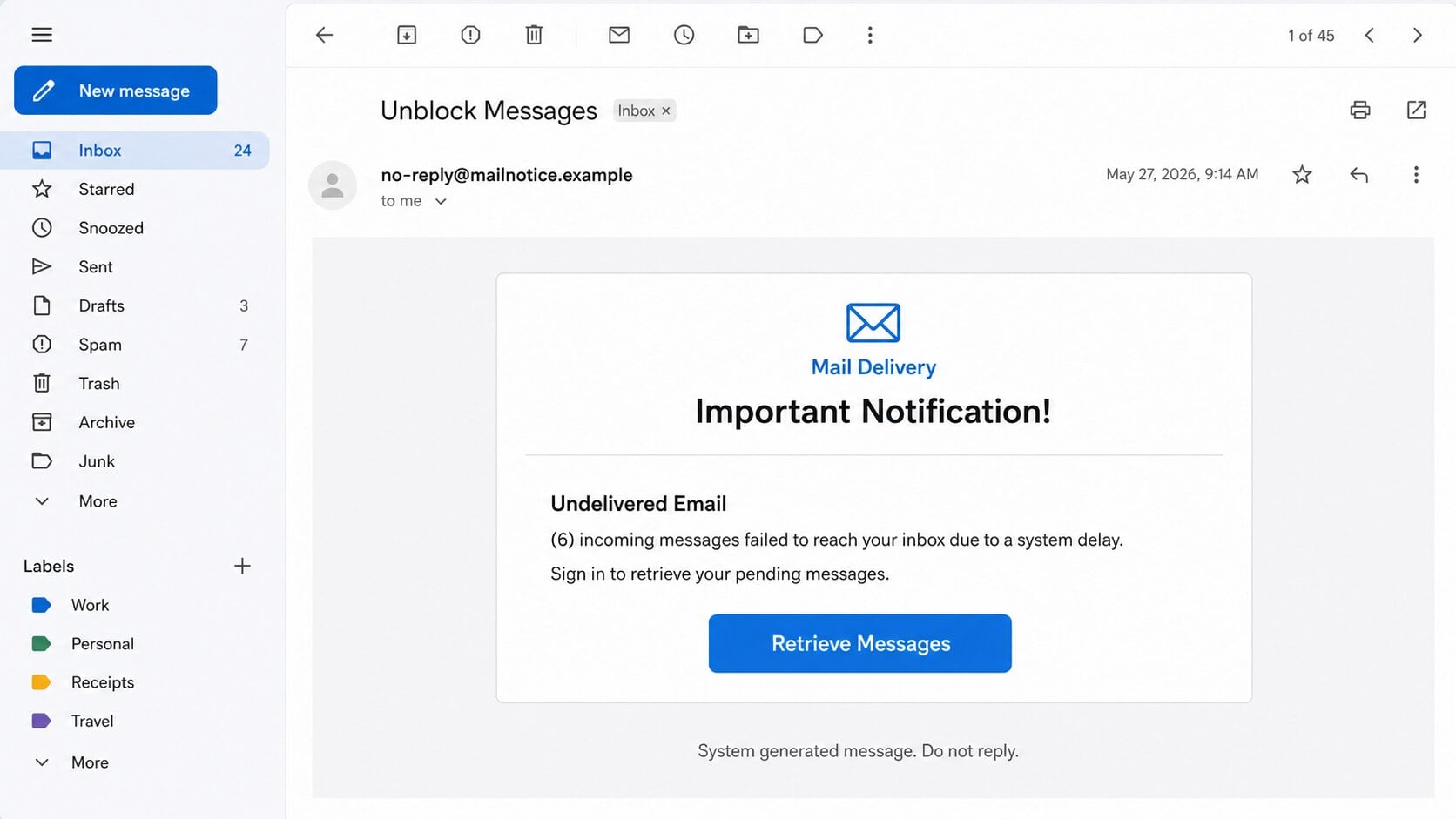
The Messages Failed Due to System Delay email claims six incoming messages could not reach the recipient’s inbox.
It presents the problem as a technical queue rather than a permanent failure. That wording suggests the missing mail still exists and can be recovered.
A button labeled “Retrieve Messages” promises immediate access through an email portal.
The destination is a password collector, not a recovery portal
The observed link opened a page branded simply as “Webmail Login.” It requested an email address and password before showing any alleged messages.
A security badge or padlock graphic on that page does not establish ownership, legitimacy, or a relationship with the recipient’s provider.
Credentials entered there are exposed to the operator controlling the form. The six-message count is only the lure.
The strange legal footer is another important clue
The email mentions personal-data rules and tax regulations, even though neither subject belongs in a routine mail-delivery notification.
This disconnected language appears borrowed from another document. It adds official-sounding weight while revealing that the template was assembled carelessly.
- The sender uses a generic “Mail Delivery” identity.
- The notice claims exactly six messages are delayed.
- The retrieval button leaves the genuine mail provider.
- The landing page asks for the mailbox password.
- The footer discusses tax authorities without any logical reason.
Why an Undelivered-Message Warning Gets Attention
Curiosity does much of the scammer’s work
The letter never identifies the missing senders or subjects. That absence encourages recipients to imagine the messages they most fear overlooking.
A job applicant may picture an interview reply. A business owner may expect an order, while an employee may worry about a manager’s request.
Because the list remains hidden, almost anyone can find a reason to click.
The count makes a vague problem feel measured
“Six messages” sounds like information taken from a functioning mail server. In reality, the number can be identical in every copy.
Specific numbers often feel more credible than broad warnings, even when the email provides no server name, queue identifier, or delivery report.
A real administrator should be able to supply technical context that survives independent verification.
The promise of recovery lowers suspicion
Account-closure scams threaten a loss. This campaign instead offers to restore something the recipient believes may already belong to them.
That helpful posture feels less hostile, so the button may seem like ordinary maintenance rather than a security-sensitive action.
The requested password changes the situation completely. A delivery notice does not need an unrelated website to collect it.
How the Messages Failed Due to System Delay Scam Works
Step 1: A bulk campaign reaches active mailboxes
Attackers obtain addresses from breaches, exposed contact pages, scraped directories, compromised accounts, and earlier phishing lists.
The same template can be sent to personal, school, and company addresses because it names no specific provider.
Deliverable addresses may later receive more focused scams, especially when tracking confirms that a recipient opened the letter.
Step 2: The message announces a believable service delay
The email says incoming mail failed because of a system delay, a phrase broad enough to sound technical without explaining anything.
It avoids claiming the mailbox is full or disabled, conditions a recipient could quickly disprove inside normal settings.
The notification also calls itself system-generated, discouraging replies that might expose the sender’s inability to answer.
Step 3: The hidden messages create an information gap
No sender names, timestamps, subject lines, or message identifiers are displayed.
The recipient is told those details become visible only after signing in, so curiosity and fear move the decision toward the button.
Legitimate quarantine systems normally appear inside the established account or include verifiable details from the organization’s own mail gateway.
Step 4: The retrieval link leaves the trusted environment
The button opens an external host rather than the normal mailbox address. Some campaigns use compromised sites, free hosting, or distributed storage gateways.
These locations can change quickly when a page is reported. The wording and artwork remain reusable even as domains rotate.
Reading the complete hostname is more reliable than judging a page by its colors, icons, or security claims.
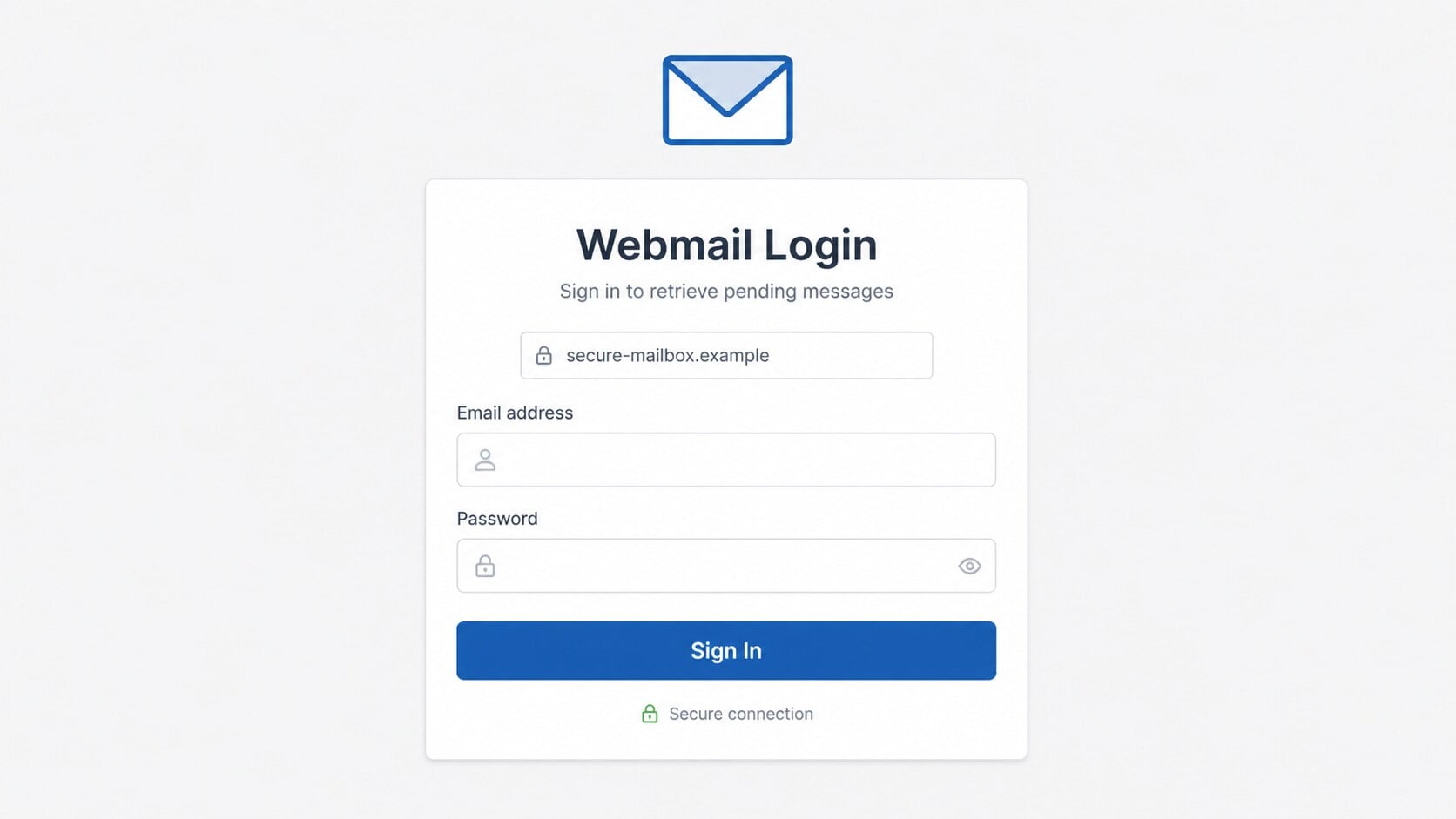
Step 5: A generic sign-in form captures the password
The landing page asks for the same credentials used to access the victim’s real mailbox.
Submitting the form sends those values to the phishing operator. It does not release delayed mail or communicate with the genuine provider.
The page may show an error and request another attempt. That tactic collects corrected passwords when the first entry contained a typing mistake.
Step 6: Criminals test the inbox and connected accounts
Attackers may sign in immediately, or they may sell the credentials for later use.
Once inside, they search for invoices, password resets, identification files, business conversations, and services registered to the address.
If the password was reused, automated login attempts can extend the compromise to shopping, social, cloud, or financial accounts.
Step 7: Mailbox access supports a quieter second attack
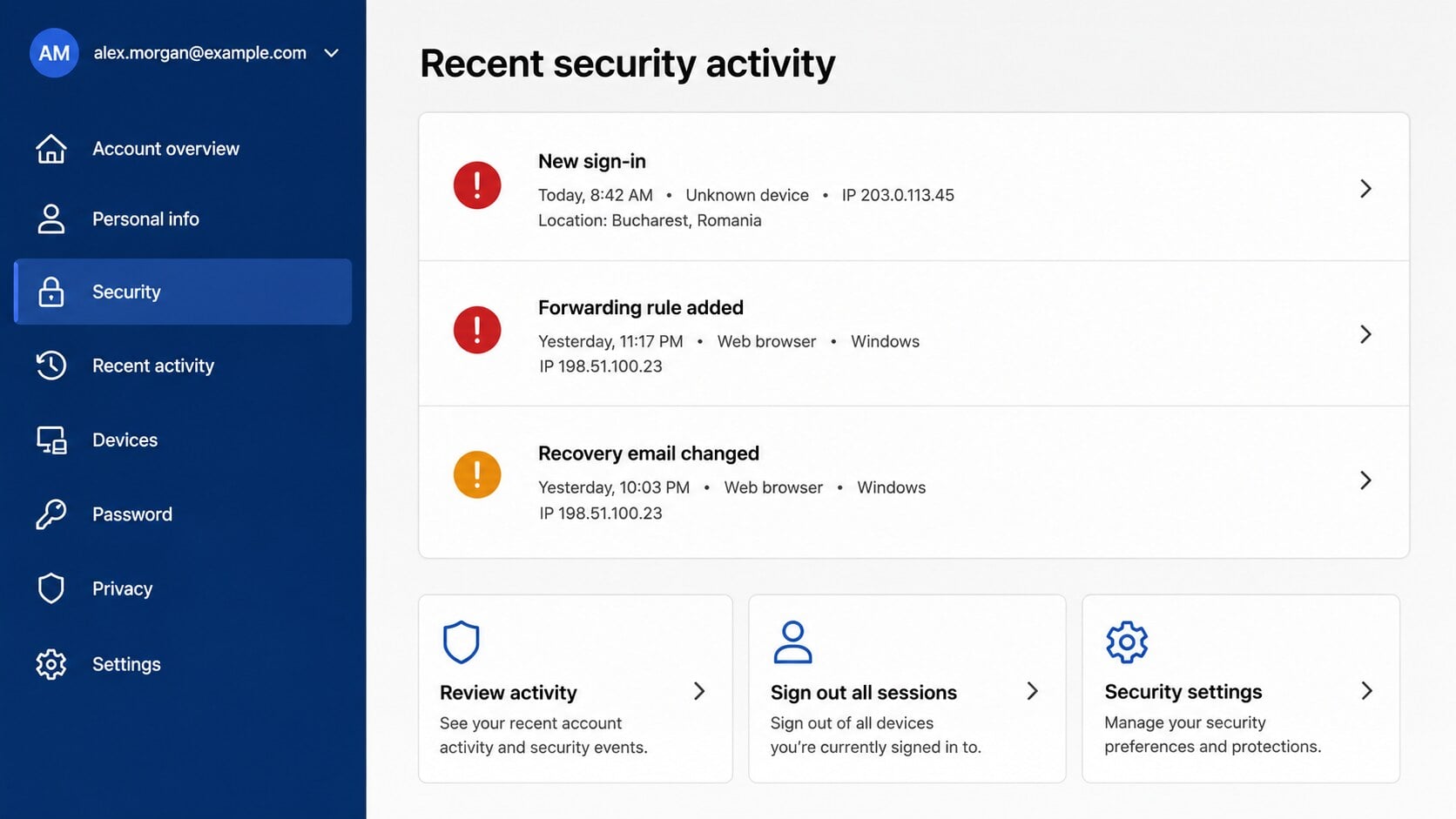
A hidden forwarding rule can copy future correspondence without obvious changes to the inbox.
Criminals may study writing styles and ongoing transactions before sending payment changes or malicious files from the trusted account.
The original six-message lure can therefore become business email compromise, identity theft, or another wave of phishing.
What the Fake “Secure Connection” Claim Really Means
A phishing page can use HTTPS and still be malicious. Encryption only protects the connection between the visitor and the current website.
It does not confirm that the website belongs to an email provider, employer, hosting company, or any organization named in the message.
Attackers can obtain certificates for domains they control. Browsers then display a padlock while credentials travel safely to the wrong recipient.
The decisive question is who controls the hostname. A badge drawn inside the page answers nothing.
Sender, Mail Queue, Link, and Account Checks
The sender must match the actual mail administrator
Expand the From and Reply-To fields. A friendly display name can hide an unrelated address or a compromised third-party account.
Workplace notices should come through the organization’s known domain and established support process.
Do not reply for confirmation. Contact the help desk through a saved number, company directory, or internal portal.
The alleged queue should be visible inside the real service
Open the mailbox by typing its normal address or using a trusted bookmark.
Check spam, quarantine, storage usage, service status, and administrative alerts without touching the email button.
If six messages are genuinely pending, the provider or company administrator should be able to confirm them independently.
The link hostname matters more than the login design
Preview the button destination before opening it. Look for unrelated domains, encoded paths, redirects, and hosts with no connection to the service.
A page can copy familiar webmail styling or insert the recipient’s address automatically.
Neither trick transfers control of the domain to the genuine provider.
The account should be checked for post-login changes
Review recent sessions, recovery methods, application passwords, connected apps, delegates, and forwarding rules.
Attackers often preserve access rather than causing an obvious lockout. A working mailbox is not proof that nobody else entered it.
Save audit logs before removing suspicious entries when an employer or investigation team may need evidence.
What Criminals Can Do With One Mailbox Password
Reset other accounts
Email is the recovery channel for many services. An intruder can request reset links and delete the resulting notifications.
Financial platforms may have additional protections, but shopping, social, storage, and work applications can still be exposed.
The risk increases sharply when the same password was reused elsewhere.
Impersonate the mailbox owner
Messages sent from a genuine account pass the first trust check for friends, customers, and colleagues.
Criminals can request urgent payments, gift cards, confidential documents, or password resets while pretending to be the owner.
Existing conversation history supplies names, tone, and context for a more convincing approach.
Monitor business conversations
Invoices and vendor threads reveal when money is about to move.
An attacker can wait, then replace banking instructions near the final payment date.
Separate telephone confirmation for new account details can stop this form of payment diversion.
Build additional phishing campaigns
Address books and previous messages identify relationships that generic mailing lists cannot reveal.
A criminal can resend the delayed-message story from the victim’s account or switch to shared documents and voicemail notices.
Each successful mailbox expands the pool of believable senders.
How to Recognize the Message Before Clicking
- The notice hides every supposedly delayed sender and subject.
- A precise message count appears without a queue reference.
- The sender calls itself “Mail Delivery” instead of naming a provider.
- The button points outside the normal mailbox domain.
- The landing page requests a full email password.
- A self-created security badge is presented as proof.
- The footer contains irrelevant tax-authority language.
- The message promises delivery only after external authentication.
One odd detail may have an innocent explanation. Several unrelated details pointing toward an external password form are a strong phishing pattern.
When uncertainty remains, verify inside the real mailbox. No legitimate retrieval process becomes less valid because you avoided an emailed button.
Why the Tax-Authority Footer Matters
Unrelated legal language exposes template assembly
Mail delivery and tax administration are separate systems. A routine queue notice has no reason to explain a tax authority’s data powers.
The mismatch suggests text was copied from another document and inserted without understanding its purpose.
Scam templates often collect impressive phrases because official tone matters more to the operator than logical consistency.
Legal wording can intimidate careful readers
Privacy and regulation references may discourage questions by making the sender appear compliant and knowledgeable.
Recipients can mistake complicated language for evidence that lawyers, administrators, or government systems approved the message.
A legitimate notice should explain a relevant policy clearly, not scatter unrelated authority across a basic mailbox alert.
Context is a stronger test than formality
Read each footer sentence and ask how it connects to the requested action.
Boilerplate concerning taxes, investments, shipping, or health has no place in retrieving delayed personal email.
When the legal language cannot answer who operates the service, it adds decoration rather than accountability.
- Identify the organization named by the policy.
- Check whether the rule applies to email delivery.
- Look for a genuine privacy notice inside the established service.
- Treat disconnected official language as a warning, not reassurance.
What to Do if You Have Fallen Victim to This Scam
Choose the actions matching what happened. Receiving the letter, opening its link, entering a password, and downloading a file create different levels of exposure.
- Close the phishing page. Do not enter another password or follow any later prompt. Preserve the email, URL, and screenshots for reporting.
- Open the real mailbox independently. Use a known bookmark or typed address, then check whether any genuine delivery or storage warning exists.
- Change an exposed password immediately. Use a clean device and create a unique password that has never protected another account.
- End unauthorized access. Sign out every session, remove unknown devices, revoke application passwords, and enable multi-factor authentication.
- Inspect mailbox persistence. Check forwarding, filters, delegates, recovery details, connected applications, and recently deleted security messages.
- Replace reused credentials. Start with banking, work systems, cloud storage, shopping, and social accounts tied to the compromised address.
- Warn affected contacts. Tell colleagues and customers to distrust recent links, files, payment changes, or urgent requests from the account.
- Scan when a file was involved. Malwarebytes can check downloads and persistence. AdGuard can block many known phishing pages and malicious advertising redirects.
- Escalate workplace exposure. Notify the administrator quickly so logs, tokens, mail rules, and connected services can be reviewed centrally.
- Report financial or identity misuse. Contact the relevant institution and local fraud authority, then ignore anyone promising guaranteed recovery for an upfront fee.
Is Your Device Infected? Run a Free Malware Scan
Slow performance, constant pop-ups, or strange behavior? These are classic signs of a malware infection. The fastest way to find out is to scan your device with Malwarebytes Free — one of the most trusted malware removal tools available.
The free version detects and removes the most common threats, including:
- Adware — the cause of those annoying pop-ups
- Browser hijackers — unwanted redirects and changed homepages
- Trojans and spyware — hidden programs stealing your data
- Potentially unwanted programs (PUPs) — software you never asked for
👉 Select your device below — Windows, Mac, or Android — then follow the simple steps to download Malwarebytes, scan your system, and remove any threats it finds. The scan usually takes 5 to 20 minutes.
Run a Malware Scan with Malwarebytes for Windows
Malwarebytes is one of the most popular and trusted anti-malware tools for Windows — and it’s completely free for removing infections. It catches threats that many antivirus programs miss, including adware, browser hijackers, and trojans. Follow the steps below to scan and clean your PC in just a few minutes.
Download Malwarebytes
Click the button below to download the latest version of Malwarebytes for Windows from the official source. The free version is all you need — it will scan your computer and remove adware, browser hijackers, and other malicious software at no cost.
Download MalwarebytesOfficial installer for Windows 11 and 10. Your download starts right away.Want real-time protection? See Malwarebytes Premium Malwarebytes Free for WindowsScans and removes malware at no cost
-
Install Malwarebytes
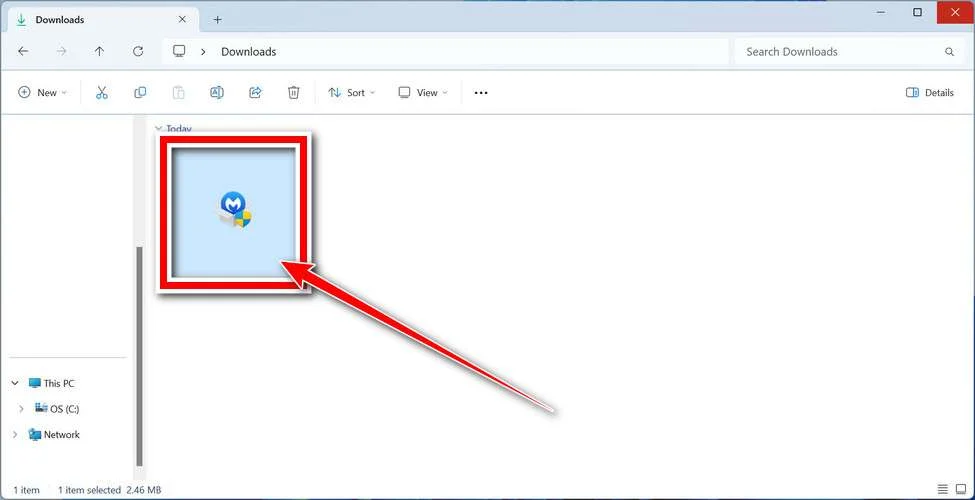
When the download finishes, open your Downloads folder and double-click the MBSetup file. If Windows shows a User Account Control pop-up, click “Yes” to allow the installation.
Follow the On-Screen Prompts to Install Malwarebytes
The setup wizard will walk you through a few quick screens:
-
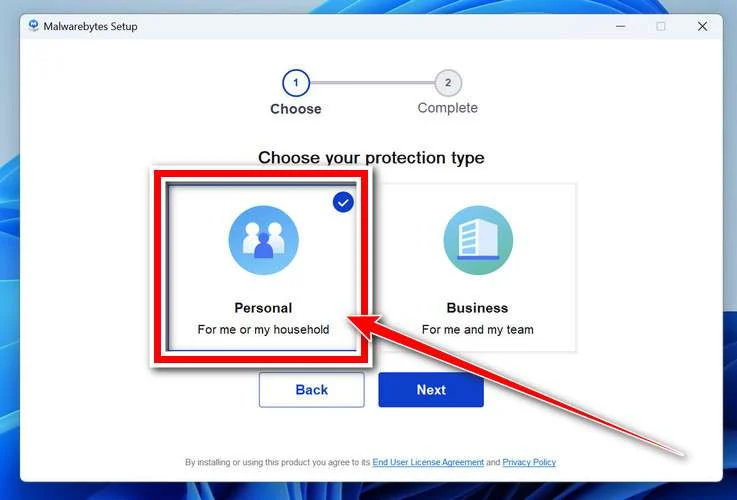
Choose where you’re installing the program — “Personal Computer” or “Work Computer” — then click Next.
-
Malwarebytes will now install on your device. This usually takes under a minute.

-
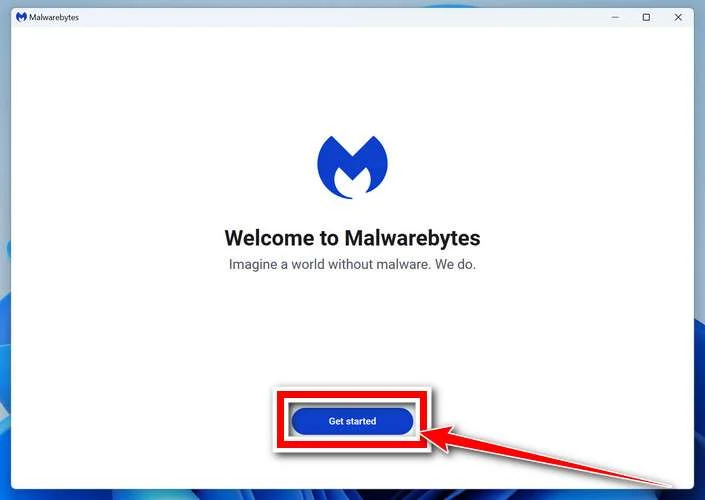
When installation is complete, the “Welcome to Malwarebytes” screen will open automatically.
-
On the final screen, click Open Malwarebytes to launch the program.

-
Enable “Scan for Rootkits”
Before scanning, turn on rootkit detection so Malwarebytes can find even the most hidden threats. Click the Settings gear icon on the left side of the screen.
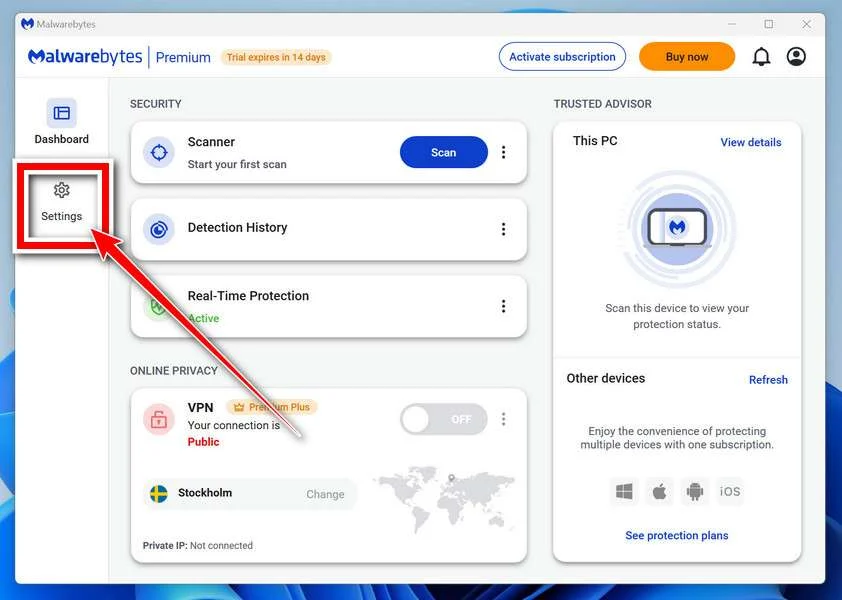
In the settings menu, find “Scan for rootkits” and click the toggle so it turns blue.

Done? Click “Dashboard” in the left pane to return to the main screen.
Start the Scan
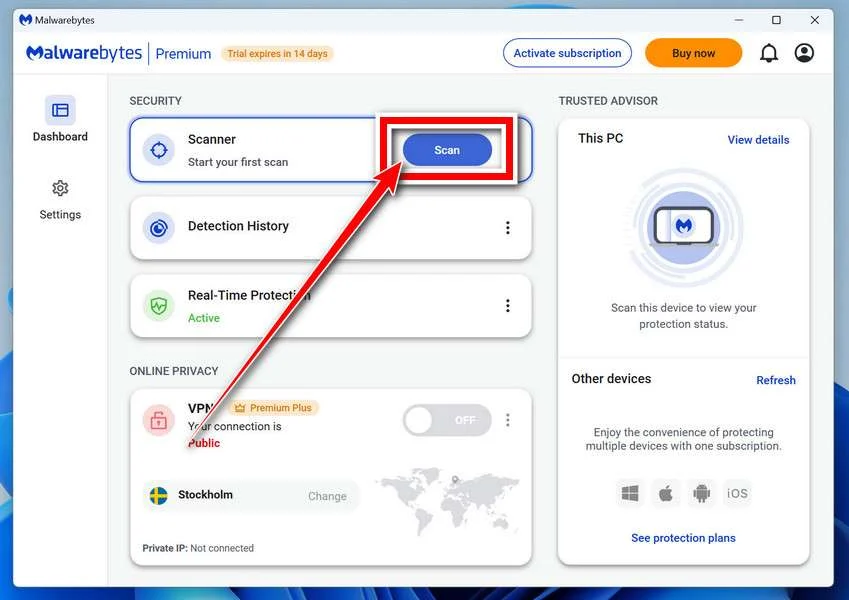
Click the blue Scan button. Malwarebytes will automatically update its virus database and start checking your computer for malware.
-
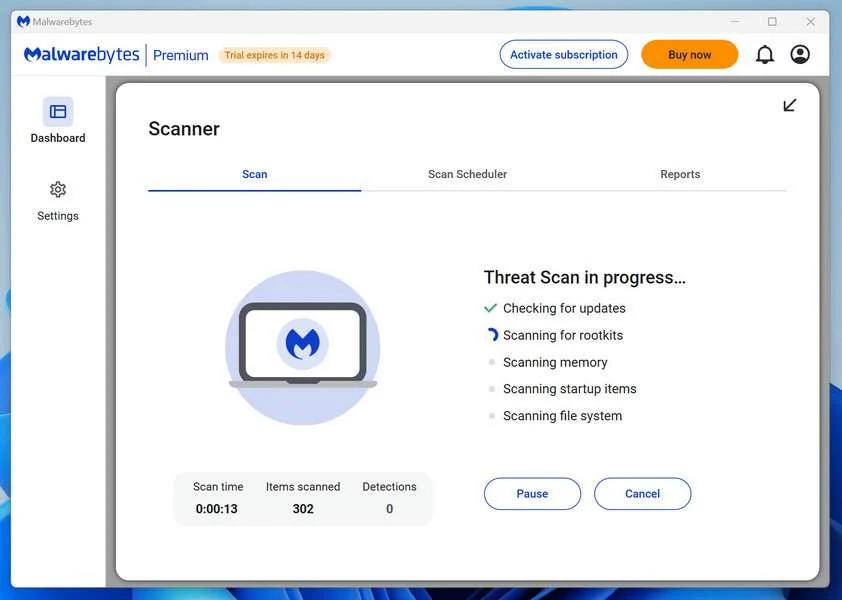
Wait for the Scan to Finish
The scan checks your entire system for browser hijackers and other malicious programs, so it can take 5 to 20 minutes depending on your computer. Feel free to do something else — just check back occasionally to see the progress.
-
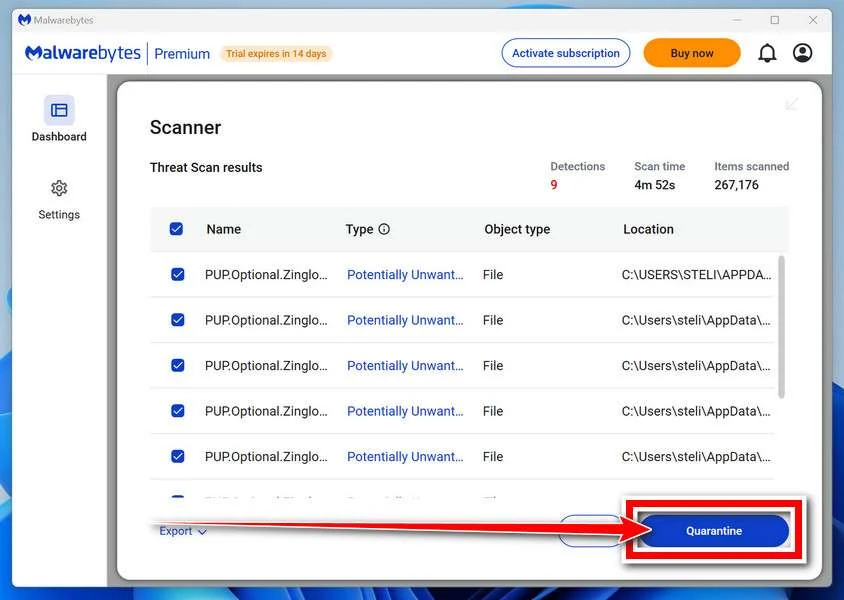
Quarantine the Detected Threats
When the scan is done, you’ll see a list of everything Malwarebytes found — malware, adware, and potentially unwanted programs. Click the “Quarantine” button to remove all of them at once.
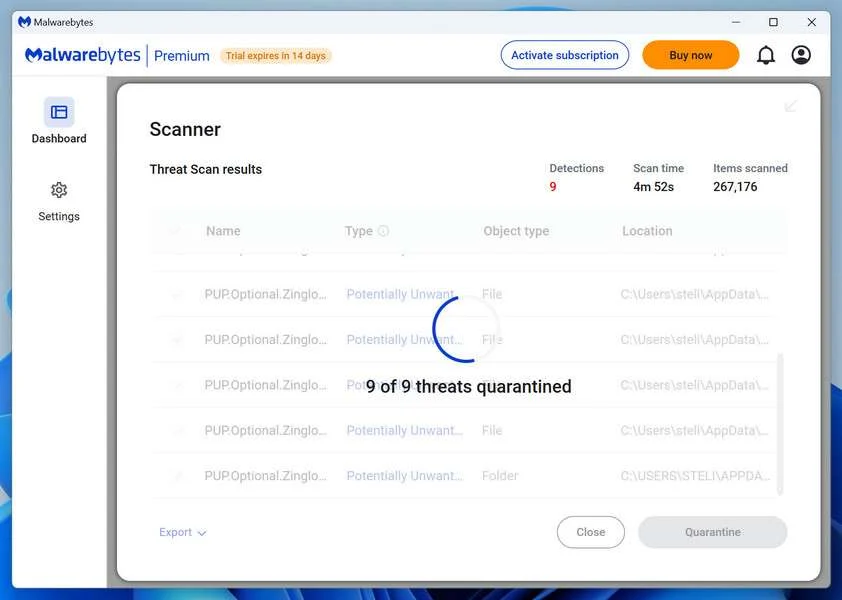
Malwarebytes will now remove the malicious files and registry entries and move them safely into quarantine.
-
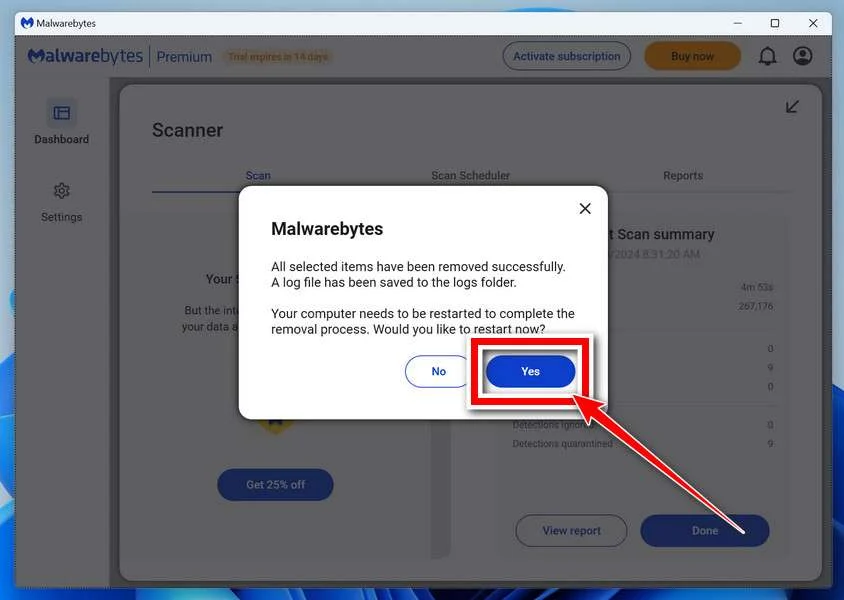
Restart Your Computer
Some threats can only be fully removed after a reboot. If Malwarebytes asks you to restart, click Yes. Once you’re logged back in, Malwarebytes has finished removing the threats it found.
That’s it — your Windows PC is now clean of trojans, adware, and other malware, and should be back to running smoothly.
If you are still having problems with your computer after completing these instructions, then please follow one of the steps:
- Run a computer scan with ESET Online Scanner
- Ask for help in our Windows Malware Removal Help & Support forum.
Run a Malware Scan with Malwarebytes for Mac
Malwarebytes for Mac is a free on-demand scanner that removes the malware other security software tends to miss — adware, browser hijackers, and unwanted programs included. Cleaning an infected Mac with Malwarebytes has always been completely free, and it’s our go-to recommendation. Follow the steps below to scan and clean your Mac in just a few minutes.
-
Download Malwarebytes for Mac
Click the button below to download the latest version of Malwarebytes for Mac.
Download MalwarebytesOfficial installer for macOS. Your download starts right away.Want real-time protection? See Malwarebytes PremiumMalwarebytes Free for MacScans and removes malware at no cost -
Open the Malwarebytes setup file
When the download finishes, open your Downloads folder and double-click the setup file to begin the installation.
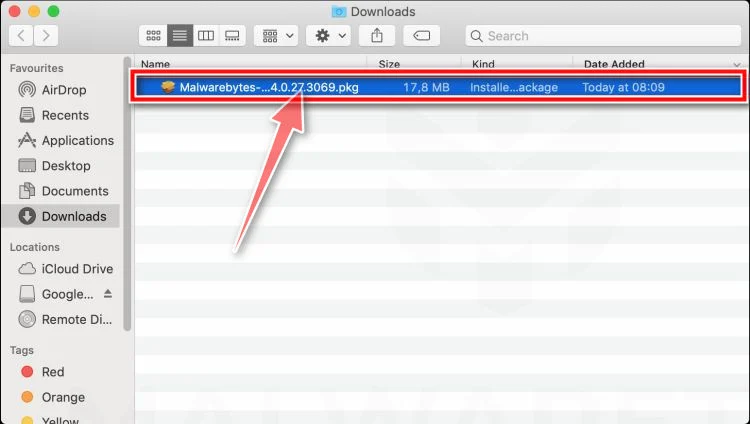
-
Follow the On-Screen Prompts to Install Malwarebytes
The Malwarebytes for Mac Installer will guide you through a few quick screens. Click “Continue” and keep following the prompts until the installation completes.
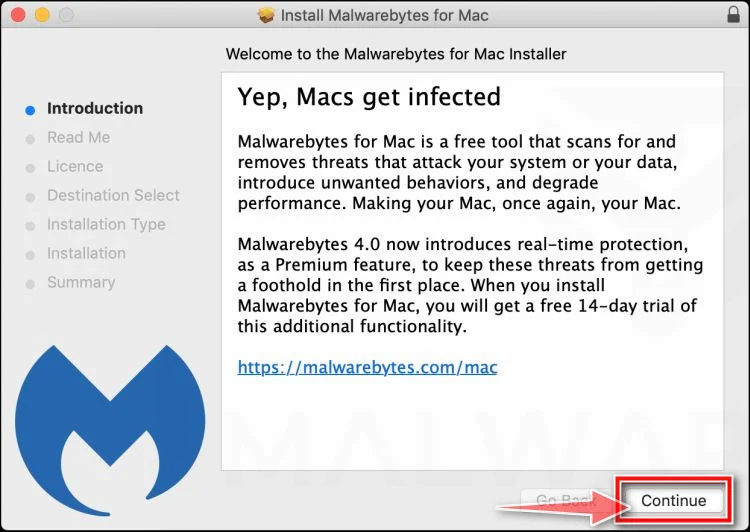
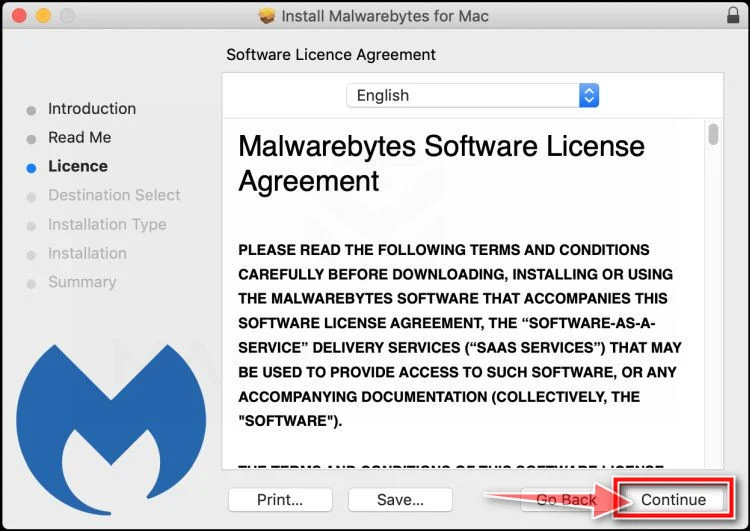
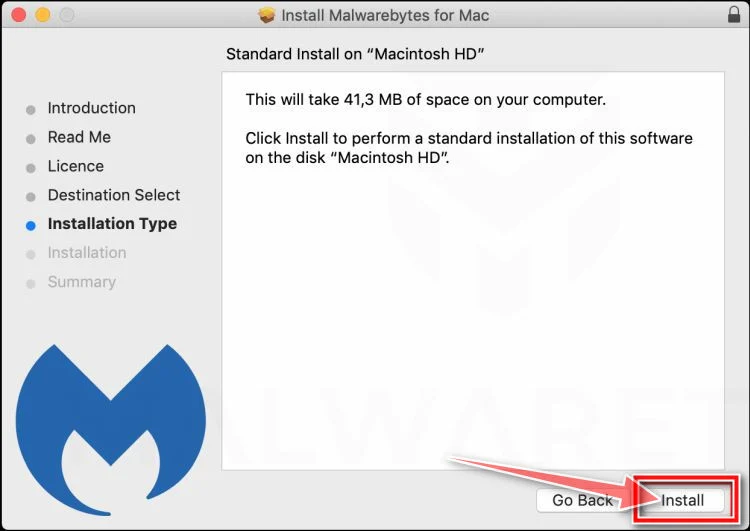
When the installation is complete, Malwarebytes opens to the Welcome to Malwarebytes screen. Click “Get started“.
-
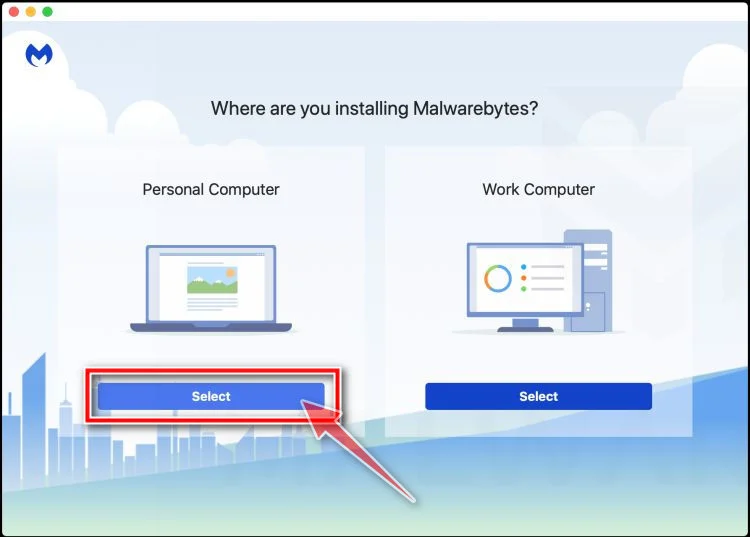
Select “Personal Computer” or “Work Computer”
Malwarebytes will ask what type of computer you’re installing it on. Click either Personal Computer or Work Computer, whichever applies.
-
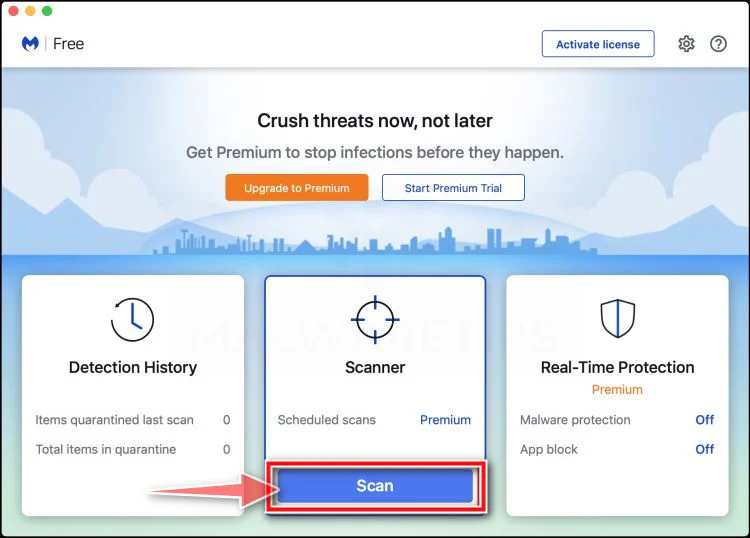
Start the Scan
Click the “Scan” button. Malwarebytes will automatically update its detection database and begin checking your Mac for malware.
-
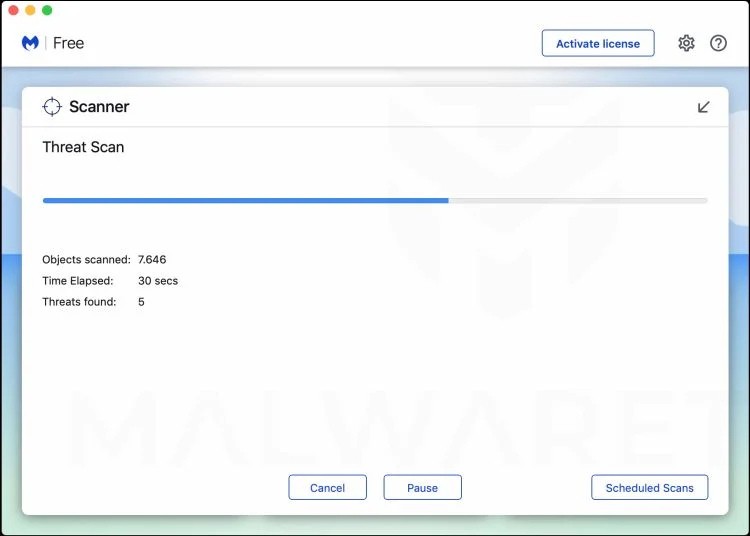
Wait for the Scan to Finish
Malwarebytes will scan your Mac for adware, browser hijackers, and other malicious programs. This can take a few minutes, so feel free to do something else — just check back occasionally to see the progress.
-
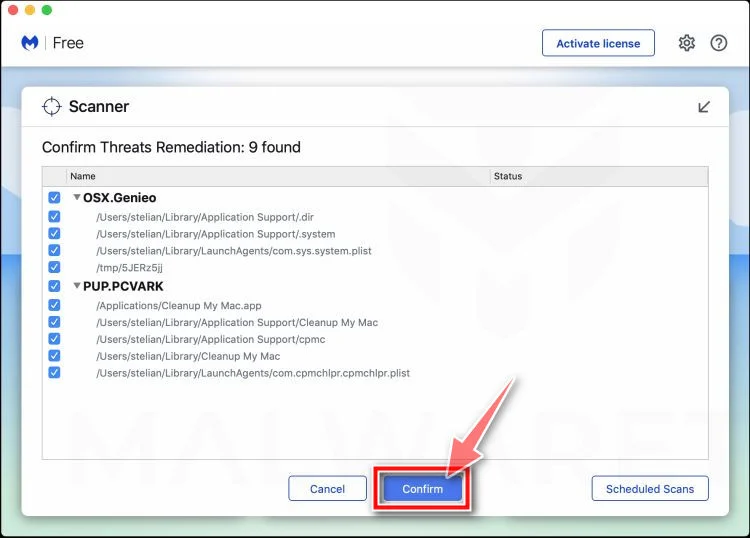
Quarantine the Detected Threats
When the scan is done, you’ll see a list of everything Malwarebytes found. Click the “Quarantine” button to remove all the threats at once.
-
Restart Your Mac
Malwarebytes will now remove all the malicious files it found. Some threats can only be fully removed after a reboot — if Malwarebytes asks you to restart, allow it. Once you’re logged back in, your Mac is clean.
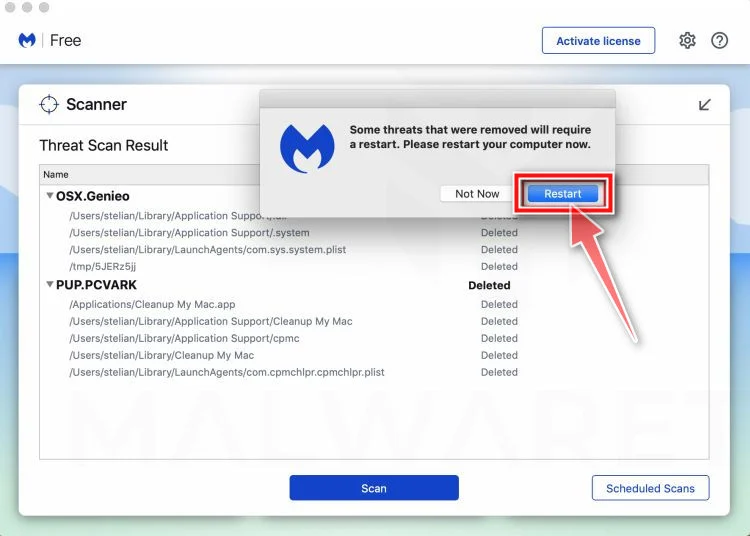
That’s it — your Mac is now free of adware, rogue browser extensions, and other potentially harmful software.
If you are still experiencing problems while trying to remove a malicious program from your computer, please ask for help in our Mac Malware Removal Help & Support forum.
Run a Malware Scan with Malwarebytes for Android
Malwarebytes for Android automatically detects and removes dangerous threats like malware and ransomware so you don’t have to worry about your most-used device being compromised. Aggressive detection of adware and potentially unwanted programs keeps your Android phone or tablet running smooth.
-
Download Malwarebytes for Android.
You can download Malwarebytes for Android by clicking the link below.
Get Malwarebytes for AndroidOpens Google Play in a new tab.Want real-time protection? See Malwarebytes Premium for AndroidMalwarebytes for AndroidScans your phone and removes malware at no cost -
Install Malwarebytes for Android on your phone.
In the Google Play Store, tap “Install” to install Malwarebytes for Android on your device.

When the installation process has finished, tap “Open” to begin using Malwarebytes for Android. You can also open Malwarebytes by tapping on its icon in your phone menu or home screen.

-
Follow the on-screen prompts to complete the setup process
When Malwarebytes will open, you will see the Malwarebytes Setup Wizard which will guide you through a series of permissions and other setup options.
This is the first of two screens that explain the difference between the Premium and Free versions. Swipe this screen to continue.
Tap on “Got it” to proceed to the next step.
Malwarebytes for Android will now ask for a set of permissions that are required to scan your device and protect it from malware. Tap on “Give permission” to continue.
Tap on “Allow” to permit Malwarebytes to access the files on your phone.
-
Update database and run a scan with Malwarebytes for Android
You will now be prompted to update the Malwarebytes database and run a full system scan.

Click on “Update database” to update the Malwarebytes for Android definitions to the latest version, then click on “Run full scan” to perform a system scan.

-
Wait for the Malwarebytes scan to complete.
Malwarebytes will now start scanning your phone for adware and other malicious apps. This process can take a few minutes, so we suggest you do something else and periodically check on the status of the scan to see when it is finished.

-
Click on “Remove Selected”.
When the scan has been completed, you will be presented with a screen showing the malware infections that Malwarebytes for Android has detected. To remove the malicious apps that Malwarebytes has found, tap on the “Remove Selected” button.

-
Restart your phone.
Malwarebytes for Android will now remove all the malicious apps that it has found. To complete the malware removal process, Malwarebytes may ask you to restart your device.
That’s it — your Android phone is now clean — no more malicious apps, adware, or browser redirects.
If you are still having problems with your phone after completing these instructions, then please follow one of the steps:
- Restore your phone to factory settings by going to Settings > General management > Reset > Factory data reset.
- Ask for help in our Mobile Malware Removal Help & Support forum.
Stay Protected: Block Ads and Malicious Sites
Now that your device is clean, keep it that way. Most infections start with a malicious ad or a fake download button — so blocking them at the source is your best defense.
We recommend AdGuard, which blocks malicious ads, phishing pages, and dangerous redirects before they can reach you.
👉 Download AdGuard and browse safely
If you only read the email, mark it as phishing and delete it. Viewing ordinary message content does not surrender a password.
If you clicked but entered nothing, close the page and review downloads. The account risk rises when information was submitted or a file was opened.
Frequently Asked Questions
Are six messages really waiting for me?
The number is part of the lure. Check quarantine and delivery notices inside the genuine mail service to determine whether anything is actually pending.
Why did the fake page already know my email address?
The address can be encoded in the link. Displaying it does not prove the page accessed your account.
Does a secure-connection badge make the portal safe?
No. Anyone can draw a badge, and HTTPS can encrypt a connection to a phishing site.
Am I infected if I only opened the email?
Usually not. Risk changes if you opened a malicious attachment, downloaded software, or granted browser permissions.
What if the fake portal rejected my password?
Assume the entry was recorded. Change it through the real provider and do not test another password on the page.
Can the attacker keep reading mail after I change the password?
Possibly, if forwarding, app passwords, tokens, or delegates remain. Review those settings and sign out all sessions.
The Bottom Line
The Messages Failed Due to System Delay scam turns ordinary inbox anxiety into a reason to visit an external password form.
Check delivery issues inside the real service. If credentials were submitted, secure the mailbox quickly and examine the quiet settings attackers use to remain invisible.

Join the discussion
0 commentsShare your experience or ask a question about this article.
Discussion
Start the conversation
Have a question or something useful to share? Add the first comment.