A signed real estate document can demand attention, especially when the message implies every participant already finished their part.
The SkySlope DigiSign notice examined here looks routine at first glance, but several details deserve a slower, more careful review.
Overview
What the completed-document message claims
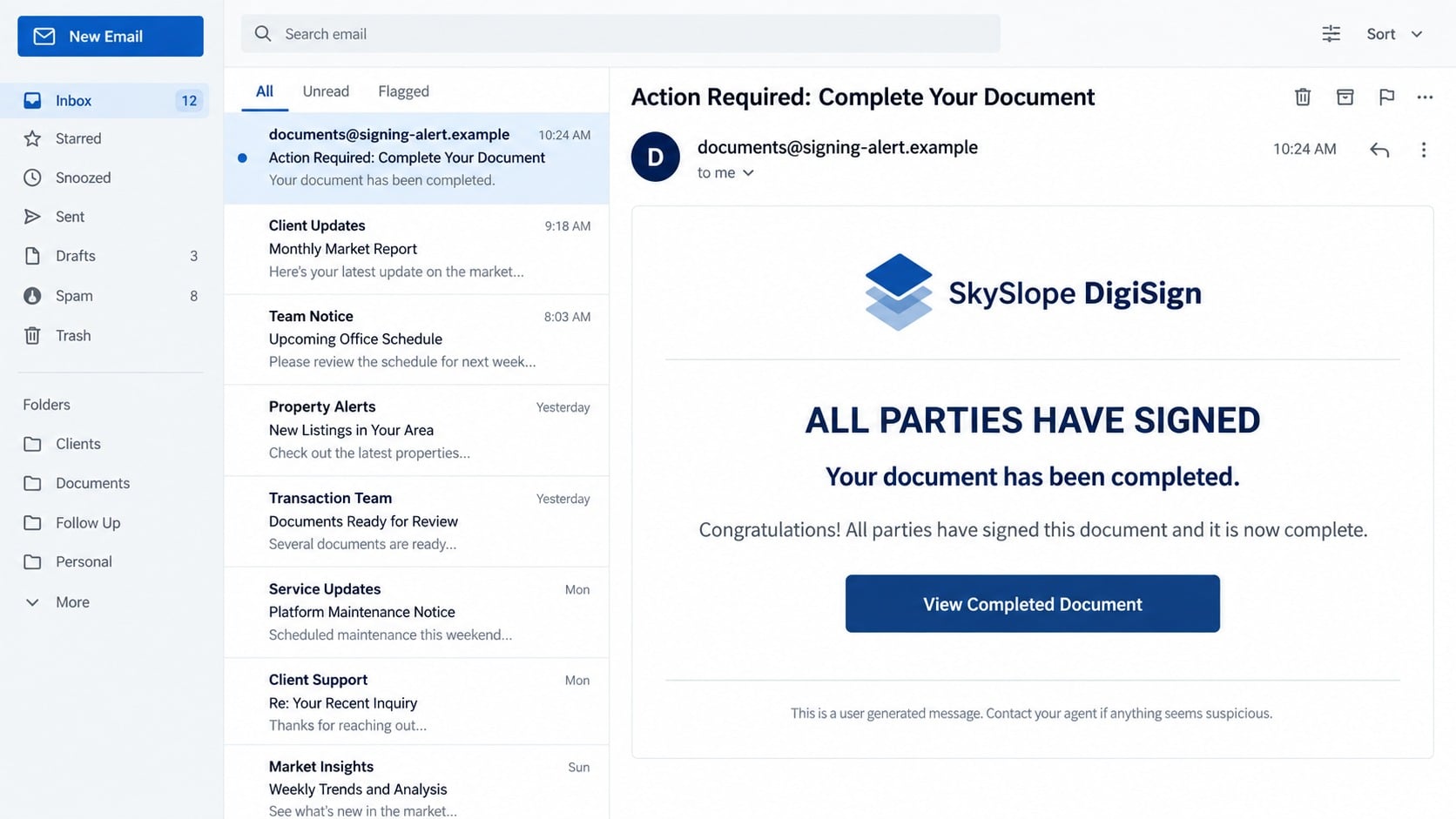
The email arrives with a subject resembling “Action Required: Complete Your Document.”
Inside, a SkySlope DigiSign heading appears above the awkward statement “ALL PARTY HAVE SIGNED.”
The message then says the document has been completed and presents a prominent “View Completed Document” button.
Congratulatory language suggests everyone signed successfully, creating the impression that the remaining task is simply downloading a final copy.
A small security warning may also appear, telling recipients not to share the email or its link.
That warning does not prove authenticity. Phishing messages routinely borrow security language because it makes an unfamiliar link feel protected.
Where the button actually leads
The observed button did not take the recipient to a recognizable SkySlope or document-signing account.
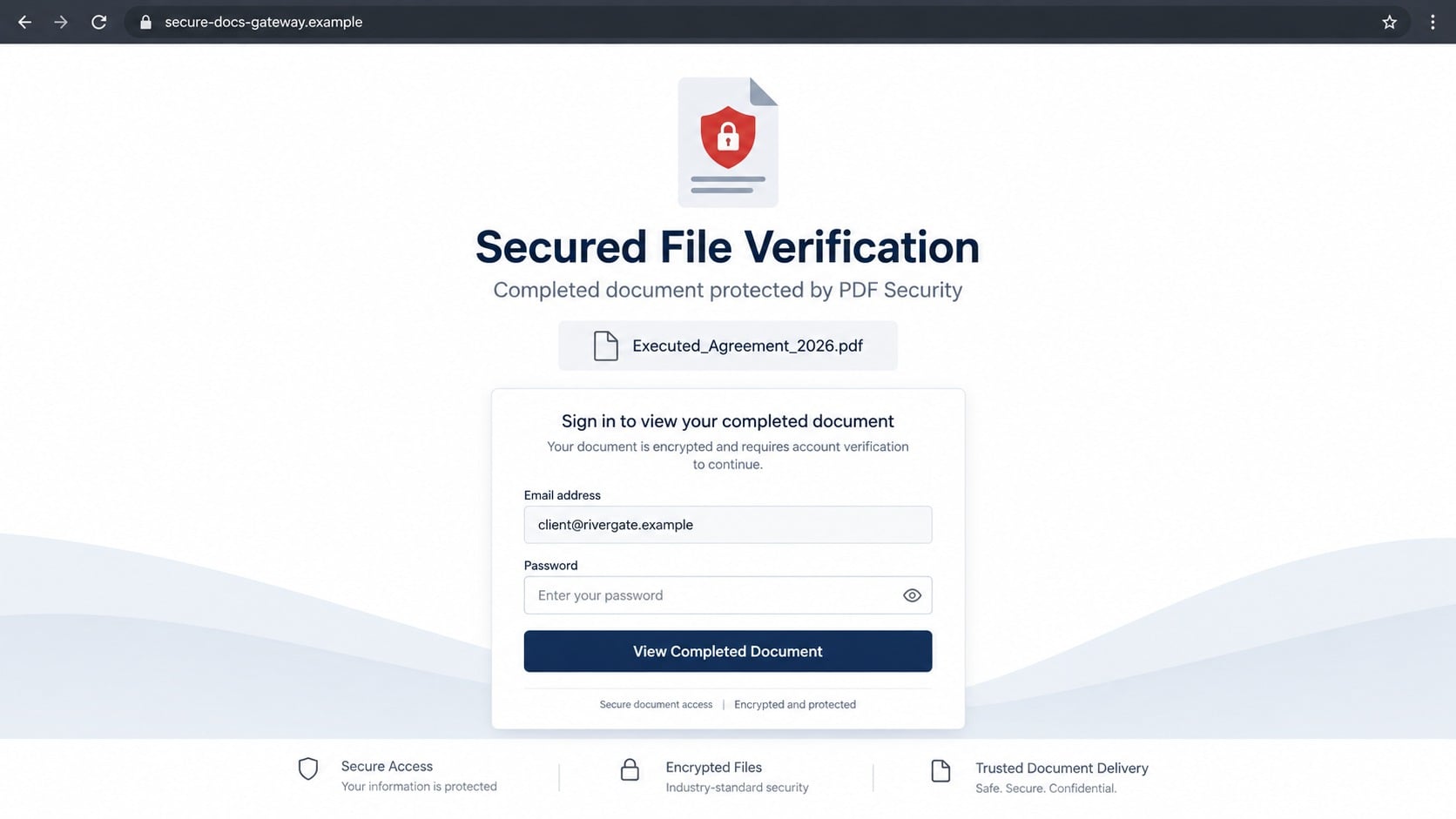
It opened an unrelated website that presented a “Secured Adobe File Verification” page.
The page displayed the recipient’s email address and requested the corresponding password before revealing the supposed file.
This transition is the decisive problem. A completed SkySlope document should not require mailbox credentials on an unrelated domain.
The page is designed to collect email passwords, not verify a legitimate transaction.
The warning signs in one view
The campaign combines familiar property paperwork with recognizable signing and PDF language.
Those references create borrowed trust, while the actual destination remains outside every organization named in the message.
Important warning signs include:
An unexpected completed envelope that names no property, transaction, agent, or brokerage.
Broken grammar such as “ALL PARTY HAVE SIGNED.”
A button whose destination differs from the service named in the email.
An Adobe-themed page that asks for an email account password.
A prefilled address used to make the false login feel personalized.
No trustworthy way to identify the document before signing in.
SkySlope, DigiSign, and Adobe are used as visual references in the lure. Their names do not establish involvement with the campaign.
How the SkySlope DigiSign Completed Document Email Scam Works
Step 1: The attacker sends an unexpected completion notice
The first message imitates the final stage of an electronic signature workflow.
Completion notices are effective lures because recipients expect signed documents to contain contracts, disclosures, leases, offers, or closing records.
The email avoids specific transaction details. That vagueness lets the same template reach agents, buyers, sellers, tenants, contractors, and office staff.
A recipient may assume a colleague started the envelope and click before asking who sent it.
The subject also mixes “action required” with “completed,” creating a small contradiction that encourages curiosity.
If everything is finished, the only apparent action is viewing the document. That makes the button seem both urgent and harmless.
Step 2: SkySlope and signature language provide borrowed credibility
Real estate teams regularly exchange documents through specialized transaction platforms.
Scammers exploit that routine by placing trusted names near generic signing language, even when their infrastructure has no connection to those services.
The phrase “all party have signed” communicates the intended story despite its grammar.
Recipients focused on a closing or deadline may notice the meaning before noticing the mistake.
The email may resemble an automated notification, which discourages replies and directs attention toward the central button.
Automation is easy to imitate. A logo, neutral layout, and standard footer can be copied without access to a legitimate platform.
Step 3: The button redirects outside the promised service
Clicking “View Completed Document” begins the campaign’s critical handoff.
The browser reaches a domain unrelated to the named transaction platform, signing service, brokerage, or known participant.
Attackers often choose neutral domain names containing words like document, secure, file, human resources, or verification.
Those words describe a function, but they do not identify who operates the website.
A padlock beside the address only means the connection is encrypted. It does not confirm that the page belongs to SkySlope.
Fresh phishing domains can obtain encryption certificates automatically, just like ordinary websites.
Redirects may also hide the final address until the victim has already followed one or more intermediate links.
Step 4: A fake PDF verification screen asks for the mailbox password
The landing page changes the story from transaction signing to PDF security.
It may claim that a protected document requires Adobe verification, then display the victim’s email in a completed field.
Prefilling the address creates familiarity and reduces the amount of information the victim must type.
The password field is the real collection point.
An unrelated document website cannot legitimately authenticate a private mailbox by receiving its password directly.
Secure integrations normally redirect users to the genuine identity provider, where the address bar shows the provider’s controlled domain.
The phishing form instead sends submitted values to the attacker or a collection service under their control.
Step 5: Failed-login theater can capture multiple passwords
Some fake portals reject the first entry and claim the password is incorrect.
This behavior is deliberate. People frequently retype carefully, submit an older password, or try another password used elsewhere.
Each attempt can be recorded.
The page may then show a loading animation, blank document, harmless error, or redirect to a real website.
That ending makes the incident look like a technical failure rather than successful credential theft.
The victim may postpone changing the password because no obvious confirmation appears.
Step 6: The stolen mailbox becomes a platform for deeper fraud
Email access is especially valuable in property transactions because conversations can contain names, signatures, phone numbers, invoices, and payment schedules.
An intruder can search for words such as closing, deposit, escrow, wire, commission, lease, or purchase agreement.
They may quietly create forwarding rules, delete security notices, and study conversation patterns before sending anything.
Once the timing looks favorable, the attacker can impersonate an agent, title representative, vendor, or client.
A fraudulent wire instruction sent inside an existing conversation can appear far more convincing than the original phishing email.
The account may also be used to distribute fresh completed-document lures to trusted contacts.
Why This Real Estate Document Lure Feels Convincing
Completed paperwork suggests a safe final step
People tend to treat signing requests cautiously because they expect to review terms before approving anything.
A completion notice feels different. It implies the important decisions already happened and the remaining file is simply a record.
That framing lowers resistance precisely when the link still deserves verification.
A genuine final copy should identify the envelope, parties, sender, and transaction context before demanding authentication.
Property transactions involve many unfamiliar participants
Buyers and sellers may interact with agents, coordinators, lenders, inspectors, attorneys, insurers, title companies, and contractors.
Because new names are normal, an unfamiliar sender may not feel immediately suspicious.
Scammers benefit from that crowded environment.
The safest question is not whether the sender’s role sounds possible. Ask whether a known participant independently confirms this exact document.
Deadlines make imperfect messages easier to overlook
Closings and leases create real time pressure.
A recipient worried about delaying other parties may overlook grammar, missing identifiers, or a strange destination.
Urgency should increase verification, not shorten it.
A brief call using a saved number can prevent days of account recovery or a devastating payment diversion.
What Criminals Can Do With a Compromised Real Estate Mailbox
Monitor conversations without announcing their presence
Attackers do not always act immediately after obtaining a password.
They may read weeks of mail, identify active transactions, and learn how each participant writes.
Hidden forwarding rules can copy incoming messages elsewhere while the owner continues using the account normally.
This surveillance helps criminals choose moments when a request for money or documents will appear believable.
Redirect deposits, invoices, or closing funds
A compromised conversation can be modified with new bank details shortly before payment.
The criminal may explain the change as an updated escrow account, accounting correction, or same-day closing requirement.
Because the message comes from a real mailbox and references real details, ordinary spam checks may not stop it.
Every payment instruction should be confirmed through a known telephone number, especially after any last-minute banking change.
Collect sensitive documents for identity fraud
Mailboxes may contain identification, tax records, loan applications, signatures, addresses, and financial statements.
Those materials can support identity theft, account recovery abuse, targeted impersonation, or fraudulent applications.
Recovery therefore involves more than changing one password.
The owner must review what information was accessible and notify affected organizations when exposure could create further harm.
Sender, Envelope, Destination, and Account Verification Checks
Confirm the sender through an existing conversation
Do not reply to the unexpected notice or call a number printed inside it.
Open a previous verified conversation with the agent, coordinator, attorney, or transaction contact.
Ask whether they sent a completed envelope and request its transaction reference.
A legitimate sender can identify the property, document type, participants, and expected delivery time.
If the answer is no, preserve the message and report it to the organization being impersonated.
Inspect the envelope details before opening any link
Real signing workflows provide meaningful context, not merely a button.
Look for the sender’s name, company, envelope identifier, property reference, signing date, and recognizable participants.
Compare those details with records you already possess.
Missing context matters because the attacker cannot safely guess information unique to your transaction.
Grammar alone is not proof, but mistakes reinforce concern when essential identifiers are also absent.
Examine the destination without trusting its design
On a desktop browser, hover over the button and read the actual destination.
On other devices, avoid opening it. Use the service’s saved bookmark or manually entered address instead.
The registered domain must belong to the expected provider, not merely contain reassuring words.
Subdomains and long paths can place a trusted name before an attacker-controlled domain.
Read the address from right to left around the registered domain, and stop if ownership remains unclear.
Open the known account independently
Sign in through the platform address you normally use, never through the email button.
Check the account’s envelopes, completed documents, notifications, and activity history.
If the document is real, it should appear there without requiring a mailbox password on another website.
Ask internal support to inspect the email headers and destination when a business account is involved.
Independent access breaks the attacker’s carefully staged route and gives you a trusted comparison point.
How to Handle a Suspicious Completed Document Safely
Keep the email intact while you verify it. Forwarding as an attachment can preserve routing information for security staff.
Do not test the password form with false credentials. Visiting further can expose browser details and confirm that your address is active.
If a colleague sent the message, ask them to share the envelope identifier through a separate channel.
Organizations should teach staff that completed documents never justify entering an email password into an unrelated PDF portal.
Payment teams should treat any later banking change from the same conversation as high risk.
Enable multifactor authentication before an incident, preferably using an authenticator application or security key rather than text messages alone.
What to Do If You Fell for the SkySlope DigiSign Scam
Change the exposed password from a trusted device. Open the genuine email provider directly. Create a unique password that you have never used elsewhere.
End active sessions. Review recent sign-ins and sign out every unfamiliar device. If available, revoke all sessions created before the password change.
Enable strong multifactor authentication. Prefer an authenticator application or security key. Replace recovery codes if the mailbox stored or displayed them.
Remove attacker persistence. Inspect forwarding rules, filters, delegates, connected applications, app passwords, recovery addresses, and automatic replies for unauthorized changes.
Warn transaction participants quickly. Tell agents, clients, title staff, lenders, and accounting personnel that messages from the account may be untrustworthy.
Pause pending payments. Confirm every wire or deposit instruction through previously verified contact details. Notify the financial institution immediately if money moved.
Scan the device. Run Malwarebytes to check for malware, then use AdGuard to reduce malicious advertising and known phishing destinations during browsing.
Document and report the incident. Save the email, destination, timestamps, and account alerts. Provide them to organizational security and relevant fraud channels.
Is Your Device Infected? Run a Free Malware Scan
Slow performance, constant pop-ups, or strange behavior? These are classic signs of a malware infection. The fastest way to find out is to scan your device with Malwarebytes Anti-Malware Free — one of the most trusted malware removal tools available.
The free version detects and removes the most common threats, including:
Adware — the cause of those annoying pop-ups
Browser hijackers — unwanted redirects and changed homepages
Trojans and spyware — hidden programs stealing your data
Potentially unwanted programs (PUPs) — software you never asked for
👉 Select your device below — Windows, Mac, or Android — then follow the simple steps to download Malwarebytes, scan your system, and remove any threats it finds. The whole process takes about 5 minutes.
Malwarebytes for WindowsMalwarebytes for MacMalwarebytes for Android
Run a Malware Scan with Malwarebytes for Windows
Malwarebytes is one of the most popular and trusted anti-malware tools for Windows — and it’s completely free for removing infections. It catches threats that many antivirus programs miss, including adware, browser hijackers, and trojans. Follow the steps below to scan and clean your PC in just a few minutes.
Download Malwarebytes
Click the button below to download the latest version of Malwarebytes for Windows from the official source. The free version is all you need — it will scan your computer and remove adware, browser hijackers, and other malicious software at no cost.
(The link opens in a new page where your download will start)
Install Malwarebytes
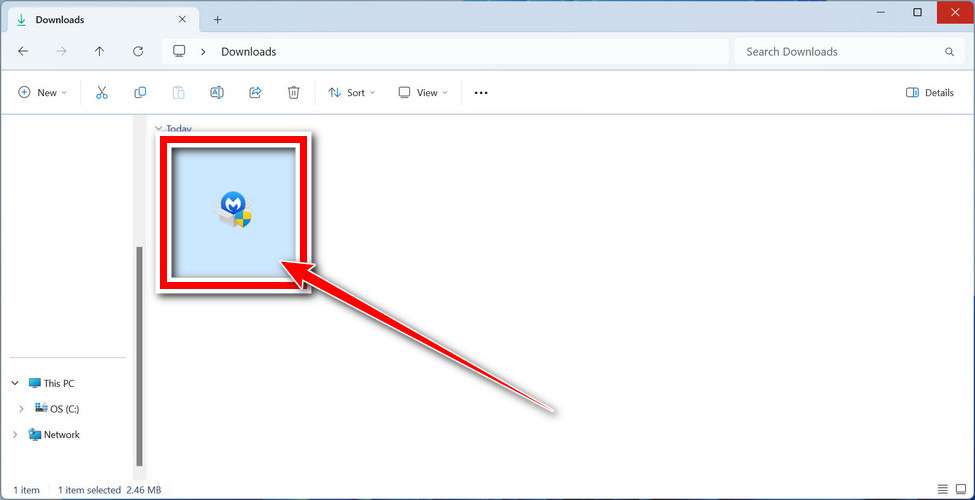
When the download finishes, open your Downloads folder and double-click the MBSetup file. If Windows shows a User Account Control pop-up, click “Yes” to allow the installation.
Follow the On-Screen Prompts to Install Malwarebytes
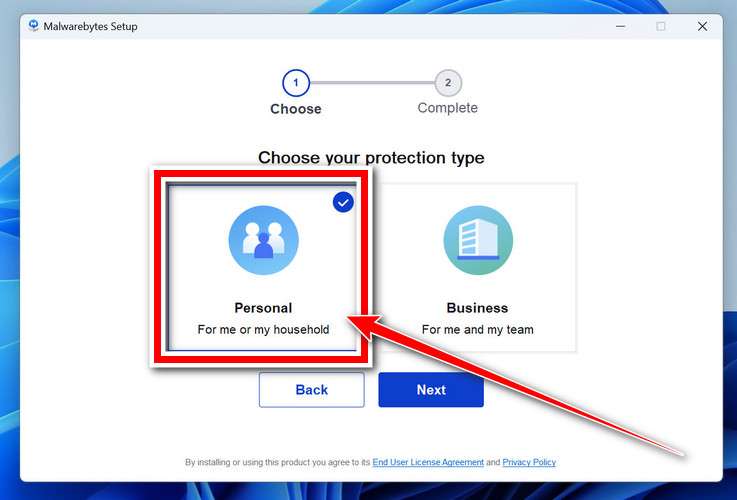
The setup wizard will walk you through a few quick screens:
Choose where you’re installing the program — “Personal Computer” or “Work Computer” — then click Next.
Malwarebytes will now install on your device. This usually takes under a minute.
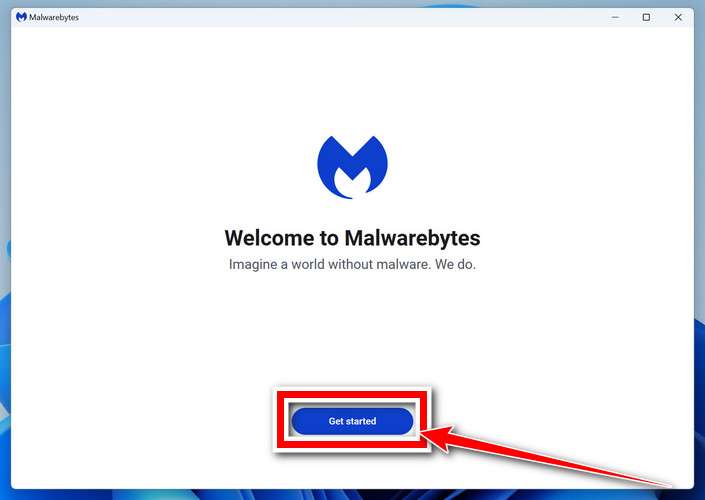
When installation is complete, the “Welcome to Malwarebytes” screen will open automatically.
On the final screen, click Open Malwarebytes to launch the program.
Enable “Scan for Rootkits”
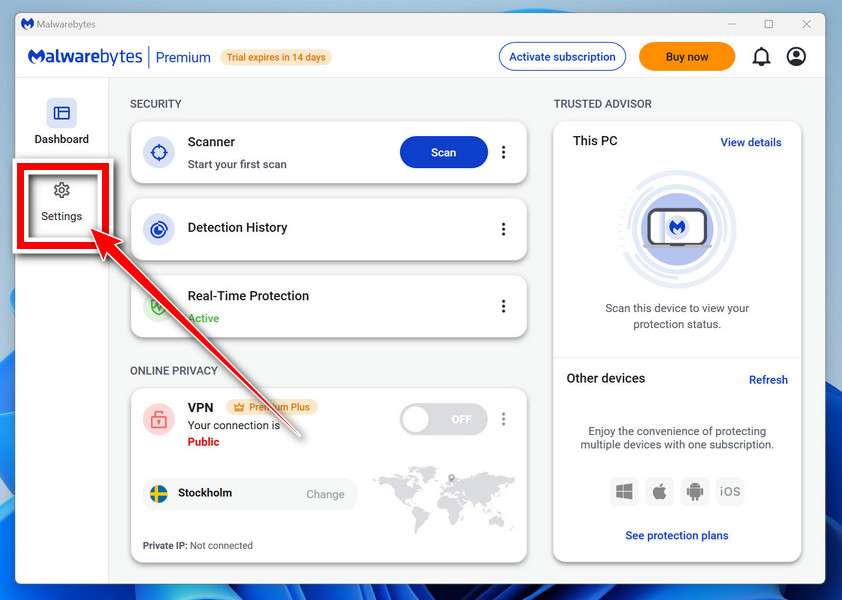
Before scanning, turn on rootkit detection so Malwarebytes can find even the most hidden threats. Click the Settings gear icon on the left side of the screen.
In the settings menu, find “Scan for rootkits” and click the toggle so it turns blue.
Done? Click “Dashboard” in the left pane to return to the main screen.
Start the Scan
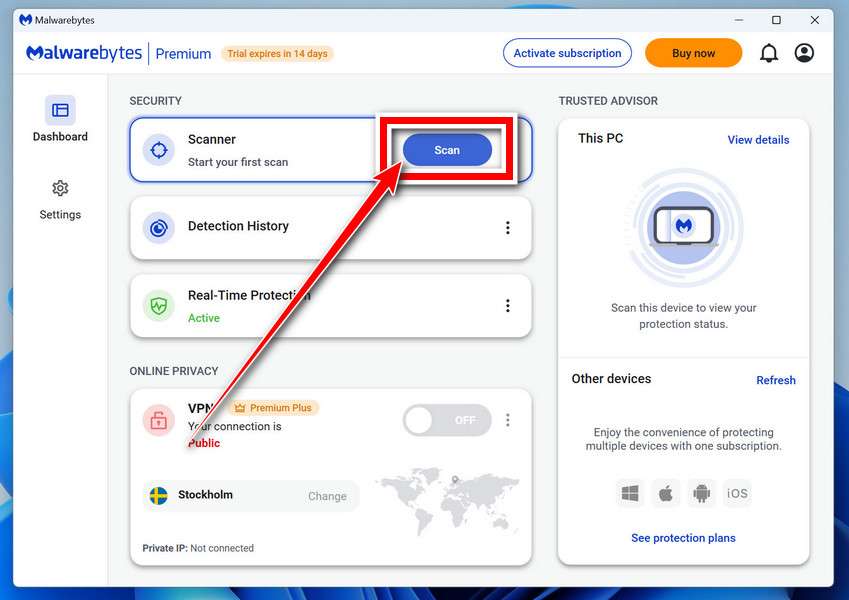
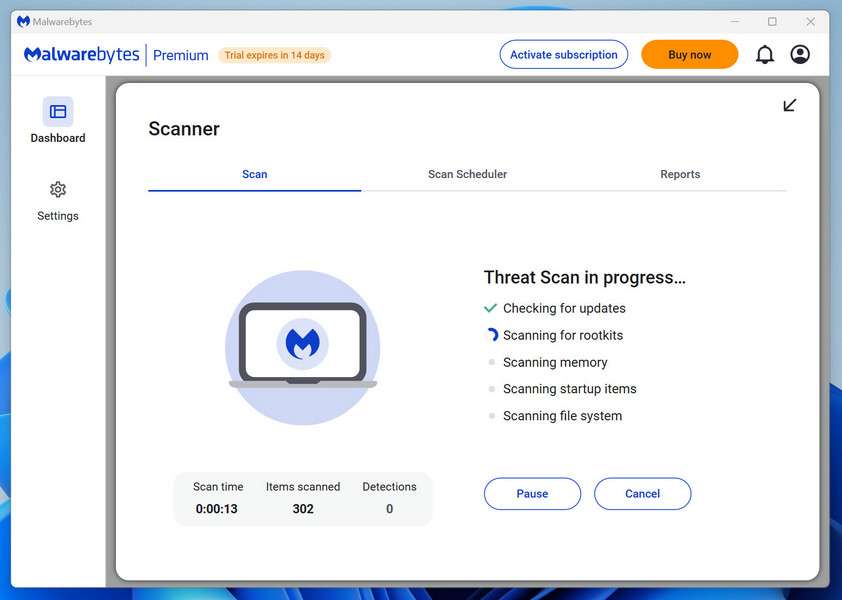
Click the blue Scan button. Malwarebytes will automatically update its virus database and start checking your computer for malware.
Wait for the Scan to Finish
The scan checks your entire system for browser hijackers and other malicious programs, so it can take several minutes. Feel free to do something else — just check back occasionally to see the progress.
Quarantine the Detected Threats
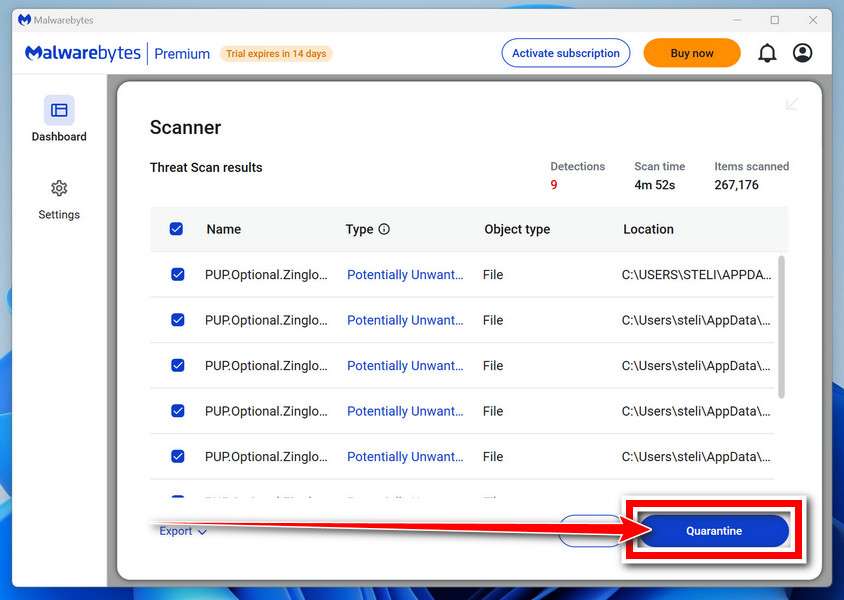
When the scan is done, you’ll see a list of everything Malwarebytes found — malware, adware, and potentially unwanted programs. Click the “Quarantine” button to remove all of them at once.
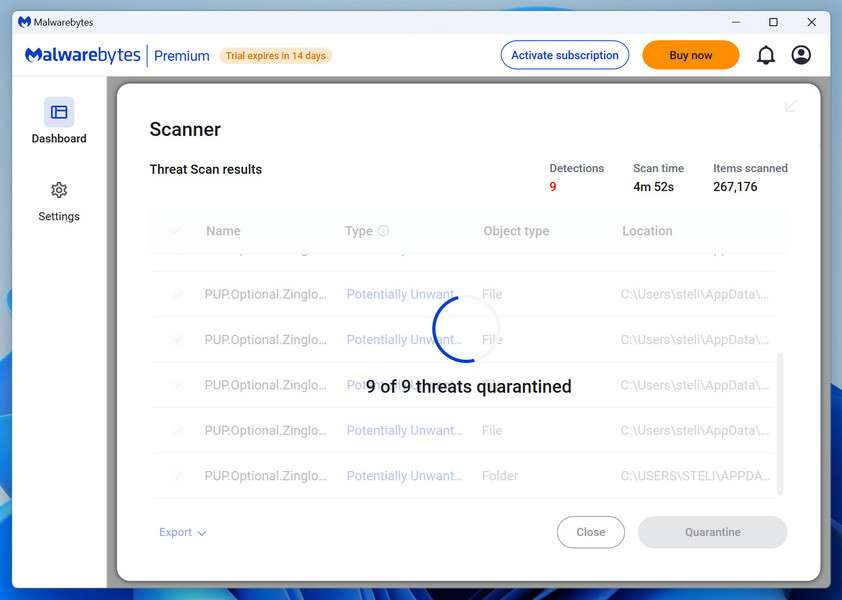
Malwarebytes will now remove the malicious files and registry entries and move them safely into quarantine.
Restart Your Computer
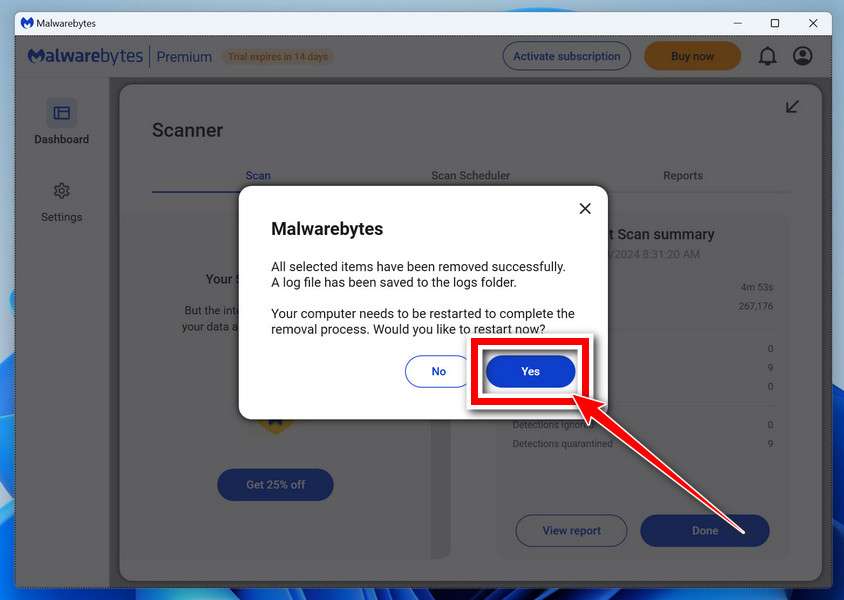
Some threats can only be fully removed after a reboot. If Malwarebytes asks you to restart, click Yes. Once you’re logged back in, your PC is clean and you can continue with the next steps in this guide.
When the scan finishes, click Quarantine to remove everything Malwarebytes found. That’s it — your Windows PC is now clean of trojans, adware, and other malware, and should be back to running smoothly.
If your current antivirus allowed this malicious program on your computer, you may want to consider purchasing Malwarebytes Premium to protect against these types of threats in the future. If you are still having problems with your computer after completing these instructions, then please follow one of the steps:
Malwarebytes for Mac is a free on-demand scanner that removes the malware other security software tends to miss — adware, browser hijackers, and unwanted programs included. Cleaning an infected Mac with Malwarebytes has always been completely free, and it’s our go-to recommendation. Follow the steps below to scan and clean your Mac in just a few minutes.
Download Malwarebytes for Mac
Click the button below to download the latest version of Malwarebytes for Mac.
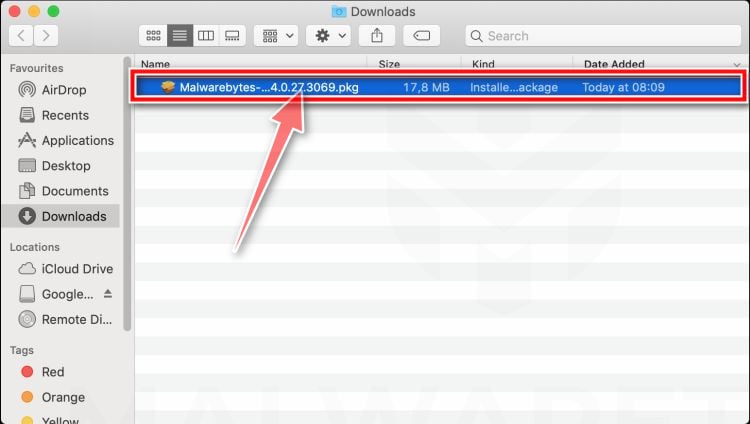
When the download finishes, open your Downloads folder and double-click the setup file to begin the installation.
Follow the On-Screen Prompts to Install Malwarebytes
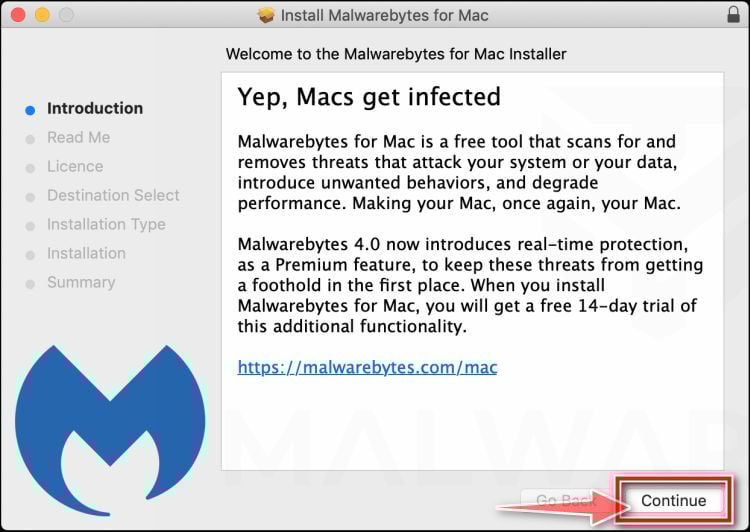
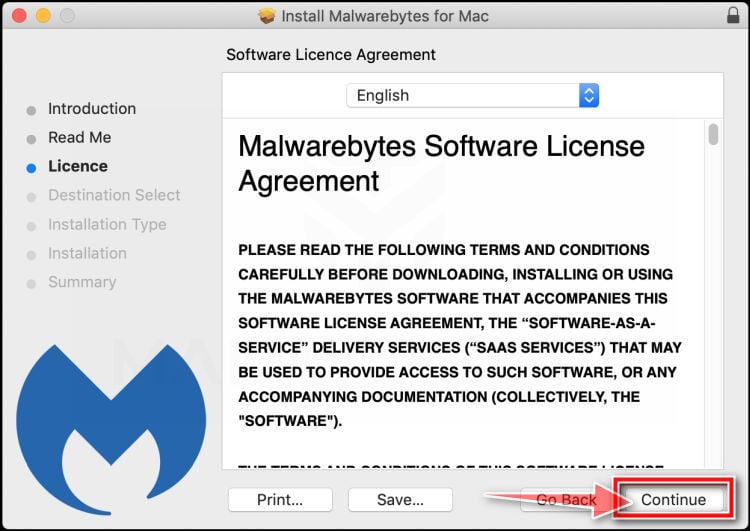
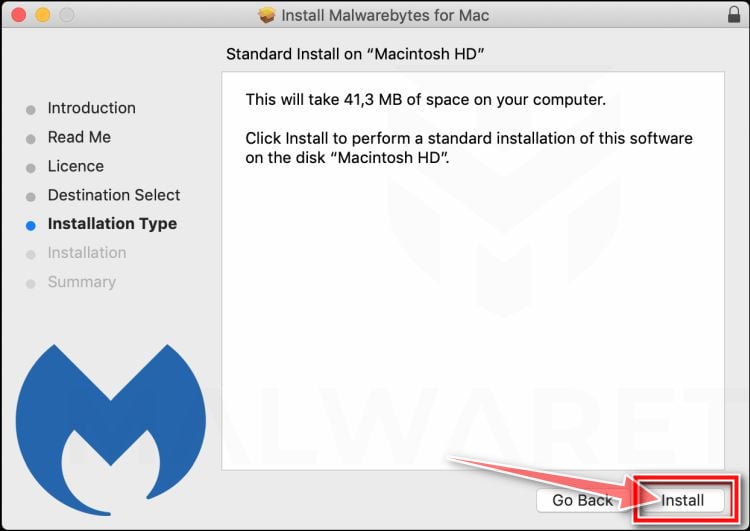
The Malwarebytes for Mac Installer will guide you through a few quick screens. Click “Continue” and keep following the prompts until the installation completes.
When the installation is complete, Malwarebytes opens to the Welcome to Malwarebytes screen. Click “Get started“.
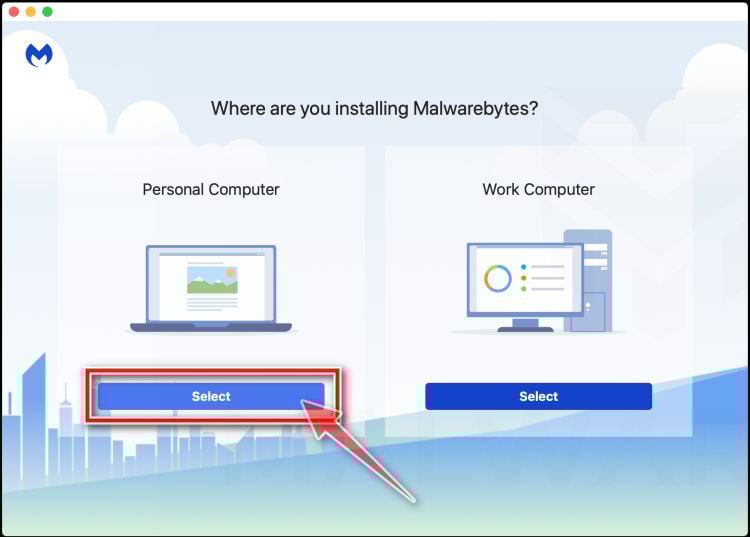
Select “Personal Computer” or “Work Computer”
Malwarebytes will ask what type of computer you’re installing it on. Click either Personal Computer or Work Computer, whichever applies.
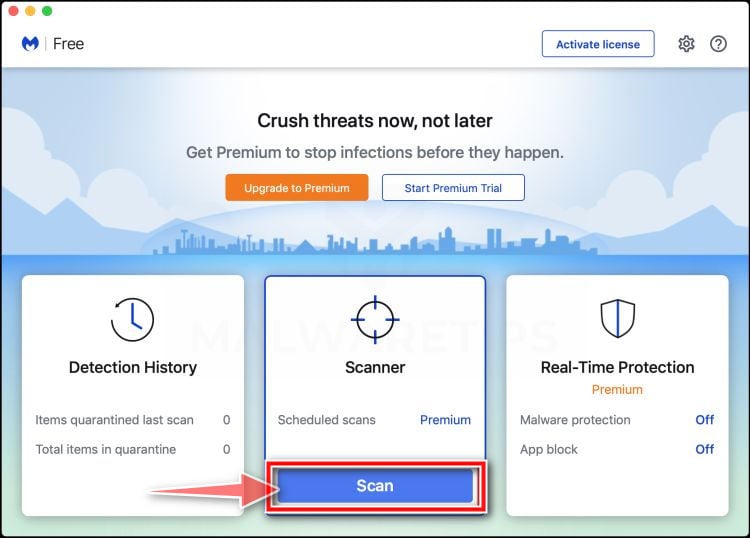
Start the Scan
Click the “Scan” button. Malwarebytes will automatically update its detection database and begin checking your Mac for malware.
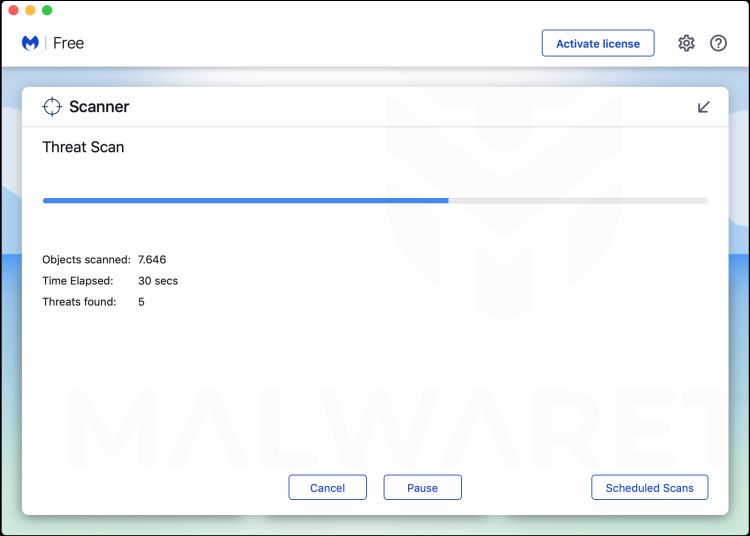
Wait for the Scan to Finish
Malwarebytes will scan your Mac for adware, browser hijackers, and other malicious programs. This can take a few minutes, so feel free to do something else — just check back occasionally to see the progress.
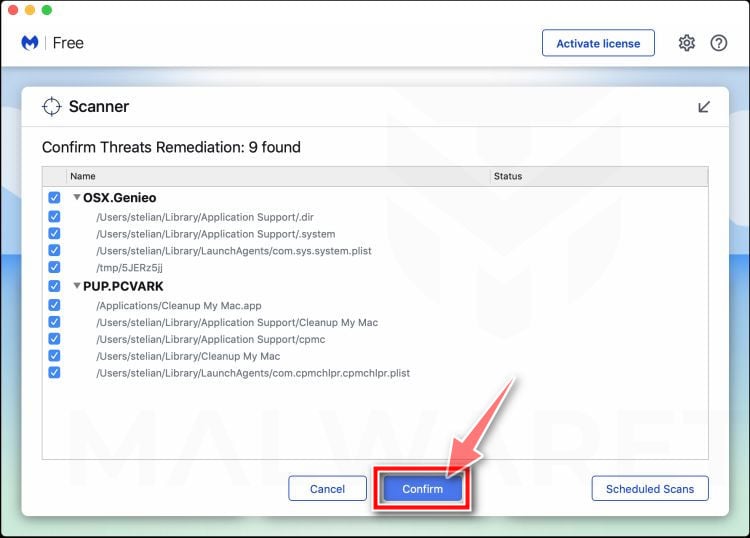
Quarantine the Detected Threats
When the scan is done, you’ll see a list of everything Malwarebytes found. Click the “Quarantine” button to remove all the threats at once.
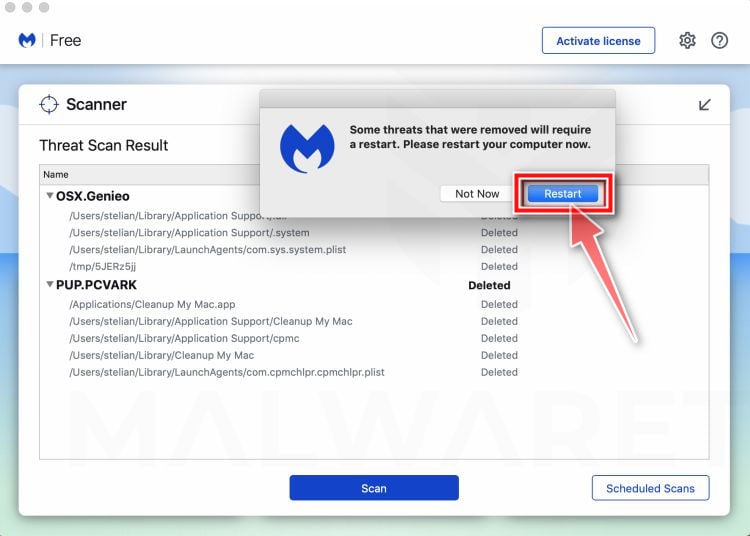
Restart Your Mac
Malwarebytes will now remove all the malicious files it found. Some threats can only be fully removed after a reboot — if Malwarebytes asks you to restart, allow it. Once you’re logged back in, your Mac is clean.
Once the scan is done, remove every threat it detected. Your Mac is now free of adware, rogue browser extensions, and other potentially harmful software.
If your current antivirus allowed a malicious program on your computer, you might want to consider purchasing the full-featured version of Malwarebytes Anti-Malware to protect against these types of threats in the future. If you are still experiencing problems while trying to remove a malicious program from your computer, please ask for help in our Mac Malware Removal Help & Support forum.
Run a Malware Scan with Malwarebytes for Android
Malwarebytes for Android automatically detects and removes dangerous threats like malware and ransomware so you don’t have to worry about your most-used device being compromised. Aggressive detection of adware and potentially unwanted programs keeps your Android phone or tablet running smooth.
Download Malwarebytes for Android.
You can download Malwarebytes for Android by clicking the link below.
In the Google Play Store, tap “Install” to install Malwarebytes for Android on your device.
When the installation process has finished, tap “Open” to begin using Malwarebytes for Android. You can also open Malwarebytes by tapping on its icon in your phone menu or home screen.
Follow the on-screen prompts to complete the setup process
When Malwarebytes will open, you will see the Malwarebytes Setup Wizard which will guide you through a series of permissions and other setup options. This is the first of two screens that explain the difference between the Premium and Free versions. Swipe this screen to continue. Tap on “Got it” to proceed to the next step. Malwarebytes for Android will now ask for a set of permissions that are required to scan your device and protect it from malware. Tap on “Give permission” to continue. Tap on “Allow” to permit Malwarebytes to access the files on your phone.
Update database and run a scan with Malwarebytes for Android
You will now be prompted to update the Malwarebytes database and run a full system scan.
Click on “Update database” to update the Malwarebytes for Android definitions to the latest version, then click on “Run full scan” to perform a system scan.
Wait for the Malwarebytes scan to complete.
Malwarebytes will now start scanning your phone for adware and other malicious apps. This process can take a few minutes, so we suggest you do something else and periodically check on the status of the scan to see when it is finished.
Click on “Remove Selected”.
When the scan has been completed, you will be presented with a screen showing the malware infections that Malwarebytes for Android has detected. To remove the malicious apps that Malwarebytes has found, tap on the “Remove Selected” button.
Restart your phone.
Malwarebytes for Android will now remove all the malicious apps that it has found. To complete the malware removal process, Malwarebytes may ask you to restart your device.
After the scan, tap Remove Selected to delete all detected threats. Your Android phone is now clean — no more malicious apps, adware, or browser redirects.
If your current antivirus allowed a malicious app on your phone, you may want to consider purchasing the full-featured version of Malwarebytes to protect against these types of threats in the future. If you are still having problems with your phone after completing these instructions, then please follow one of the steps:
Restore your phone to factory settings by going to Settings > General management > Reset > Factory data reset.
Now that your device is clean, keep it that way. Most infections start with a malicious ad or a fake download button — so blocking them at the source is your best defense.
We recommend AdGuard, which blocks malicious ads, phishing pages, and dangerous redirects before they can reach you.
Is the SkySlope DigiSign completed document email real?
The specific campaign described here is phishing.
Its button leads away from the named services and ends at a page requesting mailbox credentials.
SkySlope can be used legitimately, so verify each notice inside your known account rather than judging only the displayed branding.
Why does the page already know my email address?
The address can be embedded in the link, taken from a mailing list, or collected during an earlier breach.
Prefilling it does not prove account access.
It mainly makes the fake form feel personalized and leaves the victim with only a password to enter.
Does the browser padlock mean the document page is safe?
No. The padlock indicates an encrypted connection between the browser and that website.
It does not verify the operator’s identity or claims.
A phishing website can use valid encryption while securely delivering stolen credentials to its owner.
Can I safely open a real completed document without the email button?
Yes. Navigate to the signing or transaction platform using your saved bookmark or manually entered address.
Review completed envelopes inside that account.
If nothing appears, contact the supposed sender through an established channel before taking further action.
What if I entered my password but multifactor authentication blocked access?
Change the password anyway.
The attacker still possesses it and may try another service, trigger repeated prompts, or wait for an opportunity.
Review sessions, recovery settings, and mailbox rules because a previous session may already exist.
Could this scam lead to real estate wire fraud?
Yes. A compromised mailbox can reveal transaction timing and trusted relationships.
Criminals may later insert altered payment instructions into genuine conversations.
Verify bank details by telephone using a number established before the requested transfer.
The Bottom Line
The SkySlope DigiSign completed document email is a credential-phishing lure. Its polished signing story ends on an unrelated page asking for an email password.
Verify envelopes inside the known platform, confirm senders separately, and act quickly after any submission. Those habits protect both the mailbox and the transaction.
10 Rules to Avoid Online Scams
Here are 10 practical safety rules to help you avoid malware, online shopping scams, crypto scams, and other online fraud. Each tip includes a quick “if you already got hit” action.
Stop and verify before you click, log in, download, or pay.
Most scams win by creating urgency. Verify using a trusted method: type the website address yourself, use the official app, or call a known number (not the one in the message).
If you already clicked: close the page, do not enter passwords, and run a malware scan.
Keep your operating system, browser, and apps updated.
Updates patch security holes used by malware and malicious ads. Turn on automatic updates where possible.
If you saw a scary “update now” pop-up: close it and update only through your device settings or the official app store.
Use layered protection: antivirus plus an ad blocker.
Antivirus helps block malware. An ad blocker reduces scam redirects, phishing pages, and malvertising.
If your browser is acting weird: remove unknown extensions, reset the browser, then run a full scan.
Install apps, software, and extensions only from official sources.
Avoid cracked software, “keygens,” and random downloads. During installs, choose Custom/Advanced and decline bundled offers you do not recognize.
If you already installed something suspicious: uninstall it, restart, and scan again.
Treat links and attachments as untrusted by default.
Phishing often impersonates delivery services, banks, and popular brands. If it is unexpected, do not open attachments or log in through the message.
If you entered credentials: change the password immediately and enable 2FA.
Shop safely: research the store, then pay with protection.
Be cautious with brand-new stores, “closing sale” stories, and prices that make no sense. Prefer credit cards or PayPal for dispute options. Avoid wire transfers, gift cards, and crypto payments.
If you already paid: contact your card issuer or PayPal quickly to dispute the transaction.
Crypto rule: never pay a “fee” to withdraw or recover money.
Common patterns include fake profits, then “tax,” “gas,” or “verification” fees. Another is a “recovery agent” who demands upfront crypto.
If you already sent crypto: stop paying, save evidence (wallet addresses, TXIDs, chats), and report the scam to the platform used.
Secure your accounts with unique passwords and 2FA (start with email).
Use a password manager and unique passwords for every account. Enable 2FA using an authenticator app when possible.
If you suspect an account takeover: change passwords, sign out of all devices, and review recent logins and recovery settings.
Back up important files and keep one backup offline.
Backups protect you from ransomware and device failure. Keep at least one backup on an external drive that is not always connected.
If you suspect infection: do not connect backup drives until the system is clean.
If you think you are a victim: stop losses, document evidence, and escalate fast.
Move quickly. Speed matters for disputes, account recovery, and limiting damage.
Stop payments and contact: do not send more money or respond to the scammer.
Call your bank or card issuer: block transactions, replace the card if needed, and start a dispute or chargeback.
Secure your email first: change the email password, enable 2FA, and remove unfamiliar recovery options.
Secure other accounts: change passwords, enable 2FA, and log out of all sessions.
Scan your device: remove suspicious apps or extensions, then run a full malware scan.
Save evidence: screenshots, emails, order pages, tracking pages, wallet addresses, TXIDs, and chat logs.
Report it: to the payment provider, marketplace, social platform, exchange, or wallet service involved.
These rules are intentionally simple. Most online losses happen when decisions are rushed. Slow down, verify independently, and use payment methods and account controls that give you recourse.
Hello! I'm Lapain Epuran, your go-to source for detailed and honest product reviews. From tech gadgets to miracle cures, I provide insights to help you make informed choices. Join me as we discover what's truly worth your time and money.