

The caller knows the name of a real health plan and may even display a familiar telephone number. Then the conversation takes a frightening turn: overseas claims, canceled coverage, a police investigation, or a home visit that supposedly cannot wait.
That sudden escalation is the point. Molina Healthcare impersonation scams use the authority of a real insurer to push people into revealing information they would never hand to an unknown caller.
Overview
Scammers borrow the identity of a real healthcare company
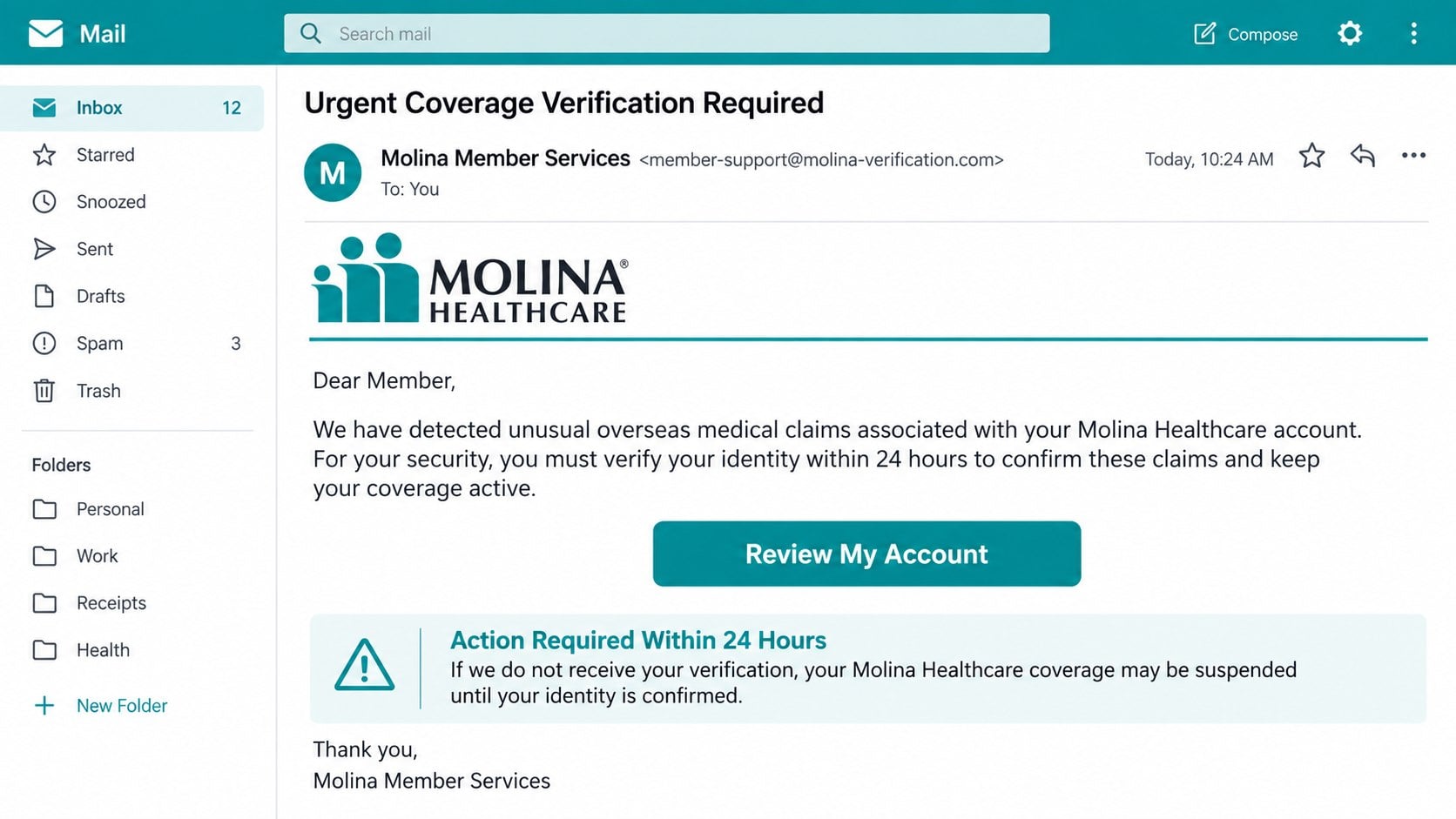
Molina Healthcare is a legitimate health-plan provider. The scam comes from criminals who pretend to represent Molina through calls, emails, texts, video meetings, or copied account pages.
They may spoof caller ID so a real or familiar-looking number appears on the screen. A logo, member-services title, or correct piece of personal information can make the contact feel official.
The safest response is to end the unexpected contact and use the number printed on the back of the member card or a contact method found through the official Molina Healthcare website.
The stories target both fear and confusion
One version claims that someone used the member’s identity for medical treatment or insurance claims overseas. The caller may say an investigation is open and offer to transfer the victim to police or another authority.
Another version warns that coverage will expire unless payment or identity details are supplied immediately. Families may also receive calls about an alleged new rule requiring an assessment of children or an in-person home visit.
These stories are effective because insurance rules are complex. A confident caller can make an invented requirement sound like a routine part of keeping benefits.
The objective is identity, money, or account access
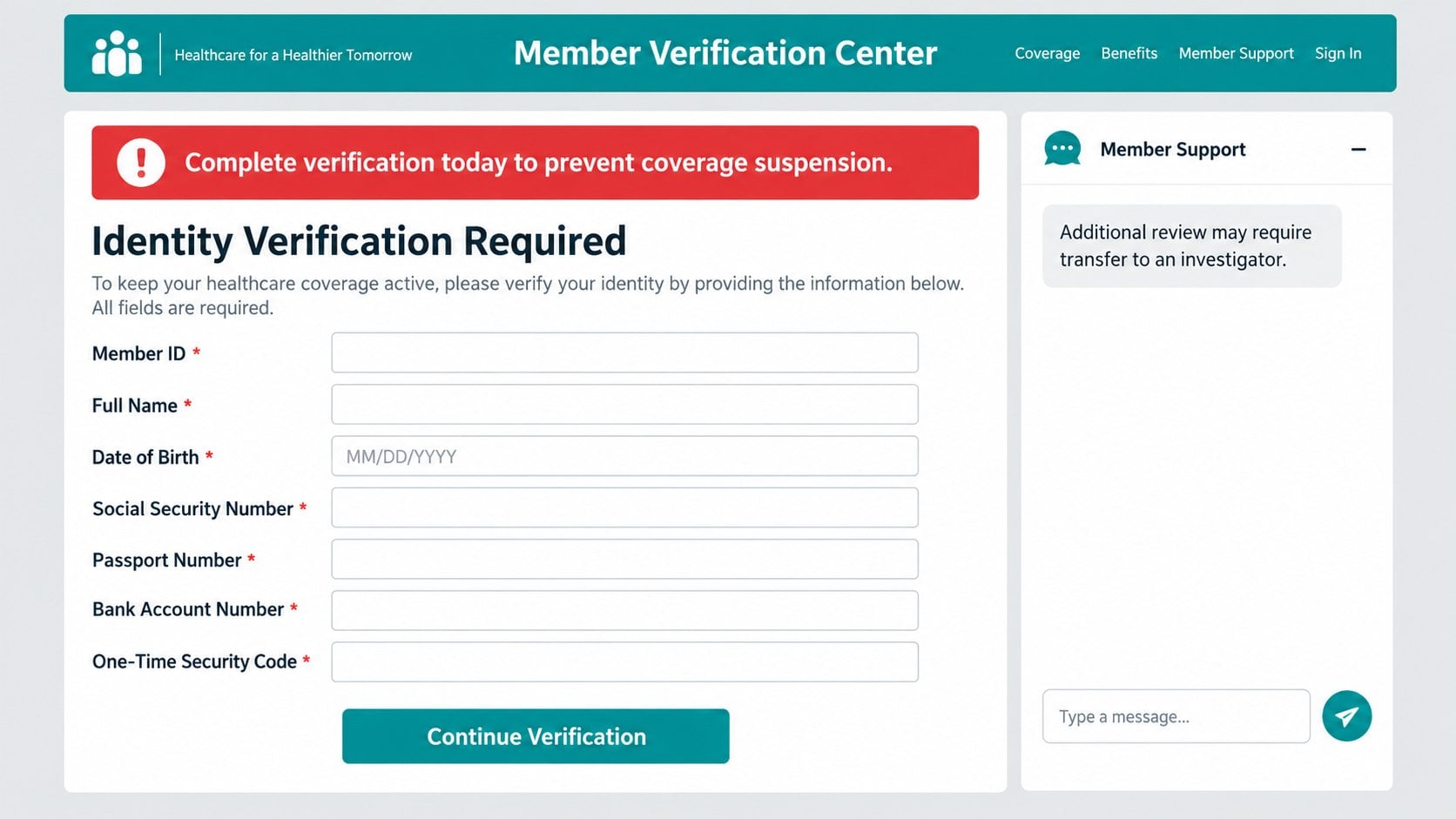
A scammer may ask for a Social Security number, passport photo, date of birth, member ID, bank details, card information, or a security code. Each detail can support identity theft or another account takeover.
Some operations move the conversation to Zoom or another video platform and display fake police credentials. Others send a link to a copied member portal where the victim enters information directly.
Common warning signs include:
- An unexpected call about overseas medical claims or criminal activity.
- A threat that health coverage will end within hours.
- A demand for passport, Social Security, or banking information.
- An offer to transfer the call directly to police.
- A request to continue the investigation on a video call.
- A supposed new law requiring a rushed home visit.
- A link that does not lead to an official Molina domain.
- Pressure to pay by wire, gift card, crypto, or payment app.
Common Molina Healthcare Impersonation Stories
The overseas-claims story tells the member that a hospital or provider in another country submitted suspicious treatment under their identity. The caller may know the member’s name and insurer from leaked or purchased data.
The conversation can become theatrical. A fake fraud investigator asks detailed questions, then a fake police officer demands identity documents and secrecy. The victim is told not to contact family because the case is confidential.
Coverage-renewal messages use a simpler path. A text or email says the policy is expiring, a premium failed, or the member must update information. The link opens a page that captures login credentials, identity data, or card details.
Home-visit scams create physical risk as well as data risk. A caller may claim that a law or benefit program requires an assessment of a child, older adult, or household. Never accept an unexpected visit until the plan verifies it through a known channel.
How the Molina Healthcare Scam Works
Step 1: The scammer obtains basic personal information
Names, telephone numbers, addresses, insurer references, and dates of birth can come from data breaches, marketing lists, public records, compromised email, or previous scams.
Knowing one accurate fact lets the caller sound prepared. It does not mean the caller has access to the real insurance account.
Step 2: Caller ID or email branding is copied
The phone may display a Molina name or a number associated with healthcare. Email messages use copied colors, logos, policy language, and member-service labels.
Caller ID and display names are not proof of origin. They are labels that criminals can manipulate.
Step 3: A frightening account problem is introduced
The target hears about fraudulent claims, a suspended policy, a missed payment, a required assessment, or possible criminal liability. The problem is designed to feel personal and urgent.
The caller discourages normal verification by saying that delay will cancel coverage or interfere with an investigation.
Step 4: The victim is moved away from trusted channels
The scammer sends a private link, requests a video call, or transfers the victim to another person who claims to be an investigator. Each handoff adds authority to the story.
The victim is told not to call the number on the member card because the case is supposedly being handled by a special department.
Step 5: Sensitive identity information is collected
The fake form or investigator requests a member ID, Social Security number, passport, driver’s license, address, and date of birth. A live video call may be used to persuade the victim to hold documents up to the camera.
Those details can support new-account fraud, tax fraud, benefit theft, and convincing attacks on banks or email accounts.
Step 6: Financial access or a direct payment is requested
The scammer may ask for bank details to “verify” that the victim did not receive claim money. Another version requests a payment to preserve coverage or resolve a balance.
A one-time code can be used to authorize a real bank login or transaction. It should never be read to an unexpected caller.
Step 7: The stolen data is reused
Criminals may open accounts, attempt password resets, file false claims, or sell the identity package. Because healthcare records contain durable information, the risk can continue after a card is replaced.
The victim may later receive calls from fake fraud teams or recovery agents who already know details from the first contact.
Caller, Portal, Investigator, and Visit Checks
Caller ID should never be the only verification
Hang up and call the number on the member card. If the call was legitimate, the real organization can locate a note or explain the issue after normal identity checks.
Do not redial from the recent-calls list when a number may have been spoofed. Enter the verified number yourself.
The portal address must belong to the real organization
A padlock does not prove that a website belongs to Molina. It only means the connection to that site is encrypted.
Open the official member portal from a saved bookmark or type the known address. Avoid links in unexpected texts, emails, ads, and search results labeled as support.
A real investigation can be verified independently
Police do not need an insurance caller to transfer you into a private video meeting. If someone claims there is a case, ask for the agency, officer name, and reference number, then end the contact.
Find the agency’s public number independently and ask whether the case exists. Do not use a number supplied by the caller.
An unexpected home visit requires confirmation
Do not schedule or admit a visitor based only on an unsolicited call. Contact member services and ask whether the plan requested a visit, which contractor is involved, and how the visitor’s identity is verified.
If someone arrives unexpectedly and refuses to leave, keep the door closed and contact local authorities.
Why the Scam Can Sound So Convincing
Health insurance involves real deadlines, complex notices, provider networks, and personal records. Scammers imitate that complexity, then offer themselves as the fastest route through it.
A real member ID or address may come from a data breach. A spoofed phone number supplies visual reassurance. A second fake official creates the impression that several organizations agree about the problem.
Language access can also be exploited. Some scammers target communities in their preferred language, present culturally familiar authority figures, and make international claims sound plausible.
Fear narrows attention. Someone worried about losing healthcare or being accused of fraud may focus on clearing their name rather than questioning why a supposed investigator wants a bank code.
Scammers also create false continuity. The first caller may know the story told by the second caller, and a fake portal may repeat the same claim number. That coordination is meant to feel like access to a shared official case file, even though every part of the chain is controlled by the same group.
A victim should not feel embarrassed for pausing a healthcare conversation. Real member services can tolerate a callback through a verified number. A criminal operation depends on keeping the target inside the original call, chat, or page until the requested data has been surrendered.
How to Verify a Molina Contact Safely
Start with information you already control. Use the number on the physical member card, the official app, or an address typed from a trusted record. Ask whether Molina initiated the call, email, assessment, or visit.
Review claims inside the genuine portal. A serious overseas claim or coverage change should have a record that official member services can explain.
If the message concerns Medicaid, CHIP, Medicare, or marketplace coverage, contact the relevant government program through its official website. The FTC’s health insurance scam guidance advises people not to trust unsolicited callers offering or threatening coverage.
Never provide a password, full Social Security number, bank password, or one-time security code simply because the caller knows your insurer. Legitimate representatives can explain a safe verification route.
What to Do if You Have Fallen Victim to This Scam
- End the call or video session. Do not argue, continue an interview, or follow new instructions. Block the contact after preserving the number and messages.
- Contact Molina through the member card. Ask the real plan to review the account, claims, contact details, and recent activity. Report the impersonation and any information disclosed.
- Call the bank immediately. Replace exposed cards, block transfers, and secure online banking. Tell the bank if a one-time code or remote-access permission was provided.
- Secure the email account. Change the password from a trusted device, sign out other sessions, remove unknown forwarding rules, and enable multifactor authentication.
- Place identity protections. If a Social Security number, passport, or license was shared, visit IdentityTheft.gov for a recovery plan and consider fraud alerts or credit freezes with the three credit bureaus.
- Report exposed documents. Follow the issuing authority’s process for a compromised passport, driver’s license, Medicare number, or other identification.
- Remove remote-access tools. Disconnect the device from the internet if a caller controlled it. Uninstall the tool, review permissions, and change sensitive passwords from another trusted device.
- Run a Malwarebytes scan. Scan the full system if you opened a file, installed software, or used a suspicious portal. Credential stealers can keep collecting data after the call ends.
- Use AdGuard against follow-up links. It can block many known phishing domains and malicious ad redirects. Keep using direct official channels because new scam sites can appear before filters recognize them.
- Report the incident. File reports with the FTC at ReportFraud.ftc.gov and the FBI’s IC3 when appropriate. Give law enforcement the sender, domain, phone number, wallet or payment details, and timeline.
- Prepare for repeat impersonation. Warn household members and treat future calls that mention the incident as unverified. Recovery scammers often reuse stolen details.
Frequently Asked Questions
Does Molina Healthcare call members?
A real health plan may contact members, but any unexpected request should be verified independently. Hang up and call the number on the member card before sharing sensitive information.
Can a scam call display Molina’s real phone number?
Yes. Caller ID can be spoofed. The displayed number should not be treated as proof that the call came from the organization.
Would Molina transfer me directly to police?
An unsolicited caller who transfers you to a supposed officer is a major warning sign. End the call and contact the named agency through its independently verified public number.
Should I send a passport photo to verify medical claims?
Not through an unexpected link, chat, or video call. Ask official member services why a document is needed and which secure process applies.
What if I clicked the link but entered nothing?
Close the page, check for downloads, and remove notification permissions. A click alone usually does not expose every account, but a malicious page can collect device data or start a download.
How do I confirm whether a home assessment is real?
Call official member services, verify the contractor and appointment, and ask how the visitor will identify themselves. Do not rely on the incoming caller’s number.
The Bottom Line
Molina Healthcare impersonation scams turn insurance complexity into pressure. The caller may know real details, use familiar branding, and present a frightening claim, but none of that replaces independent verification.
End the unexpected contact and start again through the number on the member card. Never surrender identity documents, bank access, or a one-time code to solve a problem introduced by an unverified caller.
If information was shared, act across the health account, bank, email, credit files, and exposed identity documents. Fast, coordinated action limits how much value the stolen data has.








