Never Applied for a Loan? Why Dozens of Lender Calls Suddenly Target You
Written by: Lapain Epuran
Published on:
The first call sounds like a routine follow-up. By lunchtime, five different numbers have left messages about a loan you never requested.
That mismatch deserves attention, but it does not automatically mean someone opened an account in your name.
Overview
What people are receiving
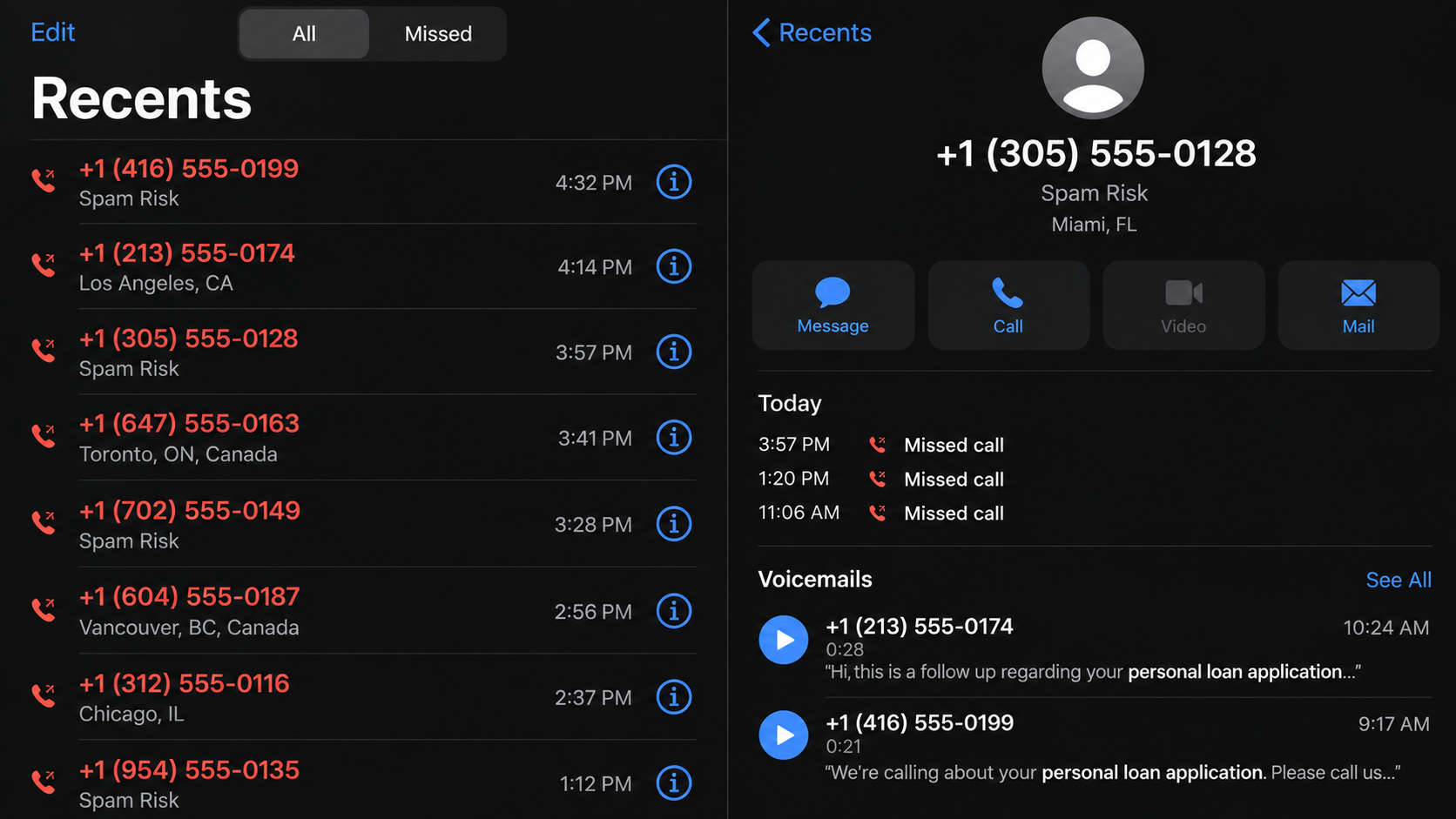
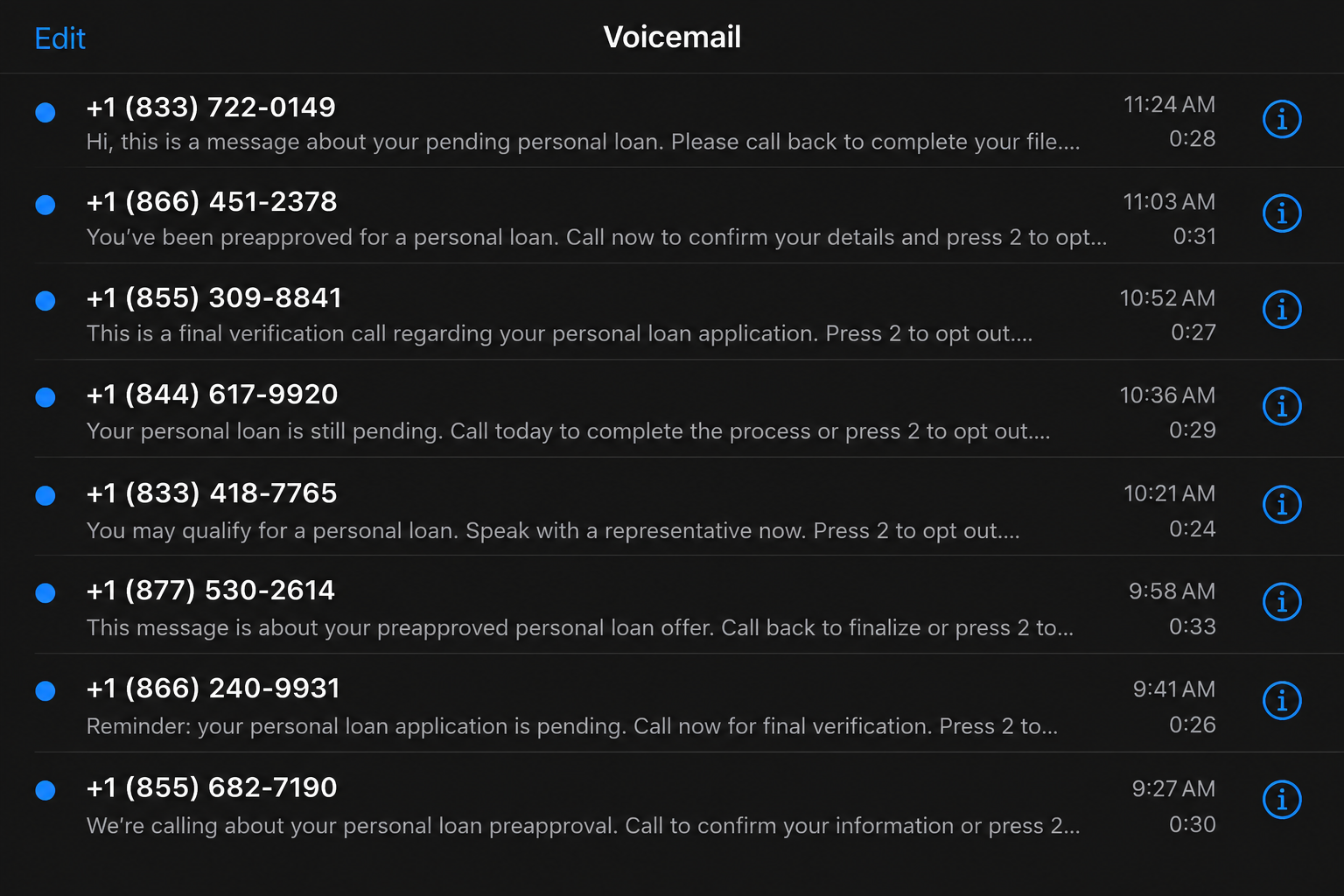
Recipients report clusters of calls and voicemails claiming that a personal loan application is pending, preapproved, incomplete, or ready for final review.
The messages may quote an impressive amount, mention a deadline, or invite the listener to press a key to speak with a funding specialist.
Calls often arrive from changing local-looking numbers. Some displays show Spam Risk, while others present an ordinary city or business-style caller name.
What the calls usually mean
In many cases, there is no application. The message is bait designed to make the recipient call back and supply information.
Other campaigns come from aggressive lead generators that obtained a phone number through a marketing form, data broker, or recycled contact list.
A smaller but important possibility is identity misuse. Someone may have submitted the recipient’s details to test eligibility or seek credit.
Why one explanation never fits every victim
The same script can be used by a criminal, an unlicensed broker, a lawful marketer with poor records, or an automated dialing vendor.
The safest response is therefore twofold: do not engage with the caller, and independently check whether any genuine credit activity exists.
These are the central findings:
An unsolicited loan voicemail is not proof that an application exists.
Caller ID cannot establish who placed the call.
Calling back may confirm that the number reaches a responsive person.
Repeated calls can be designed to wear down caution.
Credit reports provide better evidence than anything the caller says.
A freeze can stop new credit accounts even when personal data has leaked.
Why the Calls Suddenly Arrive in a Flood
A single phone number can move through several marketing systems within minutes. One form submission may be resold to multiple lenders and intermediaries.
The submission may come from the number owner, a typo, an old customer record, a purchased database, or somebody intentionally using false details.
Automated dialers then work the list at scale. Each campaign may use a different outbound number, recorded voice, and callback route.
That explains why blocking one number rarely ends the problem. The number displayed to the recipient may never be used again.
Lead marketplaces reward speed
Loan leads are valuable when they appear fresh. Competing callers try to reach the supposed applicant before another seller does.
A bad or fabricated lead can therefore trigger many businesses at once. Each sees a record suggesting that somebody requested contact.
This does not excuse misleading calls. It explains why the volume can look coordinated even when several operators are involved.
Scammers imitate the same sales process
Criminal callers borrow familiar lending language because it creates a plausible reason to request a birth date, bank account, income, or Social Security number.
They may already know the recipient’s name and address. Data-broker records and breaches make those details poor proof of legitimacy.
The missing information is often the valuable part. The caller frames each question as a harmless final verification step.
Pressure can be the real objective
Ten calls in one day create fatigue. Eventually, someone may answer simply to demand removal from the list.
That response confirms the line is active and monitored. It can also give the operator a voice sample, preferred language, or useful personal clues.
Some messages even offer a callback option to stop future calls. A legitimate opt-out should not require sensitive information or a fee.
How the Loan Call Scam Works
Step 1: A phone number enters a lending list
The sequence begins when a number appears in a lead file. It may be harvested, purchased, mistyped, scraped, or deliberately submitted by someone else.
The record can include a name, location, estimated debt, or desired loan amount. None of those fields proves the named person completed a form.
Once copied between vendors, correcting the original record may not remove later copies.
Step 2: Automated systems create urgency
Recorded messages say the application needs attention, the approval window is closing, or funds are waiting for release.
The wording assumes an earlier action. That assumption makes the listener wonder whether they forgot something or whether another person used their identity.
Changing caller IDs keep the campaign visible after individual numbers are blocked.
Step 3: The callback verifies a valuable target
Returning the call tells the operator that a real person heard the message and can be prompted to continue.
A menu may ask for a reference number, date of birth, postal code, or the last four digits of a government identifier.
Even partial answers can improve a profile assembled from other databases.
Step 4: A representative reframes the conversation
If the recipient denies applying, the representative may claim the request came through a partner website or a recent rate-comparison form.
The conversation then shifts from verification to a new offer. The caller may promise debt consolidation, fast approval, or unusually favorable terms.
A fraudster can also invent an identity-theft emergency, then offer to secure the application after collecting more information.
Step 5: Personal or financial details are collected
The caller may request employment, income, bank routing information, account balances, login codes, or copies of identification.
Real lenders collect information through controlled application processes. An unexpected caller should never dictate where sensitive documents or codes are sent.
Verification codes are especially dangerous. They may authorize account access rather than confirm a loan.
Step 6: An advance payment may appear
Some versions demand an origination deposit, insurance charge, credit-building payment, or processing fee before funds can be released.
The payment request may use gift cards, cryptocurrency, a transfer app, or a bank transfer. Those methods make recovery difficult.
A promise that the fee will be refunded with the loan does not make it safe.
Step 7: The campaign changes numbers and continues
When a number gains a spam label, the dialer moves to another caller ID. The script and callback operation remain largely unchanged.
Victims who answer may receive more calls because their records are marked responsive.
People who paid can later be targeted by recovery callers claiming they can retrieve the money for another charge.
Scam, Marketing, or Identity Theft?
The call itself cannot answer that question. Treat it as unverified, then look for evidence outside the conversation.
If no unfamiliar inquiry, account, or application appears, the calls are more likely spam, lead abuse, or a wrong-number campaign.
If a lender reports an application you did not make, the matter becomes an identity-theft incident requiring formal disputes and protective steps.
Signs of a pure callback scam
The message gives no identifiable lender or verifiable application number.
The caller refuses to mail written terms before collecting information.
Approval is guaranteed without a credit review.
A fee is required before any funds arrive.
Payment must use gift cards, cryptocurrency, or a transfer app.
The representative demands a security code sent to your phone.
Signs of aggressive lead generation
Several companies may reference the same requested amount or submission time. Representatives may know marketing details but not a genuine lender account.
Some will admit they are matching services when questioned. Others use phrases like funding partner while avoiding a clear legal company name.
A legitimate marketer must still respect applicable consent and calling rules. Misleading an uninvolved person is not made acceptable by buying a lead.
Signs that identity checks are urgent
Watch for mail from an unfamiliar lender, a new hard inquiry, an account you do not recognize, or alerts about changed contact information.
An unexpected denial notice can matter too. Federal rules may require a creditor to explain an adverse decision tied to an application.
Do not use contact details in suspicious messages. Find the lender through its verified website or a trusted statement.
How to Verify Whether a Real Loan Application Exists
Start with your credit reports, not the caller’s story. Review all available bureau files because an inquiry may appear on only one.
Look for hard inquiries, unfamiliar addresses, new accounts, and name variations. A marketing prescreen normally does not equal an opened account.
Contact any unfamiliar creditor through a phone number obtained independently. Ask for its fraud department and the application date.
Request written confirmation and the procedure for disputing an application. Avoid sending identity documents until the recipient’s identity is verified.
If the creditor confirms misuse, document the representative’s name, case number, time, and promised next action.
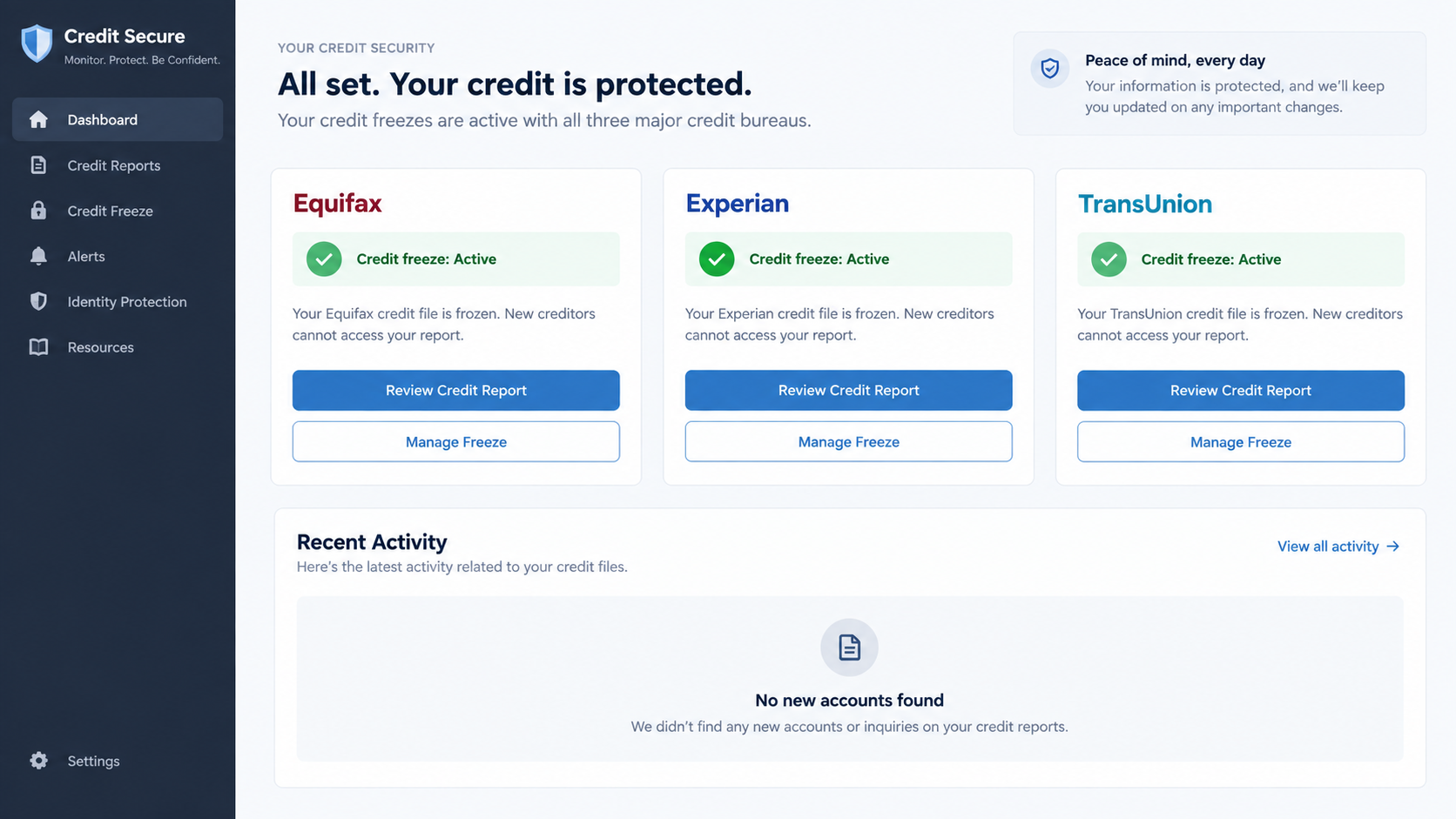
Then place a credit freeze with Equifax, Experian, and TransUnion. A freeze is free and must be placed separately at each bureau.
A fraud alert asks businesses to verify identity before issuing credit. It can be useful alongside a freeze, depending on the situation.
Keep screenshots of call logs and save voicemails. They may reveal repeated wording, callback numbers, or times useful in reports.
Do not assume a quiet credit report makes the calls harmless. The operator may still be testing which recipients respond.
Equally, do not panic solely because a caller knows your address. That information is widely available through commercial and breached datasets.
Company, Address, and Fulfillment Checks
The caller’s company name may be temporary
Ask for the legal entity, licensing state, physical address, website, and written privacy notice. A vague brand name is not enough.
Search the exact name with complaint, license, and enforcement terms. Compare the results with the details the caller supplied.
Do not let a familiar-sounding lender name end the check. Impersonators deliberately choose names that resemble established firms.
A local number proves nothing
Caller ID can be spoofed. A Toronto, Miami, or nearby area code does not show where the operation is located.
Call the institution using a verified public number. Never ask the suspicious representative to transfer you to a supposed fraud team.
A disconnected callback number can also indicate short-lived routing, but a working number does not prove legitimacy.
An address can hide a mailbox or lead seller
Search any disclosed address and inspect what actually operates there. It may be a virtual office, mailbox, residence, or unrelated company.
For a lender, verify the license through the appropriate state regulator and Nationwide Multistate Licensing System records when applicable.
A registered company can still use deceptive marketing. Registration confirms paperwork, not the truth of every call.
There is no fulfillment without written loan terms
A real offer should identify the creditor, annual percentage rate, fees, repayment schedule, and conditions before the borrower accepts.
Money appearing in an account after depositing a check can be another trap. Fraudulent checks may be reversed after the recipient forwards funds.
Never pay to receive borrowed money through an irreversible channel. Stop when the supposed lender avoids normal documentation.
How to Reduce the Calls Without Making Them Worse
Let unfamiliar calls go to voicemail. A legitimate organization can leave a specific message that you verify independently.
Use call-labeling and blocking features from the phone operating system or carrier. These tools reduce disruption but cannot stop every spoofed number.
Do not press a key to unsubscribe from an obviously fraudulent recording. That interaction may confirm that the line is active.
Register eligible numbers with the National Do Not Call Registry. It will not stop criminals, but it can clarify which calls disregard lawful marketing rules.
Report repeated unwanted calls with the displayed number, callback number, date, time, and recording details.
Avoid publishing your main number on public listings. Use a separate number for online forms when practical.
Review privacy choices on rate-comparison, insurance, real estate, and financial websites. Broad partner consent can produce extensive marketing.
If a legitimate company confirms it bought a bad lead, demand suppression in writing and ask which supplier provided the record.
That answer may identify the source of the flood. It also creates a documented request if calls continue.
What to Do if You Shared Information or Paid
End contact immediately. Do not argue, call another number supplied by the operator, or send additional proof of identity.
Contact your bank or card issuer. Explain exactly how payment was made and ask whether the transaction can be stopped or disputed.
Protect online accounts. Change exposed passwords from a trusted device, enable multifactor authentication, and revoke unfamiliar sessions.
Freeze all three credit files. Place freezes directly with Equifax, Experian, and TransUnion, then store each recovery credential safely.
Review credit activity. Document unfamiliar inquiries or accounts and dispute them with both the bureau and named creditor.
Create an identity-theft recovery plan. Use IdentityTheft.gov when Social Security, banking, or identification data may have been exposed.
Preserve evidence. Save call logs, voicemails, payment receipts, emails, names, and every number used during the contact.
Report the campaign. File details with the FTC, your state regulator, and the lender being impersonated when one is named.
Scan the affected device. If you installed an app or granted access, remove remote tools and run a full Malwarebytes scan.
Block malicious follow-ups. AdGuard can reduce harmful pages and advertisements, but it cannot replace account and payment recovery.
Is Your Device Infected? Run a Free Malware Scan
Slow performance, constant pop-ups, or strange behavior? These are classic signs of a malware infection. The fastest way to find out is to scan your device with Malwarebytes Anti-Malware Free — one of the most trusted malware removal tools available.
The free version detects and removes the most common threats, including:
Adware — the cause of those annoying pop-ups
Browser hijackers — unwanted redirects and changed homepages
Trojans and spyware — hidden programs stealing your data
Potentially unwanted programs (PUPs) — software you never asked for
👉 Select your device below — Windows, Mac, or Android — then follow the simple steps to download Malwarebytes, scan your system, and remove any threats it finds. The whole process takes about 5 minutes.
Malwarebytes for WindowsMalwarebytes for MacMalwarebytes for Android
Run a Malware Scan with Malwarebytes for Windows
Malwarebytes is one of the most popular and trusted anti-malware tools for Windows — and it’s completely free for removing infections. It catches threats that many antivirus programs miss, including adware, browser hijackers, and trojans. Follow the steps below to scan and clean your PC in just a few minutes.
Download Malwarebytes
Click the button below to download the latest version of Malwarebytes for Windows from the official source. The free version is all you need — it will scan your computer and remove adware, browser hijackers, and other malicious software at no cost.
(The link opens in a new page where your download will start)
Install Malwarebytes
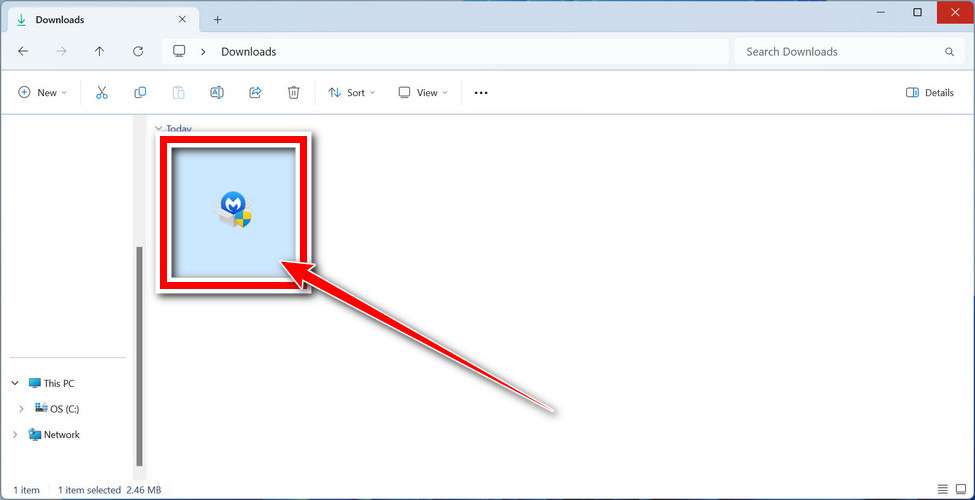
When the download finishes, open your Downloads folder and double-click the MBSetup file. If Windows shows a User Account Control pop-up, click “Yes” to allow the installation.
Follow the On-Screen Prompts to Install Malwarebytes
The setup wizard will walk you through a few quick screens:
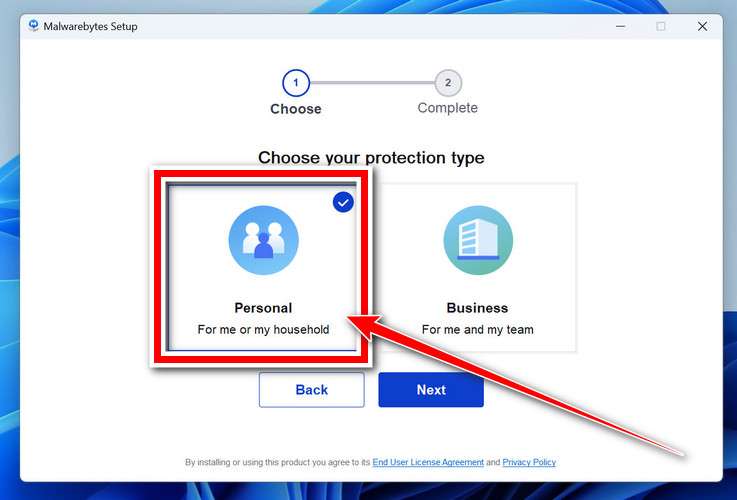
Choose where you’re installing the program — “Personal Computer” or “Work Computer” — then click Next.
Malwarebytes will now install on your device. This usually takes under a minute.
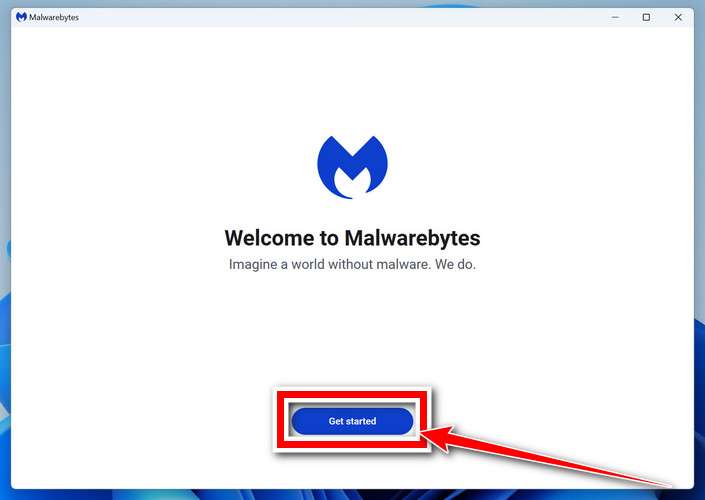
When installation is complete, the “Welcome to Malwarebytes” screen will open automatically.
On the final screen, click Open Malwarebytes to launch the program.
Enable “Scan for Rootkits”
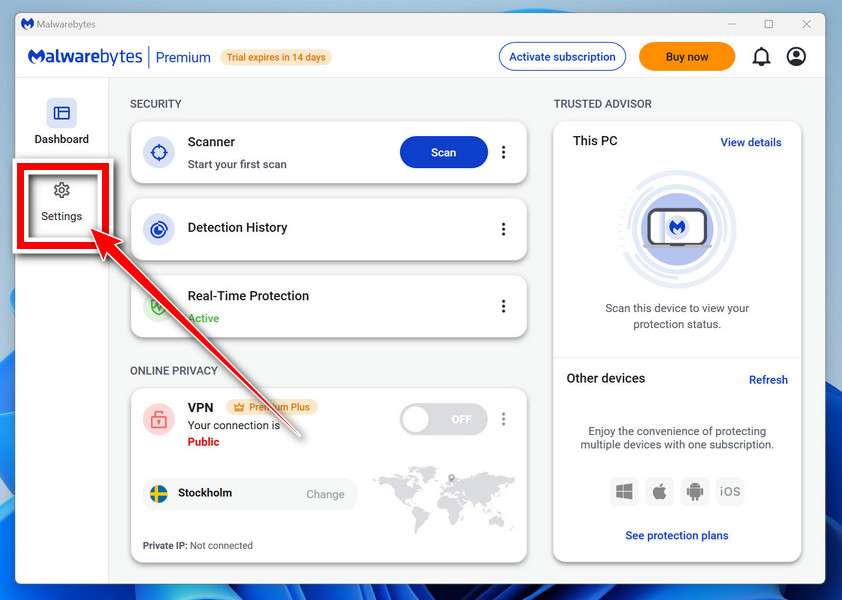
Before scanning, turn on rootkit detection so Malwarebytes can find even the most hidden threats. Click the Settings gear icon on the left side of the screen.
In the settings menu, find “Scan for rootkits” and click the toggle so it turns blue.
Done? Click “Dashboard” in the left pane to return to the main screen.
Start the Scan
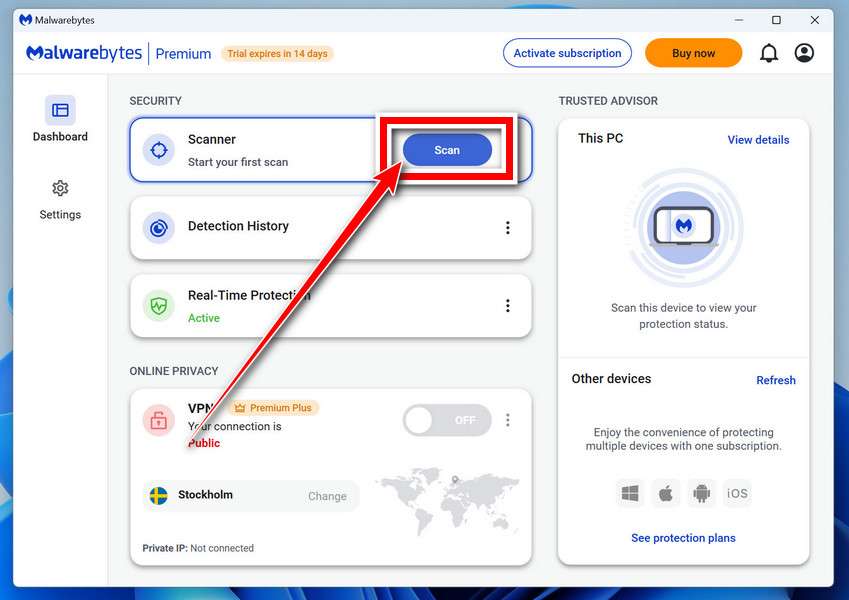
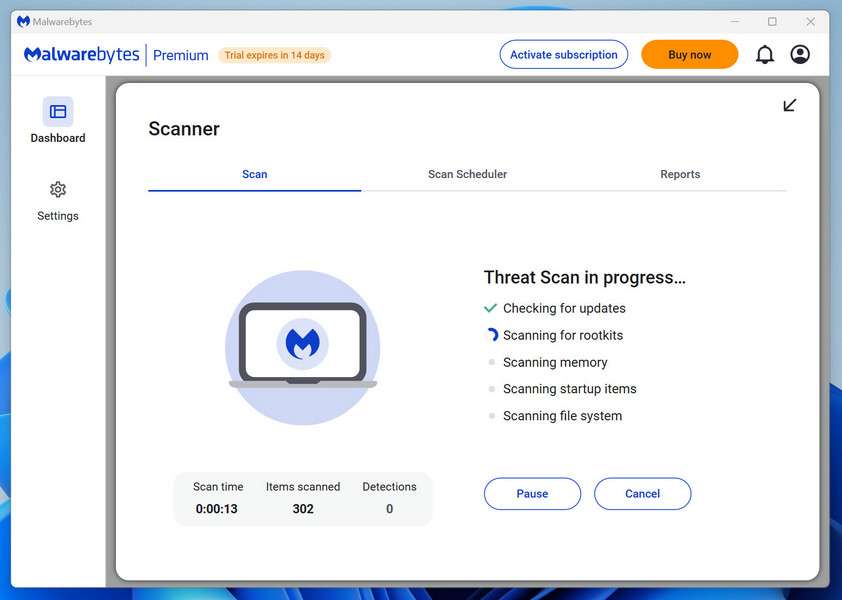
Click the blue Scan button. Malwarebytes will automatically update its virus database and start checking your computer for malware.
Wait for the Scan to Finish
The scan checks your entire system for browser hijackers and other malicious programs, so it can take several minutes. Feel free to do something else — just check back occasionally to see the progress.
Quarantine the Detected Threats
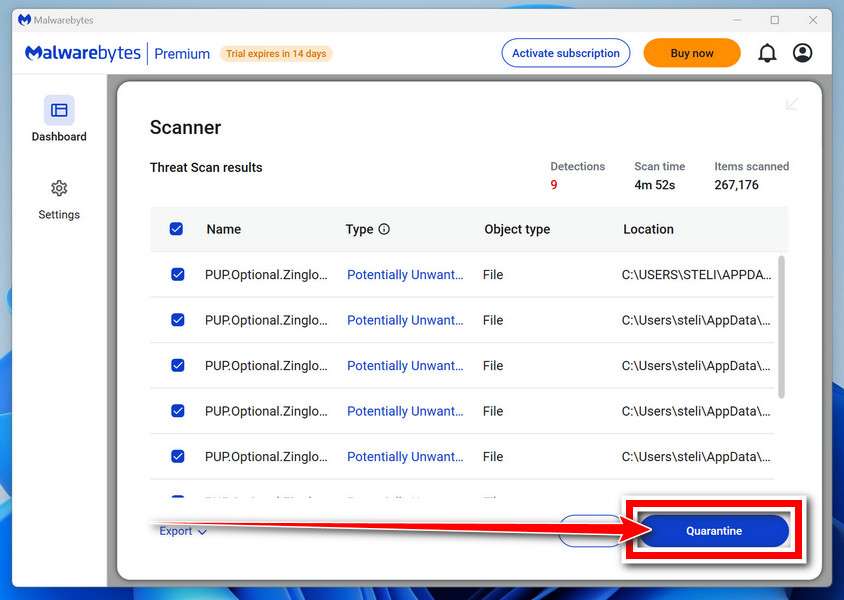
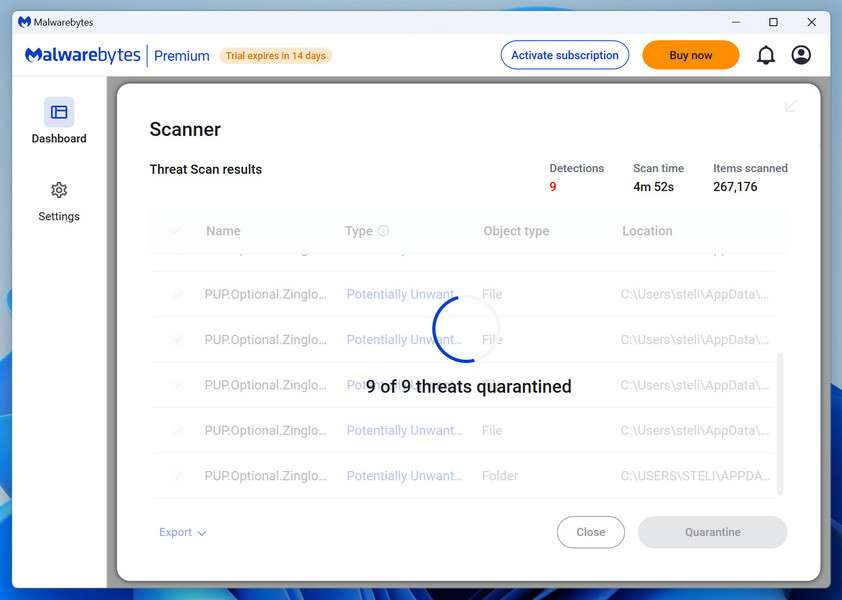
When the scan is done, you’ll see a list of everything Malwarebytes found — malware, adware, and potentially unwanted programs. Click the “Quarantine” button to remove all of them at once.
Malwarebytes will now remove the malicious files and registry entries and move them safely into quarantine.
Restart Your Computer
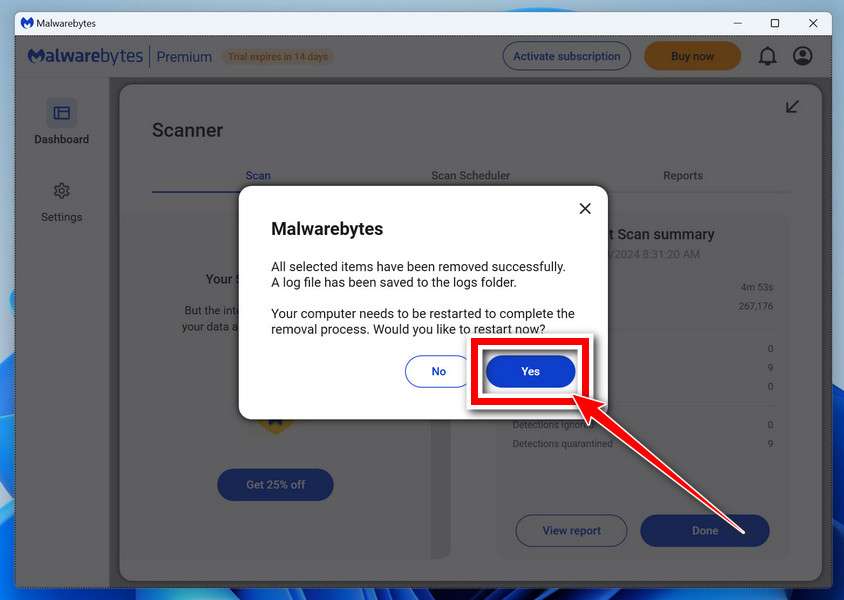
Some threats can only be fully removed after a reboot. If Malwarebytes asks you to restart, click Yes. Once you’re logged back in, your PC is clean and you can continue with the next steps in this guide.
When the scan finishes, click Quarantine to remove everything Malwarebytes found. That’s it — your Windows PC is now clean of trojans, adware, and other malware, and should be back to running smoothly.
If your current antivirus allowed this malicious program on your computer, you may want to consider purchasing Malwarebytes Premium to protect against these types of threats in the future. If you are still having problems with your computer after completing these instructions, then please follow one of the steps:
Malwarebytes for Mac is a free on-demand scanner that removes the malware other security software tends to miss — adware, browser hijackers, and unwanted programs included. Cleaning an infected Mac with Malwarebytes has always been completely free, and it’s our go-to recommendation. Follow the steps below to scan and clean your Mac in just a few minutes.
Download Malwarebytes for Mac
Click the button below to download the latest version of Malwarebytes for Mac.
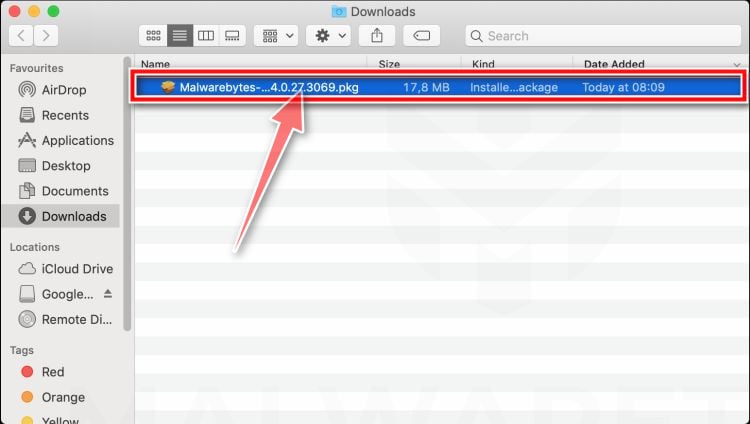
When the download finishes, open your Downloads folder and double-click the setup file to begin the installation.
Follow the On-Screen Prompts to Install Malwarebytes
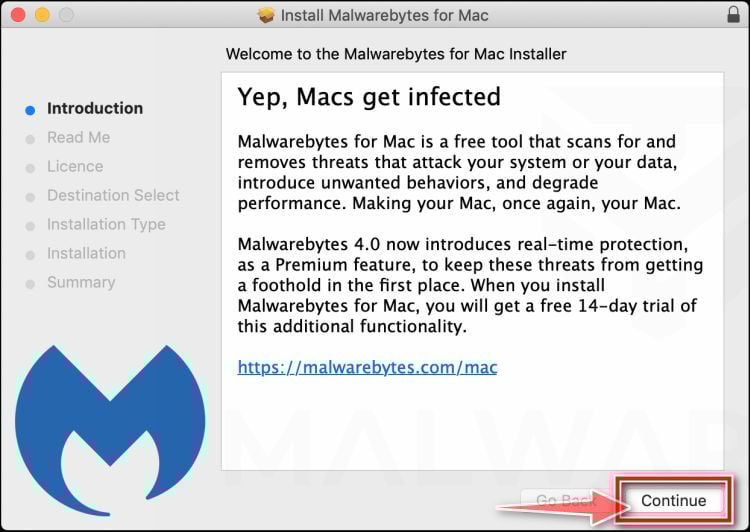
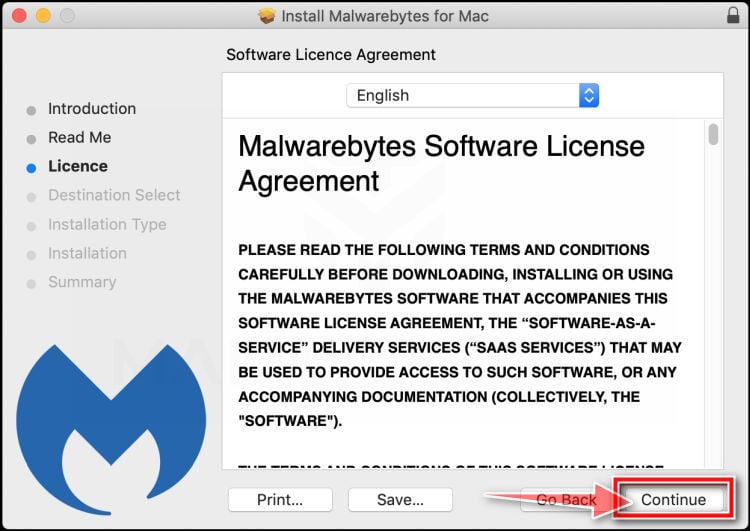
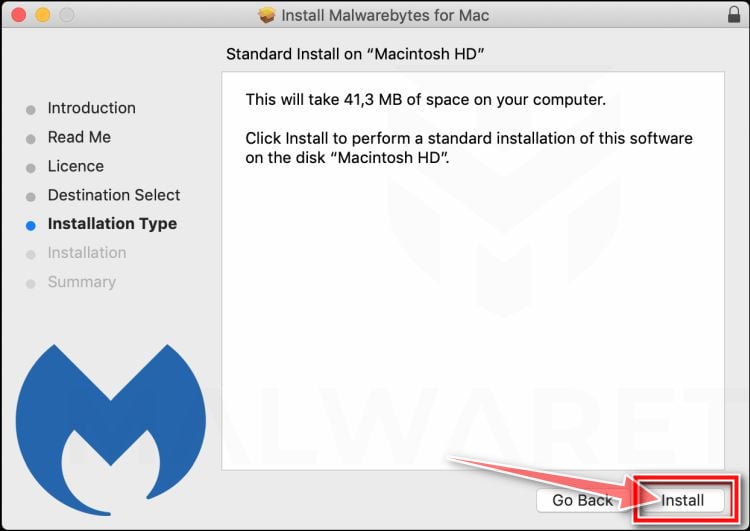
The Malwarebytes for Mac Installer will guide you through a few quick screens. Click “Continue” and keep following the prompts until the installation completes.
When the installation is complete, Malwarebytes opens to the Welcome to Malwarebytes screen. Click “Get started“.
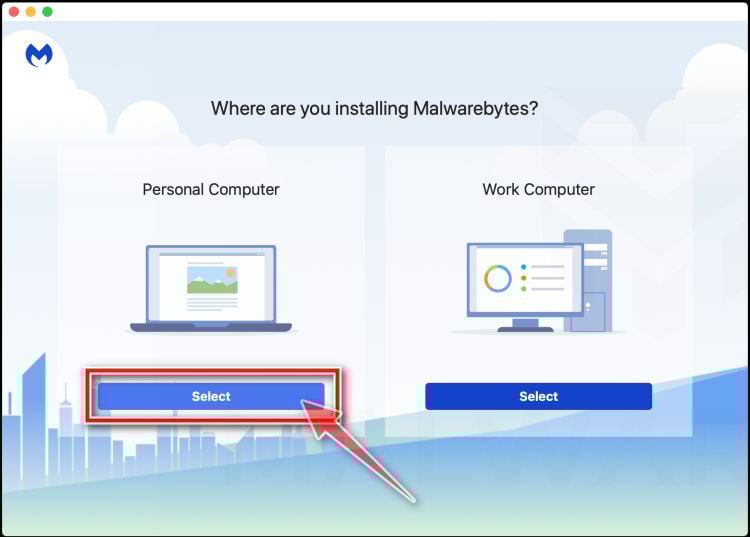
Select “Personal Computer” or “Work Computer”
Malwarebytes will ask what type of computer you’re installing it on. Click either Personal Computer or Work Computer, whichever applies.
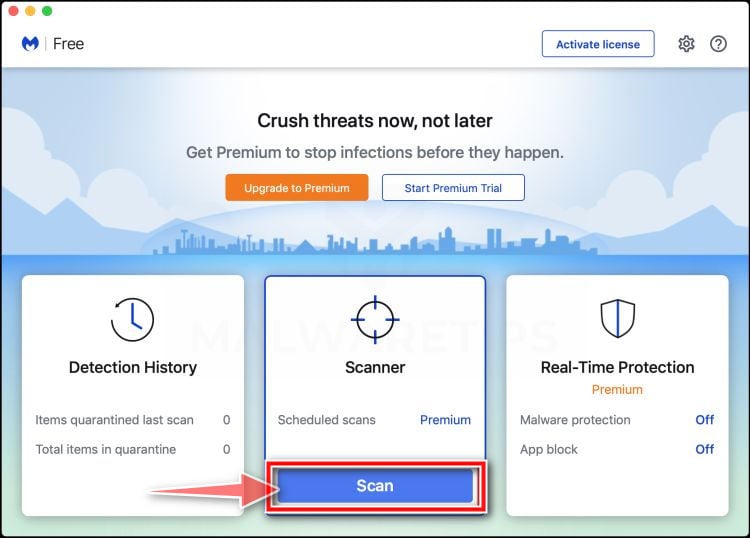
Start the Scan
Click the “Scan” button. Malwarebytes will automatically update its detection database and begin checking your Mac for malware.
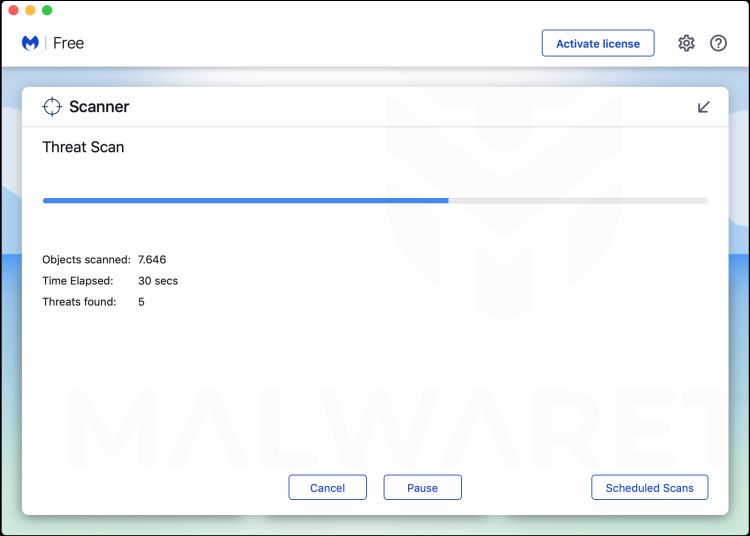
Wait for the Scan to Finish
Malwarebytes will scan your Mac for adware, browser hijackers, and other malicious programs. This can take a few minutes, so feel free to do something else — just check back occasionally to see the progress.
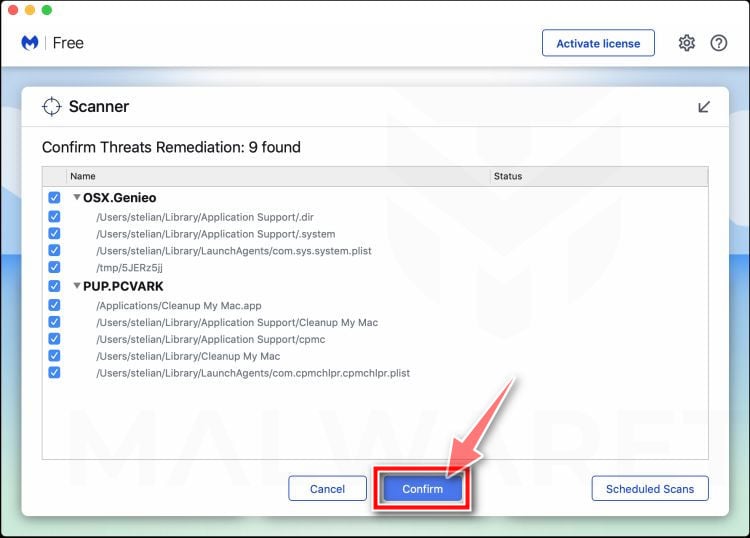
Quarantine the Detected Threats
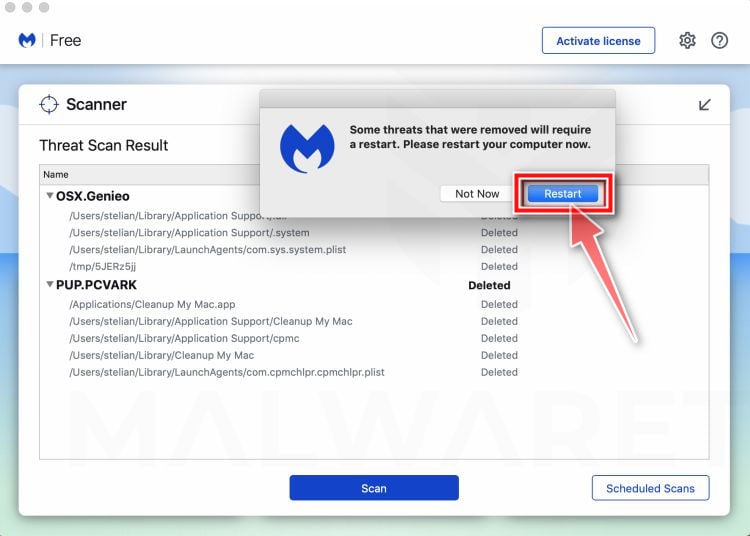
When the scan is done, you’ll see a list of everything Malwarebytes found. Click the “Quarantine” button to remove all the threats at once.
Restart Your Mac
Malwarebytes will now remove all the malicious files it found. Some threats can only be fully removed after a reboot — if Malwarebytes asks you to restart, allow it. Once you’re logged back in, your Mac is clean.
Once the scan is done, remove every threat it detected. Your Mac is now free of adware, rogue browser extensions, and other potentially harmful software.
If your current antivirus allowed a malicious program on your computer, you might want to consider purchasing the full-featured version of Malwarebytes Anti-Malware to protect against these types of threats in the future. If you are still experiencing problems while trying to remove a malicious program from your computer, please ask for help in our Mac Malware Removal Help & Support forum.
Run a Malware Scan with Malwarebytes for Android
Malwarebytes for Android automatically detects and removes dangerous threats like malware and ransomware so you don’t have to worry about your most-used device being compromised. Aggressive detection of adware and potentially unwanted programs keeps your Android phone or tablet running smooth.
Download Malwarebytes for Android.
You can download Malwarebytes for Android by clicking the link below.
In the Google Play Store, tap “Install” to install Malwarebytes for Android on your device.
When the installation process has finished, tap “Open” to begin using Malwarebytes for Android. You can also open Malwarebytes by tapping on its icon in your phone menu or home screen.
Follow the on-screen prompts to complete the setup process
When Malwarebytes will open, you will see the Malwarebytes Setup Wizard which will guide you through a series of permissions and other setup options. This is the first of two screens that explain the difference between the Premium and Free versions. Swipe this screen to continue. Tap on “Got it” to proceed to the next step. Malwarebytes for Android will now ask for a set of permissions that are required to scan your device and protect it from malware. Tap on “Give permission” to continue. Tap on “Allow” to permit Malwarebytes to access the files on your phone.
Update database and run a scan with Malwarebytes for Android
You will now be prompted to update the Malwarebytes database and run a full system scan.
Click on “Update database” to update the Malwarebytes for Android definitions to the latest version, then click on “Run full scan” to perform a system scan.
Wait for the Malwarebytes scan to complete.
Malwarebytes will now start scanning your phone for adware and other malicious apps. This process can take a few minutes, so we suggest you do something else and periodically check on the status of the scan to see when it is finished.
Click on “Remove Selected”.
When the scan has been completed, you will be presented with a screen showing the malware infections that Malwarebytes for Android has detected. To remove the malicious apps that Malwarebytes has found, tap on the “Remove Selected” button.
Restart your phone.
Malwarebytes for Android will now remove all the malicious apps that it has found. To complete the malware removal process, Malwarebytes may ask you to restart your device.
After the scan, tap Remove Selected to delete all detected threats. Your Android phone is now clean — no more malicious apps, adware, or browser redirects.
If your current antivirus allowed a malicious app on your phone, you may want to consider purchasing the full-featured version of Malwarebytes to protect against these types of threats in the future. If you are still having problems with your phone after completing these instructions, then please follow one of the steps:
Restore your phone to factory settings by going to Settings > General management > Reset > Factory data reset.
Now that your device is clean, keep it that way. Most infections start with a malicious ad or a fake download button — so blocking them at the source is your best defense.
We recommend AdGuard, which blocks malicious ads, phishing pages, and dangerous redirects before they can reach you.
Names, phone numbers, addresses, and demographic details circulate through public records, data brokers, marketing lists, and breached databases.
Knowing basic information proves access to a record, not possession of a genuine application.
Does a loan voicemail mean my identity was stolen?
Not by itself. Many campaigns use invented applications, recycled leads, or wrong numbers to trigger callbacks.
Check credit reports and contact unfamiliar creditors independently before deciding whether identity misuse occurred.
Should I press 2 to be removed?
Not on a suspicious recording. Pressing a key may confirm the number is active and increase its value to other callers.
Block the call, use carrier filtering, and submit a report instead.
Can caller ID show whether the lender is real?
No. The displayed name and number can be spoofed or routed through services that conceal the true source.
Verify through a regulator and the lender’s independently located website.
Will a credit freeze stop the phone calls?
A freeze restricts new credit access, not telemarketing. It protects against account opening while blocking tools address the calls separately.
Both measures can be appropriate when the source of the contact is uncertain.
Can I recover an advance fee sent to a fake lender?
Recovery depends on the payment method and speed of reporting. Contact the provider immediately and request reversal or fraud review.
Ignore anyone who later guarantees recovery for another upfront charge.
The Bottom Line
A flood of loan calls usually signals a contaminated lead, an aggressive sales campaign, or a deliberate callback scam, not confirmed approval.
Do not engage through the message. Verify credit activity independently, freeze files when needed, and treat every request for fees or codes as a warning.
10 Rules to Avoid Online Scams
Here are 10 practical safety rules to help you avoid malware, online shopping scams, crypto scams, and other online fraud. Each tip includes a quick “if you already got hit” action.
Stop and verify before you click, log in, download, or pay.
Most scams win by creating urgency. Verify using a trusted method: type the website address yourself, use the official app, or call a known number (not the one in the message).
If you already clicked: close the page, do not enter passwords, and run a malware scan.
Keep your operating system, browser, and apps updated.
Updates patch security holes used by malware and malicious ads. Turn on automatic updates where possible.
If you saw a scary “update now” pop-up: close it and update only through your device settings or the official app store.
Use layered protection: antivirus plus an ad blocker.
Antivirus helps block malware. An ad blocker reduces scam redirects, phishing pages, and malvertising.
If your browser is acting weird: remove unknown extensions, reset the browser, then run a full scan.
Install apps, software, and extensions only from official sources.
Avoid cracked software, “keygens,” and random downloads. During installs, choose Custom/Advanced and decline bundled offers you do not recognize.
If you already installed something suspicious: uninstall it, restart, and scan again.
Treat links and attachments as untrusted by default.
Phishing often impersonates delivery services, banks, and popular brands. If it is unexpected, do not open attachments or log in through the message.
If you entered credentials: change the password immediately and enable 2FA.
Shop safely: research the store, then pay with protection.
Be cautious with brand-new stores, “closing sale” stories, and prices that make no sense. Prefer credit cards or PayPal for dispute options. Avoid wire transfers, gift cards, and crypto payments.
If you already paid: contact your card issuer or PayPal quickly to dispute the transaction.
Crypto rule: never pay a “fee” to withdraw or recover money.
Common patterns include fake profits, then “tax,” “gas,” or “verification” fees. Another is a “recovery agent” who demands upfront crypto.
If you already sent crypto: stop paying, save evidence (wallet addresses, TXIDs, chats), and report the scam to the platform used.
Secure your accounts with unique passwords and 2FA (start with email).
Use a password manager and unique passwords for every account. Enable 2FA using an authenticator app when possible.
If you suspect an account takeover: change passwords, sign out of all devices, and review recent logins and recovery settings.
Back up important files and keep one backup offline.
Backups protect you from ransomware and device failure. Keep at least one backup on an external drive that is not always connected.
If you suspect infection: do not connect backup drives until the system is clean.
If you think you are a victim: stop losses, document evidence, and escalate fast.
Move quickly. Speed matters for disputes, account recovery, and limiting damage.
Stop payments and contact: do not send more money or respond to the scammer.
Call your bank or card issuer: block transactions, replace the card if needed, and start a dispute or chargeback.
Secure your email first: change the email password, enable 2FA, and remove unfamiliar recovery options.
Secure other accounts: change passwords, enable 2FA, and log out of all sessions.
Scan your device: remove suspicious apps or extensions, then run a full malware scan.
Save evidence: screenshots, emails, order pages, tracking pages, wallet addresses, TXIDs, and chat logs.
Report it: to the payment provider, marketplace, social platform, exchange, or wallet service involved.
These rules are intentionally simple. Most online losses happen when decisions are rushed. Slow down, verify independently, and use payment methods and account controls that give you recourse.
Hello! I'm Lapain Epuran, your go-to source for detailed and honest product reviews. From tech gadgets to miracle cures, I provide insights to help you make informed choices. Join me as we discover what's truly worth your time and money.