

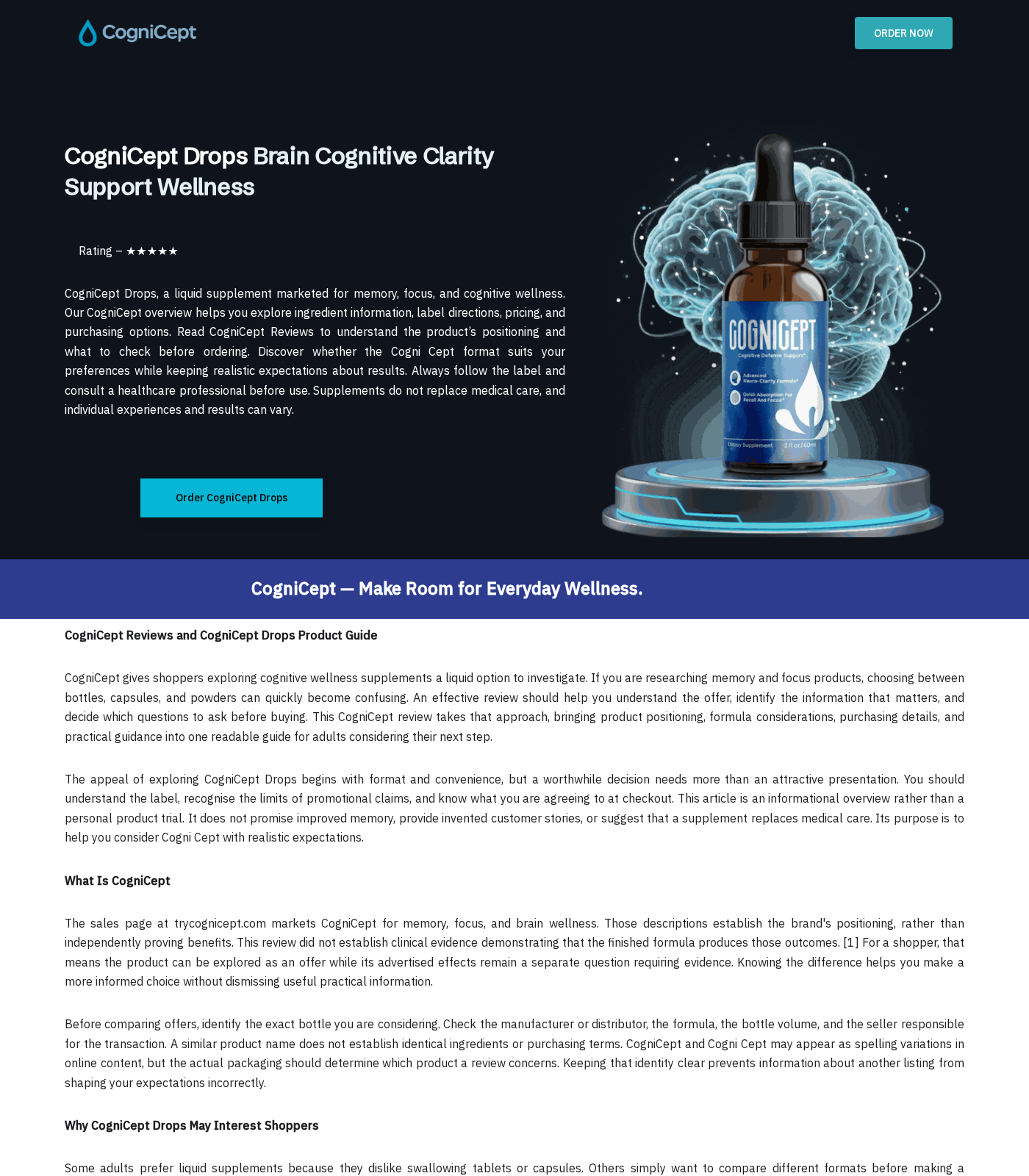
CogniCept arrives with the visual language of a futuristic brain supplement. A dark bottle, glowing graphics, and technical absorption claims make it look carefully engineered.
That confidence fades when the two promotional sites are compared and their order buttons are followed to the end.
Overview
What the pages advertise
CogniCept is depicted as a 60 ml liquid supplement taken with a dropper for memory, focus, recall, and mental clarity.
The presentation suggests rapid sublingual absorption, high bioavailability, precise dosing, and hours of cognitive support.
What immediately fails verification
The two CogniCept domains were registered at the same recorded second on September 10, 2026, and use closely related page designs.
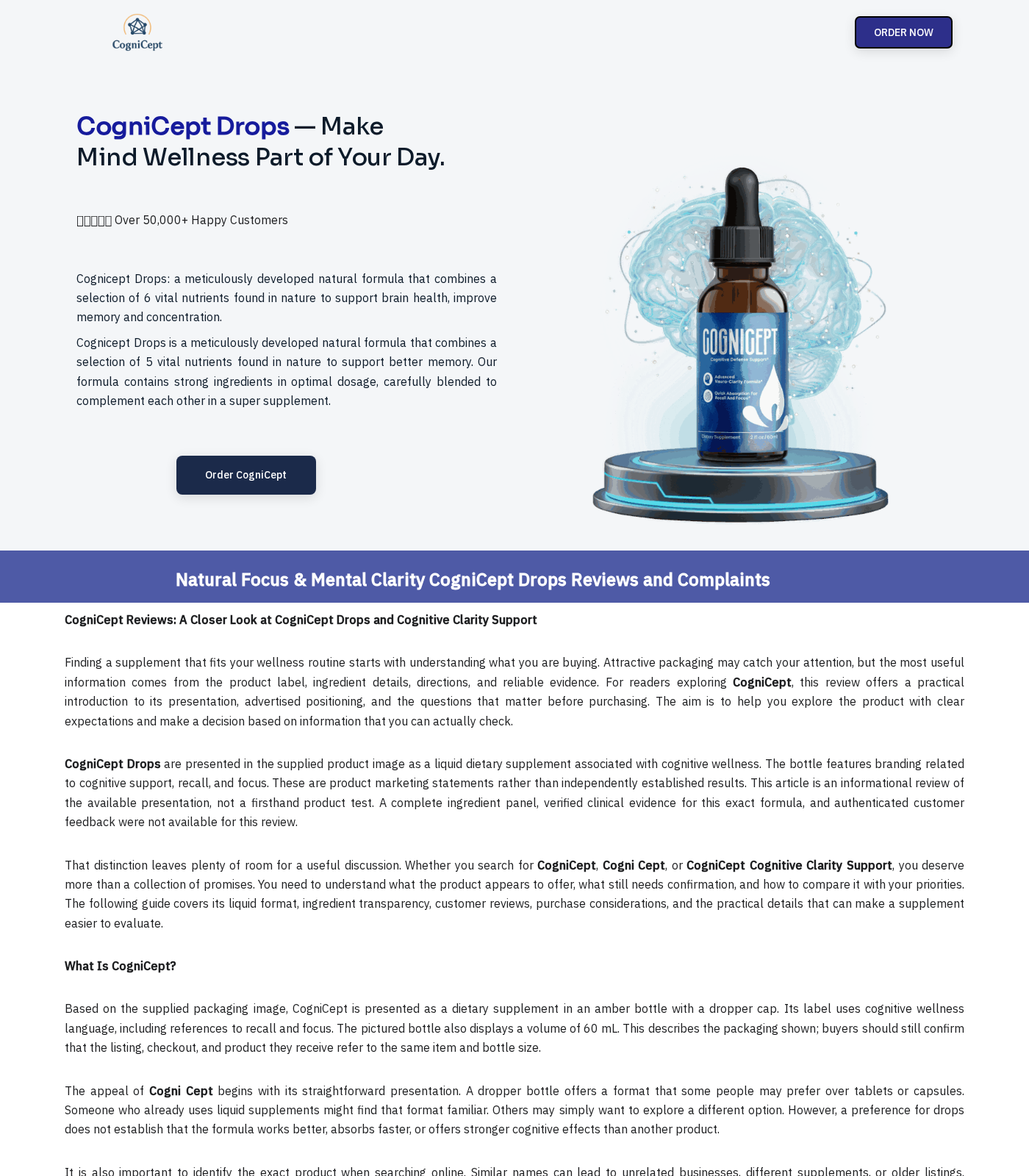
Their claims conflict. One page describes five nutrients, then six. Other sections present different formulas and quantities without a verifiable manufacturer label.
What happens at the order button
One site switches the shopper from CogniCept Drops to Cognizil. The other ends on a nearly empty WordPress installation instead of a checkout.
- The advertised liquid is not sold at the observed destination.
- The working route substitutes Cognizil bottles.
- The second route is broken.
- Formula descriptions contradict each other.
- The claimed customer count is not independently substantiated.
This investigation does not establish that Cognizil itself is counterfeit. It establishes that CogniCept advertising does not lead to a matching CogniCept purchase.
A product review cannot be reliable when the pictured format, written formula, and item offered for payment refuse to remain the same.
That mismatch is the central consumer risk, even without assuming hidden billing or making unsupported claims about where any replacement product was manufactured.
How the CogniCept Drops Scam Works
Step 1: A synthetic-looking bottle creates a product identity
Both sites display the same blue-labeled dropper bottle against a glowing brain illustration and metallic platform.
The image resembles a polished digital composition. Visual inspection cannot prove whether artificial intelligence produced it, but it does not document physical inventory.
No clear photograph shows a readable Supplement Facts panel, lot code, responsible distributor, or ordinary retail packaging.
Step 2: Scientific-sounding numbers encourage trust
The promotions reference 98% bioavailability, five-minute absorption, exact milligram amounts, and a six-to-eight-hour focus window.
Precise numbers feel authoritative, but precision in advertising is not proof. The pages do not provide dependable finished-product research supporting those measurements.
The FTC expects objective health claims to be truthful, not misleading, and supported by competent and reliable scientific evidence.
A dramatic percentage needs a defined test, method, sample, comparison, and product. None of those essentials is obvious beside the claim.
Step 3: The formula changes inside the promotion
On cogni-cept.com, adjacent paragraphs describe a formula containing six vital nutrients and then five vital nutrients.
Elsewhere, the copy lists Citicoline, L-Theanine, and Bacopa at specific amounts while another description references a 22-ingredient proprietary blend.
Those versions cannot all describe the same transparent formula without further explanation.
A buyer needs one current label, not a collection of incompatible ingredient stories assembled across promotional sections.
Step 4: Customer popularity is asserted, not demonstrated
One page announces more than 50,000 happy customers near the hero section. It offers no transparent dataset supporting that total.
The article copy on the same site says verified customer testimonials were unavailable. That creates another internal credibility problem.
A star graphic and large customer number can influence purchasing decisions. They should not be treated as verified reviews without source information.
Step 5: The working button silently switches to Cognizil
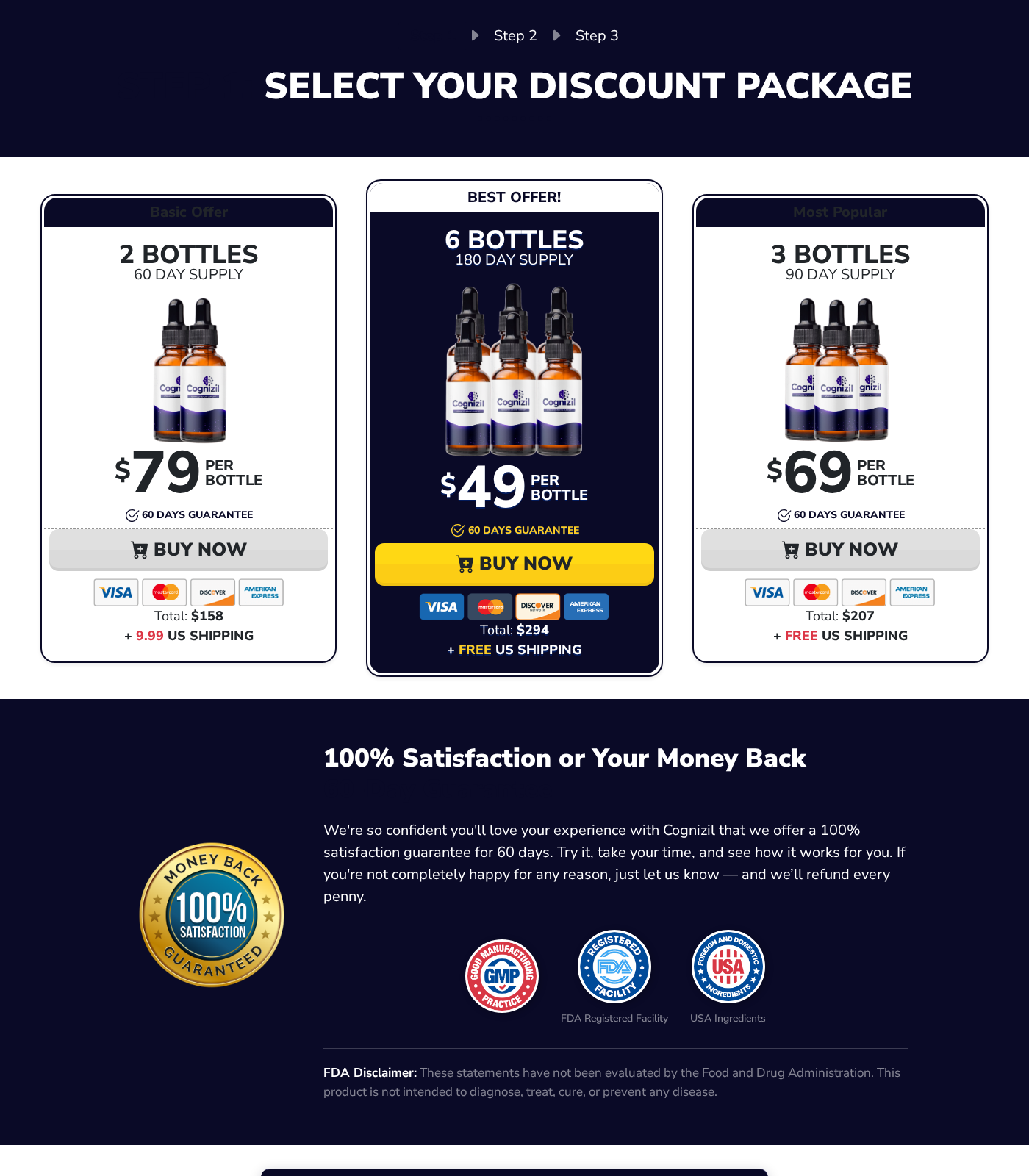
The order link on trycognicept.com passes through an affiliate redirect and opens a package page for Cognizil.
The buyer who started with CogniCept Drops now sees Cognizil bottles, different branding, and a separate product identity.
The displayed packages cost $158 for two bottles, $207 for three, and $294 for six, before any applicable shipping detail.
The sales structure resembles other memory supplement funnels, but the decisive issue is the unexplained brand substitution.
Step 6: The second button reaches no product at all
The order link on cogni-cept.com also uses Rush My Offers, but its observed destination is the affiliate site’s unfinished homepage.
The page contains the default WordPress “Hello world!” post, a sample page, and placeholder navigation.
There is no CogniCept product, checkout summary, ingredient label, or merchant explanation at that destination.
Step 7: The buyer is left without a stable product record
A shopper may remember CogniCept, receive a Cognizil receipt, and later confront different names on support or billing records.
That fragmentation can complicate cancellations, disputes, health questions, and attempts to determine which guarantee applies.
No automatic subscription term was visible during the reviewed route. This article does not claim that recurring billing was proven.
The verified problems are enough: false continuity, conflicting formula claims, an unrelated checkout product, and a second order route that does not function.
Why “Fast Absorption” Needs Real Evidence
Sublingual products can be legitimate, but placing liquid under the tongue does not automatically prove a 98% absorption rate.
Absorption depends on the ingredient, formulation, concentration, method, and measurement. A percentage without supporting documentation is merely an advertising assertion.
The same applies to a promised onset time. “Five minutes” needs a defined outcome and a reliable study of the finished formula.
Feeling alert is also not equivalent to improved memory. Different cognitive claims require appropriate measures and cannot be blended into one vague success story.
FDA does not approve dietary supplements for safety and effectiveness before sale. Facility registration language should never be mistaken for product approval.
Anyone considering a cognitive supplement should show the actual label to a pharmacist or clinician, especially when using medication or managing a health condition.
The Bottle Image Raises More Questions Than It Answers
The pictured CogniCept bottle includes short phrases about recall, focus, and rapid absorption. Those phrases are marketing statements, not an ingredient disclosure.
A front label should be connected to a readable back label. Buyers need serving size, ingredients, amounts, warnings, and responsible company details.
Those elements are especially important for liquid products. Concentration per dropper can matter as much as the total volume printed on the bottle.
The pages discuss a one-milliliter serving, yet the offer never reaches a matching CogniCept transaction where that information can be confirmed.
A beautiful render can be reused across many pages without proving that the formulation behind it is stable.
The inconsistent nutrient counts demonstrate why the label cannot be inferred from promotional copy.
The Domain Pattern Suggests a Coordinated Affiliate Campaign
trycognicept.com and cogni-cept.com share an exact registration timestamp. Both were registered for one year through the same registrar.
They also use the same broad hosting infrastructure and send orders through similarly named Rush My Offers paths.
These technical similarities strongly suggest coordinated deployment. They do not identify a legal owner because public registrant details are limited.
The coordination matters because contradictions cannot be dismissed as unrelated retailers accidentally describing different products under a common word.
The two pages appeared together, use matching product art, and follow the same affiliate structure, yet still fail to provide one dependable formula.
That pattern resembles search-focused microsites designed to capture product queries quickly, rather than a mature manufacturer maintaining documented product information.
Why the Cognizil Destination Is Not a Harmless Typo
A typo changes letters. This redirect changes the product name, bottle design, package presentation, and item offered for payment.
The Cognizil page shows dropper bottles, but that shared format does not make Cognizil and CogniCept interchangeable.
Two liquid supplements can contain different ingredients, strengths, directions, allergens, warnings, and responsible businesses.
The change also affects the contract. Refund requests normally depend on the seller, transaction record, applicable terms, and product actually purchased.
A consumer should never have to guess whether a guarantee advertised for one name follows a payment made for another.
The safest standard is straightforward: the advertisement, checkout, receipt, and delivered item should identify the same product.
The Bundle Design Pushes Commitment Before Clarity
The Cognizil destination emphasizes six bottles as its best offer. Its center package uses stronger contrast and the lowest displayed unit price.
This is a familiar direct-response layout. It encourages shoppers to compare savings among bundles instead of reconsidering why the brand changed.
The smallest available package still contains two bottles. There is no visible single-bottle option on the reviewed screen.
That matters for a first-time buyer. The minimum commitment is already $158 plus the displayed shipping charge.
A 60-day guarantee appears prominently, but shoppers should read the complete policy before assuming every bottle and shipping cost are refundable.
Check whether opened containers qualify, whether return authorization is required, and which party pays postage.
Never increase an order merely because the largest bundle carries a dramatic savings number. The total charge and product certainty matter more.
What a Trustworthy CogniCept Offer Would Need to Show
A credible offer would begin with one consistent product name and a checkout that preserves that identity.
It would display the complete current label, including exact amounts per serving, other ingredients, warnings, bottle volume, and usage directions.
The page would name the legal manufacturer or distributor and provide support details that can answer product-specific questions before purchase.
Any absorption or performance percentage would link to evidence involving the same finished formula and a clearly described testing method.
Customer totals would be explained, and reviews would show enough context to distinguish genuine purchasers from promotional copy.
Finally, the order summary would disclose bottle quantity, shipping, taxes, optional additions, recurring terms, and refund conditions before payment.
The current CogniCept network falls short on each central point. It cannot even deliver a stable path from its advertisement to its advertised product.
Company, Address, and Fulfillment Checks
The advertised brand lacks a clear legal operator
The CogniCept pages do not clearly identify a legal manufacturer or distributor responsible for the blue dropper bottle shown in their artwork.
An affiliate page can promote another company, but it should still identify the actual product and seller accurately.
No dependable CogniCept business address is established
The reviewed pages do not provide a verifiable CogniCept headquarters, manufacturing site, or product-specific returns location.
Addresses attached to checkout retailers or replacement brands should not be relabeled as CogniCept company addresses.
Support becomes uncertain after the brand switch
A buyer seeking help may search for CogniCept, while the working purchase route concerns Cognizil. Those names lead to different support expectations.
The broken second route offers no order support at all. It lands on a generic homepage with placeholder content.
The supply chain remains unverified
The promotional pages do not prove who made the pictured liquid, where it was produced, or whether that exact bottle entered commercial distribution.
There is also no basis here to declare it Chinese-made. The evidence supports an unverified origin, which is already a significant problem.
If a bottle arrives, compare its sealed label, lot information, distributor, and ingredients with the product represented during purchase before using it.
What to Do if You Have Fallen Victim to This Scam
- Write down every name in the transaction. Record CogniCept, Cognizil, Rush My Offers, the card descriptor, and any retailer appearing in your confirmation.
- Preserve the pages. Save screenshots of the original advertisement, formula claims, redirect, package page, receipt, and refund terms.
- Request cancellation in writing. Explain that the advertised product changed before payment. Ask for a response and return authorization you can retain.
- Contact your card issuer promptly. Describe any unauthorized quantity, misleading substitution, or refused cancellation. Ask about dispute and recurring-charge protections.
- Inspect any delivered bottle. Do not use it when the label, seal, ingredients, or seller differ from the order you understood.
- Seek medical advice when necessary. A pharmacist can review the actual ingredient panel for interactions. Report serious reactions through appropriate medical and regulatory channels.
- Report misleading claims. Submit clear evidence to the FTC, and report supplement safety or labeling concerns to the FDA.
- Secure your browser and device. Scan unknown downloads with Malwarebytes. AdGuard can help block repeat malvertising, trackers, and known deceptive destinations.
Frequently Asked Questions
Is CogniCept Drops a verified product?
The sites show a branded bottle, but this investigation could not verify a matching manufacturer label, stable formula, or CogniCept checkout.
What product does the working order link sell?
It opens a Cognizil package page. The bottle name and sales destination no longer match the CogniCept Drops advertisement.
Why does the second order link fail?
It redirects to the unfinished Rush My Offers homepage. The page offers no product-specific explanation or checkout.
Is the 98% bioavailability claim proven?
No reliable finished-product evidence supporting that exact percentage was presented on the reviewed pages.
Does the offer include automatic refills?
No recurring term was visible in the observed route, so automatic enrollment is not claimed here. Buyers should still inspect their own checkout terms.
What is the safest buying decision?
Do not purchase through a route that changes the product name. Demand a current label, legal seller, matching checkout, and complete refund terms.
The Bottom Line
CogniCept combines impressive graphics and precise-sounding claims with contradictory formulas, unverifiable popularity, and no matching sales destination.
One button substitutes Cognizil. The other reaches a default WordPress page. Until those basic failures are resolved, avoid the CogniCept promotion.








