

Qzylax.com looks like a cheerful general store filled with household finds, daily essentials, and low-friction shopping promises.
Behind that familiar layout, the company details, return limitations, and delivery language require more patience than the product pages suggest.
Overview
What Qzylax.com is
Qzylax.com is a broad online store selling home goods, everyday products, electronics, and other changing merchandise rather than one specialized product line.
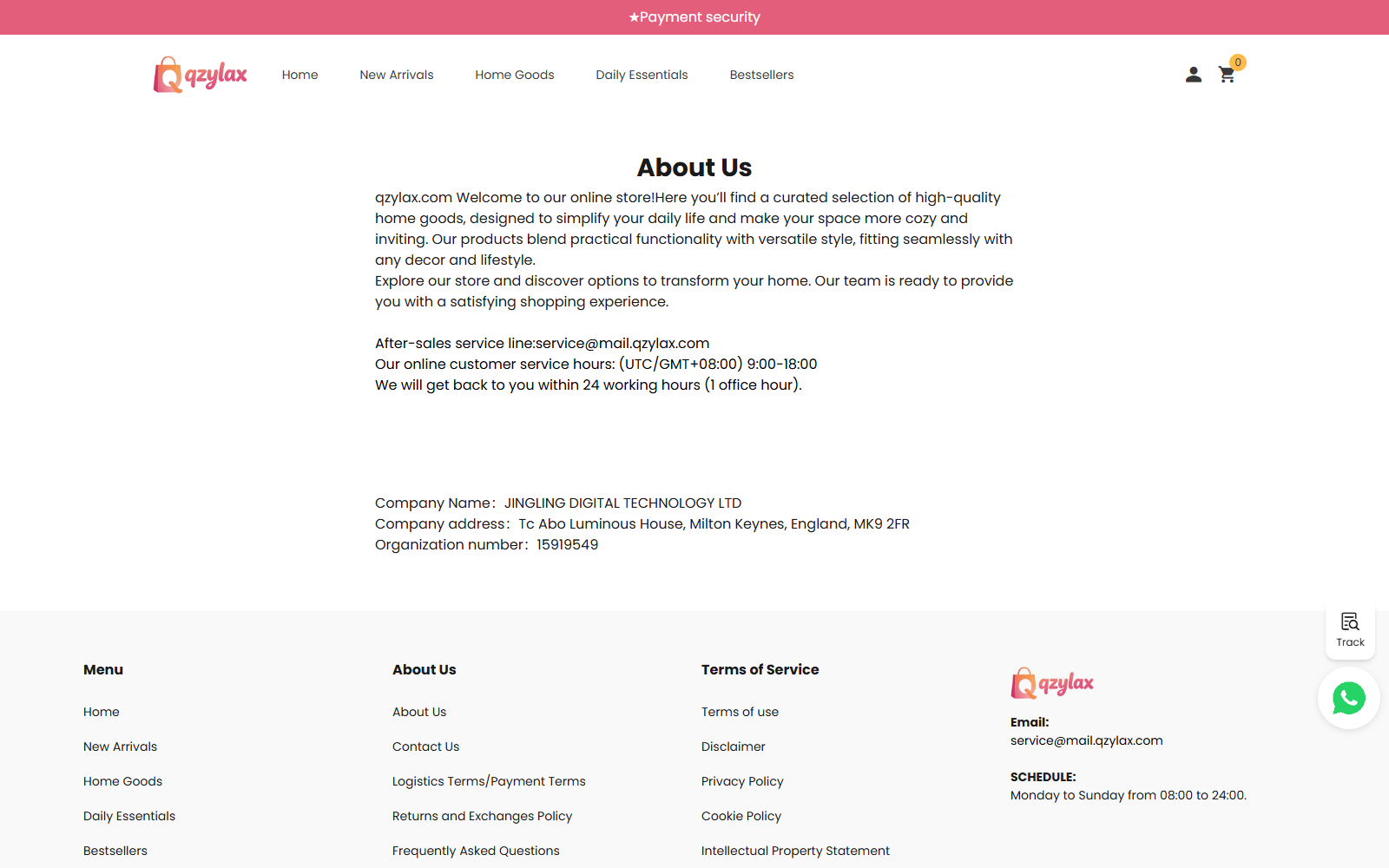
Its About Us page names JINGLING DIGITAL TECHNOLOGY LTD and provides a United Kingdom company number.
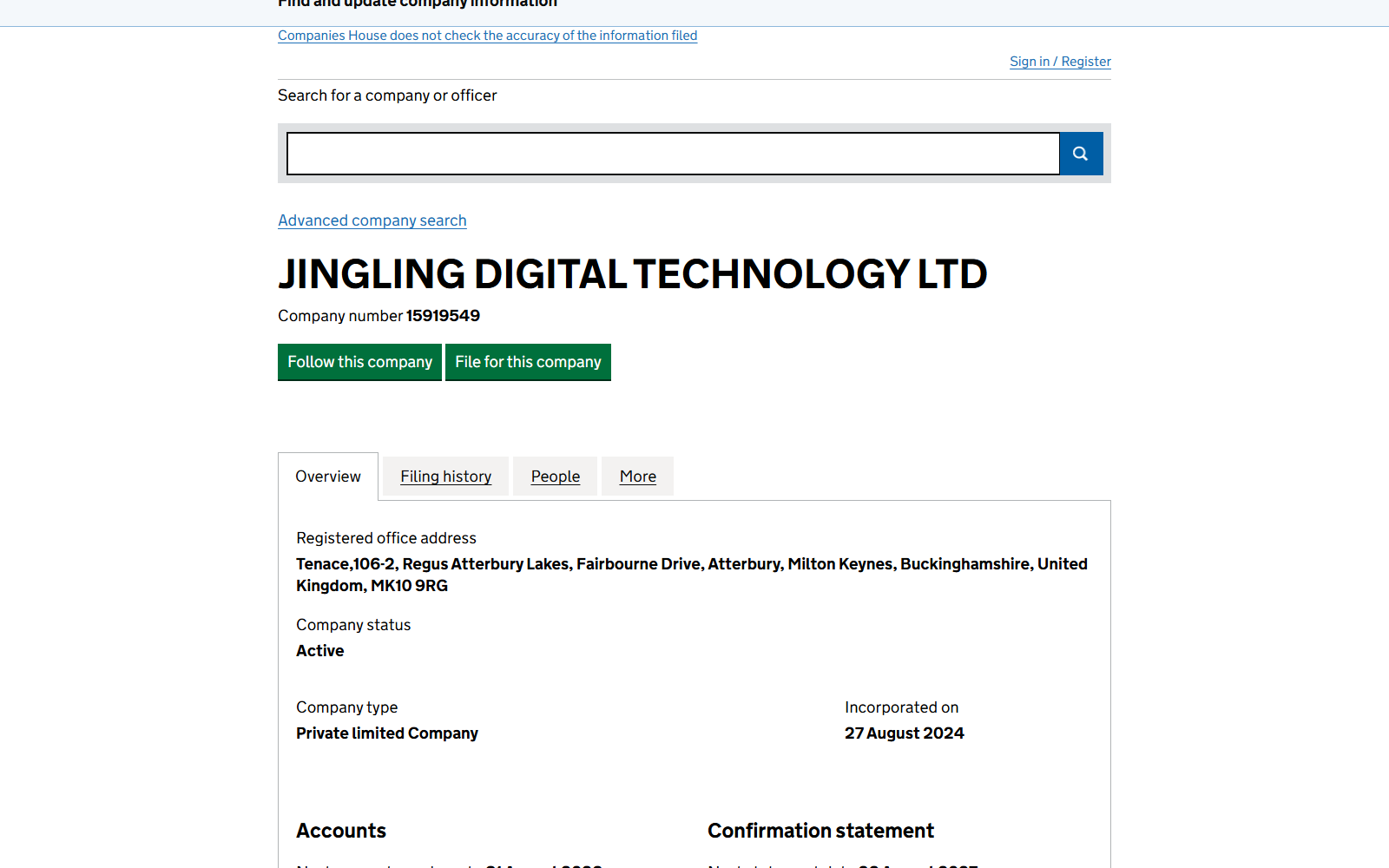
That company exists in the official register. However, the address shown by Qzylax does not match the company’s current registered office.
Where the shopping risk appears
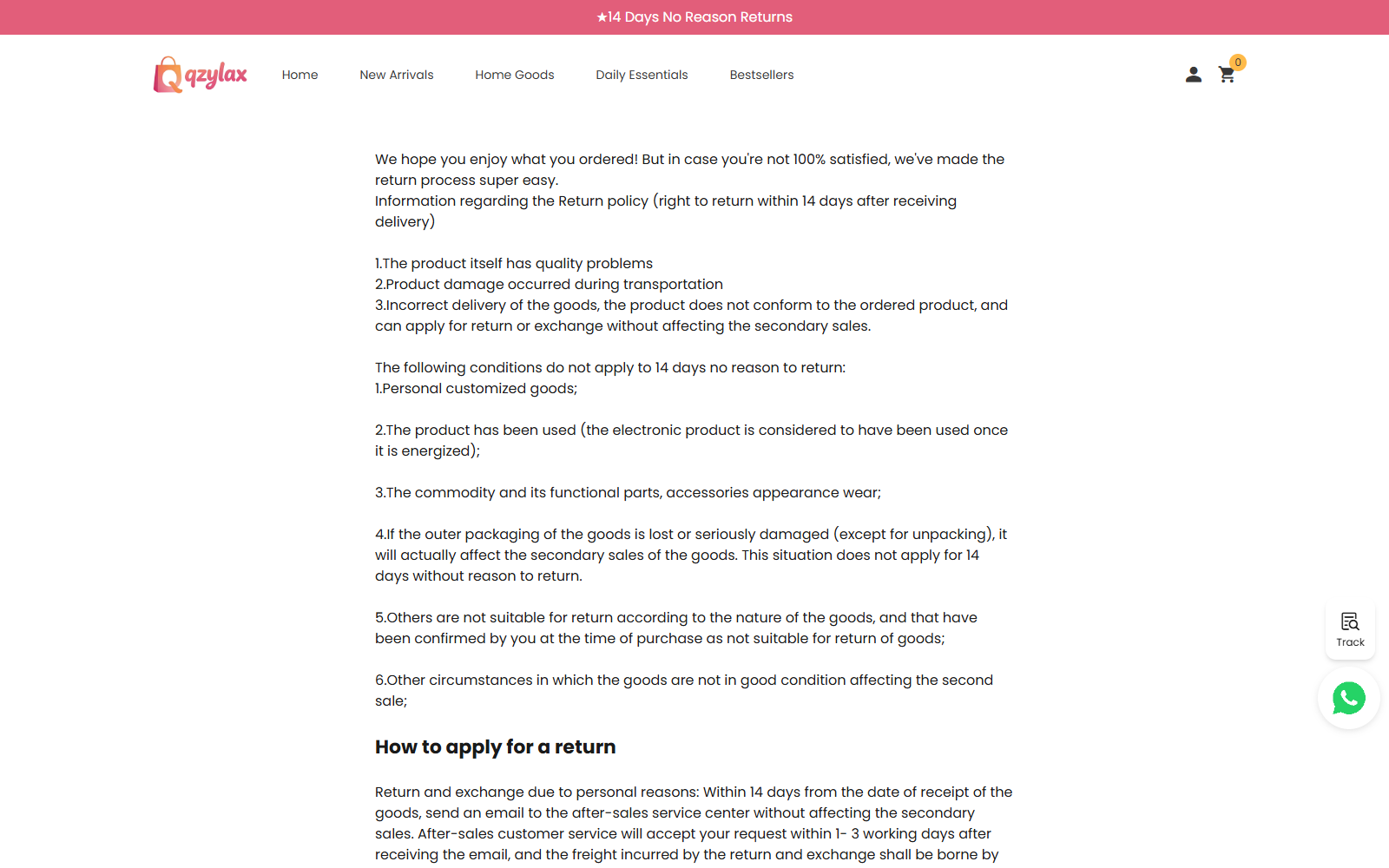
The return policy provides only 14 days and treats an electronic item as used once it has been powered on.
Customers returning goods for personal reasons pay freight. The public policy does not make the physical return destination easy to evaluate before purchase.
Shipping language is also inconsistent. It discusses airfreight and local delivery while saying overseas deliveries are not handled.
Our assessment
Qzylax should not be called a fake company simply because details conflict. The named UK company is active and has a verifiable registration.
The concern is whether that entity currently operates this exact store and whether Qzylax’s published contact details are maintained accurately.
We consider the store high risk until it reconciles its address, explains fulfillment, and supplies a usable return destination before payment.
- The named company exists in the United Kingdom register.
- Qzylax displays a different address from the current registered office.
- Customer service hours are stated in the UTC+08 time zone.
- The store allows a 14-day return request period.
- Powered-on electronics can lose unused return status.
- Personal-reason return freight is paid by the customer.
A Real Company Number Is Helpful, but Not Sufficient
Fraud investigations often begin by checking whether a company exists. That step is useful, but it answers only one question.
A registered company can be inactive operationally, used by multiple brands, impersonated, or connected to a store through details that have not been updated.
Buyers must also verify that the website, email, bank recipient, address, directors, and card descriptor form one consistent trail.
Qzylax identifies JINGLING DIGITAL TECHNOLOGY LTD and organization number 15919549. The number corresponds to an active UK company.
The official register currently lists an office in the Atterbury area of Milton Keynes. Qzylax instead publishes a central Milton Keynes address.
Companies can move. A storefront that takes payments should update its legal pages and explain which address handles notices, support, and returns.
Until the discrepancy is resolved, do not assume either location is a warehouse. A registered office may be used only for company mail.
The Return Policy Is Especially Difficult for Electronics
Qzylax advertises a 14-day no-reason return concept. The headline sounds straightforward, but the exclusions significantly narrow its usefulness.
The policy says electronics are considered used after being energized. In ordinary language, that means powering on a device can affect return eligibility.
A customer cannot discover whether a gadget works, connects, charges, or matches its claims without switching it on.
This creates a practical trap. The only meaningful product test may be the same action used to refuse an ordinary return.
Quality problems, transit damage, and incorrect goods have separate language. Buyers should document defects immediately and frame the request accurately.
Do not describe a defective item as a simple change of mind. State the specific failure, advertised function, test performed, and evidence.
The policy also assigns return freight to customers when the reason is personal. International postage can exceed the value of a low-cost item.
How a Qzylax Purchase Can Go Wrong
Step 1: A rotating product advertisement creates the visit
General stores often acquire shoppers through individual product advertisements rather than through brand loyalty.
A video may focus on one useful household device, while the destination store contains many unrelated categories.
This model is not inherently fraudulent. It makes product-specific verification more important because the store itself offers little specialist reputation.
Step 2: The storefront supplies reassuring company details
The About Us page includes a company name and registration number. Those details can make the store feel more established.
A quick registry search confirms the company’s existence, which may end a shopper’s investigation too early.
The address mismatch appears only when the official current record is compared with the website line by line.
Step 3: The shopper relies on generic product claims
Broad stores may reuse supplier descriptions, photographs, and demonstrations. The merchant should still ensure that delivered goods match those representations.
Save dimensions, materials, model numbers, included accessories, voltage, compatibility, and delivery promises before placing the order.
Do not rely on a product video if the written specifications remain vague or contradictory.
Step 4: The item travels through cross-border fulfillment
Qzylax’s logistics page describes airfreight followed by local United States delivery, with an estimate of seven to ten working days.
The same page says overseas deliveries are not handled, wording that does not fit neatly with an international storefront.
Cross-border fulfillment can add customs delays, tracking gaps, and a separate last-mile carrier.
Step 5: Testing the product affects the return
When the parcel arrives, a buyer naturally powers on an electronic device to inspect it.
Under the store’s wording, that action can classify the product as used for a no-reason return.
If the device is defective or materially different, document that specific issue rather than accepting a generic used-item rejection.
Step 6: The return cost and destination become decisive
A return request must be accepted, packed correctly, and sent within the short period.
The customer may be responsible for freight, yet the public policy does not make the destination and likely cost easy to calculate beforehand.
A low purchase price can make enforcement uneconomical, leaving a buyer with unwanted goods instead of a practical refund.
Shipping Language That Needs Clarification
The logistics page states that goods move by airfreight to a local United States delivery provider. That suggests an international origin or consolidation process.
It gives an estimated seven to ten working days, while also warning that dispatch changes the cancellation situation.
The page says an online-payment cancellation may incur a fee. It should state the amount, timing, and legal basis before checkout.
Another line says overseas delivery is not handled. Buyers outside the store’s intended market should ask whether the website accepts their order at all.
Tracking should identify both the international and domestic legs. A label-created status is not proof that the package entered the carrier’s network.
Check shipment weight against the product. Very low weight can indicate an unrelated envelope or small placeholder item.
Record promised delivery separately from a policy estimate. Product pages and checkout screens can display different timelines.
Company, Address, and Fulfillment Checks
The named company is active
Companies House lists JINGLING DIGITAL TECHNOLOGY LTD as an active private company under number 15919549.
That is a positive traceability signal. It does not independently confirm the quality of Qzylax products or every website representation.
The addresses do not currently match
Qzylax displays “Tc Abo Luminous House” in central Milton Keynes. The current official record lists Tenace, 106-2 Fairbourne Drive, Atterbury.
Ask the merchant which address is current, when it changed, and where formal notices or returns should be sent.
The support schedule points to another region
The About Us page states customer-service hours in UTC+08. That time zone is far from the United Kingdom office named on the page.
Remote support is common. The store should still explain the operator, response times, and escalation route clearly.
The warehouse remains unidentified
Neither the UK registration nor the support schedule establishes where merchandise is stocked. The airfreight language suggests fulfillment can involve other countries.
Request the dispatch country and return destination for the exact product. A generic answer about “our warehouse” is not enough.
What to Do if You Have Fallen Victim to This Scam
- Archive the product page. Save the title, images, description, specifications, price, delivery date, stock message, and return promise.
- Record the merchant identity. Keep the named company, registration number, website address, support email, receipt, and card-statement descriptor.
- Track both shipping legs. Request the international carrier, domestic carrier, parcel weight, dispatch country, and last-mile tracking number.
- Film the unopened package. Capture labels, seals, box condition, contents, manual, model number, and missing or substituted accessories.
- Test carefully and document the reason. If electronics fail, record the defect immediately instead of describing the request as preference-based.
- Contact support within 14 days. State the requested remedy, evidence, order number, and deadline for a meaningful response.
- Request the authorized destination. Do not mail a return to a registered office or parcel sender unless Qzylax approves it in writing.
- Calculate return economics. Ask about postage, duties, deductions, cancellation fees, and whether original shipping is refundable.
- Use card protections when warranted. Submit evidence of non-delivery, defect, substitution, or an unusable return process to the issuer.
- Secure your account. Change any reused password. Use Malwarebytes after suspicious downloads and AdGuard against risky ads or redirects.
- Report precise discrepancies. Provide regulators with the website address, company number, address mismatch, policies, communications, and disputed amount.
How to Research a General Store Before Buying
Search the legal company name and registration number independently. Avoid links supplied only through the storefront.
Compare the official address, incorporation date, filing status, officers, and business activity with the store’s claims.
Search distinctive product photographs. Identical images across unrelated websites can reveal common wholesale sourcing.
Read return conditions before looking at reviews. A genuine product can still become a poor purchase when returns are economically impossible.
Check whether the site gives a telephone number, named operator, warehouse country, and stable email domain.
Send a specific pre-sale question. Ask the product’s model, dispatch country, warranty provider, and return address.
Evaluate the answer, not merely its speed. A fast template response that avoids every question provides little reassurance.
Use website age as context, not a verdict. New stores can be honest, and older domains can change hands.
When a Product Is Defective Rather Than Merely Unwanted
Return policies often give stronger treatment to defects, transit damage, and incorrect goods than to a change of mind.
Describe the advertised function and observed failure. Include a short video showing the setup, power source, controls, and result.
Photograph serial labels and packaging. Sellers may request evidence that the returned unit matches the order.
Do not dismantle the item unless the manual instructs it. Alteration can complicate warranty or card claims.
If a charger, battery, or electrical component becomes dangerously hot, stop using it. Store it away from flammable materials while seeking safety guidance.
Ask whether replacement is optional or mandatory. Consumer rights may depend on location, defect timing, and the seller’s jurisdiction.
A disagreement about policy does not justify threats. Keep communication concise, documented, and focused on the promised and delivered product.
Payment and Account Safety on Unfamiliar Stores
Use a unique password if an account is required. General stores can disappear, migrate platforms, or expose customers to convincing order-themed phishing.
Enable transaction alerts before buying. A push notification can reveal a wrong amount, foreign descriptor, or repeat attempt quickly.
Never send card photographs, identity documents, or remote-access codes to support. A normal refund goes back through the original payment channel.
If support asks for a separate payment to release a refund, stop. Legitimate merchants deduct agreed costs from the refund or explain them through the processor.
Review the statement for several months. A one-time gadget purchase should not produce recurring billing unless the checkout clearly disclosed a subscription.
Replace the card only when the issuer recommends it. A dispute can sometimes block one merchant without disrupting every legitimate recurring payment.
Beware of follow-up messages claiming customs, redelivery, or insurance fees. Verify tracking on the carrier’s official website using a fresh browser tab.
Keep order emails, but avoid opening unexpected attachments. Real merchants can provide invoices inside the account or as ordinary PDF files.
When contacting the bank, describe the problem precisely. Non-delivery, counterfeit substitution, defect, excess quantity, and unauthorized renewal require different evidence.
Frequently Asked Questions
Is Qzylax.com a confirmed scam?
We found substantial shopping risks but not enough evidence to label every transaction fraudulent. The company exists, while store details and policies remain concerning.
Who operates Qzylax.com?
The About Us page names JINGLING DIGITAL TECHNOLOGY LTD, UK company number 15919549. Buyers should still verify that connection independently.
Why does the Qzylax address not match Companies House?
The store may be using outdated or different contact details. Qzylax should explain the mismatch and publish a current legal address.
Can electronics be returned after testing?
The policy says an electronic product is considered used once powered on. Defective-item rights may differ from a no-reason return.
How long does Qzylax shipping take?
The reviewed logistics page estimated seven to ten working days for airfreight and local delivery, but actual timing can vary.
Who pays Qzylax return shipping?
The policy assigns freight to the customer for personal-reason returns. Ask for the destination and estimated cost before ordering.
The Bottom Line
Qzylax supplies more company information than an anonymous storefront, yet the details do not form a clean, current, and practical accountability trail.
The address mismatch, UTC+08 support, cross-border logistics, 14-day window, powered-electronics exclusion, and customer-funded returns create meaningful risk.
Before buying, make the seller identify the dispatch country, current legal address, warranty route, and authorized return location in writing.








