

A convincing health story can travel far before anyone asks who created it. The faces look familiar, the warning sounds urgent, and the promised answer feels reassuring.
FitWell Blood Balance appears inside that kind of polished online journey. We followed every visible handoff to learn what shoppers are actually being shown.
Overview
The promotion borrows authority it did not earn
Advertisements circulating for FitWell Blood Balance use an AI-manipulated depiction of Dario Amodei, the chief executive of Anthropic, to promote a health product.
We found no credible announcement connecting Amodei or Anthropic with FitWell, Balance Blends, blood sugar capsules, or the seller behind this campaign.
That mismatch matters. A technology executive’s recognizable face is being used to make an unfamiliar supplement appear important, researched, and unusually trustworthy.
The attractive product page does not identify a transparent seller
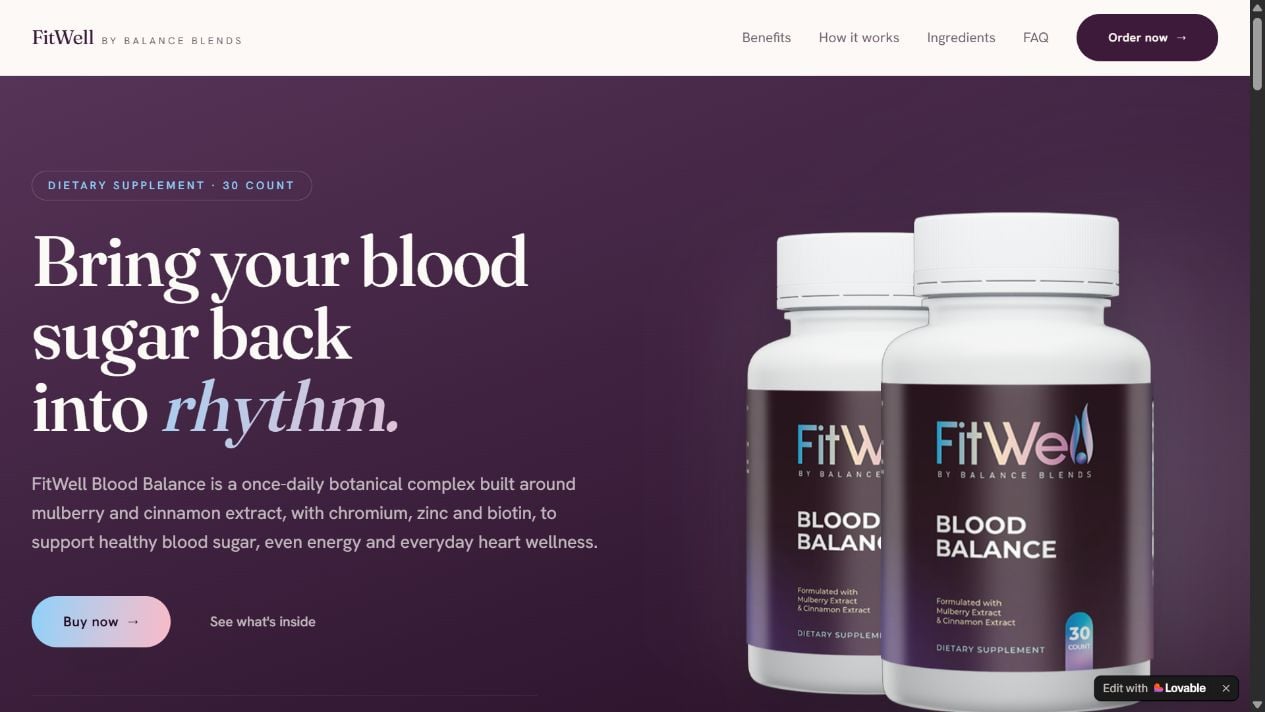
The FitWell page presents polished bottles, botanical ingredients, benefit statements, FAQs, and an order button. It identifies the branding as “FitWell by Balance Blends.”
However, the page we examined did not clearly name a legal operating company, headquarters, public telephone number, manufacturing address, or verifiable customer-service team.
A brand name is not the same as a legal seller. Buyers need the entity responsible for billing, delivery, product quality, returns, and adverse-event complaints.
The order button leads somewhere unexpected
Instead of opening an official FitWell checkout, the button sent us to a different domain containing a promotional article about the product.
That destination openly says it is not the official website. It also discloses affiliate links and possible commissions from sales generated through the page.
The result is a funnel that looks direct at first, yet becomes much less clear when the buyer tries to reach the actual merchant.
- The Dario Amodei endorsement is unauthorized and should not be trusted.
- The landing page makes blood sugar, energy, and heart-wellness claims.
- The visible page does not clearly identify the responsible legal company.
- The order button moves visitors to an affiliate promotion on another domain.
- The affiliate page says it is not the official product website.
- We found no evidence establishing that the finished product delivers the advertised outcomes.
Why the Dario Amodei Endorsement Is Fake
Dario Amodei is known for artificial-intelligence work, not for selling blood sugar supplements. That contrast helps the advertisement attract attention and discussion.
Scammers frequently choose public figures from fields associated with innovation. Viewers may transfer the person’s reputation for technical knowledge to an unrelated health claim.
Modern video tools can clone voices, reshape mouth movements, and assemble convincing interview clips. A familiar studio backdrop can be added without filming a real interview.
Short social-media ads make verification harder. They move quickly, crop context, add captions, and often prevent viewers from noticing unnatural timing or mismatched audio.
A real endorsement should be traceable through the person’s verified accounts, reputable reporting, corporate announcements, and consistent statements across independent sources.
The FitWell story fails that basic test. The promotion supplies a dramatic clip, but not an authentic statement from Amodei or Anthropic.
The false endorsement is not a harmless creative choice. It is the central device used to manufacture confidence before any product evidence appears.
What FitWell Blood Balance Claims
The landing page describes FitWell as a once-daily botanical complex built around mulberry and cinnamon extracts, with chromium, zinc, and biotin.
Its copy connects those ingredients with healthy blood sugar, even energy, and everyday heart wellness. The language sounds measured, but the surrounding promotion raises expectations.
A supplement can contain familiar ingredients without proving that its final formula meaningfully changes blood glucose, cardiovascular risk, fatigue, or medication needs.
Dosage, ingredient standardization, bioavailability, interactions, manufacturing quality, and the customer’s diagnosis all affect whether a product is appropriate or useful.
The FDA does not approve dietary supplements for safety and effectiveness before they reach the market. The seller remains responsible for truthful claims and compliant labeling.
That is why a disclaimer cannot rescue an unsupported advertising story. A page cannot imply a breakthrough, then treat the small-print disclaimer as complete protection.
People managing diabetes or prediabetes should never change medication because of a social-media video. Sudden treatment changes can create serious medical consequences.
A clinician or pharmacist can review the formula against prescriptions, kidney or liver conditions, pregnancy, allergies, and an individual treatment plan.
How the Scam Works
Step 1: An AI video creates an irresistible health revelation
The campaign begins with a recognizable technology leader apparently discussing a hidden discovery. The clip is designed to feel leaked, urgent, or suppressed.
That framing turns skepticism into curiosity. Viewers may believe they are hearing information that ordinary doctors, pharmacies, or large companies do not want shared.
The celebrity does not need a genuine medical background. Familiarity alone supplies the first layer of trust.
Step 2: The ad connects common symptoms to one simple explanation
Blood sugar concerns often involve fatigue, cravings, weight changes, thirst, medication worries, and fear about future complications.
Deceptive advertisements compress those complicated issues into one tidy narrative. A botanical deficiency or overlooked pathway supposedly explains everything.
This makes a general supplement sound personally relevant before the seller knows the viewer’s diagnosis, laboratory results, medical history, or medications.
Step 3: A polished landing page replaces the fake video’s drama
After the emotional opening, visitors reach a calmer page with elegant colors, ingredient names, product bottles, benefit cards, and reassuring FAQs.
The shift is deliberate. The sensational claim attracts the click, while restrained design makes the destination appear responsible.
Visitors may stop questioning the original deception because the next page does not look like a crude scam site.
Step 4: Product language stays suggestive rather than clinically specific
Phrases such as “supports healthy blood sugar” avoid promising a guaranteed medical result. However, the ad’s storyline supplies the stronger implication.
That division lets different pieces perform different jobs. The video creates hope, while the product page uses softer wording and standard disclaimers.
A buyer experiences the campaign as one message, even when the strongest claim and the checkout appear on separate pages.
Step 5: The order button hands the visitor to an affiliate page
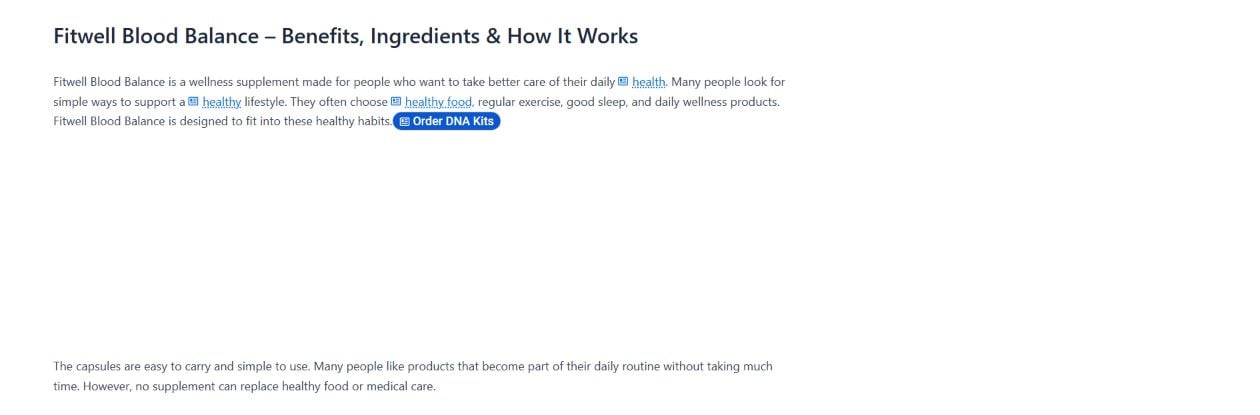
Clicking the visible FitWell order button did not produce a clear merchant checkout during our review. It opened a promotional article on Reviews and Buy.
That page says it contains affiliate links and may receive commissions. It also tells readers not to consider it the official website.
This extra handoff makes accountability harder. The advertisement, landing page, affiliate publisher, merchant, payment processor, and fulfillment provider may all be different parties.
Step 6: The real seller can remain hidden until later
A shopper may learn the billing entity only inside a checkout, confirmation email, package label, or card statement.
That is too late for informed comparison. The seller’s legal name, contact details, refund rules, and complete price should be available before payment information is entered.
We did not complete a transaction. Therefore, we cannot responsibly claim that every FitWell checkout creates a subscription or sends multiple bottles.
Step 7: The campaign can change names while preserving the same story
AI endorsement campaigns are inexpensive to rebuild. Operators can replace the bottle, domain, spokesperson, or headline while keeping the emotional script.
This is why recognizing the pattern matters more than memorizing “FitWell.” Tomorrow’s version may feature a different supplement and an entirely different landing page.
The durable warning signs are the unauthorized celebrity, breakthrough narrative, weak seller identity, affiliate handoffs, and medical urgency.
What We Could Verify and What Remains Unproven
We verified that the visible FitWell page exists and displays the claims described above. We also followed its order button to the affiliate destination.
We verified that the affiliate page labels itself promotional, discloses commissions, and says it is not the official website.
We did not find a credible source showing Dario Amodei approved, recorded, or participated in the advertisement.
We could not identify a clinical trial testing the finished FitWell Blood Balance formula at its marketed dose against an appropriate comparison group.
We also could not verify the displayed bottles’ manufacturer, lot-testing records, certificate of analysis, or the facility responsible for production.
Those missing facts do not prove a bottle contains something dangerous. They mean shoppers lack the evidence needed to treat the sales narrative as established fact.
We found no checkout evidence proving automatic refills. Any article claiming a confirmed FitWell subscription from the reviewed pages would go beyond the available evidence.
The confirmed deception is the fabricated endorsement and misleading journey. The billing model requires verification at the actual merchant checkout.
Company, Address, and Fulfillment Red Flags
The brand name does not identify the accountable company
“FitWell by Balance Blends” sounds like a business identity, yet the reviewed landing page did not provide a clear legal entity behind that wording.
Before paying, buyers should locate the company’s registered name and compare it across the terms, privacy policy, checkout, receipt, and card descriptor.
No useful public address or telephone number was visible
The landing page did not present a headquarters, returns address, manufacturing address, or public support number that we could verify.
A contact form or generic email cannot replace knowing who accepts payment and where formal notices or returns must go.
The affiliate destination is not the merchant
Reviews and Buy explicitly says it is not the official website. Its disclosure also explains that merchant links can generate commissions.
That means its page should not be mistaken for independent medical research, product testing, or proof that the merchant will honor a guarantee.
Manufacturing and fulfillment remain unclear
We found no basis to claim the supplement is manufactured in China, the United States, or any other specific country.
Likewise, a warehouse address on a future package would identify fulfillment, not necessarily the formula’s manufacturer or the company controlling the campaign.
What to Do if You Have Fallen Victim to This Scam
- Stop relying on the advertisement. Do not follow additional links, call numbers shown inside the video, or accept health advice from the apparent spokesperson.
- Review the complete transaction. Save the order page, confirmation, product quantity, total, shipping charge, renewal language, merchant name, and card descriptor.
- Contact the actual merchant in writing. Request cancellation, refund instructions, and written confirmation. Do not send a return until the merchant supplies an authorized address.
- Call your card issuer when billing differs. Explain whether the amount, quantity, merchant, or recurring charge was unauthorized. Ask about dispute deadlines and blocking future charges.
- Do not stop prescribed treatment. Speak with a clinician or pharmacist before using the supplement, especially with diabetes, heart, kidney, or liver medication.
- Report adverse effects promptly. Stop using the product, seek medical advice, preserve the bottle and lot information, and submit an FDA adverse-event report where appropriate.
- Secure information entered into the funnel. Change reused passwords and monitor the email address, telephone number, and payment account provided during checkout.
- Check the device used for payment. Run a Malwarebytes scan if a download, browser extension, or suspicious file was involved. Use AdGuard to reduce malicious redirects and deceptive advertising.
- Report the deceptive ad. Notify the social platform, the FTC, and the impersonated person’s organization. Include the ad URL, screenshots, date, and advertiser account.
How to Evaluate the Next Version of This Campaign
Begin with the spokesperson, not the bottle. Search the person’s verified accounts and reputable news coverage for the exact endorsement.
Look for the original full interview. Scam clips often provide only a short excerpt, captions, dramatic music, and a link controlled by the advertiser.
Separate each participant in the transaction. Write down the advertiser, landing-page domain, affiliate publisher, merchant, billing descriptor, and returns recipient.
Read the checkout before entering a card. Confirm quantity, one-time or recurring status, shipping, taxes, future price, cancellation method, and return restrictions.
Search the legal entity, not just the product name. Product labels can change quickly, while company registrations and policy language provide a stronger trail.
Ask for a complete Supplement Facts panel and lot-specific testing. Vague “GMP” or “doctor formulated” badges do not prove effectiveness or purity.
Finally, show the page to a healthcare professional. A sober second opinion is especially valuable when the advertisement creates urgency or discourages medical care.
Frequently Asked Questions
Is FitWell Blood Balance endorsed by Dario Amodei?
We found no credible evidence of an endorsement. The circulating promotion uses an unauthorized AI-manipulated depiction and should not be treated as an authentic statement.
Is FitWell Blood Balance a real product?
A product page and bottle presentation exist. However, those facts do not verify the seller, manufacturing chain, formula quality, or advertised health outcomes.
Does the FitWell page prove the supplement controls diabetes?
No. The page uses support language, not evidence that the finished product treats diabetes or replaces medication. Buyers should consult a qualified healthcare professional.
Does FitWell automatically enroll every buyer in a subscription?
We could not verify that claim from the pages reviewed. Inspect the actual checkout and confirmation for renewal frequency, future prices, quantity, and cancellation terms.
Why does the order button go to another website?
The button led to a promotional affiliate page. That destination discloses commissions and says it is not the official website, creating an important accountability gap.
What is the clearest warning sign?
The fake Dario Amodei endorsement is decisive. A seller willing to begin with impersonation has already given shoppers a strong reason to leave.
The Bottom Line
FitWell Blood Balance is promoted through a deceptive AI endorsement and an unusually opaque affiliate path. Those are substantial warnings, regardless of the ingredients pictured.
Do not buy because a familiar face appears in a video. Verify the merchant, checkout, evidence, and medical suitability before trusting any renamed version of this campaign.








