

Searching for HorseWood does not lead to one obvious manufacturer page. It leads to a crowded trail of websites, each sounding official and several telling different stories.
That confusion matters more than ordinary branding. HorseWood is a supplement for male vitality, so its label, dosage, seller, safety warnings, and guarantee must be dependable.
Overview
HorseWood appears to be a real marketed supplement
Several pages show bottle artwork, botanical ingredients, bundle prices, and checkout links. We found no basis to claim that every HorseWood order produces nothing.
The harder question is which page represents the actual seller and which information belongs to the product a customer will receive.
“Official” pages contradict one another
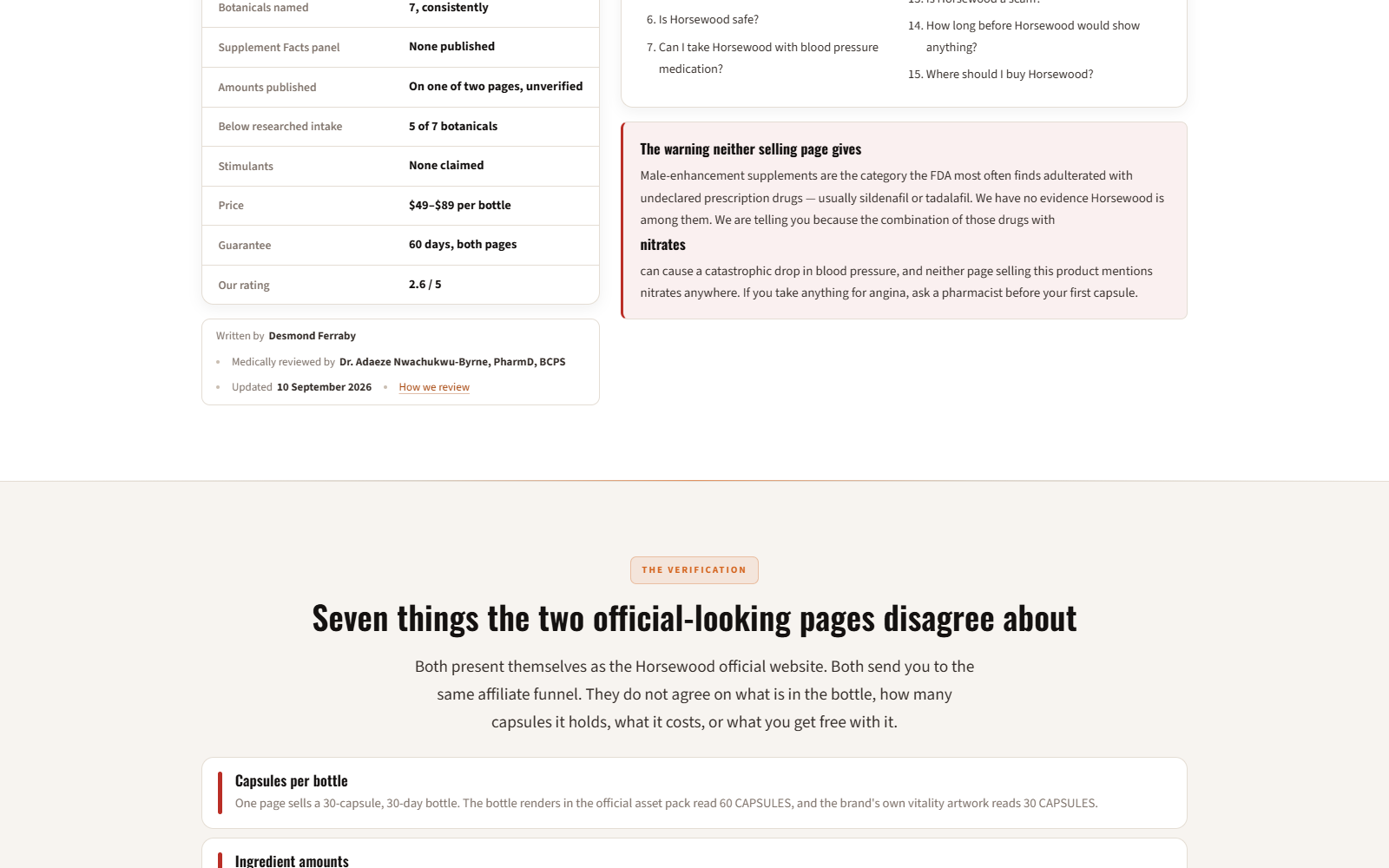
Different HorseWood domains claim official status while publishing inconsistent capsule counts, ingredient amounts, free bonuses, prices, review narratives, and refund periods.
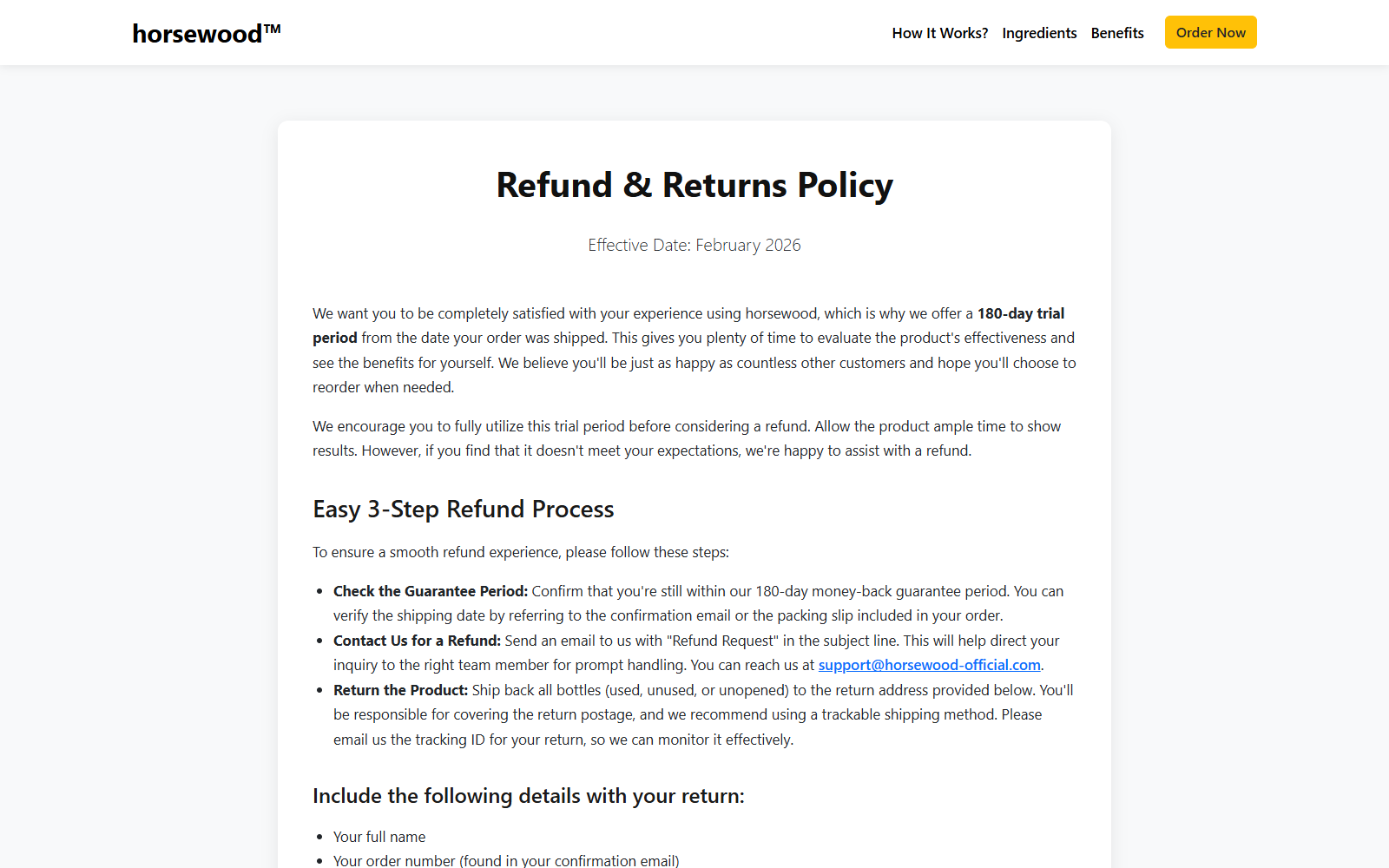
One page offers a 60-day promise. Another separate official-looking domain publishes a 180-day return policy. That is not a harmless difference when buyers spend hundreds.
The label must win over the landing page
A stylish ingredient description cannot replace a photograph of the actual Supplement Facts panel. Consumers need exact amounts, serving size, warnings, manufacturer, and lot information.
Our investigation found these concerns:
- Numerous domains present themselves as HorseWood authorities
- Multiple pages use “official site” language
- Guarantees range from 60 to 180 days
- Capsule counts and formula descriptions are inconsistent
- Large review totals appear without a transparent review archive
- Laboratory testing claims lack accessible batch certificates
HorseWood should not be judged solely by a video, affiliate review, or bottle rendering. Verify the exact merchant and physical label before swallowing anything.
The Claims That Drive HorseWood Sales
The main pitch combines energy, stamina, circulation, confidence, hormonal balance, and male vitality. These broad benefits can appeal to many unrelated symptoms.
Fatigue or sexual difficulty may result from sleep problems, stress, medicines, diabetes, cardiovascular disease, depression, low testosterone, or other medical conditions.
A supplement advertisement cannot diagnose the cause. Delaying assessment may allow a treatable condition to worsen while the buyer experiments with capsules.
One HorseWood page names seven botanicals, including tongkat ali, horny goat weed, saw palmetto, boron, nettle, sarsaparilla, and wild yam.
It publishes amounts using concentrated-extract equivalents for some ingredients. An equivalent amount is not necessarily the same as consuming that weight of raw material.
Research on an isolated standardized extract also cannot validate every commercial blend containing the plant’s name. Extraction method and active-compound standardization matter.
Saw palmetto and nettle are frequently discussed for prostate-related uses. HorseWood’s broad vitality framing does not establish that its particular doses improve sexual performance.
Horny goat weed has biologically active compounds and potential interactions. “Natural” does not mean inert, universally safe, or appropriate beside prescription medicines.
Boron is a nutrient with an upper intake consideration. Customers need the complete serving amount and should count other supplements before adding more.
The Review Numbers Need Verification
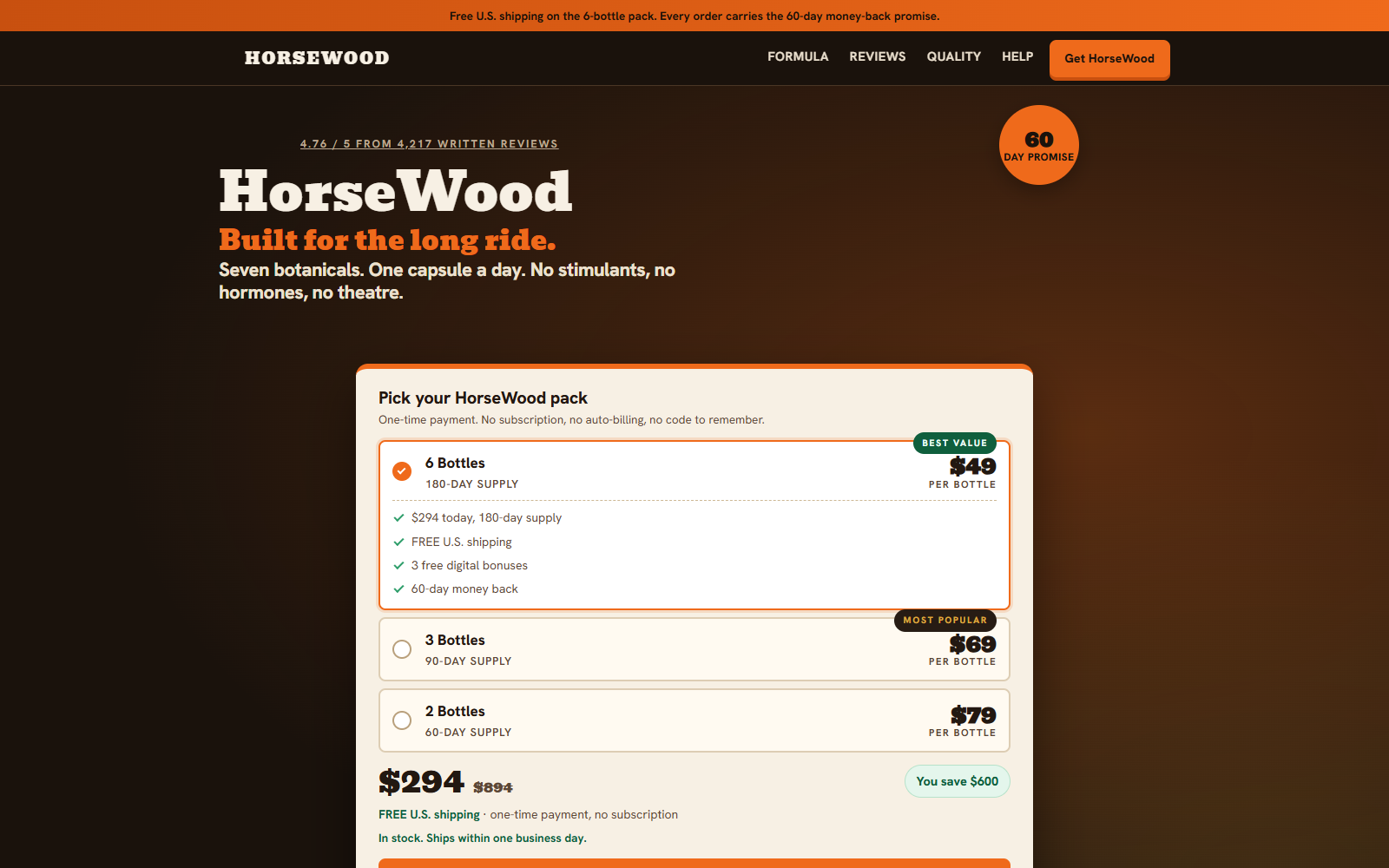
Horsewoodofficial.com displayed 4.76 out of 5 from 4,217 written reviews and stated that 38,760 men had ordered since 2018.
Those figures create an impression of a large, established customer base. The page does not provide a searchable independent record containing all 4,217 entries.
A small selection of positive stories cannot verify the aggregate total. Readers need dates, purchase verification, negative feedback, and the rules used for moderation.
The page also identifies Rowanhill Brands, LLC and says the company is registered in Kentucky. Registration only proves an entity exists, not that product claims were clinically confirmed.
Buyers should check the state’s current corporate registry themselves. Match the active entity, registered agent, formation date, and address against the checkout receipt.
Phone the published number before ordering. Ask the representative to describe the exact label, return destination, billing descriptor, and domain they recognize as authorized.
A working telephone line improves accountability, but scripted answers still require documents. Request an emailed copy of the current Supplement Facts panel and policy.
How the HorseWood Marketing Network Works
Step 1: Search results are filled with official-looking pages
Domains place HorseWood beside words such as official, USA, store, reviews, or supplement. Each page competes to appear like the safest route to purchase.
A searcher may assume every result belongs to one company. Similar logos, bottle images, pricing tables, and repeated claims strengthen that mistaken impression.
Step 2: Review pages imitate independent research
Some websites describe themselves as verification desks or detailed reviews while also directing visitors toward a checkout. The commercial relationship may be easy to miss.
A polished comparison table does not guarantee independence. Check affiliate disclosures and inspect the destination address before treating any verdict as neutral.
Step 3: Wellness language expands the audience
Instead of promising one narrow effect, the copy discusses energy, motivation, endurance, circulation, confidence, recovery, hormones, and prostate support.
Broad language lets readers map personal concerns onto the product. It can also make normal day-to-day variation feel like proof that capsules are working.
Step 4: Multi-bottle bundles become the default
The six-bottle package is prominently selected and carries the lowest displayed price per bottle. The total charge shown during our review was $294.
A six-month purchase asks customers to commit before establishing tolerance or benefit. It also makes refund conditions more important than the per-bottle discount.
Step 5: Guarantees reduce hesitation
The 60-day page says opened bottles qualify, while a different official-looking site advertises 180 days and asks for all containers back.
These may be separate operators, affiliates, or versions. Buyers cannot safely mix their promises and assume the most generous policy governs every checkout.
Step 6: The checkout determines the real contract
The merchant named on the final payment page, receipt, terms, and card statement matters more than the review domain that delivered the click.
Save that information before paying. If the browser crosses into another domain, reread the formula, quantity, billing terms, and refund policy from the beginning.
Why Formula Conflicts Are a Safety Problem
Marketing inconsistencies are annoying for electronics or clothing. With supplements, they can interfere with medication checks and adverse-event reporting.
A pharmacist needs exact ingredients and amounts from the bottle, not an affiliate’s approximation. Extract ratios, plant parts, and standardization can change the assessment.
People using nitrates, blood-pressure treatment, anticoagulants, diabetes medicines, or hormone-related therapy should seek professional advice before using male-performance products.
The FDA has repeatedly found undeclared drug ingredients in the wider sexual-enhancement supplement category. We found no evidence that HorseWood itself contains such substances.
That history still makes batch testing valuable. A seller claiming third-party analysis should publish a certificate matching the product lot, laboratory, methods, and dates.
An “FDA-registered facility” statement does not mean the FDA approved the supplement. Dietary supplements are not approved like prescription medicines before sale.
Badges using FDA language can create the wrong impression. Read the exact wording and compare it with the disclaimer at the bottom of the page.
Stop the product and seek care after chest pain, fainting, severe headache, allergic symptoms, or another concerning reaction. Do not try to push through serious effects.
Pricing and Guarantee Traps to Check
The six-bottle bundle on horsewoodofficial.com compared $294 with a crossed-out $894. A reference price only matters if the product genuinely sold at that amount.
Two-bottle and three-bottle selections carried higher unit costs. Customers should calculate the total, supply length, shipping, taxes, and possible return postage.
The page stated one-time payment with no subscription. That is helpful, but confirm the final checkout does not add autoship, membership, priority processing, or recurring protection.
Take a screenshot showing the selected quantity and recurring-status language. Small order widgets can reset when returning from an upsell page.
A 60-day trial may also be shorter than the time the marketing says full results require. Decide early enough to contact support, obtain authorization, and mail the return.
The 180-day policy on another domain does not extend a 60-day purchase. Policies belong to the specific merchant and transaction that accepted your payment.
How to Compare HorseWood Pages Without Getting Lost
Create a simple table before visiting checkout. Give each domain its own row rather than combining every claim into one imaginary master offer.
Record the legal seller, bottle count, capsules per bottle, daily serving, full formula, total charge, shipping, guarantee, and return destination for each page.
Follow the order button without paying and note the final domain. An affiliate review and the merchant receiving card details serve different roles.
Compare bottle artwork carefully. A render saying 60 capsules cannot support a sales table describing a 30-capsule supply unless the seller explains the difference.
Look at ingredient units and extract ratios. Ten milligrams of a 100:1 extract should not be presented casually as identical to 1,000 milligrams of every raw-root preparation.
Screenshot the guarantee from the merchant page, not a search result. Include the date because websites can revise conditions after complaints begin.
Search the checkout company and statement descriptor independently. Complaints filed against a similarly named domain may involve a completely different operator.
Ask support one question whose answer can be verified on arrival: “How many capsules will the sealed bottle contain?” Save the response.
If the package contradicts that answer, leave the seal intact and request a refund. Do not ingest a product whose basic identity remains uncertain.
Company, Address, and Fulfillment Checks
One page names Rowanhill Brands, LLC
Horsewoodofficial.com lists Rowanhill Brands, LLC, a Lexington address, telephone number, and Kentucky registration reference. Verify each detail in current official records.
Then confirm the same entity appears on the checkout and receipt. A footer identity is useful only when it actually accepts the order.
Other domains use different identities or none
HorseWood search results contain numerous near-match addresses. Some provide little corporate information while still calling themselves official.
Do not assume shared product images establish common ownership. Ask the named distributor which domains and affiliates it authorizes.
Addresses can be offices, mailboxes, or return depots
Search every location independently. A suite may be a genuine office, registered-agent address, virtual workspace, mailbox, or unrelated fulfillment service.
A returns warehouse can receive bottles without manufacturing them. Determine who formulates, tests, distributes, bills, and handles complaints.
Telephone and fulfillment details must match
Call the seller using the number in its formal policy, not a number copied by a review page. Ask where the supplement is made and where returns go.
Check the parcel and bottle after delivery. If the company, serving size, capsule count, or ingredient panel differs from the purchased page, do not use it.
Mass-produced supplements are not automatically dangerous or fraudulent. The risk rises when origin, formula, batch testing, and responsible company cannot be verified.
Never infer that “made in the USA” means every ingredient originated domestically. The label should distinguish manufacturing location from globally sourced raw materials.
What to Do if You Have Fallen Victim to This Scam
- Set the bottle aside. If the received label differs from the advertisement, ask a pharmacist or clinician before continuing.
- Record the exact seller. Save the domain, checkout address, merchant name, card descriptor, order number, parcel origin, and every policy shown during payment.
- Request return authorization early. Use the contact details attached to your transaction. Do not rely on a more generous guarantee from another HorseWood domain.
- Keep every container. Some policies require empty, opened, and unused bottles. Photograph the contents and use tracked postage after receiving instructions.
- Tell your card issuer about unauthorized billing. If the amount, quantity, or recurrence differs from consent, provide the saved checkout and receipt.
- Report adverse effects. Seek medical help when needed and submit the product name, ingredients, lot, seller, and reaction through your country’s safety system.
- Secure exposed accounts. Replace reused passwords. Run Malwarebytes if a download, extension, or unfamiliar application arrived through an advertisement.
- Block repeat deceptive ads. AdGuard can reduce malicious redirects and tracking. It cannot verify supplement purity or reverse a card payment.
- Report false medical promises. Send screenshots to the advertising platform, FDA, FTC, and relevant state consumer agency when evidence supports the complaint.
Frequently Asked Questions
Is HorseWood definitely a scam?
Not every offer can be labeled that way from current evidence. A product appears to exist, but multiple official-looking pages and conflicting facts create serious buyer risk.
Which HorseWood website is official?
Several domains claim authority. Verify the distributor in corporate records and ask it to confirm authorized websites before ordering.
Does HorseWood have a 60-day or 180-day guarantee?
Both periods appear on different domains. Only the policy attached to your specific merchant and checkout should be considered part of your purchase.
Is HorseWood FDA approved?
No dietary supplement should be assumed FDA approved from a badge. Facility registration and manufacturing claims do not equal product approval.
Does the site prove HorseWood works?
No. Testimonials, survey totals, and ingredient summaries cannot establish that the finished formula produces the promised results for an individual buyer.
What should I verify on the bottle?
Check Supplement Facts, serving size, capsule count, warnings, distributor, manufacturer, lot, expiry, seal, contact details, and consistency with the saved sales page.
The Bottom Line
HorseWood’s biggest warning is not one botanical. It is the maze of authoritative-looking pages that disagree about the product and the protection attached to buying it.
Do not let an “official” label decide for you. Identify the merchant, obtain the actual label, check medical risks, and preserve the exact guarantee before paying.








