

A bedroom suddenly becomes a glowing aquarium. Whales cross the ceiling, schools of fish surround the bed, and a tiny USB projector appears to create everything.
That is the promise behind Comauo ads. The product buyers describe receiving is dramatically less futuristic, and the selling network makes refunds unusually difficult.
Overview
The Advertisement Sells an Impossible Experience
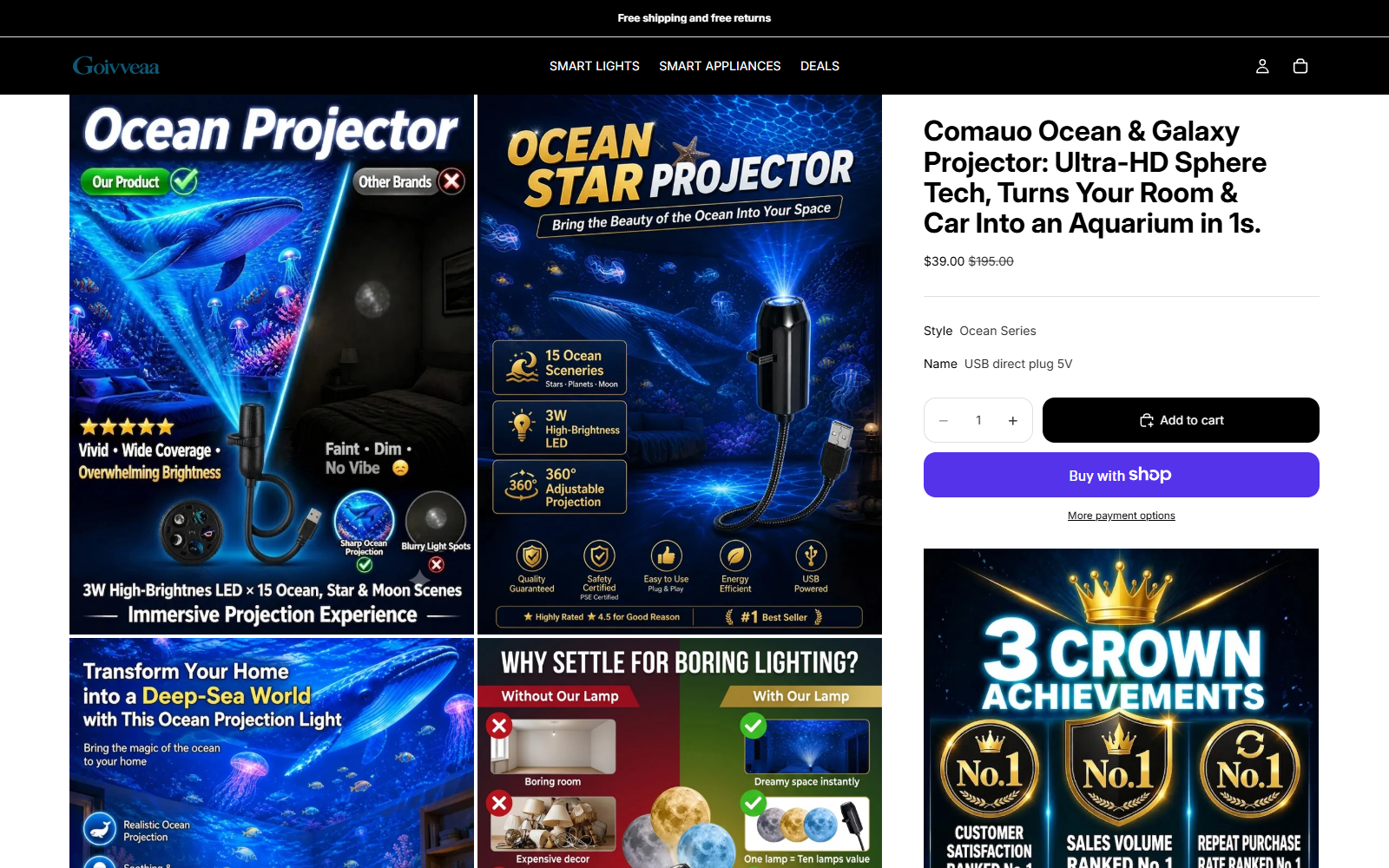
Comauo videos show vivid moving sea life covering large rooms with remarkable clarity and depth. The effect resembles expensive immersive projection or computer-generated imagery.
The device shown on product listings is a small USB light using interchangeable image films. It cannot produce the room-scale animated aquarium suggested by dramatic advertisements.
That gap is the center of the scheme. Buyers are not merely disappointed by performance; they receive a fundamentally different visual experience from the one that motivated payment.
The Physical Item Is a Cheap Novelty Projector
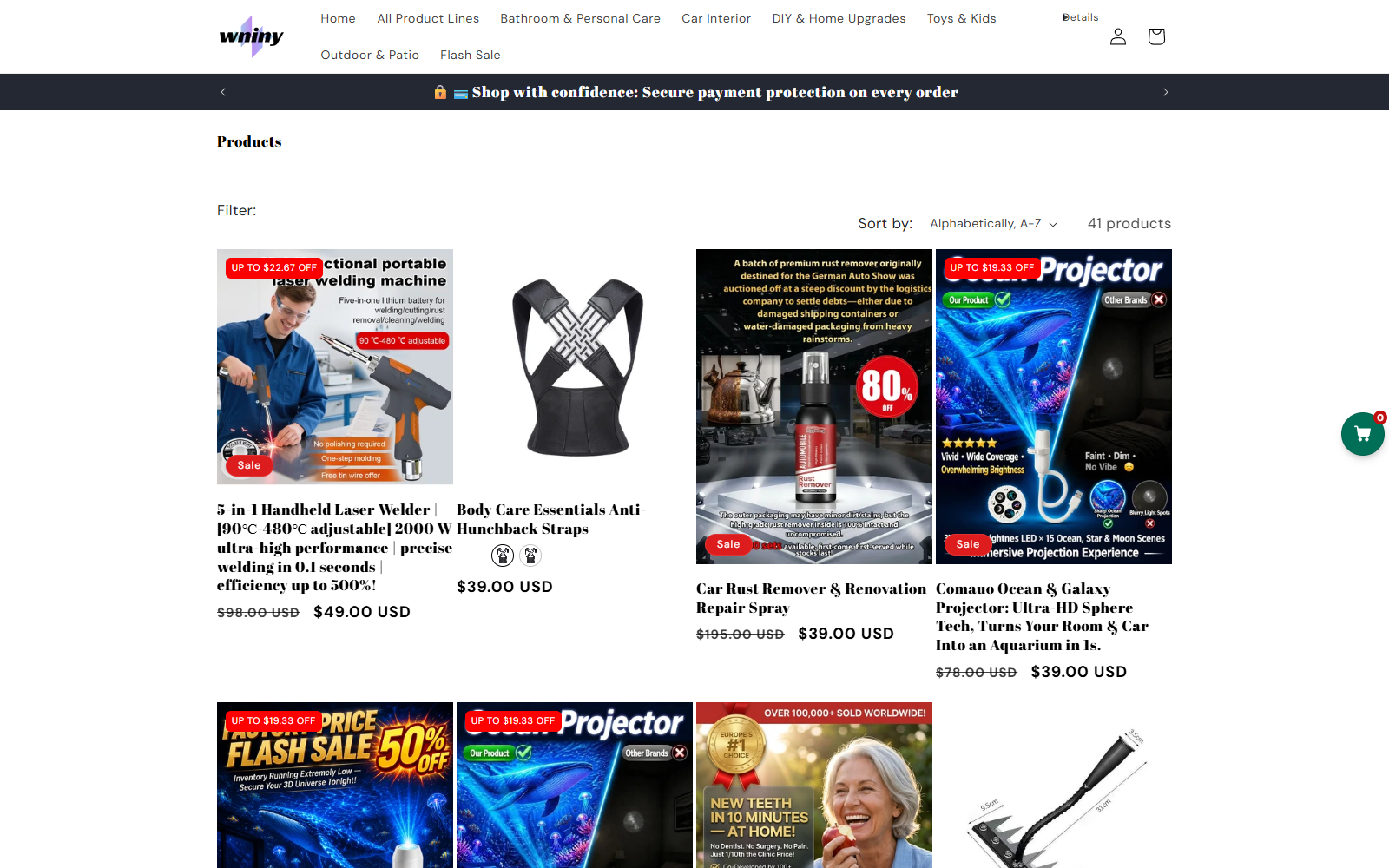
Marketplace listings show similar film projectors for roughly $9 to $15. Seller funnels commonly price the Comauo version around $39 before bundles and fees.
A simple night light is not inherently deceptive. The problem begins when static, blurry images are marketed as ultra-HD moving scenes or “5D holographic” technology.
Customer reports repeatedly describe a tiny light, several small slides, weak brightness, limited coverage, and no resemblance to the cinematic social-media demonstration.
Our Verdict
The Comauo campaign has strong characteristics of a misleading product scam. It uses AI-style imagery, invented-sounding specifications, inflated pricing, and rotating storefronts.
Some buyers receive an object, but receiving a cheap substitute does not make the transaction honest. The central advertised capability appears absent from the delivered device.
We recommend avoiding social-media offers for Comauo and visually identical projectors. If you want a novelty lamp, buy through a marketplace with clear specifications and enforceable returns.
- The product does not create a true hologram.
- Films produce small static projected images.
- Identical devices appear under multiple names.
- Seller contact information can be incomplete or false.
- Refund complaints are a recurring theme.
What Buyers Expect and What Reportedly Arrives
The advertisement suggests a room-filling show with animated ocean creatures, moving light, broad coverage, and sharp high-definition detail across walls and ceilings.
The actual item shown in independent listings is closer to a flexible USB reading light. A small projector head accepts printed films and casts one scene at a time.
Changing a plastic film changes the picture. It does not create autonomous motion, network synchronization, spatial mapping, or an aquarium that wraps around furniture.
The “5D Holographic” Claim
“5D” is not a meaningful technical specification here. The seller provides no display architecture, spatial-light method, resolution standard, brightness measurement, or independent laboratory documentation.
A projected flat image can look dimensional in a dark advertisement, especially when editing adds moving fish, fog, sound, and reflections. That does not make it holographic.
Ultra-HD and Wide-Coverage Language
Sharpness depends on lens quality, film quality, distance, focus, brightness, and room darkness. A tiny 3-watt novelty light cannot be assumed to match professional projection.
Buyer photographs and reviews describe small, dim, or blurry results. Those reports align more closely with the inexpensive marketplace versions than the spectacular promotional video.
The Price Difference
The investigated seller displayed a $195 reference price reduced to $39. Comparable generic film lights appear at a fraction of that supposed original amount.
A crossed-out price creates perceived savings, not proof of prior market value. The relevant question is what the hardware costs elsewhere under generic search terms.
How the Comauo Projector Scam Works
Step 1: An AI-Enhanced Video Stops the Scroll
The campaign begins with a spectacular room transformation. Whales, jellyfish, stars, and water appear to move naturally across every surface.
Viewers are shown the desired experience, not an honest continuous demonstration of the shipped hardware operating in ordinary conditions.
Step 2: A Fake Innovation Story Explains the Visuals
The landing page uses terms such as sphere technology, holographic projection, smart synchronization, and ultra-HD optics. Technical-sounding phrases discourage basic skepticism.
Real performance claims should include measurable specifications. Here, impressive vocabulary substitutes for resolution, lumens, projection distance, frame rate, and credible testing.
Step 3: A Huge Markdown Creates Urgency
The product is presented as premium technology temporarily reduced by about 80%. Buyers feel they discovered an expensive device at a rare bargain price.
The low-cost generic hardware makes the reference price difficult to justify. The discount is part of the persuasion architecture, not a reliable valuation.
Step 4: Bundles Increase the Damage
Quantity selectors and multi-unit discounts encourage shoppers to order gifts or equip several rooms. A $39 disappointment can quickly become a three-unit charge.
Always inspect the final quantity. Similar funnels sometimes preselect multiple units or make the single-item choice visually less attractive.
Step 5: An Overseas Parcel Delivers Something
Shipping a cheap object complicates disputes. The seller can produce tracking and argue that the order was fulfilled, even when the item materially differs.
Buyers should frame the issue as “not as described,” not merely “I dislike it.” Compare the ad’s moving room-scale imagery with the delivered static film projector.
Step 6: The Storefront Obstructs Support
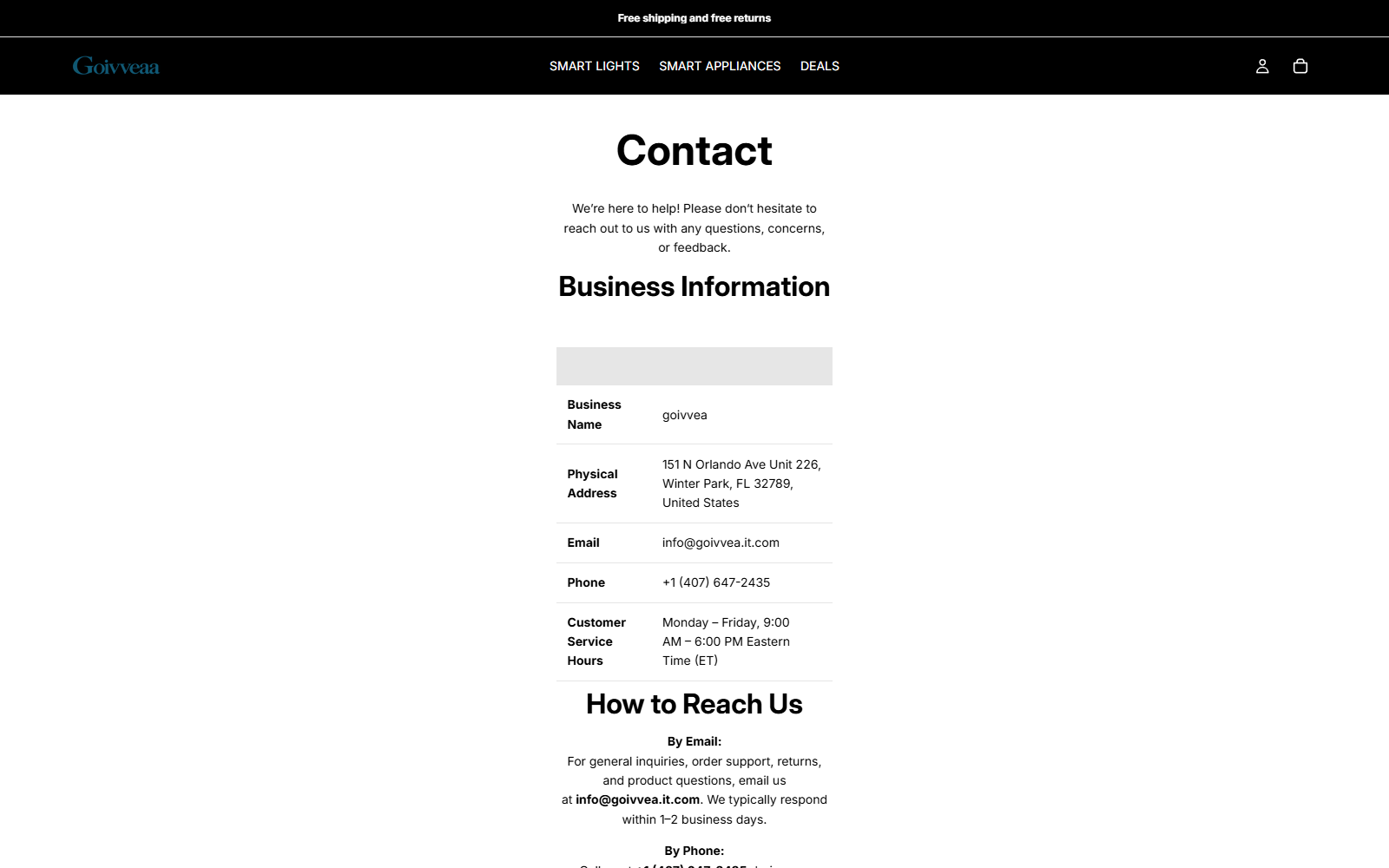
The Goivveaa footer displayed the placeholder email info@example.com, while its contact page used info@goivvea.it.com. Conflicting support addresses undermine confidence in the storefront.
Complaints connected with other sellers describe unanswered messages, invalid addresses, expensive return demands, and no practical way to obtain the advertised refund.
Step 7: The Same Product Reappears Elsewhere
Comauo is sold through multiple unfamiliar stores and appears under other names. When one page accumulates complaints, advertising can move to another domain.
The story remains stable even when the brand changes: astonishing video, invented technology, steep markdown, cheap projector, and a difficult refund.
Why Shipping a Product Does Not Make This Legitimate
Some deceptive campaigns never send anything. Others ship a low-value item because tracking reduces immediate chargebacks and creates uncertainty for the buyer.
Consumer protection is not limited to nondelivery. Material misrepresentation can include capability, size, quality, components, appearance, and performance.
If an ad sells animated room-scale projection and the parcel contains a static-image lamp, the difference is central to the purchasing decision.
Document the Material Difference
Record an unedited video of the package opening, device setup, included films, room conditions, projection size, and results. Keep the advertising video whenever possible.
Place the delivered projector beside a ruler and photograph model numbers, instructions, packaging, and return labels. Objective details strengthen a payment dispute.
Fake Reviews, Awards, and Borrowed Authority
The sales material uses large customer-satisfaction symbols, bestseller language, and award-style graphics. We found no transparent evidence connecting those badges with independent organizations.
A gold crown graphic is decoration until the named award, organizer, criteria, date, and public result can be verified outside the seller’s page.
The Goivveaa homepage also displays recognizable media-style logos and technology achievements. Their presence does not prove those publications evaluated this specific store or projector.
How to Test a Review Claim
Search the exact product and seller domain on independent platforms. Pay attention to verified purchase indicators, detailed photographs, and reviews written before the current ad campaign.
Very positive generic comments clustered within a short period provide less confidence than mixed, specific experiences spread across months or years.
Company, Address, and Fulfillment Checks
The Seller Identity Is Unclear
The product appears across several storefronts, including names unrelated to Comauo. The brand printed in an advertisement may not identify the legal seller charging the card.
Before ordering, locate the exact entity in the terms and compare it with checkout, receipt, return instructions, and the eventual payment descriptor.
The Contact Details Are a Major Warning
Goivveaa displayed info@example.com in its footer but a different address on its contact page. That unfinished, contradictory setup is a significant transparency warning.
The page also listed a telephone number and a Florida mailing address. Those details require independent verification and do not repair an unusable email channel.
The Address May Not Be a Product Business
A mailbox, office suite, or unrelated location can appear in store templates. It does not establish who designed, manufactured, imported, or tested the projector.
Search the address separately and confirm whether it accepts customer returns. Never send a parcel simply because a footer displays a street location.
Fulfillment Appears Disconnected from the Brand
Customer reports refer to overseas shipping and different store names. That pattern is consistent with generic dropshipping rather than a stable Comauo manufacturer network.
The returns warehouse may be in another country, making tracked postage nearly as expensive as the order. Ask for a prepaid label before shipping anything.
Evidence Supporting the Warning
A BBB Scam Tracker report describes a $110 loss after an advertisement promised a room and car aquarium. The customer reported receiving a small, blurry projector.
ProductReview complaints similarly describe a cheap static-image light and unsuccessful return attempts. Trustpilot reviews tied to sellers repeat the mismatch between advertising and delivery.
These accounts remain individual reports. Their value comes from the shared, specific pattern and consistency with the inexpensive hardware visible on marketplace listings.
- Room-scale moving scenes appear only in promotional material.
- Delivered devices use tiny physical image slides.
- Independent listings price similar hardware much lower.
- Customers identify multiple seller names.
- Refund communication reportedly fails or becomes impractical.
What to Do if You Bought the Comauo Projector
- Preserve the advertisement. Save the video, landing page, product claims, order total, return promise, and merchant name before the page disappears.
- Film the unboxing. Show the sealed parcel, label, contents, included slides, instructions, and a continuous test in a dark room.
- Request a refund immediately. Describe the product as materially not as advertised. Attach side-by-side evidence and ask for a prepaid return label.
- Do not accept endless partial offers. Sellers may propose small refunds while you keep the item. Decide what resolution you want and state it clearly.
- Confirm any return address. Get written authorization and use tracked postage. Do not mail to an unrelated footer address or overseas location without issuer guidance.
- Open a payment dispute. Choose the “not as described” reason where applicable. Submit the ad, hardware test, correspondence, tracking, and merchant’s unusable contact details.
- Report the advertisement. Notify the social platform, local consumer-protection agency, and relevant marketplace. Include the advertiser account and destination URL.
- Check your device. Run Malwarebytes after suspicious downloads or redirects. AdGuard can block many malicious ad chains and deceptive pop-ups.
How to Spot the Next Rebranded Projector
Ignore the invented brand and search the physical description: USB film projector, flexible neck, interchangeable ocean slides, or mini galaxy lamp.
Compare the sales video with a continuous hands-on demonstration. If every scene cuts rapidly and never shows the device producing the result, assume editing is involved.
Search distinctive phrases in quotation marks. Identical “sphere technology” or “aquarium in one second” wording across unrelated domains reveals a reusable campaign.
Inspect the seller’s contact page for placeholders, copied company details, unrelated product categories, or an address that belongs to a mailbox service.
Finally, compare marketplace prices. A generic $10 lamp does not become $195 technology because a landing page adds a brand name and artificial award badges.
Why AI Video Makes the Mismatch Harder to Notice
Generative video can place impossible sea creatures inside ordinary bedrooms while preserving enough visual realism to survive a quick social-media glance.
Rapid edits prevent viewers from inspecting shadows, projector position, image boundaries, or whether moving scenes respond consistently to walls and furniture.
Scammers then cut from fantasy footage to a real product photograph. The sequence encourages viewers to assume the small device created the preceding effect.
Look for one continuous shot showing the projector switched on, the room before and after, and the entire projection surface. Marketing rarely provides that demonstration.
Muted videos deserve extra caution because music and narration can hide the absence of mechanical movement. Static film projectors cannot suddenly animate when sound is added.
Save suspicious ads before reporting them. Platforms may remove the creative quickly, while the seller continues using a slightly changed version through another account.
Frequently Asked Questions
Is the Comauo projector a real hologram?
No convincing evidence supports that description. The visible hardware uses image films and a small light, producing conventional projected pictures rather than holographic scenes.
Does Comauo fill a room with moving fish?
Buyer reports and comparable listings indicate static, limited projections. The spectacular moving aquarium shown in ads appears edited or computer-generated.
Why do customers receive an item at all?
Tracking and a cheap delivered object let sellers claim fulfillment. The dispute then concerns misrepresentation rather than simple nondelivery.
Who owns Comauo?
The brand appears across multiple storefronts without a clear, stable manufacturer identity. The legal merchant must be identified from each specific checkout and receipt.
Can I return the projector?
Request written authorization and a prepaid label immediately. Reports indicate that support and return logistics can be difficult, so preserve payment-dispute deadlines.
Where can I buy an honest galaxy projector?
Use an established retailer with measured specifications, unedited demonstrations, verified feedback, and local returns. Expect ambient light effects, not science-fiction holograms.
The Bottom Line
The Comauo campaign sells an AI-enhanced fantasy around a basic USB film projector. Its hardware cannot plausibly deliver the immersive animated aquarium that drives the purchase.
Rotating stores, placeholder contact information, inflated reference pricing, and repeated customer complaints make the offer especially risky. Avoid buying through the advertisement.
If you already paid, document the mismatch as “not as described,” request a prompt refund, and escalate through your payment provider before dispute deadlines expire.








