

A respiratory “breakthrough” advertisement can feel especially persuasive when breathing already seems harder. The presentation mixes medical authority, household remedies, and a product name that sounds reassuring.
Pure Lung is not one simple offer. Following the name across its pages uncovers conflicting bottles, formulas, directions, prices, and identities that buyers should understand first.
Overview
The promotion uses a fake medical narrative
Some Pure Lung advertisements appear to connect Dr. Sanjay Gupta with a Vicks-based respiratory remedy or a supplement that supposedly repairs damaged lungs.
We found no dependable evidence that Dr. Gupta endorsed Pure Lung or authorized those commercial claims.
A recognizable physician can make a social advertisement feel like medical guidance. That impression is dangerous when viewers have COPD, asthma, infection, or unexplained breathlessness.
Official-looking sites disagree about the product
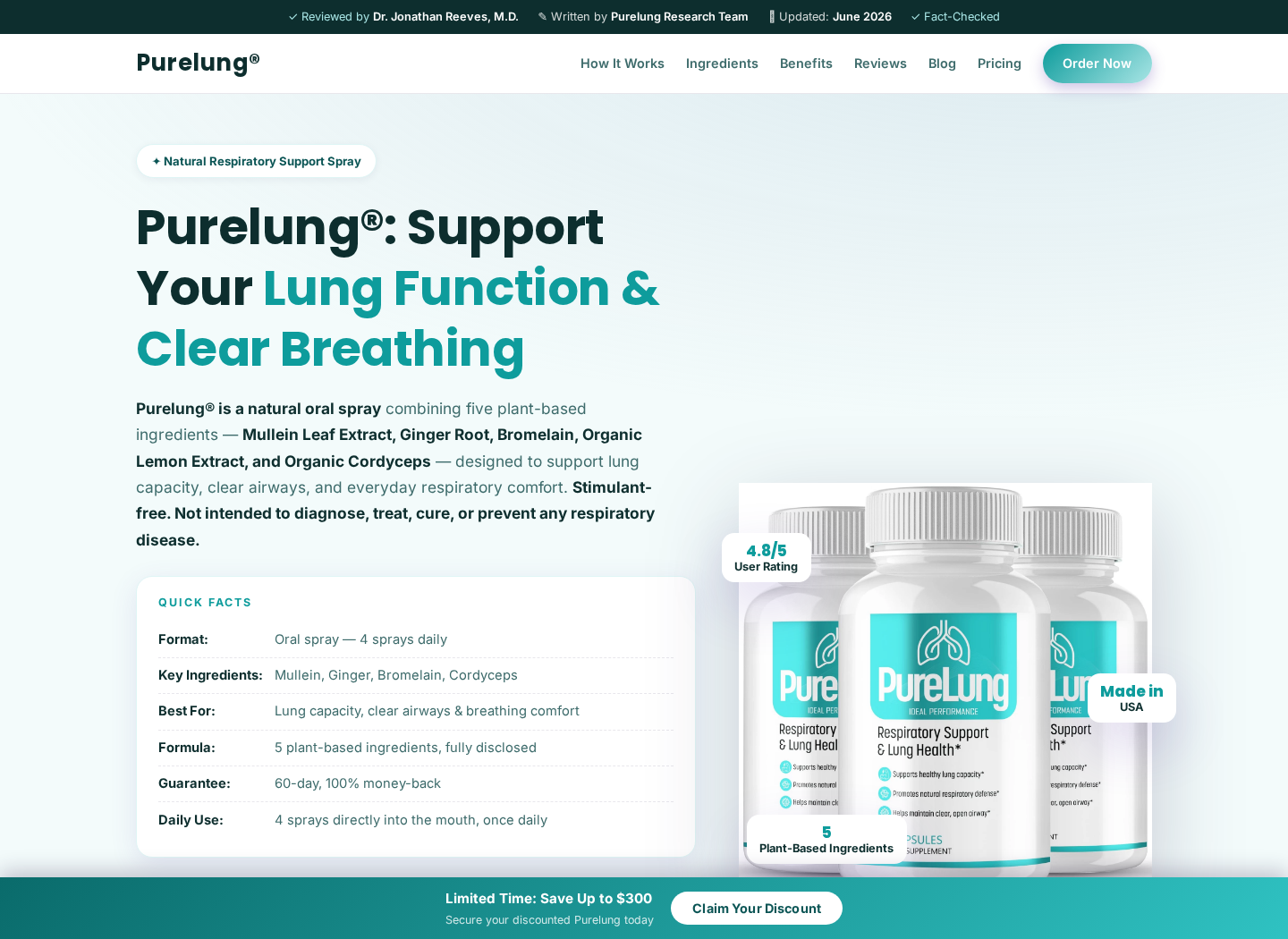
One Pure Lung page sells an oral spray used four times daily. Another similarly named page sells capsules taken as a two-capsule serving.
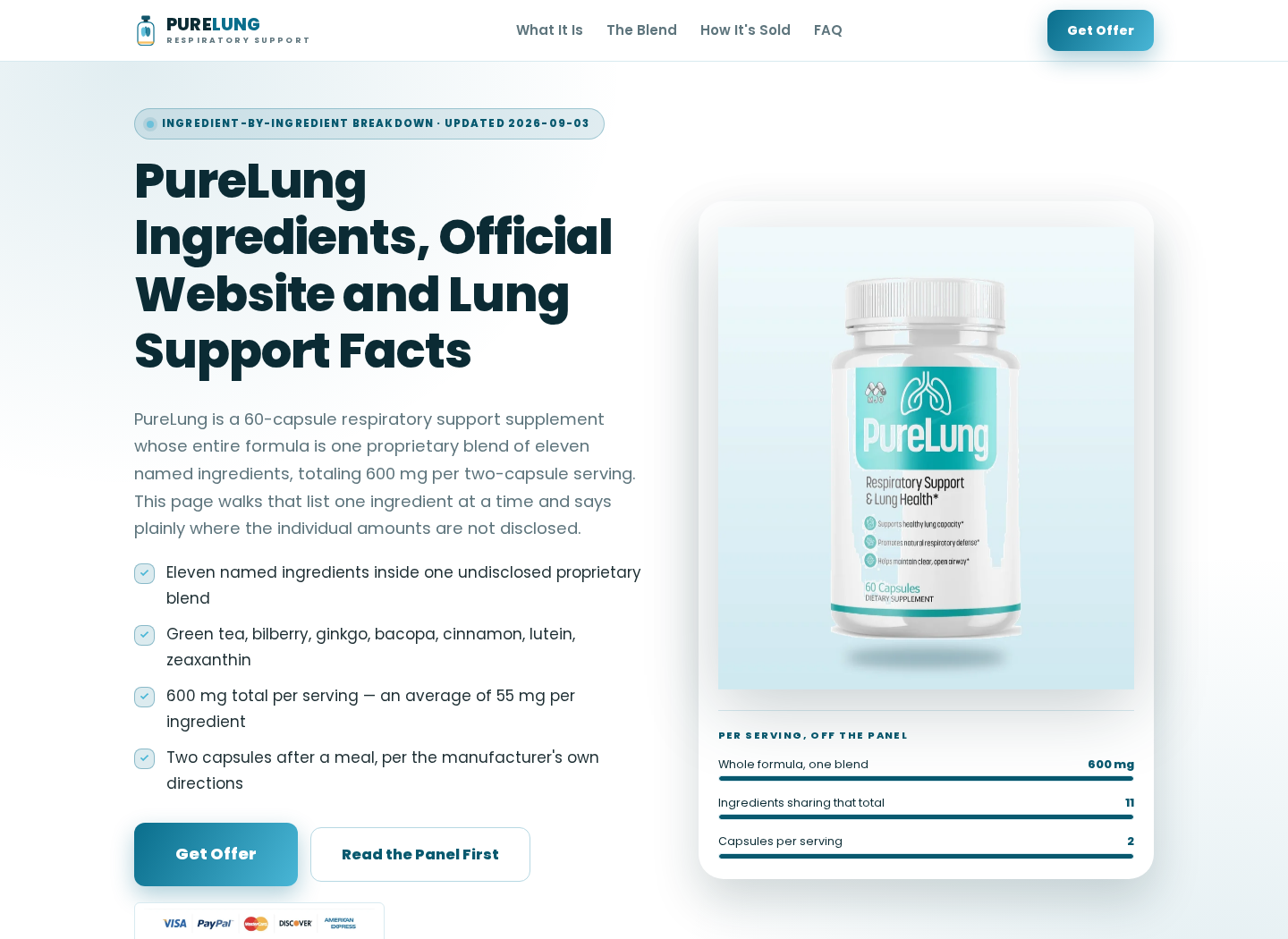
The spray highlights five ingredients. The capsule page displays a 600 mg proprietary blend containing eleven different ingredients.
These are not minor packaging updates. They are different forms, formulas, instructions, and dose presentations marketed under nearly identical identities.
The safest conclusion is a transparency warning
We cannot establish that every bottle is counterfeit or that no customer receives a product. The evidence supports a narrower, important warning.
Consumers cannot make an informed health decision when “Pure Lung” can mean several conflicting products across lookalike websites.
- The Dr. Sanjay Gupta endorsement could not be verified.
- One site sells spray while another sells capsules.
- The ingredient lists do not match.
- Pricing differs across official-looking domains.
- Seller-controlled ratings are not independent clinical evidence.
- The pages deny automatic subscriptions, so refills should not be assumed.
The Different Products Using the Pure Lung Name
The `pureslung.com` page presents a small liquid bottle with a spray top. Its instructions say to use four sprays daily.
That page names mullein, ginger, bromelain, lemon, and cordyceps. It describes support for breathing, mucus clearance, lung cleansing, and respiratory comfort.
The same page later calls the product a “daily capsule.” That internal contradiction appears inside the seller’s own presentation.
The `purelunng.com` page instead shows capsule bottles. Its panel describes two capsules per serving and a 600 mg proprietary mixture.
The capsule formula adds ingredients not listed on the spray offer. It also combines multiple components without disclosing each ingredient’s individual amount.
A third lookalike domain, `purellung.com`, has promoted capsules with another price structure. The extra letter differences are easy to overlook in a social redirect.
Brand spelling alone cannot tell a customer which formula will arrive. The exact domain, cart, label, and receipt must all be compared.
If a support representative cannot identify the product form from an order number, the customer should not consume the item.
Why the Vicks and Doctor Story Is Misleading
Vicks VapoRub is a familiar topical product. Its strong odor can create a sensation of easier airflow, but that is not lung repair.
A video that combines Vicks imagery with a physician’s face can imply a medically recognized treatment without stating one precise, testable claim.
Pure Lung then becomes the convenient next step. The viewer expects the bottle to contain or reproduce the remedy described in the video.
The reviewed formulas do not establish that relationship. A spray containing herbs and enzymes is not automatically a Vicks treatment in another format.
Dr. Gupta’s name also supplies authority the seller has not earned independently. We found no verifiable product-specific endorsement through a trusted official source.
Deepfake and manipulated-video campaigns can reuse real television footage. New audio turns general health discussion into a direct sales recommendation.
Do not judge authenticity by smooth speech alone. Check the physician’s official channels, the original interview, and reputable reporting outside the sales funnel.
How the Pure Lung Scam Works
Step 1: A health fear becomes a social media hook
The advertisement focuses on coughing, mucus, smoke exposure, poor stamina, or a frightening diagnosis. These concerns make a quick explanation emotionally attractive.
A famous doctor appears to discuss a neglected discovery. The clip may claim ordinary medicine manages symptoms while the advertised method addresses a hidden cause.
That framing discourages viewers from asking whether several unrelated respiratory conditions require different treatment.
Step 2: Familiar Vicks imagery makes the story memorable
Vicks provides a sensory shortcut. Most viewers recognize the container, smell, or childhood association immediately.
The advertisement can then suggest a “Vicks trick” without supplying a reliable recipe, appropriate dose, or clinical evidence.
Familiarity with Vicks is transferred to an unfamiliar supplement. The brands do not become connected merely because an advertisement places them together.
Step 3: The sales page replaces the remedy with Pure Lung
After the viewer accepts the story, a product page presents Pure Lung as the easiest way to obtain the promised benefits.
The site displays customer counts, star ratings, ingredient icons, guarantee badges, and confident timelines. These are persuasion devices unless independently substantiated.
The page claims more than 50,000 customers and a high rating, yet it does not show a neutral platform verifying those numbers.
Step 4: Different domains present different formulas
A visitor reaching `pureslung.com` sees spray. Someone landing on `purelunng.com` sees capsules with a different ingredient panel.
The spelling is similar enough that both can appear official. Search results, advertisements, and affiliate links may send customers to different versions.
This fragmentation makes reviews difficult to interpret. A positive comment about one liquid cannot validate an unrelated proprietary capsule mixture.
Step 5: Package ladders push a larger order
The spray page displayed one bottle for $69, three for $177, and six for $294. Larger packages receive stronger savings language.
Other Pure Lung-style pages use different totals. A customer cannot safely rely on a price quoted in a review from another domain.
Always record the exact URL, quantity, unit count, shipping charge, and final total immediately before payment.
Step 6: A guarantee reduces hesitation
The spray offer advertises a 60-day refund promise. A badge makes the decision feel reversible even when the operating details receive less attention.
Return eligibility can depend on authorization, timing, bottle condition, and destination. The customer should read the full policy before opening multiple containers.
A guarantee cannot protect health. It only addresses a financial remedy if the seller honors the written rules.
Step 7: The campaign can rotate without losing its story
If one domain disappears, the fake doctor video can point to a new spelling, formula, or bottle. The medical narrative remains valuable to the advertiser.
This rotation explains why the story matters more than one web address. Readers should recognize the unauthorized endorsement and formula mismatch wherever they appear.
Search the exact label and domain printed on the order confirmation. Similar names should never be treated as the same company automatically.
Ingredient and Safety Questions
Mullein has a history in traditional herbal use, but historical use is not proof that a particular spray repairs lung tissue or treats COPD.
Ginger, bromelain, lemon, and cordyceps each have distinct evidence and safety considerations. Combining their names does not create a proven respiratory treatment.
Bromelain may matter for people using anticoagulants or antiplatelet medicines. Allergies and digestive effects are also possible.
Cordyceps products can vary by species, preparation, and quality. Immune effects may be relevant for people with autoimmune conditions or immunosuppressive treatment.
A 600 mg proprietary blend creates a different problem. The total is stated, but individual quantities remain hidden.
Without exact amounts, a pharmacist cannot compare exposure meaningfully with studies, medication interactions, or other supplements.
Sprays also raise route-specific questions. Buyers need complete directions, warnings, alcohol content, allergens, storage requirements, and contamination controls.
Capsules require their own dissolution, excipient, and dose information. Evidence about a liquid cannot simply be applied to a capsule.
Anyone with COPD, asthma, pneumonia symptoms, chest pain, low oxygen, or significant breathlessness should seek medical care promptly.
Do not stop an inhaler, antibiotic, oxygen plan, or prescribed medication because an advertisement describes a natural repair mechanism.
Reviews, Ratings, and Testimonial Problems
The spray page presents a 4.8 rating and references tens of thousands of customers. Large numbers can make an unfamiliar product feel established.
A rating controlled by the seller does not reveal moderation rules, purchase verification, rejected reviews, refund rates, or the total customer population.
Testimonials also cannot distinguish the spray from the capsule. The page should identify exactly which formula, lot, and duration each reviewer used.
Breathing symptoms naturally fluctuate. Changes in weather, infection recovery, smoking, prescribed treatment, and activity can affect how someone feels.
That makes dramatic before-and-after stories especially unreliable without objective measurements and an appropriate control group.
A reviewer saying mucus improved does not prove lung damage reversed. Marketing often compresses those very different outcomes into one success narrative.
Company, Address, and Fulfillment Checks
The brand identity changes with the domain
Pure Lung, Purelung, Purellung, and Purelunng are visually similar names. Their pages do not present one consistent product record.
Write down the exact spelling before contacting support. An agent should identify the matching formula and seller without redirecting you to another brand.
The named medical reviewer needs independent verification
One page presents “Dr. Jonathan Reeves, M.D.” as a reviewer. We could not independently verify the claimed relationship from the seller page alone.
Ask for a full professional identity, specialty, license jurisdiction, practice affiliation, and disclosure of compensation.
A name beside a white-coat title does not prove clinical testing, endorsement independence, or responsibility for manufacturing.
Support should resolve the spray-versus-capsule conflict
Before buying, ask whether the current product is liquid or capsules, which ingredients it contains, and how many servings arrive.
Also request the billing descriptor, return destination, manufacturer, country of origin, and subscription status in writing.
If support gives an answer that contradicts the checkout or label, do not proceed. The written order must identify the product unambiguously.
Fulfillment does not establish product quality
A warehouse can pack and mail bottles without formulating or testing them. A return center may have no connection to the claimed medical research.
We did not establish that these products are manufactured in China. Origin should be verified from labeling and supply-chain documents, not assumed.
Request lot-specific testing for identity, potency, microbes, heavy metals, and undeclared drugs. Generic quality badges are not a substitute.
How to Verify a Pure Lung Offer Before Paying
Start by saving the advertisement URL. Record the account name, date, celebrity shown, claims made, and destination after each redirect.
Compare the sales-page name with the cart. The product form, bottle image, quantity, and formula should remain consistent.
Read the physical label image closely. It should identify serving size, complete ingredients, warnings, responsible business, lot information, and contact details.
Search the named physician and claimed endorsement independently. Use licensing records and official profiles rather than pages linked by the seller.
Call support with a simple test question: “Am I purchasing a spray or capsules, and who manufactures this exact formula?”
Do not accept vague language about proprietary laboratories. An ingestible health product should have a traceable responsible party.
What to Do if You Have Fallen Victim to This Scam
- Identify the exact version. Photograph the front, back, Supplement Facts panel, lot code, seal, package label, and order receipt.
- Do not mix conflicting directions. Follow neither the spray nor capsule instructions until the delivered product and label are clearly authenticated.
- Contact a clinician after symptoms. Bring the bottle and ingredient list. Seek urgent care for breathing difficulty, chest pain, confusion, swelling, or severe allergy.
- Request cancellation or return in writing. State the formula conflict and ask for authorization, destination, deadline, and expected refund.
- Keep unopened items sealed. Multiple open containers can weaken a return request. Store the package safely while the dispute is active.
- Review every statement. The sites say purchases are not automatic subscriptions, but unauthorized repeat charges should still be reported immediately.
- Dispute when appropriate. Give the card issuer the advertisement, receipt, label, support messages, and evidence that the delivered item differed.
- Secure the device. Use Malwarebytes if the funnel installed anything or generated suspicious pop-ups. AdGuard can block harmful advertising chains.
- Report the health claims. Notify the advertising platform and relevant consumer or health regulators, especially when a fake physician endorsement appears.
A medical concern can make the situation feel frightening. Separate the health response from the billing response and handle both promptly with reliable records.
Frequently Asked Questions
Is Pure Lung a spray or a capsule?
Both forms appear on separate official-looking domains. That inconsistency is central to this warning and must be resolved before purchase or use.
Did Dr. Sanjay Gupta endorse Pure Lung?
We found no reliable confirmation of an endorsement. Treat videos linking him to Pure Lung or a Vicks lung cure as unauthorized advertising.
Does Pure Lung cure COPD or repair lungs?
The reviewed pages do not provide credible finished-product evidence supporting those medical outcomes. COPD and serious respiratory symptoms require professional care.
Is every Pure Lung purchase a subscription?
The pages we reviewed say orders are one-time and not automatic refills. Confirm the selected checkout and retain the receipt.
Why do the formulas differ?
The sites do not clearly explain the discrepancy. Different sellers, private-label versions, or rotating funnels are possible, but the relationship remains unverified.
What should I check on the delivered bottle?
Check product form, serving instructions, complete ingredients, manufacturer, distributor, origin, lot number, expiration date, warnings, seal, and support details.
The Bottom Line
Pure Lung is promoted through an unverified medical story, while similarly named sites disagree about whether the product is a spray or capsule.
That confusion is unacceptable for an ingestible respiratory product. Do not order or use it until the exact formula, seller, manufacturer, and claims are independently verified.








