

Seasonal lighting stores often appear when shoppers are already picturing holidays, parties, and family gatherings, making a quick order feel harmless.
JollyGlow presents familiar reassurance, but its short public history and sparse legal information make careful verification especially important before checkout.
Overview
JollyGlow is an unusually new store with little public history
Public domain records indicate jollyglow.store was registered in September 2026, only weeks before this review.
A new domain is not proof of wrongdoing because legitimate seasonal businesses launch every year.
It does mean shoppers cannot rely on a long record of deliveries, refunds, or independent customer-service outcomes.
The site should therefore provide unusually strong company details and policies to compensate for that missing history.
Instead, the pages available during our check offered far less information than a cautious buyer needs.
The sales promise is clearer than the business identity
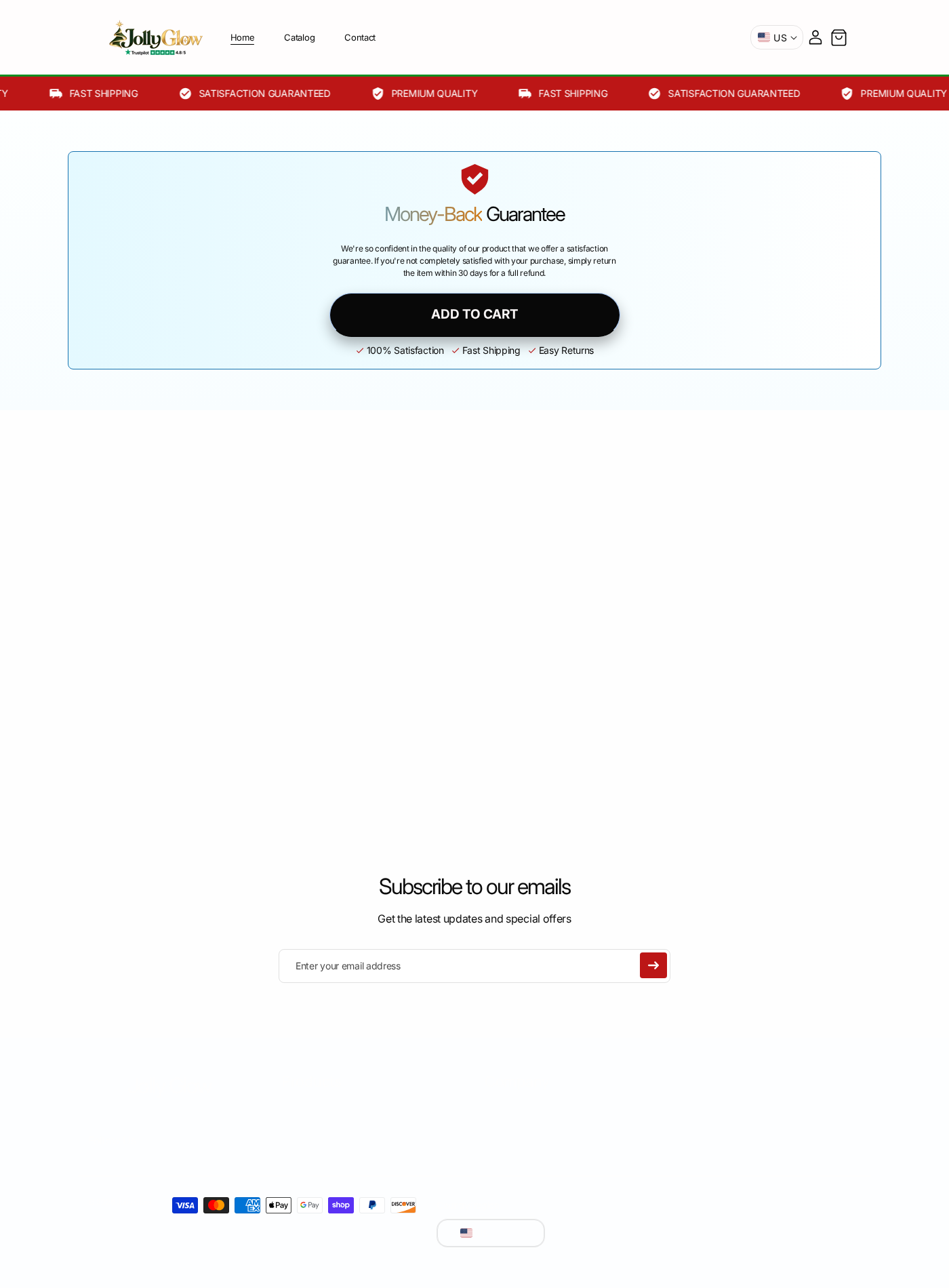
JollyGlow displays fast shipping, premium quality, satisfaction guaranteed, easy returns, and a 30-day money-back guarantee.
Those statements are broad assurances rather than complete contractual terms explaining eligibility, destination, costs, or deadlines.
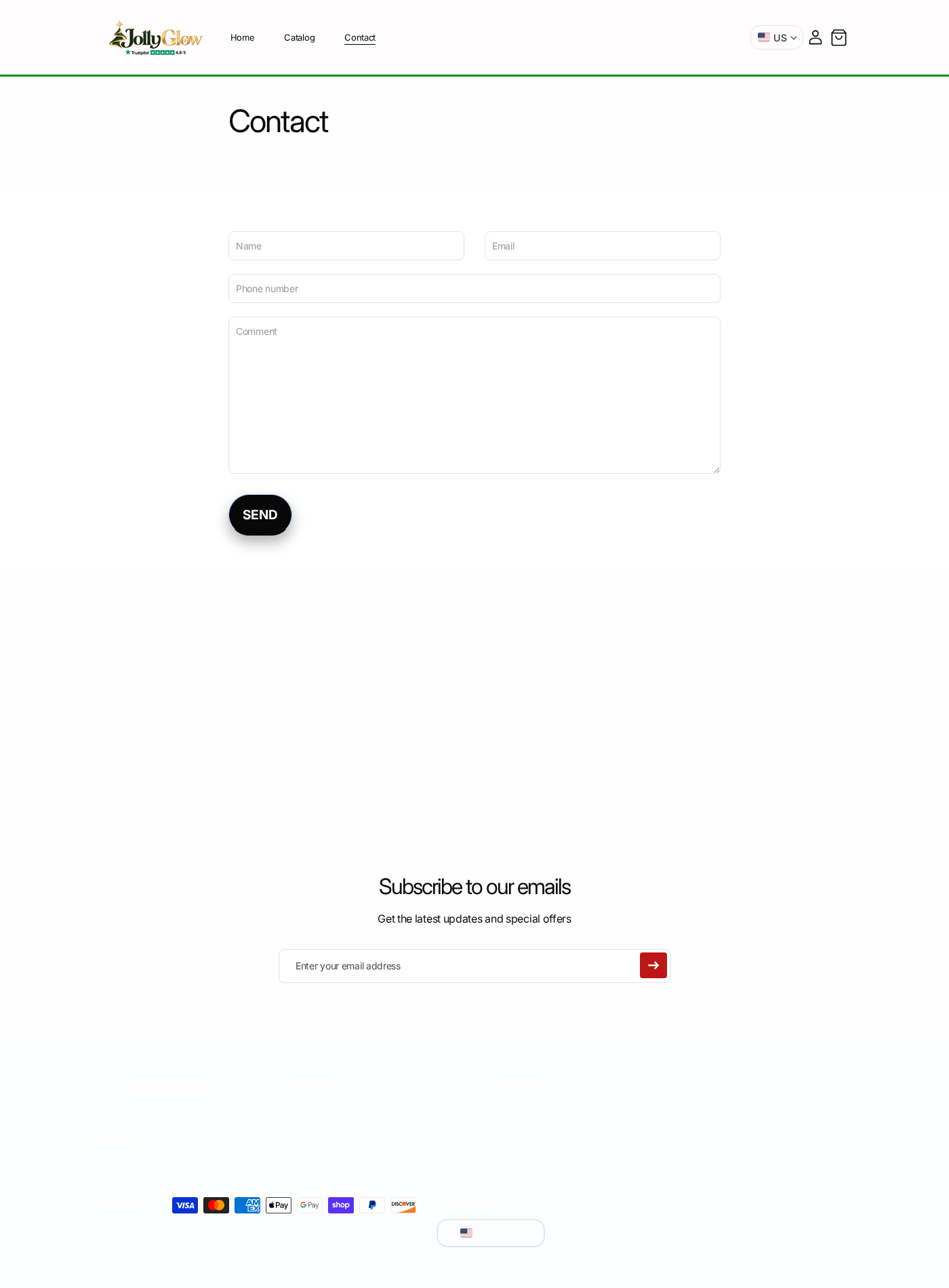
The contact page showed a form requesting the shopper’s name, email, phone number, and comment.
It did not visibly identify a legal company, office, return address, support email, or staffed telephone number.
A customer should know who receives payment before trusting a guarantee written by the same unidentified seller.
Important policy URLs returned missing pages
Standard Shopify addresses for refund, shipping, and terms pages returned 404 responses during our research.
The homepage claimed full refunds within 30 days but did not expose the operational details behind that promise.
Without a written policy, shoppers cannot verify whether goods must remain unopened, who pays postage, or where returns travel.
They also cannot confirm processing times, delivery estimates, cancellation rules, excluded sale items, or dispute jurisdiction.
That combination makes JollyGlow a high-risk new storefront, although it does not prove every order will fail.
- Jollyglow.store was registered in September 2026.
- The website promotes a 30-day full-refund promise and satisfaction guarantee.
- The visible contact page offers only a web form.
- No legal business name or physical address was prominent on the reviewed pages.
- Common refund, shipping, and terms URLs returned 404 pages.
- The store displayed familiar payment logos without supplying equivalent company transparency.
- A short domain history leaves almost no long-term service record to examine.
- Buyers should obtain complete written policies before treating the order as reversible.
How a Thin Seasonal Storefront Can Turn a Small Order Into a Dispute
Step 1: Holiday emotion shortens the normal verification process
Decorative lights are tied to deadlines, gifts, guests, and a limited season, so shoppers feel pressure to act quickly.
A bright advertisement can make the product look like the missing detail needed for a planned celebration.
The buyer focuses on arrival before the event rather than the age and identity of the merchant.
Seasonal urgency is particularly powerful because waiting for outside reviews may feel like losing the opportunity entirely.
Pause long enough to verify the company, delivery range, product dimensions, and return route independently.
Step 2: Reassurance badges substitute for verifiable operating details
JollyGlow repeats fast shipping, satisfaction guaranteed, premium quality, money-back, and easy returns across the visible page.
Each phrase addresses a predictable buyer concern, yet none identifies who fulfills the promise.
Payment logos show which services may process money, not whether the seller will answer later.
A Trustpilot-style graphic near a logo should link to a verifiable profile and current review distribution.
Treat isolated badges as advertising until an independent source confirms their meaning.
Step 3: A simple page pushes the visitor toward Add to Cart
The homepage offered little company information and centered attention on one large purchase button.
Sparse design is not inherently suspicious, but it leaves fewer facts available for an informed comparison.
A buyer should still be able to find materials, measurements, power requirements, warranty, delivery estimates, and safety information.
When those details are absent, the shopper is being asked to buy an image and promise rather than a documented product.
Do not supply payment details until the object and seller are both identifiable.
Step 4: The checkout may appear complete while policies remain undefined
Shopify can provide a familiar cart and secure payment connection even when a merchant’s own disclosures are incomplete.
Platform infrastructure does not guarantee product quality, refund performance, or truthful delivery claims.
Read every checkbox, quantity, shipping fee, discount, add-on, and total before authorizing payment.
Save the page because a very new store can revise its terms quickly after launch.
A receipt proves a transaction occurred, not that the advertised guarantee is enforceable without supporting details.
Step 5: Problems are funneled into an unaccountable contact form
The visible JollyGlow contact route asked customers to submit personal details through a form.
It did not show a direct support address, telephone line, postal address, named operator, or expected response time.
Forms can work well, but senders need an automatic copy or ticket number proving what was submitted.
Without that evidence, a customer may struggle to show timely cancellation or refund requests.
Test the form before purchase and retain its confirmation screen.
Step 6: The promised refund becomes difficult to measure or enforce
A 30-day full-refund statement sounds straightforward until the operational policy is missing.
Customers do not know whether the clock starts at order, shipment, delivery, or initial contact.
They cannot price tracked return postage because no destination is disclosed.
They also cannot evaluate exclusions covering opened goods, discounted items, light strings, packaging, or change-of-mind returns.
A guarantee without those details should not determine the purchase decision.
Why Seasonal Storefronts Require Extra Caution
The selling window is shorter than the complaint window
A seasonal seller can generate most revenue during several busy weeks, while delivery and refund problems emerge later.
By the time buyers compare experiences, advertisements may stop and the useful shopping season may already be over.
Very new domains provide little evidence about whether support continues after peak demand passes.
Look for a company that operated across previous seasons under the same name, domain, and contact details.
Continuity is not a guarantee, but it is stronger than a storefront with no documented past.
Delivery timing is part of the product value
Christmas lights arriving in January are materially different from lights delivered before a planned December event.
A seller should separate handling time from carrier transit and explain customs or remote-area delays.
Ask whether inventory is domestic, preordered, or shipped by a third-party supplier abroad.
Do not rely on fast shipping language without a dated delivery estimate for your postal code.
Use a payment method that preserves dispute rights if the promised event date is missed.
Generic products can move between short-lived brand names
Light strings and decorative trees are widely sourced products that can be rebranded quickly for social-media campaigns.
Search the product photograph, dimensions, controller, plug, and distinctive wording across large marketplaces.
A matching item does not prove copying or fraud, because retailers can legitimately share suppliers.
It does reveal alternative prices, ordinary product specifications, delivery routes, and review histories.
That comparison helps separate proprietary innovation from familiar merchandise wrapped in a new identity.
What a Credible Money-Back Guarantee Should Explain
Eligibility must be defined before the box is opened
A useful policy states whether customers may assemble, power, test, or briefly use the lights.
It distinguishes defects, missing pieces, wrong items, damage, late delivery, and simple dissatisfaction.
The rules should address discounted goods, bundles, promotional gifts, and products with removed protective films.
Customers need these details before examining the item in a way that could void eligibility.
JollyGlow’s short statement did not provide that practical guidance during our review.
Costs and destination must be visible
The seller should say who pays return postage and whether a prepaid label is available for seller-caused problems.
A complete destination country helps international buyers estimate tracking, customs paperwork, and delivery time.
The policy should also explain whether original shipping and protection fees are refundable.
Hidden overseas returns can make an inexpensive order uneconomical to challenge.
If the merchant will not disclose the destination before purchase, assume the return could be costly.
Processing deadlines should be measurable
A proper guarantee specifies how quickly support acknowledges requests, authorizes returns, inspects parcels, and issues refunds.
It names the payment method receiving the credit and allows time for the financial institution to post it.
The customer should receive a return authorization or case number connecting the parcel to the order.
Vague language permits both sides to describe the same delay differently.
Measurable steps turn a slogan into a process that can be documented and enforced.
Company, Address, and Fulfillment Checks
No prominent legal operator was identified on the reviewed pages
The homepage and contact page presented the JollyGlow brand without a visible incorporated company name.
We also did not find a registration number, responsible individual, or clear dispute jurisdiction there.
A legal entity gives customers something concrete to verify against receipts, card descriptors, and consumer records.
Its absence is especially important for a domain created only weeks earlier.
Ask the merchant to identify the contracting company before purchasing.
The contact page did not provide a physical address
The form collected customer details but did not visibly show where the business or returns operation was located.
An address can be a headquarters, mailbox, home, registered agent, warehouse, or unrelated fulfillment center.
Even so, publishing none prevents buyers from estimating jurisdiction and return cost.
Search any address later provided and compare it with the receipt, policy, and card descriptor.
Do not mail merchandise to a shipping-label origin without written authorization.
Direct support details were not visible
We did not see a populated support email or customer-service telephone number on the contact page screenshot.
A form-only channel can leave the sender without a copy of the request.
Before ordering, submit a question and verify that a reply comes from a stable business domain.
Do not treat an unanswered number found inside an advertisement as verified support.
Keep the form confirmation, response headers, and complete conversation.
Manufacturing and fulfillment remain unclear
The reviewed pages did not prominently identify the light manufacturer, inventory location, warehouse, or safety certifier.
Generic seasonal products are often shipped by suppliers that never appear in the storefront branding.
That arrangement can be legitimate, but responsibility must remain clear when goods are defective or unsafe.
Inspect packaging for manufacturer, importer, model, voltage, warnings, and recognized certification markings.
Unknown electrical goods should never be left operating unattended.
What to Do if You Have Fallen Victim to This Scam
- Save the entire storefront immediately. Capture the product, guarantee, shipping language, price, quantity, checkout, confirmation, and every available company detail.
- Use the contact form once and document it. Keep the submitted text, timestamp, confirmation screen, and any automated ticket received.
- State the requested resolution clearly. Ask for cancellation, delivery, replacement, or refund and provide a reasonable written deadline.
- Monitor tracking independently. Check the carrier’s own website instead of trusting only a storefront status page or emailed link.
- Do not pay a second fee to release the parcel. Unexpected insurance, redelivery, customs, or verification requests may indicate another scam.
- Preserve the delivered item. Photograph labels, package condition, contents, dimensions, plug, damage, and operation before discarding anything.
- Request return terms before shipping. Obtain the authorized recipient, address, deadline, tracking standard, responsibility for postage, and refundable amount.
- Contact the payment provider promptly. Explain non-delivery, material mismatch, or an unhonored guarantee with dates and evidence.
- Report the advertising and store. Notify the platform carrying the ad and the relevant consumer agency when business details or promises appear deceptive.
- Protect the device after suspicious behavior. Run a complete Malwarebytes scan, then use AdGuard to filter unsafe redirects, fake notifications, and repeat ads.
A Five-Minute New-Store Check Before Checkout
Compare the domain age with the brand story
A recently registered domain does not automatically invalidate a new business, but it limits what history exists to verify.
Look for older social profiles using the same operator, address, products, and support details rather than a similar display name.
Search exact email addresses, telephone numbers, policy sentences, and product photographs.
Conflicting identities or cloned text deserve explanation from the seller.
Do not mistake search-engine visibility created by affiliates for an established operating record.
Demand complete policies in ordinary language
Open refund, shipping, privacy, terms, and contact pages before entering card information.
A 404 policy is not a minor cosmetic flaw when it governs money, personal data, and disputes.
Save the terms active on the purchase date because new stores can change them quickly.
Ask support to answer any missing point in writing and retain the response.
If the merchant cannot explain a basic return, skip the order.
Limit the first transaction
Choose one inexpensive item and avoid bundles, shipping protection add-ons, or quantity upgrades until the seller proves reliable.
Pay by credit card or a reputable payment service with buyer protections and clear dispute deadlines.
Never use cryptocurrency, wire transfer, gift cards, or a bank payment to test an unknown seasonal shop.
Set calendar reminders for the promised dispatch and delivery dates.
Small exposure and fast documentation make any later resolution much easier.
Frequently Asked Questions
Is JollyGlow a scam?
JollyGlow is a functioning but extremely new storefront with insufficient transparency for a confident verdict.
Missing policies and operator details create substantial buyer risk without proving every transaction fraudulent.
When was jollyglow.store registered?
Public domain data indicates registration in September 2026.
That short history limits independent evidence about long-term delivery and refund performance.
Does JollyGlow promise a 30-day refund?
The homepage displayed a 30-day full-refund statement.
Detailed rules defining eligibility, costs, and destination were not available through the expected policy pages during review.
Who owns JollyGlow?
The pages we examined did not prominently name a legal company or registration number.
Ask the seller to identify the contracting entity before ordering.
How can I contact JollyGlow?
The visible contact route was a web form requesting name, email, phone, and comment.
Keep proof of submission and verify any reply carefully.
What is the safest way to pay?
Use a credit card or reputable payment service offering buyer protections.
Avoid irreversible methods and do not buy a large bundle as a first test.
The Bottom Line
JollyGlow asks customers to trust a familiar guarantee while providing very little public evidence about the business behind it.
Its September 2026 registration, missing policy pages, and form-only contact route make the storefront too uncertain for an ordinary impulse purchase.
Unless the seller supplies complete written terms and verifiable company details, the sensible decision is to wait or buy comparable lights from an established retailer.








