

Decorative lights can transform an ordinary room, and TwinklingTree presents that small pleasure with polished photographs, discounts, and enthusiastic customer stories.
Before ordering, shoppers should compare the inviting storefront with the practical details governing support, returns, product expectations, and the real cost of changing their mind.
Overview
TwinklingTree is a functioning store, not a newly created checkout page
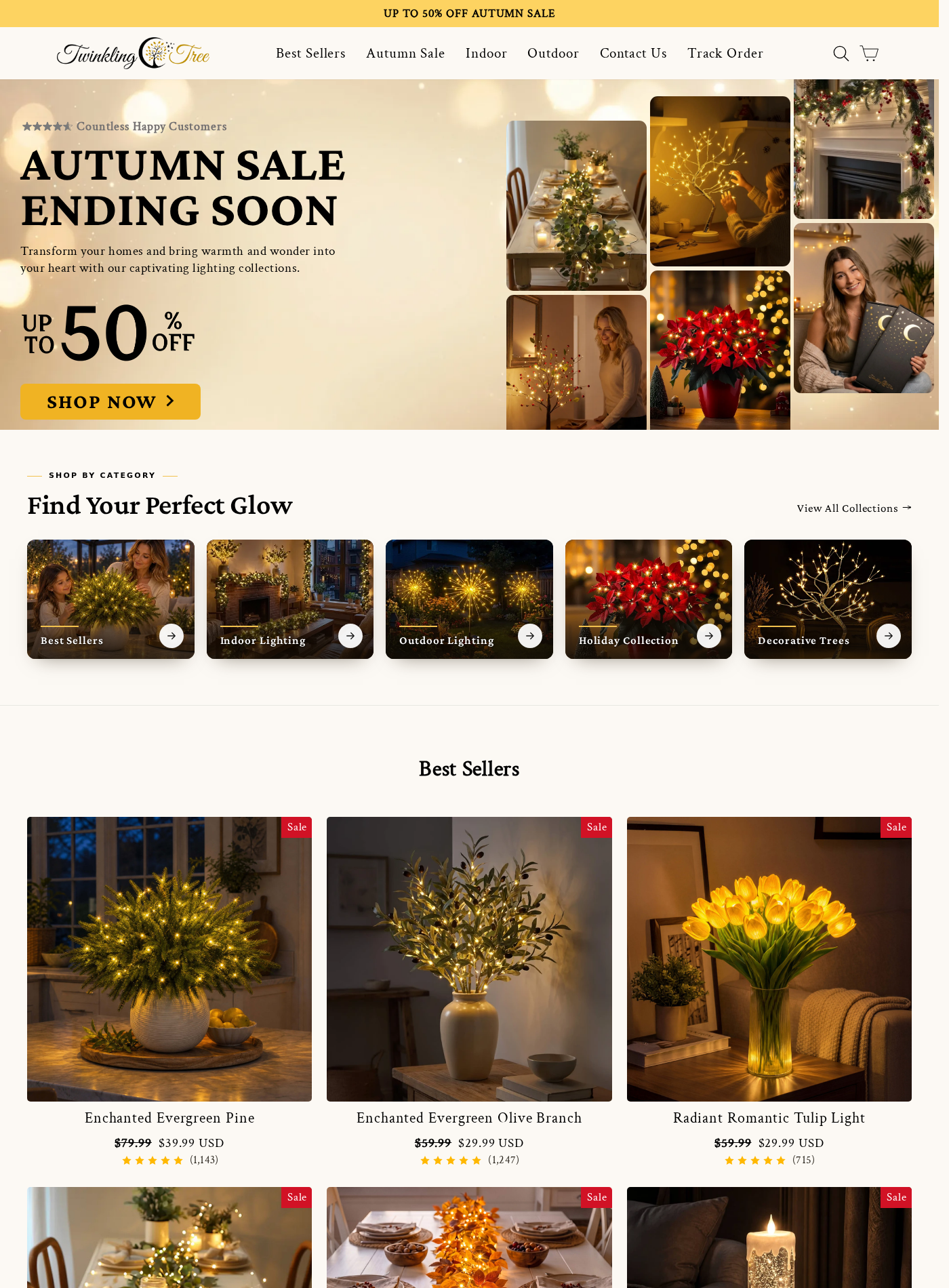
TwinklingTree sells decorative trees, illuminated flowers, indoor accents, outdoor lights, and seasonal pieces through a developed online catalog.
Public registration records show the domain was created in December 2020, giving it a longer history than disposable stores launched days before advertising.
The homepage claims more than 100,000 happy customers and displays large review totals beside individual products.
Those facts distinguish the business from a completely anonymous overnight shop, but they do not settle questions about value, accuracy, or customer service.
This investigation therefore focuses on documented buying risks rather than declaring every TwinklingTree transaction fraudulent.
The largest risk appears after a customer wants to return something
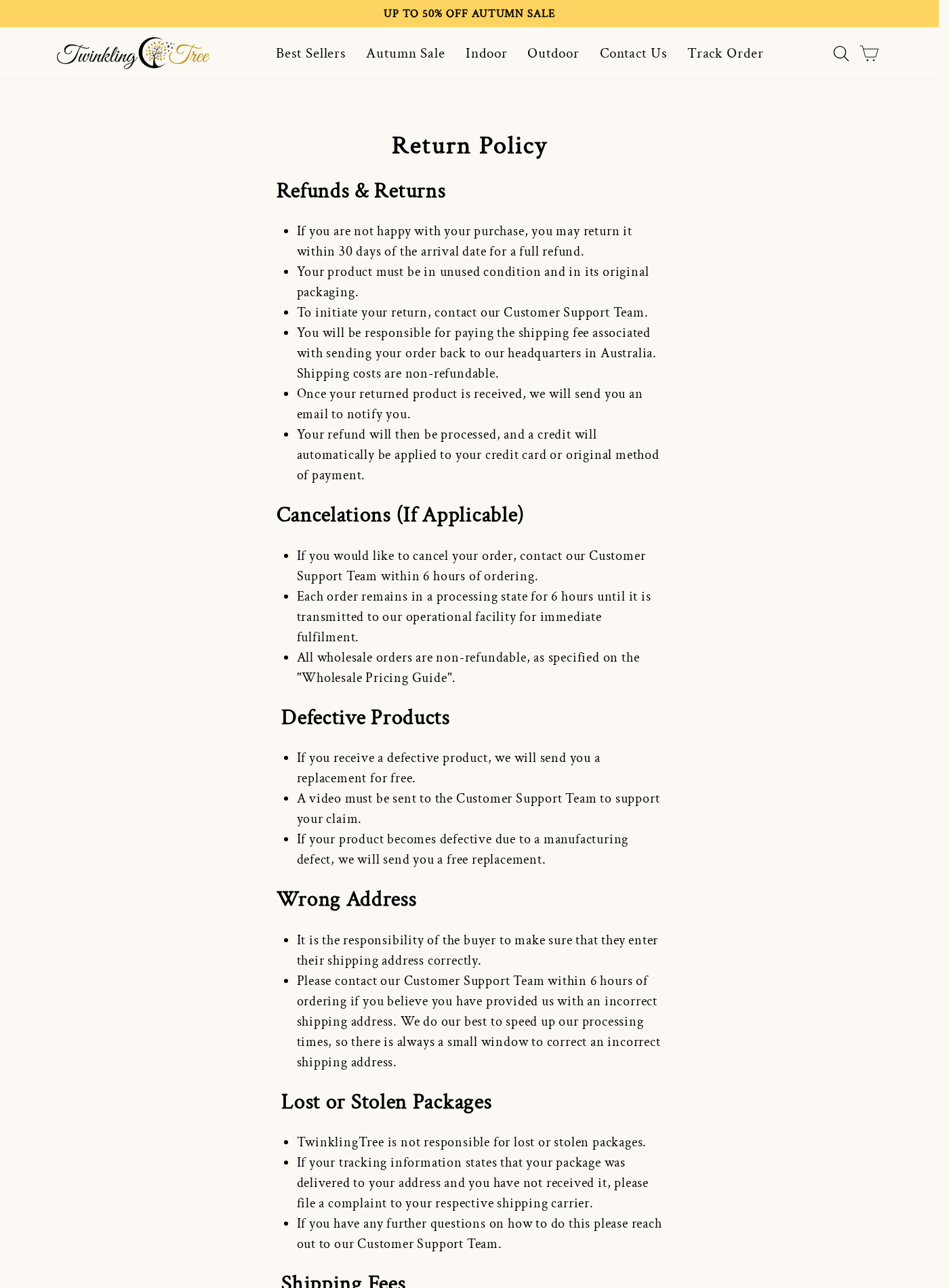
The homepage emphasizes a 30-day money-back promise, language that makes a trial purchase feel relatively safe.
The detailed policy requires unused goods in original packaging and places return postage entirely on the buyer.
Most importantly, the parcel must go to the company headquarters in Australia, even when the customer ordered from another country.
Original shipping is not refunded, and tracked international postage can erase much of the value of returning a modestly priced decoration.
A six-hour cancellation window makes quick order corrections difficult once the initial excitement fades.
Mixed independent feedback deserves a balanced reading
Independent review pages contain many positive experiences alongside complaints about size, materials, image accuracy, delivery, and the expense of Australian returns.
Several unhappy buyers describe receiving an object that looked smaller or less substantial than the advertisement suggested.
Other reviewers say their lights arrived successfully and created the atmosphere they expected, so the record is not uniformly negative.
Complaints are allegations from individual customers, not automatic proof that every listing is deceptive.
The repeated themes still help a careful buyer identify what must be measured, documented, and confirmed before payment.
- The TwinklingTree domain has existed since December 2020.
- The store advertises decorative lighting with recurring sale prices and large on-site review counts.
- Returns are allowed within 30 days only when products remain unused and in original packaging.
- Customers must pay return postage to Australia, while original shipping costs remain non-refundable.
- Order cancellations must be requested within six hours.
- Defect claims require video evidence under the published policy.
- The Contact Us link redirected to an inactive Replit page during our review.
- Independent feedback is mixed, with both satisfied customers and recurring product-expectation complaints.
How the TwinklingTree Sales Funnel Can Create Buyer Problems
Step 1: A beautiful room scene sells an atmosphere before specifications
A shopper usually encounters warm rooms, glowing branches, decorated tables, or gardens that look professionally staged.
The advertisement sells the feeling of the finished space before it explains dimensions, construction, power source, or brightness.
That emotional framing is effective because buyers imagine the photograph appearing in their own home.
A scene can also make a small object look larger when furniture, camera distance, and scale references remain unclear.
Pause and write down the exact height, width, materials, power method, included pieces, and indoor or outdoor rating.
Step 2: Permanent-looking discounts create urgency around ordinary decor
The storefront uses crossed-out prices, sale labels, and ending-soon language across many products.
A discount only has meaning when the higher price was genuinely charged for a meaningful period.
Compare the object by description and dimensions on major marketplaces instead of searching only the branded product name.
Generic illuminated branches and trees often appear under several names, photographs, and prices across direct-response stores.
Price comparison should include shipping, taxes, replacement batteries, adapters, and the cost of a possible return.
Step 3: Seller-controlled reviews reduce the urge to investigate elsewhere
Product cards show star ratings and review counts that can make a listing appear thoroughly tested by hundreds of buyers.
Reviews displayed by the seller are useful marketing material, but shoppers cannot independently inspect every moderation rule or verification method.
Search for detailed outside feedback containing original photographs, measurements, order dates, delivery locations, and support outcomes.
Read positive, neutral, and negative reports because any single group can distort the overall picture.
Repeated specifics carry more weight than dramatic one-line praise or anger.
Step 4: The checkout feels safer than the return route actually is
A familiar card form and 30-day promise can make the order feel reversible at little cost.
The policy transfers international return shipping to the customer and does not publish a simple prepaid domestic route.
That difference matters after a buyer sees the product outside studio lighting and decides it does not suit the room.
Ask support for the exact destination and estimated refundable amount before ordering, not after opening the parcel.
If support avoids the question, treat the purchase as effectively final.
Step 5: A narrow cancellation window closes before many buyers reconsider
TwinklingTree says orders remain in processing for six hours before transfer to its operational facility.
A customer who notices a wrong quantity the next morning may already be outside the stated cancellation period.
Review the confirmation immediately for quantity, model, color, voltage, shipping address, and total charge.
Send any correction through every available channel and preserve the time-stamped message.
Do not assume that abandoning a cart, refusing delivery, or disputing later produces the same result as prompt cancellation.
Step 6: Support friction becomes visible when something goes wrong
During our review, the site’s Contact Us link opened an inactive Replit application rather than a working support page.
The footer invited shoppers to click for assistance, yet the destination could not accept a request.
That may be a technical mistake rather than deliberate obstruction, but it matters when cancellation lasts only six hours.
Locate a working email before paying and send a simple pre-sale question to test response quality.
A storefront is only as reliable as the support route available after payment.
What Buyers Should Verify Before Ordering Decorative Lights
Measure the actual object, not the room shown around it
Translate every dimension into a familiar household reference and mark the footprint with tape where the light will sit.
Check whether measurements include the base, flexible branches, cable, pot, decorative wrapping, or only the illuminated section.
Look for customer photographs beside recognizable objects, because carefully framed marketing images can conceal scale.
Confirm whether branches arrive compressed and require shaping before they resemble the advertisement.
A five-minute measurement exercise prevents the most common form of disappointment described in complaints.
Check electrical and weather claims carefully
Find the voltage, plug type, battery specification, timer behavior, cable length, replacement method, and waterproof rating.
Words such as outdoor, weather-resistant, and waterproof are not interchangeable technical guarantees.
For exterior products, identify the certified rating covering rain exposure, connector housing, transformer, and battery compartment.
Never place an indoor adapter, exposed connection, or unverified battery pack where water can reach it.
If certification markings are missing, use the decoration only within conservative conditions recommended by a qualified electrician.
Save the listing before it changes
Capture the complete page showing dimensions, materials, brightness, included accessories, delivery estimate, price, and guarantee.
Keep the checkout screen, order confirmation, tracking history, packaging label, and unboxing video together.
Record any damaged wire, loose part, missing component, or visual mismatch before assembling the product.
The policy requests video for defect claims, so continuous evidence can prevent arguments about when damage occurred.
Do not discard the original packaging until the return period and testing are complete.
TwinklingTree Complaints: What They Mean and What They Do Not Prove
Product mismatch complaints are relevant when details repeat
One disappointed buyer can misunderstand a listing, but repeated reports about scale or material justify closer inspection.
Compare each allegation with the exact listing version, because sellers may update photographs, descriptions, or product generations.
Look for measurements and original photos rather than relying on broad labels such as cheap, fake, perfect, or amazing.
A recurring difference between staged presentation and delivered appearance signals expectation risk, even when an item technically arrives.
That is a consumer-value problem distinct from payment theft or non-delivery fraud.
Positive reviews should receive the same scrutiny
Satisfied customers can honestly enjoy an inexpensive decorative item despite limitations that bother other buyers.
Useful praise explains installation, size, brightness, delivery time, durability, and the room where the product was used.
Generic compliments without photographs or order details offer less evidence than a balanced, specific account.
Check whether reviewers discuss support after defects, because service quality is rarely tested by a perfect order.
The goal is not to count emotions but to understand the likely range of outcomes.
The evidence supports caution, not an absolute verdict
TwinklingTree has operated for years and many customers report receiving usable products.
At the same time, international returns, a broken contact link, and repeated expectation complaints weaken the low-risk shopping impression.
Calling every sale fraudulent would ignore the functioning business and positive experiences documented elsewhere.
Calling the purchase worry-free would ignore important terms that can make an unsatisfactory order expensive to unwind.
A precise conclusion protects readers better than either extreme.
Company, Address, and Fulfillment Checks
The legal pages name the brand but do not prominently identify a separate corporate entity
The Terms state that the website is operated by Twinkling Tree and describe Shopify as the commerce platform.
We did not find a clearly highlighted company registration number or full legal entity in the pages reviewed.
A trading name can be legitimate, but buyers need an accountable entity when escalating an unresolved refund.
Ask which legal business accepts payment and which jurisdiction handles disputes before placing a high-value order.
The card statement should match the entity described in the receipt or support response.
The Australian return destination may be expensive for overseas customers
The policy says accepted goods travel back to headquarters in Australia at the customer’s expense.
It does not publish the full destination before approval, so shoppers cannot calculate postage during checkout.
An address used for returns may be a warehouse, logistics partner, office, or shared facility rather than a manufacturer.
Always request the full address, tracking standard, customs description, deadline, and refundable amount in writing.
Do not post to an address found on a parcel unless support authorizes it for that return.
The inactive contact page is a real operational warning
The site linked to a Replit address displaying that the application was not live during our check.
That failure removes the most obvious support route advertised in the footer and navigation.
Technical faults happen, but a merchant should detect them quickly when cancellation and return requests depend on timely contact.
Test support before ordering and save the failed page if it remains unavailable.
A working email and documented response matter more than a polished homepage.
Fulfillment location and manufacturing origin remain separate questions
A return headquarters in Australia does not reveal where every light is manufactured, stored, or dispatched.
Likewise, a tracking origin does not necessarily identify the seller or factory responsible for product quality.
Inspect packaging for manufacturer, importer, model, electrical markings, batch information, and safety instructions.
Mass-produced decorations can be perfectly serviceable, but unknown electrical components deserve cautious placement and supervision.
Stop using any light that overheats, sparks, smells burnt, damages batteries, or exposes wiring.
What to Do if You Have Fallen Victim to This Scam
- Photograph the parcel before opening it. Record labels, dimensions, packaging condition, included parts, and the complete unboxing if damage or mismatch is possible.
- Do not assemble a return candidate. The policy requires unused goods in original packaging, so extensive setup can weaken eligibility.
- Contact support immediately. State the order number, delivery date, precise defect or mismatch, requested solution, and the published 30-day period.
- Preserve the broken contact page. If the official route fails, save a dated screenshot and try the email shown on receipts or independent profiles.
- Request complete return instructions. Obtain the authorized Australian address, recipient, tracking requirement, deadline, and expected refund before shipping anything.
- Calculate whether return postage is proportionate. Ask the seller for a prepaid label or partial resolution when international postage consumes the refund.
- Keep a continuous evidence file. Save advertisements, listing details, receipt, tracking, photographs, videos, emails, postage proof, and delivery confirmation.
- Escalate a documented dispute promptly. Contact the card issuer or payment service when goods are materially misrepresented or an agreed refund does not arrive.
- Report unsafe electrical goods. Stop use and contact the relevant consumer-product safety authority if wiring, heat, plugs, batteries, or adapters appear dangerous.
- Secure the device if an advertisement behaved suspiciously. Scan with Malwarebytes and use AdGuard to reduce malicious redirects and aggressive shopping ads.
A Safer Way to Test an Unfamiliar Decor Store
Begin with one low-value item
A first purchase should test product quality, fulfillment, and support rather than maximize a bundle discount.
Use a credit card or payment service offering clear buyer protections instead of bank transfer, debit, gift card, or cryptocurrency.
Avoid adding duplicate units until one item has arrived, worked safely, and survived normal use.
Read the final cart carefully because quantity selectors and accessories can change the total.
A small controlled order limits both financial exposure and return-postage regret.
Ask one difficult question before paying
Request the exact return destination and approximate tracked postage for your country.
A useful reply should answer the question directly rather than repeat a guarantee slogan.
Also ask who manufactures the electrical product and which safety standard applies to your market.
Save the response because it becomes part of the purchase representation.
Silence, vagueness, or a dead contact form is valuable information before money changes hands.
Treat room photography as inspiration, not measurement
Marketing imagery can show styling possibilities without accurately communicating scale, texture, brightness, or cable visibility.
Base the purchase on written specifications and ordinary customer photographs rather than the most cinematic hero image.
Consider whether the room photograph may use multiple units, hidden wiring, enhanced lighting, or professional editing.
If the written details cannot reproduce the scene, lower expectations or skip the order.
A decoration should be chosen for its verified object, not only its advertised mood.
Frequently Asked Questions
Is TwinklingTree a scam?
The evidence does not justify calling every TwinklingTree order fraudulent.
It is a functioning, older store with meaningful concerns involving product expectations, support access, and costly overseas returns.
Where do TwinklingTree returns go?
The published policy says customers pay to send approved returns to headquarters in Australia.
Obtain the complete authorized address before posting a parcel.
How long do I have to cancel a TwinklingTree order?
The policy instructs customers to request cancellation within six hours of ordering.
Send the request immediately and retain its timestamp.
Does TwinklingTree provide free returns?
No general free-return promise appears in the detailed policy we reviewed.
Customers pay return shipping, and original shipping costs are non-refundable.
Why do some TwinklingTree reviews conflict?
Different products, expectations, countries, and service experiences can produce genuinely different accounts.
Prioritize reviews with photographs, measurements, dates, and documented support outcomes.
What should I check when the lights arrive?
Confirm dimensions, parts, plug, voltage, battery compartment, cable condition, safety markings, and weather rating.
Test cautiously while preserving packaging.
The Bottom Line
TwinklingTree is not best described as a simple fake store, but its polished presentation can make the buying experience appear safer than the terms support.
The Australian return requirement, six-hour cancellation window, inactive contact page, and recurring mismatch complaints deserve attention before ordering.
Measure carefully, test support, pay with protection, and treat any purchase as difficult to reverse once the parcel begins moving.

Join the discussion
0 commentsShare your experience or ask a question about this article.
Discussion
Start the conversation
Have a question or something useful to share? Add the first comment.