


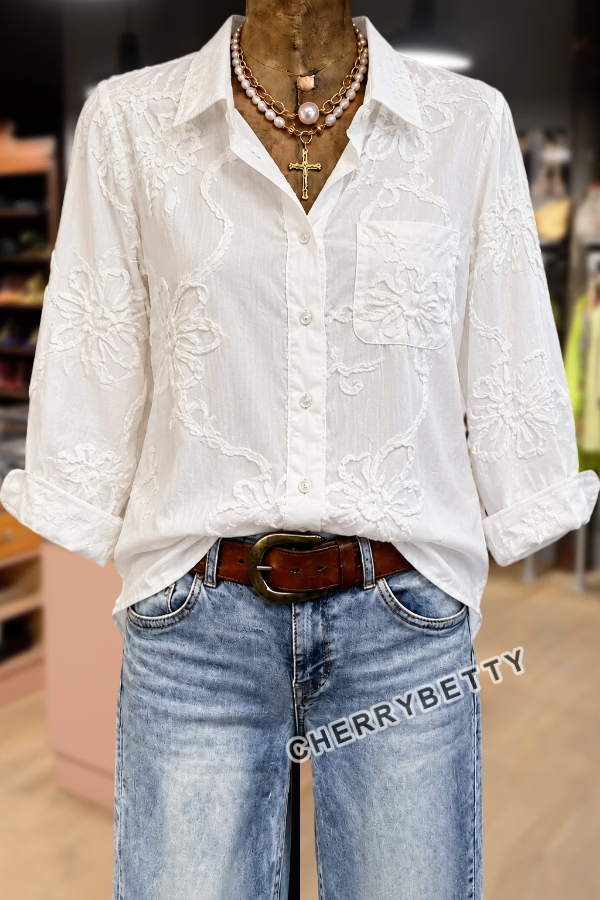
A pretty embroidered blouse can sell an entire boutique story before you read a single policy. CherryBetty’s polished clothing pictures make it easy to imagine the finished outfit.
The harder questions arrive later, when you need the right size, a missing item or somewhere to send a return. Those details deserve attention before the parcel does.
Overview
The boutique presentation meets a very poor complaint record
CherryBetty sells women’s clothing through an operating storefront. The problem isn’t simply whether a website exists or whether anybody ever receives a parcel.
Shoppers describe garments that disappoint, missing items, difficulty reaching support and expensive overseas returns. Those are serious purchasing risks, not details a nice photograph can resolve.
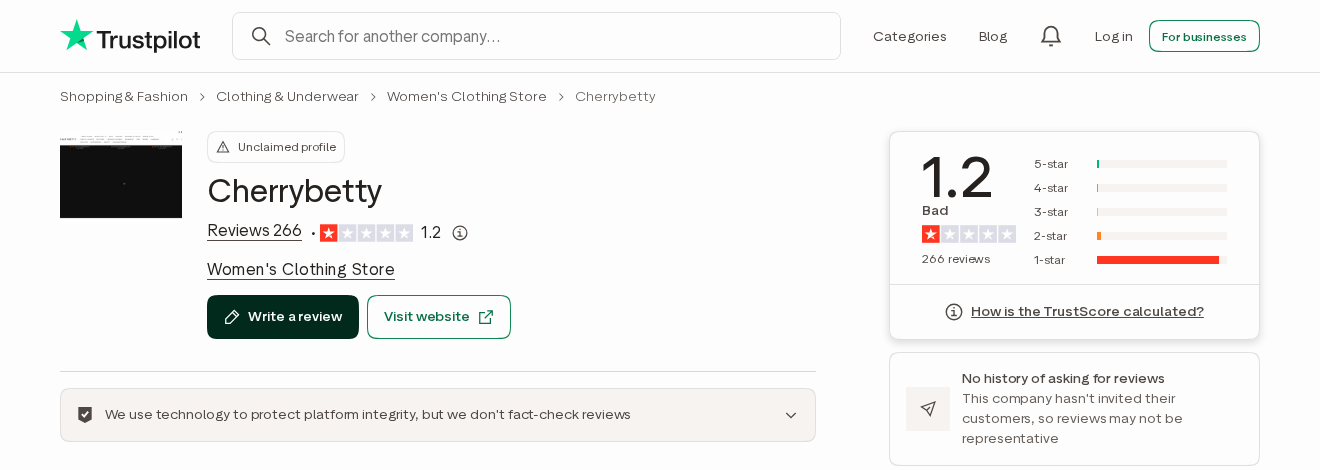
The cherrybetty.com Trustpilot profile shows a 1.2 score from 266 reviews. The current return policy also leaves the actual return address behind an email request.
Two domains use the CherryBetty brand
Both cherrybetty.com and cherrybettyshop.com display CHERRYBETTY branding. The second site’s FAQ expressly identifies it as an official brand website.
That connection matters when checking your receipt or searching for customer service. It does not mean every business with a similar cherry-themed name is the same shop.
The current policies accept eligible returns within 15 days of delivery, subject to conditions. Accepting returns on paper isn’t the same as making them affordable and practical.
The important checks are about the transaction, not the styling
- Appearance: Compare the advertised fabric, construction and measurements with what is actually delivered.
- Fulfillment: Keep track of individual items and packages, not just an order marked shipped.
- Returns: Obtain the authorized address and full postage cost before accepting an exchange or sending anything back.
- Support: Keep written requests and deadlines instead of allowing unanswered emails to stretch indefinitely.
Do not buy from CherryBetty on the strength of its boutique presentation. The complaint pattern and return hurdles make this an offer we would avoid.
What CherryBetty Promises, and What Buyers Describe
The cherrybettyshop.com FAQ describes many products as “exclusive boutique designs offered in limited runs”. That suggests something more distinctive than a generic clothing listing.
The practical question is whether the garment matches that presentation. A photograph can suggest texture and embroidery, but it can’t let you feel the fabric or inspect stitching.
On Trustpilot, an October 2026 customer reports a defective jacket, an unsuccessful refund request and a return address in China.
Another reviewer describes three satisfactory purchases followed by an incorrectly sized fourth order and unanswered emails. A positive earlier order did not protect that shopper’s later purchase.
These are customer accounts rather than inspections of every garment. Their repeated themes still matter when deciding whether you want to risk your own money.
The BBB’s Cherry Betty Shop page adds a separate set of complaints. One July 2026 reviewer describes a $76.50 return-postage quote.
That buyer says the purchase cost only slightly more. Another September reviewer reports a damaged $46 item and refund-request emails that could not be delivered.
The consequence is straightforward: an advertised return option can be of little use when sending the item back costs nearly what you paid.
How the CherryBetty Shopping and Return Process Works
Step 1: The clothing image establishes the expectation
A shirt on a styled mannequin or a coordinated outfit suggests a particular finish. You may expect substantial fabric, carefully positioned details and the shape shown.
Separate those impressions from measurable promises. Keep the listing’s material composition, size chart, product name and pictures before ordering.
If the advertised detail looks like embroidery, check whether the description actually promises embroidery. Printed decoration and stitched decoration are not interchangeable when assessing a mismatch.
You don’t need to prove how an image was made to document a different garment. A clear comparison between the listing and the delivered item is more useful.
Step 2: Coupons encourage a larger decision than one attractive top
The storefront promotes discounts and an email-signup offer of up to $60 off. A maximum saving is not necessarily the discount available on a single item.
Before adding another blouse to reach a threshold, look at the additional amount you would spend. A larger discount can still leave you risking more money.
Read the final cart as a purchase record: item, size, color, quantity, shipping and total. Don’t treat a crossed-out price as independent evidence of value.
There is also a difference between subscribing to promotional emails and authorizing paid recurring purchases. The newsletter popup alone is not proof of a subscription charge.
Step 3: Processing time comes before the delivery estimate
The newer site’s FAQ lists 1–5 business days for processing and 6–9 business days for standard transit, with possible additional preparation for certain styles.
Five processing days plus nine transit days is fourteen business days before considering exceptions. That is a different expectation from a parcel arriving next week.
Ask whether an item has actually left the warehouse if tracking hasn’t progressed. An order confirmation or a created label is not the same as carrier acceptance.
For a multi-item purchase, record which items correspond to each tracking number. A delivered package does not, by itself, show that every purchased item was inside.
Step 4: The parcel needs to be checked against the listing immediately
Open the delivery while the order details are easy to retrieve. Photograph the parcel label, the contents and any packing slip.
For a sizing issue, compare actual garment measurements with the saved chart. For a material issue, photograph the composition label and the relevant advertised description.
Keep the distinction between a product you dislike and one that is damaged, wrong or materially different. That distinction helps explain the remedy you are requesting.
Don’t remove tags, wash the item or wear it out while deciding to return it. Those actions can create an avoidable argument under the stated conditions.
Step 5: The return requires permission, an address and money
The published policy requires customer-service authorization before shipping anything back. It explicitly warns against using the sender address printed on the original parcel.
That is the detail to settle early. The address that helped a parcel reach you may not be the destination that will qualify your return.
For a change of mind or fit-related return, the policy says return postage is not reimbursed. Original delivery and shipping-insurance fees are also excluded from refunds.
Against that wording, customer reports of China-bound returns become a significant cost concern. Obtain a specific destination and postage quote rather than assuming a local California return.
A replacement or partial refund may be offered as an alternative. Compare its value with what you want, and get any agreement in writing.
The Company, Addresses and Support Behind the Storefront
A registered brand is not a guarantee about your order
The sites display a U.S. trademark-registration claim. That concerns the brand’s name and identity, not an assurance about fabric quality, domestic manufacture or successful refunds.
The current terms refer to CHERRYBETTY and entities supporting the site. Your receipt and payment record remain important for identifying the party responsible for a particular transaction.
Those terms also describe membership across participating stores in the CHERRYBETTY network. That is a stated loyalty arrangement, not proof of an unrelated criminal network.
The California address is not a ready-to-use return counter
The older site’s footer lists 15650 Don Julian Road, City of Industry, California. Property owner Rexford Industrial describes that address as a warehouse/distribution facility.
The terms and newer storefront also display 1351 Charles Willard Street in Carson, California. Multiple addresses don’t tell you where a particular return should go.
A distribution building is not evidence of a local designer workshop. Nor does its presence mean a customer can walk in, exchange a garment or obtain repayment.
Use the authorized return instructions for your order. Don’t spend postage on a California destination simply because it appears at the bottom of a page.
Published support details must lead to an actual resolution
The older domain publishes service@cherrybetty.com. The newer domain lists service@cherrybettyshop.com and a contact-page phone number, +44 7524058799.
Use the details associated with your confirmation and retain the message thread. A different support domain can be relevant when locating a response to an existing order.
The policy promises replies within 24 hours on business days. Complaints about unanswered requests should be considered alongside that promise, not dismissed because an email address exists.
If that promised response doesn’t arrive, document the delay and escalate through your payment provider as appropriate. Repeatedly sending the same request is not a refund strategy.
The manufacturing and return countries are different questions
Customers report being directed to China for returns. That is evidence of their reported return burden, not a verified factory record for every item in the catalogue.
The clothing label, composition, dispatch record and authorized return destination each answer a different question. Don’t infer all four from an American flag or address.
The buying problem is the gap between an appealing presentation and what buyers say they received, followed by difficulty undoing the purchase.
Our reports on Jess & Anne and Vivian and Pearl examine other boutique offers. Compare the transaction details rather than assuming common ownership.
Cherry Betty, Cherry Berry and Similar Clothing Names
If you searched for Cherry Berry clothing reviews, check the spelling on your receipt. This report concerns CherryBetty and the two domains identified above.
A similar name in search results can lead you to reviews for a different retailer. Use the exact domain, order confirmation and payment descriptor to avoid that confusion.
For another example of checking a boutique’s actual terms, our Susan & Margaret London investigation follows that separate offer’s return process.
What to Do If You Ordered From CherryBetty
Act on the purchase you made. A delayed order, missing item and damaged garment need different evidence, even when all three leave you wanting your money back.
Record the delivery date and problem now. The stated return window is 15 days from delivery. Photograph defects, sizing measurements and all items actually received.
Keep original packaging and tags. Save the product page and composition description so a later listing change doesn’t erase what you relied on.
Send a complete written request. Include the order number, product or SKU, specific issue and remedy requested. Use the support address associated with your order.
Ask for authorization, the full return address, applicable deadline and whether postage will be covered for the problem you describe. Retain the reply.
Price the return before posting it. Obtain a tracked-postage quote to the authorized country and address. Compare that cost with the refund amount.
Don’t assume the sender label or California footer is a valid destination. If support refuses to clarify, record that refusal for a possible payment dispute.
Document missing or undelivered items separately. List which pieces were received, which remain outstanding, and their individual tracking details. Ask for a specific dispatch or refund date.
Keep a promised credit or replacement in writing. Check whether a refund actually appears rather than treating an assurance as completed payment.
Escalate unresolved issues to the payment provider. Explain whether goods were missing, damaged or not as described. Supply photographs, listing records and attempted-resolution messages.
Ask about evidence requirements and dispute deadlines. A successful refund isn’t guaranteed, and a disappointing authorized purchase should not be described as an entirely unauthorized payment.
Reject exchanges that don’t solve your problem. Consider whether a proposed replacement corrects the specific issue or merely asks you to accept another uncertain item.
For partial refunds, confirm the exact amount and any conditions before agreeing. Avoid allowing a prolonged negotiation to exhaust your payment-provider options.
Report accurately and monitor for genuinely unexpected charges. You can submit a detailed account through ReportFraud.ftc.gov and the relevant shopping or advertising platform.
Protect accounts if you reused a password or spot suspicious activity. An ordinary clothing dispute alone does not establish identity theft, malware or a paid subscription.
How to Spot Fake Clothing Stores
Fraudulent shopping websites often share common patterns that make them easier to detect once you know what to look for. Before entering personal information or making a payment, take a few minutes to check for these warning signs:
- Unrealistic prices and discounts
If a website offers products at prices far below trusted retailers, it’s often a red flag. Many of these sites advertise luxury or high-demand products at massive discounts to create a sense of urgency. A $300 product listed for $49.99 should immediately raise suspicion. - Recently registered or suspicious domain names
Many fraudulent websites operate on newly created domains that disappear after a few weeks. Look for signs like random characters in the URL, misspellings of well-known brands, or hyphenated domains.
You can check a site’s age with a WHOIS lookup, or run it through our free Scam URL Scanner. - Missing or vague company details
Legitimate businesses clearly display their company name, tax information, phone numbers, physical address, and return policies. Fraudulent sites often provide incomplete, fake, or no company details at all. A lack of verifiable contact information is a major warning sign. - No reliable customer service
Real businesses provide clear ways to contact support—email, phone, live chat, or physical return addresses. Fake stores often list nonfunctional contact forms, invalid phone numbers, or reply with generic automated messages. - Poor website quality and structure
Many fake stores are set up quickly with low-effort templates. Look for poor grammar, spelling errors, low-resolution product images, broken links, or missing legal pages (Terms of Service, Privacy Policy, Return Policy). A sloppy website often signals something isn’t right. - Copied product descriptions and images
Fraudulent sites often lift product listings directly from real retailers or marketplaces. If you reverse image search a product photo and find it on multiple unrelated websites, the listing is likely not original. - Lack of credible reviews or suspicious review patterns
A real store will usually have a mix of customer reviews across different platforms. Warning signs include no reviews at all, obviously fake five-star reviews, or multiple identical reviews posted on the same day. Searching “[website name] reviews” or “[website name] scam” on Google often reveals warnings from other consumers. - Unclear or unfair return and refund policies
Fake stores often use vague language around returns and refunds—or avoid the topic entirely. If you can’t easily find clear instructions for how to return an item or get a refund, proceed with caution. - Aggressive urgency and pressure tactics
Fraudulent websites commonly use fake scarcity (e.g., “Only 2 left in stock!”) or countdown timers (“Sale ends in 10 minutes!”) to push you to buy before you think it through. Legitimate stores don’t rely on fabricated urgency to make sales.
Quick Steps to Verify a Website’s Legitimacy
Before entering payment or personal details on a new shopping website, take a few simple precautions:
- Search for the store’s name along with words like “reviews” or “complaints” on Google and Trustpilot.
- Check the website’s domain registration using Whois.com.
- Use trusted tools to scan for malicious or fraudulent links:
- Malwarebytes ScamGuard – detect scams and unsafe links before they reach you on Android and iOS phone.
- Malwarebytes Browser Guard – block dangerous or fake websites on Windows and macOS browsers.
- Verify the business address on Google Maps to ensure it’s a legitimate location.
- Review the store’s accepted payment methods – credit cards and PayPal are traceable and safer than cryptocurrency or bank transfers.
- Trust your instincts; if something feels off, it’s better not to proceed.
How to Spot Similar Scams on Social Media
Many fraudulent shopping websites rely heavily on sponsored social media ads to draw in large numbers of potential buyers. These ads often promise extraordinary discounts—sometimes up to 90% off—and use emotionally charged language to push users into buying immediately.
They frequently appear on Facebook, Instagram, and TikTok, blending in with legitimate content. However, these ads follow predictable patterns that make them easier to identify once you know what to look for.
Spotting Fraudulent Facebook Ads
Facebook’s advertising platform is a favorite tool for fake online stores because of its massive reach. These ads often feature “unbelievable” offers designed to create urgency and bypass critical thinking. Warning signs include:
- Extreme, unrealistic discounts such as “90% OFF,” “Store Closing Sale,” or “Final Liquidation.” Real retailers rarely discount new products this aggressively.
- Poor grammar, awkward phrasing, or inconsistent language throughout the ad or website, indicating low-effort, mass-produced content.
- Generic stock photos or images with watermarks, suggesting the images were taken from legitimate brands or stolen from other sources.
- Recently created Facebook Pages, which is common for temporary fraudulent campaigns. Check the “Page Transparency” section to see when the page was created.
- Limited or no engagement from real customers. Authentic brands usually have reviews, comments, and visible user interaction.
If an ad raises doubts, search for reviews of the website or reverse image search the product photos to see if they’re copied from elsewhere. Never provide payment information until the site is verified.
Spotting Fraudulent Instagram Ads
Instagram is another major platform used to promote fake shopping sites through eye-catching visuals and short-lived “flash sale” captions. Warning signs to look for:
- New or disposable accounts with few posts and followers, often created just weeks or days before launching ads.
- Lack of tagged users in product posts. Legitimate stores often feature real customers, influencers, or product usage.
- Unsecured checkout pages. If the website linked in the bio does not use HTTPS, do not enter payment information.
- Fake or missing customer reviews. Fraudulent stores rarely have authentic purchase feedback.
- Unclear or restrictive return policies, often hidden or written vaguely to make refunds difficult.
When in doubt, search for independent reviews before buying, and only enter payment details on verified, secure websites.
Catching Fake TikTok Ads
TikTok is increasingly used to promote questionable shopping deals through short, persuasive videos. While many ads look polished, the same red flags apply:
- Links to unknown stores that don’t appear in search results or have no external reputation. Many of these sites are temporary and disappear after a short time.
- No verification badge on the TikTok account. While not every legitimate store is verified, the lack of a badge is one more indicator to check further.
- Aggressive countdown timers or “one-day only” promotions designed to rush decision-making.
- Lack of genuine customer reviews or real user content demonstrating the product in actual use.
- Comment sections filled with complaints or warnings from other users. This is often the first place victims speak up.
TikTok scams often rely on impulse buying. Take a moment to verify the website, read independent reviews, and use trusted browser protection before visiting external links.
More Steps If You Paid a Fake Shopping Site
If you made a purchase or entered personal information this website, acting quickly can help you minimize financial loss, secure your accounts, and prevent further misuse of your data. Follow these steps carefully:
- Contact your bank or payment provider immediately
If you paid with a credit or debit card, call your bank’s customer service line and explain that you placed an order on a website that may be fraudulent. Request to dispute the transaction or initiate a chargeback.
If you used PayPal or another payment processor, file a dispute through their resolution center and provide order confirmations, emails, or screenshots as supporting evidence.
Fast action gives you the best chance of recovering your money and preventing additional unauthorized charges. - Freeze or replace your payment method
If your card or account details were entered on this website, it’s safest to have your bank or provider issue a replacement card. This prevents future unauthorized transactions and protects your financial accounts.
Some banks may also offer temporary holds or fraud alerts, ensuring no additional transactions can be made without your consent. - Run a personal data removal scan
Fraudulent websites often collect personal information such as names, phone numbers, addresses, and emails. This data may be shared with third parties or added to marketing and phishing lists.
A trusted service such as Malwarebytes Personal Data Remover can identify where your information is listed across data broker networks and help you request its removal. - Check your digital footprint
Even if you didn’t lose money, your personal data could already be circulating online. Running a digital footprint scan can help reveal whether your email address, phone number, or other personal information is present in leaks or broker databases.
This allows you to take proactive measures such as changing credentials, monitoring accounts, or setting up alerts before your data is misused. - Change your passwords and enable 2FA
If the same email or password used during checkout is also used on other websites or services, update those credentials immediately.
Choose strong, unique passwords and enable two-factor authentication (2FA) on all important accounts, especially your primary email, banking apps, and social media. This extra security layer makes unauthorized access significantly harder. - Scan your device for potential threats
Many fraudulent sites contain hidden tracking scripts, phishing pop-ups, or files designed to compromise your security.
Run a full system scan using a trusted security solution such as Malwarebytes Free or ESET Online Scanner to make sure your device hasn’t been exposed to malware or spyware during the visit.
If any suspicious files are found, remove them and restart your device. - Check your accounts and statements regularly
Monitor your bank and credit card statements closely for any unauthorized activity. Look for unfamiliar charges, subscription renewals, or repeated small test transactions.
Also review your email inbox and online accounts for password reset notices or sign-in alerts you didn’t initiate. Report anything unusual to your bank or account provider immediately. - Report the incident to the appropriate authorities
Reporting helps law enforcement track fraudulent websites and can support your claim if needed.- In the U.S., file a report with FTC ReportFraud.ftc.gov.
- In the EU, contact Europol or your national cybercrime unit.
- Globally, you can also report the site to its domain registrar and hosting provider, and to us through the MalwareTips scam report form, to help warn other consumers.
Providing the website URL, order details, and communications increases the impact of your report.
- Save all evidence and communication
Keep copies of order confirmations, emails, payment records, chat logs, and screenshots of the website. This documentation can be crucial for supporting your chargeback request, reporting the case, or pursuing legal remedies if needed.
Store everything in one secure folder so you can easily provide it to your bank or relevant agencies. - Be cautious of follow-up contact
After incidents like this, affected individuals may receive fake refund messages, phishing emails, or phone calls pretending to offer “assistance.”
Do not click on unsolicited links, download attachments, or provide additional personal information. If you receive any message related to this website, verify its authenticity directly through your bank or official payment provider channels.
Frequently Asked Questions
Is CherryBetty a legitimate clothing store or a scam?
It has an operating clothing storefront, but the serious quality and refund complaints make it unsuitable to recommend. Do not confuse receiving a parcel with receiving good value.
Why are CherryBetty clothing reviews so negative?
Recurring complaints concern items that don’t match expectations, inconsistent sizing, missing pieces and difficult returns. Judge those practical problems before trusting a boutique-style photograph.
Are CherryBetty returns sent to China?
Customers report China return addresses and costly postage. Obtain the authorized destination for your own purchase; the published California addresses do not establish a local return option.
Is cherrybettyshop.com connected to CherryBetty?
It uses the CHERRYBETTY brand and expressly calls itself an official brand website. Keep the exact domain and receipt when choosing which support details to use.
Is Cherry Berry clothing the same business?
A similar name isn’t enough to identify the merchant. Check your order’s exact spelling and domain rather than applying this report to unrelated Cherry Berry sellers.
Can I get a refund for a damaged CherryBetty item?
The policy provides a process for reporting damage with photos. Request a written remedy promptly, and ask your payment provider about options if the seller doesn’t resolve it.
The Bottom Line
Do not order from CherryBetty based on its boutique image. The repeated quality complaints, overseas-return reports and address-by-email process create a poor buying proposition.
If you already paid, preserve the listing and garment evidence, request a specific remedy within the stated window, and escalate unresolved problems before dispute deadlines expire.
A trademark, California address or attractive blouse picture cannot do that work for you. Choose a seller with a return arrangement you can realistically use.
This article is for informational purposes only and should not be relied upon for financial or business decisions. We identify potential scams using research, user experiences, and expert analysis. However, all claims should be independently verified. Mistakes may occur, and legitimate products could be flagged. We strive for accuracy but make no warranties regarding the completeness or reliability of the information.

If you are the owner of the website or product in question and wish to offer clarifications regarding your business or website, please reach out to us via our Contact form.

Join the discussion
3 commentsShare your experience or ask a question about this article.
Discussion
I ordered from cherrybetty.com maybe 6 months ago, received the product, felt it was a bit low quality, but kept it. When I placed this order, I was afraid it might be coming from China, EM them and they said they were located in California. Their website says as much. I goggle earthed the address and the address shows a distribution center with an office front, but no names. I just placed another order on May 6th and as of today, have not received a confirmation email. I’ve emailed twice no response. SO now i’m waiting to see if I’ve been taken.
In reply to Joanne Gulliksen
Hi Joanne, thank you for sharing this. The lack of confirmation email, no response after payment, and unclear business location are all serious warning signs. If you paid by card or PayPal, keep your emails and payment record ready in case you need to dispute it.
In reply to Joanne Gulliksen
Hi Joanne, thanks for sharing this.
That is a warning sign: a site claiming to be California-based, but with vague warehouse-style address details, no confirmation email, and no reply after payment. If the charge already went through, keep your emails and payment record ready. If they do not respond or ship, contact your bank or PayPal and dispute it as seller unresponsive or item not received.