


A Facebook ad shows a bold faith shirt with a glowing cross and a few lines about storms and unanswered prayers. The shop behind it is called Lassloom.
Thousands of Christian tees and hoodies, free shipping over $59 and a 30-day guarantee make it look like a safe order. Here is what buyers and the store’s pages show.
Overview
What Lassloom Sells
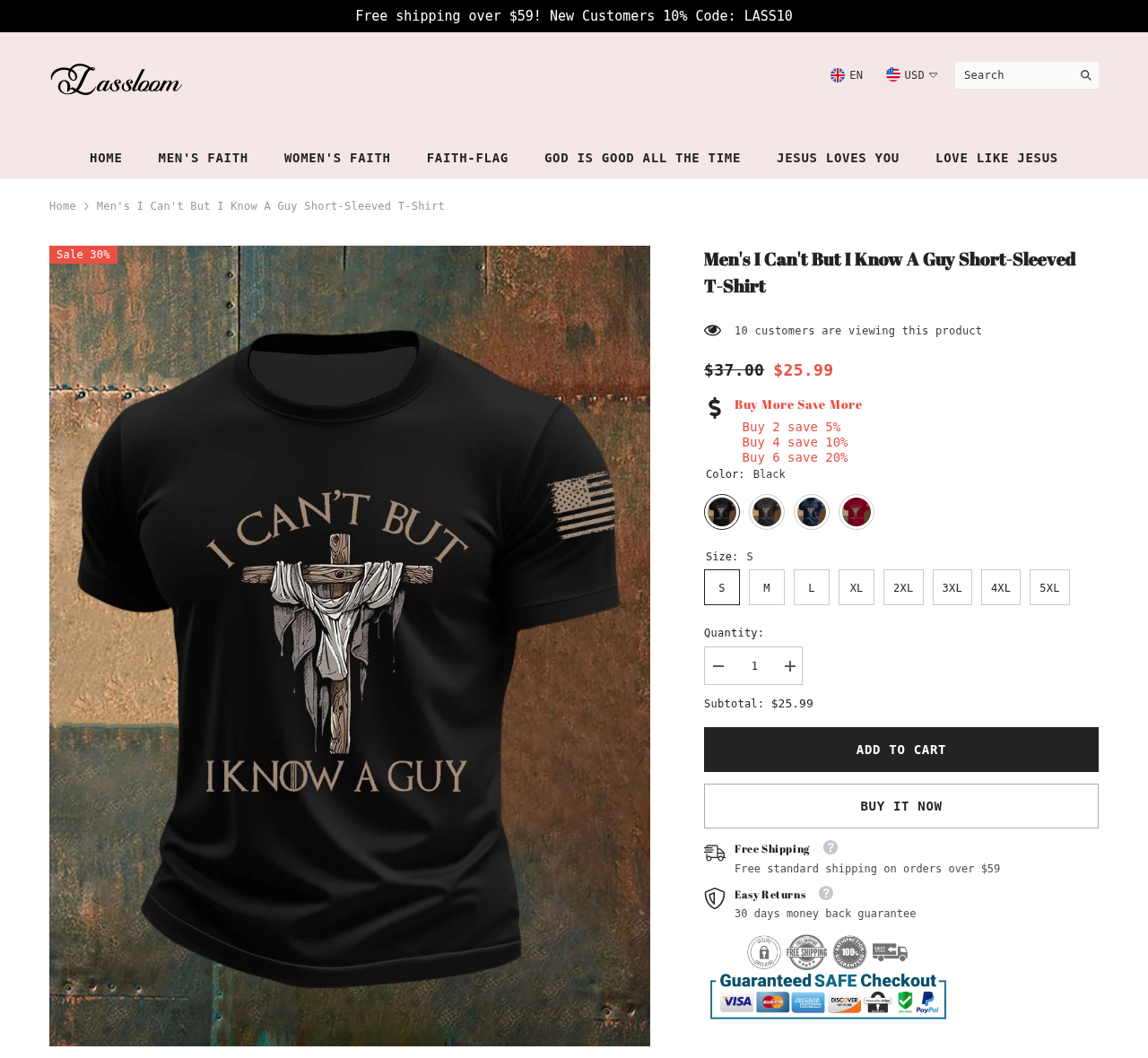
Lassloom.com is a Shopify store selling faith-themed clothing: graphic T-shirts, hoodies, tops and caps with crosses, flags and slogans such as “I Can’t But I Know A Guy.”
The catalog is huge and constantly refreshed.
Shopify’s store data counts about 4,500 published products, with new designs added in the past two weeks. Nine in ten cost between $20 and $40.
Nearly every product shows a higher “compare at” price beside the sale price. The typical markdown is about 40%, so the discount is normal pricing, not a limited event.
What Buyers and the Store’s Pages Show
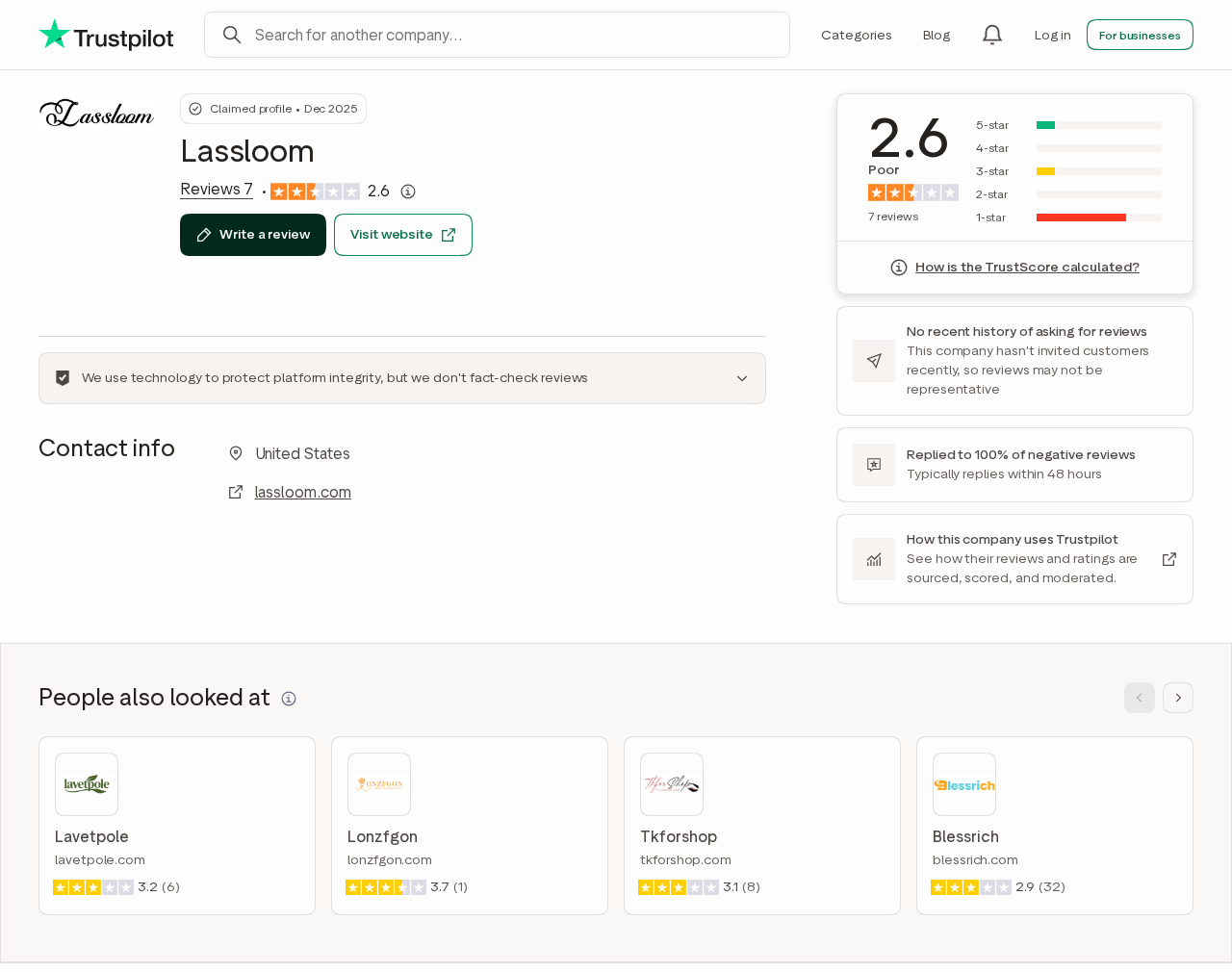
Lassloom’s Trustpilot page has seven reviews and a 2.6 “Poor” score.
Five are one-star reviews describing wrong sizes or colors, a mismatched cut, clothing unlike the photos or a missing order.
Its pages also contradict each other on returns. Product pages promise a “30 days money back guarantee,” while the actual refund policy allows returns within 14 days of purchase.
The terms name WS Trading Company Ltd. in Colorado, but Shopify’s public store data lists the shop’s location as Hengyang, Hunan, China. Its carriers handle parcels from China.
Our Verdict
Lassloom is a real store that does ship clothing, but it’s a risky place to order.
Don’t buy from Lassloom unless you’re willing to accept sizing problems and a difficult return.
- Buyers report sizes far off the chart, mixed-up orders and products that look cheaper than the photos.
- The 30-day guarantee on product pages clashes with a 14-day policy that deducts return shipping.
- The “customers are viewing” counter and “recently bought” pop-up come from fixed lists in the page code.
- The Colorado company in its terms has an F rating at the BBB, with three unanswered complaints.
- If you already ordered, document everything and keep your card dispute deadline in mind.
Lassloom Apparel Reviews: What Buyers Report
Lassloom has a small but consistent review trail. Its Trustpilot profile shows seven reviews from the past year: five one-star, one three-star and one five-star.
Most complaints describe fulfillment problems rather than missing parcels. One buyer ordered four shirts in black, blue and red and received four black shirts in the wrong size.
Another ordered a men’s shirt and got a women’s cut.
A third said every shirt arrived about three sizes smaller than labeled, after weeks of silence, and was offered a refund of half the cost.
A May 2026 reviewer said a sparkly top looked nothing like the photos.
Asked for a return, the store said shipping would cost more than the item and offered 20% off a future order.
One reviewer outside the US said orders placed more than six months earlier never arrived. The single positive review, from December 2025, said a small problem was resolved.
That is a change from our August 2025 report, which warned that buyers might receive nothing at all. Orders now do arrive in most reviews, but often with costly mistakes.
Lassloom replies to every negative review with the same request to email service@lassloom.com.
Trustpilot also notes the company hasn’t invited customers to review recently, so the sample may not be representative.
How Lassloom Sells Its Faith Apparel
Step 1: Facebook Ads From “Lassloom Apparel”
Meta’s Ad Library shows an ad from a Lassloom Page, which displays 114,704 likes, running since June 30, 2025, about a month after the domain was registered.
A newer ad started on September 15, 2026.
That ad pairs a glowing cross-and-lion design with an emotional message about storms and unanswered prayers, then sends readers to Lassloom’s men’s faith collection through a “Shop now” button.
Its hashtags, such as #WayMaker and #FaithOverFear, make it read like a devotional post, which helps it blend into Christian feeds rather than look like an ad.
Step 2: Permanent Sale Prices
Product pages show a red “Sale 30%” badge and a struck-through price.
The featured cross shirt drops from $37.00 to $25.99, with extra savings for buying two, four or six items.
Those bundle discounts are 5%, 10% and 20%. They reward bigger orders, which also multiplies the cost of a sizing mistake under a strict return policy.
Because every product carries a higher compare-at price, the “sale” is effectively the regular price. It creates urgency without telling you what the shirt normally sells for anywhere else.
Step 3: Pressure Widgets Built Into the Theme
A small eye icon says how many “customers are viewing this product.”
The number comes from a fixed list of 18 values in the page code, from 30 to 283, that rotates every few seconds.
A “Someone recently bought a” pop-up works the same way.
It cycles through nine preset products with preset times such as “10 minutes” or “2 hours” ago, rather than reporting real orders.
The home page adds a “1,000,000 Shirts Sold” banner. Nothing on the site supports that figure, and the domain was only registered in May 2025.
The catalog itself hints at how it is built.
Twenty-three products still list “gracestitchs” as their vendor instead of Lassloom. That vendor field names another Shopify clothing store, Gracestitchs, a sign that some listings came from another store’s catalog.
Step 4: Overseas Shipping and Processing Time
The shipping policy names 4PX, YunExpress, Wanb Express and UBI as carriers, cross-border services commonly used for parcels from China. Processing takes three to seven days.
Standard shipping costs $7.99 and express $13.99, with free delivery over $59. The same page still carries an old COVID-19 statement warning of delays.
The policy never gives a delivery estimate in days, only the processing window. Combined with overseas transit, that leaves buyers guessing when a shirt will arrive.
Step 5: Returns Run Through Customer Service
There is no return address on the site.
You must email customer service to get one, and the terms warn that the Colorado address they list is “not a return address.”
That gives the store control over each return, and it fits the one review describing return shipping that would cost more than the item.
Lassloom Timeline
The store’s public footprint is short, which matters when you weigh its “1,000,000 Shirts Sold” banner:
- December 19, 2023: WS Trading Company Ltd., the company named in Lassloom’s terms, starts business, according to the BBB.
- May 26, 2025: the current lassloom.com registration begins.
- June 30, 2025: a Lassloom Facebook ad starts running.
- December 2025: the Trustpilot profile is claimed, and the first review appears.
- April to August 2026: one-star reviews describe sizing errors, wrong items, a missing order and a return discouraged with a discount offer.
- September 15, 2026: a new Lassloom ad starts running.
- Late October 2026: new Christmas-themed designs are still being added.
Lassloom Return Policy: 30 Days or 14?
The product pages promise “Easy Returns” with a 30-day money back guarantee. Their pop-up offers a full refund on most new, unopened items returned “within 30 days of delivery.”
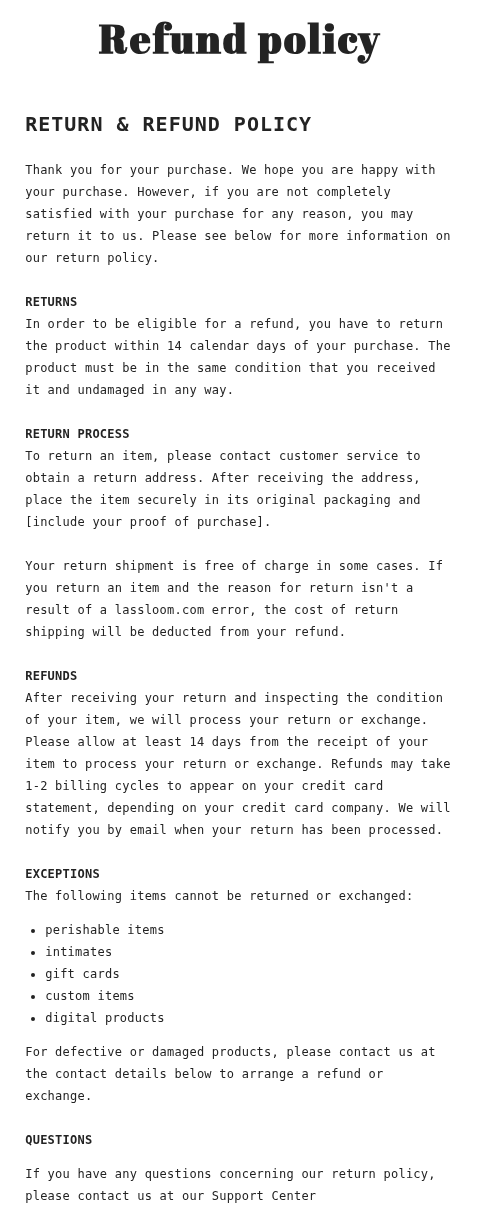
The actual Return & Refund Policy is stricter. You must return items within 14 calendar days of purchase, in the same condition, after asking customer service for an address.
If the return isn’t caused by a Lassloom error, the return shipping cost comes out of your refund.
Refunds then take at least 14 days to process and one to two billing cycles to appear.
For a shirt shipped from China, 14 days from purchase may pass before the parcel even arrives.
The site’s FAQ gives a third version, a return request within 14 days of delivery. Plan around the strictest one, 14 days from purchase.
The policy also excludes “custom items” from returns without saying which products count as custom. Ask before ordering if a design is printed to order.
Who Runs Lassloom?
A Colorado Company Name, a Chinese Store Location
The terms of service name “WS Trading Company Ltd. (Colorado)” at 6161 S Syracuse Way, Suite 320, Greenwood Village, Colorado. No other company is named.
Shopify’s public store data for lassloom.com lists the shop’s city as Hengyang, in China’s Hunan province.
Country alone doesn’t make a store unsafe, but it explains the shipping times and return costs.
Lassloom’s claimed Trustpilot profile lists its location as the United States, which doesn’t match the Hengyang location in Shopify’s store data.
The Same Company Named on Walkbyfaiths
Walkbyfaiths.com, a similar Christian clothing store, names the same WS Trading Company Ltd. and the same Greenwood Village suite in its terms.
Its Shopify data also lists Hengyang, Hunan as its location.
On Trustpilot, Walkbyfaiths has a 2.3 score from 38 reviews. Shared company details point to one operator or one shared setup across both stores.
Trustpilot’s suggested stores aren’t necessarily related. Blessrich, a general goods store shown beside Lassloom, names a Lithuanian company in its terms instead.
An F Rating at the BBB
The BBB profile for WS Trading Company Ltd. lists the Greenwood Village address, a Denver address and a start date of December 19, 2023, under religious goods.
The BBB rates it F and lists four complaints, citing failure to respond to three of them. The profile links to a different store, boutiquecloths.com, rather than to Lassloom.
The BBB profile doesn’t mention Lassloom, so those complaints may concern another store. The rating still tells you how the company named in Lassloom’s terms handles disputes.
Email Support and a UK Phone Number
Lassloom lists two email addresses, service@lassloom.com and las@lassloom.com. Its Contact Us page also gives a UK phone number labeled “Available 24/7.”
The same page lists business hours that close on Sundays, which contradicts the 24/7 label, and asks customers for their own phone number and city.
Even if you call, put every request in writing by email and keep the replies, because written messages are your evidence in a dispute.
If You Still Want to Order a Lassloom Shirt
Some buyers do receive shirts they like. If a design appeals to you anyway, a few precautions cut the risk considerably.
- Order one item first instead of a four- or six-shirt bundle, so a sizing mistake costs less.
- Compare the size chart with a shirt you already own, measured flat, and size up if you’re between sizes.
- Pay with PayPal or a credit card, which the store accepts, rather than a debit card. Both offer stronger dispute options.
- Skip the three-installment option the FAQ advertises if it adds another company between you and a refund.
- Screenshot the product page, including the price, the size you chose and the 30-day guarantee, before you check out.
- Note that customer service lists weekday and Saturday hours but no time zone, so allow time for replies.
How to Spot Risky Online Clothing Stores
Faith apparel is a crowded niche, and many stores share templates, carriers and policies. Our reviews of FaithBlessedWear and FaithGuideWear cover similar shipping and return questions.
Our Faith Wardrobe reviews and complaints report shows how a small review trail can still reveal a pattern before you order.
Fraudulent shopping websites often share common patterns that make them easier to detect once you know what to look for. Before entering personal information or making a payment, take a few minutes to check for these warning signs:
- Unrealistic prices and discounts
If a website offers products at prices far below trusted retailers, it’s often a red flag. Many of these sites advertise luxury or high-demand products at massive discounts to create a sense of urgency. A $300 product listed for $49.99 should immediately raise suspicion. - Recently registered or suspicious domain names
Many fraudulent websites operate on newly created domains that disappear after a few weeks. Look for signs like random characters in the URL, misspellings of well-known brands, or hyphenated domains.
You can check a site’s age with a WHOIS lookup, or run it through our free Scam URL Scanner. - Missing or vague company details
Legitimate businesses clearly display their company name, tax information, phone numbers, physical address, and return policies. Fraudulent sites often provide incomplete, fake, or no company details at all. A lack of verifiable contact information is a major warning sign. - No reliable customer service
Real businesses provide clear ways to contact support—email, phone, live chat, or physical return addresses. Fake stores often list nonfunctional contact forms, invalid phone numbers, or reply with generic automated messages. - Poor website quality and structure
Many fake stores are set up quickly with low-effort templates. Look for poor grammar, spelling errors, low-resolution product images, broken links, or missing legal pages (Terms of Service, Privacy Policy, Return Policy). A sloppy website often signals something isn’t right. - Copied product descriptions and images
Fraudulent sites often lift product listings directly from real retailers or marketplaces. If you reverse image search a product photo and find it on multiple unrelated websites, the listing is likely not original. - Lack of credible reviews or suspicious review patterns
A real store will usually have a mix of customer reviews across different platforms. Warning signs include no reviews at all, obviously fake five-star reviews, or multiple identical reviews posted on the same day. Searching “[website name] reviews” or “[website name] scam” on Google often reveals warnings from other consumers. - Unclear or unfair return and refund policies
Fake stores often use vague language around returns and refunds—or avoid the topic entirely. If you can’t easily find clear instructions for how to return an item or get a refund, proceed with caution. - Aggressive urgency and pressure tactics
Fraudulent websites commonly use fake scarcity (e.g., “Only 2 left in stock!”) or countdown timers (“Sale ends in 10 minutes!”) to push you to buy before you think it through. Legitimate stores don’t rely on fabricated urgency to make sales.
Quick Steps to Verify a Website’s Legitimacy
Before entering payment or personal details on a new shopping website, take a few simple precautions:
- Search for the store’s name along with words like “reviews” or “complaints” on Google and Trustpilot.
- Check the website’s domain registration using Whois.com.
- Use trusted tools to scan for malicious or fraudulent links:
- Malwarebytes ScamGuard – detect scams and unsafe links before they reach you on Android and iOS phone.
- Malwarebytes Browser Guard – block dangerous or fake websites on Windows and macOS browsers.
- Verify the business address on Google Maps to ensure it’s a legitimate location.
- Review the store’s accepted payment methods – credit cards and PayPal are traceable and safer than cryptocurrency or bank transfers.
- Trust your instincts; if something feels off, it’s better not to proceed.
How to Spot Similar Scams on Social Media
Many fraudulent shopping websites rely heavily on sponsored social media ads to draw in large numbers of potential buyers. These ads often promise extraordinary discounts—sometimes up to 90% off—and use emotionally charged language to push users into buying immediately.
They frequently appear on Facebook, Instagram, and TikTok, blending in with legitimate content. However, these ads follow predictable patterns that make them easier to identify once you know what to look for.
Spotting Fraudulent Facebook Ads
Facebook’s advertising platform is a favorite tool for fake online stores because of its massive reach. These ads often feature “unbelievable” offers designed to create urgency and bypass critical thinking. Warning signs include:
- Extreme, unrealistic discounts such as “90% OFF,” “Store Closing Sale,” or “Final Liquidation.” Real retailers rarely discount new products this aggressively.
- Poor grammar, awkward phrasing, or inconsistent language throughout the ad or website, indicating low-effort, mass-produced content.
- Generic stock photos or images with watermarks, suggesting the images were taken from legitimate brands or stolen from other sources.
- Recently created Facebook Pages, which is common for temporary fraudulent campaigns. Check the “Page Transparency” section to see when the page was created.
- Limited or no engagement from real customers. Authentic brands usually have reviews, comments, and visible user interaction.
If an ad raises doubts, search for reviews of the website or reverse image search the product photos to see if they’re copied from elsewhere. Never provide payment information until the site is verified.
Spotting Fraudulent Instagram Ads
Instagram is another major platform used to promote fake shopping sites through eye-catching visuals and short-lived “flash sale” captions. Warning signs to look for:
- New or disposable accounts with few posts and followers, often created just weeks or days before launching ads.
- Lack of tagged users in product posts. Legitimate stores often feature real customers, influencers, or product usage.
- Unsecured checkout pages. If the website linked in the bio does not use HTTPS, do not enter payment information.
- Fake or missing customer reviews. Fraudulent stores rarely have authentic purchase feedback.
- Unclear or restrictive return policies, often hidden or written vaguely to make refunds difficult.
When in doubt, search for independent reviews before buying, and only enter payment details on verified, secure websites.
Catching Fake TikTok Ads
TikTok is increasingly used to promote questionable shopping deals through short, persuasive videos. While many ads look polished, the same red flags apply:
- Links to unknown stores that don’t appear in search results or have no external reputation. Many of these sites are temporary and disappear after a short time.
- No verification badge on the TikTok account. While not every legitimate store is verified, the lack of a badge is one more indicator to check further.
- Aggressive countdown timers or “one-day only” promotions designed to rush decision-making.
- Lack of genuine customer reviews or real user content demonstrating the product in actual use.
- Comment sections filled with complaints or warnings from other users. This is often the first place victims speak up.
TikTok scams often rely on impulse buying. Take a moment to verify the website, read independent reviews, and use trusted browser protection before visiting external links.
What to Do If You Ordered From Lassloom
- Write to service@lassloom.com right away with your order number, photos of the item and its label, and the size you ordered. Keep every reply.
- Quote the “30 days money back guarantee” from the product page if you are past 14 days. Save a screenshot of that product page as evidence.
- Don’t ship anything back until you have a written return address and confirmation of who pays postage. Use tracked shipping and keep the receipt.
- If a refund doesn’t arrive or the item clearly differs from the listing, contact your card issuer or PayPal about a dispute for item not as described or not received.
- Card disputes often must be filed within about 120 days of the charge. PayPal disputes close 180 days after payment, so that window has passed for 2025 orders.
- Ignore anyone offering to recover your money for a fee. Check any refund only inside your own bank or PayPal account.
- US shoppers can report a seller that doesn’t honor its stated terms to the FTC at ReportFraud.ftc.gov. Elsewhere, use your national consumer authority.
Frequently Asked Questions
Is Lassloom legit?
Lassloom is a real Shopify store that ships clothing, but buyers report wrong sizes, mixed-up orders and hard returns. Its 30-day promise and 14-day policy contradict each other.
Where does Lassloom ship from?
The store’s Shopify data lists Hengyang, Hunan, China, and its shipping policy names Chinese cross-border carriers such as 4PX and YunExpress.
Expect processing of three to seven days plus international transit.
What do Lassloom apparel reviews say about sizing?
Three of seven Trustpilot reviewers report wrong or off sizes, one with shirts about three sizes smaller than labeled. A fourth received a women’s cut instead of a men’s.
Can I return a Lassloom shirt?
Yes, but only by emailing for a return address, within 14 days of purchase under the policy. Return shipping is deducted unless the store made the error.
Who owns Lassloom?
Its terms name WS Trading Company Ltd. in Greenwood Village, Colorado. Walkbyfaiths.com names the same company in its terms, and the BBB rates that company F.
Are the Lassloom “customers viewing” numbers real?
No. The viewer count cycles through a fixed list of numbers in the page code, and the “recently bought” pop-up repeats preset products and times.
The Bottom Line
Don’t buy from Lassloom if correct sizing and an easy return matter to you.
The reviews show repeated order mistakes, and the store’s own return terms are stricter than its product pages suggest.
If you already ordered, email the store with photos and keep screenshots of the 30-day promise. If the store stalls, open a card or PayPal dispute before your deadline.
This article is for informational purposes only and should not be relied upon for financial or business decisions. We identify potential scams using research, user experiences, and expert analysis. However, all claims should be independently verified. Mistakes may occur, and legitimate products could be flagged. We strive for accuracy but make no warranties regarding the completeness or reliability of the information.

If you are the owner of the website or product in question and wish to offer clarifications regarding your business or website, please reach out to us via our Contact form.

Join the discussion
0 commentsShare your experience or ask a question about this article.
Discussion
Start the conversation
Have a question or something useful to share? Add the first comment.