

After losing money online, an offer of legal help can feel like the first solid ground in weeks. A polished website makes that offer even harder to dismiss.
Cyber Law Solution Ltd presents exactly that kind of invitation. Before sending documents or discussing a case, there are several details worth checking.
Overview
What the website offers
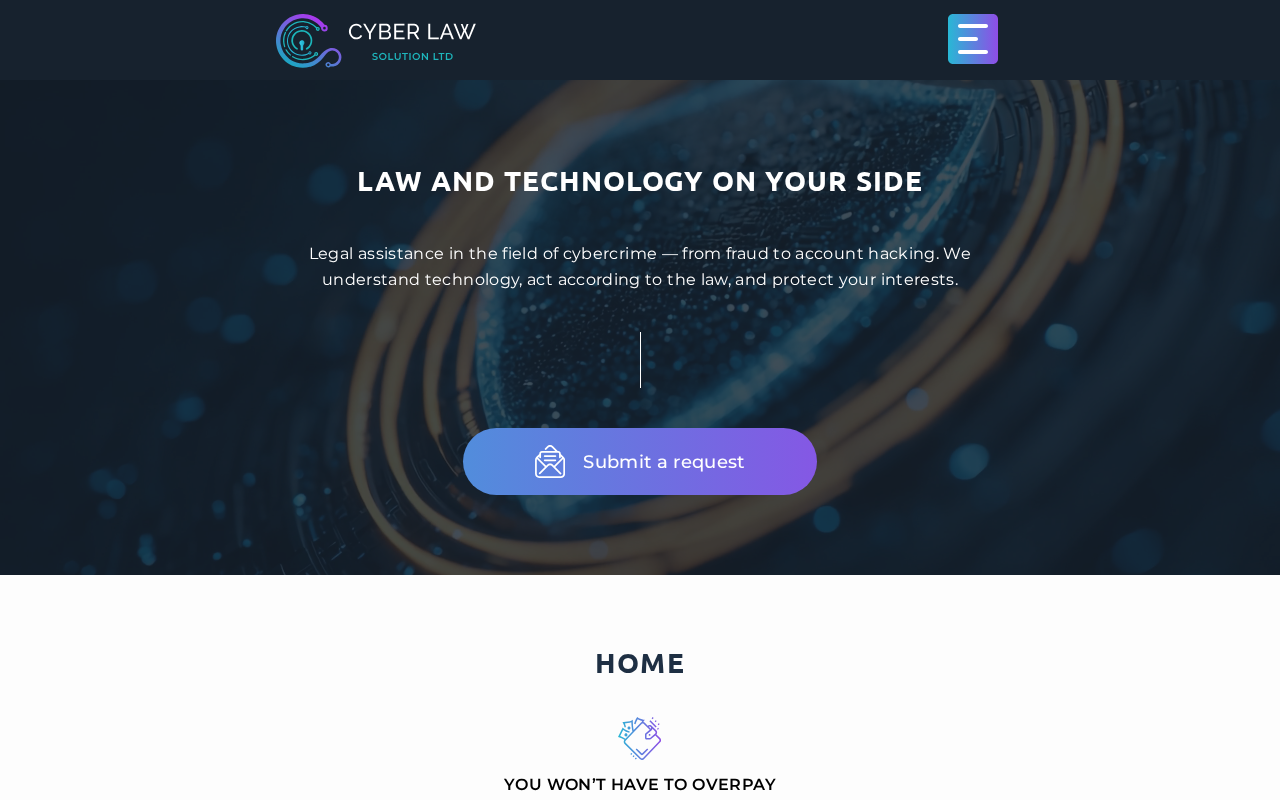
Cyber Law Solution Ltd’s website says it helps people with cybercrime, fraud, account hacking, and related legal problems. It invites visitors to submit a request.
The site uses a professional design, a Stockport location, testimonials, a phone number, and a company registration number. Those details can make it appear established.
A person who has already lost an investment may find the promise especially appealing. Recovery is difficult, and a legal-looking answer can seem more credible than another sales pitch.
What the regulator found
On September 24, 2026, the UK’s Solicitors Regulation Authority warned about the website, an email, and a stamped legal-services agreement.
The SRA says the website falsely offers legal services under the Cyber Law Solution Ltd name. It does not authorize or regulate a firm by that name.
That is a direct regulatory finding about the legal-service presentation. It is not merely a low trust score, a suspicious design, or an unhappy customer review.
What remains unproven
The alert does not disclose how much, if anything, an individual visitor paid. It does not identify the website operator or document a completed recovery.
Our live review found that the website remained reachable. Its footer displayed UK company number 15552672, which led to an important registry result discussed below.
- The SRA identifies the legal-services claim as false.
- The site still invites visitors to submit a request.
- A company number on a site does not establish authorization to practice law.
- Anyone considering a recovery service should verify the professional and the payment arrangement independently.
This investigation concerns the particular website and communications named in the SRA alert. It does not mean every cybercrime lawyer or recovery adviser is fraudulent.
Why the Offer Can Feel Convincing
People often look for a recovery specialist after a bank, exchange, or police report fails to bring money back quickly. That gap creates a vulnerable moment.
Some firms genuinely help victims organize evidence or pursue civil claims. The existence of legitimate help makes imitation easier, because the service category sounds plausible.
Cyber Law Solution Ltd’s homepage borrows the language of both law and technology. It talks about cybercrime, digital safety, and protecting clients’ interests.
The page presents a four-stage process: leave a request, receive a call, sign an agreement, and begin work. That ordinary sequence can quiet a visitor’s doubts.
It also says an initial consultation is free and that costs are discussed later. A free first conversation can reduce hesitation before more sensitive information changes hands.
None of those features proves a firm is legitimate. A website can describe a sensible legal workflow without employing an authorized solicitor to deliver it.
The SRA has seen a stamped agreement sent to a member of the public. A stamp and formal title may feel official, but they do not replace regulator verification.
The same applies to testimonials. The site displays favorable stories, yet we found no independent evidence establishing that those accounts reflect real client outcomes.
This distinction matters. The concern is not simply that the website looks generic. It is that the legal regulator specifically warns against the represented service.
How the Cyber Law Solution Ltd Recovery Scam Works
Step 1: A person seeking help encounters the offer
The entry point may be the site itself, a direct message, or a referral. The SRA documented a website, an email, and an agreement, not a single universal route.
What these routes share is the appeal to someone worried about a cybercrime or missing investment funds. The visitor is offered professional-sounding assistance.
If a stranger contacts you after a previous loss, ask how they obtained your details. Victims’ names and contact information can circulate through breaches or fraud networks.
Step 2: The website creates a legal identity
The site names Cyber Law Solution Ltd and describes lawyers, legal protection, and signed contracts. A company number appears near its contact information.
Many readers understandably interpret a UK company number as proof of legitimacy. In reality, incorporation and legal practice are different checks.
A person can register a company without being authorized as a solicitor. The SRA’s register, not the company number, is the relevant professional check.
Step 3: The contact channel moves the conversation forward
The SRA alert lists a phone number, email, and Stockport address used in the materials it reviewed. An email also described a named person as a senior lawyer.
The live website showed a different support email in its footer during our review. That variation is another reason to preserve exact screenshots and correspondence.
Do not assume every address or number in the site’s materials belongs to the same entity. Treat each as a claimed contact point until independently confirmed.
The site invites a request, and its process promises a later consultation. That can draw out a victim’s financial history, identity documents, or account information.
Step 4: A formal agreement makes the service seem settled
The SRA saw a stamped document titled as an agreement for legal services. Formal formatting can make a recipient feel that professional checks are already complete.
In a genuine instruction, you should be able to identify the regulated firm, the responsible solicitor, the scope of work, the fees, and the complaints procedure.
Here, the regulator says it does not authorize the named firm. A contract cannot cure the absence of authorization or prove that recovery is possible.
Do not sign solely because the document is stamped or refers to a company number. Verify the firm through a separate regulator search first.
Step 5: Payment or information could deepen the loss
The warning does not establish a specific fee request or a confirmed payment by every recipient. Still, legal-service solicitations can expose both money and sensitive case files.
Someone handling a previous fraud may possess bank records, wallet addresses, identity documents, and police reports. Giving those to an unverified party creates additional risk.
If a claimed recovery professional asks for an advance transfer, wallet access, a seed phrase, or a payment to release funds, stop. Those requests require independent scrutiny.
No genuine lawyer needs your crypto seed phrase to assess a legal claim. Sharing it would allow another person to control the wallet directly.
Company and Address Checks Behind the Legal Claim
The company number points to a dissolved company
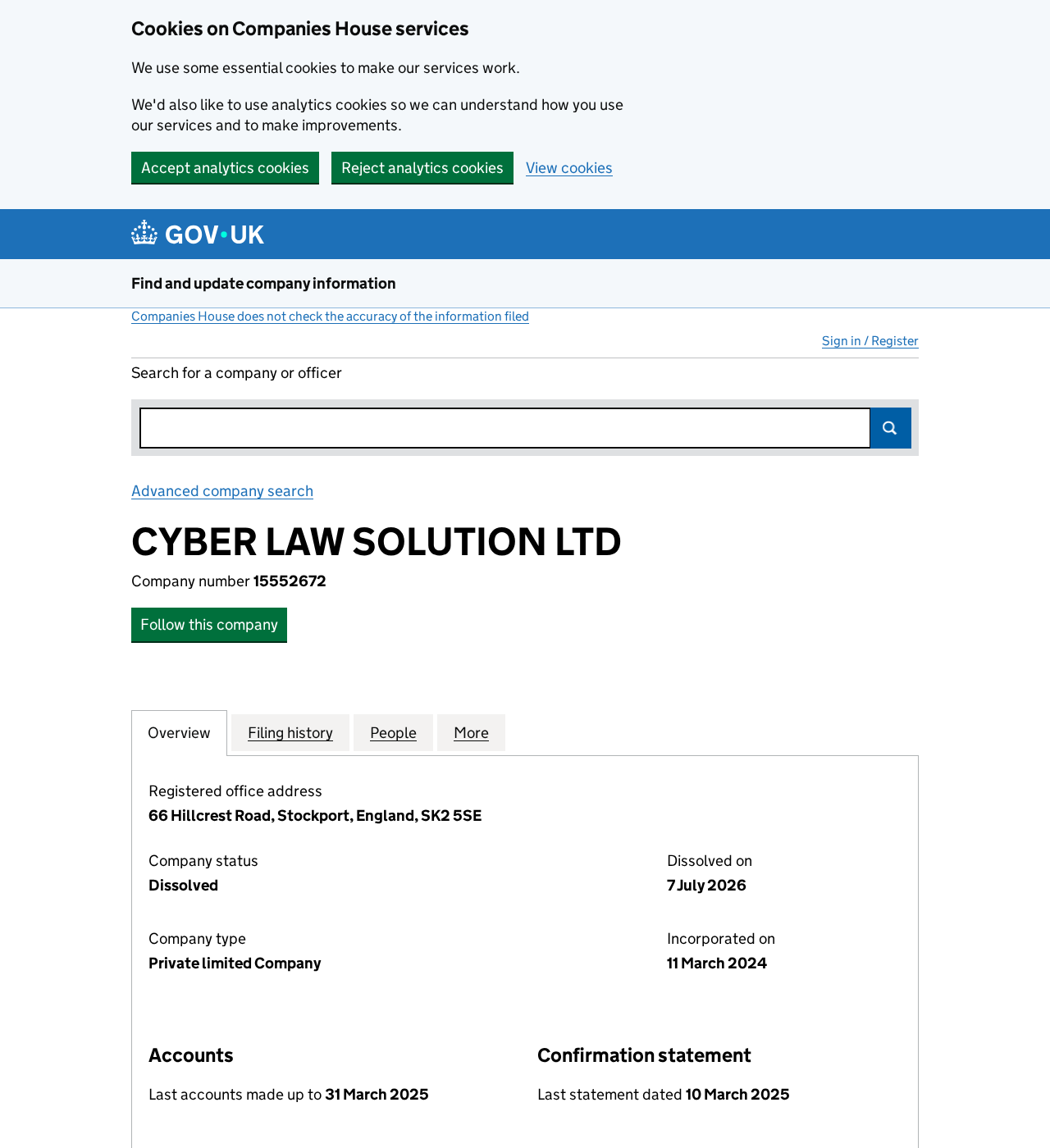
The site’s footer listed company number 15552672 when we checked it. The UK Companies House record identifies that number as Cyber Law Solution Ltd.
The register says the company was dissolved on July 7, 2026. The website was still reachable during our September 28 review.
That mismatch is significant, but it does not tell us who currently operates the website. A public company record cannot identify a site’s controller by itself.
It does mean that a company number on the page should not be treated as proof of a currently active company or a regulated law firm.
The address does not settle the question
The SRA lists an address written as Tiviot Dl, Stockport SK1 1TB in the materials it reviewed. Companies House lists 66 Hillcrest Road, Stockport SK2 5SE.
Different addresses can have innocent explanations, including office moves or correspondence services. They are not proof of wrongdoing on their own.
But a prospective client needs a reliable location for documents, complaints, and identity checks. Ask which address belongs to the responsible professional.
If the answer shifts between a website, agreement, email signature, and public register, pause until the discrepancy is explained in writing.
The support details deserve separate checks
The SRA’s observed materials used support@cyber-law.uk and a phone number ending 388. Its alert also describes an email signature with another phone number.
Our live page displayed support@law-cyber.uk in the footer. A changed address is not automatically malicious, but it complicates the identity trail.
Do not test authenticity by calling only the number on a questionable page. That merely asks the same source to vouch for itself.
Use the regulator’s register or an independently verified record to locate the responsible firm. If none appears, do not send money or documents.
Registration is not professional authorization
Companies House records company existence and filings. The SRA decides whether a solicitor or firm is authorized and regulated in England and Wales.
The company record lists “Solicitors” among its business classifications. A classification entered in a company filing is not an SRA license.
Think of these records as answering different questions. One records company filings; the other tells you whether the advertised legal professional may practice.
This is the crucial distinction the site blurs for an ordinary visitor. A number can be real while the advertised legal status is not.
The SRA explicitly says it does not regulate Cyber Law Solution Ltd. That direct statement outweighs website badges, testimonials, and the company’s old registration.
How to Verify a Recovery Lawyer Without Relying on Their Website
Start with the SRA Solicitors Register. Search the exact firm name and the individual who says they will handle your case.
Check whether the regulator shows an active authorization, a practice address, and a matching contact channel. A close name is not enough.
Ask for a written engagement letter that identifies the regulated firm and describes the work. Compare it with the register before signing or paying.
Be especially wary of a promise to recover cryptocurrency through a special blockchain procedure. Legal claims and blockchain transfers are not the same process.
A lawyer may advise on tracing, reporting, or litigation. No private party can simply reverse a blockchain transaction because its website says it can.
Also ask what happens if recovery fails. A credible professional can explain fees, uncertainties, and limitations without guaranteeing a result.
If you were first contacted unexpectedly, consider why that person knows your loss amount. Repeated targeting after a fraud is a common reason to slow down.
A real adviser should welcome that pause. Pressure to sign immediately or keep the conversation private is a reason to walk away.
Independent verification takes minutes, but it changes who controls the conversation. You are no longer judging a company solely through materials it created.
What to Do if You Have Fallen Victim to This Scam
- Stop the conversation and preserve the record. Save the website address, emails, signed agreement, chat history, receipts, wallet addresses, and exact phone numbers.
- Contact your bank or card issuer immediately if you paid. Explain that the legal-service representation was flagged by the SRA and ask about reversals or disputes.
- Secure any accounts you exposed. Change passwords through the real provider’s website, revoke unfamiliar sessions, and replace wallet credentials if you shared a seed phrase.
- Warn the original fraud investigator or platform. If you sent police reports or exchange correspondence, tell those organizations that a third party received copies.
- Report the approach to the SRA and police. Include the document and exact contact details so investigators can distinguish this case from similarly named firms.
- Be careful with follow-up recovery offers. Anyone promising guaranteed reimbursement for another fee may be attempting a second round of loss.
If you opened an attachment or installed software at someone’s request, scan the device with Malwarebytes. An ad blocker such as AdGuard can reduce exposure to malicious promotions.
Neither tool reverses a payment or replaces a bank report. The immediate priorities are to protect your money and stop unauthorized account access.
Frequently Asked Questions
Is Cyber Law Solution Ltd authorized as a law firm?
The SRA says it does not authorize or regulate a firm named Cyber Law Solution Ltd. Check the current regulator record before relying on any legal-service claim.
Does its UK company number prove the site is legitimate?
No. Companies House identifies number 15552672, but the record says that company was dissolved in July 2026. Incorporation also does not confer solicitor authorization.
Can the website recover stolen cryptocurrency?
The site advertises cybercrime help, but we found no verified recovery outcome. A lawyer cannot simply undo a blockchain transfer through a private settlement button.
Is a stamped agreement proof that the service is real?
No. The SRA specifically saw a stamped agreement in this case while warning about the false legal-services presentation. Verify the firm independently before signing.
Should I call the number on the site to check it?
Use the SRA register or another independent source instead. A number printed on the questionable page only connects you back to the same claimed service.
What if I only submitted my name and email?
Watch for follow-up calls and phishing. Do not send identity documents, bank statements, wallet credentials, or payment details without a separate professional check.
The Bottom Line
Cyber Law Solution Ltd’s website still presents a route to legal help, but the SRA says the named firm is not authorized or regulated by it.
The company’s listed registration number leads to a dissolved entity. If you need recovery advice, find and verify a professional independently before sharing another piece of your case.








