

A new investment contact appears on Telegram with documents that look ready for signature. The firm name is familiar, and the opportunity sounds exclusive.
The name alone is not the answer. What matters is whether the person, website, and contract belong to the regulated firm they claim to represent.
Overview
The regulator’s specific warning
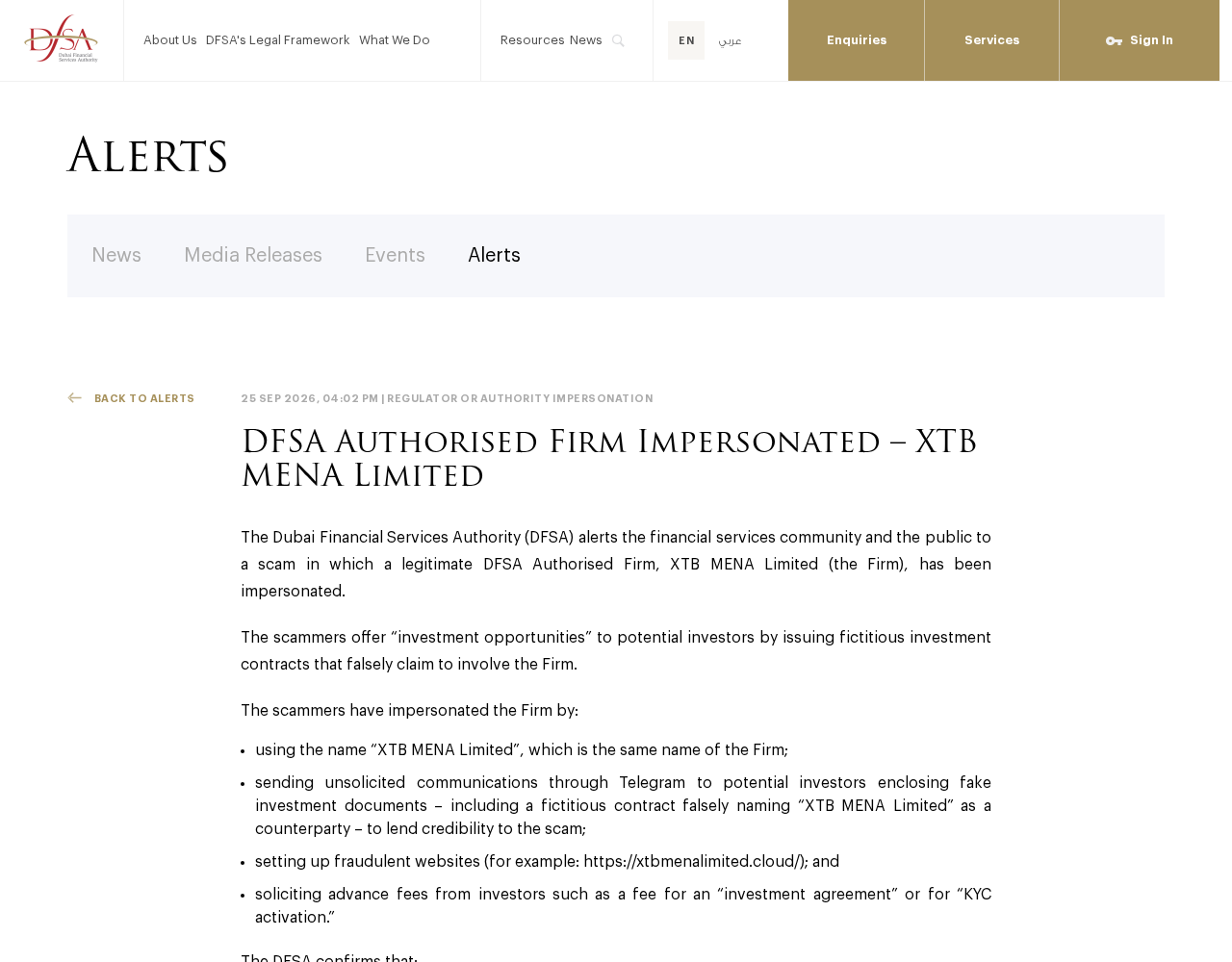
The Dubai Financial Services Authority issued an alert about XTB MENA Limited impersonation on September 25, 2026.
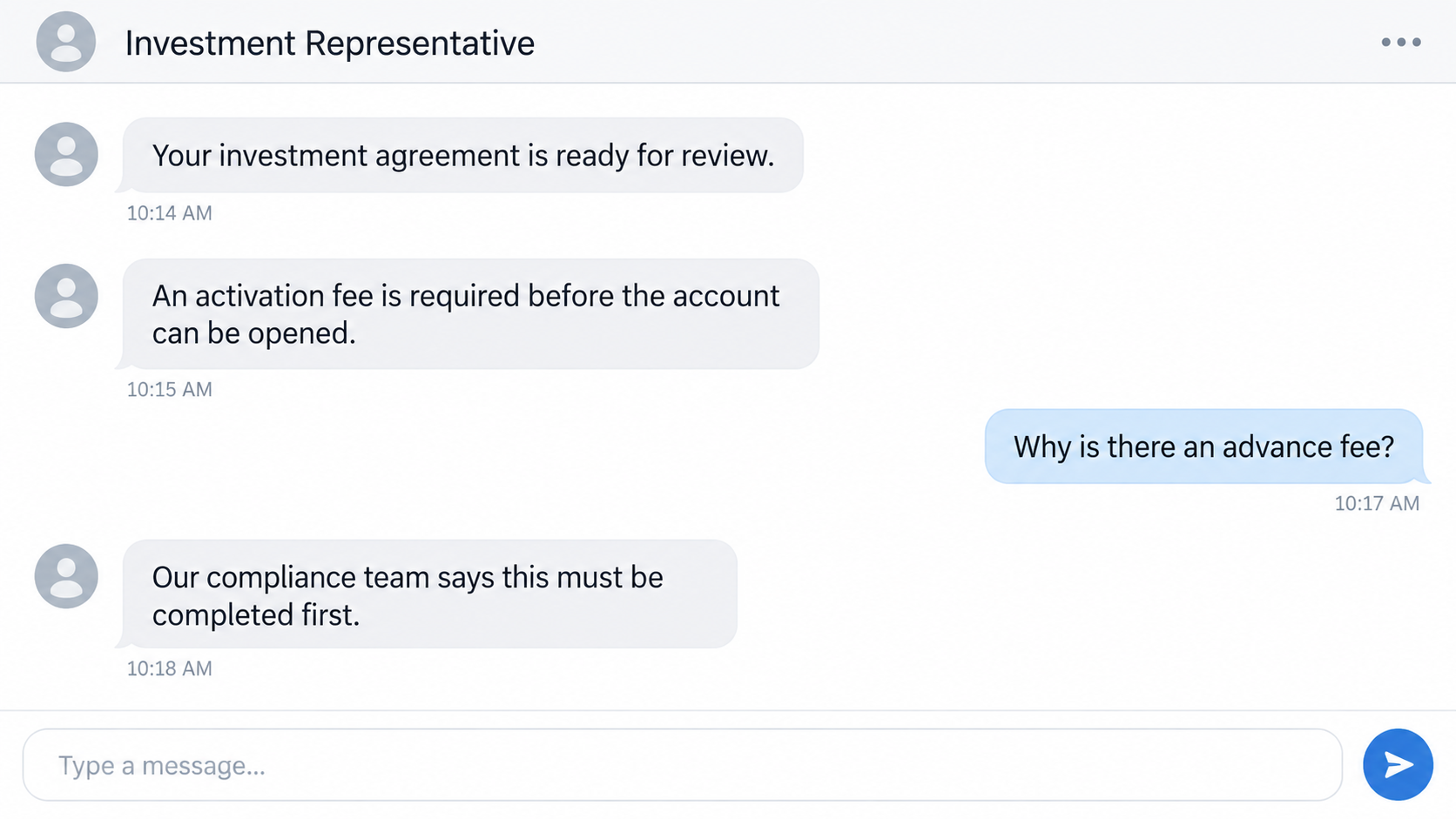
It says scammers approached potential investors on Telegram, sent fictitious investment contracts, used fraudulent websites, and asked for advance fees.
The fees were framed as payment for an investment agreement or “KYC activation.” The DFSA identifies the activity as a scam, not a genuine XTB MENA offer.
The firm and the impersonators are different
XTB MENA Limited is a real DFSA-authorized firm. The warning concerns people who borrowed its name to present false investments.
A contract that names a regulated firm does not make the person sending it an employee. The authority says the scammers falsely made that claim.
Do not assume that the firm endorsed the Telegram outreach, hosted the example site, or would honor a document prepared by the impersonators.
The visible clues
The DFSA gives one example of a fraudulent website: xtbmenalimited.cloud. A familiar firm name inside a domain is not proof of ownership.
It also describes unsolicited Telegram communications and fictitious contracts. Those are the main details a potential investor can check before paying.
- Contact channel: unsolicited Telegram messages to potential investors.
- Claimed backing: XTB MENA Limited, a genuine authorized firm.
- Documents: fake contracts that incorrectly name the firm as counterparty.
- Payment demand: advance “agreement” or “KYC activation” charges.
The public alert does not disclose a total loss figure or identify individual victims. Keep the confirmed warning separate from broader assumptions.
How the XTB MENA Telegram Investment Scam Works
Step 1: Start a private conversation away from the firm’s channels
Telegram makes it easy for a stranger to use a professional display name and reach someone who has shown interest in markets.
The DFSA says potential investors received unsolicited messages through that platform. It does not say they had existing accounts with the genuine firm.
A private chat can feel personal. That familiarity can distract from the missing link between the contact and XTB MENA’s actual communications.
Ask how the representative obtained your details. Then independently contact the firm instead of accepting the answer inside the chat.
Step 2: Use the authorized firm’s name as a shortcut to trust
A regulated name can quiet the usual concerns about an unfamiliar investment. The impersonators used the exact name XTB MENA Limited, according to the DFSA.
They also named the firm as a supposed contract counterparty. That can make the offer look protected by an established institution.
The document is still fictitious. A genuine registration or license applies to the actual firm, not anyone who prints its name on a PDF.
The right question is not “Does XTB MENA exist?” It is “Did XTB MENA issue this contract to me through its authorized process?”
Step 3: Present a website built around the borrowed identity
The DFSA names xtbmenalimited.cloud as an example of a fraudulent site. The address places the firm’s name inside a separate domain.
That site may change or disappear. A new address with similar branding would still need independent verification before any account is opened.
Look past the homepage. A convincing logo and investment language do not establish who controls the domain, receives funds, or operates the platform.
Never verify a site’s legitimacy by calling the number shown on that same site. Find the regulated firm’s own published contact route.
Step 4: Move from conversation to a signed-looking contract
The fake agreement is a bridge between the chat and the payment demand. Its legal formatting may make the investor feel the arrangement is already official.
The DFSA says the contracts falsely claimed to involve the firm. A signature line, reference number, or copied regulatory language cannot overcome that finding.
Before signing anything, ask the real firm to confirm the document identifier, sender, product, and onboarding channel.
If the answer comes only from a Telegram account or the suspect website, the verification has not left the impersonator’s control.
Step 5: Introduce an advance charge as a routine requirement
The DFSA describes fees for an “investment agreement” or “KYC activation.” Those labels make an up-front payment sound like an administrative step.
Know-your-customer checks are real in financial services, which is why the wording can be effective. It does not make this specific fee genuine.
The order is the warning sign: pay first to unlock an opportunity a Telegram stranger says is backed by a regulated firm.
Do not send a small trial payment. It proves only that you can pay, and it may invite a larger request.
Step 6: Keep the promise alive after money is requested
If a payment is made, the impersonator may offer reasons why the contract or funds remain pending. The DFSA alert does not document every follow-up.
What it does confirm is the false association with XTB MENA and the advance-fee demand. That is enough reason to stop.
Do not rely on an account dashboard or screenshot of a balance to prove your money exists. Both can be controlled by the fake operator.
Speak to your payment provider and the real firm using independently found contact information before any further transfer.
Why an Authorized Firm’s Name Does Not Protect This Offer
Regulatory status belongs to a specific entity
The DFSA authorization describes the genuine firm. It cannot be borrowed by a Telegram profile, a lookalike domain, or an unsigned document.
An investor who checks only the name may find a real register entry and stop there. The critical next step is matching the channel.
Compare website domains, email addresses, phone numbers, and the exact investment product with the firm’s independently published information.
Professional documents can be manufactured
Contracts are easy to format. A clause about governing law or compliance may sound impressive, but anyone can type it.
Ask the genuine firm to verify the contract through its own customer service or compliance channel. Do not forward sensitive records to a chat contact.
If the firm cannot find your account or has never offered that product, treat the agreement as unverified regardless of its appearance.
An activation fee is not proof of compliance
The phrase “KYC activation” borrows a real financial-services concept. In this warning, the regulator identifies it as part of the scammers’ advance-fee request.
A demand for money before identity verification or withdrawal should be questioned, especially when the arrangement started in unsolicited messaging.
Ask for the firm’s documented fee schedule through its real website. If the fee exists only in the Telegram conversation, do not pay it.
Practical Checks Before You Invest
Begin with the official DFSA register and the real firm’s contact information. Use those sources to reach the firm, not an advertisement or message link.
Describe the proposed investment without sending your ID. Ask whether the firm recognizes the representative, domain, contract format, and requested fee.
Look closely at the domain. A company name followed by an unfamiliar extension is only a string chosen by whoever registered that address.
If a representative insists the offer is secret or time-limited, ask why a regulated firm would not confirm it through normal channels.
Keep copies of the original messages and documents. If the site changes names, those records can help identify what you were shown.
Do not put additional funds into an account to “verify” a balance or release returns. A legitimate status check does not require trusting a stranger’s payment route.
Questions to Ask the Real Firm
Is this person an authorized representative?
Give the genuine firm the Telegram handle and any name or title the contact used. Ask it to verify that exact person.
A generic answer that the company has advisers is not enough. You need a match to the individual offering the investment.
If the firm cannot identify the person, do not continue the chat while hoping the contract will resolve the uncertainty.
Was this contract actually issued?
Read the document number, product name, dates, and counterparty to the firm’s independently found contact team. Do not send identity documents just to ask.
A legitimate firm should be able to tell whether it created a proposed agreement and whether its terms match an authorized offering.
Remember that the DFSA already calls the reported contracts fictitious. This check protects against new variations using different filenames.
Where would my money go?
Ask who legally owns the destination account and why a fee is demanded before the investment begins. Request the firm’s published fee schedule.
Do not accept an account name merely because it resembles the company. Match payment instructions through the actual firm’s secure process.
If payment is requested in cryptocurrency, ask how the firm documents custody and refunds. A wallet address supplied in chat deserves particular caution.
The Difference Between KYC and “KYC Activation”
Real financial firms may need to verify customers’ identities. That can involve checking documents, sanctions lists, and suitability for certain services.
The term in the DFSA warning is different. The impersonators used “KYC activation” as a reason to seek advance fees.
Compliance vocabulary can make a demand sound obligatory. It should never replace confirmation from the firm that the payment belongs to its process.
A prospective investor should understand what any charge pays for, which entity receives it, and whether it is refundable.
If the only explanation is that the funds cannot be released until you pay, stop and get independent advice.
Why Telegram Makes Verification Especially Important
Messaging handles are easy to change. A profile can display an official-looking logo while having no organizational connection at all.
Forwarded documents can lose context. You may see a polished contract without the ordinary account-opening records that a real firm would keep.
Group chats can add fabricated social proof, with other members claiming they invested successfully. Their messages are not audited performance evidence.
A disappearing account or deleted chat can make later reporting harder. Export or preserve the conversation before confronting the sender.
Most importantly, the DFSA says the outreach in this case was unsolicited. You have every reason to verify it before discussing your finances.
Take a screenshot of the profile header as well as the payment demand. A username may later be changed, while an exported timeline preserves context.
If someone claims a regulator approved the transaction, ask the regulator directly. A firm authorization is not approval of every private investment pitch.
Never let another group member’s testimonial substitute for that check. Anonymous chat participants cannot prove who they are or what happened to their money.
What to Do if You Have Fallen Victim to This Scam
- Stop all new payments. Do not pay another agreement, activation, tax, or release fee while the recipient’s identity is in doubt.
- Contact the payment provider immediately. Explain the DFSA warning and provide transfer details. Ask whether a recall, dispute, wallet trace, or account flag is possible.
- Tell the genuine firm. Use contact information found independently and share the Telegram handle, fake contract, domain, and payment request.
- Secure credentials and devices. Change passwords entered on the suspect site. If you downloaded files or software, scan with Malwarebytes and use AdGuard to reduce exposure to malicious redirects.
- Preserve evidence and report the approach. Export the chat where possible, save screenshots and receipts, and report the impersonation to the DFSA and relevant local authorities.
- Be skeptical of recovery agents. A stranger promising to retrieve investments for another fee may be a second fraud attempt.
There may be no immediate guarantee of recovery, but reporting quickly gives your bank or payment service the best information available.
If you only viewed the site and did not submit information, close it and avoid returning through the Telegram link.
Frequently Asked Questions
Is XTB MENA Limited a fake company?
No. The DFSA identifies a genuine authorized firm being impersonated. The Telegram investment pitch and fake contract are the problem.
Did the real firm send contracts over Telegram?
The regulator says the reported Telegram contracts were fictitious and falsely claimed to involve XTB MENA. Confirm any different claim directly with the firm.
What is wrong with an “investment agreement” fee?
In this case, the DFSA identifies it as an advance fee requested by impersonators. The label does not make the payment part of a genuine onboarding process.
Can a fake website use a real firm’s exact name?
Yes. A domain owner can choose a similar-looking address. Compare the site’s domain with one confirmed independently by the actual firm.
What if the contract includes a regulator reference?
A reference can be copied. Check the firm’s authorization and then ask the real firm whether the specific contract and contact belong to it.
Does the warning say how much investors lost?
No. The public alert describes the method and advance-fee request but does not publish a verified total of losses.
The Bottom Line
The XTB MENA Telegram investment scam borrows a real authorized firm’s name, then uses fake contracts and advance fees to make an unsolicited offer seem official.
Verify the representative, document, domain, and fee with the actual firm before investing. A real name in a chat is not the same as a real offer.








