

A football tournament brings millions of fans together. A token sale claiming to let supporters own a piece of that excitement can sound like a natural extension.
Before buying, look past the countdown and the word “official.” What, exactly, connects the coin to the tournament or team it names?
Overview
Real fan enthusiasm becomes borrowed authority
The Singapore Police Force warned that scammers were marketing fake “Official World Cup Tokens” and fan coins as tournament- or team-affiliated assets.
The warning also covered fake tickets, merchandise, and streaming sites. This article focuses on the token-investment story, which has a different loss pattern.
A visitor may think a familiar event name implies licensing, access, or a credible community. The marketing claim is not proof of any of those things.
Police observed variants where token prices were artificially lifted before sellers dumped their holdings, leaving later buyers with a collapse.
Buying a token is not buying a ticket
Some sites blur the distinction between a digital asset and an actual match experience. They promise presale status, rewards, voting, or exclusive access.
Those benefits need independent verification from the event organizer or named team. A page cannot authorize itself by placing “official” above a purchase button.
The token can exist on a blockchain and still be promoted deceptively. Technical existence does not establish an affiliation or sensible investment value.
Nor does a sports theme change the financial risk. Buyers may be purchasing into a market controlled by a concentrated group of early holders.
The evidence has important limits
The police advisory identifies the scam pattern, not one universal token contract, exchange, website, or loss amount.
- A sale claims official tournament or team association.
- Social promotion encourages fans to buy before a deadline.
- The token may show a dramatic early price rise.
- Early holders sell into demand created by the campaign.
- Later buyers face a sharp fall or an asset they cannot sell.
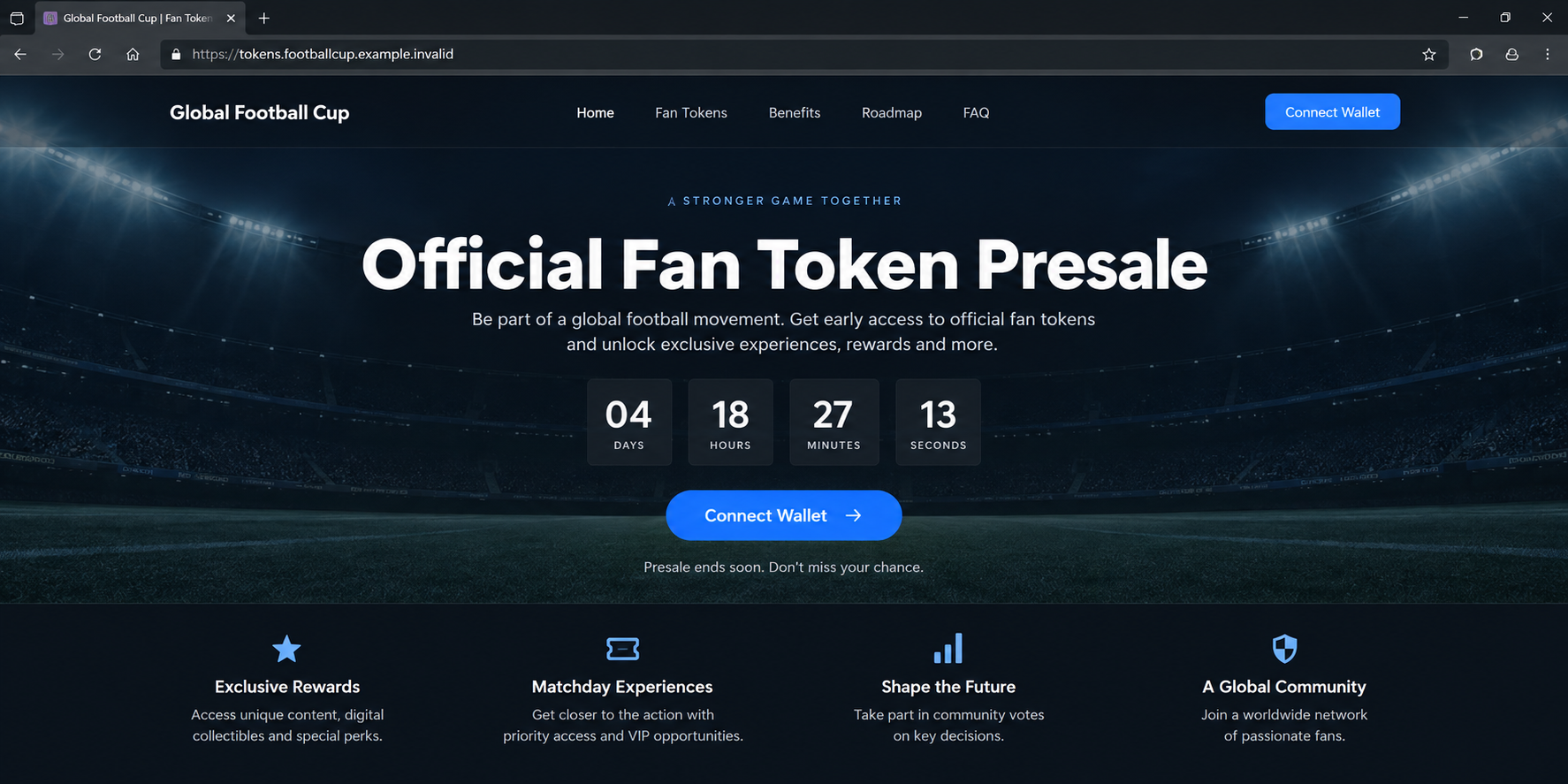
The opening image is a fictional reconstruction. It does not depict a specific token named by police or imply that the pictured site is active.
Why “Official” Is the Most Valuable Word on the Page
Sports supporters already know teams sell licensed merchandise, tickets, hospitality, and digital memberships. A fan coin can therefore fit a familiar commercial story.
The scam adds one word that changes perception: official. It suggests the organizers have reviewed the asset and that purchases support something real.
Yet licensing is a matter of permission and documentation, not typography. A token site needs confirmation from the rights holder, not just its own badge.
Countdown timers make verification feel expensive. A “last chance” banner can persuade a buyer to skip the one check that would settle the claim.
Community language also works well. Buyers are told they are joining other fans, not speculating on a thinly traded crypto asset.
That feeling can be amplified by screenshots of rising prices and chat messages from supposed supporters. Neither establishes the identities behind the token.
Even a real team can authorize some digital products and not others. Do not treat one legitimate partnership as a blanket endorsement of every coin using its name.
How the Fake World Cup Fan Token Scam Works
Step 1: A promotion catches fans during the event cycle
The attacker presents a token as a timely opportunity tied to a major football tournament. The page may invoke scarce allocation or early access.
Police documented World Cup-themed crypto scams but did not identify one fixed advertising route for the fan-coin variant.
It is reasonable to watch for social posts, search promotions, and messaging links, while avoiding claims that every observed buyer came from the same channel.
The first task for a reader is to separate the event’s real popularity from the token seller’s unproven relationship to it.
Step 2: The site claims affiliation it cannot verify
The presale page may use tournament-like colors, football imagery, and a name suggesting official status. None is a license certificate.
Look for a direct announcement on the organizer’s or team’s independently located website. An outbound link from the token page back to a famous brand proves nothing.
Also inspect the legal entity running the sale. Anonymous developers and a generic contact form cannot establish responsibility for buyer funds.
If a promised utility includes tickets or votes, ask who will honor it, when, and under what written terms.
Step 3: Scarcity pushes the first purchase
A limited allocation, timer, or bonus for early buyers can make a token appear to have an imminent deadline.
These controls can be configured by the page operator. A moving number is not evidence that an independent market has accepted the asset.
The buyer may be asked to send crypto, use an exchange, or connect a wallet. The police warning does not say every fan-token variant used the same checkout.
Whatever the route, review the recipient, network, and permissions. Never approve an unrelated token-spending request merely to “reserve” a coin.
Step 4: A rising price creates social proof
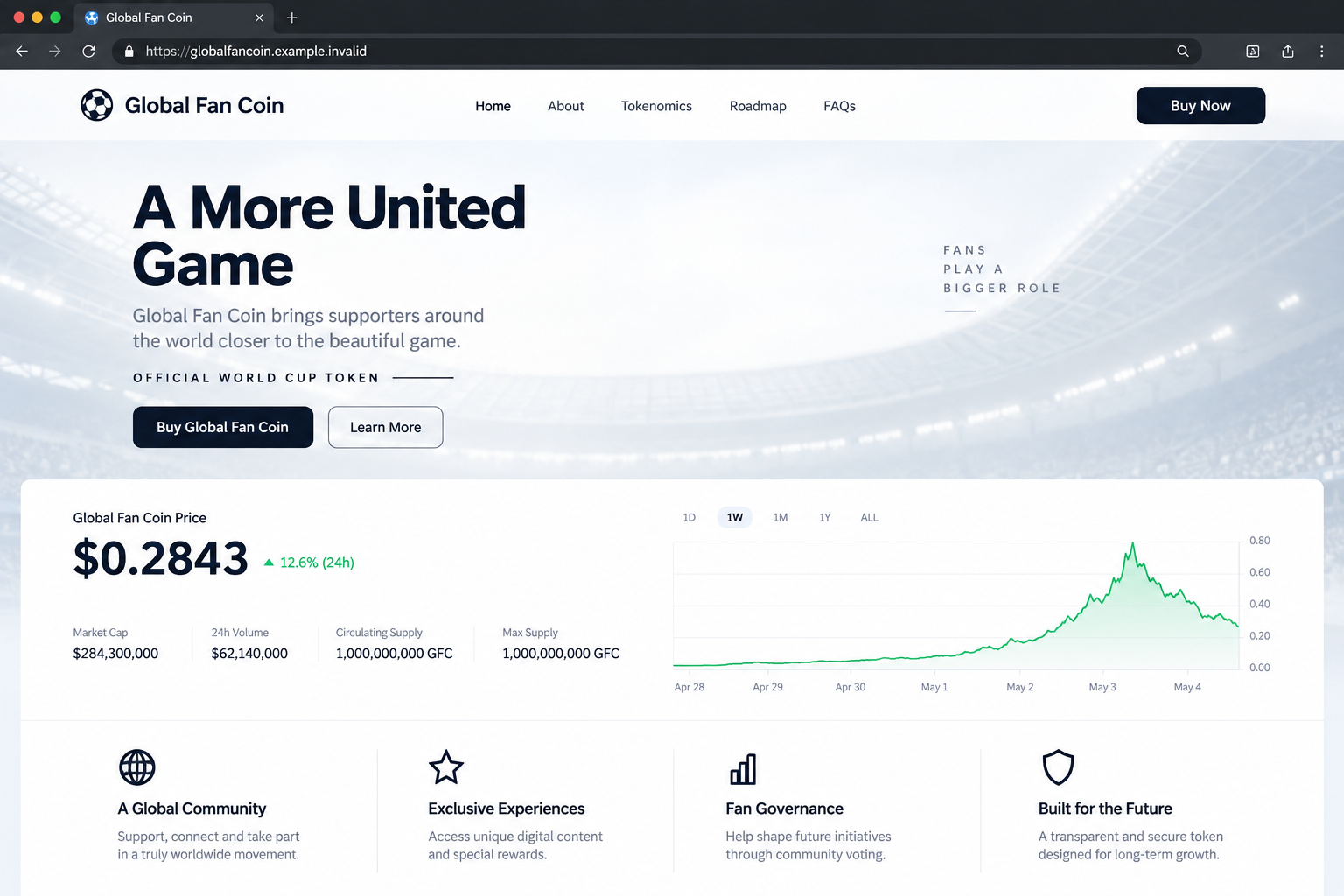
Once trading begins, a price chart can rise quickly when liquidity is thin or early holders control supply. A green chart attracts more buyers.
Police said the tokens in observed variants could be artificially inflated. The rise is therefore not evidence of genuine fan demand or organizer support.
A dashboard can also show invented volume or customer figures. Confirm market data through independent sources before treating it as factual.
The second image depicts a fictional price surge and decline. Its values are illustrative, not the historical chart of a named token.
A real blockchain transaction proves a token moved. It does not prove that an event organizer authorized the sale or that liquidity will remain available.
Step 5: Early holders sell into the excitement
In the police-described pattern, scammers sell their holdings after pushing the price higher. Their exit puts downward pressure on the market.
Later buyers may find that a displayed price does not translate into a sale at the same value. Thin liquidity makes that gap especially painful.
A project can keep its website online while the financial harm has already happened. Disappearance is not required for a pump-and-dump loss.
Promises of future announcements may keep supporters holding while connected wallets continue selling.
Step 6: A recovery pitch tries to extract more
After a collapse, a fake support account may claim the token will be swapped, upgraded, or reimbursed if the holder connects a wallet.
The Singapore police advisory did not establish this follow-up for every fan-token case. It is a separate risk to consider when seeking help.
Never give a recovery phrase or pay a “release fee” to someone who contacts you after a loss. Verify any migration through genuine project channels.
If affiliation was false from the start, do not assume a new domain claiming to fix the coin is trustworthy.
How to Test an Affiliation Claim
Open the tournament organizer’s official website yourself. Search its news, partners, licensing, and fan-products pages for the exact token name and contract.
Do the same for any named team. A team can have an authorized token while a lookalike contract uses a nearly identical name.
Compare the exact contract address where the organizer publishes it. A ticker symbol alone is not unique and can be reused by anyone.
Search official social accounts independently, but remember that social posts can be impersonated or accounts compromised. Confirm important claims across more than one channel.
Read the terms for any ticket or membership benefit. If no rights holder promises to honor it, the token page may be selling an expectation.
Ask whether there is a named issuer, a registered business, a clear refund or complaint route, and disclosure of who controls the supply.
A lack of these details does not prove every coin is illegal. It does make a claimed official relationship unverified.
What a Price Chart Cannot Tell You
A chart shows historical trades or values supplied by a platform. It cannot reveal whether insiders created the demand or whether selling will remain possible.
Market capitalization can be especially misleading when most tokens are held by a few wallets and only a small fraction trades.
High promotional volume may involve the same wallets buying and selling repeatedly. Independent on-chain review can help, but is not simple for most readers.
Beware of screenshots that show only the best hour. A presale promoter can choose a window that hides the subsequent decline.
If a token is supposed to have practical fan utility, a price chart should not be the main evidence of that utility.
The organizer’s verifiable commitment matters more than a temporary increase in a speculative market.
Who Controls the Supply?
A fan token’s distribution matters as much as its name. If a few wallets hold most units, their decisions can dominate the market.
A project should explain allocations for founders, promoters, treasury, liquidity, and public buyers. Vague promises about “community ownership” are not enough.
Look for lockups and vesting schedules that can be checked on-chain. A graphic claiming locked supply is weaker than verifiable contract data.
Be careful with wallets described as separate investors when their trading behavior suggests coordinated control. That question requires analysis, not assumptions from one screenshot.
Liquidity also matters. A displayed market value may represent only a tiny pool, leaving later sellers unable to exit without moving the price sharply.
None of these checks can turn an unauthorized sports claim into an official product. They help measure the financial risk behind the branding.
If the sale refuses to identify insiders or publishes only promotional charts, leave the burden of proof with the seller. Fans do not owe blind trust.
What to Do If You Bought a Fake Fan Token
Focus on preserving evidence and preventing further exposure. A falling price is distressing, but rushed recovery attempts can create a second loss.
- Stop buying more based on promises that a rebound is guaranteed. Do not send funds to a “support” wallet or migration page.
- Record the exact token contract, network, purchase time, exchange or wallet used, transaction hashes, and the seller’s advertised affiliation claims.
- Check whether the token is listed on a genuine exchange and whether withdrawals or sales are possible. Do not pay a new fee to unlock a private dashboard balance.
- If you connected a wallet, review connected sites and token allowances. Revoke suspicious permissions using trusted wallet tools.
- If you exposed a seed phrase, create a fresh wallet on a clean device and transfer remaining assets. Revoking one allowance cannot repair compromised keys.
- Contact the exchange that handled your purchase. Share the contract and transaction details, and ask whether it can investigate or preserve records.
- Report false affiliation to the named organizer or team through verified channels. Their brand-protection staff may help warn other fans.
- Run Malwarebytes if a related site asked you to install a streaming app, wallet tool, or other file. A token purchase alone does not establish malware.
- Use AdGuard to reduce malicious ads and deceptive redirects in future browsing. It cannot restore a token’s price or reverse a blockchain transfer.
- File a report with local police or your national cybercrime agency. Ignore recovery services that guarantee funds back for an upfront crypto payment.
Do Not Merge Every World Cup Crypto Trap Into One
Police described several related frauds. A fake ticket seller takes payment for goods never delivered; a false fan coin can leave buyers holding a collapsing asset.
A streaming page may instead seek wallet connections, card details, or malware installation. The safe response depends on what the person actually did.
For a ticket purchase, preserve the order and payment record. For a token, preserve contract and transaction data. For a wallet approval, inspect permissions immediately.
One brand theme can support multiple mechanisms without every victim experiencing all of them. Accurate classification prevents both underreaction and unnecessary panic.
It also makes reporting more useful. Investigators can follow a token contract, web domain, and wallet address more effectively than a vague “World Cup scam” label.
Frequently Asked Questions
Are all football fan tokens fraudulent?
No. Some teams authorize digital products. The warning concerns coins falsely marketed as officially tied to the tournament or a team.
Does a blockchain listing prove official status?
No. Anyone can create or list a token under a familiar-sounding name. Verify the exact contract through an independent rights-holder announcement.
Can I get match tickets by holding a fan coin?
Only if an authorized seller publishes clear, verifiable terms. A token page’s promise alone does not create a ticket entitlement.
Why did the price rise before falling?
Police warned of artificial inflation followed by insider selling. Thin liquidity and concentrated holdings can magnify the resulting decline.
Is connecting a wallet always dangerous?
Connection alone differs from approving spending or signing a transaction. Still, inspect the site and each permission before proceeding.
Can an exchange reverse my token purchase?
Usually blockchain transfers cannot simply be reversed, but exchanges can investigate accounts and preserve evidence. Report quickly without paying recovery intermediaries.
The Bottom Line
A token’s football branding is not proof that the event organizer or team backs it. Police documented fake official fan coins promoted into artificial price rises and crashes.
Verify the exact asset and issuer outside the sales page. If you already bought, preserve the on-chain trail and secure any wallet permissions.








