

A polished TStrive page promises stronger performance, easier weight loss, and a risk-free order. Yet small details begin contradicting the confident sales story.
Those inconsistencies matter before anyone enters a card number. Our review followed the links, compared the product identities, and examined what the page actually promises.
Overview
What the page claims to sell
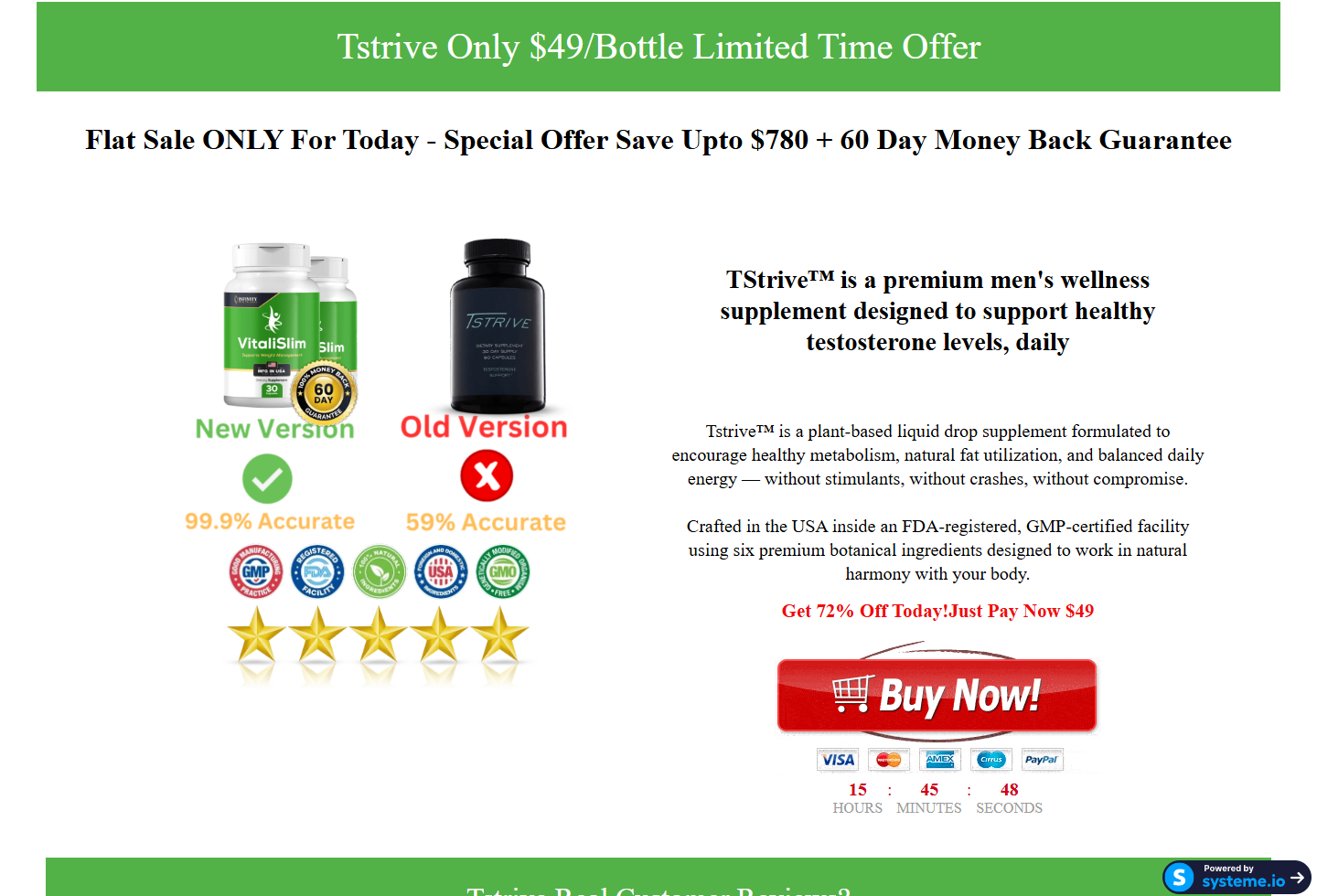
The page at us-tstrive.systeme.io presents TStrive as a natural answer for male vitality, testosterone support, energy, confidence, and physical performance.
Further down, the story changes. TStrive becomes a plant-based liquid designed to accelerate metabolism, control appetite, and help both women and men lose weight.
Those are not minor wording differences. A testosterone capsule and a liquid slimming formula are different products requiring different labels, doses, warnings, and evidence.
The page never resolves that conflict. Instead, it uses repeated purchase buttons and dramatic testimonials to push visitors toward a bulk order.
Why this is not the normal TStrive website
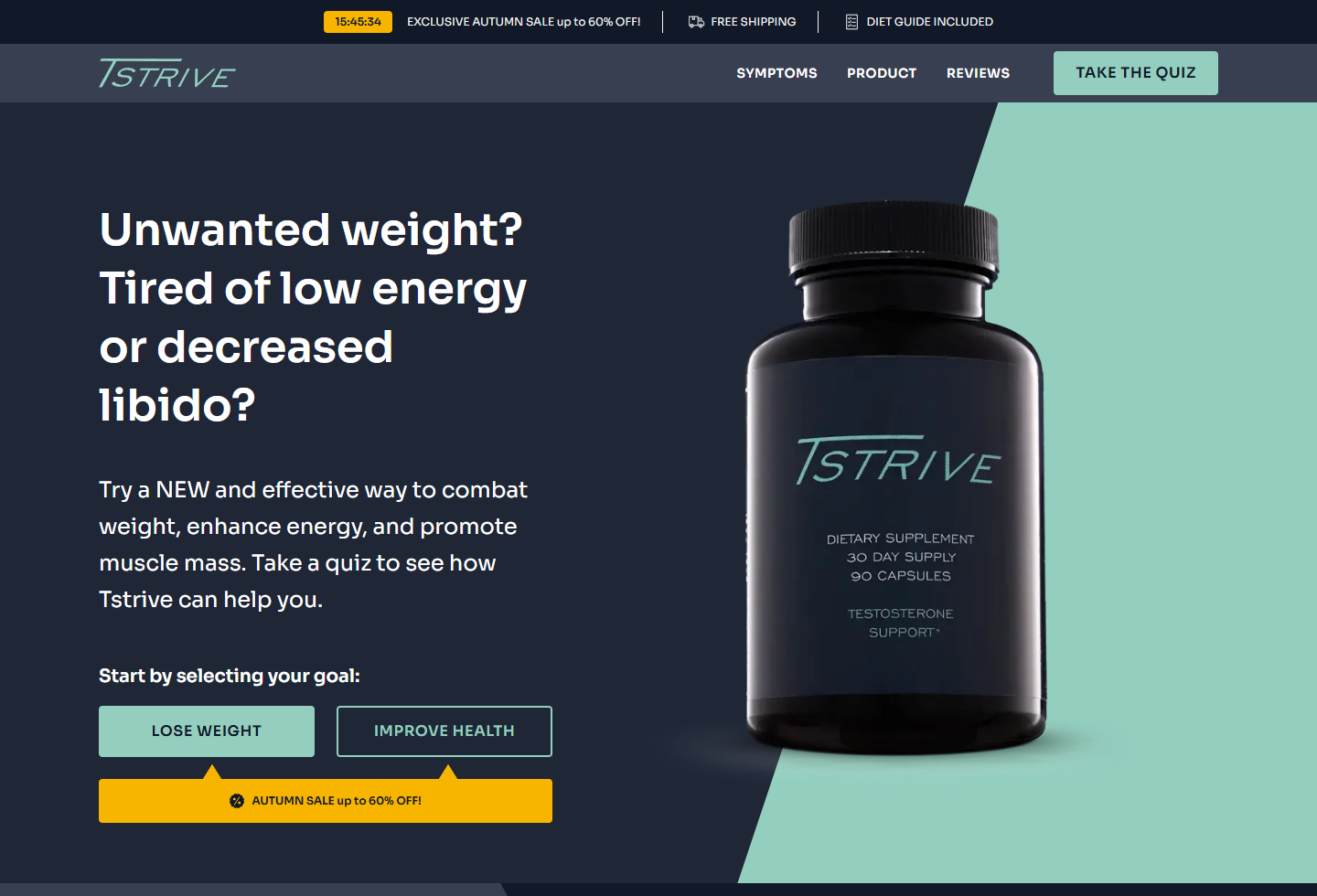
The established TStrive website uses tstrive.com. It presents a capsule product and instructs customers to take three capsules daily.
The Systeme.io page uses TStrive branding but stores product graphics with Jelly Burn names. Its policy links lead to another page branded around Horse Boost.
That combination strongly indicates a recycled affiliate funnel, not a coherent official storefront created specifically for the product shown.
The real TStrive business also has customer-service complaints worth considering. However, those reports do not make an unrelated copied page legitimate.
What our investigation found
The strongest warning is not one spelling error. It is the collection of mismatched brands, formulas, guarantees, prices, and destinations across one supposed official offer.
- The domain is a Systeme.io subdomain rather than tstrive.com.
- The product changes from capsules to liquid drops.
- Weight-loss images retain Jelly Burn file names.
- Policy links point to a Horse Boost-branded domain.
- The refund period alternates between 60 and 180 days.
- One package total conflicts with its advertised unit price.
- The footer acknowledges possible affiliate compensation.
We classify this specific page as an apparent brand-impersonation funnel. That conclusion concerns the page, not every bottle sold under the TStrive name.
How the Fake TStrive Sales Page Works
Step 1: Broad health promises attract different audiences
The opening pitch speaks to men worried about testosterone, stamina, aging, and confidence. That emotional framing makes the product feel personal and urgent.
Later sections target people trying to lose weight. They discuss appetite, metabolism, stubborn fat, and rapid changes in body shape.
Combining unrelated concerns expands the potential audience. Almost any visitor can find a promise that matches an insecurity or health goal.
It also prevents meaningful evaluation. A formula cannot be assessed when the page cannot consistently explain whether it is a capsule or liquid.
Step 2: Recycled graphics manufacture a product story
The page displays polished bottle renders and lifestyle photographs. At first glance, the visual presentation resembles a dedicated supplement storefront.
Image details expose the template underneath. Several files use Jelly Burn names, including graphics promoting two-bottle and six-bottle packages.
Jelly Burn is not a harmless technical label for TStrive. It is another product identity left inside the page assets.
Reusing an old funnel is fast and inexpensive. Operators can replace headlines and labels while leaving pricing blocks, testimonials, and checkout links largely unchanged.
Step 3: Testimonials bridge the contradictions
Personal stories appear where clinical evidence should be. They describe weight changes, renewed energy, improved confidence, and effortless daily use.
The stories are difficult to verify from the page. Readers are not given order records, independent profiles, or a method for confirming the reviewers.
Testimonials can create emotional certainty without proving typical results. They also distract from the unexplained switch between male-performance capsules and slimming drops.
A genuine customer experience cannot establish what every buyer will receive. It cannot replace an accurate label, seller identity, or product-specific trial.
Customer photographs also cannot verify the bottle behind a result. Lighting, timing, diet, and unrelated treatment may all influence the story presented.
Trust begins with a stable product identity. This funnel never supplies one, even before questions about effectiveness and safety are considered.
Step 4: Bulk pricing encourages commitment before testing
The offer pushes visitors toward several bottles at once. The six-bottle package is framed as the best value and displays the largest apparent saving.
Another option claims three bottles cost $49 each, yet the displayed total is $207. That total equals $69 per bottle, not $49.
Price arithmetic should be simple. When a checkout funnel cannot keep the unit cost consistent, shoppers cannot reliably compare packages.
A large first order increases the financial risk. The customer may discover the mismatch only after several bottles have been charged or delivered.

Step 5: Conflicting guarantees reduce hesitation
A prominent guarantee tells visitors they have 60 days to try the product. Nearby copy later describes a 180-day money-back period.
Those deadlines are materially different. A customer relying on the longer promise could contact support after the shorter period has expired.
Refunds also depend on conditions beyond the headline. The customer may need a return authorization, original containers, tracking, and proof of timely delivery.
When written terms disagree, save both versions before ordering. Do not assume the most generous statement will automatically control the dispute.
Step 6: Policy links send the buyer elsewhere
The Privacy Policy, Disclaimer, and Terms links do not remain inside a clear TStrive legal framework. They point toward a Horse Boost-branded Systeme.io property.
That matters because policies should identify who collects data, who accepts payment, where returns go, and which law governs the transaction.
A copied policy may describe a different merchant or product. It gives the buyer little confidence that the stated obligations apply to this order.
The footer also says the site may receive an affiliate fee. Affiliate disclosure is appropriate, but it confirms the page may be a promoter.
Step 7: The checkout separates the promotion from accountability
Repeated buttons move the shopper away from the claims and toward payment. The legal seller may appear only after the checkout begins.
That separation makes complaints harder. The website name, product label, receipt descriptor, fulfillment warehouse, and support desk may all be different.
A visitor should stop if the checkout introduces another merchant without explanation. Record the full total, quantity, renewal language, and card descriptor first.
Never rely on a social advertisement or landing-page badge as proof of authorization. Verify the destination independently through the established brand website.
Why the Product Claims Do Not Add Up
Capsules and drops require different facts
A capsule page should provide a Supplement Facts panel, serving size, capsule count, ingredient amounts, warnings, and manufacturing information.
A liquid product needs its own concentration, dropper serving, bottle volume, storage directions, and accurate ingredient quantities per serving.
The fake TStrive page tries to benefit from both identities. It never gives shoppers a dependable way to know which formula the order concerns.
That uncertainty alone is enough to avoid the offer. Consumers should never ingest a product whose basic form changes within the sales material.
Testosterone claims deserve medical caution
Fatigue, lower libido, mood changes, and reduced strength can have many causes. A webpage cannot diagnose testosterone deficiency from common symptoms.
Proper evaluation may involve medical history, examination, and appropriately timed laboratory tests. Treatment decisions depend on the cause and individual risks.
Herbal ingredients can interact with prescriptions or affect blood pressure, glucose, sleep, and digestion. Natural wording does not make an unknown formula harmless.
Anyone with persistent symptoms should speak with a qualified clinician. Do not delay assessment because a copied landing page promises a simple hormonal reset.
Weight-loss promises need product-specific evidence
A finished supplement should be supported by evidence for that exact formula and dose. General references to plants or metabolism do not establish meaningful weight loss.
Body weight changes with diet, activity, sleep, medication, illness, and fluid balance. Before-and-after stories cannot isolate what caused an individual result.
The page does not present a credible trial connecting its advertised TStrive product with the broad results described in the testimonials.
Rapid or unexplained weight change can signal a medical concern. It should not be managed by guessing what is inside a recycled product page.
Company, Address, and Fulfillment Checks
The domain does not establish an authorized seller
Systeme.io is a legitimate website-building platform. Its presence does not verify the identity, authorization, or reliability of every person using a subdomain.
The page should clearly name the legal business accepting the order. That name should match the checkout, receipt, privacy policy, and card statement.
Here, the branding changes across the page and linked policies. The visitor is not given one stable chain of responsibility.
The address must belong to the accountable business
A warehouse or mailbox can receive returns without being a headquarters, manufacturer, or product owner. An address alone does not prove who operates the offer.
Search the address independently and compare it with business records. Check whether numerous unrelated supplement brands use the same suite or returns location.
If support refuses to identify the legal seller before payment, do not order. Accountability should not appear only after a charge posts.
The support channel should answer product-specific questions
Ask whether the product contains capsules or liquid, how many servings arrive, and which guarantee applies. Request the answer in writing.
Also ask about recurring billing, cancellation, return postage, opened containers, and the exact merchant descriptor that will appear on the card.
A generic response that avoids the product name is a warning. So is an email domain tied to another supplement or sales funnel.
The fulfillment trail can expose the mismatch
A package may come from a logistics center that serves many online brands. That facility is not automatically the manufacturer or seller.
When an order arrives, compare the bottle, facts panel, lot number, business name, and return address with the saved offer.
Do not consume capsules or drops if the seal is broken, the label is incomplete, or the ingredients differ. Photograph everything before contacting support.
Real TStrive Complaints Are a Separate Issue
The established TStrive company has an identifiable website and customer-review history. Some reviewers describe useful support or satisfactory orders.
Others report unexpected offers, unwanted extras, subscription concerns, cancellation difficulty, or charges they did not anticipate. Those are customer allegations, not automatic proof.
Read current terms directly on tstrive.com before ordering. Confirm whether coaching, memberships, trials, or additional products are included in the transaction.
This distinction is important. A real company can receive complaints, while an unrelated affiliate page can still misuse or imitate its name.
Our warning concerns the tested Systeme.io page because its product identity and policies conflict. It should not be treated as the authoritative TStrive storefront.
What to Do If You Ordered Through This TStrive Page
- Save the complete offer. Capture the URL, package selection, guarantee statements, checkout total, confirmation page, emails, and product images before the page changes.
- Identify the actual merchant. Read the receipt and card statement. Write down the billing descriptor, processor, support address, order number, and promised delivery date.
- Ask for written clarification. Request the exact product form, ingredients, quantity, renewal status, refund deadline, and return procedure. Keep every reply.
- Cancel unwanted recurring services. If the receipt includes coaching, membership, autoship, or another trial, cancel through the stated channel and preserve confirmation.
- Inspect the delivery before use. Photograph the package and sealed bottle. Compare the label with the offer, and avoid consuming an unidentified or damaged product.
- Request a refund promptly. Quote the saved guarantee and product mismatch. Obtain return authorization and use tracked shipping if a return is required.
- Contact the card issuer when necessary. Explain any unauthorized amount, extra quantity, recurring charge, or materially misrepresented product. Provide your records and merchant correspondence.
- Monitor future statements. Review the payment card for additional charges. Ask the issuer whether blocking that merchant or replacing the card is appropriate.
Frequently Asked Questions
Is us-tstrive.systeme.io the official TStrive website?
It does not appear to be the established brand website. The recognized TStrive domain is tstrive.com, while the Systeme.io page contains unrelated brand remnants.
Does the fake page sell capsules or liquid drops?
The page contradicts itself. It presents capsule-style male support in some places and liquid weight-loss drops elsewhere, so the advertised product is not reliably defined.
Why do the images mention Jelly Burn?
The file names indicate that graphics from a Jelly Burn funnel were reused. That is strong evidence of copied sales material, not product-specific documentation.
Is the real TStrive company a scam?
This investigation does not make that claim. TStrive is an operating seller with mixed customer feedback. Buyers should separately review its current terms and complaints.
Will the page honor a 180-day refund?
That cannot be assumed. The page also states 60 days. Save both statements and obtain written confirmation before relying on the longer period.
Should I take a bottle that arrived from this offer?
Do not use it if the label, seal, ingredients, or form differs from the saved order. Ask a pharmacist or clinician about any uncertain supplement.
The Bottom Line
The Systeme.io TStrive page is not a trustworthy product offer. It mixes unrelated purposes, reuses Jelly Burn assets, changes refund deadlines, and links to different branding.
Use tstrive.com for any independent comparison, then read every checkout term. If you already ordered through the copied page, document the transaction and act quickly.








