

The birdhouse looks hand-carved. The story introduces its maker, and the store says the package will travel straight from a workshop to your porch.
That is a compelling way to buy a gift. Before you pay for the story, though, it is worth reading the quieter pages of the same store.
Overview
What Back Road Goods asks shoppers to believe
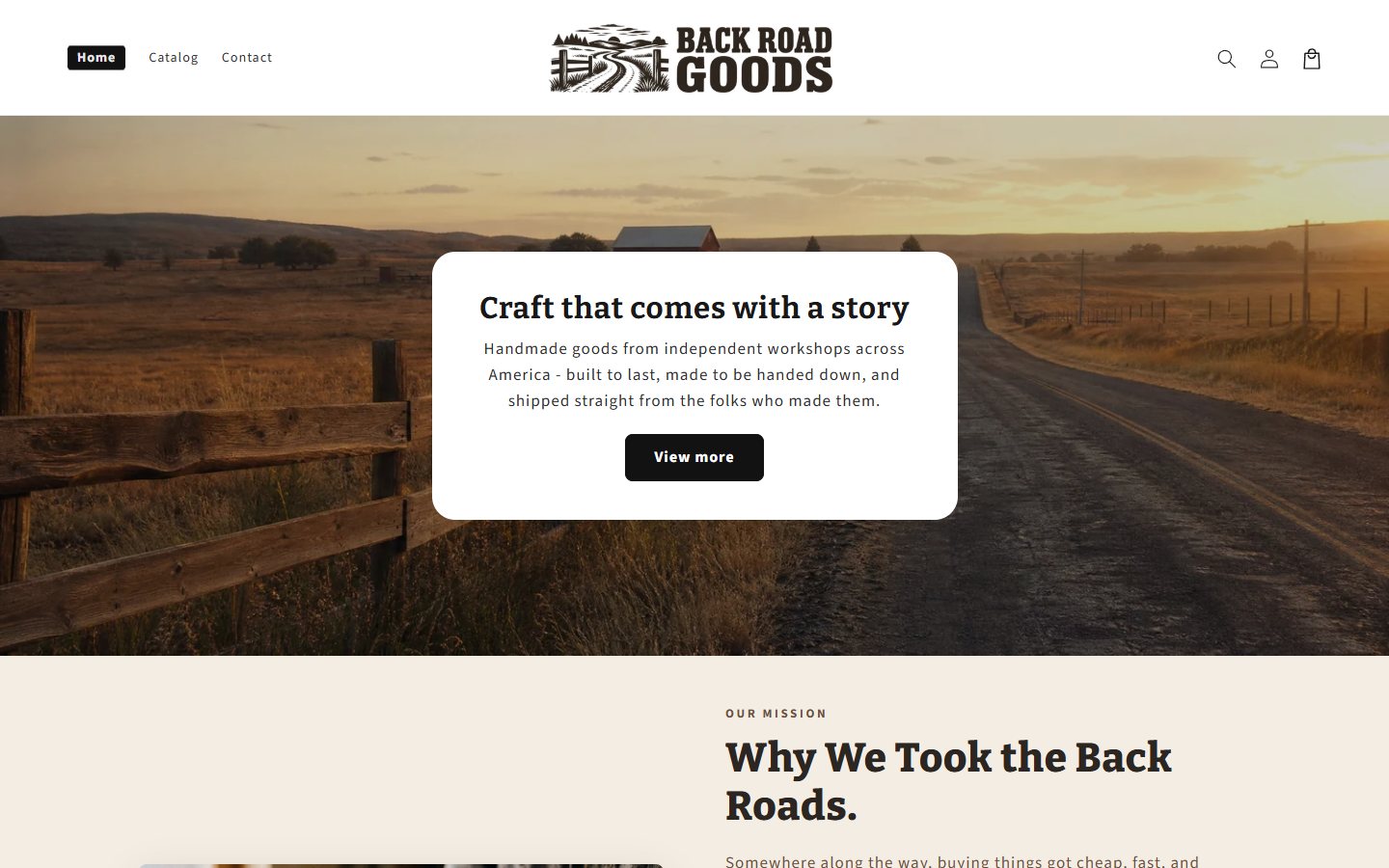
Back Road Goods presents itself as a marketplace for small American workshops. Its homepage emphasizes individual makers, small batches, durable goods, and direct shipping.
The products have names and backstories. A bee bowl is linked to Bev, a butterfly house to Dulcie, and a hedgehog shelter to Reg.
That approach makes an ordinary product listing feel personal. The buyer is not just choosing garden decor, but seemingly supporting a specific craftsperson.
What the store’s own pages show
The live storefront is real and accepts shoppers. It also publishes a phone number, email address, and a UK company name on its contact page.
Yet its linked shipping, terms, and privacy pages describe Namora, another brand. Two of those pages still display a placeholder calling for legal review.
The mismatch is not a minor spelling error. It changes the product type, return period, guarantee, and contact email a customer might rely on.
Our assessment and the open questions
This is a serious commercial-risk case, not a finding that every item is fake or that every order fails to arrive.
We did not buy a product or independently identify the makers. We can, however, document contradictory promises directly from the seller’s public pages.
- The homepage says maker-direct shipping and 60-day returns.
- The linked policy discusses personalized Namora jewelry and 30-day returns.
- The terms and privacy pages retain a prelaunch placeholder.
- Public company records show a real UK partnership with a current strike-off proposal.
- Independent buyer complaints exist, but individual reports remain unverified.
The practical question is simple: who made the item, what will be delivered, and which written return terms will the seller actually honor?
The Handmade Story Meets the Fine Print
Names and workshop language do much of the selling
The homepage describes independent American workshops and says goods ship from the people who made them. It rejects anonymous warehouses as part of its identity.
A shopper seeing that claim may reasonably expect evidence of a workshop, a traceable maker, or at least product-specific information about origin.
The names on listings make the promise more vivid. They also create a fact worth checking, because a name is not proof of manufacture.
Ask whether the named person designs, hand-makes, assembles, or merely lends a story to the product. Those are very different relationships.
We did not find independent workshop profiles for the products examined. That absence alone does not prove the people are invented.
It does mean the store’s strongest selling point remains a claim from the store. Buyers should not treat it as independently established.
The return policy belongs to a different shopping experience
Back Road Goods advertises 60-day, no-questions returns on its homepage. That would be a meaningful protection for gifts and seasonal decor.
Follow the footer’s Shipping & Returns link, however, and the page begins by discussing made-to-order Namora pieces.
It talks about engraved names and birthstones, items unlike the wooden houses and garden ornaments shown on the Back Road Goods storefront.
For non-personalized goods, that page states a 30-day period. It also describes a 24-month jewelry guarantee and a Namora support address.
A buyer could follow the only obvious returns link and still not learn how to return the birdhouse they are considering.
That is the problem. A return policy needs to identify the seller, the relevant product, the deadline, and the correct contact channel.
When those details point somewhere else, a generous homepage badge becomes hard to use if an order goes wrong.
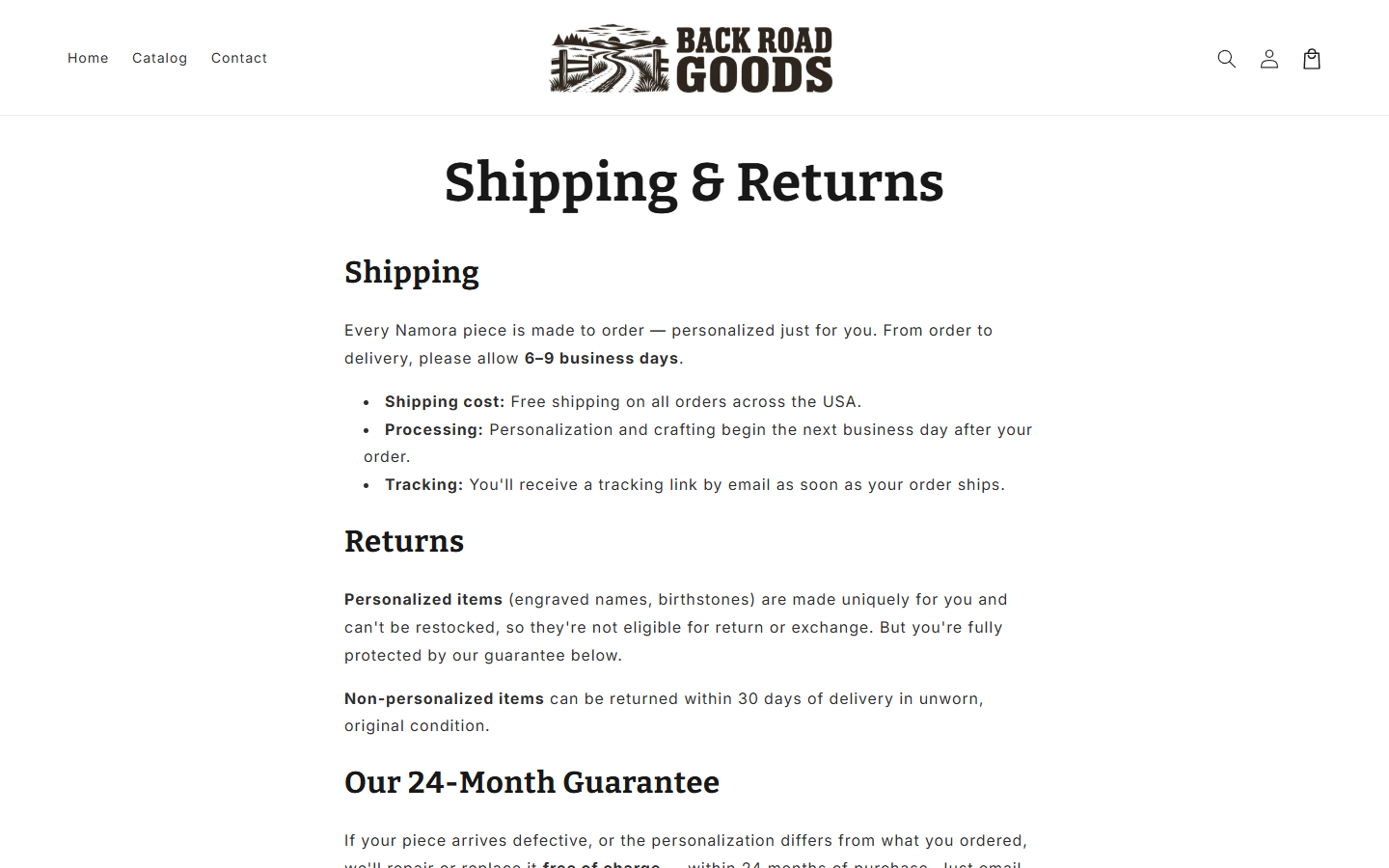
Launch placeholders remain in legal pages
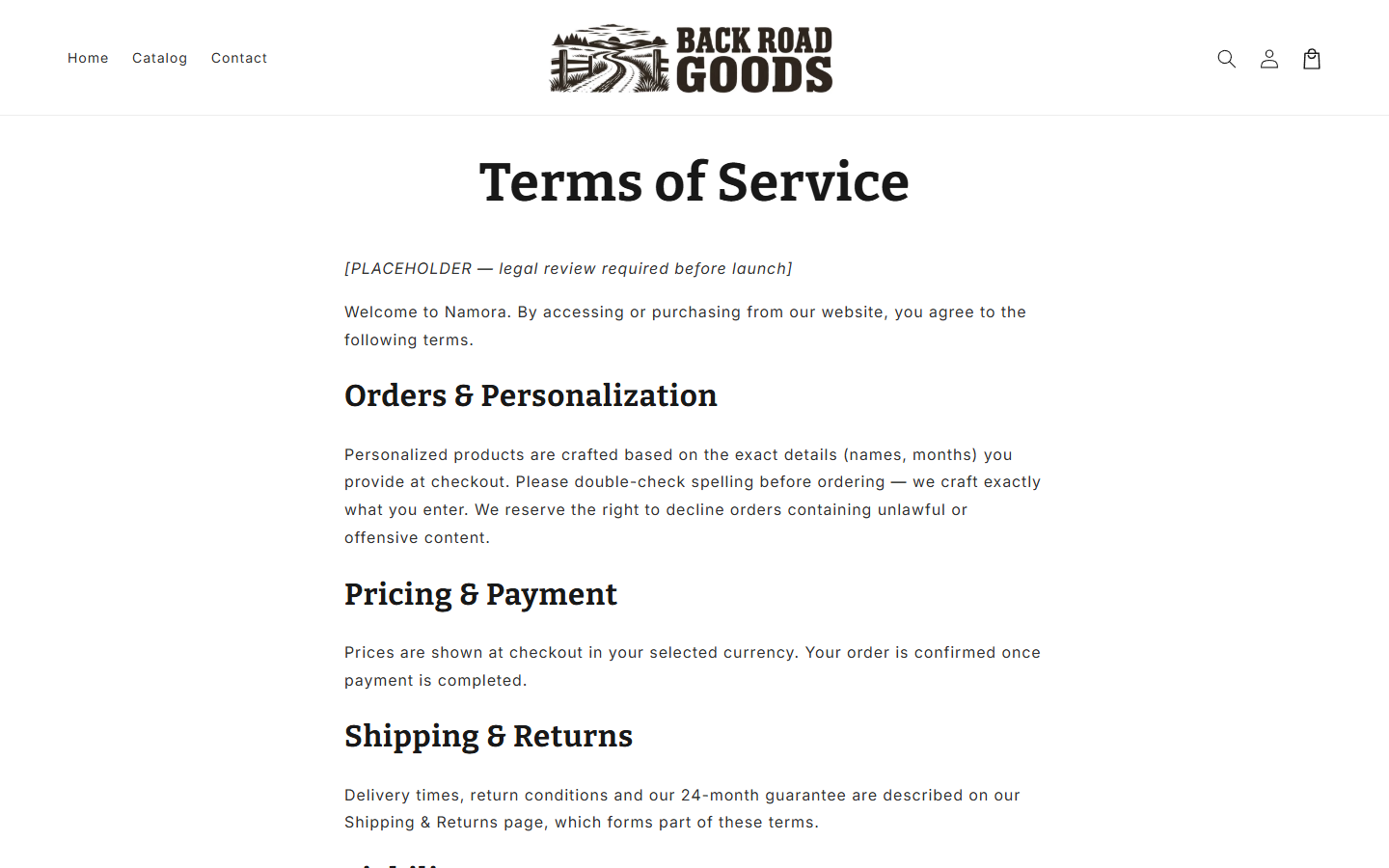
The terms page displays a legal-review placeholder. It then welcomes readers to Namora and describes personalized products.
The privacy page repeats the placeholder and directs privacy requests to the same other brand’s email address.
These are public, customer-facing documents. A shopper should not have to guess whether they govern Back Road Goods at all.
A copied template can be fixed. Until it is corrected, it is an observable transparency failure, not evidence that a particular customer was defrauded.
It also matters after purchase. A customer may need a policy copy to resolve a dispute over delivery, a return, or personal information.
How the Back Road Goods Sales Journey Works
Step 1: A social post sells the person behind the object
A buyer may first encounter a photograph of a garden ornament, wooden shelter, or other rustic gift in a social-media ad.
The appeal is not simply the object. The surrounding story suggests a small maker, patient handwork, and a purchase with personal meaning.
We did not verify every advertisement or the targeting behind it. The storefront itself clearly continues this maker-first narrative.
Pause on that distinction. A persuasive ad can introduce a product, but it cannot verify who made it or where it will ship from.
Step 2: The product page turns a generic need into a craft purchase
The store gives individual products maker-style names and presents them under a collection of popular crafts. This framing raises expectations about materials and workmanship.
For a birdhouse, ask about the actual material, size, weight, and weather suitability. For a garden bowl, check dimensions rather than the lifestyle photograph.
Those details tell you more than a warm story. A product may be useful even if manufactured at scale, but the price should match its real qualities.
If a listing claims one-piece carving or handmade ceramic construction, save that exact description before ordering. It may later disappear or change.
Step 3: The homepage makes the purchase feel protected
Alongside the craft language, the homepage says makers guarantee goods for life and promises 60-day returns without difficult questions.
For a hesitant shopper, those assurances lower the perceived risk. They may be the reason someone pays more than they would at a large marketplace.
But the promises are not matched by the linked policy page we inspected. That page discusses a different brand and a shorter return window.
Before checking out, ask support to identify the terms applying to your specific item. A written answer is more useful than a homepage badge.
Step 4: Checkout captures payment while questions remain
The store runs on a functioning ecommerce platform. That does not establish where goods are made or whether a particular workshop will fulfill the order.
At checkout, record the quantity, full total, delivery address, and merchant descriptor. Do not assume the product price is the entire charge.
We did not complete a paid purchase or test fulfillment. Claims about undisclosed fees or recurring charges would be speculation here.
The concrete risk is paying before the material, maker, shipping origin, and applicable return route have been clearly documented.
Step 5: The buyer must find a usable post-purchase path
If the item differs from its description, the shopper needs an address, a deadline, and an authorization procedure for that item.
The published policy instead supplies jewelry instructions and a different email. Sending a parcel to a guessed address could waste money and time.
Public complaints describe mismatches between advertised and delivered goods. Those are individual reports, not independently inspected purchases in this investigation.
Even so, they make the policy confusion more consequential. Save the listing and order records while they are still accessible.
Step 6: A dispute depends on the original representations
When support answers, compare its instructions with the offer visible when you purchased. Ask it to explain any switch from 60 days to 30.
If the merchant refuses a remedy for a materially different product, your payment provider may ask for the advertisement, product page, receipt, and correspondence.
Keep the packaging and take clear photographs beside a ruler. An exact comparison is stronger than a general claim that the item feels cheap.
Do not mail anything internationally until the seller confirms the destination and who pays postage. Keep that confirmation with your dispute file.
Company, Address, and Fulfillment Checks
The brand and the legal partnership are different names
The contact page identifies Back Road Goods as a trade name of Ecomcloud Trading LLP. That is a specific entity a customer can look up.
The UK Companies House entry lists the same London registered office and says the partnership remains active.
It also records an active proposal to strike off and an overdue confirmation statement. Those entries warrant attention, but do not establish a scam.
Check the registry immediately before ordering because company status can change. Compare the entity on your receipt and card statement with the published contact page.
The London address is not a workshop map
The site’s London address is a registered office for the partnership. It does not verify that any named craftsperson works there.
Nor does it establish that products ship from American workshops. A registered office, dispatch location, and return warehouse can be entirely different places.
Ask the seller to name the country of dispatch for the particular item. A truthful answer matters for delivery time, customs, and return postage.
Do not call the address fake simply because it is not a workshop. The problem is the gap between a verified registration and an unverified maker-direct promise.
Phone and email details need a product-specific answer
The contact page gives a phone number and Back Road Goods email. The shipping page points instead to Namora support.
We did not call either line or send a test message, so we cannot describe response speed or whether staff handle returns.
A buyer can ask one targeted question: which address and policy apply to Reg’s Hedgehog House or Bev’s Bee Blossoms?
If the reply copies jewelry language, ask again in writing. A support response that names the exact product is what you need.
The maker and materials should be traceable
Handmade and maker-direct are meaningful claims. They should connect to a real workshop, material specification, and production method for each listing.
We cannot determine a product’s factory or country from a photograph. Likewise, a customer’s claim of overseas shipping needs parcel evidence before being generalized.
Ask for the maker’s full name, workshop location, and material details. If those cannot be supplied, decide whether the item is still worth the price.
The issue is not that imports are automatically bad. It is whether a buyer pays a handcrafted premium for an origin story that cannot be substantiated.
How to Check a Handmade Offer Before Paying
Compare the photograph with measurable specifications
Product imagery can make small goods look larger or more detailed than they are. Record dimensions, material, assembly method, and included accessories.
Search the exact design using image search, but interpret matches carefully. Similar images may show a shared supplier, copied photography, or a common design.
A match is a reason to ask questions, not automatic proof that a particular listing is fraudulent. Compare the physical specifications as well as the picture.
Make the return promise specific
Before ordering, request written confirmation of the return window and whether change-of-mind returns include return postage.
Ask whether the product must be unused, who approves returns, and where it would go. The current policy page does not answer those questions for these crafts.
Take screenshots of the offer, policy, and final checkout summary with timestamps. That small step can prevent a vague argument later.
If the seller cannot reconcile the Namora pages with Back Road Goods, you have useful information before risking any payment.
What to Do If You Ordered from Back Road Goods
- Save the original offer. Capture the product title, maker claim, material, dimensions, 60-day badge, order total, and receipt. Preserve the page URL and purchase date.
- Inspect the delivery carefully. Photograph the package label before opening. Then document the item’s material, size, finish, and any difference from the listing without discarding packaging.
- Contact the named seller in writing. Use the email on its contact page, identify your exact product and order number, and request a product-specific remedy or return authorization.
- Ask which policy controls. If support cites a 30-day jewelry page, send the screenshot of the 60-day storefront promise and ask for a written explanation.
- Escalate a material mismatch promptly. If the item is substantially unlike its description and support does not resolve it, ask your card issuer about its dispute process and deadlines.
- Keep the complaint factual. If reporting the experience to a consumer body or review site, separate what you personally observed from what other customers allege.
Card protections vary by payment method and jurisdiction. A clear record gives the payment provider a better basis for reviewing your own transaction.
A return dispute is stressful, but you do not need to prove the seller’s intent. Focus on the documented promise and the item actually received.
Frequently Asked Questions
Is Back Road Goods a proven scam?
No criminal finding follows from these pages alone. The mismatched policies and unverifiable maker claims create material buying risk that deserves direct clarification.
Are its products really handmade in America?
The store says so, but we did not independently verify the named workshops or individual production methods. Ask for product-specific maker and origin information.
Why do the policies mention Namora?
The linked pages contain another brand’s jewelry terms and support address. We cannot explain the operator’s intent; the visible mismatch is the important fact.
Can I rely on the advertised 60-day return?
Do not assume the current linked policy confirms it. Get written confirmation for your exact item and preserve the homepage wording visible at purchase.
Is Ecomcloud Trading LLP a real registered company?
UK Companies House lists it as active, with a proposal to strike off and an overdue statement at the time of review. Registration does not verify product claims.
Does an overseas parcel prove the item was mass-produced?
No. A parcel origin can challenge a maker-direct shipping claim, but it does not by itself reveal who designed or manufactured the object.
The Bottom Line
Back Road Goods sells an appealing handmade story, yet its own linked policies describe a different brand and different return terms.
Until the seller identifies the maker, material, dispatch point, and applicable return policy for a specific product, a cautious buyer has good reason to pause.








