

A handmade lamp feels different when the page introduces the person who supposedly cut every piece of glass. That is the appeal of BackRoad Goods.
Before letting that story decide the purchase, look at the details that will matter if the parcel, the product, or the return disappoints.
Overview
What BackRoad Goods promises
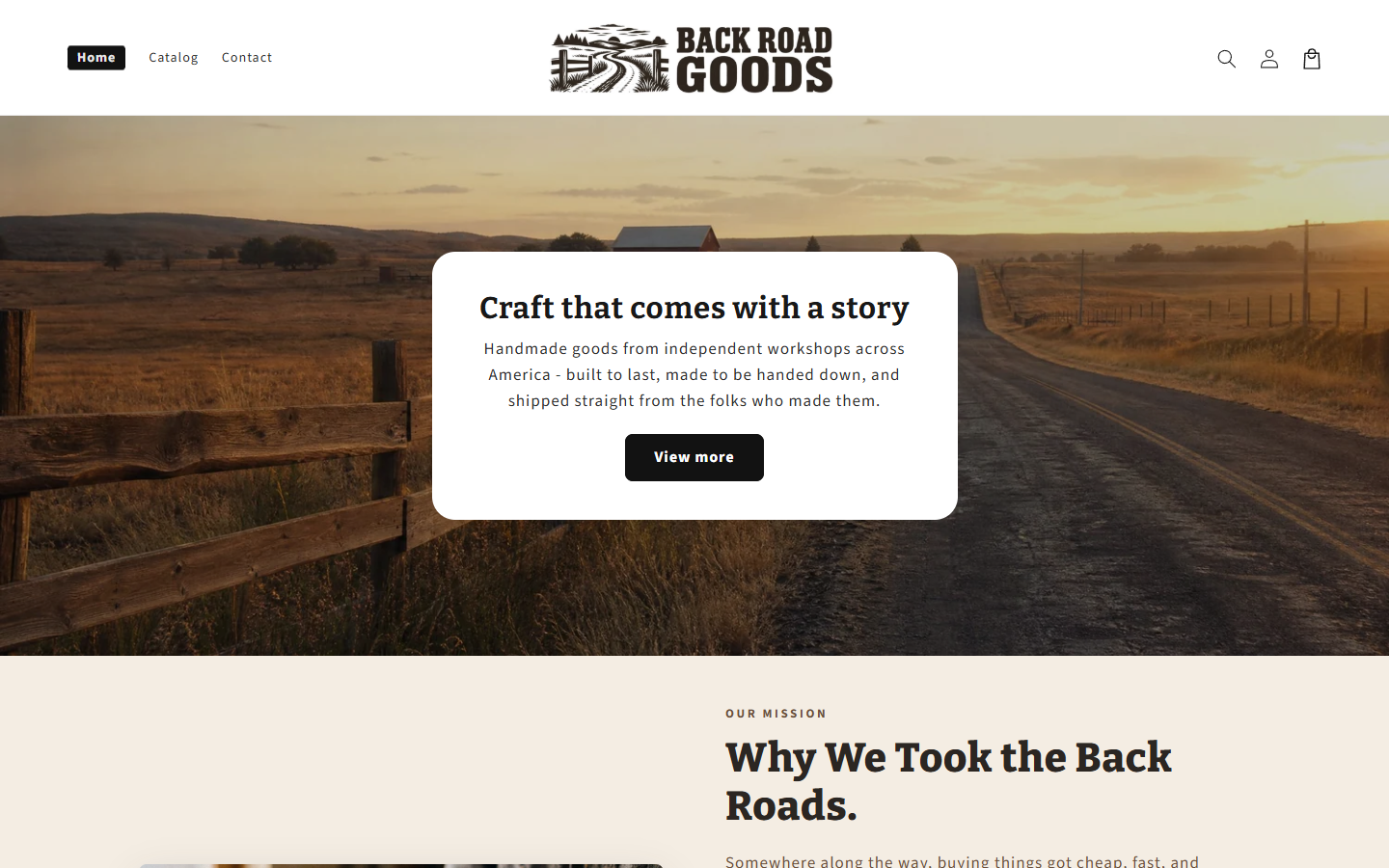
BackRoad Goods describes itself as a home for independent artists and makers. Its homepage emphasizes small batches, maker-direct shipping, and goods made by hand.
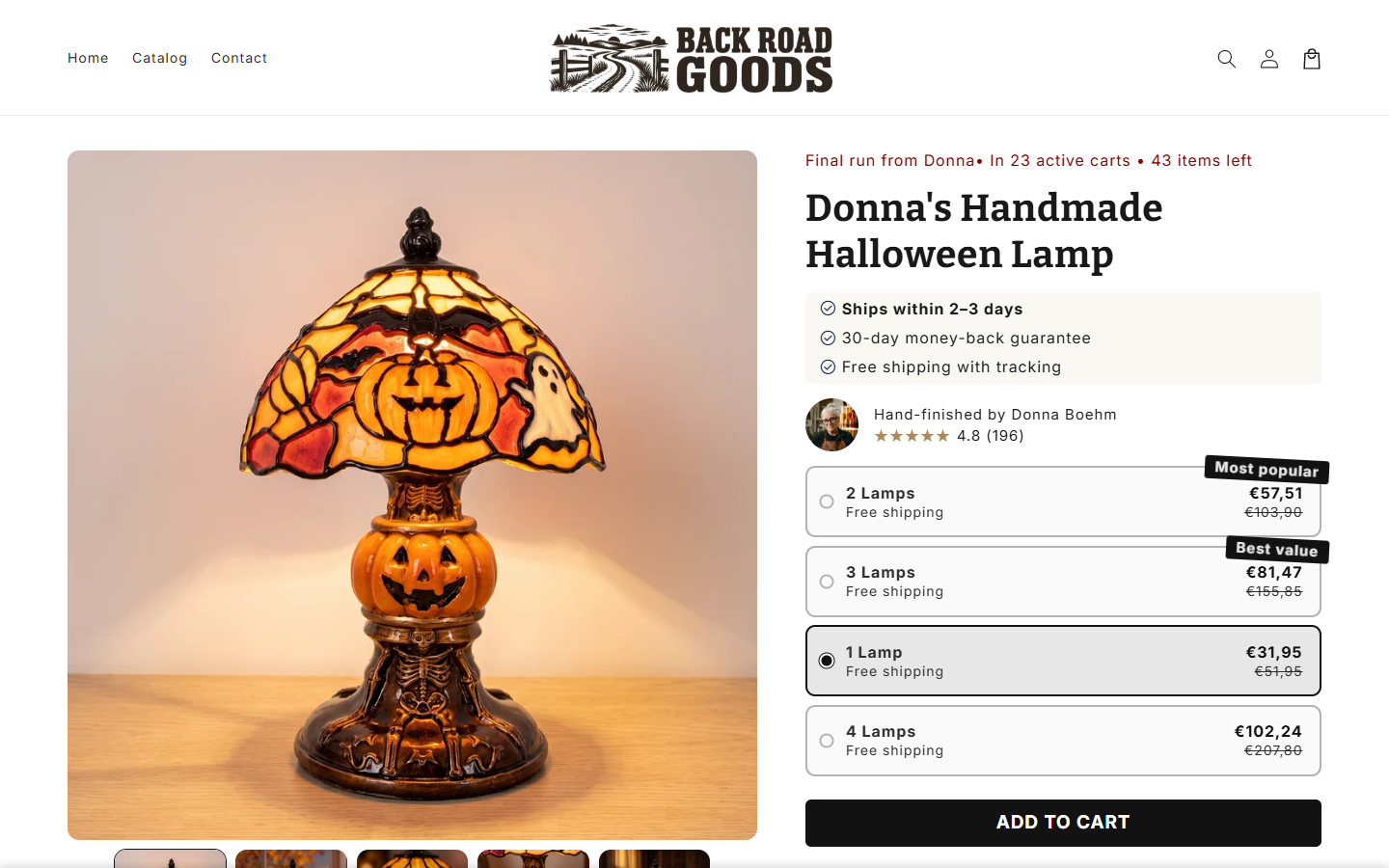
The featured collection includes Halloween lamps and blankets named after individual makers. Their stories are more specific than the usual generic product description.
That specificity is emotionally powerful. A customer may feel they are supporting a particular craftsperson, not simply purchasing seasonal decor from an online store.
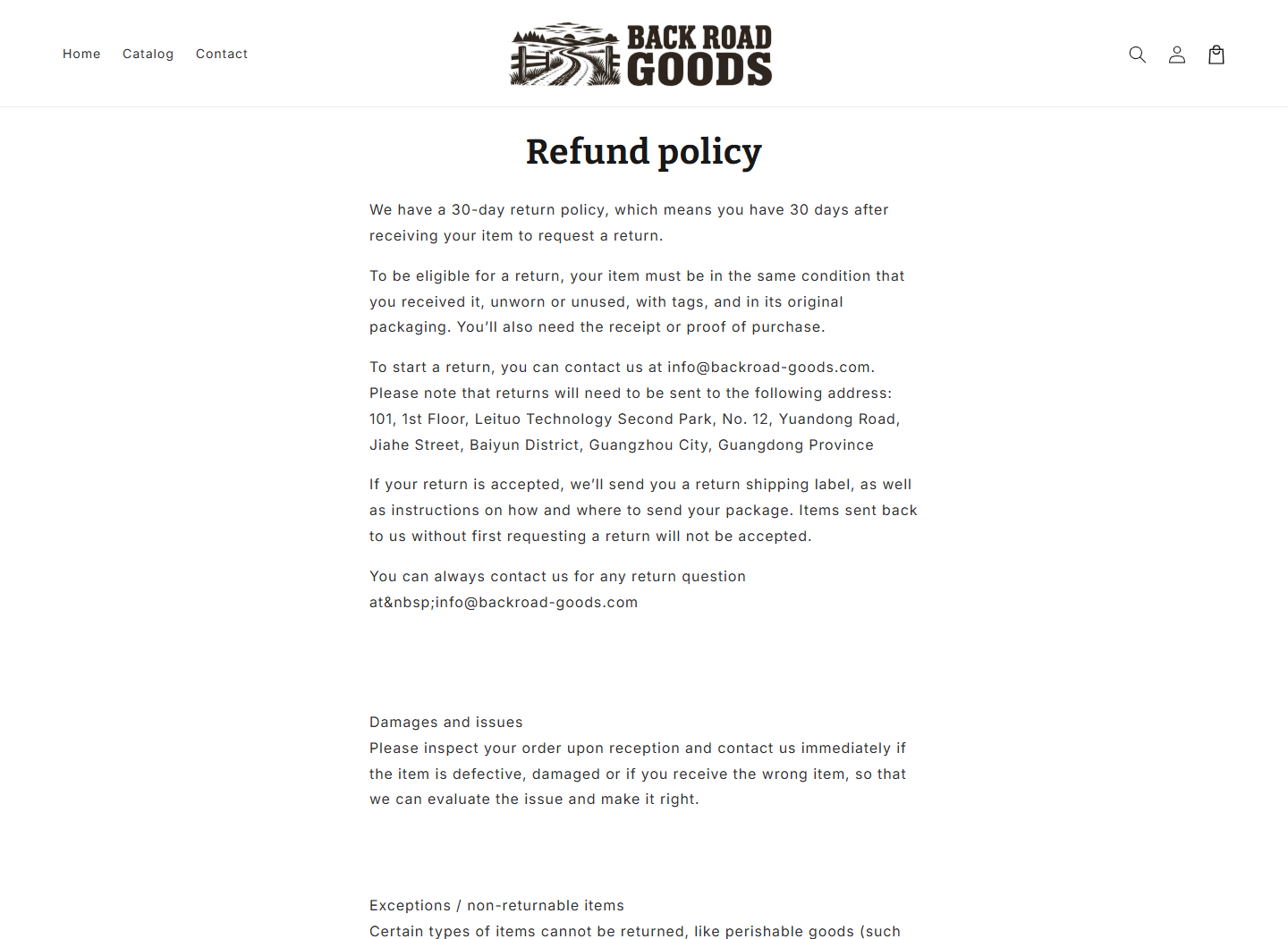
The site advertises 60-day returns on its homepage. Product listings and its formal refund policy instead display a 30-day period.
The refund policy names a return destination in Guangzhou, China, and excludes sale items. Those terms make the homepage’s broad promise especially difficult to interpret.
What our review can and cannot establish
We examined the live storefront, product pages, the named business information, and the UK company register. We did not place a test order.
We cannot independently verify the makers’ identities, the production process, the dispatch origin of every item, or whether a particular buyer received a genuine handmade object.
Nor can a critical review prove that every testimonial is invented. The point is narrower: important claims require evidence before they earn a buyer’s trust.
The practical buyer question
The decision is not whether the decor looks appealing. It is whether the craft story, return promise, and accountable seller remain convincing after closer inspection.
- The homepage uses specific artist identities and maker-direct language.
- At least one product page gives a different return period from the homepage.
- The refund policy names Guangzhou as the return destination and says sale items cannot be returned.
- The shipping page discusses an unrelated brand, Namora, and gives that brand’s support email.
- The visible product stories include precise biographical and production claims we could not independently confirm.
- The business named on the site should be checked against current public company records.
- Public complaints raise questions, but each complaint is one person’s account, not a verified finding about every order.
The Handmade Story Deserves More Than a Pretty Photograph
A named maker is a factual claim
The Margie lamp listing describes a named craftsperson, a Massachusetts location, church restoration work, and an illness affecting her eyesight.
It even specifies the number of glass pieces and a remaining quantity. Those details make the product feel personal and scarce.
A moving biography can be true. It can also be impossible for a shopper to verify from the seller’s page alone.
Search the maker’s full name, location, professional work, and independent portfolio. An actual craft business may have past exhibitions, workshop photographs, or local coverage.
Absence of search results does not prove the story is fabricated. Some talented makers have little online presence, especially when their work predates social media.
But when the seller asks you to pay a premium specifically because of the maker’s identity, it should welcome reasonable questions about that identity.
Specific numbers are not independent verification
The listing’s measurements and power details are useful. It says the lamp is about 6 inches tall and USB powered.
Those specifications can help avoid one common disappointment: buying a miniature accent light while expecting a full-size table lamp.
The same page says photographs may make the lamp look larger. That disclosure is genuinely helpful, and buyers should read it before ordering.
Other numbers, such as a claimed production run or pieces of glass per lamp, are seller assertions unless an independent source confirms them.
A high level of detail creates credibility, but detail alone is not evidence. Ask whether the supplied photos show the actual object from multiple angles.
Look for the base, cable, switch, seams, and a ruler or familiar household item beside it. A polished hero image cannot answer every practical question.
The return promise changes as you browse
On the homepage, BackRoad Goods advertises 60-day returns with reassuring language about changing your mind. The formal refund policy says 30 days.
Another listing can have its own terms, but the buyer needs to know which promise controls a particular order.
Ask whether the clock starts on purchase, dispatch, or delivery. That distinction matters if an item spends weeks in transit.
Ask who pays for return postage and whether the refund includes original shipping, customs costs, or promotional discounts.
The policy lists a return address in Guangzhou. A generous window loses value if shipping a low-cost decoration overseas costs almost as much as the product.
It also says sale items cannot be returned. That exception deserves attention because the storefront prominently displays discounted goods.
Keep dated screenshots of both offers. If support later applies the shorter period, you will have the exact wording shown before checkout.
Who Is Behind the Store and What the Records Show
The legal operator is not the artist in the story
Where a store identifies a legal business, treat that name as the counterparty for payment, refunds, and formal complaints.
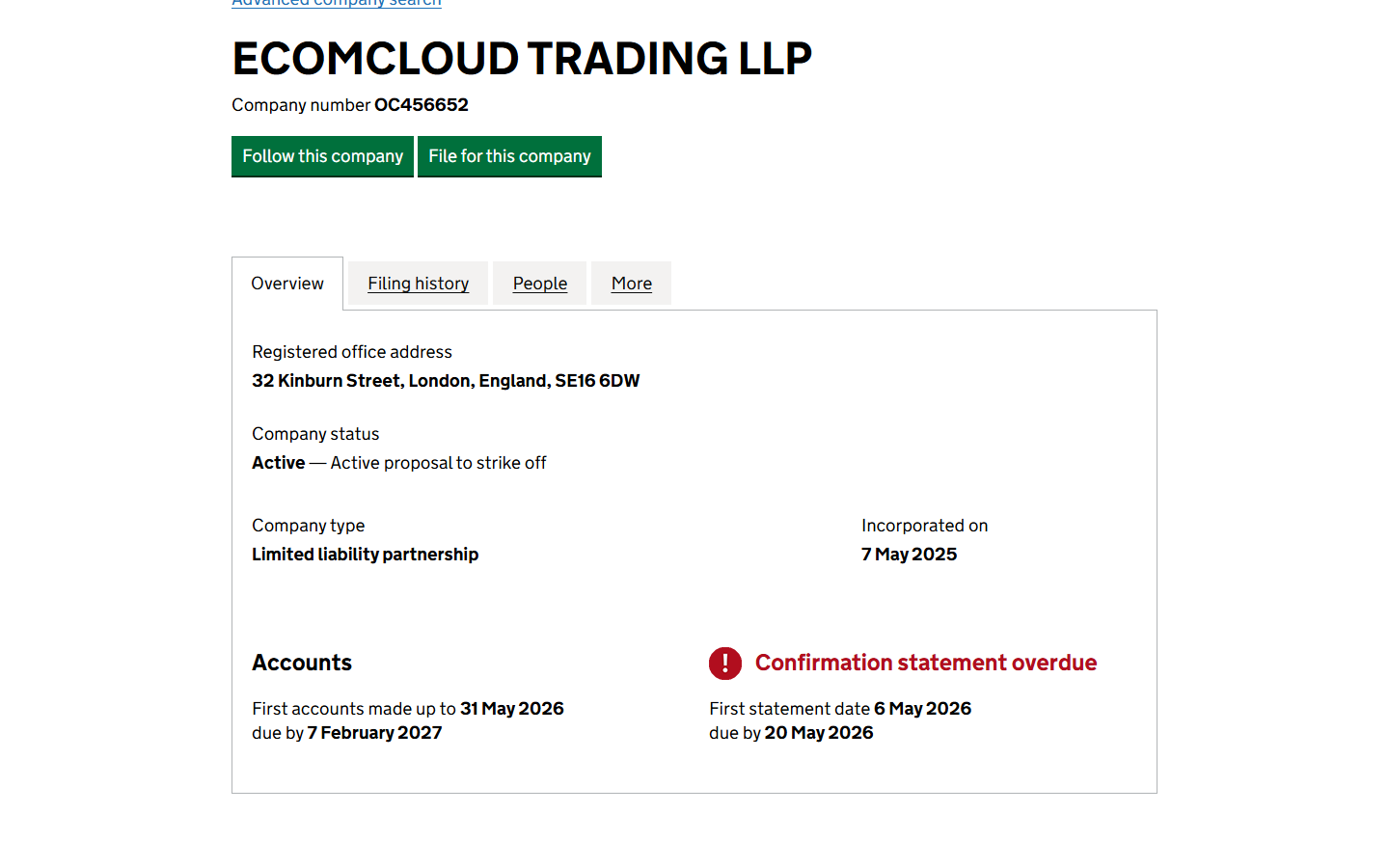
The store’s contact-information policy names ECOMCLOUD TRADING LLP. The UK Companies House record lists an LLP registered in May 2025.
That record shows a London registered office at 32 Kinburn Street. A registered office is a legal contact point, not proof of a craft workshop.
It also does not establish where products are made or from where parcels leave. Those are separate questions for the seller.
An active strike-off proposal is a concrete concern
When we checked, Companies House displayed an active company with an active proposal to strike off and marked the confirmation statement overdue.
That is a public-register status, not a court finding of fraud. Company statuses can change, so recheck before relying on it.
For a buyer, the practical question is who will honor returns or guarantees months later if the legal operator’s status changes.
Ask the merchant to identify the contractual seller on the receipt and explain how warranty or refund obligations would be handled.
If a different company appears at checkout or on the card statement, note the name. Do not assume it is the maker named in the advertisement.
The receipt is a useful identity check
A card descriptor can be shortened, but the full receipt should still let you identify the merchant responsible for the sale.
Compare that identity with the footer and support correspondence. If they differ, ask why before the return deadline begins to run.
The shipping page belongs to another story
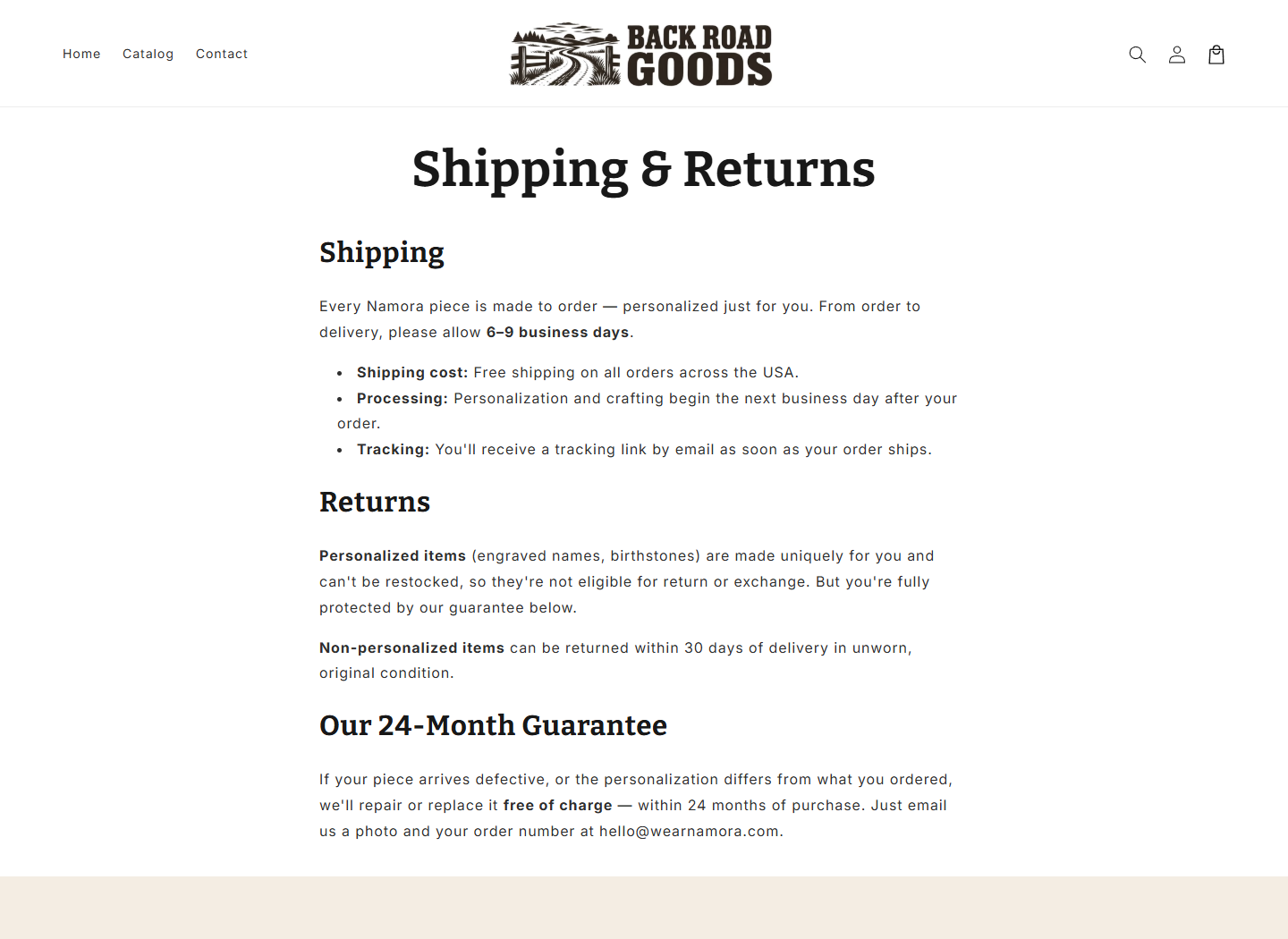
The linked Shipping & Returns page says Namora pieces are personalized, mentions birthstones, and directs warranty requests to a Namora email address.
That wording does not match the lamps and blankets presented as BackRoad Goods crafts. It reads like a policy carried over from another store.
A copied or mistaken page does not prove that orders are unfulfilled. It does mean a buyer cannot confidently apply those shipping promises to this product.
The same page says non-personalized items can be returned within 30 days, while the homepage says 60. The formal refund policy also says 30.
Ask support which brand’s terms actually govern your item. Require the answer before trusting the page’s delivery estimate or guarantee.
Save the exact listing and policy you relied on. If the pages later change, your copies show what was represented at the time.
How the BackRoad Goods Sales Journey Works
Step 1: A craft story gives the object emotional value
A customer sees an attractive lamp or blanket accompanied by the name of an artist. The purchase begins to feel like support for an individual.
That is different from comparing identical seasonal decorations by size and price. The narrative gives the item a reason to matter.
When a maker’s life story influences your choice, treat it as part of the product claim. Ask what independent evidence supports it.
Step 2: Scarcity narrows the time to think
Small-batch language and remaining-stock figures suggest there may be no second chance. Holiday timing adds another reason to act quickly.
Scarcity may be real for handmade work. Still, a buyer can pause long enough to save the listing and compare seller details.
If an item is truly limited, ask whether each unit is individually handmade or whether a design is manufactured in a larger run.
Step 3: The buyer checks specifications and the real price
The Margie page helpfully states its approximate height. Do not skip that line because the larger photographs are more memorable.
Check whether the package includes a plug adapter, how the light switches on, and whether the pictured finish matches the selected variant.
Compare the final checkout total with the product page. Currency conversion, taxes, and optional extras can change a seemingly modest purchase.
Step 4: Competing return statements become important
The homepage’s 60-day statement and a product page’s 30-day promise create uncertainty before any dispute exists.
Email support with a direct question: “For this exact product, what is the deadline, return address, shipping cost, and refund amount?”
A useful answer names the product and conditions. A generic “we stand behind everything” reply does not settle a conflict.
Step 5: Dispatch and delivery test the maker-direct promise
If you order, keep the tracking number and parcel label. The dispatch country and sender can help evaluate the maker-direct claim.
International fulfillment is not automatically wrong. It becomes relevant if marketing led you to expect shipment from a named American workshop.
Ask the seller for a plain explanation before assuming that a foreign tracking event proves where the item was manufactured.
Step 6: The return process determines the true value
A customer may discover that the item differs in size, finish, materials, or craftsmanship. Photograph the package and object immediately.
Contact the merchant within the shortest published window while referencing the longer promise shown elsewhere. Request a prepaid label if the item was misdescribed.
If the response is delayed, use your payment provider’s dispute deadline rather than waiting indefinitely for another email.
How to Check a Handmade-Shop Claim Before Paying
Start with the object, not the backstory
Write down what you would need to know if the artist’s biography disappeared: dimensions, materials, power requirements, finish, care, and repairability.
If those facts are missing, a moving story cannot fill the gap. Ask support for measurements or close-up images.
Where a listing already flags that photographs exaggerate scale, take the warning seriously. Measure a 6-inch object against your intended shelf.
Search product imagery carefully, but do not assume one visual match proves a shared manufacturer. Sellers may reuse photos or sell licensed designs.
The goal is to establish what will physically arrive, not to win a reverse-image-search argument.
Test the support process with a specific question
Ask about the maker, workshop location, dispatch location, returns address, and the exact policy for your item in one concise message.
Keep the response and its timestamp. A helpful seller should answer directly or explain which details it cannot disclose.
A phone number is not essential for every small business, but a reachable email and clear legal seller are important.
Do not send payment details, identity documents, or a photo of your full card to prove that you are a legitimate buyer.
Compare the promise across pages
Read the homepage, product listing, policy pages, cart, and checkout. A buyer should not discover stricter terms only after an issue arises.
Screen-capture any contradiction and ask which statement applies. Avoid ordering until the answer is unambiguous.
For gifts, check whether the return period extends through the holiday or expires before the recipient opens the parcel.
Pay with a method offering a documented dispute process. A bank transfer or irreversible payment offers much less recourse.
Ask specifically whether a displayed discount makes the purchase final sale. That exception appears in the formal refund policy.
Price international return postage to Guangzhou before assuming a return would be practical. The public policy lists that destination for approved returns.
What to Do if You Already Ordered
- Preserve the offer. Save the product page, homepage return promise, checkout confirmation, receipt, messages, and every tracking update. Include dates and the domain.
- Confirm what was charged. Compare the card amount and descriptor with your receipt. Ask your bank about unfamiliar or duplicate charges immediately.
- Inspect the delivered item promptly. Photograph the packaging, label, measurements, seams, power connection, and any damage before using or altering it.
- Request a precise resolution. Cite the listing’s specification and both return statements. Ask for the refund amount, return location, and postage responsibility in writing.
- Watch the shortest deadline. Do not let a 30-day product window expire while debating a 60-day homepage claim. Send the request early and keep proof.
- Escalate if necessary. If the item is materially misdescribed or a valid refund is refused, contact the card issuer or payment service before its dispute period ends.
Describe the discrepancy factually. A clear timeline and photographs help far more than an unsupported statement that every item from the store is fake.
If you shared only your mailing and payment details, malware scanning is not automatically the relevant remedy. Watch the account and protect your payment method.
Frequently Asked Questions
Is BackRoad Goods proven to be a scam?
No. We found conflicting policies, another brand’s shipping terms, a China return address, and a company-status concern. We did not prove every order fraudulent.
Are the advertised makers real?
We could not independently verify the named makers from the material reviewed. Ask for portfolio, workshop, or other evidence before paying a maker-story premium.
Why does the return window matter?
The homepage advertises 60 days, while a product page states 30 days. Get written confirmation of the rule for the exact item.
Does a London company address mean the goods are made in Britain?
No. A registered office identifies a legal contact point. It does not establish the location of design, manufacturing, packing, or dispatch.
Does an active proposal to strike off mean the company has closed?
No. The register showed the company as active with a proposal to strike off when checked. Recheck the live record because status can change.
What if my lamp is smaller than the photograph suggested?
Compare it with the written measurement on the listing. If it does not match the stated specification, document the difference and request a remedy.
The Bottom Line
BackRoad Goods sells a story as much as a decorative object. That can be lovely, but the buyer still needs verifiable craftsmanship, consistent terms, and a responsible seller.
The conflicting return periods, mismatched shipping page, Guangzhou return address, and company-register status justify extra care. Save the offer and ask direct questions.








