

A delivery text arrives just as you are waiting for a parcel. It says the courier tried twice, could not reach you, and needs one quick confirmation.
The message sounds ordinary enough to open. Before you enter an address or pay a redelivery charge, there is one detail worth checking.
Overview
What the LBC Express tracking scam claims
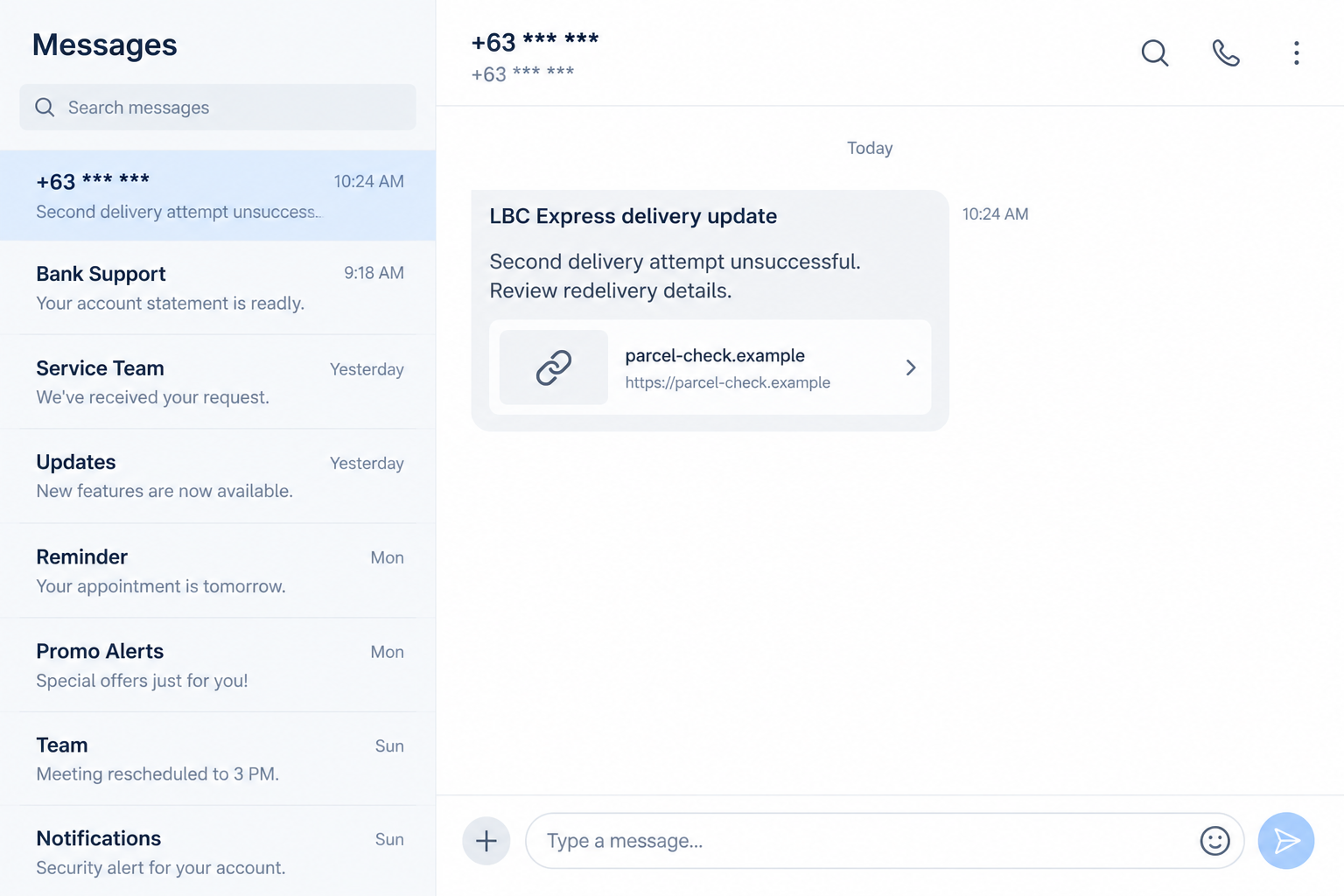
The LBC Express tracking scam begins with a message that appears to concern a missed delivery, an incomplete address, or a parcel awaiting another attempt.
A reported example on OnlineThreatAlerts claims a second delivery attempt failed and directs the recipient to a link for further instructions.
The important point is not whether a parcel could be delayed. It is whether the message leads to an independently verified LBC service.
LBC Express is a real courier. The suspicious text is an impersonation attempt, not evidence that LBC sent it or that its tracking system was breached.
What the evidence supports and what it does not
The reported wording shows a common delivery-phishing lure: a plausible problem, a short deadline, and a link that moves the customer away from known channels.
That wording alone does not prove a particular recipient has a parcel, reveal the sender’s identity, or establish exactly what every destination page collects.
Some versions request an address first. Others may seek card details for a small fee. Treat those as possible stages, not guaranteed steps in every message.
LBC’s own tracking page offers a separate way to check an actual shipment using a reference you already have.
Both images in this article are fictional screen reconstructions. They illustrate the reported lure without sharing a live phishing destination or someone’s private delivery details.
Warning signs to notice before tapping
- The link goes to an unfamiliar domain rather than a site you reached independently.
- The text mentions a second attempt but gives no matching tracking reference.
- It asks you to re-enter an address that a legitimate shipment already carries.
- A tiny redelivery charge appears before the parcel can be identified.
- The message pressures you to act before you can contact the sender or courier.
- The page requests card details, a one-time code, or unrelated account credentials.
None of those clues alone establishes every fact. Together, they are enough to stop and verify the delivery through another route.
Why a Missed-Delivery Text Is So Convincing
It borrows a problem people already expect
Parcels really do arrive late. Address details really can be incomplete. Many customers have seen genuine courier updates, so another short text rarely feels unusual.
The scammer does not need to know your order. Sending the same message widely will reach some people who happen to be waiting for something.
That coincidence can feel like confirmation. In reality, it may simply be the overlap between mass messaging and everyday online shopping.
Even a real package in transit does not authenticate a new link. Check the tracking number supplied by the retailer, not the one introduced by an unsolicited text.
It makes the smaller request seem harmless
At first, the page might ask only for a name and address. That information may seem less sensitive than a password or card number.
It still matters. A delivery address, phone number, and order expectation can help an impostor craft more convincing follow-up messages.
A page may then reveal a modest redelivery charge. The small amount is meant to feel easier than losing the parcel.
The real risk can be larger than that charge. A phishing checkout can capture card details and sometimes prompt an additional bank authentication step.
Real courier messages complicate the picture
It would be misleading to say that every LBC text is fraudulent. Couriers may send legitimate service notifications, and cash-on-delivery arrangements exist.
LBC itself discusses cash-on-delivery scam precautions. The practical distinction is verification, not a blanket ban on messages.
If the text refers to a shipment you recognize, open LBC’s official site yourself. Compare the tracking history, recipient, and expected service before responding.
When those facts do not line up, do not use the message’s reply option or link to settle the question.
How the LBC Express Tracking Scam Works
Step 1: A routine delivery issue lands in your inbox
The first text may mention an unsuccessful attempt, missing address detail, customs issue, or parcel that will be returned.
The reported LBC-themed example emphasizes a second failed delivery. That wording raises the stakes without having to identify a real parcel.
Some messages display a familiar sender name. Others arrive from a random number. Neither presentation proves who actually sent the message.
Scammers can write brand names into ordinary messages, and sender identifiers may not be reliable identity checks.
Step 2: The message offers an easy-looking fix
Instead of asking you to locate an existing receipt, the text supplies a direct link and suggests that the solution takes only a moment.
This is the key handoff. The message turns a delivery question into a visit to a site chosen by the sender.
Watch the complete destination, not just words such as “LBC,” “parcel,” or “tracking” within it. Those words can appear on unrelated domains.
A shortened or redirected link can also hide the final address. The safest response is not to expand it through the message.
Step 3: A page asks you to confirm the parcel
A convincing page may use a parcel icon, a tracking-style layout, and familiar delivery language. It can look polished without being connected to LBC.
The fictional example below shows how an address form might appear after the text. It is not a captured live phishing site.
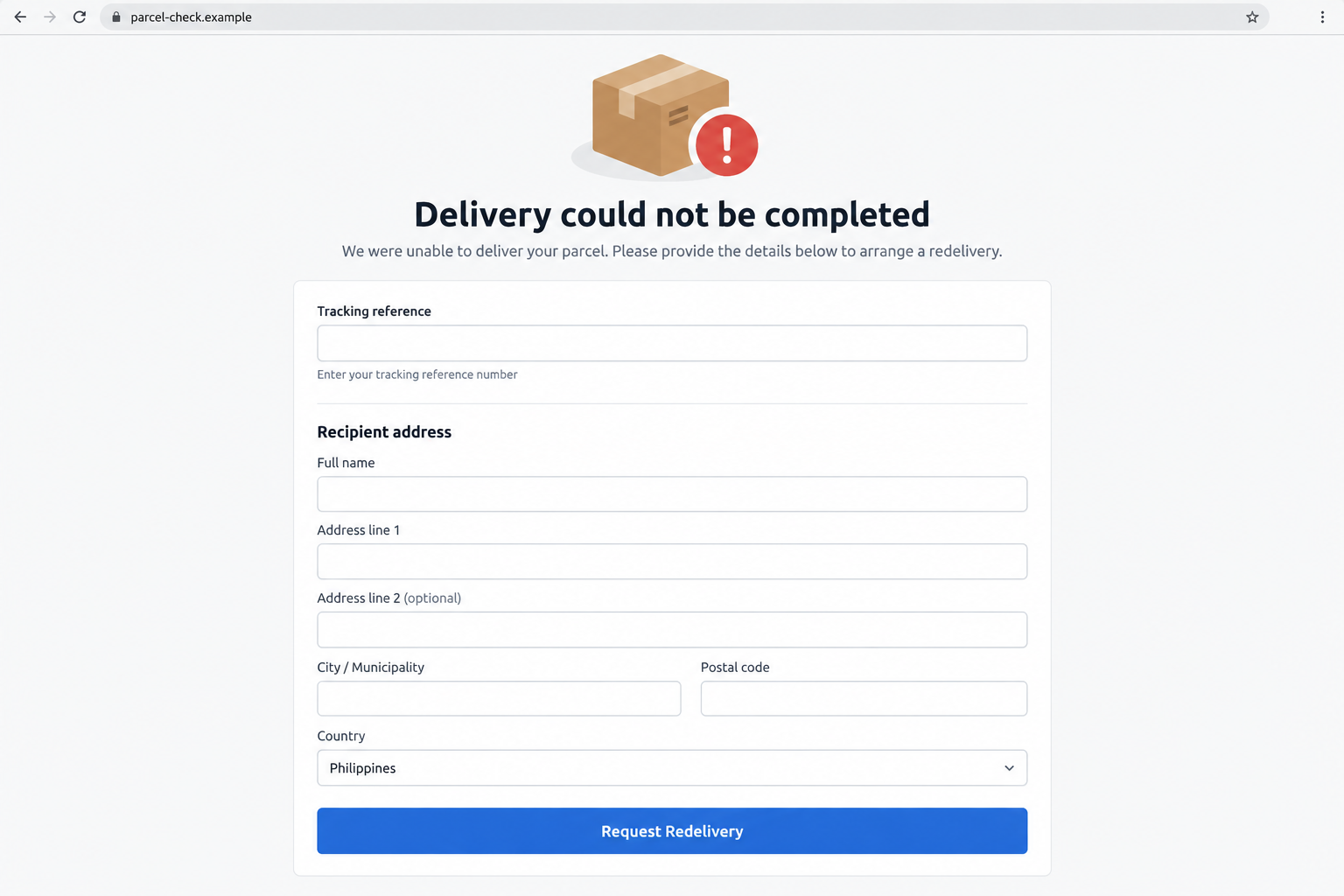
The page may ask for your name, phone number, complete address, or tracking reference. An empty form does not verify that a parcel exists.
If a site accepts any reference and still continues, that is another reason to question whether it is checking a real shipment.
Step 4: The inconvenience becomes a payment request
Some delivery-phishing pages introduce a small rescheduling or handling fee after the customer has already entered personal details.
A small fee can lower resistance. The customer focuses on the amount rather than on who owns the checkout and how the card data will be handled.
The reported text does not establish that every recipient reaches this stage. Still, it is a known risk when an unverified parcel link leads to a payment page.
Do not type card details into a site reached only through a message. Check the shipment through your retailer and LBC’s official channel first.
Step 5: The attacker may try to complete account or card access
A payment screen might ask for a bank one-time code. That code can authorize an actual transaction, even when the original fee looked tiny.
Some variants may use the collected phone and address for later messages. Others may simply take the card information and disappear.
These are potential outcomes, not a claim that all LBC-themed texts behave identically. The safe response is based on the unverified route itself.
Once personal or payment details have been submitted, move quickly to the relevant bank and account controls rather than waiting for the page to fail.
How to Check a Delivery Without Using the Text
Start with the order you actually placed
Open the retailer’s account or confirmation email that you received when placing the order. Find the courier name and original tracking reference there.
If the merchant has no LBC shipment for you, the message’s claim becomes much weaker. Do not let the text invent an order you cannot find.
For a parcel sent by a person, ask that sender for the waybill details through a contact method you already use.
Do not ask the suspicious message to supply proof. An impostor can send another convincing-looking screenshot or fabricated reference.
Use an independently opened tracking page
Type LBC’s official address into your browser or use a saved bookmark, then open its tracking service.
Compare the current status, destination, and expected delivery date with the text. A real tracking history should not depend on the suspicious link.
Remember that a legitimate delivery problem may still exist. The goal is to solve that problem without trusting an unverified message.
If the tracking service does not answer the question, reach LBC through a contact page opened from its official website.
Keep the link and the delivery separate
People sometimes assume the text is safe because a parcel eventually arrives. The two events can happen independently.
Conversely, a delayed shipment does not make a strange payment page legitimate. Verification must connect the exact notice to the exact shipment.
Look for a matching waybill, sender, and delivery event. If those details are missing, do not provide information just to discover what the page wants.
This separation is especially useful during holiday shopping, when many unrelated parcels and notifications arrive close together.
Three Delivery Situations That Can Be Confusing
You are expecting more than one parcel
When several orders are in transit, a vague text can attach itself to whichever delivery is on your mind. That makes coincidence particularly persuasive.
Keep the tracking references separate. Check each retailer’s order page and match a specific LBC waybill to a specific delivery event.
Do not assume that a message applies to one order simply because its date is close. A mass campaign can coincide with a real delivery window.
If you cannot establish which parcel the text means, that uncertainty is a reason to stop, not a reason to complete the link’s form.
A courier really did miss you
A missed delivery can be real while the text remains fake. The attacker is exploiting a real inconvenience, not necessarily inventing the entire situation.
Use the waybill and official tracking history to see what happened. Ask the sender or LBC what redelivery options are available.
Do not let the existence of a real missed attempt authenticate an unrelated URL. The proper destination still needs to be independently verified.
If a payment is genuinely required, confirm the amount and method through the official channel before entering a card anywhere.
A family member placed the order
Shared households often receive parcels under different names. A text may look relevant even when you do not personally remember ordering anything.
Ask the family member for the order confirmation or original tracking link. That is safer than forwarding the suspicious message and asking them to try it.
If the parcel is cash-on-delivery, confirm the purchase and amount with the person who ordered it before accepting or paying for anything.
These checks may take a few minutes, but they preserve a clear chain from the order to the courier and any legitimate payment.
What to Do if You Have Fallen Victim to This Scam
- Stop interacting with the message. Close the page and do not reply. Do not try another link in a follow-up text, even if it claims to correct the first one.
- Call the bank after entering card details. Find its official number on the card or in your banking app. Explain the parcel-page exposure and ask whether the card should be blocked or replaced.
- Report any one-time code you shared. Tell the bank exactly when and where the code was entered. Ask it to review authorizations and any pending transactions, not only completed charges.
- Protect accounts if you entered a password. Change it through the genuine service, enable multifactor authentication, and sign out other sessions where the service allows it. Change reused passwords elsewhere.
- Check your actual shipment independently. Use the retailer’s order page or LBC’s official tracking site. A real delivery may still need attention, but it should not be handled through the suspicious page.
- Preserve the evidence. Save the message, sender display, destination URL, screenshots, transaction records, and dates. Do not revisit the page merely to collect more details.
- Watch for follow-up contact. Someone who collected your address or phone number may send a more tailored courier or bank message. Treat each new request as unverified.
- Check the device if you downloaded something. A link alone does not prove malware installation. If you installed an app or file, remove it and run a reputable security scan before signing in again.
If the message only arrived and you did not open its link, deleting or reporting it is enough. You need not replace a card that was never entered.
If money has already moved, ask the bank about its dispute process promptly. Recovery depends on the payment method and timing, so avoid anyone promising guaranteed refunds.
Frequently Asked Questions
Does LBC Express send real delivery texts?
It can. The existence of legitimate notifications is why you should check the shipment through LBC’s independently opened tracking service, not assume every text is fake.
Is a second-delivery warning proof that a courier visited?
No. That phrase is easy to write into a bulk message. Compare it with the actual waybill history and any notice left through your usual delivery channel.
What if the link contains the word LBC?
Brand words inside a longer address do not establish ownership. Open LBC’s website yourself and use its navigation, rather than trusting the link in the text.
Can a small redelivery fee still be dangerous?
Yes. The amount may be small, while the page collects a card number, address, and authentication code. Contact your bank if you entered those details.
What if I entered only my address?
Monitor for tailored follow-up scams. Tell household members who may receive parcel messages, and avoid giving further information to callers who reference that address.
Should I call the number shown in the suspicious text?
No. Find contact details from LBC’s official website or your retailer. A number supplied by the same unverified sender cannot independently confirm the message.
The Bottom Line
The LBC Express tracking scam turns an everyday delivery concern into a reason to open an unverified link. The real courier’s name does not authenticate the message.
Check the original order and official tracking history first. If you entered card or account details, act through your bank and the genuine service immediately.








