

RxPros reviews matter when an affordable monthly price makes medical weight-loss treatment seem within reach. Choosing a program can feel like a hopeful turning point.
Before starting, follow the offer from its price card to the agreement attached to it. The details affect both your treatment and your budget.
Overview
The commitment matters more than the headline month
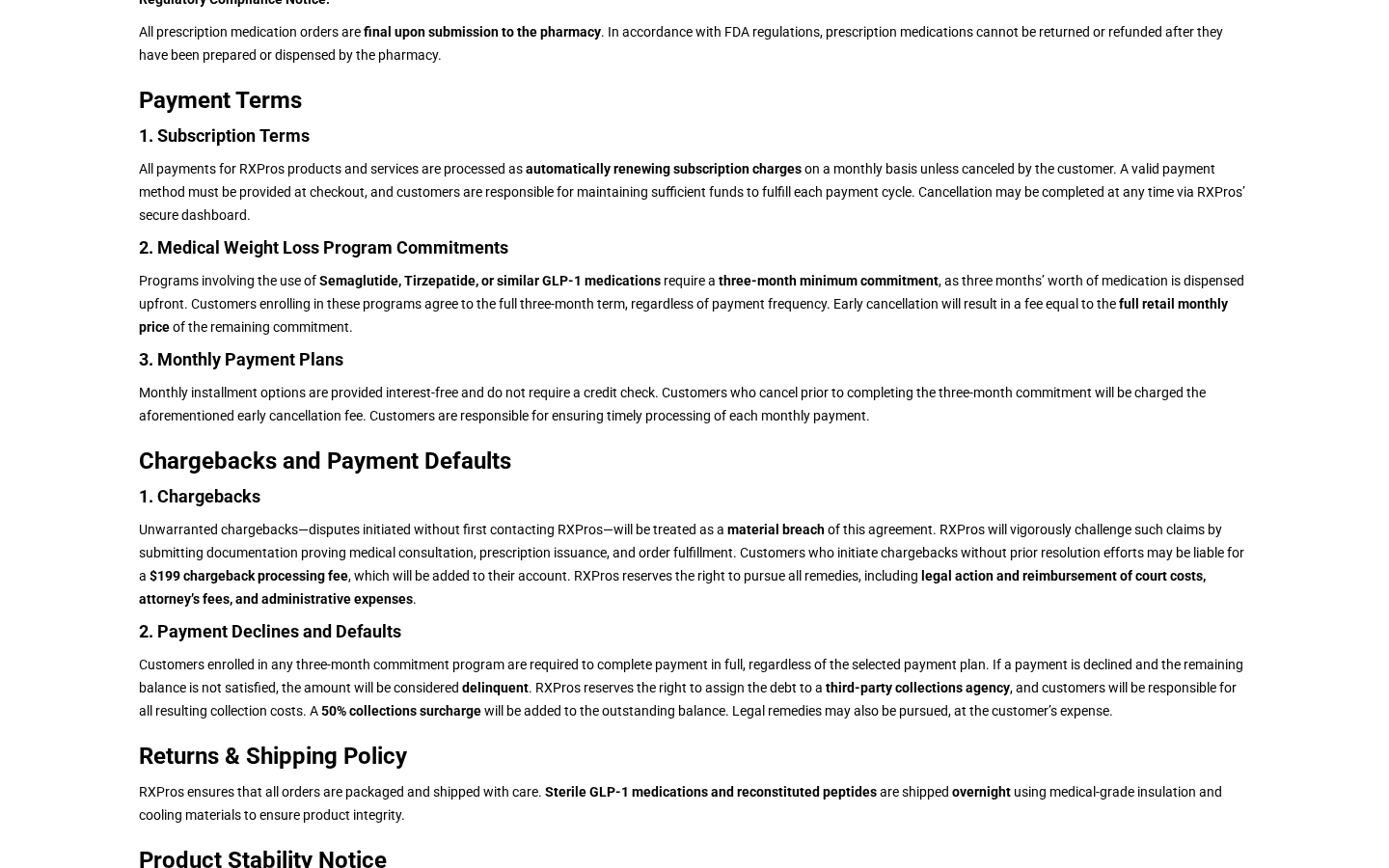
RxPros presents a telehealth weight-loss program using compounded GLP-1 medicines. Its published payment agreement describes automatic renewal and a minimum three-month commitment for relevant programs.
That means paying monthly does not necessarily mean buying one month at a time. Longer selected plans may involve longer terms.
Our finding is a material billing and cancellation risk requiring clarification before enrollment. We have not established that the service is fraudulent or that its medicines are counterfeit.
The policies contain consequential fees and conflicting language
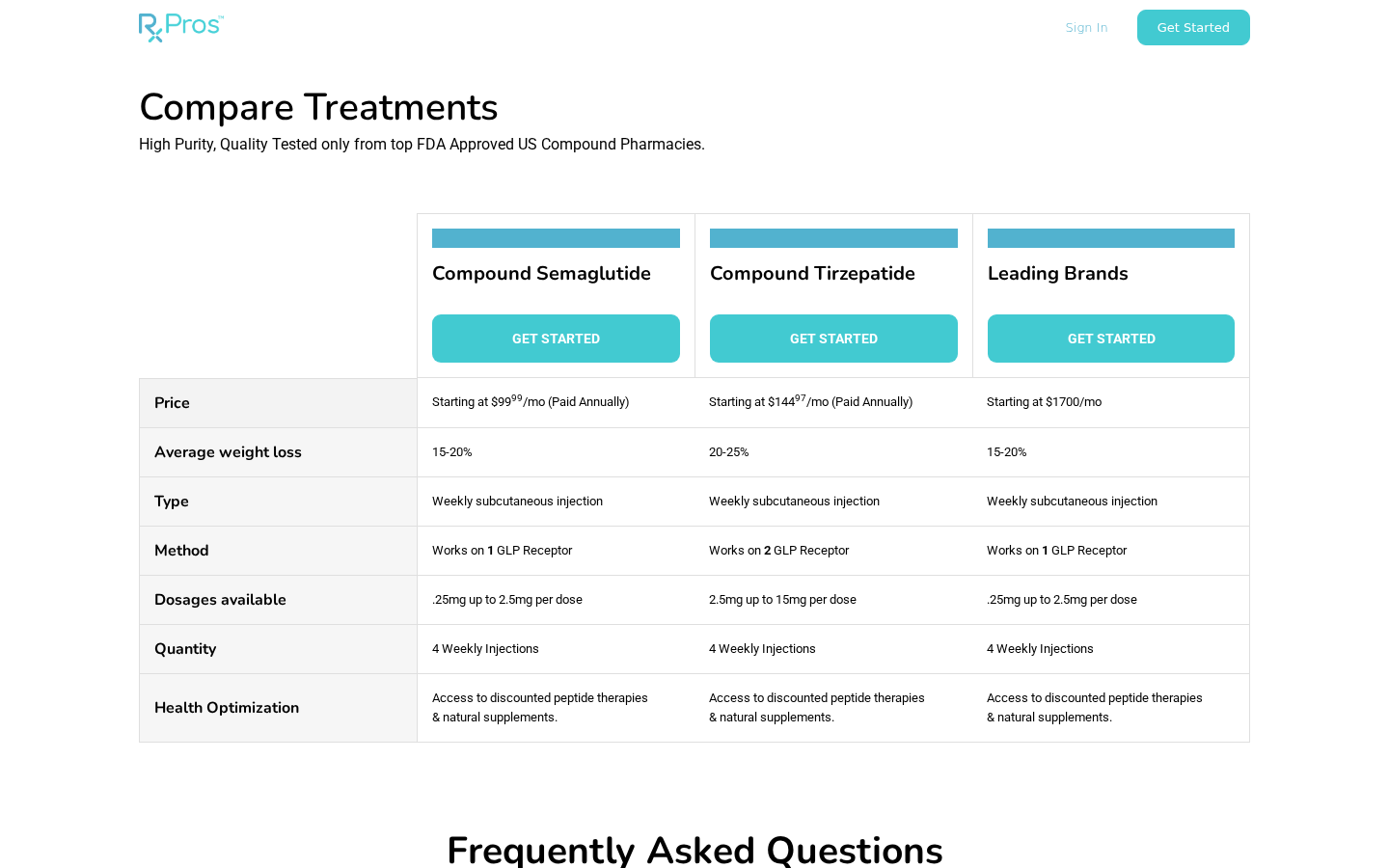
The agreement includes a possible $99 pre-consultation refund deduction, an asserted $199 chargeback fee, and a stated 50% collection surcharge. These are merchant policy claims.
It also combines cancellation-at-any-time language with minimum-term restrictions. Ask what ends immediately, what remains payable, and whether a final shipment is already committed.
- Confirm the total obligation for the selected plan.
- Distinguish a monthly installment from a month-to-month service.
- Identify the prescriber and dispensing pharmacy.
- Resolve the cancellation and refund rules before medical consultation.
Compounded treatment requires its own verification
Compounded drugs are not FDA-approved. That does not make every compounded prescription fraudulent, but it means drug approval cannot be inferred from pharmacy or ingredient language.
We reviewed public pages on October 8, 2026. No medical enrollment, purchase, license verification for an assigned provider, or independent medication testing was performed.
Proceed only after a qualified clinician confirms the treatment is appropriate and the merchant explains the complete financial commitment in writing.
Why monthly prices can be misleading without their terms
A monthly figure is convenient for comparison. It can also describe an annual payment divided by twelve, a promotional month, or installments on a longer agreement.
Those arrangements require different budgets. The meaningful comparison includes the amount charged today, the later amounts, the minimum term, and the conditions for leaving.
The captured RxPros comparison labels its low figures as paid annually. Other portions of the homepage display different pricing cards, so do not assume they describe identical plans.
Ask which specific offer you are accepting. A screenshot of a starting price cannot explain a different package eventually selected in the enrollment process.
Calculate the obligation before comparing services
For an illustrative program costing $150 monthly for three committed months, the initial obligation is $450. Canceling after one installment does not necessarily erase the balance.
That is an example, not a quote for RxPros. Request your actual plan’s total, payment schedule, renewal date, and cancellation calculation.
Compare care as well as price. Ask what clinical follow-up, pharmacy access, dose review, and help with problems are included.
A lower cost is less useful if you do not understand whom to contact for a medical question. The support arrangement belongs in the comparison.
How the RxPros Enrollment and Billing Process Works
Step 1: The offer makes treatment look accessible
The homepage emphasizes weight-loss outcomes, included services, and affordability. Those features may attract people who have already found branded treatments expensive.
Separate the general evidence about GLP-1 drugs from evidence about the exact preparation prescribed to you. Similar active-ingredient language does not establish identical finished products.
Before entering health information, read the operator’s privacy and medical-consent pages. You should know who receives it and how to contact the responsible service.
Do not exaggerate symptoms or omit medications to qualify for a program. A clinician needs accurate information to make a suitable prescribing decision.
Step 2: A plan sets the price and minimum term
Identify whether the selected price is promotional, quarterly, annual, or an installment option. Record the entire summary at the point where payment is requested.
Ask whether later payments fund medicine already supplied or a future shipment. That distinction is central to understanding a claimed remaining balance.
The payment agreement says relevant GLP-1 programs involve three months of medication supplied upfront. Longer plan selections require their own explanation.
Do not assume every visitor sees the same options. Your confirmation should identify the plan you chose, rather than leaving you to interpret a generic website statement.
A payment button should be the end of your financial comparison. Avoid proceeding while the total obligation remains unclear.
Step 3: Consultation and prescription change refund eligibility
The agreement distinguishes the stage before consultation from an order transmitted for pharmacy fulfillment. That makes the timing of a cancellation request important.
If you reconsider before the appointment, request a written decision immediately. Ask how much would be refunded and which policy supports the calculation.
A denied prescription is different from a customer changing their mind. The provider’s clinical decision and the merchant’s billing decision should be documented separately.
Do not treat a fee dispute as a reason to start unsuitable medication. Clinical appropriateness must remain independent of money already spent.
Step 4: The pharmacy supplies an identifiable preparation
Before using medication, identify the dispensing pharmacy and prescriber. Confirm that the label, patient name, preparation, and instructions match what was prescribed.
For a compounded injection, ask the pharmacist to explain concentration and the corresponding prescribed dose. Do not calculate injection quantities from an advertisement.
Keep the supplied instructions and packaging. If a label is incomplete or conflicts with the prescription, contact the pharmacist and prescriber before use.
Ask about storage for the exact preparation received. A broad website assurance is not a substitute for pharmacy instructions applying to that formulation and shipment.
We did not assess the temperature or stability of any delivered medicine. No conclusion about an individual package’s safety can be drawn from this page review.
Step 5: Stopping renewal may leave a disputed balance
Cancellation can mean several things: stopping a future renewal, requesting no further shipments, seeking a refund, or challenging installments on an existing commitment.
State which action you need. Ask the company to list the account status, any shipment already arranged, and each remaining amount it says is payable.
The policy describes early-cancellation liability using remaining commitment and retail-price language. Get a worked calculation for your selected offer.
Do not infer that deleting a payment method settles the account. It may interrupt charging without resolving the disagreement about the obligation.
Conversely, the merchant’s assertion that you owe money is not a final legal determination. Ask your payment provider or qualified adviser about a documented dispute.
Step 6: Billing problems need their own evidence
Keep medical concerns and transaction concerns distinct. A problem with a charge can be explained without publishing private health information or guessing about the medication’s contents.
Build a timeline containing enrollment, consultation, prescription issuance, shipment, cancellation request, and charges. Each date can affect the explanation of what happened.
A merchant’s warning about chargeback fees should not replace your issuer’s explanation of its dispute process. Describe the issue accurately and ask what evidence is required.
We have not determined whether the policy’s fees are enforceable in your circumstances. Do not treat a website statement as a court ruling or personal legal advice.
Compounded GLP-1 drugs and FDA approval
FDA’s guidance on unapproved GLP-1 drugs explains that compounded versions do not undergo its premarket review for safety, effectiveness, and quality.
FDA recommends obtaining a prescription and using a state-licensed pharmacy. Ask the clinician why a compounded preparation meets a need an approved product cannot meet.
The agency’s current compounding guidance says semaglutide and tirzepatide shortages are resolved. Shortage-based explanations therefore need current, specific clarification.
That statement does not establish that every individualized compounded prescription is unlawful. Different conditions apply, and a particular prescriber and pharmacy must explain their basis.
Likewise, an inspected or regulated pharmacy does not make each compounded formulation FDA-approved. Read the product-level disclosure rather than inferring approval from an institutional phrase.
Ask for an explanation you can actually use
A satisfactory clinical answer should identify the preparation, why it was selected, relevant risks, monitoring, and the contact route for problems.
A satisfactory billing answer should identify the total, payment schedule, commitment, and exit conditions. Neither answer should be replaced by a general assurance that everything is included.
If an agent cannot answer a pharmacy question, request the pharmacist. If the pharmacist cannot explain an account charge, request the merchant’s billing team.
Company, Address, and Fulfillment Checks
RxPros LLC is separate from its clinical partners
The terms of use name RxPros LLC and describe third-party services. The billing platform, prescriber, and pharmacy have different responsibilities.
Identify each party involved in your care. A company name in a footer cannot independently verify a clinician’s license or a pharmacy’s authority to dispense.
Do not confuse RxPros with another business using a similar name. Complaints or regulatory actions concerning Rx.com or ProRx should not automatically be assigned here.
The Wyoming address does not locate the medicine
The site publishes 1309 Coffeen Ave Ste 15880, Sheridan, WY 82801. We did not establish the property’s function or where a particular prescription would be prepared.
A business contact address is not necessarily a clinic or compounding laboratory. Ask the named pharmacy for its own licensed location and contact information.
Do not mail medicine to the corporate address without instructions. Refund correspondence and medication handling are separate processes.
Billing support and medical advice need separate routes
RxPros lists support@rxpros.com and +1 855-808-5028. We have not tested their response time or ability to complete a cancellation.
For a billing issue, request a written account explanation. For a dosing or adverse-effect question, contact the responsible healthcare professional.
A support acknowledgment does not establish that either issue is resolved. Keep the actual cancellation decision or clinical instructions.
The dispensing record should trace the preparation
Retain the pharmacy label, lot information where provided, prescription, formulation, and storage instructions. Ask about any mismatch before administering a dose.
We have no batch test or ingredient-origin evidence for an RxPros order. Claims that its medication is contaminated, Chinese-made, or fake would exceed this investigation.
Traceability offers a concrete way to investigate concerns. A vague suspicion about an online service does not identify the preparation supplied to a patient.
What to Do If You Enrolled With RxPros
- Collect your account and treatment records.
Save the plan description, receipt, agreement, consultation date, prescription, pharmacy information, and every charge. Keep private medical files secure.
Separate the financial timeline from clinical details. Send only relevant information through the appropriate channel when requesting billing help.
- Clarify the minimum commitment immediately.
Ask how many months your selected plan covers, the amount still claimed, and whether the low monthly figure requires advance payment.
Request an itemized calculation rather than a link to general terms. Confirm whether cancellation would stop renewal, shipments, installments, or only some of them.
- Request a precise cancellation outcome.
Use the account controls and published support channel as appropriate. State the intended effective date and ask for written confirmation.
If the company says cancellation is restricted, request its reason and account-specific calculation. Preserve the reply for any subsequent payment dispute.
- Address medication questions with the pharmacy and prescriber.
Before use, resolve unclear concentration, instructions, storage, or labeling. Do not substitute advice from a sales page for patient-specific guidance.
Seek urgent care for severe or concerning symptoms. For a suspected quality problem, retain packaging and ask a healthcare professional about appropriate reporting.
- Review refunds and fees without assuming the policy decides your rights.
Ask which stage the order reached and what amount is refundable. A stated fee should be explained against your transaction and request.
Contact your issuer promptly about unresolved or unauthorized billing. The CFPB explains the credit-card dispute process; follow the instructions your issuer provides.
- Monitor the account after any promised resolution.
Verify that refunds arrive and later renewal charges stop as agreed. Keep confirmation of the final balance and subscription status.
If a collection demand arrives, request documentation and qualified guidance rather than ignoring it or paying an unverified caller. Use independently obtained contact details.
Frequently Asked Questions
Is RxPros a confirmed scam?
We found significant commitment, fee, and cancellation concerns. This review does not establish medical fraud, counterfeit medication, or unlawful conduct by every partner.
Does a monthly payment mean I can leave after one month?
Not necessarily. The agreement describes minimum commitments, so determine whether your payments are installments on a longer obligation.
Why should I check the paid-annually wording?
A monthly equivalent can require a much larger advance payment. Compare the actual charge and total term, not just the figure used for advertising.
Are compounded prescriptions FDA-approved?
No. A pharmacy’s regulatory status does not grant FDA approval to its compounded formulation. Ask the prescriber about the reason for the preparation selected.
Does the chargeback-fee clause prevent contacting my issuer?
A merchant policy should not replace issuer guidance. Explain your documented dispute and ask about the applicable process; enforceability depends on the circumstances.
Who should answer a question about the dose?
The prescriber or dispensing pharmacist should explain your prescription and preparation. Do not derive an injection dose from a price card or general advertisement.
The Bottom Line
RxPros reviews need to account for the complete commitment. Automatic renewal, minimum terms, and fee language can make the arrangement more consequential than its monthly headline suggests.
Confirm the total obligation and cancellation outcome before enrollment. Independently identify the clinical parties and discuss the suitability of compounded treatment with a qualified professional.








