

A polished energy-investment presentation can make the opportunity feel established before you examine it. The Del Mar Energy investment warning starts with that familiar sense of reassurance.
Industry photographs, official-looking references, and a professional dashboard deserve a closer look. Follow the identity behind the offer before deciding what those details mean.
Overview
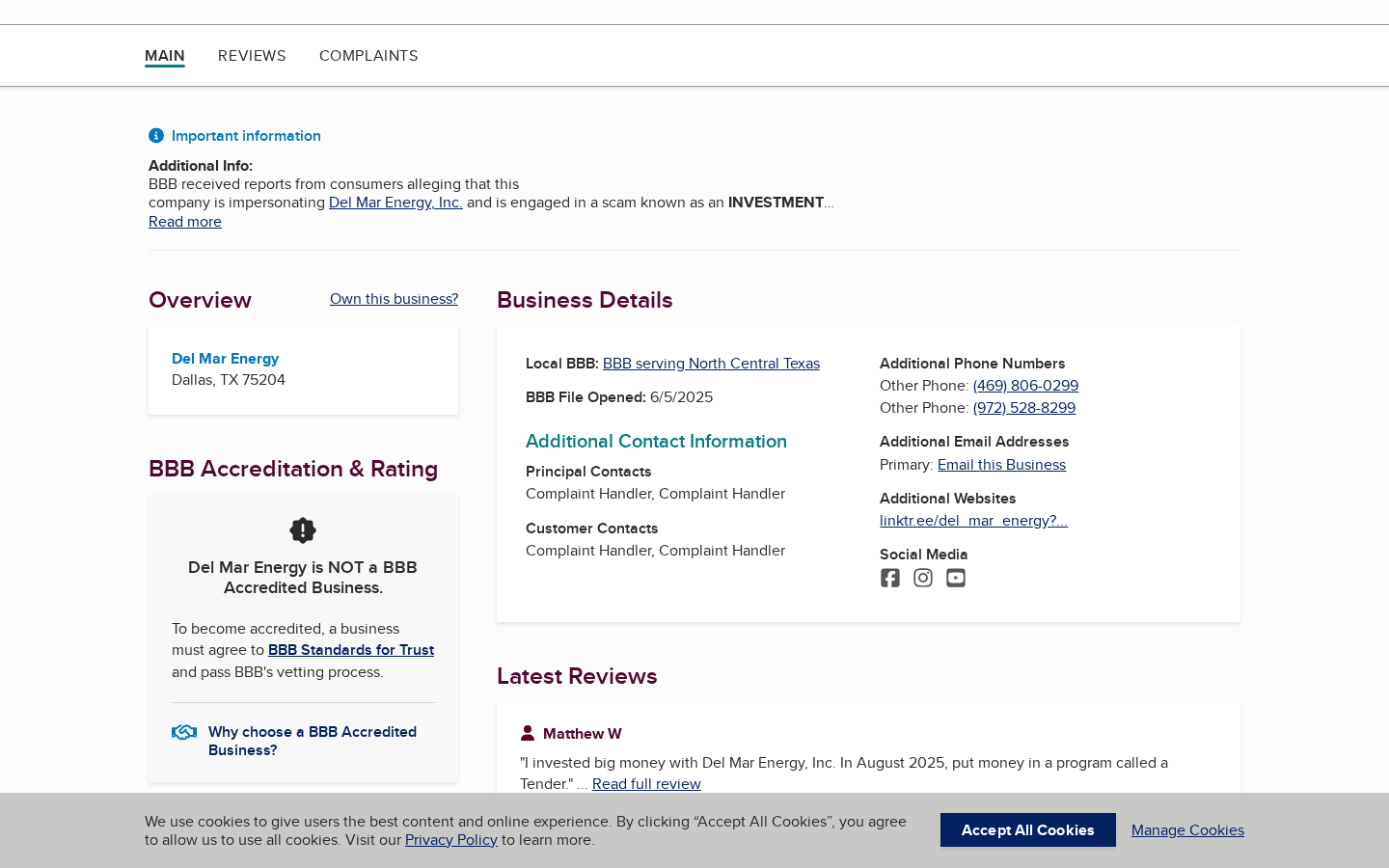
BBB has published an impersonation warning
BBB’s profile for the online operation reports consumer allegations of impersonating Del Mar Energy, Inc., misrepresenting investments, and ignoring refund requests.
That is a serious reason to stop before sending money. A matching company name or a historical securities filing does not authenticate an online promoter.
This article concerns the investment promotion and identity concerns described in that warning. It does not accuse every business with the Del Mar name of participating.
A Form D is not SEC protection
A genuine historical Form D exists for Del Mar Energy Inc. However, a Form D does not establish SEC approval, licensing, or a guarantee of investors’ money.
Promotional references to regulatory backing should be compared with what the cited document actually does. Official vocabulary can create an impression the filing cannot support.
- Verify the person and entity receiving the payment.
- Match the current offer to its actual legal documents.
- Independently confirm any regulator or auditor relationship.
- Investigate withdrawal conditions before committing funds.
The evidence warrants a firm investment warning
Our review on October 8, 2026 found the BBB warning and historical SEC record. Consumer accounts remain allegations, not independently verified transaction histories or court findings.
We did not deposit funds, test withdrawals, authenticate an audit engagement, or establish common ownership of every similarly named domain.
Do not invest through the disputed online promotion while its identity and representations remain unresolved. Independent confirmation must precede payment, not follow a withdrawal problem.
The company name is the beginning of verification
Searching a name can produce genuine corporate information alongside unrelated promotions. A person offering an investment may point to whichever result looks most reassuring.
That is why the question is not merely whether a company with the name exists. The question is whether the person, website, and payment account represent that company.
A copied address, executive name, or filing identifier can be accurate information used in an inaccurate context. Verify the connection through independently obtained channels.
What the historical filing actually shows
The 2014 Form D identifies Del Mar Energy Inc., a Texas issuer, and a Frisco address with CIK 1436535.
It concerns an exempt offering involving oil-and-gas working interests. Its opening notice explicitly cautions that SEC has not necessarily reviewed the filing’s accuracy.
Those historical details do not establish today’s authorized website, payment instructions, or investment program. The document’s age and purpose must remain part of the explanation.
A current promoter should supply documents for the actual offering and explain the relationship to the issuer. An old filing alone cannot make that connection.
Ask for current authorization linking the representative to the issuer. Confirm it through independently obtained company contacts rather than accepting a forwarded screenshot.
A document supplied by the person being checked remains a claim until its source is authenticated. Professional formatting cannot resolve that uncertainty.
OMB information identifies a form, not your protection
An OMB number printed on Form D concerns the government’s information-collection form. It is not a unique investor-insurance policy or an approval of the advertised opportunity.
Likewise, the existence of a filer identifier does not mean a website is regulated in the way its marketing suggests. Ask what specific status is being claimed.
Investor.gov’s warning about false registration claims specifically explains why Form D should not be presented as SEC approval or licensing.
If the explanation relies on a certificate or filing but never identifies the actual regulatory status, stop. A claim about protection should survive a plain-language question.
How the Reported Del Mar Energy Investment Funnel Works
Step 1: An investment approach introduces an industrial story
BBB’s warning describes consumers being approached about investment opportunities. Energy projects and industrial assets can make a proposition appear tangible compared with an unfamiliar online trading service.
Ask what you would actually own: shares, debt, a working interest, another contractual right, or merely an account balance on a platform.
Each arrangement has different documents and risks. A photograph of an oil field does not identify your rights to its income.
Do not assume a professional presentation proves that a pictured project exists, is owned by the promoter, or funds the advertised payments.
Step 2: Official references make the promotion seem safer
Promotional material associated with this investment story has used SEC and major-auditor references. These claims require confirmation from the relevant institution, not the promoter alone.
Ask for the exact report, audited entity, reporting period, and scope. An auditor’s name in marketing is not the same as an authenticated audit opinion.
We did not confirm an engagement with Deloitte, EY, or another named professional firm. Their names should not be treated as proven support for the online offer.
Similarly, a government website link can open a real record without validating the caller. Check whether the record matches the specific transaction proposed.
Step 3: A dashboard can replace questions with confidence
An investment account may display balances, projects, or scheduled payments. Those entries represent what the interface reports, not necessarily independently held assets.
Ask who holds the funds, how ownership is recorded, and where statements originate. A platform-controlled screenshot cannot perform the role of an independent custodian’s record.
If you can see a growing balance, verify whether it is withdrawable under the written agreement. Do not treat the visible figure as money available in your bank.
A small payment also cannot validate the whole operation. It proves only that a particular payment occurred, not the origin or sustainability of later returns.
Step 4: The payment request reveals another identity to verify
Before a transfer, compare the recipient with the contracting entity. Ask why funds would go to an individual, unrelated company, intermediary, or cryptocurrency wallet.
A mismatch may have an explanation, but it must be documented and independently checked. A reassuring message from the same salesperson is not sufficient confirmation.
Keep the precise instructions, recipient account, currency, and reference. These details matter if you later ask a bank or regulator to investigate.
Do not send a small test deposit simply to settle your uncertainty. Identity and offer verification should happen before any payment amount is committed.
Step 5: A withdrawal or refund exposes the practical risk
BBB reports allegations of ignored refund requests. That warning makes exit conditions a central question, rather than a detail to leave until you need money back.
Ask what contractual restrictions apply, who authorizes release, and whether any fee is disclosed in the agreement. An explanation should connect to the actual terms.
If someone demands another payment to release your balance, stop and seek independent help. Do not assume that a new transfer will repair the first problem.
This precaution describes a common investment-fraud pattern. We have not established that every person approached in this particular case receives the same additional-payment demand.
The most useful response is to preserve the complete sequence and contact the payment provider promptly. Waiting for repeated promises can reduce available recovery options.
Company, Address, and Investment Identity Checks
A historical issuer does not authenticate an online operation
BBB expressly frames the identity issue as reported impersonation of Del Mar Energy, Inc. Keep the alleged online conduct attached to the operation it describes.
Do not attribute it automatically to the issuer in the older SEC filing. Matching names are not sufficient evidence of matching control or responsibility.
Independently establish the authorized representatives, current offer, and recipient of funds. Each connection needs support beyond a shared name.
The reported Dallas locations need context
BBB says an earlier advertised location was a Dallas government building and describes a later address as believed to be virtual. Those are BBB’s reported findings.
A virtual location alone does not prove fraud, but it cannot establish the presence of an industrial headquarters, investment office, or staffed customer service operation.
Ask what the address represents and whether correspondence reaches the legal counterparty. An impressive location should not stand in for verifying the business.
A published number is not an independently confirmed contact
The BBB profile includes phone information associated with the reported operation. We did not call those numbers or verify who currently answers them.
Find an independent contact route when confirming affiliation with another business. Calling only the number inside the disputed presentation can return you to the same promoter.
Record responses concerning identity, withdrawals, and the offer. A friendly conversation does not replace documents or prove that an account balance is recoverable.
Project and auditor claims should have a traceable record
For an industrial investment, ask about ownership, contractual rights, independent reporting, and the source of returns. Generic project descriptions leave these questions unanswered.
A professional firm’s involvement has a defined scope. Even a genuine report may concern a different entity, period, or service from the one being advertised.
We have not verified every project or partnership claimed in promotional copies. Until those relationships are substantiated, they cannot be counted as protection for a deposit.
How to read withdrawal complaints without overstating them
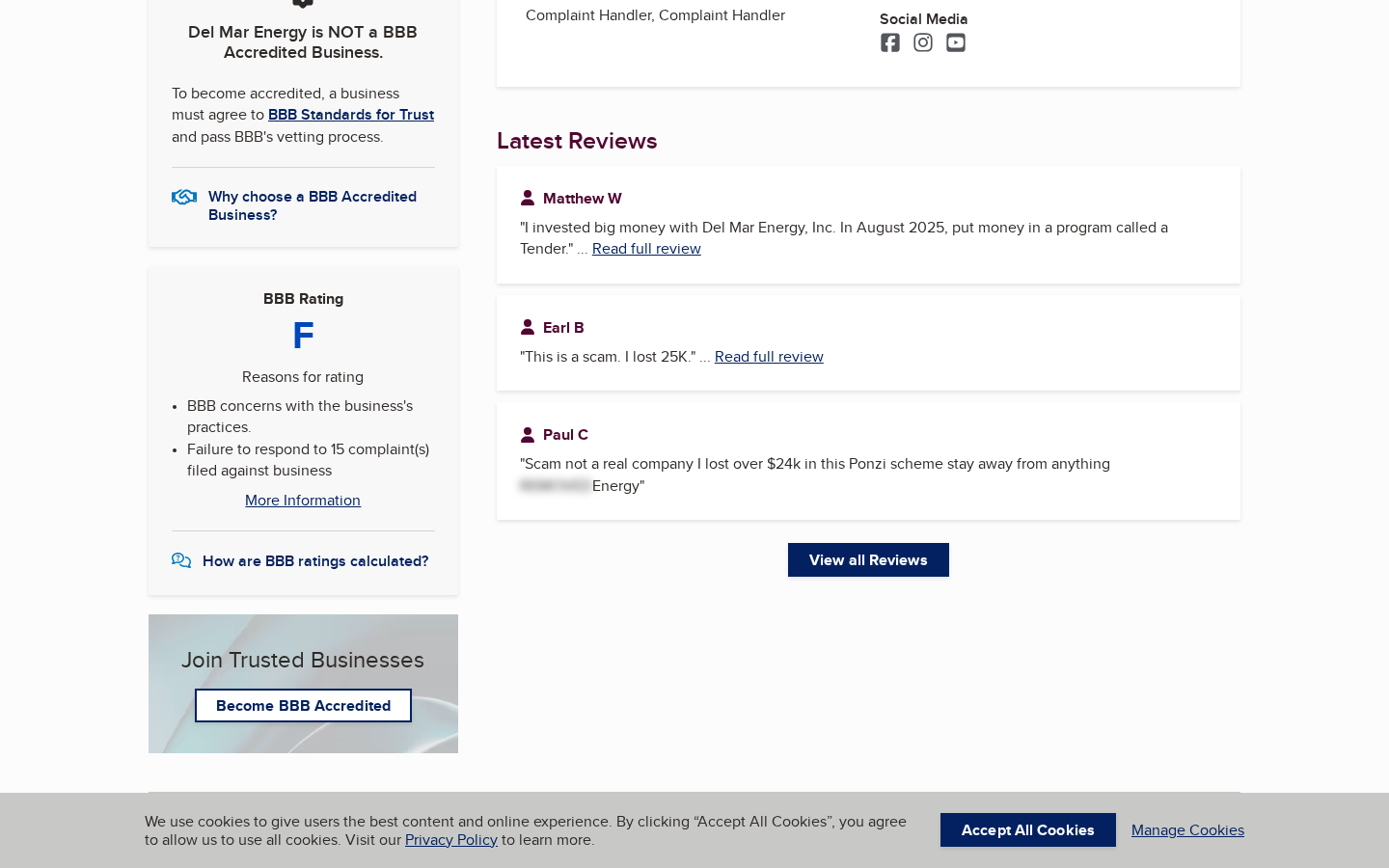
The public reviews shown above are consumer accounts. They are relevant warning signals, but a review does not independently establish the complete transaction or every allegation.
Look for details that can be checked: the exact website, dates, payment recipient, contract, withdrawal request, and written response. Broad labels provide less usable evidence.
Also distinguish a withdrawal restricted by a disclosed agreement from a promoter refusing to honor its own terms. The documents and timeline matter.
FTC’s investment-scam guidance recommends independent verification and warns about guaranteed profits, pressure, and promises of little risk.
You do not need a court judgment to decide against an unverified offer. You do need sufficient evidence before accusing a specific entity of a specific act.
What to Do If You Sent Money to This Investment Promotion
- Pause further transfers.
Do not add funds while identity or withdrawal concerns remain unresolved. Avoid paying a new verification, tax, insurance, or release amount solely on the promoter’s instructions.
Ask an independent professional about any claimed obligation. Keep the explanation you received, including where the requested payment would go.
- Contact the payment provider immediately.
Tell the bank, card issuer, or exchange how and when the funds were sent. Ask whether a recall, dispute, account flag, or other response is available.
For cryptocurrency, preserve the transaction identifier and recipient address. Recovery is uncertain; do not assume that anyone can simply reverse a completed blockchain transfer.
- Build an evidence file.
Save contracts, promotional claims, website addresses, account screenshots, transfer records, and messages. Include every withdrawal request and the response it received.
Make a dated timeline while events are fresh. Keep originals and avoid editing messages in ways that remove context or obscure recipients.
- Secure accounts if information was misused.
Change any reused password and review relevant account access. If you disclosed identification or banking details, explain that exposure to the appropriate financial institution.
A suspected investment loss does not automatically establish identity theft. Use evidence of misuse to guide further protective steps and reporting.
- Report the actual operation and transaction.
Provide regulators with the exact domain, payment recipient, dates, and documents. Explain the identity claim rather than reporting only the familiar company name.
FTC and SEC accept reports through their official channels. Independently navigate to those channels, and do not let a promoter submit or control the report for you.
- Watch for a second approach promising recovery.
Someone may contact you claiming to retrieve the investment for an advance fee. Do not give account access or send funds based on that assurance.
FTC’s recovery-scam guidance explains this further risk. Verify any professional service independently and understand its actual agreement before engaging it.
Frequently Asked Questions
What is the Del Mar Energy investment warning about?
BBB reports consumer allegations of an online operation impersonating Del Mar Energy, Inc. and mishandling investment and refund representations.
Does the warning accuse every Del Mar Energy business?
No. The online promotion must be distinguished from the historical issuer and any other legitimate entity with a similar name.
Does a Form D prove SEC approval?
No. Investor.gov explicitly warns that Form D is not evidence of SEC approval, licensing, or registration of the kind a promoter may imply.
Does a successful small withdrawal prove the investment is safe?
No. It shows one payment occurred. It does not authenticate the operator, verify assets, or guarantee access to the remaining balance.
Should I pay an additional fee to unlock funds?
Pause and verify the claimed requirement independently. An extra transfer can increase a loss without resolving the original withdrawal or identity problem.
What information is most useful when reporting?
Supply the exact domain, recipient account, transaction identifiers, contracts, representations, and withdrawal timeline. A name alone can incorrectly implicate an unrelated business.
The Bottom Line
The Del Mar Energy investment warning deserves attention because it concerns identity, regulatory claims, and access to funds. A historical filing cannot authenticate the online offer.
Do not transfer money while those questions remain unresolved. If you already paid, stop additional transfers, preserve the records, and contact your payment provider promptly.








