

NOBL luggage reviews often start with a suitcase that seems to solve every travel annoyance. Then comes the question that matters after delivery: what happens if it disappoints?
Before packing it for your next flight, take a closer look at the promises that make the purchase feel safe.
Overview
A real luggage offer with a confusing safety net
NOBL is selling luggage through an operating online store. Our review does not establish that the brand is a fake business or that every purchase is fraudulent.
The concern is narrower and concrete: its UK return documents do not tell the same story about when buyers must act and what a return costs.
A large return-window headline is reassuring. But a short notification deadline can matter much more than the larger number when you actually need help.
What the UK documents show
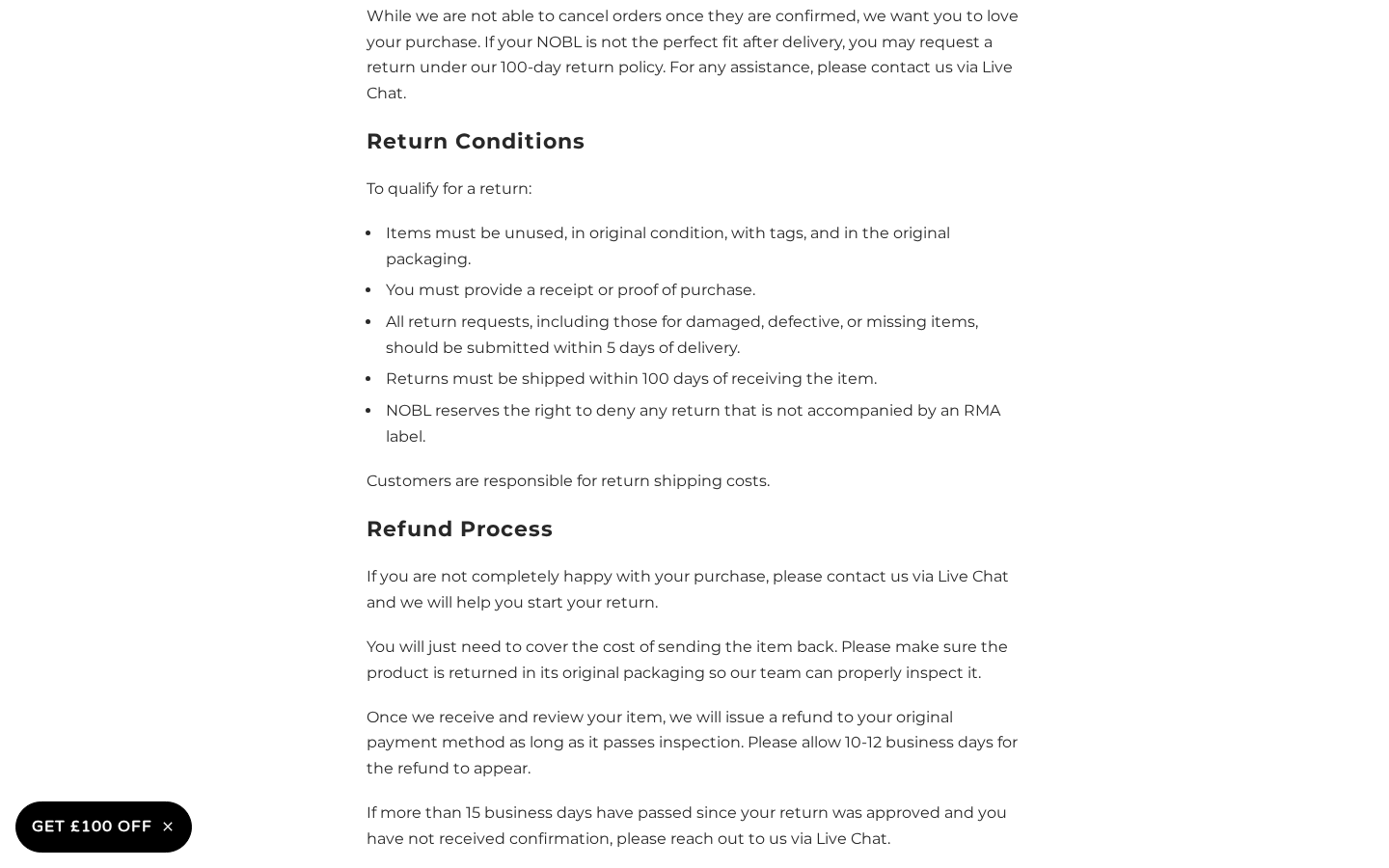
On October 8, 2026, the UK Returns and Refunds page required return requests within five days of delivery, despite advertising a 100-day window.
The separate UK refund policy instead specified seven days and a 5% restocking fee. These are pages on the same regional storefront.
That inconsistency deserves an answer before payment. It is not something shoppers should have to resolve after an unwanted suitcase arrives.
- Ask which request deadline applies to your specific order.
- Find out whether the offer is standard merchandise or excluded final-sale stock.
- Obtain the approved return destination and a realistic postage estimate.
- Keep the policy version that was displayed when you paid.
Our assessment and the limits of this review
This is a buyer-risk investigation, not a finding that NOBL steals money or never honors refunds. We did not purchase luggage or submit a test return.
The mismatch is verified in published terms. Actual service quality, the condition of individual suitcases, and how support resolves conflicting wording require separate evidence.
Until the seller clarifies the conditions in writing, do not treat the 100-day headline as permission to take the luggage on several trips before deciding.
What NOBL Luggage Reviews Miss About Returns
Picture an ordinary purchase: your suitcase arrives on a Monday, but your flight is the following weekend. You leave it boxed while finishing work and travel arrangements.
By the time you inspect the wheels or measure the case, a five-day notification period could already be an issue under the wording reviewed.
This example is not an account of a NOBL customer’s experience. It shows why the distinction between requesting a return and shipping it matters.
A policy can allow plenty of time to send an approved item back while allowing very little time to request that approval.
Those are two different clocks. Advertising the longer one without making the shorter one equally obvious leaves buyers with an incomplete picture.
For luggage, another distinction matters: checking fit at home is not the same as using the product through airports, baggage handling, rain, and hotel stays.
If the policy requires unused merchandise, your first journey may change eligibility even when the headline return window has months remaining.
A commercial guarantee also does not settle every question about defective goods or consumer rights. Applicable protections can depend on your location and transaction.
Do not assume the seller’s policy is the entire legal answer. If a significant dispute develops, seek guidance from your local consumer-protection service.
How the NOBL Purchase and Return Process Works
Step 1: The offer makes a suitcase feel like an easy upgrade
The storefront presents luggage, bundles, accessories, sale promotions, and a long return period. Together, these can make an expensive travel purchase feel less risky.
Before comparing discounts, decide what you actually need: a cabin case, checked luggage, or both. Extra pieces are not savings if they remain unused.
Measure the external dimensions, including wheels and handles. An attractive carry-on description cannot guarantee acceptance by every airline on every fare.
Write down your route’s baggage allowance separately. That simple check prevents a product-selection mistake from becoming a costly return problem.
Step 2: The regional storefront determines which documents you see
NOBL has different regional shopping pages. This investigation’s deadline conflict comes from the UK site, not from mixing a UK sale with unrelated US conditions.
Regional differences still matter. A policy you found through search may not govern the checkout you eventually use.
Check the final storefront address and delivery country before entering payment details. Save the receipt alongside that region’s policy links.
If you are redirected during shopping, reopen the return conditions after the redirect. Do not rely on a promise remembered from another version.
Step 3: The final-sale label can change the return expectation
The reviewed UK documents exclude certain promotional and final-sale purchases. A reduced price should therefore trigger an eligibility check, not automatic confidence in the guarantee.
Ask whether the exact item and bundle are returnable. A general answer about the brand’s standard purchases is not enough for a promotion-specific order.
Capture the product name, selected color, bundle contents, and any final-sale notice together. Those details connect the advertised promise to what you actually bought.
Also inspect optional extras. Shipping protection, accessories, or another bag may have their own prices and conditions; do not assume they inherit the suitcase’s refund treatment.
Step 4: Delivery starts the practical inspection period
Inspect the suitcase as soon as it arrives, while keeping the packaging and tags. Compare its condition with the item you ordered.
Check wheels, handles, locks, zippers, seams, and included accessories without turning a home inspection into a trip or damage test.
Photograph any problem clearly. Include a wide view showing the whole case and a close-up that identifies the defect.
If you want to return it, notify support promptly. Do not wait until the conflicting five-day and seven-day deadlines have passed while debating which is correct.
Step 5: Approval, postage, and inspection determine the refund path
The UK return page requires authorization before dispatch. Sending luggage to an address found elsewhere can create an avoidable argument about whether it reached the right place.
Request the destination, return reference, packaging requirements, and expected deductions in one written response. Then obtain a postage quote before committing.
Keep delivery tracking until the refund clears. A delivered return and a processed refund are separate events, so record both dates.
If support proposes store credit or a partial discount, compare that offer with your requested remedy. Accepting a compromise should be your decision, not a misunderstanding.
The Return Documents Do Not Match
The two screenshots show why this is more than a vague complaint about fine print. Buyers are reading separate versions of the same regional return arrangement.
One tells them to request within five days. Another gives seven days and adds a restocking deduction. A buyer should not need to guess which survives checkout.
A useful clarification would identify the applicable document, correct outdated wording, and state how already-placed orders are handled.
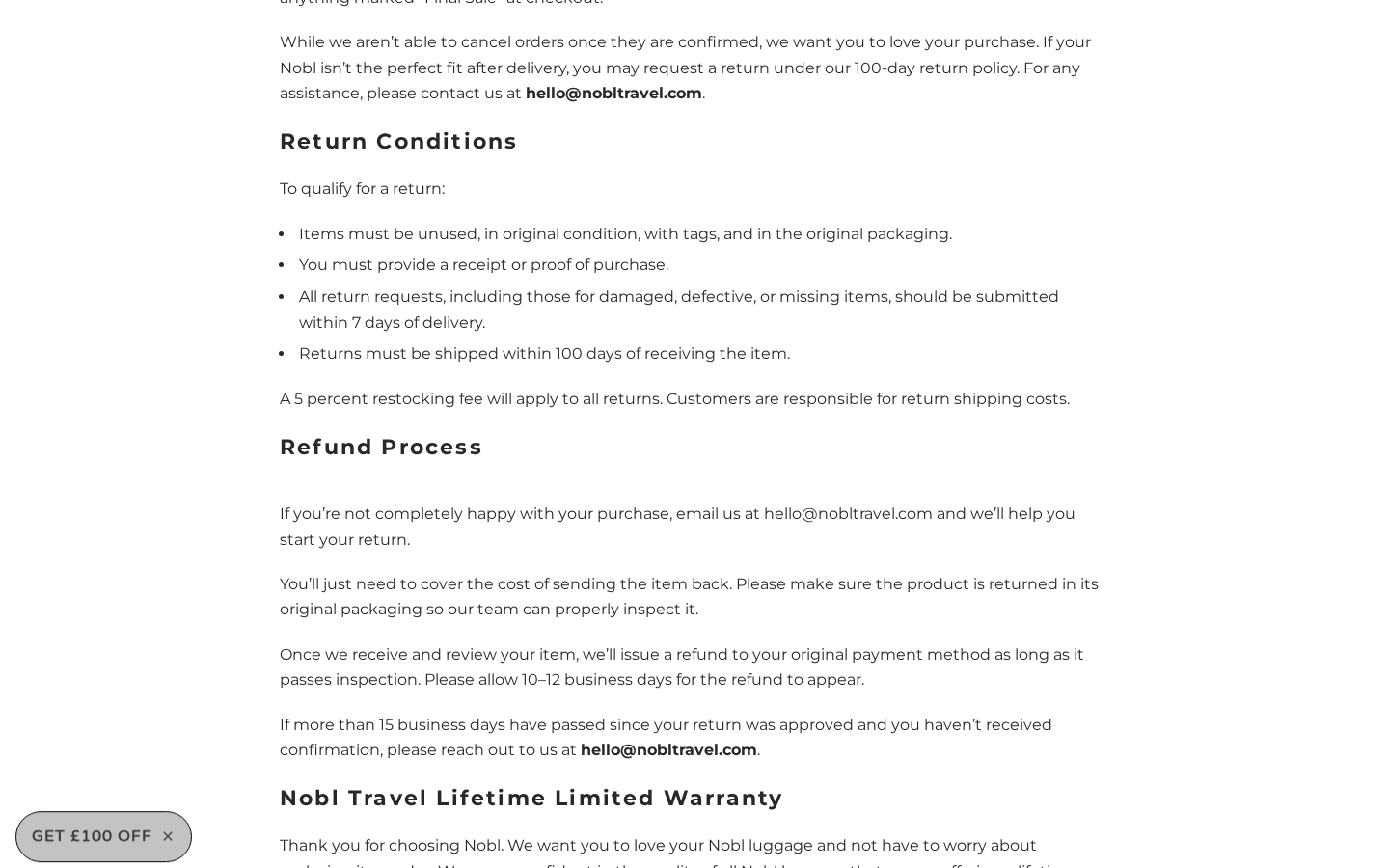
We are not claiming that a missing fee on one page proves it will never be charged. We are identifying an inconsistency that requires an order-specific answer.
Likewise, a longer deadline elsewhere is not a safe reason to delay. Notify the seller early and ask for clarification while preserving both documents.
Company, Address, and Fulfillment Checks
Identify the merchant for your regional purchase
The UK footer names NOBLTRAVEL LTD, while its terms page identifies Nysonian, Inc., doing business as NOBL Travel, with affiliates.
We have not independently verified how those entities divide responsibility. Ask which one is your contractual seller rather than assuming the names are interchangeable.
The NOBL brand name is not a substitute for the legal seller on your receipt. Before paying, ask which entity takes responsibility for your order.
Compare that answer with the checkout, invoice, and card statement. A payment descriptor can differ legitimately, but support should be able to explain the connection.
We have not independently established a complete corporate chain for every regional storefront. That is a research limit, not proof that the company is fictitious.
A shipping location is not automatically a return depot
A store may ship from one warehouse and process returns elsewhere. An overseas label also does not, by itself, prove poor quality or a false company.
What matters financially is where your approved return must go. Large luggage can be expensive to ship, especially if the destination is international.
Request the full address before ordering when possible. Do not substitute a registered office, advertised warehouse, or address from someone else’s order.
Make support answer the deadline conflict
The US contact page gives its own return and support information. Those statements should not silently replace the conditions shown on a UK purchase.
For the UK pages, ask support to resolve the five-day versus seven-day wording and the fee question explicitly.
We did not contact agents or measure response times. An available chat button proves a contact route exists, not that a complicated refund will be easy.
Separate manufacturing quality from warranty administration
A lifetime warranty does not mean every scratch, airline incident, or worn component qualifies. Check whether the problem is a covered manufacturing defect.
The UK FAQ describes exclusions and a $49 shipping-and-handling fee for starting a warranty claim. Confirm the applicable currency and charge before proceeding.
Ask who evaluates damage, whether repair or replacement is offered, and what happens when the original model is unavailable. These answers matter more than the warranty headline.
Questions Worth Asking Before Checkout
You do not need a long confrontation with support. Send a short, concrete request that names the exact suitcase or bundle you intend to buy.
- Is this sale item eligible for a change-of-mind return?
- Must I request approval within five days, seven days, or another period?
- What is the authorized return country, and who pays the shipping?
- Will any restocking, handling, or original-delivery charge reduce the refund?
- Can I inspect the case at home without losing eligibility?
- Which warranty fee and exclusions apply to this regional order?
Keep the reply with a dated screenshot of the offer. If the answer contradicts a policy, ask which version governs before spending money.
A seller unwilling to clarify these basics is giving you a practical reason to postpone the purchase. You do not have to prove fraud to walk away.
Choose luggage on features, fit, and the total cost of an unsuccessful purchase. A discount loses its appeal quickly when returning the case consumes the savings.
What to Do If You Ordered NOBL Luggage
- Open an evidence folder immediately.
Save your receipt, order confirmation, product description, regional URL, delivery tracking, and the return policies. Note the actual delivery date.
If a bundle is involved, list each item and whether it arrived. Keep screenshots readable rather than collecting dozens of disconnected cropped fragments.
- Send a clear request without waiting.
State whether you want cancellation, a return, a replacement, or help with a defect. Name the order number and the particular problem.
Include photographs where relevant. Ask support to confirm when your request was received and which deadline it considers applicable.
- Keep the product eligible while the request is pending.
Retain its packaging and avoid taking unwanted luggage on a trip. Do not assume the larger headline period permits travel use.
For damaged arrivals, preserve the outer box too. It can help distinguish shipping damage from a problem with the case itself.
- Get return authorization and the deductions in writing.
Request an approved address, reference number, and instructions. Ask directly about the 5% wording if it appears in your saved policy.
Calculate postage before accepting a return arrangement. A written estimate makes the available choices easier to compare calmly.
- Track the parcel and the refund separately.
Keep proof of dispatch, delivery confirmation, and inspection updates. If support approves a refund, record the approval date and promised processing period.
Follow up with that timeline if money does not appear. Supply the tracking reference again instead of assuming the agent has the previous conversation.
- Discuss unresolved payment issues with the payment provider.
Explain the precise dispute: non-delivery, incorrect merchandise, an unfulfilled agreed refund, or another documented issue. Do not mislabel an authorized purchase as card theft.
Ask about available dispute procedures and deadlines. Provide the offer, contradictory policies, communication history, and return tracking when requested.
- Use a factual complaint if escalation becomes necessary.
A concise chronology is stronger than broad accusations. Describe what was promised, what arrived, what you requested, and the response received.
Seek local consumer guidance for significant losses. Do not pay strangers who promise guaranteed recovery or claim they can force a merchant refund.
Frequently Asked Questions
Is NOBL luggage a confirmed scam?
No confirmed-fraud conclusion follows from our review. The verified concern is inconsistent UK return wording and conditions that can narrow a headline guarantee.
That is enough to justify caution, but not an accusation that every order or the entire business is fraudulent.
Does the 100-day policy let me travel before returning?
Do not assume that. The reviewed documents require unused merchandise and original packaging, alongside a much shorter request deadline.
Obtain written permission before treating a journey as a trial. Home inspection and airport use are materially different activities.
Is the UK return request deadline five days or seven days?
Both appeared on separate UK pages reviewed. Ask the seller to clarify your order, and notify it promptly rather than relying on the more generous version.
Will NOBL charge a restocking fee?
The UK refund-policy page listed 5%. Other reviewed pages did not present identical conditions, and the current US contact page stated no fee for eligible returns.
Confirm your regional purchase terms instead of applying one version worldwide.
Does a lifetime warranty cover airline damage?
Not automatically. The UK FAQ excludes airline damage and other categories, while describing coverage for functional manufacturing defects.
Ask for an assessment and any applicable handling costs before shipping a damaged case back.
What is the safest decision before buying?
Get the return deadline, final-sale status, depot, postage responsibility, and deductions confirmed for the exact product. If the answer remains unclear, postpone the order.
The Bottom Line
NOBL luggage reviews should look beyond the long return-window headline. The verified UK document conflict makes written clarification essential before paying.
Buy only if the suitcase fits your needs and you understand the actual return and warranty costs. An unanswered policy question is a good reason to wait.








