

HoneyBoost gummies offer a simple answer to a personal worry: feeling less energetic, less confident, or less like yourself. A daily gummy sounds easy.
Before committing to another supplement routine, look at the purchase surrounding those promises. The details beyond the bottle deserve just as much attention.
Overview
Our verdict: skip the product-changing referral
We do not recommend buying HoneyBoost through the Soda Honey Boost referral examined here. The product identity changes, and the refund documents disagree.
A guide discussing Soda Honey Boost sends readers toward a HoneyBoost offer. Similar-looking names do not establish the same supplement, ingredients, or manufacturer.
The destination is an operating sales page with a BuyGoods checkout. This is not a finding that no product exists or every order is fraudulent.
Instead, the route asks you to move from information about one named product to paying for another, without a clear explanation connecting them.
That is a substantial buying problem. You should not need to guess whether the gummy you researched is the gummy your receipt will identify.
The package price and refund clock need a closer look
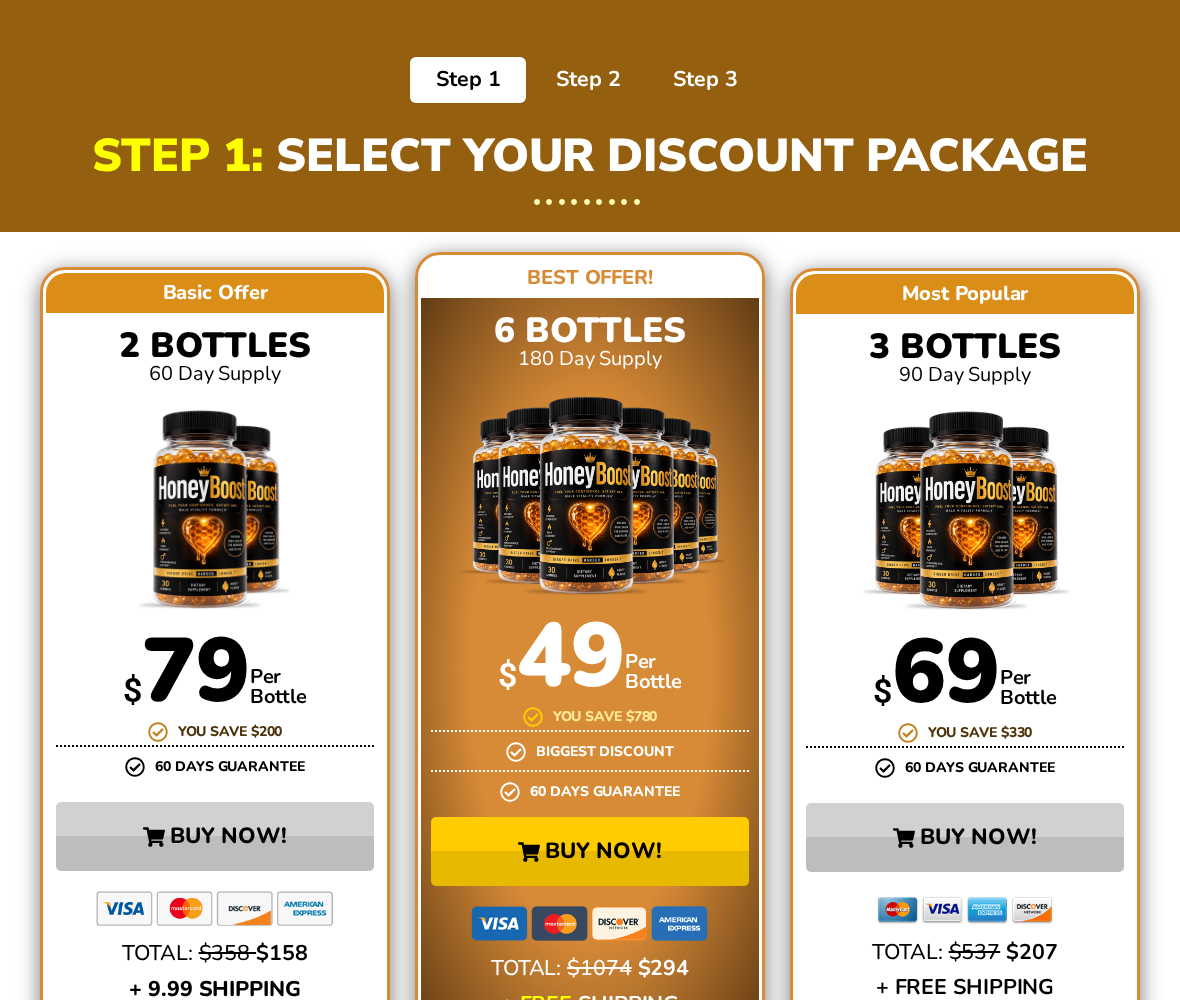
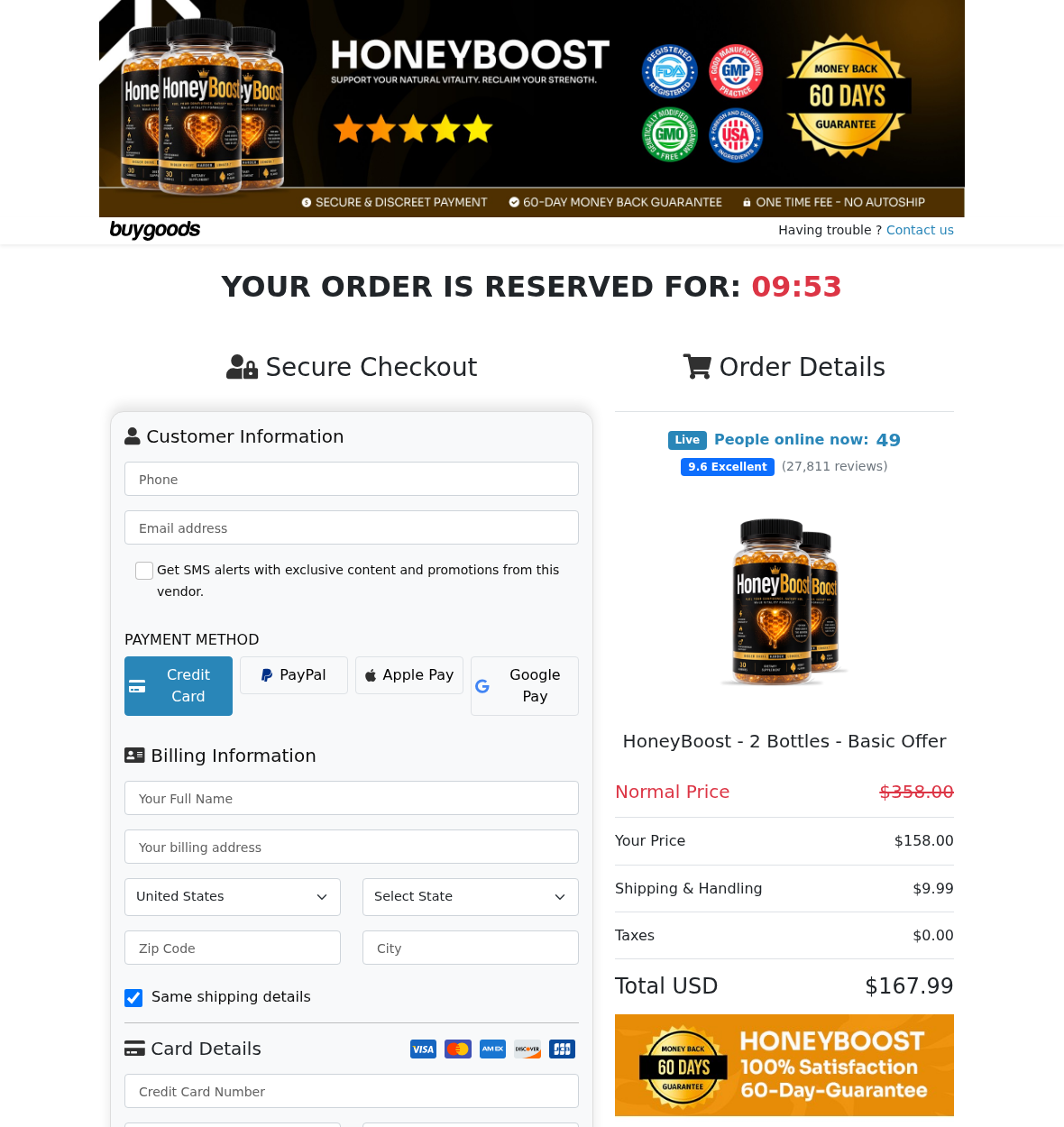
The basic HoneyBoost offer advertises two bottles for $158, plus $9.99 shipping. Our unsubmitted checkout displayed a total of $167.99.
The larger packages cost $207 for three bottles or $294 for six. A prominent $49 figure describes each bottle within the six-bottle purchase.
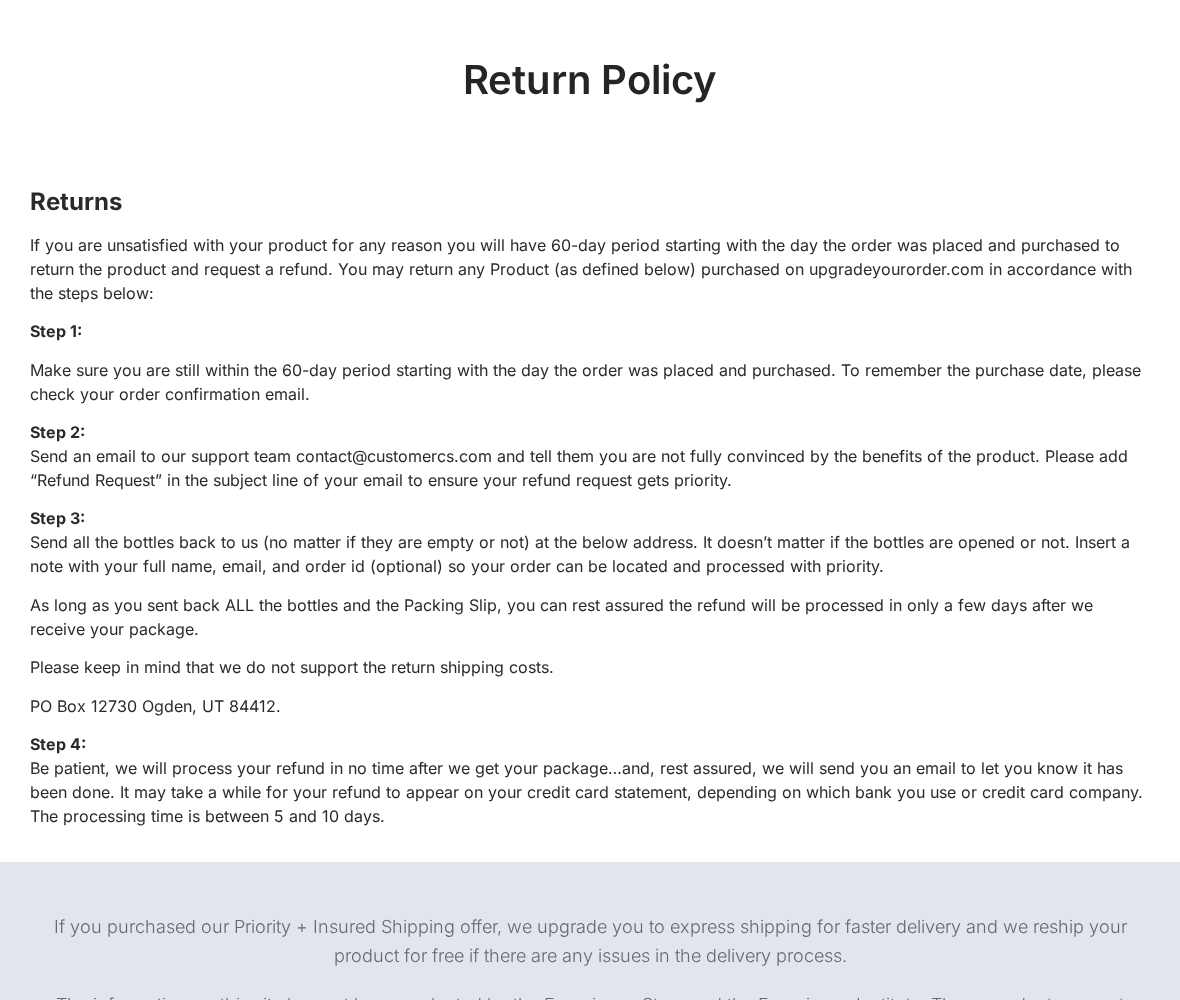
The refund documents then introduce a different uncertainty. One starts the 60-day window at delivery; another starts it when you place and purchase the order.
Those dates are not interchangeable. Shipping time can consume part of your protection if the earlier starting point applies.
- Product mismatch: a Soda Honey Boost guide leads to a checkout naming HoneyBoost.
- Actual basic package: two bottles, $158 plus $9.99 shipping.
- Conflicting protection: different refund starting dates and processing estimates.
- Unclear supply chain: a company name and mailing addresses do not authenticate the gummy factory.
- Billing finding: the captured checkout banner explicitly advertises a one-time fee with no autoship.
This investigation does not establish an automatic refill
We examined the guide, sales page, empty-data checkout, linked policies, company-name record, and public homepage on October 8, 2026.
We did not buy HoneyBoost, test a batch, contact support, or enter personal and payment information. Post-purchase offers were outside the inspected flow.
Nothing in that inspection establishes a hidden renewal. A multi-bottle package and an automatically repeated order are different arrangements.
If your own transaction contains recurring terms, preserve them and act on that evidence. The concerns documented here do not require inventing an undisclosed subscription.
What HoneyBoost Promises, and What We Could Verify
The sales page describes HoneyBoost as a gummy supplement for male performance. Its positioning includes energy, libido, and testosterone support.
Those claims speak to real frustrations. Someone looking for renewed confidence may find a discreet gummy easier to consider than an uncomfortable appointment.
But a familiar concern does not validate the proposed solution. The inspected purchase page did not supply a finished-product clinical trial establishing those advertised benefits.
Nor did it provide a complete quantitative ingredient panel that we could reconcile with the separate Soda Honey Boost guide.
A syndicated brand announcement describes seven HoneyBoost ingredients. That promotional announcement is not independent testing or proof that another brand’s panel applies.
We therefore do not transplant the guide’s ingredient quantities into this review. Ask for the actual HoneyBoost label associated with the offer you select.
The FDA’s supplement guidance explains that dietary supplements do not receive premarket approval like medicines. Registration imagery is not evidence of an effective treatment.
Likewise, a manufacturing badge does not tell you which facility made this batch, what was tested, or whether the advertised formula matches the bottle.
Clear ingredient amounts would be useful information. They would still need to be considered separately from the claim that this finished combination produces a particular result.
How the HoneyBoost Sales Funnel Works
Step 1: A product guide creates the feeling of informed research
The route we traced begins at getsodahoney.com, a guide centered on Soda Honey Boost gummies. It discusses packaging, serving information, ingredients, and buying questions.
The presentation is more restrained than a typical miracle-cure pitch. It discloses an affiliate relationship and does not claim to be the manufacturer.
That disclosure is important, but it does not resolve the destination problem. An informative-looking page can still refer you to a differently named offer.
The guide itself advises readers to match the product name and formula before ordering. Its prominent order buttons should be judged against that advice.
Do not mistake the time spent reading for verification of the seller. You may understand a supplied label without having identified the product actually offered.
We did not authenticate a social ad or celebrity endorsement for this exact route. Claims about fake doctors or AI videos would require separate evidence.
Step 2: The external link changes the product name
The guide’s ordering link uses rushmyoffers.com and a path named BuyGetsodahoney. Following that route led to a purchase page on myhoneyboost.com.
The bottles and subsequent checkout there were labeled HoneyBoost. The shortened name may look related, but the pages did not establish equivalence.
A reader expecting Soda Honey Boost could easily carry the earlier ingredient discussion into this new offer. That assumption is exactly what needs stopping.
A shared ingredient, similar label, or overlapping promotional language would not establish identical formulations. An updated product also needs an explicit, verifiable explanation.
We cannot conclude that the destination brand commissioned every statement made by the referring guide. Affiliate conduct and manufacturer conduct must remain separate.
What we can conclude is straightforward: the referral fails to provide a coherent product identity from research page to order.
Step 3: The six-bottle deal becomes the visual centerpiece
The HoneyBoost selection page places its six-bottle offer in the central position and describes it as the best offer and biggest discount.
That package shows $49 per bottle and a $294 total. The lower unit figure makes a larger commitment feel like the economical choice.
The alternative two-bottle package shows $79 each. Three bottles show $69 each. Neither should be mistaken for a one-bottle trial.
The inspected selection page did not display a single-bottle option. If you only want to try one, do not assume the smallest button buys one.
Displayed savings also compare the packages against higher crossed-out totals. We did not verify a sales history demonstrating those previous prices.
Package emphasis is not evidence that a seller silently substitutes six bottles. The quantity presented before payment is visible and should be checked carefully.
The screenshot at the beginning preserves that choice. Compare the full package cost, not just the amount printed in the largest type.
Step 4: Checkout identifies the retailer and the actual commitment
The basic package opened BuyGoods with an item specifically described as HoneyBoost, two bottles, basic offer. Its displayed product charge was $158.
Shipping added $9.99, producing $167.99 in the empty-address form. The initial browser inspection selected Romania; no identifying details were submitted.
A final address, taxes, payment method, or different offer may change a completed total. The amount documented here is an observed checkout, not a charged purchase.
The checkout identified BuyGoods as the retailer and stated that the card statement would use that name. It separately supplied retailer support information.
The captured header also stated a one-time fee with no autoship. We found no visibly active renewal schedule in the form inspected.
Read that alongside your exact receipt if you order elsewhere. It does not establish the terms of every future link, country version, or post-purchase offer.
Step 5: Refund protection becomes a cross-document question
The purchase page advertises a 60-day satisfaction guarantee. Its linked terms and dedicated return policy do not consistently explain when that protection starts.
The terms count from delivery. The return instructions count from the purchase date. Processing estimates also differ.
For a buyer waiting through shipping, that difference affects the available trial period. Resolve it before treating the guarantee as an unrestricted 60-day experiment.
The return page does permit opened and empty bottles. It requires all bottles and the packing slip, with return postage paid by the customer.
This is not the sealed-bottle restriction found in some other supplement offers. We found no 15% restocking deduction in these particular return instructions.
Using a familiar supplement-funnel template as evidence would misstate this case. The policy has to be read on its own terms.
Step 6: After ordering, paperwork matters more than the pitch
A receipt should remove uncertainty about what you purchased. Check the product name, bottle quantity, total, merchant, and any separate upgrade immediately.
If the confirmation names something other than the product you intended, contact the retailer before dispatch. Document the referring page as well as the order.
Do not discard empty bottles while a return remains possible. The linked instructions require the complete set, even though opened products are allowed.
Refund processing and cancellation of recurring billing are separate matters when a particular transaction actually includes a subscription. Ask for each relevant action explicitly.
If your order is a one-time package, describe the actual issue accurately. Calling it a subscription can obscure a stronger, documented product-mismatch complaint.
The return screenshot preserves the purchase-date wording. Keep your own dated copy, because today’s policy may not remain online when you need it.
Company, Address, and Fulfillment Checks
GEX CORPORATION LLP is named, but the roles remain separate
The linked terms identify GEX CORPORATION LLP as the website operator. The checkout identifies BuyGoods as the retailer. The referring guide earns affiliate commissions.
Those are different roles. A retailer processing a purchase does not automatically verify every medical claim on the pages that sent customers there.
Companies House lists an active GEX CORPORATION LLP, company number OC455165, incorporated January 15, 2025.
Its exact name matches the policy, but the reviewed policy does not state that registration number. We cannot treat the match as authenticated legal linkage.
Ask the seller to identify the contracting entity and registration details on your transaction. A company search should clarify accountability, not replace that confirmation.
The London address and Utah post box are not a factory tour
The British record lists 27 Old Gloucester Street, London, WC1N 3AX. British Monomarks advertises virtual-office services at that same address.
This establishes an address used for mailing and registered-office services. It does not establish a HoneyBoost production facility or prove an unlawful business arrangement.
The linked return page instead supplies PO Box 12730, Ogden, Utah 84412. That is a mailing destination, not an identified supplement factory.
BuyGoods also publishes Wilmington, Delaware business addresses in the checkout and sales footer. None should be presumed interchangeable with the authorized return destination.
Before sending a parcel, obtain the correct instructions for your order. A corporate address found online is not necessarily where customer returns are accepted.
The contacts exist on the pages, but responsiveness was not tested
The product contact page lists contact@customercs.com and +1 (507) 448-8190. The BuyGoods checkout separately lists 302-404-2568.
We did not telephone these numbers or email the businesses. Their appearance on a page does not demonstrate that a particular request will receive help.
There are also mismatched names in the supporting paperwork. The return page references upgradeyourorder.com and includes Experience Store and Institute wording.
The privacy policy gives support@institutoexperience.com.br for marketing unsubscribe requests. This unexplained identity mix makes the product-specific chain of responsibility harder to follow.
Do not assume that address handles HoneyBoost refunds or that the named institute manufactures the gummies. Use the relevant receipt channel and request a written answer.
A U.S. manufacturing claim still needs a traceable label
The offer states that HoneyBoost is manufactured in the USA using globally sourced ingredients. We did not independently identify the facility or test a batch.
A U.S. statement does not identify every ingredient’s origin. Equally, nothing reviewed establishes that these particular bottles are Chinese-made.
Request the current ingredient panel, distributor, lot number, expiration date, warnings, and testing records. These are more useful than guessing origin from packaging.
Check that the records identify HoneyBoost and your batch, not Soda Honey Boost or another similarly named product. Brand resemblance is not traceability.
A legitimate mailing service or retailer can be part of a real supply chain. It still cannot tell you what is inside an untested bottle.
Why the Official Homepage and Health Claims Deserve Scrutiny
Opening myhoneyboost.com itself produced a default WordPress blog with a Hello world post and placeholder navigation, rather than a completed product-information homepage.
The sales subpage remained active. The issue is not that the domain cannot take you toward a purchase; it is the missing, coherent public brand information.
Verisign’s public domain record gives a registration date of July 10, 2026. A recent domain limits its history but does not establish fraud.
The linked terms also choose Barbados law and arbitration. Do not interpret an Ogden return box as proof that every contractual dispute is handled in Utah.
We are reporting the written arrangement, not deciding whether a clause is enforceable. Ask your payment provider or qualified adviser about your own situation.
For the health claims, NCCIH cautions against assuming sexual-enhancement supplements are proven safe or effective. Some products in this category have contained undisclosed drugs.
That warning is general, not a laboratory finding about HoneyBoost. We have no evidence establishing hidden prescription ingredients in this product.
Persistent sexual-health or energy concerns deserve clinical attention. Do not replace that assessment with a gummy, and have medication interactions reviewed before taking an unfamiliar supplement.
What to Do If You Ordered HoneyBoost
Start with your own purchase record. A clear description of the problem will help more than trying to prove every supplement promotion belongs to one network.
-
Save the complete referral trail. Preserve the Soda Honey Boost page, external ordering link, HoneyBoost destination, selected package, and confirmation.
Include dates and the exact product names. This documents whether the item you researched differs from the item you agreed to buy.
-
Request cancellation promptly if the product is wrong. Contact the retailer identified on the receipt and ask whether dispatch can be stopped.
State the order number, intended item, and unwanted item. Keep the reply or evidence of your request rather than relying on a telephone conversation alone.
-
Ask which refund deadline governs your order. Point out the conflict between purchase-date and delivery-date wording. Request the applicable deadline in writing.
Meanwhile, act within the earlier window if possible. Do not spend the remaining time waiting for clarification that may arrive after a deadline.
-
Keep the bottles, packaging, and packing slip. The reviewed return instructions require every bottle, including empty ones. Obtain return authorization and the current destination.
Use tracking if you send the approved parcel. Preserve delivery evidence and calculate postage before accepting a refund arrangement that leaves you paying it.
-
Compare each charge with what you authorized. Check the package total, shipping, any upgrade, and any separate transaction on your statement.
If your receipt does authorize renewals, cancel future shipments and billing explicitly. If not, ask the retailer to explain any subsequent charge.
-
Escalate a documented unresolved issue. Tell the card issuer or payment service whether the problem concerns product identity, incorrect charges, non-delivery, or refund handling.
Provide the receipt, dated policies, screenshots, and correspondence. Ask about dispute deadlines without assuming that a long support exchange pauses them.
-
Inspect the delivered label before using the gummies. Match its name, ingredients, serving instructions, seal, lot, and warnings to the product you intended.
If the label is unclear or you take medication, ask a pharmacist or clinician to review it. Seek prompt medical help for serious symptoms.
Frequently Asked Questions
Should I buy HoneyBoost gummies through the Soda Honey Boost link?
We recommend skipping that route. The unexplained name change and inconsistent refund clock need resolution before you commit to the advertised package.
Is HoneyBoost the same as Soda Honey Boost?
Not established by the pages reviewed. Similar branding does not confirm identical ingredients, ownership, or manufacturing. Ask for the exact label and seller’s explanation.
Does HoneyBoost automatically send refills?
The inspected checkout advertised a one-time fee with no autoship. No automatic refill was confirmed. Your exact receipt governs any different arrangement.
What was the basic HoneyBoost order total?
The empty-data checkout showed $167.99 for two bottles, including $9.99 shipping. A completed order’s address, taxes, or selected options may affect the final charge.
Can opened HoneyBoost bottles be returned?
The linked return page allows opened and empty bottles but requires the entire set and packing slip. Obtain current instructions before shipping anything back.
Does the Ogden address prove U.S. manufacture?
No. The listed post box handles the stated return destination. It does not identify the factory, ingredient origin, batch testing, or manufacturing quality.
The Bottom Line
HoneyBoost gummies’ purchase route leaves too much unresolved. Skip the mismatched referral until the seller reconciles the product, complete label, and refund terms.
Automatic refills were not demonstrated. If you already ordered, document the transaction, act on the earliest plausible deadline, and challenge the specific discrepancy affecting you.








