

Maisonelux presents the sort of easy outfits that make online shopping tempting: relaxed sets, soft-looking layers, and pieces you can imagine wearing all week.
When you’re choosing clothes from photographs, the safety net matters. It’s worth looking at what happens after delivery before deciding what goes in your cart.
Overview
The Storefront Promises Simple Everyday Clothing
Maisonelux sells women’s clothing, including casual lounge sets, tops, sweaters, and accessories. Its presentation emphasizes understated design and comfortable everyday use.
The site describes working with producers and overseeing materials and stitching. It doesn’t identify those producers in the inspected company information.
That is a claim about the business’s process, not independent proof of premium construction or a particular manufacturing country.
The Return Window Is Only Seven Days for Changed Minds
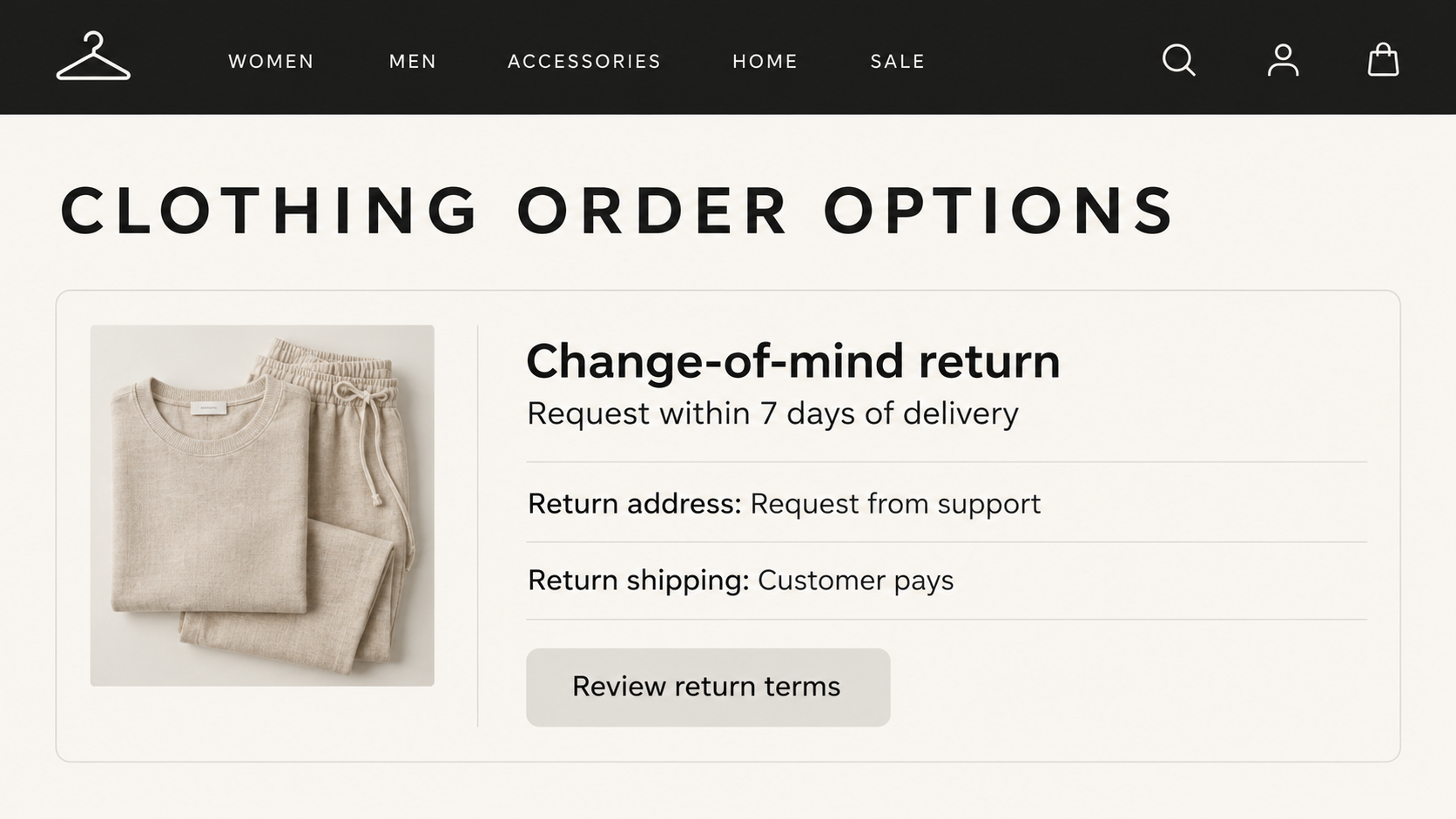
The published policy gives seven days after delivery to request a change-of-mind return. Customers pay the return postage, and the destination is supplied after authorization.
Product problems have a different stated window: 30 days for defects, damage, wrong goods, or items not matching the description.
The illustrative shopping screen highlights that distinction’s practical importance. The actual Maisonelux rules were checked directly, not inferred from the example image.
The Main Concern Is an Unclear, Restrictive Purchase
The inspected pages did not identify a registered legal company or publish a fixed return address. The contact route is a branded support email and chat.
This does not establish fraud, fake merchandise, or a subscription trap. It does leave buyers with important unknowns before an international clothing purchase.
Here is what changes the buying decision:
- A short seven-day deadline for ordinary returns.
- Sale and clearance exclusions in the return policy.
- An undisclosed return destination that prevents estimating postage in advance.
- A 7–20 business-day transit estimate after dispatch, not after ordering.
- No verified production origin or legal seller established from the inspected pages.
Why the Return Details Matter More Than the Styling
Clothes are difficult to assess from a screen. A set can photograph beautifully and still have the wrong fit, weight, finish, or feel for you.
That possibility doesn’t make a retailer dishonest. It makes usable return terms part of the product’s real value.
A modest purchase can become expensive if the return needs international tracked postage. Without a destination, you cannot compare that cost with keeping the item.
Maisonelux supplies the address only after a request. You would therefore commit money before knowing where an unsuitable garment must go.
The seven-day deadline compounds that problem. If delivery happens while you’re away or you need clarification about fit, the decision period is brief.
The Short Window Starts After Delivery
The policy measures the ordinary-return request window from delivery, not from the day you placed the order. Don’t subtract transit time from those seven days.
Even so, the window is a poor match for someone expecting a generous try-at-home period. A clothing seller should make the limitation clear before checkout.
Check the exact request method and preserve the timestamp. Asking about size and formally requesting a return may not be treated as the same action.
For defective or misdescribed goods, use the separate product-issue route. Don’t describe the matter as a simple change of mind if the item is materially different.
The Policy Has Its Own Sale Exclusion
The return page says sale and clearance items cannot be returned. The catalog includes discount labels and promotions, making eligibility a question worth settling.
Ask whether your exact item and any multi-buy discount affect its return status. A general promise of satisfaction doesn’t answer that.
A retailer’s written exclusions don’t automatically remove rights available under applicable law. But enforcing a disagreement is harder than understanding the purchase before paying.
If the business cannot explain eligibility and destination clearly, don’t order expecting the return process to resolve everything afterward.
How a Maisonelux Order Works
Step 1: A Coordinated Outfit Makes the Purchase Feel Easy
The storefront focuses on ready-made combinations and relaxed silhouettes. That reduces the mental work of imagining how separate pieces fit together.
The about page describes clean lines, breathable fabrics, and close relationships with producers. These statements build an impression of considered design.
But the useful buying evidence is more concrete: fiber percentages, measurements, care instructions, close-up construction, and the actual garment you’re ordering.
A linen-blend description does not identify how much linen is present. Ask for the composition rather than assuming the photograph or product name supplies it.
Likewise, a loose cut can still fit poorly. Compare garment measurements with something you own, not just a size letter.
Step 2: Multi-Buy Offers Increase the Basket
The promotional popup advertises progressively larger multi-item offers. Its wording attaches a discount to a particular later item in the basket.
For example, a discount on a third item is not necessarily the same as that discount on all three items.
Read the basket calculation carefully. Increasing quantity can lower an effective unit cost while raising the amount you risk on an unfamiliar seller.
The storefront also shows some items at reduced prices. Keep a record of which products were discounted and how the offer was described.
That record matters if the merchant later invokes a sale exclusion. A discount shouldn’t quietly change the return expectations that persuaded you to buy.
Step 3: Checkout Adds Delivery Costs and Currency Questions
The shipping policy says the fee depends on destination and order contents, with the final amount shown before payment.
International duties, taxes, or handling fees may also apply, according to the policy. These costs are not fully captured by a catalog price.
Read the final currency and total when you reach the order summary. Don’t assume a selector on the storefront guarantees a particular settlement currency.
The source contained generic subscription-option text, but that alone doesn’t establish an active recurring clothing charge. A product-specific subscription checkout was not verified.
No payment was made. The assessment therefore doesn’t claim an unexpected charge, added quantity after payment, or a completed delivery.
Step 4: Processing and Transit Follow Different Clocks
The policy aims to prepare orders within 24 business hours, with possible extensions during busy periods. Transit is estimated at 7–20 business days after dispatch.
Those are not interchangeable promises. An order confirmation is not proof that a package has already entered the shipping network.
The seller asks customers to allow 24–48 hours for tracking information to show movement. A newly created label can therefore precede a useful carrier scan.
If you need clothing for a particular event, don’t treat the shortest transit estimate as a promised delivery date from checkout.
Ask about dispatch status when tracking remains unchanged beyond the stated interval. Keep the seller’s answer rather than relying on an automated status label.
Step 5: Delivery Starts the Return Decision
Inspect the garment soon after arrival. Compare size, color, composition, construction, and quantity with the listing and order confirmation.
For ordinary dissatisfaction, the seller’s policy requires a return request within seven days. For specified product problems, it gives 30 days.
The difference affects how you describe the issue. An unsuitable fit isn’t automatically a defect, while a different composition can be a description problem.
Give support photographs and measurements when something is wrong. Specific evidence helps prevent the complaint being reduced to a vague preference dispute.
Step 6: Authorization Determines Where and How to Return It
The return policy says to contact support, wait for instructions, and then use trackable shipping.
It warns that unauthorized returns may be refused. That makes the written destination and acceptance decision essential before you send a parcel.
For change-of-mind returns, the policy refunds product cost rather than original shipping. For eligible product-issue returns, it describes a fuller remedy.
Approval and receipt of the return remain separate steps. The refund timeline doesn’t simply start when you write the first email.
Ask for the amount expected back, postage responsibility, and any deadline for dispatching the authorized return. A vague instruction to send it back isn’t enough.
The Maisonelux Seller and Fulfillment Questions
The Trading Name Doesn’t Identify a Verified Company
The terms describe an agreement with Maisonelux. The inspected terms, contact page, and about material didn’t establish a registered company number or complete legal entity.
That is an identity gap, not proof that the company is fabricated. Don’t fill it with unrelated businesses sharing a similar fashion-oriented name.
Request the legal seller, jurisdiction, business address, and invoice details. Compare those with the payment statement if you’ve already bought something.
The Return Destination Is Missing Before Purchase
The store doesn’t give a fixed return location in the policy reviewed. It says support will provide the address after authorization.
Without that location, neither a domestic return nor an overseas return can be assumed. There is no verified China destination in this case.
The absence still affects your costs. Ask the seller for the country and complete return address before committing to clothes you may need to send back.
Contact Details Are Published, Not Proven Responsive
The hydrated contact page displays service@maisonelux.com and describes email replies within one or two business days. It also advertises continuous chat availability.
No message was submitted to test replies. The published response estimate remains the seller’s promise, not a measured customer-service result.
Use a written channel for a return request and save a copy. If chat provides important instructions, preserve the conversation before closing it.
The Manufacturing Story Needs Actual Product Information
The about page describes close work with producers but doesn’t identify a factory or origin for the specific lounge sets inspected.
That doesn’t prove the garments come from China or that the photographs are AI-generated. Neither conclusion was authenticated from the available evidence.
Request a readable care and composition label, accurate measurements, and product-specific photos. These are useful checks even when an item eventually arrives.
Shared storefront styling is also insufficient to establish common ownership with other boutiques. A network allegation needs more than a familiar template.
The Delivery-Problem Deadline Is Especially Tight
The policy asks buyers to report a delivered-but-missing parcel within 24 hours of the delivery confirmation. That is a very short practical deadline.
A carrier scan doesn’t settle where the package actually went. Check the delivery photograph, safe place, household members, and any available location information.
Notify the seller immediately when the parcel isn’t there. Describe the facts without inventing proof you cannot reasonably obtain.
The shipping page discusses recovery or replacement, while the returns page also refers to a refund after verification. Ask which remedy the seller proposes.
These are published procedures, not proof that every missing parcel is ignored. No actual non-delivery claim was filed for this investigation.
What to Do If You Ordered From Maisonelux
-
Preserve the garment listing. Save the product name, composition, size chart, photographs, sale status, quantity, price, and delivery estimate.
Keep the confirmation and final currency beside those records. They establish the offer you accepted if the listing changes later.
-
Track dispatch separately from transit. Record when the seller says the parcel shipped and when the carrier first scanned it.
Ask for an explanation when there is no meaningful progress beyond the stated processing and tracking intervals. Don’t let repeated generic replies replace a dispatch answer.
-
Act immediately on a missing delivery. If tracking says delivered but nothing arrived, notify support within its stated 24-hour period.
Supply the tracking reference and what you checked. Ask the carrier for delivery information without claiming the scan proves fraud or correct delivery.
-
Inspect promptly and classify the problem. Photograph wrong, damaged, or misdescribed items. For fit dissatisfaction, send the return request within the seven-day policy window.
For product issues, refer to the separate 30-day route. Keep tags and packaging until instructions are clear.
-
Obtain the return address and costs. Write to service@maisonelux.com with the order number and the remedy you want.
Ask whether sale exclusions apply and who pays postage. Don’t mail the parcel to an unconfirmed sender address or accept an unexplained partial refund automatically.
-
Escalate if the seller won’t resolve it. Bring the records to your payment provider and ask about the deadline for your specific issue.
Where needed, obtain local consumer advice. A retailer’s policy is not the final authority on statutory remedies for defective or misdescribed goods.
Frequently Asked Questions
Is Maisonelux a Confirmed Scam?
No confirmed fraud mechanism was established. This is a buyer-risk review focused on restrictive returns, unclear seller identity, and missing pre-purchase return-location information.
How Long Do I Have to Request a Return?
The published rule gives seven days after delivery for a change of mind and 30 days for specified product issues. Sale exclusions also need clarification.
Does Maisonelux Publish a Return Address?
The inspected policy says the destination is provided after authorization. Ask for its country and address before buying if return cost matters to you.
Are the Clothes Proven to Come From China?
No. Manufacturing and dispatch origin were not established. A familiar boutique layout or long transit estimate isn’t enough to prove a country.
Does Maisonelux Have a Verified Subscription Trap?
No recurring clothing checkout was verified. Generic subscription text in the website source does not establish that your order includes refills or automatic charges.
What If Tracking Says Delivered but the Parcel Is Missing?
Notify the merchant immediately and preserve carrier evidence. The site asks for contact within 24 hours, so don’t wait several days before raising the issue.
The Bottom Line
Do not order from Maisonelux expecting a flexible, inexpensive return. The seven-day window and undisclosed destination make that assumption too risky.
Before buying, obtain the legal seller and written return details. Existing customers should document delivery, act within the relevant window, and escalate unresolved problems promptly.








