

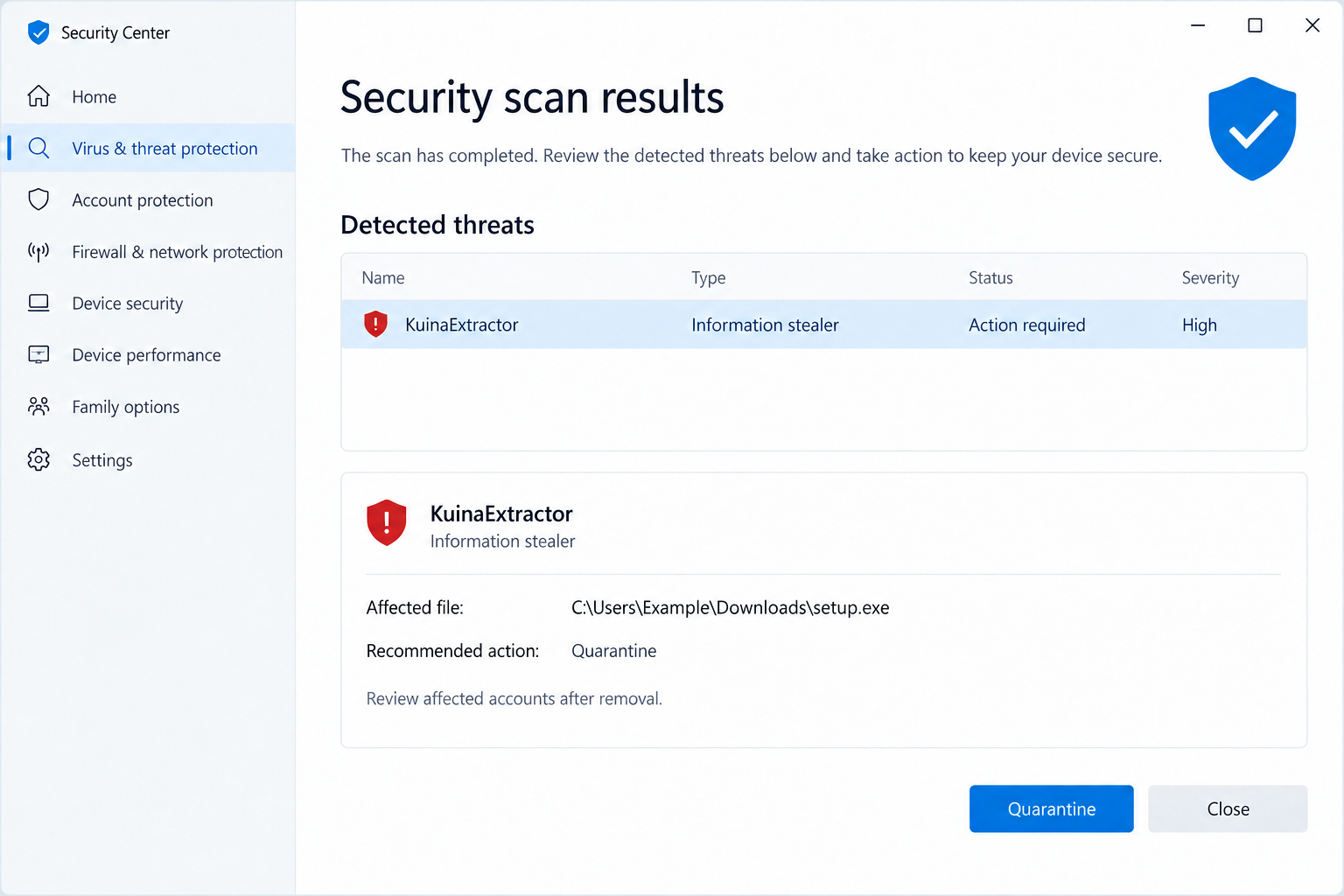
A scan names KuinaExtractor, but your browser still opens and your games still work. It can be hard to tell which part of your digital life needs attention.
The malware’s other name, k0to, adds another complication. Here is how to make sense of the alert and organize a recovery that fits the exposure.
Overview
An information stealer with more than one name
KuinaExtractor is Windows information-stealing malware written in Rust. Threatray traced related builds through several development stages and a later rebrand to k0to.
These names help identify a malware family. They are not applications you should install to repair Windows or retrieve stolen account information.
The research describes collection of sensitive browser and application data. An affected PC may therefore need account recovery even after the malicious file is removed.
A detection name alone does not establish the entire incident. Save the scanner’s file location, time, and action so the exposure can be assessed properly.
Browser sessions and gaming accounts deserve attention
The documented targets include browser information, cryptocurrency wallet material, and access-related data associated with services such as Steam, Roblox, and Discord.
A signed-in account can be valuable even without a visible password file. Session data helps a service recognize access already established.
- Browser credentials and sessions can affect everyday accounts.
- Gaming and messaging access can create problems beyond email.
- Wallet material requires a separate assessment of secret exposure.
- Work access on a shared computer may involve organizational systems.
Collection varies between builds and what exists on the device. A list of targets is not proof that every listed account was present or stolen.
The first recovery decision is where to make account changes
Do not use a credibly compromised PC to enter replacement credentials. A different trusted device gives you a safer place to begin the account-side response.
Meanwhile, arrange trusted removal or rebuilding of the affected Windows installation. Account changes and device cleanup should support each other, not substitute for each other.
If the file was blocked before it ran, the situation may be a prevented attempt. Confirm that from the detection record rather than assuming the worst.
Why an Account Can Be at Risk When the PC Looks Normal
Data theft does not need to stop a computer from functioning. A program can collect useful information without locking the screen or changing your wallpaper.
That makes visible performance a poor measure of exposure. A successful game launch tells you little about whether its access data remained private.
For example, a gaming account may have a purchase history, stored value, social contacts, or trading activity. Unauthorized access can affect more than the next login.
These are reasons to review the account, not claims that every KuinaExtractor incident caused every consequence. The provider’s records establish what changed.
A messaging account matters too. Someone using it could approach people who recognize your identity, making later contact more believable.
Check unfamiliar messages and account changes directly. Do not let a friend’s report of an odd message be dismissed solely because you still have access.
The recovery question is specific: what access was available on this PC during the exposure? A useful answer comes from the timeline and installed applications.
How KuinaExtractor Collects and Exposes Information
Step 1: A malicious build executes on Windows
The family analysis explains what the malware does after execution. It does not establish one universal delivery message, installer, or advertising campaign for all infections.
Identify the file you actually ran. Download history and the scanner’s path are better evidence than guessing from a general list of malware distribution methods.
A warning about an unfamiliar executable should not be overridden to test it. Leave it blocked and obtain an assessment through trusted security software.
If execution occurred on a managed device, tell the administrator promptly. They may need evidence that would disappear if you delete files at random.
Step 2: The build gathers available system and application information
Analyzed versions added system reconnaissance and collection from Windows credential storage. These functions broadened the material available beyond one browser profile.
The important limit is availability. A program cannot collect an account’s locally stored data if that data was never present on the machine.
Make an inventory of applications and accounts used during the relevant period. Include secondary browser profiles and other household users when the PC is shared.
Do not open those accounts on the affected computer to build the list. Work from your memory, records, and a safe device instead.
For work-related access, give the organization enough context to assess its own credentials. You may not know every token or saved setting used by its applications.
Step 3: Browser and service access data become targets
The family includes browser-cookie collection and techniques designed to bypass Chrome’s App-Bound Encryption. This is not proof that every Chrome account on every version was compromised.
It explains why a saved-password check is too narrow. An incident can concern existing session access as well as reusable login credentials.
After recovery begins, review the provider’s available session and device controls. A changed password may not have the same effect on every service’s existing sessions.
Gaming platforms and communication tools also deserve service-specific review. Their access mechanisms and recovery procedures are not identical to an email login.
Prioritize the accounts that control other accounts. Email recovery details, for instance, can affect how you regain access to a gaming profile.
Keep unexpected account notifications. Their times may help connect the installation window with suspicious activity without assuming every unrelated notification belongs to this malware.
Step 4: Collected data is sent away from the computer
Threatray tracked changing data-transfer infrastructure across the family’s development. A later build used a one-way upload route rather than interactive command polling.
That distinction matters: an information stealer does not need ongoing interactive control to cause harm. A copied secret can remain useful after the process exits.
Do not assume the incident ended because there is no visible remote cursor or support window. Those signs describe a different kind of access.
Likewise, disconnecting the network interrupts further communication but does not retrieve a data bundle already sent. Account recovery must address what could now exist elsewhere.
A clean removal result is still important. It reduces continuing device exposure while the separate credential and session tasks are completed.
Step 5: The stolen access can be used after the original file is gone
If usable credentials or sessions were collected, the attacker may approach the relevant service from another environment. The PC need not remain infected for that attempt.
This is why recovery needs a follow-through plan. Device cleanup alone does not tell a provider that an old session or secret should no longer be accepted.
Use the service’s own controls and support process to address that access. Avoid third-party tools claiming to reset every account automatically.
If wallet keys were stored locally, assess whether they were among the exposed material. A password change on a gaming account does not resolve wallet control.
Record completed recovery actions so you can distinguish an old alert from a new incident. Keep the timeline even after Windows is working normally again.
Understanding the k0to Name and Related Experiments
The k0to rebrand makes name-based searching less straightforward. A report using the newer name may concern the same development line as KuinaExtractor.
Threatray also identified related experiments, including KuinaCookieExtractor. Their relationship does not make every experimental capability a feature of every main-line sample.
For example, the research places FileZilla and some additional application targets in the separate CookieExtractor discussion. Do not turn that into a universal collection claim.
If a technical responder identifies a particular build, its findings can narrow the account review. Until then, use the data actually present and credible detection details.
A file name can change more easily than its behavior. Do not depend on finding an executable literally named KuinaExtractor or k0to in your installed-app list.
Nor should the unfamiliar name itself create panic. Focus on execution, detection action, available data, and the account consequences you can verify.
What to Do if KuinaExtractor or k0to Is Detected
Preserve the alert and stop sensitive use. Record the threat label, file path, detection time, and whether protection blocked or removed it.
Disconnect the PC when active compromise is credible. For a work machine, notify the security team before changing or deleting evidence.
Establish the exposure window. Note the suspicious file’s execution time and the period before isolation. List relevant browser profiles, gaming applications, messaging tools, and wallets.
Include other users of the same Windows account where applicable. Their locally available sessions may matter even if they did not run the original file.
Perform trusted malware removal. Run updated Malwarebytes or your organization’s approved Windows protection. Keep the detection results and follow the required quarantine or restart instructions.
Use Microsoft Defender Offline or qualified assistance when persistent findings require further assessment. Do not replace trusted protection with an unknown cleanup script.
Secure the recovery accounts first. On a clean device, protect relevant email access, check recovery details, and review suspicious sessions or connected applications.
Then follow the affected services’ credential and session procedures. If a password was reused, address that reuse rather than changing only one login.
Review gaming and messaging accounts individually. Check unfamiliar purchases, trades, recovery changes, and messages. Use each provider’s genuine support route for access you cannot restore.
Steam’s stolen-account guidance emphasizes device cleanup and securing the associated email. Do not share your password with someone offering to rescue the profile.
Handle wallets and work credentials separately. Obtain verified guidance if private wallet material may have been collected. Ask the organization to assess any business access stored on the workstation.
Do not expose secret keys in a support conversation. Public transaction references and detection information can begin an investigation without handing over account control.
Choose a clean rebuild when removal cannot restore confidence. Use official Windows installation media with suitable help. Preserve necessary documents without carrying suspicious executables or unknown browser extensions forward.
Reinstall wanted applications from their real publishers. AdGuard can reduce some deceptive-ad exposure, but it cannot repair a compromised session or make an unknown installer safe.
Is Your Device Infected? Run a Free Malware Scan
Slow performance, constant pop-ups, or strange behavior? These are classic signs of a malware infection. The fastest way to find out is to scan your device with Malwarebytes Free — one of the most trusted malware removal tools available.
The free version detects and removes the most common threats, including:
- Adware — the cause of those annoying pop-ups
- Browser hijackers — unwanted redirects and changed homepages
- Trojans and spyware — hidden programs stealing your data
- Potentially unwanted programs (PUPs) — software you never asked for
👉 Select your device below — Windows, Mac, or Android — then follow the simple steps to download Malwarebytes, scan your system, and remove any threats it finds. The scan usually takes 5 to 20 minutes.
Run a Malware Scan with Malwarebytes for Windows
Malwarebytes is one of the most popular and trusted anti-malware tools for Windows — and it’s completely free for removing infections. It catches threats that many antivirus programs miss, including adware, browser hijackers, and trojans. Follow the steps below to scan and clean your PC in just a few minutes.
Download Malwarebytes
Click the button below to download the latest version of Malwarebytes for Windows from the official source. The free version is all you need — it will scan your computer and remove adware, browser hijackers, and other malicious software at no cost.
Download MalwarebytesOfficial installer for Windows 11 and 10. Your download starts right away.Want real-time protection? See Malwarebytes Premium Malwarebytes Free for WindowsScans and removes malware at no cost
-
Install Malwarebytes
When the download finishes, open your Downloads folder and double-click the MBSetup file. If Windows shows a User Account Control pop-up, click “Yes” to allow the installation.
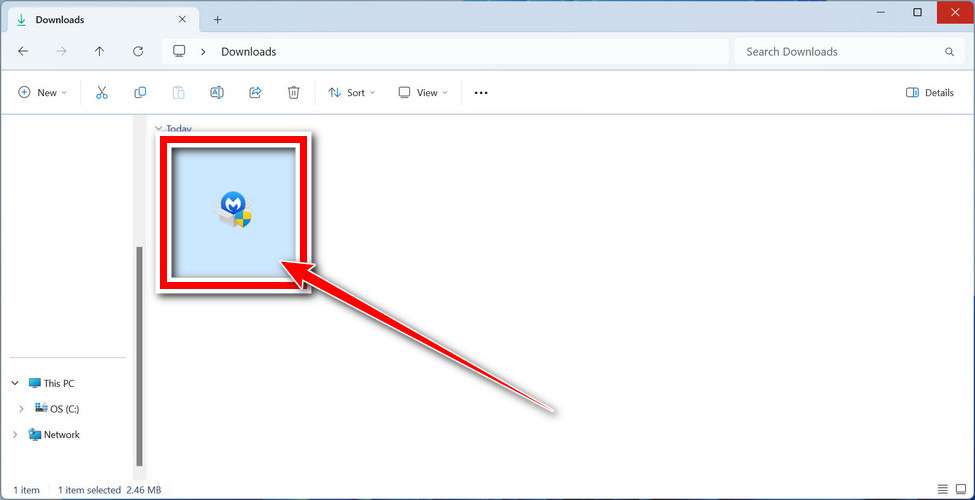
Follow the On-Screen Prompts to Install Malwarebytes
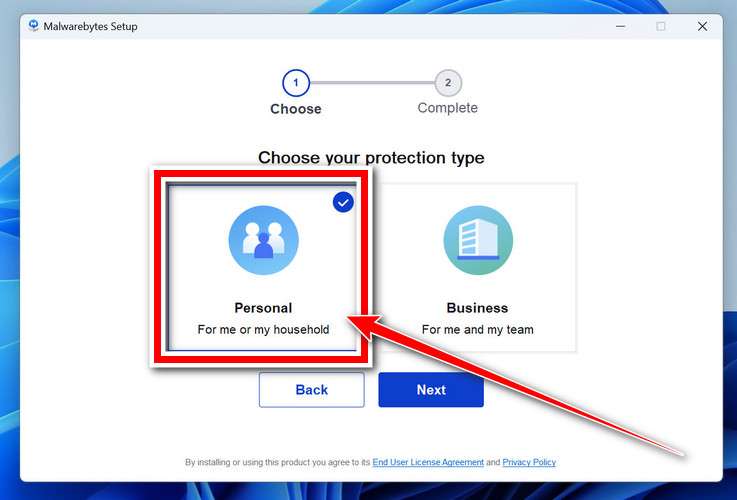
The setup wizard will walk you through a few quick screens:
-
Choose where you’re installing the program — “Personal Computer” or “Work Computer” — then click Next.
-
Malwarebytes will now install on your device. This usually takes under a minute.

-
When installation is complete, the “Welcome to Malwarebytes” screen will open automatically.
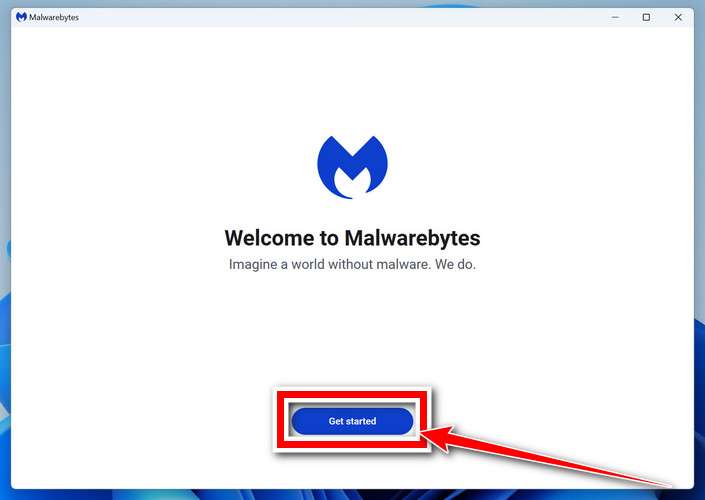
-
On the final screen, click Open Malwarebytes to launch the program.

-
Enable “Scan for Rootkits”
Before scanning, turn on rootkit detection so Malwarebytes can find even the most hidden threats. Click the Settings gear icon on the left side of the screen.
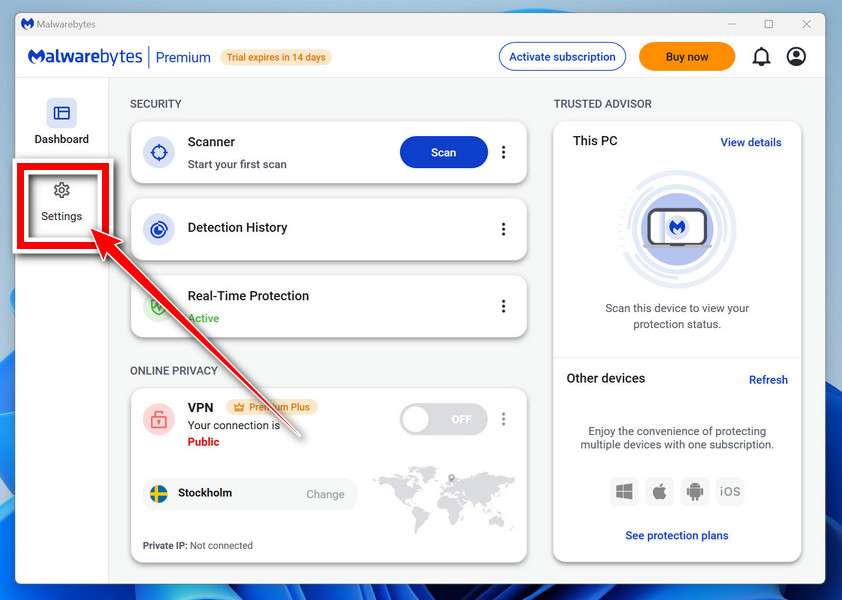
In the settings menu, find “Scan for rootkits” and click the toggle so it turns blue.

Done? Click “Dashboard” in the left pane to return to the main screen.
Start the Scan
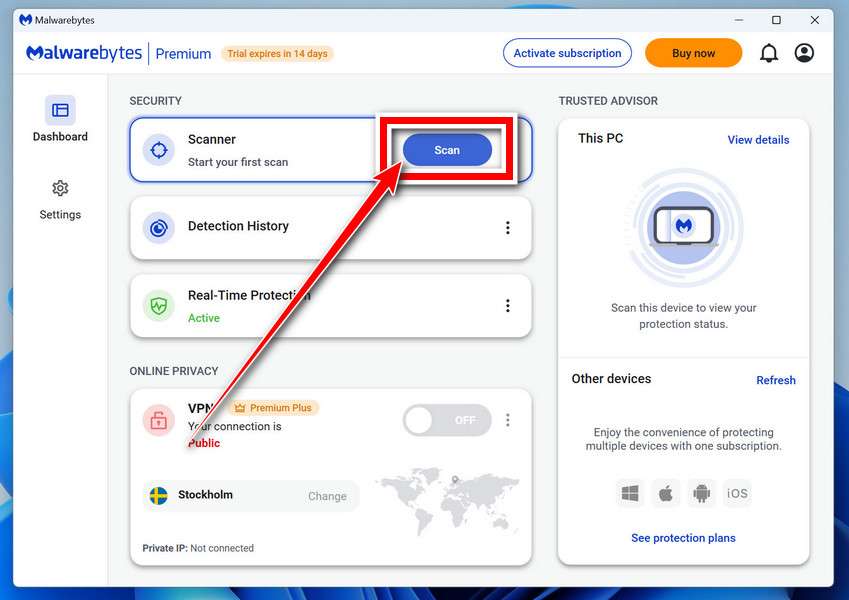
Click the blue Scan button. Malwarebytes will automatically update its virus database and start checking your computer for malware.
-
Wait for the Scan to Finish
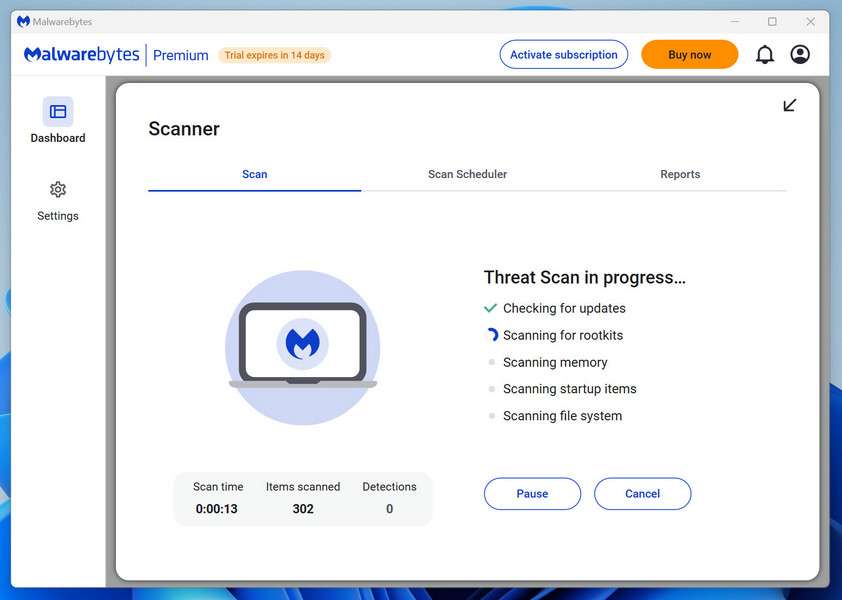
The scan checks your entire system for browser hijackers and other malicious programs, so it can take 5 to 20 minutes depending on your computer. Feel free to do something else — just check back occasionally to see the progress.
-
Quarantine the Detected Threats
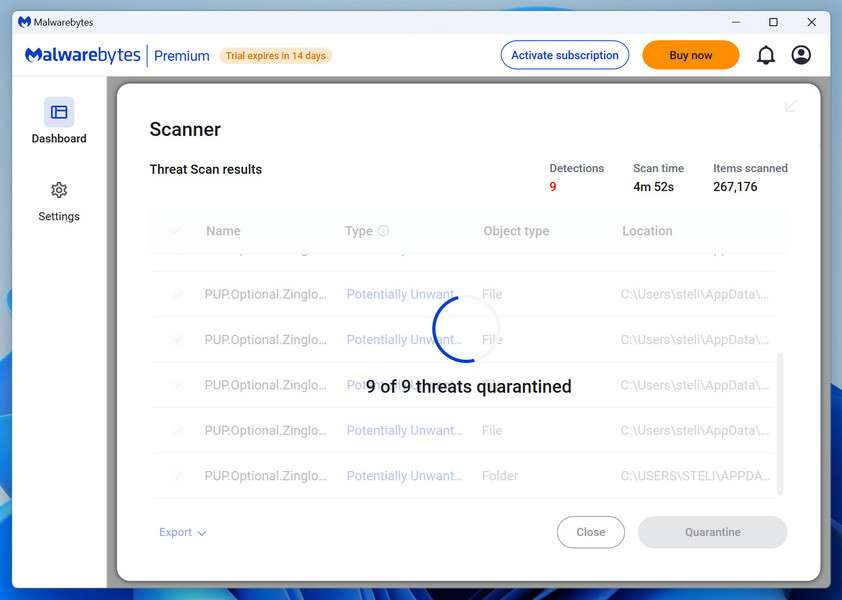
When the scan is done, you’ll see a list of everything Malwarebytes found — malware, adware, and potentially unwanted programs. Click the “Quarantine” button to remove all of them at once.
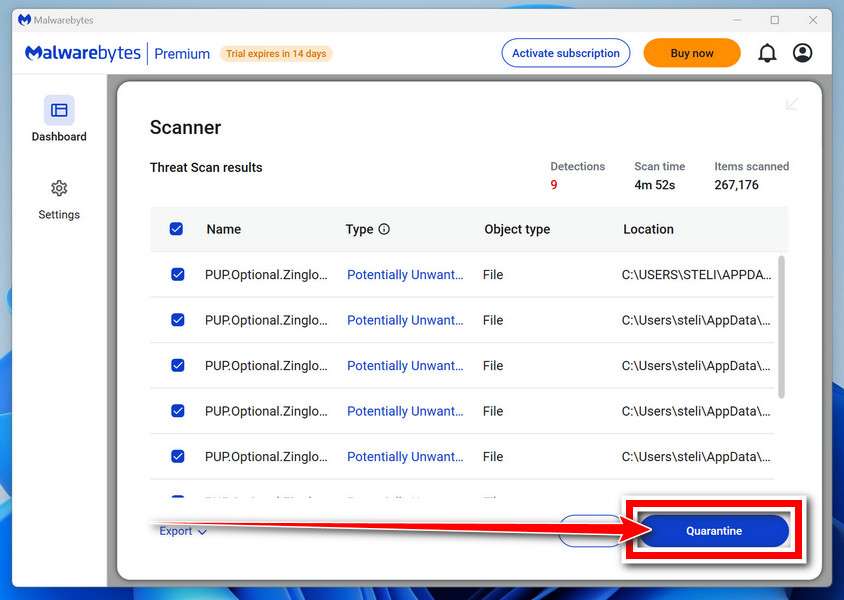
Malwarebytes will now remove the malicious files and registry entries and move them safely into quarantine.
-
Restart Your Computer
Some threats can only be fully removed after a reboot. If Malwarebytes asks you to restart, click Yes. Once you’re logged back in, Malwarebytes has finished removing the threats it found.
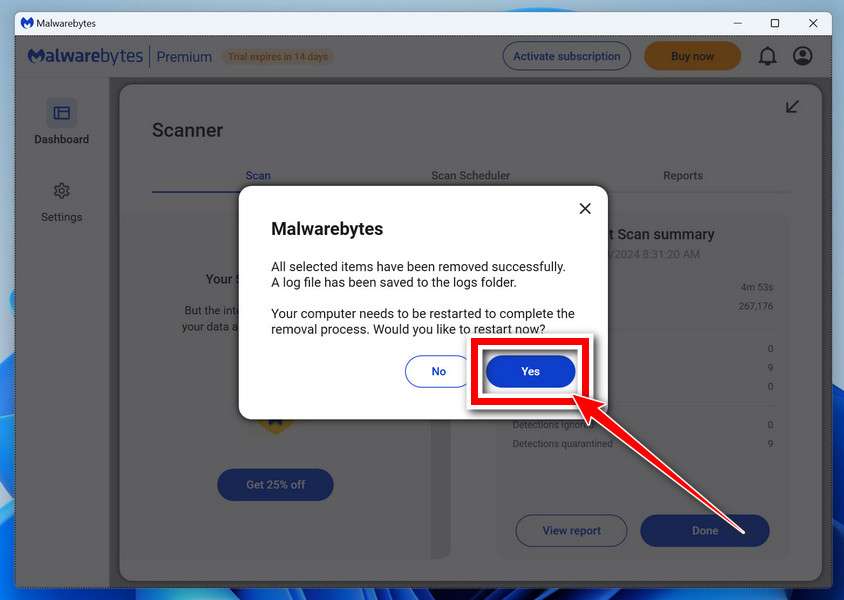
That’s it — your Windows PC is now clean of trojans, adware, and other malware, and should be back to running smoothly.
If you are still having problems with your computer after completing these instructions, then please follow one of the steps:
- Run a computer scan with ESET Online Scanner
- Ask for help in our Windows Malware Removal Help & Support forum.
Run a Malware Scan with Malwarebytes for Mac
Malwarebytes for Mac is a free on-demand scanner that removes the malware other security software tends to miss — adware, browser hijackers, and unwanted programs included. Cleaning an infected Mac with Malwarebytes has always been completely free, and it’s our go-to recommendation. Follow the steps below to scan and clean your Mac in just a few minutes.
-
Download Malwarebytes for Mac
Click the button below to download the latest version of Malwarebytes for Mac.
Download MalwarebytesOfficial installer for macOS. Your download starts right away.Want real-time protection? See Malwarebytes PremiumMalwarebytes Free for MacScans and removes malware at no cost -
Open the Malwarebytes setup file
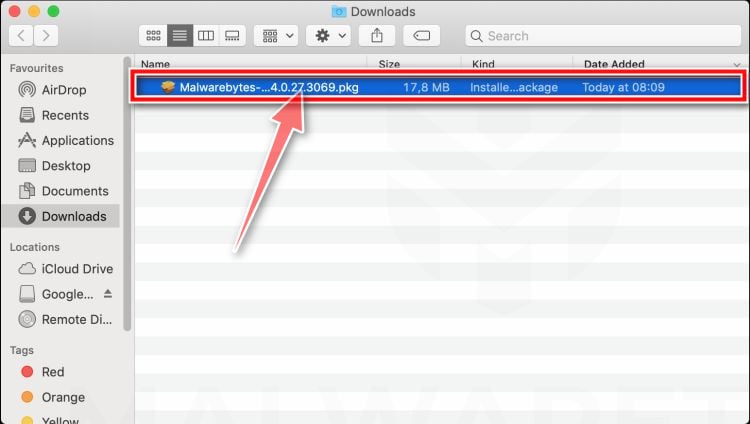
When the download finishes, open your Downloads folder and double-click the setup file to begin the installation.
-
Follow the On-Screen Prompts to Install Malwarebytes
The Malwarebytes for Mac Installer will guide you through a few quick screens. Click “Continue” and keep following the prompts until the installation completes.
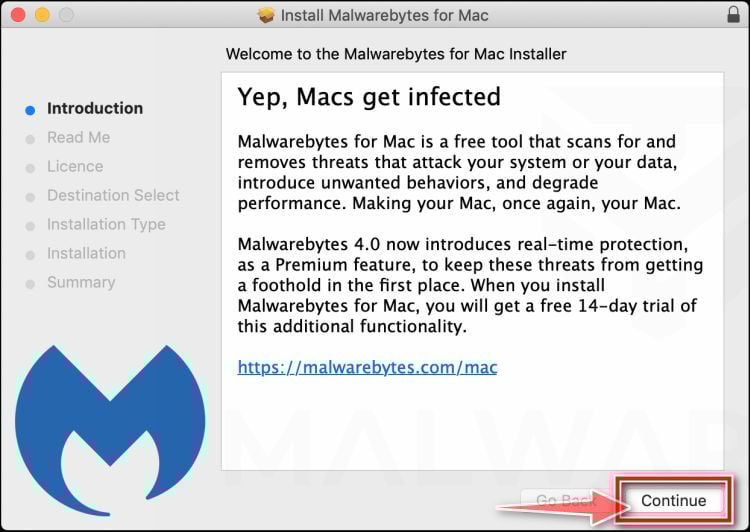
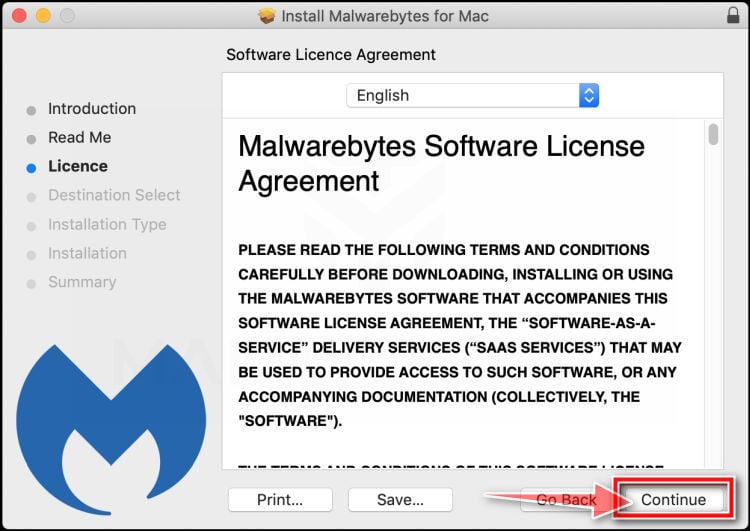
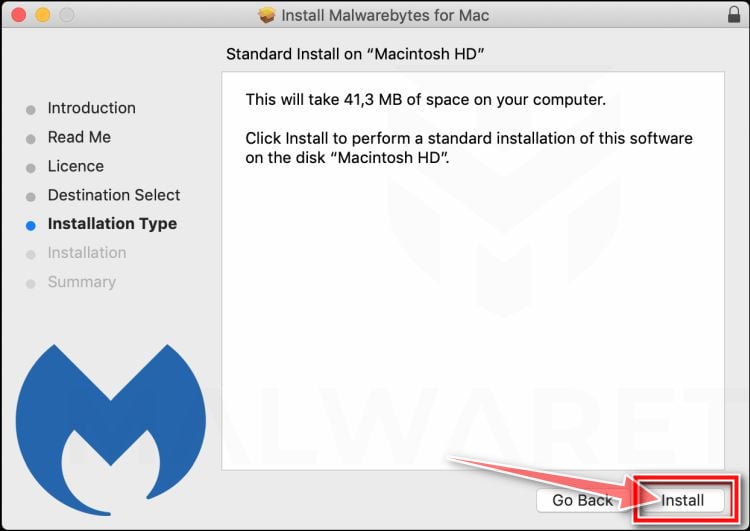
When the installation is complete, Malwarebytes opens to the Welcome to Malwarebytes screen. Click “Get started“.
-
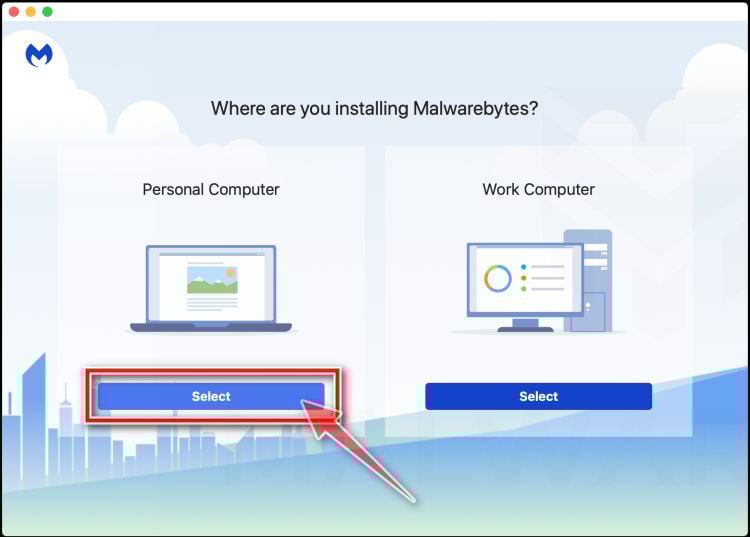
Select “Personal Computer” or “Work Computer”
Malwarebytes will ask what type of computer you’re installing it on. Click either Personal Computer or Work Computer, whichever applies.
-
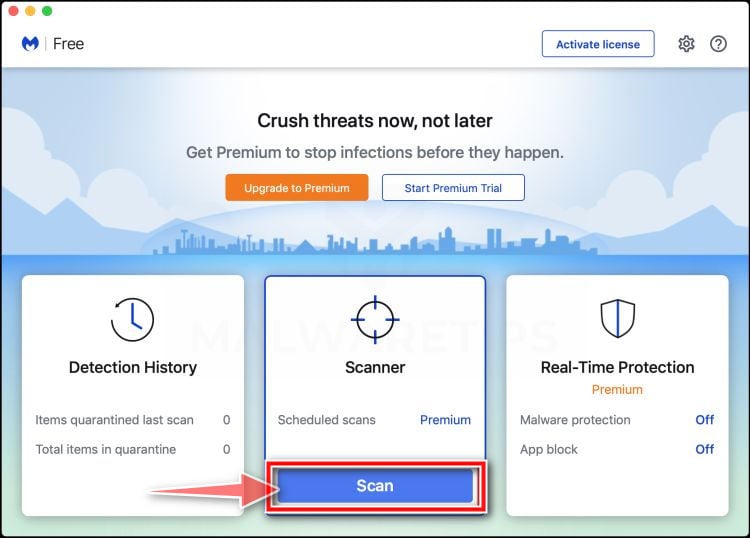
Start the Scan
Click the “Scan” button. Malwarebytes will automatically update its detection database and begin checking your Mac for malware.
-
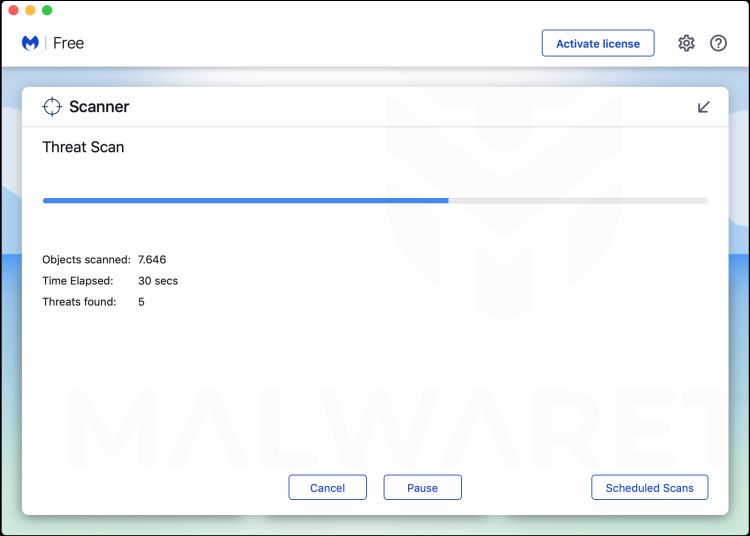
Wait for the Scan to Finish
Malwarebytes will scan your Mac for adware, browser hijackers, and other malicious programs. This can take a few minutes, so feel free to do something else — just check back occasionally to see the progress.
-
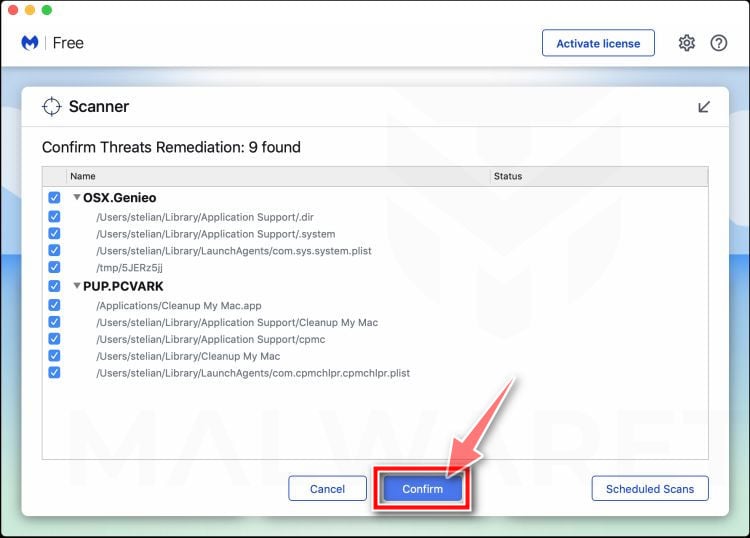
Quarantine the Detected Threats
When the scan is done, you’ll see a list of everything Malwarebytes found. Click the “Quarantine” button to remove all the threats at once.
-
Restart Your Mac
Malwarebytes will now remove all the malicious files it found. Some threats can only be fully removed after a reboot — if Malwarebytes asks you to restart, allow it. Once you’re logged back in, your Mac is clean.
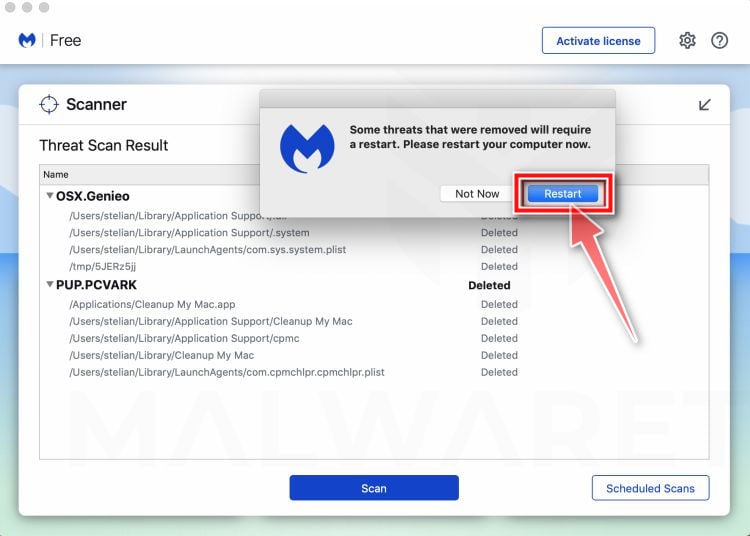
That’s it — your Mac is now free of adware, rogue browser extensions, and other potentially harmful software.
If you are still experiencing problems while trying to remove a malicious program from your computer, please ask for help in our Mac Malware Removal Help & Support forum.
Run a Malware Scan with Malwarebytes for Android
Malwarebytes for Android automatically detects and removes dangerous threats like malware and ransomware so you don’t have to worry about your most-used device being compromised. Aggressive detection of adware and potentially unwanted programs keeps your Android phone or tablet running smooth.
-
Download Malwarebytes for Android.
You can download Malwarebytes for Android by clicking the link below.
Get Malwarebytes for AndroidOpens Google Play in a new tab.Want real-time protection? See Malwarebytes Premium for AndroidMalwarebytes for AndroidScans your phone and removes malware at no cost -
Install Malwarebytes for Android on your phone.
In the Google Play Store, tap “Install” to install Malwarebytes for Android on your device.

When the installation process has finished, tap “Open” to begin using Malwarebytes for Android. You can also open Malwarebytes by tapping on its icon in your phone menu or home screen.

-
Follow the on-screen prompts to complete the setup process
When Malwarebytes will open, you will see the Malwarebytes Setup Wizard which will guide you through a series of permissions and other setup options.
This is the first of two screens that explain the difference between the Premium and Free versions. Swipe this screen to continue.
Tap on “Got it” to proceed to the next step.
Malwarebytes for Android will now ask for a set of permissions that are required to scan your device and protect it from malware. Tap on “Give permission” to continue.
Tap on “Allow” to permit Malwarebytes to access the files on your phone.
-
Update database and run a scan with Malwarebytes for Android
You will now be prompted to update the Malwarebytes database and run a full system scan.

Click on “Update database” to update the Malwarebytes for Android definitions to the latest version, then click on “Run full scan” to perform a system scan.

-
Wait for the Malwarebytes scan to complete.
Malwarebytes will now start scanning your phone for adware and other malicious apps. This process can take a few minutes, so we suggest you do something else and periodically check on the status of the scan to see when it is finished.

-
Click on “Remove Selected”.
When the scan has been completed, you will be presented with a screen showing the malware infections that Malwarebytes for Android has detected. To remove the malicious apps that Malwarebytes has found, tap on the “Remove Selected” button.

-
Restart your phone.
Malwarebytes for Android will now remove all the malicious apps that it has found. To complete the malware removal process, Malwarebytes may ask you to restart your device.
That’s it — your Android phone is now clean — no more malicious apps, adware, or browser redirects.
If you are still having problems with your phone after completing these instructions, then please follow one of the steps:
- Restore your phone to factory settings by going to Settings > General management > Reset > Factory data reset.
- Ask for help in our Mobile Malware Removal Help & Support forum.
Stay Protected: Block Ads and Malicious Sites
Now that your device is clean, keep it that way. Most infections start with a malicious ad or a fake download button — so blocking them at the source is your best defense.
We recommend AdGuard, which blocks malicious ads, phishing pages, and dangerous redirects before they can reach you.
👉 Download AdGuard and browse safely
A Practical Account Review After the Scan
Gaming accounts: look beyond whether the game launches
Check recent account activity through the provider. An unchanged game installation does not establish that purchases, trading rights, or recovery details remained untouched.
If something is unfamiliar, preserve the relevant reference and report it. Do not accept a community member’s payment request as a condition for contacting official support.
Warn contacts about messages you did not send, but keep the warning factual. Avoid distributing suspicious files or publishing personal account information to demonstrate the problem.
Messaging accounts: inspect access and communications
Review connected devices, active sessions, and recent sent messages where the service provides those controls. Ask official support about anything you cannot interpret.
Check whether account recovery still points to information you control. An attacker-added recovery method can complicate regaining access later.
A familiar avatar is not enough to trust subsequent contact. If a friend receives an unusual request from your profile, encourage independent verification.
Shared and work accounts: assign the remaining tasks
One person’s cleanup cannot silently resolve everyone else’s access. Tell other affected users which device and exposure window need review.
Have administrators handle credentials you do not own or cannot rotate safely. An uncoordinated change to shared access can disrupt work without completing the right security action.
Write down which tasks remain with each person. That prevents the malware scan from becoming the last step while important account-side work is still unfinished.
Returning the Computer to Everyday Use
Resume sensitive activity after the device has been cleaned or rebuilt and the necessary access changes are complete. Normal performance alone does not establish that point.
Review what you restore into the browser. Useful bookmarks are different from unknown extensions or old access material that needs further assessment.
Keep replacement credentials out of untrusted local files. Use the verified security tools and storage arrangements appropriate to the service or workplace.
Watch for delayed notifications linked to the exposure period. A provider’s later message can still deserve investigation even when the machine is now clean.
If another credible detection appears, preserve it and reassess. Do not dismiss it simply because you already completed one removal attempt.
Make the next download decision easier by keeping publisher routes bookmarked. An urgent need to reinstall a game or utility should not send you back to an unknown executable.
Frequently Asked Questions
What is KuinaExtractor?
It is a Rust-based Windows information stealer. Research connects its development with the later k0to name and collection of browser, wallet, and application access data.
Is k0to a separate safe application?
No. In this research, k0to is a rebrand within the malware’s development line. Do not install something bearing that name as a recovery tool.
Does every build steal all the listed accounts?
No. Capabilities and available data vary. The research describes analyzed samples, while your detection record and device contents determine the appropriate recovery scope.
Why do Steam, Roblox, and Discord need review?
Access-related data for these services appears in the documented targeting. Review the relevant accounts used on the PC, rather than limiting recovery to browser passwords.
Does Chrome encryption guarantee that my sessions were safe?
The family includes a documented bypass technique. That does not prove success in every environment, but encryption alone should not replace assessment after a credible infection.
Is a clean scan enough to finish?
A clean scan addresses device findings. Potentially exposed credentials, active sessions, wallet secrets, and work access still need their own recovery decisions.
The Bottom Line
Take a credible KuinaExtractor or k0to detection seriously, even if the PC feels normal. Information theft can affect accounts after the original malicious program is removed.
Complete trusted Windows cleanup and recover relevant access from safe equipment. Review gaming and messaging sessions alongside email, wallets, and any work credentials present during exposure.








