

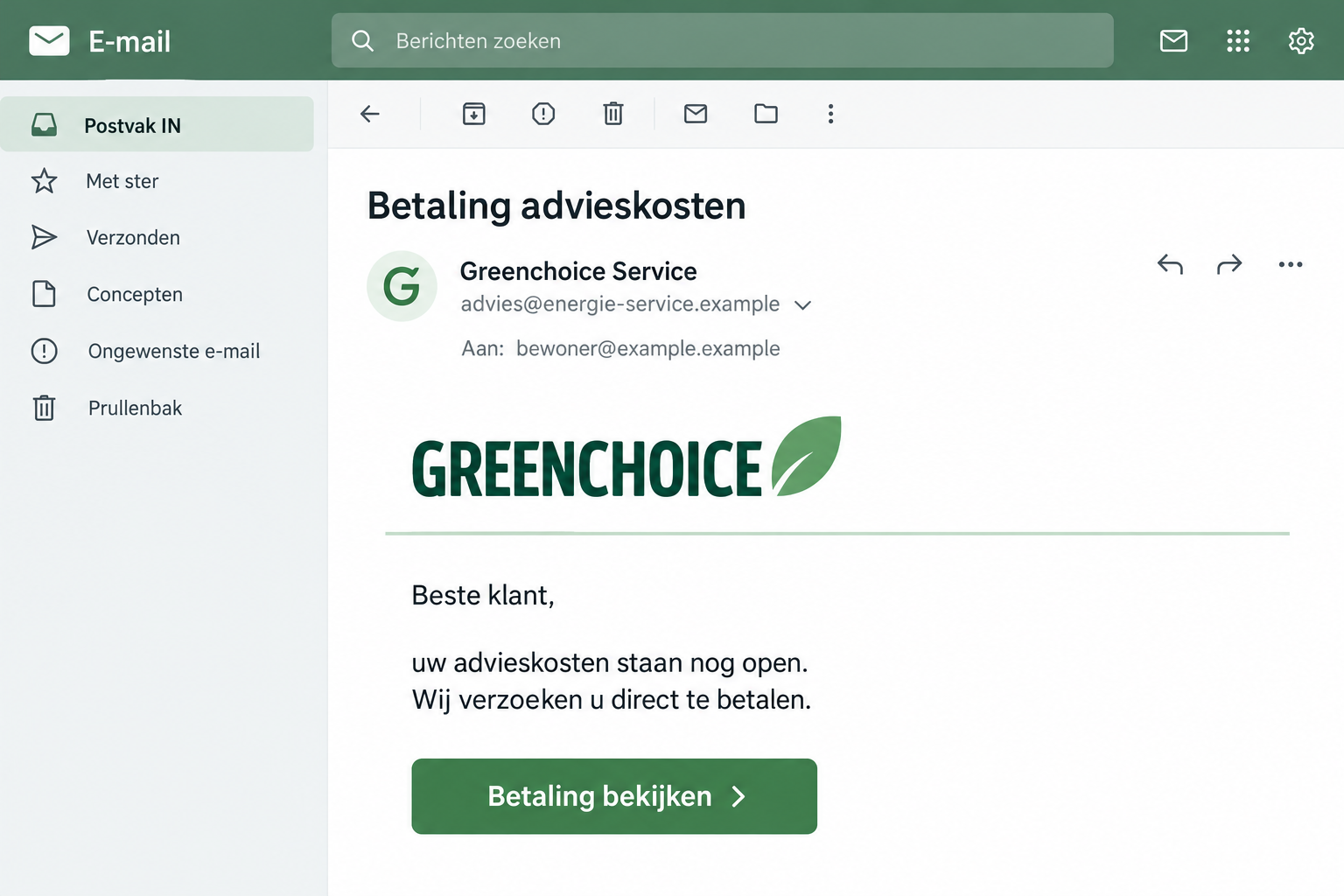
A message mentions Greenchoice and an outstanding fee. Or someone claiming to represent the supplier insists there’s a payment you need to make immediately.
The familiar name makes the conversation easy to start. What happens when you ask to check the request first matters much more.
Overview
The supplier’s name is being borrowed
The Greenchoice phishing scam concerns outsiders posing as the energy supplier or its partners. It is not an accusation that Greenchoice itself runs a fraud.
Greenchoice’s own warning describes false emails, texts, and calls intended to obtain money or personal information.
One especially useful warning concerns immediate handling or sustainability-advice payments. A supposed adviser should not get your money merely by invoking the supplier’s name.
Pressure replaces independent verification
The approach can arrive in writing or by phone. These are alternative routes, not proof every victim receives an email followed by a call.
The lead image is a generated example with fictional contact details. Its wording illustrates the fee demand rather than reproducing a particular intercepted message.
Watch for a combination of claims and instructions:
- A person says they represent Greenchoice but demands an immediate payment you cannot independently match.
- A claimed partnership is offered instead of a verifiable explanation of the service.
- The conversation moves toward passwords, bank information, or login codes.
- You are pushed to continue before speaking to the genuine supplier.
How to check without paying
End the unexpected conversation and reach Greenchoice separately. Ask about the named person, claimed service, and specific fee before entering any payment details.
A legitimate energy bill remains something to address. A stranger’s urgent instructions are not the place to establish whether you owe it.
A Claim of Partnership Is Not an Invoice
Energy customers may hear from installers, advisers, and other businesses. That makes a claimed commercial relationship sound plausible without proving the speaker has one.
You don’t need to decide that every outside adviser is dishonest. You need to verify the particular person requesting your money.
Ask yourself what you actually ordered. Did you request the service, agree to a price, and receive paperwork through a route you recognize?
If the answer is unclear, don’t let the speaker supply your memory. Find your own confirmation or ask the real company to investigate.
Words such as administration, handling, and advice can make a charge sound routine. They describe the sender’s claim, not an established obligation.
A genuine dispute about agreed work needs its own assessment. This article concerns impersonation and unverified demands, not every disagreement about an energy contract.
For a claimed appointment, check who arranged it and how. An unsolicited description of a visit isn’t the same as your own booking confirmation.
If the speaker says a fee was discussed earlier, look for the actual agreement. Don’t let confident repetition stand in for a document.
For written requests, compare the service description with the invoice recipient. A request addressed to the household should still explain what was supplied.
Don’t send identity documents to obtain a copy of an agreement from an unverified contact. Ask the genuine organization how to resolve the question safely.
If you find a real agreement but doubt the collection request, keep both. Resolving the contract and authenticating the collector are separate tasks.
When you contact support, say which of those tasks remains unresolved. That makes the conversation more useful than asking whether every message about advice is fake.
That distinction protects you from two mistakes: paying an impostor and ignoring a real account problem because someone else misused the provider’s identity.
How the Greenchoice Phishing Scam Works
Step 1: A recognizable energy company opens the conversation
An email, text, or caller introduces Greenchoice as the reason for contacting you. The sender wants the name to make their request feel expected.
On the phone, the first few details can sound like normal customer service. In writing, a familiar color scheme or sender label serves a similar purpose.
Neither proves the person works with your account. Someone who knows your name or address still hasn’t shown they’re entitled to collect money.
Step 2: An unexplained task becomes an urgent charge
The conversation shifts toward an action you supposedly need to take. The provider’s warning specifically includes pressure to pay for handling or sustainability advice.
Urgency matters because checking would interrupt the process. A demand to settle something now leaves less room to compare it with your actual records.
There is no need to debate the caller’s entire story. Say you will contact the supplier independently and end the conversation.
Don’t negotiate a smaller payment to make the issue disappear. The missing verification isn’t repaired by a reduced amount.
Step 3: The sender asks you to trust their route
In a message, that may mean following the supplied payment or account link. During a call, it means accepting the caller’s instructions as authoritative.
Keep the destination separate from the branding. A page can display an energy company’s name without being operated or authorized by that company.
Likewise, caller ID is not a reliable credential. Greenchoice warns that telephone numbers can be spoofed, making an impostor’s call look familiar.
Dial a number you found independently after hanging up. Don’t accept a transfer inside the original conversation as an independent identity check.
Step 4: Money or sensitive information leaves your control
The objective is the payment or information you provide, not a genuine account correction. Personal and financial details can create risks beyond the initial conversation.
The official warning disowns requests for login codes, bank details, and usernames through these contacts. Do not share them to prove you’re the customer.
If a message asks for an authorization, read the actual approval screen. Receiving money or confirming a conversation shouldn’t be confused with authorizing an outgoing transaction.
Record what happened if you already responded. The bank or account provider needs the actual payment, disclosure, or approval, not a generalized description.
Questions to Resolve Before Sending Any Money
What did you buy or request?
Look for your own order confirmation, appointment details, quote, or contract. Start with documents you already possessed, not attachments supplied during the unexpected demand.
Separate the service description from the requested fee. An explanation of energy-saving work doesn’t establish that you ordered that work or accepted this price.
If someone else in the household arranged it, check with them directly. A sender claiming they already spoke to your partner hasn’t verified anything.
For rented accommodation, don’t assume a caller’s reference to your home means your landlord approved a charge. Ask the relevant person through established contact details.
Who is asking to be paid?
Identify the business and recipient named in the request. Compare them with your actual agreement and the information supplied by genuine support.
A trading name, bank recipient, and adviser name may differ for legitimate reasons. Unexplained differences still need resolving before payment.
Do not accuse an unrelated account holder or company based on a name in one message. Preserve those details for the organizations investigating the incident.
If payment is supposed to settle your energy account, check the independent account record. A reassuring receipt from the sender is not enough.
Can the real supplier confirm the request?
Open Greenchoice’s official website yourself and navigate to your account or customer service. Don’t rely on a support address pasted into the doubtful message.
Describe the requested fee, the claimed partner, and the contact method. Ask whether that specific communication is recognized.
You can verify a request without supplying passwords or full banking credentials. If you need to send evidence, use the official channel and minimize sensitive information.
Failure to log in is a separate problem to solve. It is not a reason to trust an unfamiliar payment link or let a caller troubleshoot banking.
Keep a Suspicious Demand Separate From a Real Bill
If your genuine account shows an unpaid balance, deal with it through the normal payment route. Don’t assume that makes the unexpected message authentic.
A scam can coincide with a real obligation by chance. The overlap doesn’t prove the sender knows your account or works for your supplier.
If the genuine account shows no matching item, ask support before acting. Save the message so you can describe exactly what doesn’t match.
Never pay twice simply because the sender says the first payment failed. Check the bank transaction and genuine account before approving another instruction.
For an actual affordability problem, ask the real supplier what options apply. An unexpected caller’s demand is not a safe substitute for that conversation.
What to Do if You Have Fallen Victim to This Scam
-
Break off contact. Stop replying, close the page, or hang up. You don’t owe the impersonator an explanation or another chance to prove themselves.
Ignore pressure to keep the conversation private. A trusted person can help you take the next steps without approving anything on your behalf.
-
Report a payment to your bank. Explain that someone used Greenchoice’s name to obtain the transfer or charge. Use a contact route you already trust.
Keep the transaction reference, recipient, amount, and timing ready. Ask whether blocking, recall, dispute, or another protective measure is appropriate to that transaction.
A refund is not guaranteed. Report promptly anyway, and keep the case reference for later conversations.
-
Disclose any banking access you shared. Tell the bank about codes, login information, approvals, or card details, even if no unauthorized transaction is visible yet.
If you followed instructions without understanding an approval, describe the screen and timing. Don’t dismiss it as harmless because the sender called it verification.
-
Replace exposed passwords. Use the real website to change affected credentials. Choose a different password rather than a slight variation of the exposed one.
Where available, review signed-in sessions and recovery settings. Secure any other account where you reused the same password.
-
Send the genuine supplier a factual report. Greenchoice lists phishing-klantmeldingen@greenchoice.nl on its fraud page for suspicious contacts using its identity.
Include the claimed service, sender or caller information, and what was requested. State whether you paid or disclosed anything; don’t send passwords.
-
Keep the original correspondence. Save messages and payment evidence before deleting or blocking the contact. A screenshot alone may omit useful sender information.
Separate what you know from what you suspect. For example, record an outgoing transfer as fact, but don’t guess who ultimately controlled the receiving account.
-
Check devices if the interaction involved software. This warning doesn’t establish malware in every contact. A simple email opening is different from running an unfamiliar installer.
If you installed a supposed support tool, stop sensitive activity on that device and seek help removing unwanted access.
Malwarebytes can assist with a software check. AdGuard may reduce risky ads or redirects, but these tools cannot cancel a payment or invalidate stolen login details.
-
Use the appropriate reporting service. Greenchoice directs customers concerned about leaked personal information to Fraudehelpdesk. Report financial crime through the relevant official route as well.
Be cautious if another stranger offers to recover the fee for an advance payment. Knowing the first scam’s details isn’t proof of legitimate recovery work.
A Useful Note to Prepare for Support
Write a short account of the contact while it’s fresh. Begin with the delivery method, claimed identity, and reason given for the charge.
Then list what you actually did: clicked, replied, entered information, approved a request, paid, or installed something. Avoid vague wording such as everything was hacked.
Finish with the evidence available and the organization already contacted. That helps support avoid repeating questions while an urgent banking issue still needs attention.
If you are helping a family member, let them describe the interaction in their own words. Small details about approvals may matter more than perfect chronology.
Don’t forward the suspicious link around as a test. A written description or redacted screenshot can warn others without inviting another click.
Frequently Asked Questions
Is Greenchoice itself the scam?
No. The confirmed issue is impersonation by outsiders. The real provider has warned customers about contacts misusing its name and supposed partnerships.
Does a Greenchoice number on caller ID authenticate the caller?
No. Number spoofing can disguise the origin of a call. End the conversation and contact the company through details you found separately.
Should I pay an immediate sustainability-advice fee?
Not on an unexpected contact’s instructions. Check what you actually requested and have the genuine supplier verify the specific claim first.
Are all energy advisers or partner messages fraudulent?
No. A real commercial relationship can exist. Verify the individual request rather than treating either a partnership claim or a blanket blacklist as evidence.
What if I sent information but no payment?
Protect the affected information or account. Banking codes need bank attention; an exposed password needs replacement. Record the disclosure when reporting the contact.
Can an antivirus scan settle the disputed fee?
No. Software checks address possible device exposure. Your bank handles the transaction, while the genuine provider can investigate the claimed bill or partnership.
The Bottom Line
Don’t pay an unexpected Greenchoice advice or handling demand under pressure. A familiar supplier name does not establish a valid fee or authorize the caller.
Check the request independently. If you already transferred money or exposed banking information, call your bank and report the impersonation to the genuine company.

Join the discussion
0 commentsShare your experience or ask a question about this article.
Discussion
Start the conversation
Have a question or something useful to share? Add the first comment.