

A text bearing the name Zilveren Kruis says a payment still needs attention. You wonder whether it’s a premium, a healthcare bill, or something you overlooked.
Before you tap the link, make sure the message isn’t choosing both the explanation and the payment route for you.
Overview
A payment reminder is being used as cover
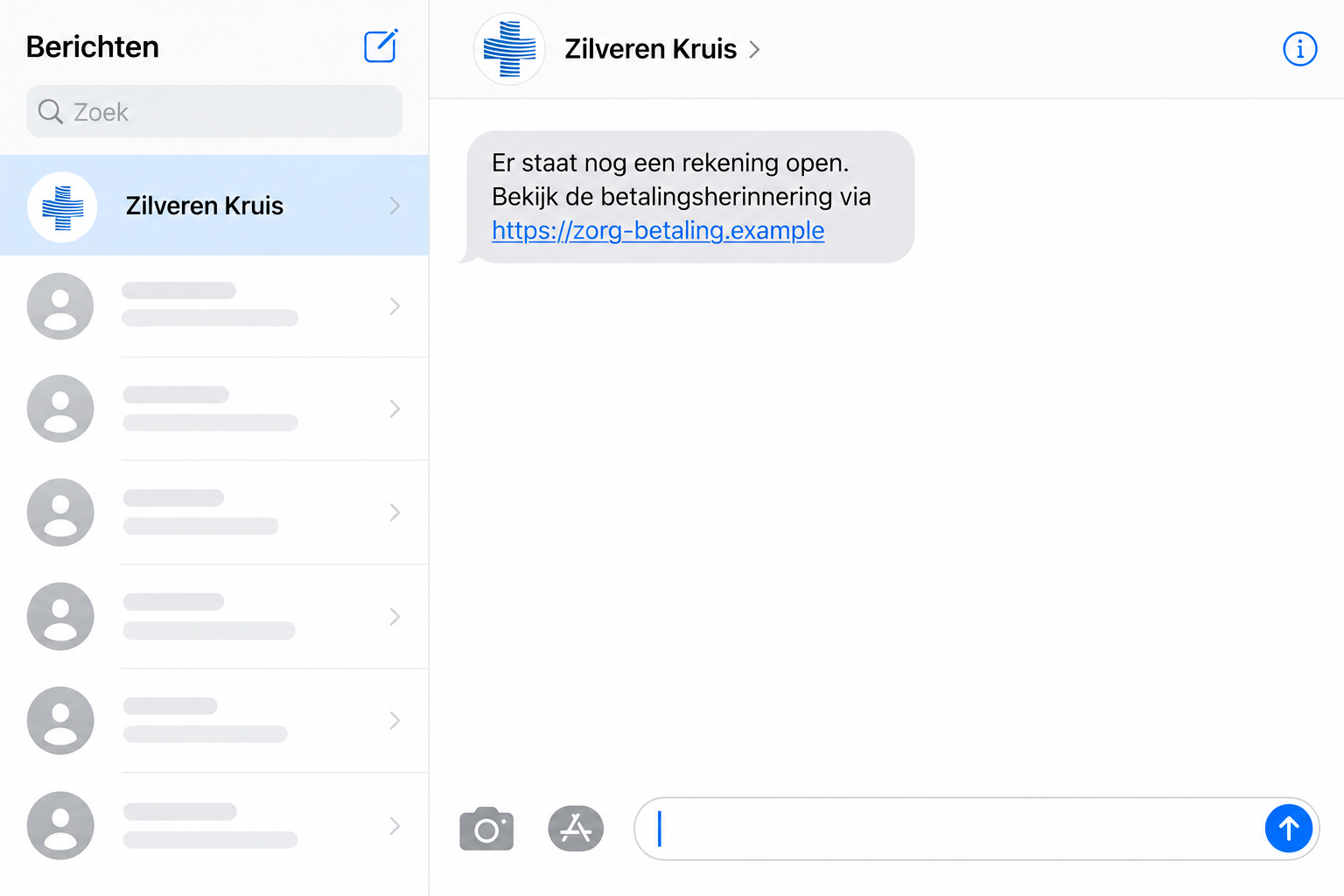
The Zilveren Kruis SMS scam impersonates the Dutch health insurer to make a false request feel like normal account administration.
The insurer’s official phishing warning confirms fake payment-reminder texts. It also explains how recipients can check genuine bills independently.
This is not an allegation that the real insurer is dishonest. The warning concerns outsiders borrowing its identity to obtain money or information.
Check the account, not just the sender label
A healthcare-related payment can sound plausible without being genuine. You may not immediately remember whether a recent expense has already been handled.
The practical test is a matching record in the real account or app. A text’s reassuring name, logo, or link description cannot replace that record.
Important checks include:
- Whether the claimed bill appears in your genuine account documents.
- Whether the period, amount, reference, and payment status match your records.
- Whether the sender requests information the insurer says it does not ask for.
- Whether the payment route belongs to the insurer’s independently verified options.
One especially clear warning sign
Zilveren Kruis says it does not ask customers to pay through Tikkie. A request framed that way should not be treated as a normal insurer collection.
The image is an illustrative message with a fictional destination. It doesn’t establish an exact original wording, amount, or link used in every version.
Why a Health Insurance Text Can Catch You Off Guard
Healthcare payments aren’t always easy to remember. A premium and a charge connected to care may be separate items with different explanations.
An impostor can benefit from that uncertainty without knowing anything about your treatment. The request may simply reach someone who already expects correspondence.
Don’t assume a message referring to healthcare means the sender has your medical file. The brand name alone doesn’t establish any access to personal records.
Equally, a familiar amount is not enough to authenticate a request. Check what it is for, who receives it, and whether it remains outstanding.
If another person handles your payments, ask them before acting. A shared household should not produce two hurried payments for a single supposed reminder.
The scam doesn’t require a dramatic story. A short note suggesting unfinished paperwork can encourage a quick tap while you’re occupied with something else.
That is why independent checking works better than trying to judge the message’s tone. Ordinary-looking administration is the disguise.
How the Zilveren Kruis SMS Scam Works
Step 1: A text creates doubt about a payment
The sender presents the message as a reminder from the insurer. The immediate suggestion is that there’s already an obligation waiting for you.
You may begin wondering which bill it means. The sender wants the supplied route to feel like the fastest way to find out.
Don’t let that uncertainty become consent. You can check the genuine account without using the message to identify either the debt or the recipient.
Step 2: The insurer’s identity lends credibility
A recognizable name can make the text feel connected to your existing relationship with the company. That connection is claimed, not established.
A logo or profile icon is not an authentication check. Treat the message’s appearance as something the sender controls.
If a follow-up email or call appears, don’t assume it independently confirms the text. Another unexpected contact still needs its own verification.
You don’t have to reply to ask whether the sender is real. Ask the genuine insurer through a route you already trust.
Step 3: A link becomes the place to resolve the supposed bill
The request encourages action outside the account you would normally use. That gives an impostor an opportunity to collect information or direct a payment.
Read any new screen according to what it requests. An alleged invoice lookup does not justify a password, banking code, or picture of a health card.
The insurer’s warning specifically disowns requests for passwords, PINs, and health-card photos. Don’t provide them to make an unfamiliar contact feel more comfortable.
A request for Tikkie payment is another direct mismatch. The legitimate payment service itself isn’t the accusation; the false claim of insurer authorization is.
Step 4: The recipient supplies data or approves money out
The relevant harm depends on the action taken. Viewing a page, entering personal information, and authorizing a payment are not interchangeable events.
If a page leads into your bank app, inspect the amount, recipient, and operation before approving. Don’t let the earlier text decide what you’re authorizing.
A successful payment screen doesn’t prove the insurer received anything. Check the bank record and the genuine customer account separately.
Don’t make a second payment because the message says the first didn’t work. Verify the actual transaction before doing anything else.
Find Out Whether There’s a Genuine Bill
Open the real insurer account yourself
Use the app you already have or independently navigate to the official website. Avoid downloading an app offered by the unexpected message.
Look at the account documents and recorded bills. Compare the item with the text rather than assuming any outstanding amount confirms the sender.
Check the correct insured person and billing period where relevant. Keep other household members’ health and account information private during the comparison.
If a payment recently left your bank, note the reference and date. Ask genuine support about any difference instead of paying another request to remove uncertainty.
If the amount is real but unaffordable, ask the insurer about suitable arrangements through its normal channels. Pressure from an unknown sender shouldn’t make that decision.
Use the published payment options
The insurer’s official payment guidance explains ways to handle genuine charges. Reach it independently before deciding how to settle a bill.
Read the recipient information against the authentic invoice. A familiar bank interface does not decide whether the person requesting payment is entitled to receive it.
Don’t replace your usual arrangement because a text claims the account has changed. Confirm any supposed change through the genuine organization.
One familiar reference doesn’t settle the question. Match the bill, recipient, and payment status before you approve anything.
Ask a precise question if something doesn’t match
Tell support what the text claims, the amount if one appears, and whether your account shows a corresponding bill. Avoid sending sensitive details unnecessarily.
Ask whether the message and payment route are recognized. If they aren’t, keep that answer with your incident notes.
If the genuine account cannot be accessed, recover access through the official service. An account difficulty does not make the unexpected link a safe alternative.
Likewise, don’t use contact details from an unverified reminder to resolve the reminder’s authenticity. That leaves the original sender in control of the answer.
Don’t Turn a Phishing Check Into a Medical Data Disclosure
You shouldn’t need to explain your treatment to an unknown sender just to question a bill. Keep any health-related discussion within genuine, appropriate support channels.
If you share a screenshot for advice, remove names, insured-person details, references, and medical information that other readers don’t need.
Someone offering to help in a public reply is still a stranger. Don’t give them account access or documents because they seem familiar with the scam.
If you actually uploaded identity or healthcare documents, record which ones. That is a separate exposure from payment and deserves specific advice from the affected organizations.
If a false page involved DigiD, follow the identity provider’s fraud recovery guidance, including password protection and a review of usage history.
Ask about unfamiliar access rather than guessing what records were viewed. The identity provider and insurer can help investigate different parts of that concern.
Keep genuine account-change notifications received afterward. They may help distinguish a misleading message from an actual alteration that needs correcting.
Avoid exaggerating what happened when reporting it. A message using an insurer’s name is not proof the insurer’s systems or records were breached.
What to Do if You Have Fallen Victim to This Scam
-
Stop the conversation and payment process. Don’t reply with more details, open another link, or send a second transfer to cancel the first.
Close the page, but keep the message long enough to preserve useful evidence. You don’t need to confront the sender.
-
Contact your bank after financial exposure. Report any outgoing payment, disclosed card or banking credentials, and unexpected approval made during the interaction.
Use your own bank’s trusted contact route. Explain the false insurance-reminder context and provide the actual transaction record.
Ask which protective or recovery steps apply to your case. A refund cannot be promised, and the insurer cannot reverse a payment it never received.
-
Secure the specific login involved. If you entered account credentials, use the genuine service’s recovery process and review available activity or security settings.
A DigiD disclosure needs the identity provider’s attention as well as the insurer’s. Do not assume changing an unrelated email password fixes it.
For reused passwords, replace the copies on other accounts. Keep any new codes or recovery information out of later conversations with the sender.
-
Check the authentic billing record. Confirm whether any real amount remains outstanding. Let the insurer know that a payment or disclosure involved an impostor.
Handle an authentic balance through the normal account route. A fraudulent demand and a genuine bill may need separate attention.
-
Preserve the original contact. Save the text, visible sender information, address visited, screenshots, transaction reference, and later messages.
Record what you entered or approved without writing down actual passwords. A factual list helps distinguish financial, account, and document exposure.
-
Report the impersonation through genuine channels. Use the insurer’s official phishing information for the appropriate route. Report text-message details as text evidence, not an invented email attachment.
If a related false email arrived, its email reporting instructions explain how to preserve the original technical information when forwarding.
Financial crime may also require a police report. Keep each case number so new information can be added to the right report.
-
Review device changes if any occurred. If a link led you to install a program, grant remote access, or allow unfamiliar notifications, address that exposure separately.
Malwarebytes can help check unwanted software. AdGuard may reduce malicious ads and redirects, but neither can recover transferred money or replace account-security action.
No installation is established merely because you received the text. Don’t assume infection or purchase emergency cleanup from a stranger on that basis.
-
Verify anyone who contacts you afterward. A caller claiming to cancel the false bill or arrange reimbursement may be another unverified contact.
Return to the bank or insurer through the channel you established yourself. Never pay a release fee or share another code to unlock supposed compensation.
Helping a Relative Handle the Message Calmly
If a family member asks whether to pay, start by asking whether they already clicked or sent anything. That decides the first useful action.
Help them reach the genuine insurer without taking their password. Let them review the account and approve only actions they understand.
Where a bank report is urgent, help collect transaction details instead of spending the first hour trying to identify the scammer.
Don’t blame the person for finding the reminder believable. The message exploits an existing need to keep healthcare administration up to date.
Afterward, agree on an easy checking routine: open the real app, compare the bill, and ask genuine support about anything unexplained.
Keep fraud correspondence apart from actual medical paperwork. That makes later reporting easier and reduces the chance of sharing private records while discussing the scam.
Frequently Asked Questions
Are fake Zilveren Kruis payment texts confirmed?
Yes. The insurer specifically warns that customers receive false payment-reminder SMS messages. This article concerns that impersonation, not fraud by the legitimate insurer.
Would Zilveren Kruis ask me to pay through Tikkie?
Its phishing guidance says no. Verify genuine charges through the insurer’s account and published payment routes instead of acting on that request.
Does a healthcare reference mean my medical records were stolen?
No. A generic insurance reminder doesn’t establish access to medical files. Record any actual document or health information you disclosed when seeking advice.
What if the bill amount also appears in my real account?
That establishes a balance to check, not the text’s authenticity. Use the independently accessed account to confirm status and choose the genuine payment route.
Should I send a photo of my health card for verification?
Not to the unexpected sender. The insurer warns it does not request that photo through these contacts. Verify the issue with genuine support.
What if I clicked but entered nothing?
Close the page and check for unintended downloads or permissions. A click alone doesn’t prove money moved or that your insurer account was accessed.
The Bottom Line
Don’t pay a Zilveren Kruis reminder through an unverified text, and reject a supposed insurer Tikkie request. Check the genuine account before acting.
If money or banking details went to the impostor, contact your bank promptly. Protect any exposed login and report the message through the insurer’s authentic channels.

Join the discussion
0 commentsShare your experience or ask a question about this article.
Discussion
Start the conversation
Have a question or something useful to share? Add the first comment.