

Donald Trump appears in a lottery advertisement with an enthusiastic message about AI and easy money. For a moment, it sounds like a public endorsement.
The clip leads into something called the Lottery Gap. Before treating the familiar voice as a recommendation, look at the story surrounding it.
Overview
The apparent Trump recommendation is part of the deception
The Donald Trump Lottery Gap promotion uses an apparent presidential endorsement to sell confidence in an AI lottery-prediction system.
The captured campaign portrays Trump praising an extraordinary moneymaking opportunity. That appearance is manipulated promotional material, not evidence that he recommended the advertised system.
The warning concerns impersonation and the financial promise attached to it. It is not a political assessment or an allegation that Trump operates the offer.
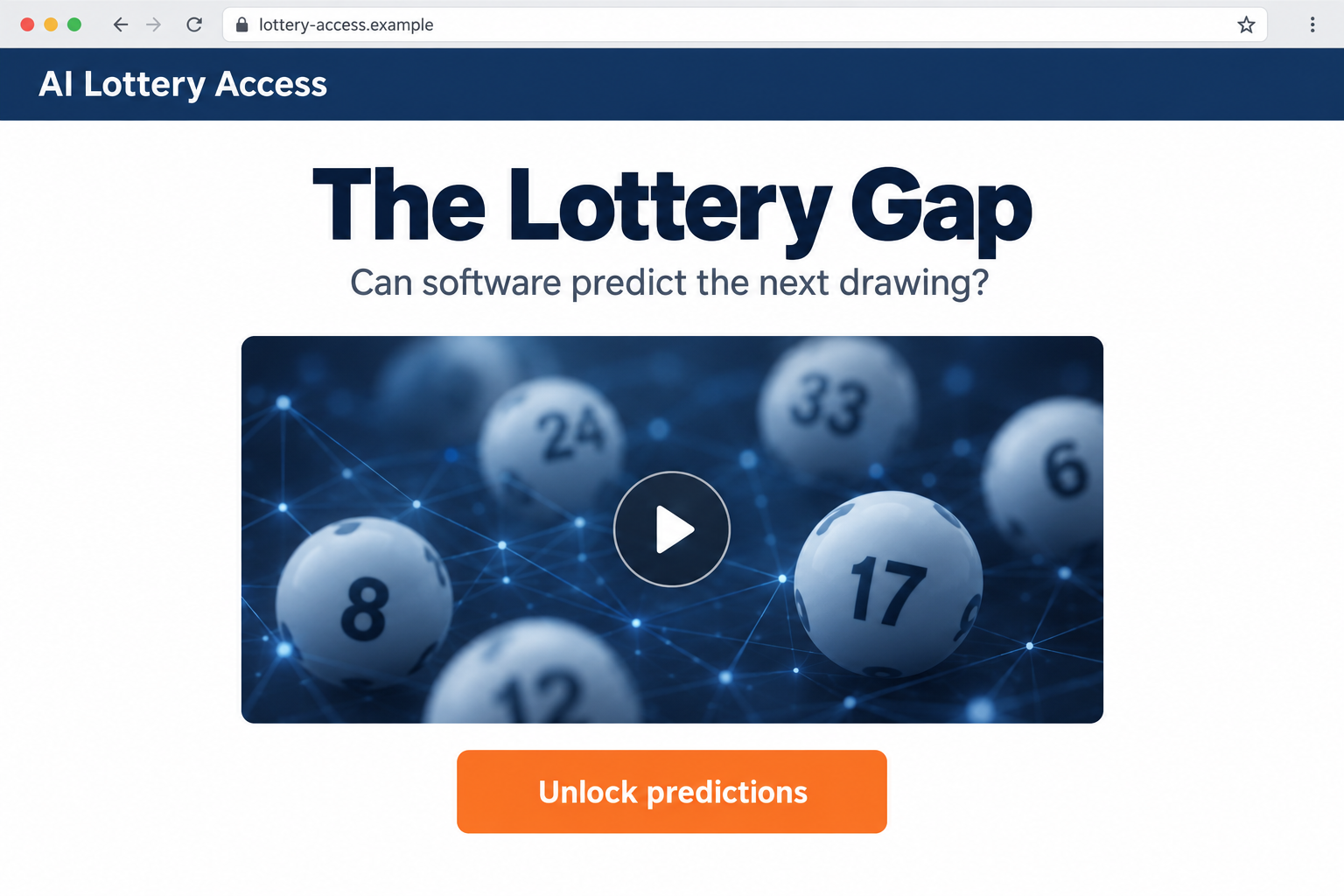
The interface illustration above represents the sort of page involved. It does not depict an actual Trump statement, authenticated lottery account, or completed purchase.
The application name can change while the endorsement story survives
A recent version promotes Lotto Ace. The same campaign family has used other lottery-related names, including Lotto Cash.
That is why the durable question is whether Trump endorsed the Lottery Gap story, not whether the newest application has a different logo.
The promotion’s supposed winners and confident narration do not supply an original statement from him or a demonstrated ability to predict future drawings.
Do not buy through a recommendation that depends on this fabricated appearance. A new product label doesn’t authenticate the person apparently speaking.
The public figure is being borrowed, not verified
- A recognizable voice is not an authenticated source.
- A promotional clip needs its original context, not more copies of the advertisement.
- A politician’s apparent approval cannot demonstrate lottery-prediction accuracy.
- A displayed prize check does not establish a genuine winning record.
- The seller accepting payment is separate from the person shown in the video.
No purchase was made to test this campaign. Its exact current fee, renewal agreement, and support outcome should not be invented from a familiar scam pattern.
Why a Familiar Political Voice Makes the Offer Feel Safer
An unfamiliar software seller has to earn trust. A recognizable public figure seems to arrive with it already attached.
For people who follow Trump, the apparent recommendation may feel like hearing an opportunity from someone whose statements they already watch and discuss.
The advertiser is exploiting recognition, not necessarily persuading viewers to change political opinions. That makes the pitch capable of moving quickly past ordinary skepticism.
The ad doesn’t need to change your politics. It only needs your trust in a familiar speaker to carry over into an unfamiliar purchase.
There is another important distinction: even a genuine endorsement would not prove that software can beat a random drawing. Authenticity and performance are separate questions.
This promotion fails before reaching that second question because the apparent backing itself is false. The sales story should not inherit credibility from the person it impersonates.
How the Donald Trump Lottery Gap Scam Works
Step 1: The advertisement opens with apparent public recognition
The campaign introduces the Lottery Gap as an opportunity already attracting enormous attention. Trump is then presented as someone who has recognized its importance.
This ordering matters. The advertiser wants viewers to enter a conversation that seems already underway, rather than question whether the discovery exists.
A familiar face can make the next claim feel like confirmation. Instead of evaluating an unknown seller, the viewer is following what appears to be widely recognized news.
Pause at that transition. An advertisement saying that a public figure praised something is not an independent record of the public figure doing so.
Step 2: Manipulated speech supplies a recommendation he didn’t make
The recorded promotion contains an apparent Trump statement comparing the AI opportunity with a major earlier financial trend.
It is designed to sound like an accessible way for ordinary people to make money. That phrasing gives the offer moral reassurance as well as excitement.
But a familiar speaking style can be imitated. Synthetic audio or edited video can make a recognizable person appear to deliver a commercial script.
Do not rely on whether the voice sounds persuasive through a phone speaker. The necessary check is an authentic original statement supporting the actual recommendation.
Step 3: Everyday winner stories turn the promise into a possible new life
The presentation moves from public authority to personal relief. Supposed customers describe escaping debt, retiring comfortably, or improving life for their families.
These scenes are not merely illustrating how to choose numbers. They invite you to imagine what a successful purchase would change at home.
The filmed checks do not provide reliable independent proof. Some contain conflicting amounts or malformed wording, making them particularly poor evidence of the payouts described.
Even a genuine prize would need a verified connection to the method. Somebody winning after using a number tool doesn’t establish that the tool predicted the draw.
Step 4: A suppression story makes missing proof sound intentional
The sales narrative claims the lottery establishment wants the opportunity hidden. That gives viewers a reason to distrust the absence of ordinary confirmation.
If the method is supposedly being censored, missing mainstream reporting can be made to sound like support for the story instead of a reason to question it.
A short access window adds pressure. The viewer is encouraged to watch and act before a chance disappears, rather than leave to check the speaker.
A credible claim survives a pause. You do not lose a valid scientific explanation simply because you take time to verify who is making it.
Step 5: The public-sounding discovery becomes a private sale
The apparent announcement eventually points toward paid access. That is where the actual seller becomes important, despite spending much less time on screen.
Identify what is offered: an account, recording, guide, number generator, or other digital product. None is automatically an official lottery entry.
A small starting fee can feel reasonable after a large promised benefit. But the size of the fee does not make the endorsement or prediction claim genuine.
Do not fill out a payment form merely to learn who the merchant is. That information should be clear before personal or financial details are requested.
Step 6: The script can return under a new product name
Changing a brand can make an old warning harder to locate. Viewers search the latest name and may miss reports describing the same story elsewhere.
In the recorded Lotto Ace version, the original investigator identifies awkward replacement speech and older dashboard branding associated with Lotto Cash.
That is useful campaign context, not proof that every similarly named company shares an owner. Keep the accusation attached to the impersonation and advertised prediction.
The reusable warning is straightforward: a public figure appears to endorse easy AI lottery winnings, but the recommendation cannot be authenticated outside the sales material.
How to Check an Apparent Trump Endorsement
Find the statement outside the advertisement
Look for the complete original through a genuine official account, an identified full interview, or another trustworthy primary publication.
The source should show the relevant words in context. A real speech with unrelated subject matter does not validate a commercial message attached afterward.
Repeated copies of the same advertisement are not independent confirmation. They can all originate from one manipulated file.
Match the recommendation to the exact offer
A public figure discussing AI generally would not authenticate a seller’s lottery application. A statement about economic opportunity would not establish a guaranteed prediction method.
Check what the person supposedly recommended, when, and through which identifiable relationship. Avoid filling gaps with assumptions about what they probably meant.
The more the advertiser relies on implication instead of an original statement, the less weight the supposed endorsement deserves.
Don’t make facial glitches the whole argument
Poor synchronization, changing details, or unnatural speech can be clues. Compression and ordinary editing can also create odd effects.
The stronger question is whether the endorsement has a genuine source and a verifiable relationship to the sale. A convincing face cannot answer that.
Likewise, a flawless-looking clip would not remove the need for verification. Better production quality doesn’t make an unsupported recommendation authentic.
Why the Lottery Promise Still Needs Its Own Evidence
Suppose the endorsement question vanished. The prediction system would still need to demonstrate that its selections reliably improve on chance before the results become known.
A fair drawing doesn’t remember which numbers have recently appeared or which combinations a customer wants. Describing previous results is different from forecasting the next one.
Software can generate combinations, display charts, and explain selections without possessing useful information about the future draw.
A performance record needs every attempt, including failures and ticket costs. Selected winning images leave out the spending necessary to judge whether the method helped.
An on-screen guarantee is not the same as independently held funds available to reimburse customers. It is another promise requiring an accountable party.
MalwareTips’ broader Lottery Gap investigation explains the recurring claim. A renamed application should not reset your assessment of the underlying pitch.
Use the lottery’s genuine resources for rules, authorized purchasing, and actual results. Powerball’s official guidance also warns against fraudulent prize contacts.
Who to Contact if the Advertisement Led to a Purchase
The person impersonated is not your merchant. A political office, campaign account, or unrelated Trump-branded business cannot identify a transaction simply from the copied image.
Start with the order confirmation and payment statement. Record the charged name, amount, date, destination domain, and item description.
Different names across those records need explanation. A payment processor may legitimately handle another company’s charge, but it does not endorse the advertised capability.
Do not send banking details or identity documents to an address found by searching for the politician’s name and refund. That can lead into another impersonation.
Use the merchant route associated with the transaction or contact your payment provider through its genuine app or statement number.
This is a payment-and-impersonation investigation, not a physical-product supply-chain case. Guessing at factories, warehouses, or China shipment would add allegations without helping recovery.
What to Do if You Have Fallen Victim to This Scam
-
Stop the next payment, not just the next video. Decline upgrades, private access tiers, unlocking fees, and another product suggested as the solution.
Do not keep buying lottery tickets to justify the original access fee. The seller’s charge and gambling spending should be reviewed separately.
-
Save the impersonation in context. Keep the advertisement, account name, supposed Trump statement, linked page, product label, and advertised guarantee.
Also preserve the receipt and delivered material. Together, they explain the connection between the false recommendation and your purchase.
-
Write to the charging merchant. Request cancellation and a refund, identifying the specific misleading endorsement and the amount involved.
Ask for a written answer and any applicable deadline. Keep copies outside an account controlled by the seller.
-
Check whether future charges were authorized. Read your agreement for renewal or continuity terms. A recurring arrangement must be canceled separately if one exists.
Don’t assume that a bundle, a login, or a refund conversation proves subscription enrollment. Use your actual agreement and statement history.
-
Consult your payment provider promptly. Explain that the sale relied on a fabricated endorsement and unsupported financial promise. Ask which dispute options remain available.
Provide the relevant records and seller response. Be precise about whether a charge was unauthorized or an authorized purchase induced by misleading claims.
-
Secure accounts if you exposed them. Replace reused passwords and review active sessions. Never share a bank verification code with a purported refund representative.
If you installed unfamiliar software, inspect it with Malwarebytes. AdGuard can reduce risky advertising, but it cannot recover payments or authenticate political endorsements.
-
Report the false promotion without blaming the impersonated person. Use the platform’s reporting process and the appropriate consumer-fraud authority for your country.
Include the destination and advertiser identifiers. Reject unsolicited recovery offers, especially demands for an advance fee, cryptocurrency, or remote access.
Family members can help organize records without judgment. A convincing impersonation is designed to exploit trust, and embarrassment should not delay a useful complaint.
Frequently Asked Questions
Did Donald Trump really endorse the Lottery Gap system?
No authentic endorsement establishes this promotion. The apparent recommendation in the recorded campaign is manipulated material used to lend credibility to a lottery-prediction sale.
Does this mean Trump runs Lotto Ace or another lottery application?
No. Being depicted in an impersonation does not establish ownership, involvement, or authorization. The merchant taking payment must be identified separately.
Why does the advertised product name keep changing?
Promoters can replace names while retaining a persuasive script. A new label doesn’t authenticate the copied recommendation or establish that the prediction promise works.
Would a genuine celebrity endorsement prove lottery accuracy?
No. Authenticity and performance are separate questions. Software still needs complete, independently checked predictions recorded before drawings rather than selected success stories.
Is the video part of an official government lottery opportunity?
The impersonation does not establish an official program. Verify lottery rules and purchasing through the actual lottery, not a sales page borrowing political authority.
Can I get a refund by contacting a Trump-related office?
Use the merchant and payment provider tied to your charge. The impersonated person or an unrelated business is not the appropriate contact for reversing that transaction.
The Bottom Line
Reject the Donald Trump Lottery Gap scam. The apparent endorsement is fabricated, and a familiar public figure cannot turn an unsupported prediction into reliable income.
If the clip led you to pay, preserve the impersonation and transaction, request a written refund, and ask your payment provider about timely remedies.
The product name may rotate. Your boundary can remain the same: don’t finance a lottery promise because a manipulated video makes a trusted person appear to recommend it.

Join the discussion
0 commentsShare your experience or ask a question about this article.
Discussion
Start the conversation
Have a question or something useful to share? Add the first comment.