

A message says your money cannot move until an official clearance is complete. AUSTRAC’s name appears on the paperwork, and someone is waiting for a payment.
Then comes the pressure: handle this privately, act quickly, and don’t let a small fee hold up a much larger amount.
Overview
A real regulator’s name is being used to collect fake payments
The AUSTRAC impersonation scam uses the Australian financial intelligence agency’s identity to demand money or personal information through emails, calls, and messages.
AUSTRAC has confirmed cases involving its name and staff identities. This isn’t simply a complaint about a real government bill.
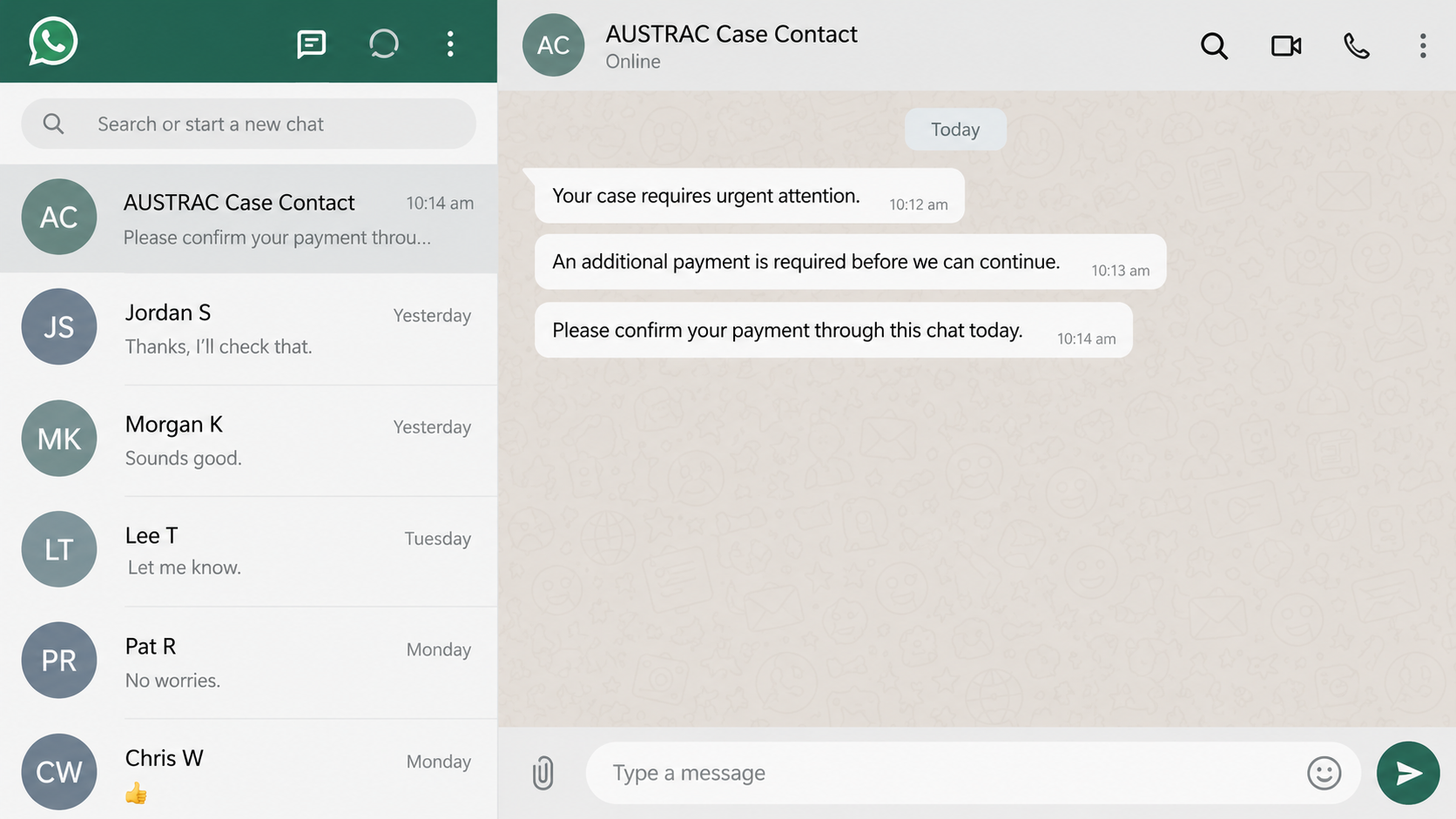
The agency says it doesn’t unexpectedly contact members of the public demanding payment. It never requests payment through cryptocurrency or social messaging platforms.
The image above is a fictional illustration of the pressure involved, not a screenshot from an actual AUSTRAC case.
A clearance fee can be the next excuse for keeping your money
AUSTRAC’s fraud and scam guidance describes official-looking emails, contracts, and supposed anti-money-laundering certificates that misuse its branding.
One claim is that a fee or tax must be paid before funds can be released to a bank account.
Other approaches threaten frozen accounts or prosecution. The common element is a stranger borrowing official authority to make their payment instruction harder to question.
- An apparent official introduces a financial, identity, or compliance problem.
- Agency branding or a supposed certificate makes the demand look established.
- The recipient is pressed to provide money or sensitive details.
- Unusual payment channels or secrecy can keep the conversation outside genuine agency processes.
- A promised release of funds encourages the recipient to keep paying.
Real business obligations must be checked separately
AUSTRAC does have legitimate levy and infringement processes involving regulated businesses. An article about impersonation shouldn’t tell a business to disregard every genuine notice.
The distinction is between an independently verified obligation and an unexpected stranger’s demand. An official-looking file doesn’t settle that question.
Don’t send money to unlock funds or satisfy a chat-based threat. Reach AUSTRAC independently before acting on a disputed notice.
Why the AUSTRAC Name Makes a Fake Fee Convincing
Someone waiting for money may already feel stuck. A withdrawal has failed, a transfer seems delayed, or an unfamiliar compliance explanation has appeared.
A supposed government requirement can make that delay sound unavoidable. Instead of questioning the person holding the money, you’re encouraged to satisfy the regulator.
The name also gives a scammer a convenient answer to ordinary questions. Why another payment? Compliance. Why a different recipient? Processing. Why the hurry? Enforcement.
Those explanations need checking, especially when the person claiming authority also supplies the only route for verification.
A PDF can carry a seal, signature, reference number, and complicated terminology without representing a real AUSTRAC decision.
The agency specifically warns about purported AML/CTF certificates. These initials refer to anti-money-laundering and counter-terrorism-financing measures, not an automatic stamp of approval.
Don’t treat a certificate inside an investment chat as proof that a balance exists or that a withdrawal will follow payment.
You can verify the agency claim without accepting the sender’s explanation of the investment, transfer, or account behind it.
AUSTRAC’s warning also covers demands tied to supposed account freezes, intercepted packages, or avoiding prosecution. Not every approach uses the same financial story.
Recognizing only one script can therefore leave you exposed to another. Focus on the claimed authority and requested action, not just a familiar fee label.
If the demand changes after you question it, keep both versions. A new explanation doesn’t erase the original request or establish a genuine obligation.
It’s particularly important to separate money already paid from money merely promised. A large number shown on a page isn’t a bank deposit.
How the AUSTRAC Impersonation Scam Works
Step 1: Someone introduces an official-sounding obstacle
The approach arrives by email, phone, or message. The sender invokes AUSTRAC or a staff member to give the demand government authority.
They may say funds require clearance, an account faces restrictions, or a financial rule has been broken.
AUSTRAC has warned about these demands. Knowing your name or transaction doesn’t give the caller authority over your money.
Pause before explaining your finances. You don’t need to provide more personal information to a stranger merely to ask who they are.
Step 2: Documents make the obstacle look formal
An email, contract, or supposed compliance certificate can put the claim into a format that resembles an established administrative process.
That presentation encourages you to look for the amount and deadline rather than question who issued the document.
Check the demand through the agency’s actual contact route. Don’t use a phone number printed only on the disputed certificate as your independent check.
If a trading platform supplied the document, checking with that same platform doesn’t independently verify the regulator’s involvement.
Step 3: The sender asks for money or sensitive details
The request may concern a fee, tax, or claimed enforcement problem. Some approaches seek personal information rather than an immediate payment.
AUSTRAC says it never asks for an additional payment simply to engage with the agency. Cryptocurrency and social-chat payment demands are not its payment process.
Don’t send identification to make an unverified demand go away. Information handed over during the conversation can create another problem beyond the disputed fee.
Keep the original request so the real agency can understand exactly what was claimed. Don’t forward private documents to unofficial helpers.
Step 4: Urgency discourages an outside check
A threat of frozen funds or prosecution makes delay feel dangerous. Secrecy can isolate the recipient from people who might question the story.
That pressure is part of the problem, not a reason to comply faster. AUSTRAC says genuine payment requests allow time for questions.
End the conversation and locate the agency yourself. A callback arranged by the suspicious caller still leaves that caller controlling the verification.
If a colleague handles regulatory correspondence, involve them through your established internal process rather than following the sender’s private instructions.
Step 5: A promised release keeps the recipient invested
A fund-release demand ties a new payment to money you already want back. The larger balance makes the proposed fee seem comparatively small.
But paying an impersonator doesn’t establish that the promised funds exist. Nor does it guarantee that the sender will stop inventing obstacles.
Assess the next request on its own. Previous payments are a reason to seek help promptly, not a reason to continue funding the same story.
Avoid sending a smaller test amount. It still transfers value while leaving the sender’s claimed authority unverified.
How to Check a Notice Without Following the Sender
Start with AUSTRAC’s real contact details
Open the official AUSTRAC contact page yourself. Explain that you need to verify a demand using the agency’s name.
Describe the sender, claimed staff identity, document reference, payment method, and deadline. Ask how to provide a copy safely if needed.
Don’t call a search advertisement or the number the suspicious message tells you to use. You want a route the sender didn’t choose.
Caller ID and a familiar-looking email address are not substitutes for that check. Treat them as details to report, not proof.
Identify the actual obligation before discussing payment
For a business, ask which notice, account, or regulatory process the demand concerns. Have the person responsible for compliance review it.
A real business levy and a cryptocurrency payment to release a personal withdrawal are different situations. Don’t let one be used to justify the other.
For instance, a caller might point out that AUSTRAC can issue genuine notices. That general fact still doesn’t authenticate their specific notice or recipient account.
Ask the real agency to confirm the reference and communication, not simply whether it ever receives payments. The narrower question addresses the actual demand.
Preserve any answer through your organization’s normal records. If you later receive a modified version of the same demand, staff can compare it with that confirmation.
If a genuine deadline may apply, seek clarification promptly through the real agency or your professional adviser. Don’t ignore legitimate correspondence because impersonation exists.
Equally, don’t pay the suspicious sender while waiting for clarification. Verification should happen before money leaves, not after it has become harder to recover.
Keep the original financial claim under review
Suppose the fee appeared after you requested an investment withdrawal. Record the withdrawal request, displayed balance, and every explanation given for withholding it.
The regulator impersonation may be one part of a wider fraud. Your bank or investigators need the whole payment history, not only the latest certificate.
Don’t assume a polished account dashboard proves money is waiting. The sender’s screen and the bank’s actual transaction records are different evidence.
If you sent multiple transfers, don’t combine them into one estimated figure. Record each date, amount, recipient, and stated purpose before discussing recovery options.
Explain whether a payment went directly from your bank or through an exchange. That helps the provider identify the transaction it can actually investigate.
You can report an impersonation without proving who operated it. Preserve the identities used, but don’t publicly accuse a real employee whose name was borrowed.
Ask your payment provider about completed transfers using the real amounts and recipients. Avoid relying on the alleged platform’s description of where money went.
What to Do if You Have Fallen Victim to This Scam
-
Stop further payments and private negotiations. Don’t send a release fee, verification transfer, or additional amount to cancel the first demand.
Save the conversation before blocking the contact. You don’t need to persuade the impersonator to admit the story is false.
-
Contact the bank or payment service immediately. Explain that someone impersonating AUSTRAC obtained money and provide the actual recipient details.
Ask whether a transfer can be stopped, recalled, or investigated. Available options depend on the payment method and timing; recovery isn’t guaranteed.
-
Report cryptocurrency payments accurately. If applicable, preserve the transaction identifier, network, destination, time, and exchange records.
Contact the exchange through its genuine support route. Don’t pay an online tracing service that promises a guaranteed reversal after another deposit.
-
Verify the agency claim and report through the right route. AUSTRAC’s official contacts can help check a demand using its name.
Its fraud guidance directs scam reports to Scamwatch or local police, and online or email fraud to the Australian Cyber Security Centre.
AUSTRAC’s general contact service isn’t a fraud-recovery service. Don’t wait for it to retrieve money before contacting your bank and making the appropriate report.
-
List the information you disclosed. Separate passwords, identity documents, account numbers, and ordinary contact details so the response matches the exposure.
Reset exposed credentials through the real service and notify the relevant provider about identification misuse. Don’t upload documents to a stranger’s replacement verification page.
-
Preserve the entire payment trail. Keep original emails, headers, attachments, chat exports, receipts, and any earlier withdrawal or investment messages.
Make a police report through an official local route. A short timeline helps distinguish money actually transferred from balances merely displayed by the sender.
-
Involve your workplace if business records were used. Alert the appropriate finance, compliance, or security contact without forwarding sensitive material broadly.
If separate software or login exposure occurred, describe it to IT. A threatening message alone doesn’t establish that a device is infected.
When the Follow-Up Claims to Be a Refund
After a loss, the promise of getting everything back can feel more convincing than the original offer. It addresses the problem you now urgently want solved.
Be cautious if another supposed official says the funds have been located but requires an advance fee before returning them.
A new name, certificate, or agency logo doesn’t independently verify a recovery claim. Return to the bank, agency, or investigator you already reached yourself.
Keep any genuine case number private. Don’t post identity documents or transaction details publicly while asking whether a recovery offer is authentic.
If someone says secrecy is necessary to protect a reimbursement, pause again. You can consult your own bank or adviser without accepting the stranger’s rules.
For business victims, maintain one internal record of reports and responses. That prevents a second employee from paying a follow-up demand without knowing about the first.
Frequently Asked Questions
Does AUSTRAC ever charge legitimate fees?
Yes, regulated businesses can have genuine levies or infringement obligations. Verify the specific notice independently rather than accepting an unexpected payment demand.
Will AUSTRAC require cryptocurrency to release my funds?
No. The agency says it never requests cryptocurrency payments. Don’t send crypto because a message claims an AUSTRAC clearance is required.
Is an AML certificate proof that an investment is approved?
No. AUSTRAC warns that scammers misuse its name on supposed certificates. Verify the agency claim separately from the investment’s own promotional material.
What if the caller threatens to freeze my account?
Don’t pay the caller. End the conversation and check with the actual agency and your bank through contact details you independently obtain.
Should I pay a small fee to test the process?
No. A test payment doesn’t authenticate an official or prove funds will be released. It simply puts another amount at risk.
Can I get back a payment already sent?
Contact the payment provider immediately and ask what can still be done. Keep the evidence, but don’t accept anyone’s guarantee of recovery.
The Bottom Line
Don’t pay an unexpected AUSTRAC fund-release fee or chat-based demand. Independently verify any real business notice instead of trusting the sender’s official-looking paperwork.
If the AUSTRAC impersonation scam already cost you money or information, contact the payment provider and real agency now. Stop further payments and preserve the records.

Join the discussion
0 commentsShare your experience or ask a question about this article.
Discussion
Start the conversation
Have a question or something useful to share? Add the first comment.