


A parcel labeled as a gift can leave you guessing who sent it. A notice saying it will be returned tomorrow makes that mystery feel urgent.
Before paying to release it, check whether there is a parcel to release.
Overview
The gift comes with a small charge and a short deadline
The RAM gift parcel delivery email scam says a shipment is on hold, its collection PIN is suspended and a clearance fee must be paid.
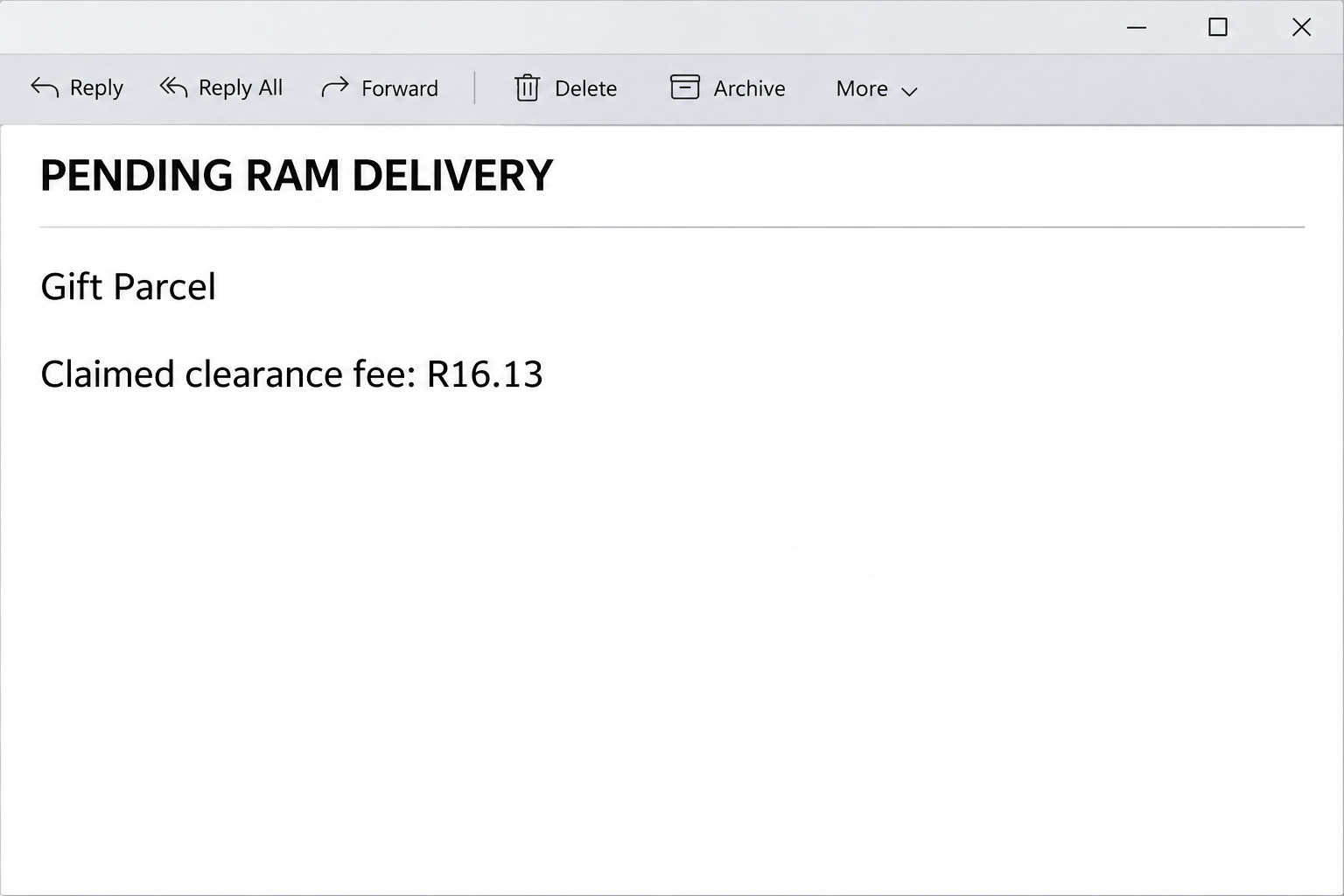
The specimen asks for R16.13 and says the item will be returned unless you act within 24 hours. It presents an apparent shipment reference as part of the story.
The amount is in South African rand. A fee that looks trivial can make it easier to pay before asking who sent the parcel.
The image recreates the subject and the claimed charge without showing a reference, payment control or any real delivery information.
The reported form wanted much more than R16.13
The action led to a fake site resembling the real South African courier RAM Hand-to-Hand Couriers. The reported page treated the payment as a condition for delivery.
The first stage asked for personal details, including an identity number and contact and delivery information. The second asked for card information, including the security code.
That sequence matters if you closed the page before the final button. You may have supplied identity details or card information without seeing any successful payment.
The reported form establishes those requests, not that somebody actually charged a specific recipient. The email does not establish a parcel, a customs bill or a genuine PIN suspension.
A real delivery has a sender who can confirm it
If you were expecting a gift, ask the likely sender through the way you normally reach them. They can tell you whether they shipped anything and which carrier they used.
Use RAM’s official site or an established support number to check the shipment. Do not take the email’s reference or payment button as independent corroboration.
- Find a shipment reference from a person or merchant you recognize.
- Ask the courier whether the actual shipment has a hold or authorized fee.
- Treat identity documents and payment card information as separate disclosures.
- If your bank asks you to approve an unfamiliar transaction, check the actual charge before doing anything.
The real courier has also warned about impersonation messages claiming that parcels will be returned unless a shipping cost is paid. Check the carrier rather than testing the alleged checkout.
How the RAM Gift Parcel Delivery Scam Works
Step 1: A surprise package makes missing order details feel normal
The notice calls the parcel a gift instead of connecting it to a purchase you can find in your account. That makes the absence of a receipt easier to accept.
Someone may assume a family member sent it. That possibility can feel more plausible around a birthday or after mentioning an address to a friend.
If you can think of a sender, check with them directly. A real person can tell you whether they sent a gift without asking for a clearance payment.
When nobody recognizes the shipment, the email should not become a way to discover who paid for it. Leave the link alone while you verify the claim.
Step 2: A suspended collection PIN makes the hold feel official
The message claims you cannot use a collection PIN until you pay. It also gives a short clock before the package supposedly goes back.
That makes the demand seem like a routine way to regain access to an existing shipment. But the email supplies no authoritative record of a real PIN or package.
A legitimate collection or delivery code has a defined purpose for a particular shipment. Do not confuse it with a code from your bank that approves a payment.
If somebody follows up asking for either code, ask the real courier or bank what it is for. The email cannot tell you which system generated it.
Step 3: The listed fee makes the first decision look easy
R16.13 is the amount shown in the specimen, not a verified amount due. The fraud asks people to focus on the minor inconvenience of paying it.
The risk goes beyond that number. Supplying personal information and card details to an unverified party can create problems even when the supposed fee never posts.
A genuine carrier may explain a charge through verified support. You do not need to enter information first to learn whether the fee is connected to your shipment.
This is especially useful when the address or reference looks familiar. A detail copied into a message can match reality without making the payment destination trustworthy.
Step 4: The form treats identity details like routine delivery information
The reported page asked for several pieces of personal information before the card form. That can look like an effort to prepare a delivery rather than collect records.
Your identity number and address belong to a different category from the question of whether you owe a small fee. Do not assume everything requested is necessary.
If you supplied only the first set of details, tell support exactly that. The appropriate response differs from exposing payment card information or accepting a bank prompt.
When a legitimate shipment requires identification, verify the requirement with the carrier and determine the approved route. An unrelated page cannot establish authority by naming a parcel.
Step 5: The card stage puts your payment method at risk
The reported checkout asked for card details and a security code. It was not evidence that the real courier received or needed those details.
If a bank prompt appears, use the genuine bank app to read what it authorizes. Do not treat the amount from the email as the amount actually being requested.
No receipt on the copied page does not mean nothing was received. If your card details were provided, speak to the issuer instead of trying a second card.
A separate charge or call may follow. Do not accept a refund or cancellation offer from an unsolicited contact without checking with the bank independently.
What to Do if You Have Fallen Victim to This Scam
-
Stop before you provide any more information.
Close the page and leave any backup link in the email untouched. Report the notice if you reached it through a work or shared mailbox.
Record the last thing you did. The helpful distinction is whether you read, entered personal information, entered card details or approved a request.
Do not go back for an order number or further screenshot. Save what you already have and use a trusted route for the next check.
-
Call your card issuer if payment details were exposed.
Use the number already on the card or the contact in your real banking app. Say you entered the details on a suspected fake courier page.
Ask about locking or replacing the card and checking attempted or pending payments. Follow the issuer’s advice rather than waiting to see whether R16.13 appears.
If you approved anything, tell the bank what the genuine prompt said. A visible amount, merchant and time are more useful than the fee stated in the email.
-
Make a separate record of identity information shared.
List the kinds of data you submitted, such as address, phone number or identity number. Do not repeat the actual values in a public report.
Ask your financial institution what monitoring is appropriate if sensitive identity details were provided. Use local fraud and identity support appropriate to the actual information exposed.
Follow-up callers may quote the address or claimed gift. Start a fresh contact with the carrier or bank instead of replying to somebody who has that detail.
-
Check whether any real shipment needs attention.
Ask a known sender or merchant for their tracking record. Confirm the carrier and actual delivery status through an independent site or phone number.
If nobody verifies the shipment, do not pay a fee to prevent a hypothetical return. If a real issue exists, use the carrier’s verified instructions.
Preserve correspondence about the genuine package separately. It can help resolve a real delay without giving the bogus email authority over the shipment.
-
Keep useful proof for the bank or courier.
Save the subject, time and claimed fee privately. Preserve any bank approval, merchant label or posted entry if money was involved.
Report the impersonation through the courier or your email service. A private copy can help the recipient identify a campaign without exposing other people’s information.
If you report an unauthorized payment, give the bank the actual record and retain its reference. Do not assume a charge for a different amount is unrelated.
-
Treat any second demand as a new event.
Someone may claim a payment was refused or that a refundable deposit is needed. Do not provide another card or send money to release the alleged gift.
If a stranger offers to reverse a charge, call the issuer through your trusted route. Check independently whether the case number or transaction exists.
Tell household members who might receive a version of the same claim. Share the false subject and warning, not the link or payment form.
Why the Rand Amount Is Not a Safety Check
People often assess an unfamiliar charge by asking whether the amount seems reasonable. That can help compare verified fees, but it cannot identify an unverified payment page.
A small displayed amount does not reveal what an unrelated page does with the card details. It also cannot tell you what a later bank request authorizes.
If the courier verifies a real charge, ask what shipment it covers and which payment channel belongs to it. Compare the answer with the actual seller or sender record.
If no independent record exists, no payment is needed to keep investigating. The artificial deadline should not decide whether you release financial or identity information.
When the tracking number appears to work
A reference from a message can describe a real shipment without telling you who sent the message. Start with the reference supplied by a known merchant or sender instead.
For an expected gift, ask which person or retailer handed it to the carrier. You can check who booked the delivery without accepting the message’s stated fee.
If the real status says your package is already delivered or scheduled for another day, ask about the discrepancy. Do not jump from a mismatch to entering more personal data.
When a message asks for a collection code
A real collection code has a specific use, which the genuine courier can explain. A bank code or transaction approval is not a substitute for a collection code.
If the bank app names a different amount from the email, decline the transaction and contact the issuer. Do not approve a higher amount to release a small fee.
If you can see no bank activity but shared your details anyway, make the same call. A fraudulent form can ask for information without completing a visible transaction.
When a gift truly requires pickup, check which location and identification procedure the carrier recognizes. The answer should come from an established shipment, not an urgent stranger.
Frequently Asked Questions
Is the PENDING RAM DELIVERY gift parcel message genuine?
The version that asks for R16.13 and claims the PIN is suspended is an impersonation attempt. Its reported payment page requested personal and card information.
Confirm a real shipment with the sender or RAM through a trusted route. Do not pay to find out whether the gift exists.
What does R16.13 mean in the notice?
It is the amount displayed as a clearance charge, in South African rand. It does not establish that the recipient owes an actual fee.
The displayed cost does not limit what could happen after you enter card data. Verify any genuine fee without using the email’s form.
Can an actual delivery require a collection PIN?
A genuine courier can require a code in an appropriate delivery workflow. The claim about a suspended code here does not establish anything about a real shipment.
Check with the carrier before sharing or acting on a code. Never use a banking approval code as a delivery code.
What if I entered my ID number but not my card?
Keep a private record of that disclosure and seek advice appropriate to identity exposure. Do not describe your card as exposed if you never entered it.
Watch for follow-ups using your personal details. If the caller names a bank or carrier, verify from a number you already trust.
What if I submitted my card but paid nothing?
Call the issuer anyway and say what information the form received. A failed page or missing receipt does not tell you who captured the card details.
Ask the issuer to review pending activity and explain whether to restrict the card. Do not submit a second payment to verify the first one.
Is this evidence that RAM itself is running the scam?
No, the reported page imitates the courier. The abuse of a real brand does not turn it into permission to collect your personal data.
Treat any actual RAM shipment as a separate matter. Check the independently verified carrier record before making a payment or sharing information.
The Bottom Line
Do not pay the R16.13 through this email. The copied delivery flow asks for personal and card information without establishing that a parcel or fee exists.
Verify any real shipment directly with the sender and carrier. If you entered card details or approved a payment, contact your bank promptly.

Join the discussion
0 commentsShare your experience or ask a question about this article.
Community experiences
Did this happen to you?
Your experience could help someone recognize the same scam. Submit a private report for our team to review.
I experienced this tooReports are reviewed before publication. Sharing publicly is always your choice.
Discussion
Start the conversation
Have a question or something useful to share? Add the first comment.