


A WhatsApp recruiter offers an app optimization job under the name Blue Wheel Digital. You get an invite code and see a balance grow as you complete the work.
The first time you try to withdraw, the platform gives you a condition the recruiter never mentioned.
Overview
The job used a name that sounds like an established agency
A public report describes someone being recruited on WhatsApp for app optimization work under the Blue Wheel Digital name. An invite code led to a sign-up and a task platform.
The tasks appeared to earn money on a dashboard. The reported condition for withdrawing was that the applicant had to deposit their own money first.
The account named bluewheeldigital[.]com and also identified a separately hosted version. The applicant stopped before paying, so the public account does not establish a successful transfer or a withdrawal.
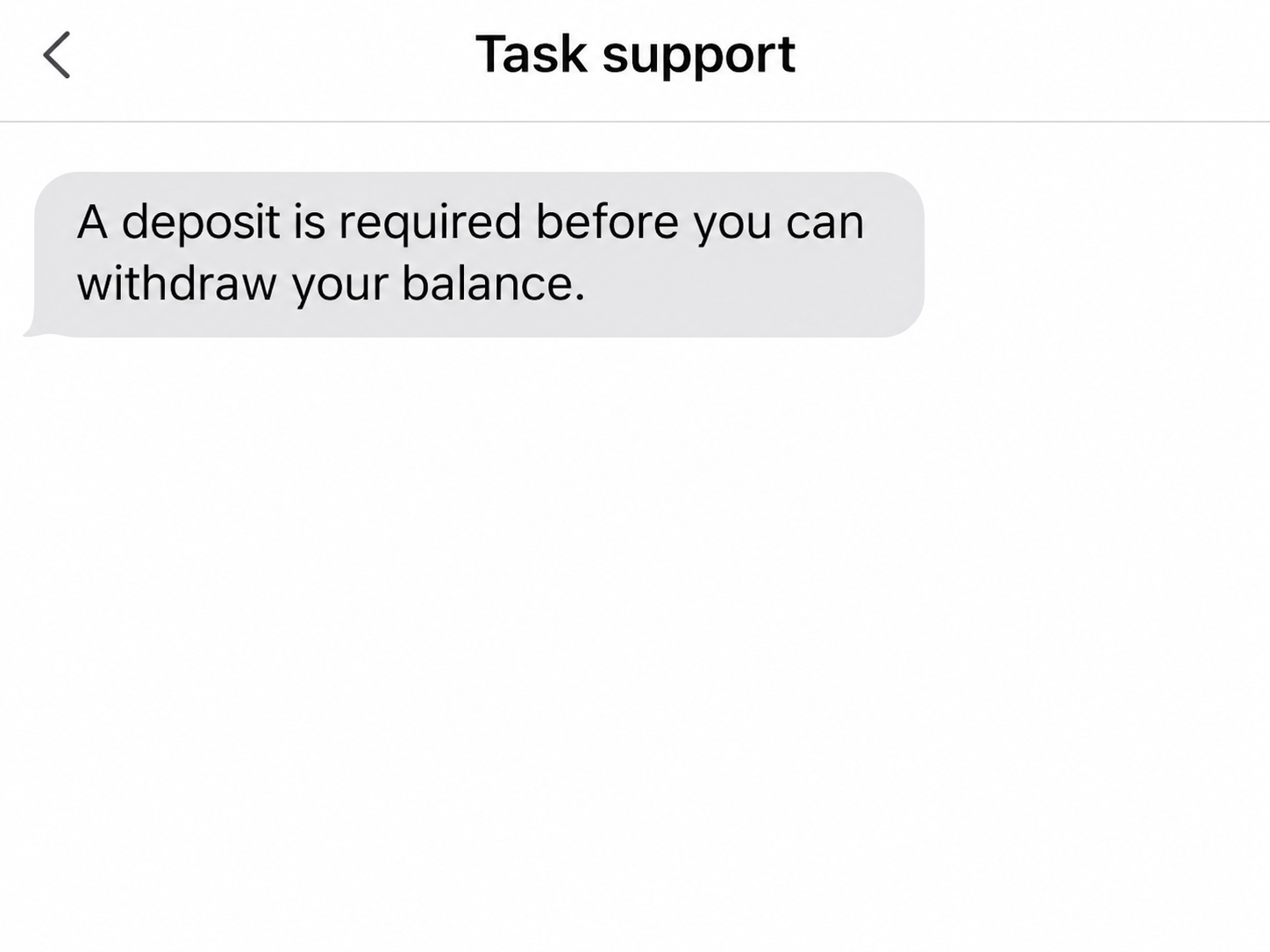
The lead image reconstructs the reported deposit demand in a generic chat. It preserves the offer’s central condition without showing an address, account or way to pay.
The real Blue Wheel agency warns about the exact domain
Blue Wheel’s recruitment verification notice names Blue Wheel Digital and bluewheeldigital[.]com among the impersonators it has identified. It says the real agency has no association with the offers.
The agency says it never asks applicants to send crypto, deposit money or unlock earnings with a fee. Check job offers through its own careers page.
Start by comparing the details the recruiter supplies:
- The company name in the initial WhatsApp message.
- The domain the recruiter wants you to use.
- The contact or account that supplied the invite code.
- What changed when you tried to withdraw the balance.
- The payment request and recipient, if you received them.
The withdrawal balance is the leverage
The FTC’s warning about task scams describes fake work platforms that make a displayed balance grow before demanding deposits. The apparent earnings give the next payment a purpose.
The reported Blue Wheel offer used that same structure. The applicant had a reason to believe there was money waiting, while paying was presented as the way to reach it.
Neither reported address showed a working task dashboard during the check. The agency’s public notice names the main domain and warns against any deposit demand.
The case does not establish who ran either reported site or whether a particular payment recipient was involved. No transfer was reported by the applicant in this account.
How the Fake Blue Wheel Digital Job Scam Works
Step 1: A recruiter offers work under a similar name
A person contacting you through WhatsApp can borrow terms such as digital marketing and app optimization from real agency work.
The job can sound specialized without giving you a verifiable employer.
The name Blue Wheel Digital resembles the agency’s actual name. The distinction becomes clearer when you compare the address you received with the agency’s own notice.
Look up a prospective employer before following a recruiter’s link. Check the legal name, the company’s official site and whether it independently acknowledges the particular position.
If the recruiter calls themselves customer support, ask who is responsible for hiring and payment. An account title supplied by the same person cannot establish that they work there.
Step 2: An invite code makes the dashboard feel private
An invite code can make a site feel like a restricted workplace.
It may lead applicants to assume that the company already verified their identity or accepted them for the role.
In this case, the person described an invite-code sign-up followed by simple tasks. The reported experience gives no independent evidence that the clicks produced revenue.
Ask which customer commissioned the work and how the employer measures it. A genuine role should have an explanation that exists outside the dashboard.
Keep the original message if you already registered. It can show where the invite code came from and who was communicating before the payment demand.
Step 3: A rising balance creates something to lose
A balance can make it feel like you have already put valuable time into the job. Each task gives you a reason to come back and look at the total.
The FTC describes task scams showing earnings inside a dashboard even when there is no genuine compensation to withdraw. Compare the displayed amount with money that actually reached your account.
If somebody sends screenshots of their own earnings, keep that claim separate from your records. You cannot verify your payment by looking at somebody else’s task balance.
A displayed amount does not establish that wages are being held in your name. Verify any real payment by opening the bank or wallet you already use.
Step 4: The withdrawal becomes conditional on a deposit
The task platform reportedly demanded a payment before the applicant could withdraw. That moves the risk from time spent on tasks to money leaving the applicant’s account.
Someone may describe the deposit as temporary or say it will be added to the payout. The receiving account still has to be paid before any real money comes back.
If you already made a transfer, save its actual receipt. A supposed unlocking step should never replace a conversation with the bank or payment service that handled the money.
Stop if another fee appears after the first one. Report each demand in the order it arrived and let the provider assess the transfers already made.
How to Verify a Blue Wheel Job Offer
Compare the recruiter’s domain with the real agency
The real agency uses bluewheelmedia[.]com. Its notice says official staff communicate through that domain and directs candidates to its careers page for genuine opportunities.
Start by opening the real company site yourself. Search its job listings for the title and city or remote arrangement you were offered.
Contact the agency through its verified information if you cannot find the role. Give it the recruiter’s displayed name and exact link without reopening the suspicious address.
A genuine email domain can help you check a message. Keep verifying the sender and offer if somebody tries to move the conversation back to an unconfirmed chat.
Ask for the terms governing pay and expenses
Ask how the company pays, who issues the agreement and where the role is supervised. A written explanation gives you something to compare with the demand that appears later.
Read the terms for any expenses the recruiter claims you must cover. An instruction to send a deposit to unlock displayed earnings should end the conversation.
Some legitimate jobs use commission, bonuses or expenses. The worker should be able to verify the employer and meaning of the payment outside a closed task portal.
If the recruiter refers you to another support account for payment, keep those two contacts in your records. The handoff can help the platform understand how the request developed.
Check whether any amount reached your own account
Open your bank or payment app independently and look for a deposit you can recognize.
A transaction in that account provides a stronger record than a changing number on the job site.
If you received a small payment earlier, keep it separate from any amount you were asked to send back.
It does not verify the later balance or the person asking for a deposit.
For crypto transactions, keep the recipient address and transaction ID privately. Your payment provider can explain which parts of the transaction it can see or investigate.
If the dashboard says you owe money, pause before treating it as a debt. Ask any genuine provider whether it has a real account or payment record in your name.
Keep proof when a task platform or chat disappears
Save the original chat, invite and any available screenshot without logging back into the fake site. Record the address from your existing history if you need to report it.
Write down when the account began to display a balance and when the deposit became a condition. That chronology shows what the recruiter offered before asking for your money.
When contacting the real agency, mention which domain or messaging account used its brand. Keep wallet, card and identity details for the providers that actually need them.
If another person now claims to work in recovery, ask your bank or exchange whether it knows that person. Avoid a second payment based on a promise of a refund.
Review what you shared during registration
If you entered a password you use elsewhere, change it through genuine services. Give priority to the email account that can reset passwords for other sites.
Review any documents, codes or contact details you shared before the deposit request. Different exposures call for different protections, so keep a list rather than sending the documents again.
If your mobile number was used for the job account, you may receive follow-up recruiting messages. Ask a company to verify a new offer through its official contact.
If you installed software or approved access at the recruiter’s request, ask a trusted support provider to help review the device. Use another trusted device to reach your bank.
Verify a new role even if it seems to explain the first offer
A second recruiter may claim the original person used the wrong link and the role merely moved. Check the new claim with the real agency from its own website.
If the new version asks for a different payment method, note the change in your report. A switch from bank transfer to cryptocurrency does not change the underlying requirement.
Keep the record of the first promised payment date. That makes it easier to explain when the job stopped being about work and started asking for funds.
Check whether the recruiter had any authority to collect funds
A recruiter may say the company has separate accounts for salaries and deposits. Ask the genuine agency what it knows about the role before discussing such an arrangement.
If the site directs you to a wallet, preserve the request privately without sending funds. The receiving address can help a payment provider investigate money you already sent.
If you see several payment instructions, keep them in the order they arrived. That helps show whether the recipient or explanation changed after your first response.
Tell other applicants which evidence you can confirm
Share a link to the official company warning with someone who received the same offer. Describe the domain or fee request without forwarding the recruiter’s sign-up link.
If the other person has already paid, help them locate their own bank or wallet history. They should report their transfer through the provider that handled it.
What to Do if You Have Fallen Victim to This Scam
-
Stop tasks that require a deposit before withdrawal. Save the recruiter’s name, invite code, website and payment request so the platform can investigate what was offered.
-
Contact the payment provider that handled your transfer and give it the amount, date and recipient. Ask what recovery or account-protection options apply.
-
Secure any password you used on the task site through the services it also opens. Report any shared codes or identity information to the affected providers.
-
Report the impersonation to the real Blue Wheel agency through its verification page. Tell WhatsApp which account handled recruitment or payment requests.
-
Use FTC ReportFraud if you are in the United States and keep the reference. Report later recovery offers separately if they ask for money.
You can still report the recruiter if you stopped before sending money. The messages explain the impersonation even when no bank transaction exists.
Frequently Asked Questions
Is Blue Wheel Digital the same as Blue Wheel?
The real agency’s warning identifies the named domain and denies any association with it. Check a job through the company’s official careers page and contact information.
Does an invite code prove that someone hired me?
An invite code can control who sees a website. It does not prove who created the site or that a real company is paying for the work.
Why does the balance keep increasing after each task?
A task site can display figures that look like earnings. Check for an actual payment in your own account before treating the figures as money.
Does this account confirm that someone paid the deposit?
The applicant in this report stopped before paying. The demand to deposit money before a withdrawal was the key detail, and no recovery outcome was reported.
Can a recruiter use another website with the same name?
Someone can register a different address and present the same company name. Verify the job through the real agency instead of accepting a new link from the recruiter.
What if the site closed after I transferred money?
Keep your bank or wallet receipt and contact the provider independently. You can make a report using transaction records and messages you already saved.
The Bottom Line
Walk away from a Blue Wheel Digital job that asks for a deposit before you can withdraw. The genuine agency specifically warns about the domain named in the report.
If you already paid, contact the payment provider promptly and keep the original chat. Report the money that actually left your account and preserve any further demands.

Join the discussion
0 commentsShare your experience or ask a question about this article.
Community experiences
Did this happen to you?
Your experience could help someone recognize the same scam. Submit a private report for our team to review.
I experienced this tooReports are reviewed before publication. Sharing publicly is always your choice.
Discussion
Start the conversation
Have a question or something useful to share? Add the first comment.