


The message says your Quick Promo account needs one last verification. It gives you three days to pay and threatens the money you already put in.
For someone watching a balance they cannot withdraw, that ultimatum can feel like a way out. Authorities across the Caribbean have warned people about this platform.
Overview
The demand that matters now
The Centrale Bank of Curaçao and Sint Maarten documented a Quick Promo message demanding an additional $300 within 72 hours for account verification.
The message threatened to take away access to the account and the funds it purported to hold. Do not send that payment to protect a displayed balance.
- The $300 demand came after participants had already put money into the platform.
- The central bank treated the request as a sign of financial strain, not a routine identity check.
- The deadline was part of the platform’s message, not a government reporting deadline.
What the regulators say in each jurisdiction
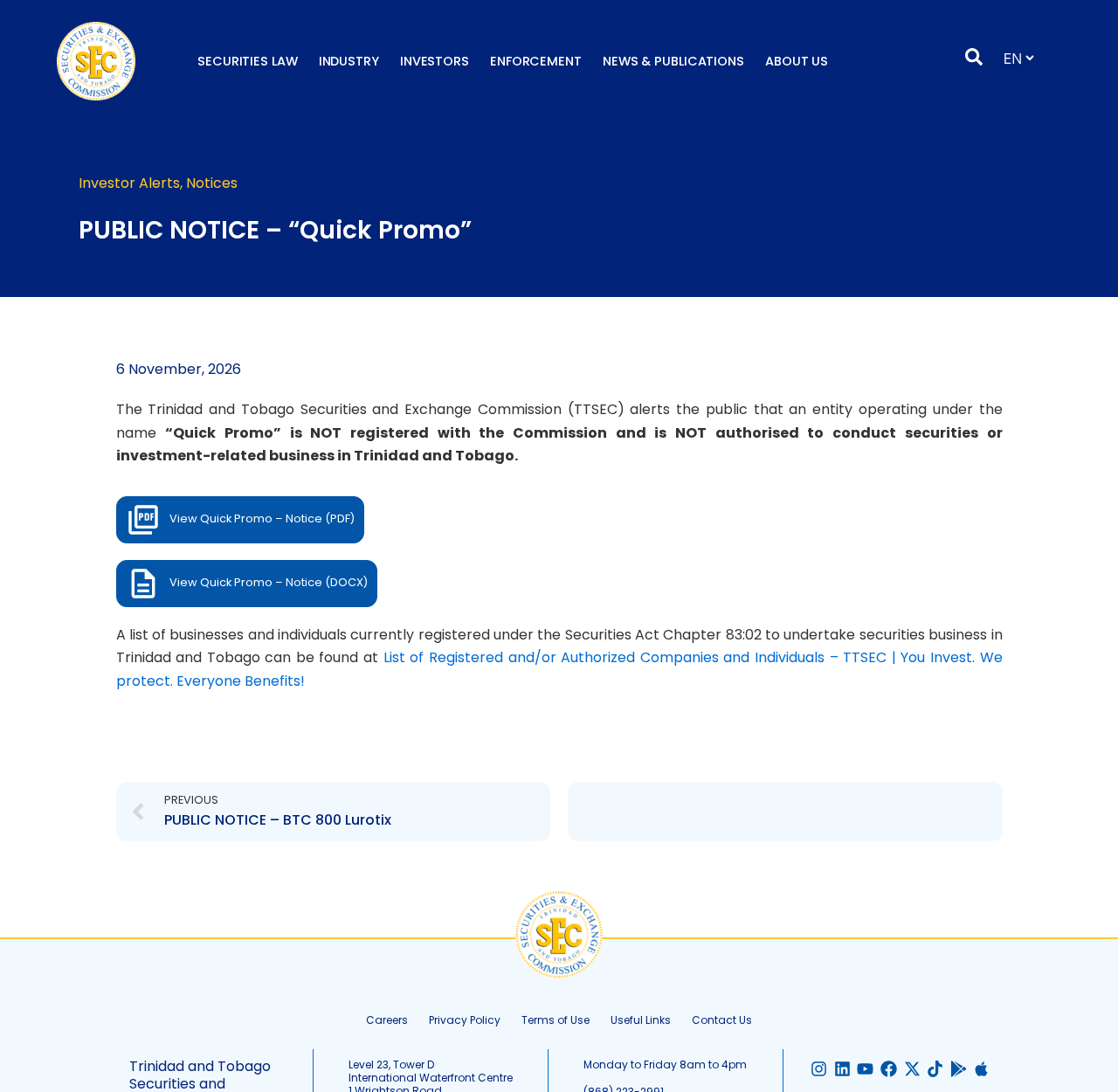
The Trinidad and Tobago Securities and Exchange Commission says Quick Promo was not registered or authorized to conduct securities or investment-related business there.
The Centrale Bank van Aruba separately warned about QuickPromo Aruba and urged people who had transferred funds to report it to Aruba’s police.
Those findings concern investment activity in specific jurisdictions. They are not announcements that one authority holds the deposits or has opened a reimbursement program.
Keep the old payment separate from the new one
Whatever options exist for tracing a deposit, sending another payment does not improve the receipts or transaction records for the first one.
Gather those records now, while the messages and account pages are still available to you. Then report the actual transfer through the institution that processed it.
How the Quick Promo Scam Works
Step 1: A social pitch puts the platform in familiar company
The Aruba warning reproduces a poster in local language inviting people to hear about QuickPromo Aruba. It did not appear on a regulator’s list of authorized offers.
A promotional image using familiar language and an island’s name can make the offer look local. Localization isn’t evidence that a local regulator supervises the deposits.
It is easy to see why a familiar name in a community chat makes the next step feel ordinary. That person may be relying on the same promises.
Before giving an investment platform money, verify who is taking it and whether that exact entity is authorized for that activity in your jurisdiction.
Step 2: Repeated activity makes the account look productive
Reports on the platform describe participants logging in and clicking a button to qualify for a daily return. The activity was presented as connected to trading.
The meaningful distinction is between a number appearing after a click and funds reaching an account you control. A platform can display the first without delivering the second.
Even a small withdrawal in the past is not evidence that every remaining balance is funded. Record any funds actually received when calculating what remains out of pocket.
The same distinction matters when someone forwards a screenshot of earnings. Without an independent transaction record, it shows a display, not the source or availability of a payout.
Step 3: The platform makes another transfer sound like a safeguard
In its November 10 notice, the Curaçao and Sint Maarten central bank described the extra deposit as an account-verification requirement communicated by Quick Promo.
This is the part of the offer to stop at. The people controlling access were asking account holders to increase their exposure to preserve what was already there.
A request to prove your identity does not need to be accepted on a platform’s own terms. Only trust instructions from an institution you’ve verified independently.
The central bank said demands of this kind can signal that a scheme cannot meet its existing obligations. It did not promise the requested payment would restore withdrawals.
Step 4: The deadline turns an apparent balance into pressure
Someone who entered with a modest amount may now be asked to send a much larger sum to avoid losing access. The clock makes that choice feel urgent.
Let the platform’s deadline pass before you take another risk. Its threat cannot establish that the balance exists outside its own records or that a transfer will release it.
Some accounts of the request refer to USDT, while the central bank expressed the amount in US currency. Keep the unit shown on your actual receipt.
If the platform or a person in a chat changes the amount, the same decision applies. Do not send a replacement payment just because the wording changed.
How the Three Official Warnings Fit Together
Trinidad and Tobago’s notice, dated November 6, is about authorization. Its finding means Quick Promo should not be treated as an approved investment business there.
The November 10 notice from the Curaçao and Sint Maarten central bank addresses a later development: the demand to deposit again within a very short window.
That notice described the pressure as a possible sign of a pyramid scheme under strain. It did not establish an exact amount available for every account.
The November 14 Aruba notice addresses a local promotion and says QuickPromo Aruba was not registered with the country’s Chamber of Commerce and Industry or central bank.
The Aruba bank’s direction to report to police is recovery guidance for affected people. It does not mean the bank can automatically reverse a transaction.
One country’s registration document would not undo another’s warning. Check the jurisdiction and the type of authorization rather than treating all official documents as equivalent.
Keep the regulatory findings separate from local allegations about who promoted the platform. You do not need to settle any disputed identity before you report your own payment.
Read the Trinidad and Tobago notice alongside the agency’s registry link. A registration check concerns the exact named firm, not a similarly named business or promoter.
On the Aruba side, the regulator’s examples of approaches through social media explain why contacting an account from the ad is not an independent license check.
A public warning and a civil claim also answer different questions. A warning can help you avoid a second payment without resolving entitlement to the first.
Work Out What You Actually Sent
Start a list with your deposits, not the platform’s balance. Record the amount, date, currency, sender and receiving account shown on each independent receipt.
Put any successful withdrawals in a separate column. That makes it possible to distinguish funds that reached you from earnings that appeared only on the platform.
For a bank transfer, preserve the beneficiary name, account details and payment reference privately. Mark whether you sent it directly or used a local intermediary.
If you paid through a crypto exchange, find the transaction reference and asset in your own history. Record the exact sending service and currency before reporting.
For cash, keep receipts, dates and the circumstances in which you handed it over. Preserve contact details privately rather than naming someone publicly based on a chat nickname.
Save screenshots of the separate $300 message even if you did not pay it. They can show what happened after the original payment and why you stopped.
Keep related communications in chronological order. If messages came from multiple numbers or profiles, don’t merge them into one identity unless you have evidence connecting them.
A notice requesting an additional deposit is useful evidence of the demand. Do not click its payment instructions again to make the report more detailed.
When two currencies appear in the same story, do not add them as if each unit were interchangeable. Give your payment provider the amount it can locate.
If you exchanged local currency to send crypto, keep the exchange receipt and separate transfer reference. One documents the purchase; the other documents movement of the asset.
If several members of a household paid, record each account separately. A single combined figure makes it harder for each institution to find its own transaction.
Include any payment you sent after the verification demand as a separate entry. That timing distinguishes a second loss from the money you originally put in.
Write down which claim came from the platform and which came from a person who introduced it. The fact that the stories sound alike doesn’t establish the connection.
If the app shows a transaction marked pending, keep a screenshot and check your own account for a corresponding credit. Don’t count a pending screen as a withdrawal.
Include requests for referral or verification payments only if you actually received them. That keeps the report specific to the steps you can describe or show.
What to Do If You Paid Quick Promo
-
Do not send any more money. Don’t pay to verify the wallet, prevent account closure or get an earlier withdrawal processed through an unofficial contact.
-
Contact the bank, card issuer or exchange you actually used. Explain when you paid, how the money moved and why the transaction is now being reported.
-
Ask whether the transfer can still be stopped, flagged or investigated. Keep the case reference and any deadline your payment provider gives you.
-
Save the promotion, original receipt and verification demand privately. If a contact disappears, notes made before it vanished can still help you describe the route.
-
Use the official police or regulatory route in your own jurisdiction. In Aruba, the central bank directs people who transferred funds to the Korps Politie Aruba.
-
Tell your bank if you also shared documents or banking information. Describe exactly what was exposed instead of assuming the platform has access to everything.
-
Decline recovery offers that ask for another payment or wallet access. Check anyone claiming to be an investigator through the agency they say they represent.
Use the same care if a supposed recovery agent claims to know the amount you lost. Knowledge of your deposit isn’t proof that someone can recover it.
Never give a private wallet recovery phrase to someone offering help. Legitimate reporting can be based on transaction records without transferring control of your remaining assets.
If you paid through another person, report that fact and include the records you have. Don’t try to seize money from a promoter yourself.
If an informal support group asks for documents, ask where they will go before sharing them. An online registration isn’t necessarily a police report or a verified claim.
Keep backup copies of the complaint and evidence outside any app associated with Quick Promo. Losing access to the platform should not erase your own records.
If you never sent money, report the message without opening the payment route. There is no reason to test whether the demand is being enforced.
Why an Early Payout Doesn’t Answer the Reserve Question
The Curaçao and Sint Maarten central bank explained that payments in pyramid schemes can come from later participants rather than genuine earnings from external activity.
That explanation makes earlier small payments compatible with trouble later. It does not allow anyone outside the platform to determine who funded a particular payment.
A friend receiving money may honestly believe the pitch. Ask whether you are looking at their bank receipt or at a screen that has not been cashed out.
If a chat participant offers to cover the $300 in exchange for access to your account, do not give them credentials. Their offer doesn’t fix the authorization problem.
Look out for a second approach under a different name. The relevant similarity is a demand to fund recovery, not proof any two accounts have the same owner.
It is possible to warn relatives without forwarding the payment button. Describe the amount demanded, the supposed deadline, and the official warning they can open independently.
Keep any reassurance from a promoter alongside the withdrawal history. An explanation that funds were temporarily delayed should not replace evidence that a transfer actually arrived.
Frequently Asked Questions
Was the $300 demand an official government requirement?
No government required that payment in the warnings discussed here. The Curaçao and Sint Maarten central bank identified it as a demand circulated by the platform.
Will paying the $300 release my balance?
There is no independent basis for expecting it to work. Stop before sending more and ask the provider that handled your original transfer about reporting it.
Is Quick Promo authorized in Trinidad and Tobago?
The TTSEC says it is not registered or authorized to conduct securities or investment-related business in Trinidad and Tobago.
What should people in Aruba do if they transferred funds?
The Aruba central bank advises affected people to file a report with the Korps Politie Aruba. Bring payment records and the messages that led to the transfer.
Does a profitable account screen show how much I lost?
Use money actually sent and received to document your financial exposure. Keep the screen separately, since it can show how the balance was represented.
Can an exchange reverse my Quick Promo transfer?
Notify the exchange promptly and ask what it can do. The result depends on the asset, the actual transfer and where the funds went.
The Bottom Line
Do not send Quick Promo any more money. The $300 ultimatum is documented in a central bank warning, not verified as a way to release funds.
If you already paid, report the original transfer and preserve your receipts. Use the institution that handled your money and the police route for your jurisdiction.

Join the discussion
0 commentsShare your experience or ask a question about this article.
Community experiences
Did this happen to you?
Your experience could help someone recognize the same scam. Submit a private report for our team to review.
I experienced this tooReports are reviewed before publication. Sharing publicly is always your choice.
Discussion
Start the conversation
Have a question or something useful to share? Add the first comment.