


A buyer arrives to collect your laptop and shows you a transfer confirmation on their phone. The amount is right, but nothing has appeared in your account.
Then the buyer opens what looks like a conversation with the bank and says you just need to wait.
Overview
The buyer showed two forms of supposed proof
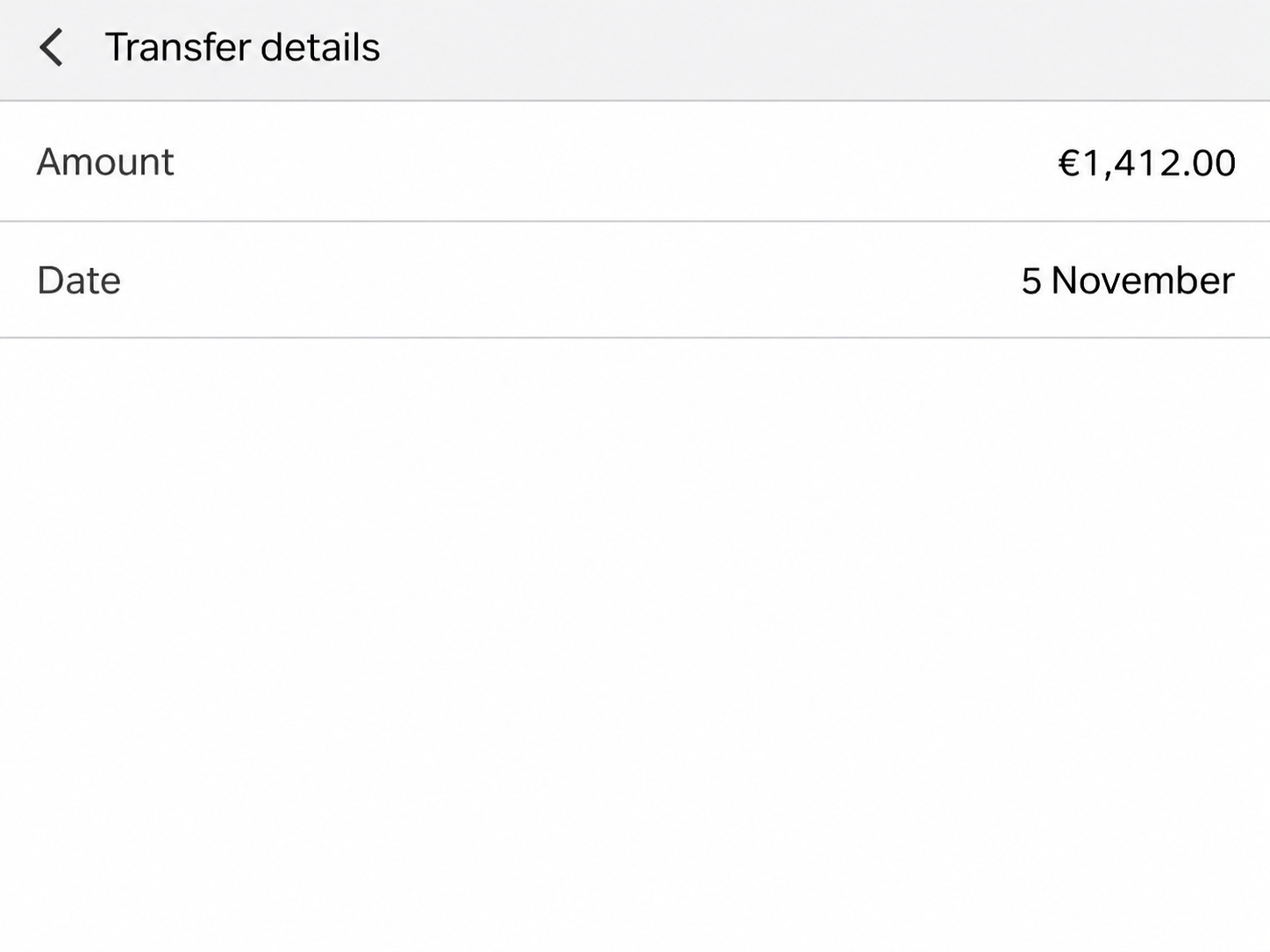
A UK seller reported that a buyer came to collect a MacBook and claimed to have sent €1,412. The buyer said the money was coming from Bank of Ireland.
The buyer displayed a payment confirmation and what appeared to be a support chat. The message in the chat reportedly said the transfer could take 24 hours.
The seller’s Monzo account did not show the payment. The seller said Monzo could not see an incoming or pending transfer when they asked about it.
The lead image reconstructs the displayed amount without copying either bank’s interface or identifying information. The example shows why someone else’s screen cannot settle what reached your account.
The account field and the timing claim changed the handover
The seller said their UK sort code and account number appeared in a field labelled IBAN. That was another reason to check with their own bank.
A domestic sort code and account number are not the same presentation as an IBAN. A field label alone cannot tell you whether a genuine payment was initiated.
The seller kept the laptop even after the buyer became aggressive and asked for an ID photo. The buyer texted about returning but never did.
These are separate details to save if this happens to you:
- The price you agreed and the currency used in the sale.
- The amount, status and date on the buyer’s supposed receipt.
- Any confirmation or reference you received through your own bank.
- The message asking you to release the item before the transfer arrived.
- Any later request for identification or threat about collection.
Police have documented this kind of fake payment display
The Regional Organised Crime Unit’s warning describes fake banking apps used to persuade people selling goods to hand them over. It recommends checking your own account for a transfer.
The apparent support chat seemed to explain the first receipt. Both pieces of proof came from the buyer, who still could not show money in the seller’s account.
The seller could not confirm how the screen was made. Checking with their own bank gave them a clear reason to keep the laptop.
How the Fake Bank Transfer Confirmation Scam Works
Step 1: The buyer arranges to take the item in person
A private buyer can agree a price and collection time without a platform handling the payment. That makes the handover depend on what you can verify yourself.
A laptop, phone or camera is easy to carry away once it has changed hands. Agree before the meeting that the item stays with you until you can confirm payment.
Keep the conversation on the selling platform if one is involved. Save the price, currency and collection arrangement so both sides can refer to what was agreed.
If the buyer introduces a different payment method at collection, pause and review it. You can reschedule rather than learning a new transfer process while somebody waits.
Step 2: The screen makes an outgoing transfer look complete
A confirmation can show the right price and your name while still being fabricated or unrelated. You only need your own account to check whether you received the money.
In the reported case, the seller’s account details appeared in a field labelled IBAN. The mismatch was visible once the seller had time to examine the confirmation.
Check the currency you agreed and the amount your own account shows. If the buyer names a different currency, find out what your provider actually received before releasing anything.
A genuine sender can ask their own bank to trace a payment. The buyer’s screenshot can be part of a report without serving as permission to take the item.
Step 3: The buyer explains the delay with apparent bank support
The buyer reportedly showed a chat saying the transfer might take 24 hours. That gave the missing payment an explanation that sounded like it came from a third party.
Some bank transfers genuinely take time.
It is reasonable to wait for a transfer to arrive rather than letting a claimed delay become the buyer’s reason to leave with your item.
If the sender’s bank confirms a reference, ask the buyer to handle that conversation themselves. You can then ask your bank what it can check using that reference.
A support conversation on someone else’s handset can be genuine, inaccurate or fabricated. Treat the information as a claim until your own provider can tell you what it sees.
Step 4: The buyer presses for the item or asks for more information
The reported seller said the buyer became aggressive when they would not give up the laptop. The buyer also asked for a photograph of the seller’s identification.
A private sale can create pressure to avoid an awkward disagreement. You do not owe the buyer an identity document in order to prove that money has reached you.
If the conversation turns hostile, end the meeting and get to a safe place. Keep later texts for police and avoid arranging another handover to test the claim.
You can give a marketplace or your own bank the evidence through official channels. There is no reason to send the buyer an account statement to demonstrate that nothing arrived.
How to Check a Transfer Without Handing Over Your Item
Open your own app and find the incoming entry
Refresh your account independently and look for the agreed payment. Check the amount, currency, payer details your provider shows and whether it is pending or complete.
If the buyer is using a different currency, ask your bank how the conversion or transfer would appear. A number on the buyer’s screen cannot answer that for you.
Use the amount you were promised as a search clue. If a similar transfer appears, verify who sent it and which sale it belongs to before assuming it is theirs.
If your own provider says it cannot confirm the transfer, stop the handover. Tell the buyer you can make another arrangement once the transaction is resolved.
Treat a genuine delay as a reason to wait
A failed or delayed payment can happen without fraud. The buyer can check the destination with their bank and give you a reference that your bank can evaluate.
Monzo’s guidance for transfers that haven’t arrived tells senders how to check payment details and find the tracking reference. Use your own app if you are the recipient.
Keep delivery and collection separate from payment troubleshooting. If you originally promised to hold the item for an hour, you can set a new time once payment is visible.
If someone says they need your card number, password or approval code so a transfer can arrive, end contact. Receiving a payment should not require revealing those credentials.
Save the buyer’s claims without copying personal details into a post
If you already have the receipt, store it privately with the chat. Cover bank details and unrelated names before sharing a screenshot outside an official report.
Write down what the buyer showed you and whether anything appeared in your own account. That lets a fraud team compare a claimed transfer with its records.
If a message claims to come from Bank of Ireland, use the bank’s published fraud reporting guidance to identify a legitimate contact. Save what you can verify about the message.
A bank may be unable to discuss an account that belongs to somebody else.
It can still tell you how to pass along suspicious evidence or report activity on your account.
Plan where and when to hand the item over
Choose a collection arrangement where you can pause comfortably. If you feel unsafe during a meeting, give priority to leaving and contacting the appropriate authorities.
Remove your personal data from a laptop before a genuine sale, and keep the device with you while payment is unresolved. Keep your original ownership details privately.
If a business or venue has relevant records of a threatening encounter, report the incident and ask police what evidence they need. Avoid seeking out the buyer on your own.
Do not open a new payment page somebody sends to prove they paid. A legitimate transfer can be checked through the account where you expected to receive it.
Report repeated contact about the same item
Save the message if someone says they are returning at a specific time. Tell the platform and police about threats or unwanted attempts to visit.
Keep the item listing available as a record even if you deactivate it. The price and listing history can show what the buyer was originally supposed to pay.
If another account contacts you with a similar story, handle it as a new inquiry. Keep each account’s messages separate so an investigator can distinguish the contacts.
Before relisting the item, write down the payment method you will accept. Clear instructions make it easier to end a discussion when a stranger insists on another route.
Agree on the currency before a buyer comes to collect
A price in pounds can sound like the same deal when a buyer offers an equivalent amount in euros. Agree which currency you are actually accepting before the meeting.
If you accept another currency, ask your provider how it receives that type of transfer. Confirm any conversion and the amount credited from your own account records.
Write down the exact price and method in the message thread. That gives you a record if the buyer later says the amount was changed to cover a fee.
Ask what evidence your bank can actually use
Tell support the expected amount, approximate time and payment route. If the buyer has a bank-issued reference, ask your provider whether it can use that identifier.
A screenshot may leave out the date, status or sending account. Let the bank decide which details it can verify instead of judging the design of the buyer’s screen.
If a matching payment later appears, check that it belongs to the buyer who agreed to collect. Update your police or platform report if your evidence changes.
If the original price was never received, keep the record of what you were shown. That is the clearest way to explain why you declined the handover.
What to Do if You Have Fallen Victim to This Scam
-
Keep the item until your provider confirms payment. If you handed it over already, preserve the listing, collection details and buyer messages.
-
Contact your bank through its own app and give it the amount and any reference. Ask which details it can confirm about the alleged transfer.
-
Report the account through the selling platform if there was one. Provide the listing reference and privately share any receipt the platform needs for its review.
-
Report fraud through Report Fraud if you are in England, Wales or Northern Ireland. Use the appropriate police reporting route in Scotland.
-
Tell your bank if you disclosed identity or account information beyond what the transfer required. Explain when it happened and follow its guidance on securing your account.
If the buyer is threatening you or has returned unexpectedly, contact local police using the appropriate emergency or nonemergency route. Do not put yourself in danger to save a screenshot.
Frequently Asked Questions
Should I trust a screenshot that lists my name and price?
Keep it as evidence of the claim and check your own account separately. A person can copy known transaction details into an image.
Can a bank transfer take longer than a few minutes?
Some transfers take longer because of bank checks, details or payment routes. A genuine delay is a reason to wait before handing over the item.
What if the screenshot says my sort code is an IBAN?
Ask your bank which details it requires for that type of transfer. A mislabeled field is a reason to verify rather than a reason to accuse the named bank.
Does a chat on the buyer’s phone prove the bank verified payment?
You cannot verify which app or conversation someone is showing you. Ask your own bank or provider about the transfer before taking action.
Can I show my bank statement to prove money hasn’t arrived?
Keep your statement private and share it only through an official reporting route if required. You can decline the handover without revealing other transactions.
What should I do if the buyer already took the laptop?
Save the buyer’s contact, the agreed sale, the confirmation they showed and any identifying details of the device. Contact the platform and report the incident promptly.
The Bottom Line
Keep your item until you can verify that the payment reached your own account. A receipt and an apparent bank chat shown by the buyer do not replace that check.
If you already handed over the item or disclosed sensitive information, contact your bank and report the incident. Keep the messages and evidence for the platform and police.

Join the discussion
0 commentsShare your experience or ask a question about this article.
Community experiences
Did this happen to you?
Your experience could help someone recognize the same scam. Submit a private report for our team to review.
I experienced this tooReports are reviewed before publication. Sharing publicly is always your choice.
Discussion
Start the conversation
Have a question or something useful to share? Add the first comment.