

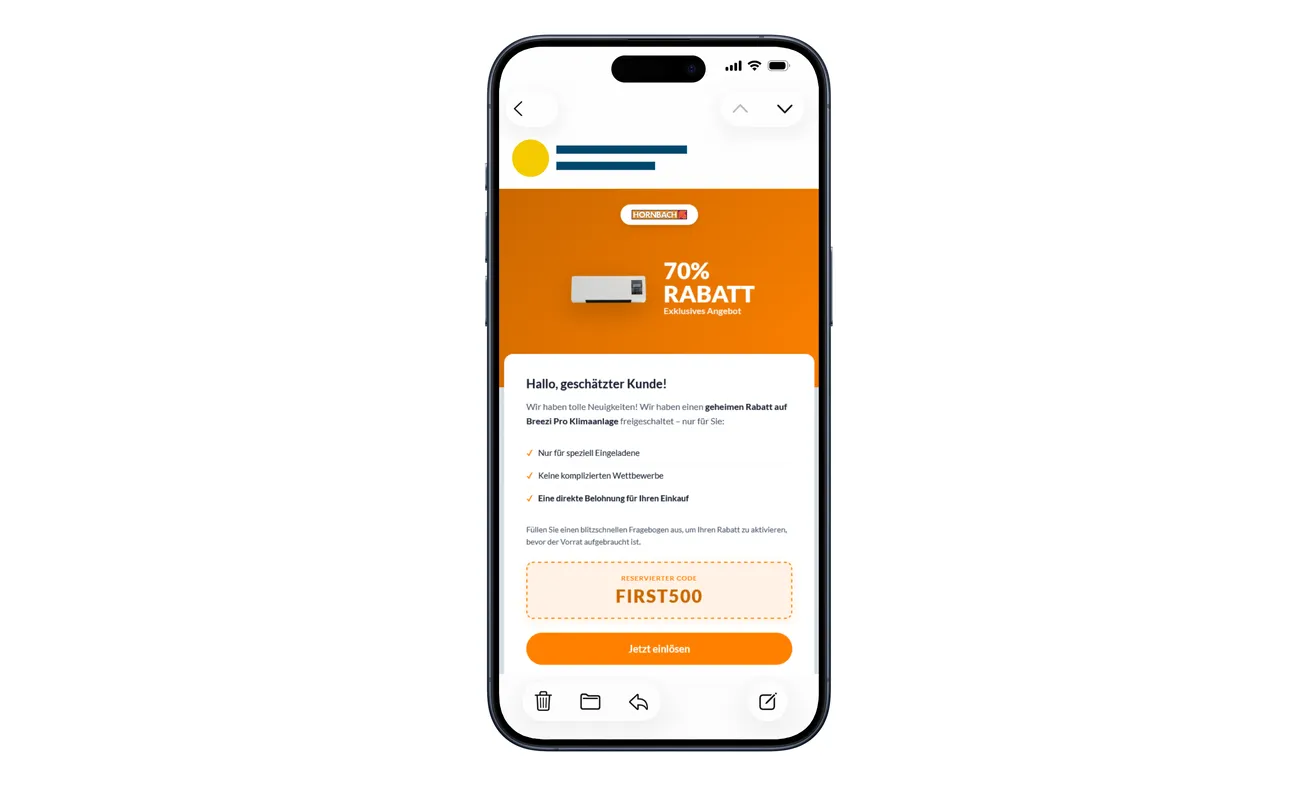
A bright orange email promises 70% off a Breezi Pro air conditioner. The HORNBACH logo is there, and a discount code appears reserved for you.
There’s just a short questionnaire before you can claim it. That little detour is worth examining before the offer gets anywhere near your card.
Overview
The discount is the invitation
The fake HORNBACH 70% off email scam advertises an exclusive air-conditioner offer and uses FIRST500 as its attention-grabbing code.
The message suggests limited availability and asks the recipient to answer a short survey. A subsequent offer leads into a counterfeit online shop.
That shop requests personal information and card details. You’re not simply expressing interest in a product; you’re being led toward disclosing payment information.
HORNBACH is the retailer being impersonated. This isn’t a claim that the real company runs a scam or that its genuine customers are victims.
A police warning identifies the fake shopping journey
The documented campaign warning traces the email, copied branding, survey, product offer, and fraudulent shop collecting customer and payment details.
The original message above shows the promotional hook. Its orange design and reserved-code presentation are part of what makes the request feel like retail marketing.
Avoid this copied shopping journey because it collects details under a false retailer identity. That tells you nothing about every other device sold as Breezi Pro.
The practical checks before taking the offer seriously
Put the code aside for a moment. An attractive discount is useful only if the shop taking your information genuinely belongs to the advertised retailer.
- Find the promotion through the retailer independently, not through the email.
- Question a survey that becomes a separate shopping and card-entry process.
- Don’t mistake an activated code for confirmation from the real company.
- Keep the advertised savings separate from evidence about the seller.
- Contact your card provider if the counterfeit checkout received your information.
Limited codes aren’t a reason to skip those checks. Losing a supposed deal is better than handing your payment details to an impersonator.
Why FIRST500 Makes the Promotion Feel Personal
A code can make a mass message feel like an invitation. Instead of seeing a broad sales pitch, you see something that seems allocated to you.
The captured email combines that feeling with urgency: a large discount, a reserved code, and language suggesting the advantage will disappear.
That shifts your attention from authenticity to timing. You start asking whether you can claim it quickly enough rather than whether the invitation is genuine.
The survey adds another small commitment. Answering a few easy questions can feel harmless, especially when you’re expecting a familiar retail brand on the other side.
By the time the shopping page appears, you may feel you’ve earned the offer. Walking away starts to feel like wasting a reward.
None of that obliges you to continue. A few completed questions don’t make the next website trustworthy or create a need to finish an order.
A large retailer can run genuine promotions, and a discount alone isn’t fraud evidence. Here, the warning rests on the identified fake website and collection of sensitive data.
Keep that distinction clear when telling someone else about the message. The problem isn’t bargain hunting; it’s the false claim about who is offering the bargain.
How the Fake HORNBACH 70% Off Email Scam Works
Step 1: The email borrows a retailer’s reputation
The message presents Breezi Pro as an exclusive discounted purchase. The familiar logo helps the offer look connected to an established store.
The opening doesn’t ask you to research an unknown seller. It encourages you to act as though that question has already been settled.
But logos travel easily. Before accepting the retailer connection, open the company’s real site yourself and look for the promotion there.
If you can’t find it, ask customer support through independently obtained details. Don’t treat the email’s own assistance link as a second opinion.
Step 2: The copied page appears to activate your code
The fraudulent site displays FIRST500 as activated. Limited remaining codes and a short availability window make the offer seem both real and perishable.
That display is controlled by the same website trying to persuade you. It isn’t an independent check against the genuine retailer’s promotion records.
Don’t keep refreshing to see whether the counter changes. That doesn’t resolve who operates the page, and it keeps you engaged with the pressure.
The sensible question remains simple: can you reach this offer through a shopping route you chose yourself?
Step 3: A short survey turns interest into participation
The questionnaire is positioned as the way to unlock the deal. It turns an unsolicited message into something you’ve spent time completing.
Survey questions can look far less sensitive than a payment form. That makes them a convenient bridge between curiosity and checkout.
You can leave at this stage without losing anything you’ve purchased, because answering questions isn’t the same as placing a verified order.
Don’t supply extra personal details just to make the promised offer appear. If the questions become intrusive, close the page.
Step 4: The offer leads into a fraudulent shop
After the questionnaire, the supposed air-conditioner deal appears. Another link carries the recipient to a shop offering a heavily reduced price.
This is a new decision point. Reaching checkout doesn’t mean the earlier branding has established the seller’s identity.
A product photo, a cart, and a familiar checkout layout can make the page feel like ordinary commerce. They don’t show who receives the submitted information.
Don’t assume a delivery address field proves fulfillment exists. It’s also a way to collect information that can make later messages more convincing.
Step 5: The checkout asks for the information the sender wanted
The counterfeit order process collects personal details and payment information. The police warn that these can be used for unauthorized payments or further fraud.
That is the financial turning point, regardless of whether a polished confirmation page follows. The page’s own success message isn’t a bank record.
If you supplied a card, leave the shopping process and contact its issuer. Waiting for dispatch isn’t an appropriate test of whether exposed information is safe.
If a separate approval request appears, don’t confirm it on the strength of the discount story. Read the bank’s details and reject anything unfamiliar.
This Isn’t a Review of Every Breezi Pro Air Conditioner
The product name gives the fraudulent promotion something concrete to sell. It doesn’t establish the identity, specifications, origin, or performance of every device carrying that name.
Those are different questions from whether this email and checkout are genuine. A real product could still be used as bait by a fake shop.
Likewise, poor cooling performance would not be needed to establish the impersonation. The documented payment route is already enough to avoid this offer.
Don’t assume a subscription exists just because other shopping scams use repeat billing. The cited warning doesn’t establish specific refill terms or a recurring contract here.
If your own statement shows repeated charges, report those actual entries to the issuer. Don’t substitute a general scam pattern for what your records show.
The distinction also matters when contacting the legitimate retailer. Report misuse of its name, not an ordinary return request for an order it may never have received.
An alleged order number from the fake page doesn’t establish a purchase in HORNBACH’s system. Let the real company’s support team check that connection independently.
Checking a Retail Promotion Without Getting Pulled Back In
Start from the retailer’s official site or your existing shopping app. Search for the promotion without pasting the suspicious address into your browser.
If the offer arrived in a shared household inbox, ask whether anyone actually requested it. Don’t assume another family member signed up.
If a friend forwarded it, ask where they obtained it. A trusted person can pass along a malicious promotion without realizing what the link does.
Keep your inquiry simple: does this campaign exist, and does this checkout belong to the retailer? You don’t need to discuss your full card information.
Don’t upload screenshots containing security codes, account passwords, or full payment details. Redact them before sharing evidence with anyone outside your bank’s secure channel.
If the genuine retailer can’t connect the offer to its service, leave the promotion. There’s no benefit in bargaining with the counterfeit shop’s chat representative.
A second promise of a deeper discount isn’t independent reassurance. It’s another statement from the same unverified shopping journey.
Save what you already have, then stop. You don’t need to sacrifice another small payment to prove that a warning applies to you.
Why a Fake Checkout Needs a Different Response From a Late Order
With a verified retailer, you might begin by checking dispatch times or asking customer service about an order. That assumes the retailer actually took the order.
Here, the identified counterfeit shop changes the priority. Card exposure deserves attention before a promised shipping window has passed.
Don’t keep a potentially exposed card active simply because an email says the air conditioner will arrive next week. The sender controls that promise too.
When speaking to the bank, distinguish what you intended to buy from what the statement shows. Keep the advertised price and actual charge in separate notes.
If no charge appears, report the card disclosure anyway. An empty transaction list doesn’t mean the fake checkout deleted the information.
If a parcel later arrives, preserve the packaging and check with the issuer before assuming the earlier report no longer matters.
Delivery, card security, and whether the real retailer authorized the promotion are separate questions. Resolve each with the organization that can actually answer it.
What to Do if You Have Fallen Victim to This Scam
-
Exit the survey and checkout. Don’t finish an order, retry a failed payment, or supply a different card to preserve the discount.
If you answered only general survey questions, stop there. That doesn’t automatically mean a payment occurred or your device was infected.
-
Tell the issuer if you entered payment details. Reach the bank through a trusted app or the contact number on your card.
Explain that a fake HORNBACH promotional email led to a counterfeit shop. Ask about card blocking, replacement, and checking attempted transactions.
If the card belongs to someone else in your household, tell them immediately. They need the facts to contact the issuer without delay.
-
Report actual charges and approvals. Provide the statement descriptor, currency, amount, time, and any bank notification connected with the event.
Describe whether you authorized something while believing it was the advertised purchase. Don’t leave out a confirmation because you’re embarrassed about it.
Ask about the correct dispute process and deadlines. Recovery isn’t guaranteed, but the issuer needs a prompt and accurate report to assess your options.
-
Keep the promotional trail. Save the email, the FIRST500 wording, the destination address, checkout confirmations, and any correspondence already received.
These records help distinguish the advertised retailer from the operator taking the details. Don’t revisit a dangerous page merely to collect more.
Keep private information out of public warnings. Other shoppers can recognize the promotion without seeing your full name, address, or card number.
-
Protect any password you disclosed. If the fake shop asked you to create an account using an existing password, change that password on the real affected accounts.
Pay particular attention to your email if it used the same password. Secure it through its own settings, not through a link in a later message.
-
Separate browser cleanup from payment recovery. Close the page and remove notification permission if you granted it to the suspicious site.
If you installed a shopping helper or opened a suspicious download, Malwarebytes can help inspect the device. AdGuard can reduce exposure to some harmful advertising and destinations.
Neither product proves an order was genuine or retrieves money from a fake shop. Your issuer remains the right contact for the financial exposure.
-
Notify the real retailer and report financial loss. Use independently found HORNBACH contact details to report the impersonating promotion.
Contact your local police about loss or misuse. The online Cybercrimepolice incident channel provides information to police but doesn’t itself accept a formal criminal complaint.
Don’t pay a recovery specialist who promises to release a refund after another fee. Keep the recovery conversation with the card provider handling your case.
Frequently Asked Questions
Is HORNBACH running the FIRST500 scam?
The documented campaign abuses the retailer’s name and appearance. The scam is the fake promotional email and shopping journey, not the legitimate HORNBACH business.
Does the FIRST500 code prove I received a real discount?
No. A fraudulent page can display an activated code without any connection to the real retailer. Verify promotions through an independently opened official channel.
Is the survey itself the payment?
The documented route uses the survey before a product offer and fake checkout. Don’t continue into card entry because the earlier questions appeared harmless.
Does this prove Breezi Pro is always a scam product?
No. The warning establishes a particular impersonation campaign. It doesn’t determine the specifications or authenticity of every separately advertised product using that name.
Should I wait for the air conditioner before contacting my bank?
Not if you disclosed a card to the counterfeit shop. Ask the issuer to secure it promptly rather than using delivery as a test of financial safety.
What if the fake shop sent an order confirmation?
Keep it as evidence, but don’t treat it as proof the real retailer has your order. Check the retailer and your bank through separate trusted routes.
The Bottom Line
Don’t order through the fake HORNBACH 70% off email. FIRST500 and the survey lead into a counterfeit shopping process, not a verified retailer bargain.
If you entered a card, contact its issuer immediately. Preserve the offer and any charges while the bank assesses protection and recovery.

Join the discussion
0 commentsShare your experience or ask a question about this article.
Discussion
Start the conversation
Have a question or something useful to share? Add the first comment.