

You’ve picked a date for Europa-Park, and a ticket website offers a better price. It even lets you choose who is coming along.
The booking feels familiar enough to finish before making the rest of your plans. But there’s one detail worth checking before you pay.
Overview
A convincing booking page can sell no admission at all
The Europa-Park ticket scam uses counterfeit shops that resemble a real booking service. Attractive prices bring you in; ordinary booking controls help keep you there.
A Swiss police warning about fake park-ticket shops documents this impersonation, including offers for Europa-Park and Rulantica. Paying those fraudulent sellers doesn’t secure valid admission.
The genuine resort is not running the scam. Criminals are borrowing its attractions and identity to make their own payment destination look legitimate.
The park independently warns about counterfeit bookings
Europa-Park’s own booking warning identifies official channels and authorized sales partners. That gives you a route to check without relying on the disputed seller.
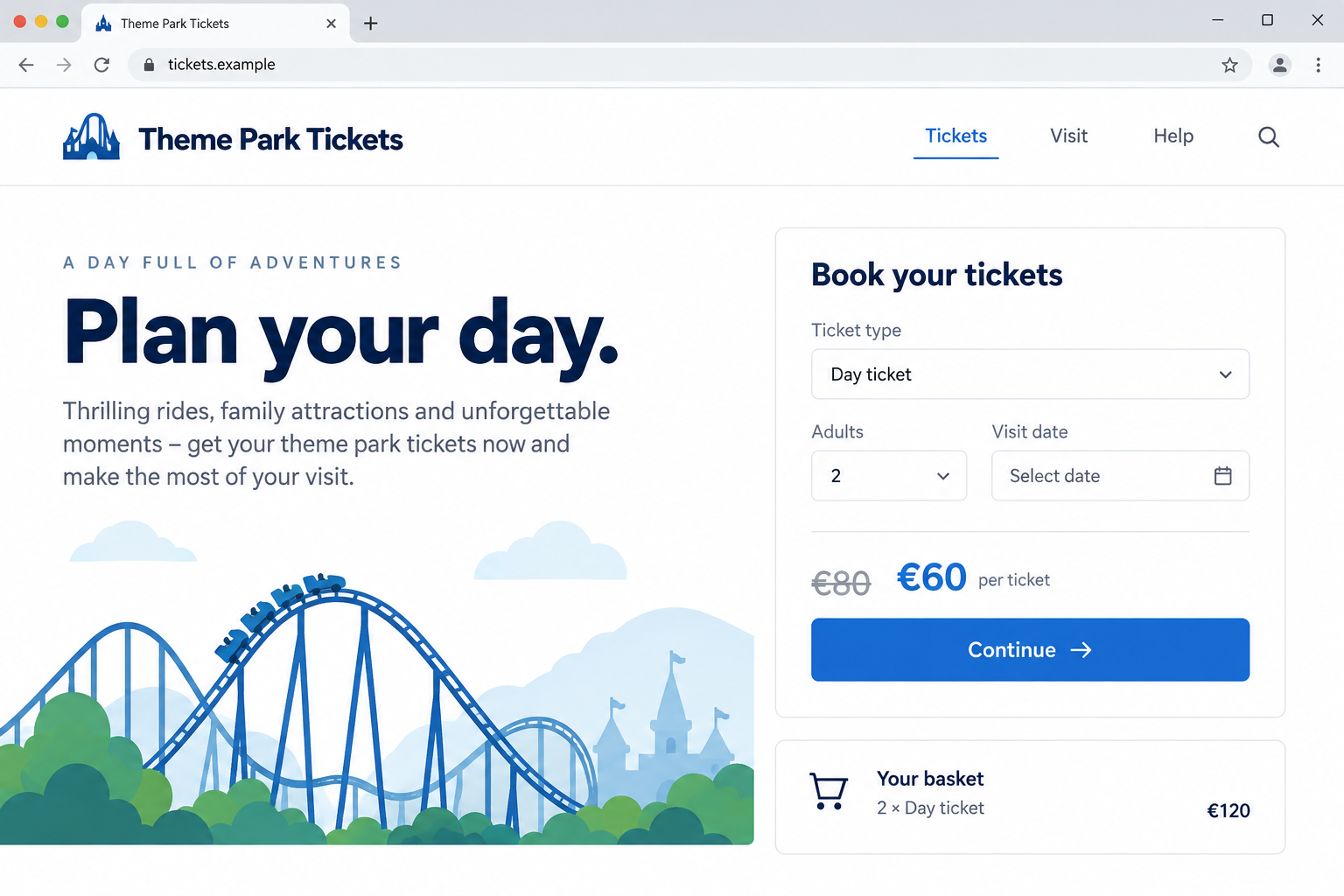
The lead image is a fictional booking illustration with invented prices. It shows how a normal-looking interface can reassure a buyer, not an actual offer.
A discount alone doesn’t prove fraud. The documented problem is a counterfeit seller accepting payment without supplying the valid entry it advertises.
Check the seller before you build a trip around the purchase
A completed checkout can make you relax and start planning the journey. First check that you’ve bought admission, not just received an impressive receipt.
- Reach the resort’s ticket links through its genuine website.
- Ask the park about a claimed authorized partner if you’re unsure.
- Check the attraction, date, visitor details, and ticket type before paying.
- Don’t rely on copied branding or a shopping basket as authentication.
- Contact your payment provider promptly if you paid a counterfeit shop.
Why Picking a Date Can Make the Shop Feel Real
Most people don’t expect a fake store to do much. A page that accepts your visit date and party size can therefore feel reassuringly complete.
Those choices give you a small sense of progress. You’re no longer deciding whether to trust a stranger; you’re arranging a day out.
Once you’ve coordinated friends or family, starting over feels inconvenient. The temptation is to finish the payment and move on to transport or accommodation.
But a usable form only shows that someone built a usable form. It doesn’t identify the business receiving the money or the admission being supplied.
The details also fit a purchase you already intend to make. Unlike an unexpected prize message, the site appears to answer your own search.
That makes the route into the shop important. Finding it while researching a genuine trip doesn’t turn it into the resort’s official sales channel.
You can keep the date and party plan while abandoning the questionable seller. Checking another route doesn’t mean losing all the planning you’ve already done.
How the Europa-Park Ticket Scam Works
Step 1: A cheaper offer appears where visitors look for tickets
The documented shops are reached through search, online advertising, or social media. The invitation is a lower price for an attraction people already recognize.
A placement near legitimate results can encourage quick comparison by price. Yet the most useful comparison comes first: who is actually offering the ticket?
Don’t let an advert choose that answer simply because you searched for the right park. A search engine result isn’t the same as the park recommending a seller.
If the offer came through a shared post, your friend’s interest doesn’t authenticate it either. They may be looking at the same unverified bargain.
Step 2: The copied shop turns interest into a booking
The counterfeit interface invites ordinary ticket choices. In the police example, that includes visit dates, party size, and different park-related offers.
This is where the site borrows the credibility of a familiar process. Each sensible-looking choice makes the previous decision to stay seem more comfortable.
Pause before the payment page, even if everything has worked smoothly. Check the seller through the real attraction, not through the clone’s own assurances.
Don’t assume a detailed contact or help section settles the question. Information supplied by the same unverified shop isn’t an independent reference.
Step 3: The checkout collects money and sensitive information
The purchase reaches a payment stage without establishing that valid admission will be issued. The police also warn that some fraudulent sites can cause additional charges.
Read the actual banking approval if one appears. A merchant or amount that doesn’t fit your understanding deserves attention before you authorize it.
If a payment seems to fail, don’t automatically try another card. First establish whether your financial institution recorded an attempt and whether the seller is genuine.
Different payment screens can have different consequences. Tell your provider what you entered and approved rather than assuming the advertised ticket price describes everything.
Step 4: The apparent purchase leaves the visitor without valid entry
The central loss isn’t just a disappointing discount. It’s paying for a visit that the fraudulent seller cannot legitimately provide.
Don’t wait until you’re at the entrance to investigate a questionable booking. Verify it through the park before making further nonrecoverable plans.
An email, receipt, or ticket-looking document still needs to connect to valid admission. Appearance alone cannot do that job.
If the park cannot confirm the arrangement, ask about your options independently. Don’t keep paying the original seller to activate or repair its supposed tickets.
Which Website Is Actually Taking Your Booking?
Start from the resort’s known website and use its own booking links. This gives you a trusted starting point instead of a name guessed from an advertisement.
The official warning identifies the MACK International ticket shop for several resort attractions. A checkout brand can therefore differ from the attraction’s familiar name.
That is why guessing whether a domain looks official is weaker than following the resort’s own published route.
Authorized sales partners may also sell genuine tickets. Don’t declare every external shop fraudulent merely because it isn’t the main park website.
If a seller claims that relationship, ask the park to verify it. Use independently obtained contact details, not a support button on the disputed store.
Check which attraction the product covers. Europa-Park admission, a water-park visit, an event, and accommodation aren’t interchangeable just because one page displays all their names.
Make sure the date and visitor category fit the visit you intend. A genuine ticket for the wrong product doesn’t solve the same problem as counterfeit admission.
Keep a record of what was offered and what was purchased. That helps separate a booking mistake from a seller that never had valid access to sell.
Before comparing two prices, compare the whole booking. A headline amount for one person doesn’t describe the cost for everyone traveling.
Check which date, attraction, and visitor categories the price includes. Ask the genuine seller about anything unclear rather than accepting the questionable site’s explanation.
If another person made the booking, have them preserve the actual confirmation and payment record. A cropped bargain screenshot may leave out the seller entirely.
Don’t ask them to publish the ticket as proof. Use a private, verified support channel when an admission document needs checking.
If the arrangement includes a hotel, identify who confirmed that component too. One branded page doesn’t establish both accommodation and park entry.
Those checks are useful even when the purchase turns out to be genuine. They clarify what you have before you organize the rest of the visit.
Don’t Confuse a Fake Shop With a Genuine Booking Problem
A real seller can have a slow confirmation email or an ordinary customer-service issue. Those facts alone aren’t enough to accuse it of fraud.
This warning concerns the counterfeit shops identified by the authorities and the resort. The decisive issue is the fraudulent sales route, not simply an unhappy customer.
If your own booking is uncertain, ask the park to assess the relevant details. Don’t assume that every delayed email proves you used one of these sites.
Likewise, a successful card payment doesn’t confirm the booking’s validity. Financial authorization and admission are separate records held by different parties.
Explain both questions clearly when seeking help: whether the ticket is valid, and whether the payment or card needs protection.
For a group purchase, identify the organizer and the payment method used. Avoid having every member contact a different supposed support agent introduced by the seller.
One person can coordinate the park inquiry while the payer handles the bank. Share the necessary references privately, without circulating full card details.
Protect the Rest of the Trip While You Investigate
A suspicious ticket purchase can affect more than admission. You may already have accommodation, transport, or time off arranged around the date.
Before buying replacements, establish whether anything valid exists. Keep the questionable order separate from a new purchase made through a verified route.
If you need to change other plans, ask each genuine provider about its own terms. Don’t assume the ticket scam automatically changes unrelated reservations.
Keep records of extra costs rather than accepting a stranger’s promise that everything will be reimbursed. Ask your payment provider what evidence is relevant.
Avoid public posts containing a complete ticket barcode, booking reference, children’s details, or travel itinerary. You can describe the issue without exposing the whole trip.
Be cautious if someone replies offering cheap replacement tickets or guaranteed recovery. The pressure to save a planned visit can become a second opening for fraud.
You’re allowed to pause. Losing a few minutes to verification is easier to manage than buying the same nonexistent admission twice.
What to Do if You Have Fallen Victim to This Scam
-
Stop buying through the suspect shop. Don’t pay an activation charge, replacement fee, or another checkout attempt to make the supposed tickets work.
Keep the existing order and messages. If the seller asks you to move to another payment channel, don’t follow that instruction while authenticity is unresolved.
-
Check admission directly with the resort. Use the genuine website to find the relevant contact and ask about the seller or booking.
Provide only what the official team needs. A screenshot of a checkout isn’t a reason to send your full card number or unrelated identity documents.
-
Contact the issuer of the card you used. Explain that you paid a suspected counterfeit ticket store, and give the transaction details from your account.
Ask how to protect the exposed card and challenge an unwanted payment. Include attempted payments that seemed to fail and any other cards entered.
Check reporting deadlines with the issuer. Recovery depends on the circumstances and payment method; a refund cannot be promised simply because the site was fraudulent.
-
Review charges beyond the advertised price. Look for unfamiliar amounts, repeated debits, or merchant names associated with the interaction.
Report each disputed item using the bank’s records. Don’t rely on a fake order page’s description of whether a transaction succeeded or was canceled.
-
Preserve the sales trail. Save the original advert or message if available, the shop address, advertised ticket, order confirmation, and payment record.
Write down the sequence while you remember it. Don’t revisit the checkout or make a test payment to improve the evidence.
Report the impersonation to the park and the platform carrying the promotion. Where appropriate, provide the incident to your local police.
-
Protect personal information and accounts where relevant. Change a password if you entered it on the false shop, including reused copies elsewhere.
Watch for follow-up messages using your visit date or purchase details. Familiar information can come from the fraudulent order rather than a genuine park employee.
-
Address any separate download or installation. If the shop told you to install an app or open a suspicious file, describe that exposure as well.
A Malwarebytes inspection can help with unwanted software. AdGuard can filter some risky advertising and destinations, but it cannot validate admission or reverse a card charge.
Don’t assume malware was installed just because you visited the page. Take device measures that fit what you actually opened or permitted.
Frequently Asked Questions
Are the fake Europa-Park ticket shops confirmed?
Yes. Both the police and the resort warn about counterfeit sales or bookings. That warning doesn’t make the genuine attraction responsible for the impersonation.
Does a discount automatically make a ticket fake?
No. Verify the seller and admission route. A lower price is a reason to check, not a substitute for evidence about authenticity.
Can I trust a shop because it lets me select a date?
No. Booking controls can be copied. They don’t establish that the seller can issue valid entry for your visit.
Are all third-party ticket sellers fraudulent?
No. The resort recognizes authorized partners. Verify a claimed relationship through the park rather than accepting the seller’s own statement.
Should I wait until the visit date to report a problem?
No. Check authenticity and contact your payment provider promptly. Waiting can complicate the trip and may affect the options available for a disputed payment.
Does a confirmation email prove the ticket will work?
Not by itself. Have a questionable arrangement checked through the genuine attraction. A professional-looking email is not an admission guarantee.
The Bottom Line
Don’t buy through a counterfeit Europa-Park ticket shop. A convincing calendar and discounted basket cannot provide the valid admission the seller lacks.
If you already paid, verify the booking with the resort and contact your card issuer. Secure the payment method before trusting another offer to rescue the trip.

Join the discussion
0 commentsShare your experience or ask a question about this article.
Discussion
Start the conversation
Have a question or something useful to share? Add the first comment.