

An email says a recent purchase qualifies you for a Swiss VAT refund. The amount looks worth claiming, and the federal branding makes it sound official.
Perhaps you’ve shopped in Switzerland or received a parcel from abroad. Before deciding this message belongs with your receipts, check what its refund process actually asks.
Overview
A customs identity is being used to promise money
The Swiss VAT refund email scam borrows the identity of the Federal Office for Customs and Border Security, known as FOCBS in English and BAZG in German.
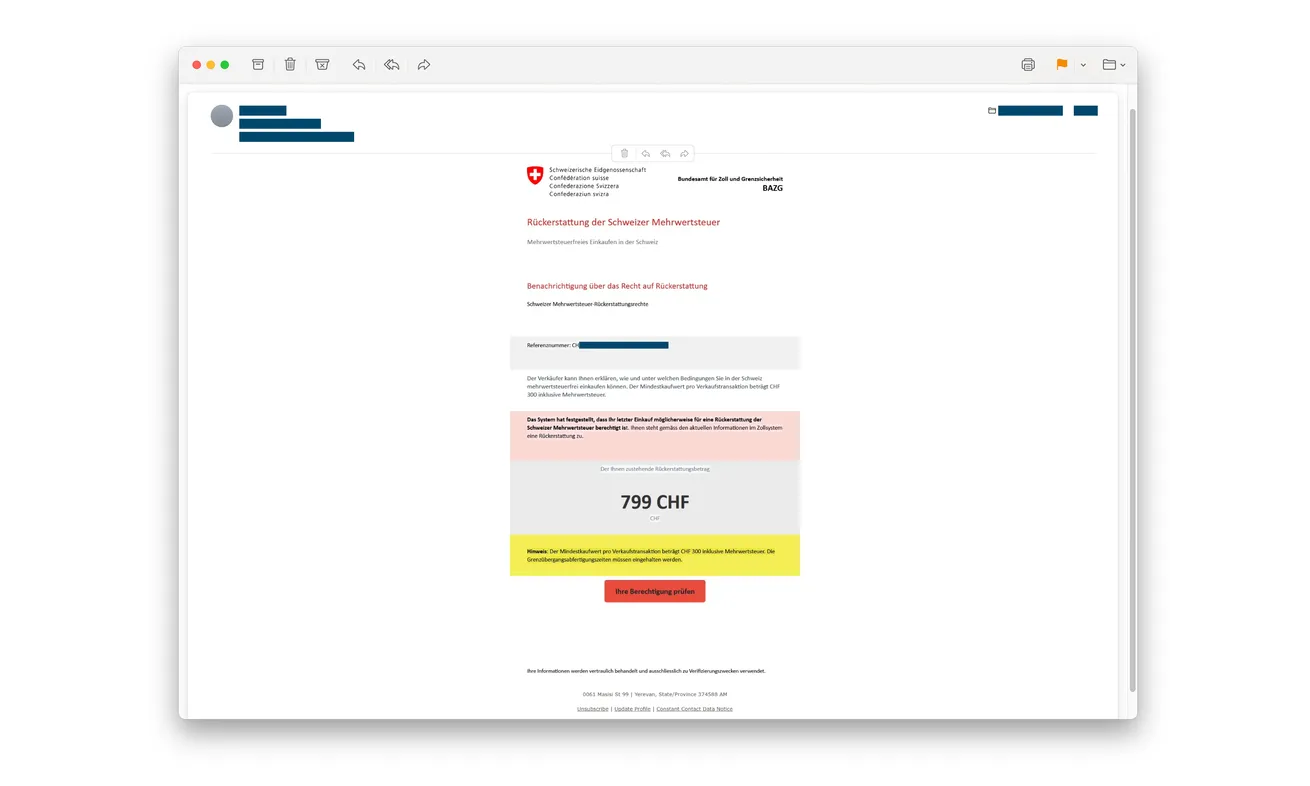
Its pitch is simple: money from a purchase is supposedly available if the recipient completes an online claim. The email supplies the route and the explanation.
The example above advertises CHF799. That figure is bait inside a fraudulent message, not a confirmed refund or a statement about Swiss tax eligibility.
The claim leads to card collection and a verification code
Swiss police document the VAT-refund phishing campaign, including copied federal branding, personal and card fields, and a six-digit verification request.
The genuine customs office isn’t offering the payout through that imitation. An official coat of arms doesn’t authorize the person receiving the form.
The request becomes especially dangerous when a supposed incoming refund involves approving something through your bank. Read the bank’s instructions, not the email’s explanation.
A real purchase doesn’t validate an unsolicited refund link
You may have an actual tax or shopping question. Resolve it with the relevant retailer or authority using records and contacts you already trust.
- Don’t enter card details to claim this emailed refund.
- Keep the alleged refund separate from genuine invoices or tax documents.
- Don’t relay a banking code to the sender or its website.
- Contact the issuer if a card or approval was exposed.
- Report the impersonation without circulating an active claim link.
The Refund Story Fits an Everyday Shopping Question
Tax is one of those subjects people expect to be complicated. A message can sound credible simply because it describes a process the reader hasn’t used before.
You might assume a government office has matched your purchase to a refund. The email’s confidence encourages you to skip the question of how that happened.
A recognizable purchase can make the connection feel even stronger. Yet remembering an order doesn’t establish that this sender has a legitimate claim attached to it.
The message doesn’t have to know which shop you used. It can invite recipients to connect a broad shopping story to their own recent spending.
A refund also changes how a card form feels. Instead of seeing a request for payment information, you may see a place to receive money.
Calling the form a payout doesn’t protect your card. Check what the bank is actually asking you to authorize, not what the refund page promises.
Focus on that practical mismatch: you expected money coming back, but an unfamiliar website wants sensitive payment details and a security code.
You don’t need to solve Swiss tax law to stop there. A legitimate question can be checked without completing an unsolicited form.
How the Swiss VAT Refund Email Scam Works
Step 1: A federal-looking email announces an entitlement
The sender claims the recipient qualifies for a reimbursement linked to a purchase. The design draws authority from Switzerland’s government identity and customs office.
The pictured amount makes the claim concrete. It gives the reader a number to think about rather than a reason to question the sender.
Any purchase threshold printed in that message belongs to the scam’s story. Don’t repeat it as a genuine eligibility rule or use it to advise someone else.
A copied logo and a neat reference number can make invented paperwork look complete. Neither shows that a government system evaluated your purchase.
Step 2: The refund link opens a copied government-style page
The next screen continues the federal appearance. Familiar symbols and administrative wording make the form feel like the natural continuation of the email.
That continuity is visual, not proof of ownership. The recipient has moved into a site supplied by the unexpected message.
Even working menus or links to genuine public information wouldn’t authenticate the form itself. A page can send visitors to real websites while collecting data elsewhere.
Don’t use a contact address printed inside this process to verify the process. Obtain the authority’s contact information independently.
Step 3: Personal details and a card become the price of claiming
The documented page asks for identifying information and credit-card details. The promised reimbursement provides the excuse for completing those fields.
A card number, expiry date and security information aren’t harmless because the displayed balance is positive. Tell your issuer if you entered them.
Personal details can also help someone tailor subsequent contact. A stranger who knows your name and the refund figure may be using this submission.
You may never see a real payment receipt. Lack of a completed transaction doesn’t tell you whether the form received the information.
Don’t submit a second card if the first one seems unsupported. Troubleshooting the form gives the person behind it another opportunity.
The appropriate next step is outside the website: check with the payment provider and verify the supposed entitlement through a genuine channel.
Step 4: A six-digit request tries to carry the process further
Police describe an additional verification-code request. A short code can look like a routine safeguard, particularly after a page has promised to send money.
But its purpose depends on the genuine service that issued it. It might authorize activity you weren’t trying to perform.
Read the full message or approval screen from your bank. An outgoing amount, unexpected merchant or new sign-in doesn’t become a refund because a website says so.
Do not copy a code into the refund form or dictate it to someone contacting you about the claim. Decline an unexpected approval.
If you already shared it, report that fact distinctly. Card details alone and a completed authorization may require different protective steps.
A countdown or expiring-code message shouldn’t prevent that pause. Letting an unverified request expire is preferable to approving an action you don’t understand.
What the Real Customs Warning Tells You
FOCBS warns about fraudulent messages abusing its identity, including copied logos and spoofed email addresses.
Its warning specifically distinguishes fraudulent payment demands sent through email or SMS from the authority’s genuine procedures. Don’t interpret a familiar sender label as official approval.
This doesn’t mean every message involving Swiss taxes is fraudulent. It means this refund campaign must not become your route into a government or payment account.
Keep the agency names straight, too. FOCBS, the Federal Tax Administration and police are separate institutions; their logos aren’t interchangeable proof of an entitlement.
A real receipt may help identify whom to ask about a purchase. It doesn’t need to be uploaded to a stranger to demonstrate that you’re eligible.
Look at your original order confirmation and establish which merchant handled it. Use the existing customer relationship, not a newly supplied refund representative.
If an actual tax matter remains unclear, ask the relevant authority through its established website. Don’t let the scam’s amount or threshold define your question.
You can say, “I received a suspicious message claiming a purchase refund,” rather than asserting that the government owes the advertised amount.
Three Details That Shouldn’t Reassure You
The message displays a plausible government address
An address in a signature is text the sender controls. A displayed email name is also not a verified identity.
FOCBS explicitly warns about spoofing. Expanding the sender field can expose a mismatch, but a familiar-looking result isn’t a complete safety test.
The more reliable move is to leave the email and find the genuine authority yourself. There’s no obligation to investigate by clicking.
The website has an encrypted connection
Encryption can protect information while it travels to a site. It doesn’t establish that the site’s owner is entitled to receive your card.
A copied government page can therefore display a browser padlock while serving a fraudulent purpose. Design and encryption answer different questions from authorization.
The promised amount resembles money you spent
A coincidence can make the email feel personalized. Don’t treat a number as a match unless your genuine records and an independent channel establish the connection.
If the amount differs from your purchase, don’t send receipts to help the sender correct it. That would supply new information to an unverified party.
Keep the original claim unchanged for reporting. Investigators and the issuer need to see what the message actually said, not your attempt to reconcile it.
For a business purchase, tell the finance team before the email enters its refund or reconciliation queue. A convincing attachment to an expense record can mislead another colleague.
Record it as a suspicious message, not money the company is expecting. That small distinction prevents the scam’s invented balance becoming part of normal bookkeeping.
When the Refund Turns Into a Support Conversation
Once you’ve asked why money hasn’t arrived, it can be tempting to continue with anyone who offers an answer. Break that pattern early.
A caller who references the claim isn’t necessarily independent of the original message. Details collected in a form can make a follow-up sound informed.
Don’t install remote-control software, move funds or approve another transaction because someone says the refund needs fixing. Those are new requests requiring independent verification.
That advice is a precaution against escalation, not a claim that every recipient in this campaign was contacted by telephone.
Likewise, a later message saying the refund was canceled doesn’t clear an exposed card. Resolve payment security with the issuer, not the supposed refund desk.
If you warned someone by forwarding the email, send a plain-text correction. Ask them not to open its button, and avoid creating another clickable copy.
What to Do if You Have Fallen Victim to This Scam
-
Abandon the false claim. Leave the page and stop corresponding with its sender. Don’t complete another verification to cancel the first one.
Reading the email alone doesn’t disclose a card. If you did nothing else, report and delete the message rather than assuming a financial loss occurred.
-
Reach the card issuer through your own banking route. Say that a fake Swiss customs-refund form requested your payment details.
Ask whether the card should be frozen, replaced or otherwise protected. Check attempted and pending activity, not only charges already posted.
Explain any six-digit code, banking notification or approval you supplied. If you don’t recall its wording, say that rather than guessing.
-
Challenge unfamiliar activity using the provider’s process. Record the merchant descriptor, amount, currency and time of each transaction that needs investigation.
Ask about dispute deadlines and evidence requirements. A fraudulent claim doesn’t guarantee automatic reimbursement or remove the need to report promptly.
-
Secure additional credentials only if they were exposed. If you supplied an account password, change it from the genuine account and address reuse elsewhere.
Tell the relevant provider if the page requested a government or banking login. Don’t keep trying to sign in through the imitation.
-
Save evidence without publishing sensitive information. Preserve the original email, alleged refund amount, destination and a short timeline of your interactions.
Keep banking records in a private folder. Redact account numbers and personal identifiers from any screenshot shared publicly to warn others.
You don’t need to revisit the form to build a perfect record. What you already hold can support an initial report.
-
Notify the impersonated authority and police where appropriate. Use the genuine customs website’s reporting guidance, not the address supplied by the refund email.
Report financial loss or misuse to police and retain the reference. Clarify which information was disclosed so the report doesn’t overstate or overlook the exposure.
-
Handle future contact as a fresh verification problem. Don’t trust a caller merely because they know the advertised refund or your card’s last digits.
End the conversation and reopen your bank’s established app or contact route. Never pay an advance recovery fee to unlock the promised government money.
If the card belongs to a family member or employer, inform them promptly. Payment protection shouldn’t wait until you can fully explain the tax story.
Frequently Asked Questions
Is the CHF799 customs refund genuine?
That amount appears in a documented phishing example. It isn’t evidence that the recipient qualifies for a real Swiss VAT reimbursement.
Does the email describe actual Swiss refund rules?
Don’t use it as tax guidance. Its purchase conditions and payment route are claims inside a fraudulent message, not authoritative eligibility instructions.
Why would a refund require my credit card?
In this campaign, the supposed payout is the excuse for collecting card information. Refuse the form and check genuine purchase questions independently.
Can an official-looking sender address be spoofed?
Yes. FOCBS warns about fraudulent messages using its identity. A copied name, logo or address doesn’t validate the linked collection page.
What if I entered details but never received a code?
Contact the issuer anyway. Card exposure matters without a completed code stage, and an unfinished webpage doesn’t prove your information remained private.
Can the real customs office reverse an unauthorized card charge?
Payment protection and disputes belong with your issuer. The real authority can receive an impersonation report and clarify genuine customs questions.
The Bottom Line
Don’t submit the Swiss VAT refund email’s claim form. The government-style presentation hides a confirmed request for sensitive personal and payment information.
If you’ve entered your card or shared a banking code, contact the issuer now. Resolve any real purchase or tax question outside the fraudulent email.

Join the discussion
0 commentsShare your experience or ask a question about this article.
Discussion
Start the conversation
Have a question or something useful to share? Add the first comment.