

A caller claiming to work for the FTC says a phone registered in your name is being used in scams overseas.
You hesitate, so they suggest contacting the police. That sounds reassuring, but pay attention to who chooses the route you use to check.
Overview
A phone-service threat creates the urgency
The FTC phone deactivation scam begins with an impersonator claiming that a phone in your name has been connected to criminal activity abroad.
The caller threatens deactivation and presents themselves as someone helping resolve the problem. A supposed badge number can make the introduction sound official.
The FTC’s October 22 warning confirms this approach and the later demand for a security deposit. These callers aren’t FTC employees.
The incoming accusation doesn’t establish that your phone was hacked, that another account exists, or that your service is genuinely about to stop.
The apparent police check stays inside the scam
The especially deceptive part is the response to hesitation. The caller can tell you what to search online so you can supposedly contact police yourself.
According to the FTC, scammers answer that call too. You may feel that you independently verified the story while still speaking to the same fraudulent operation.
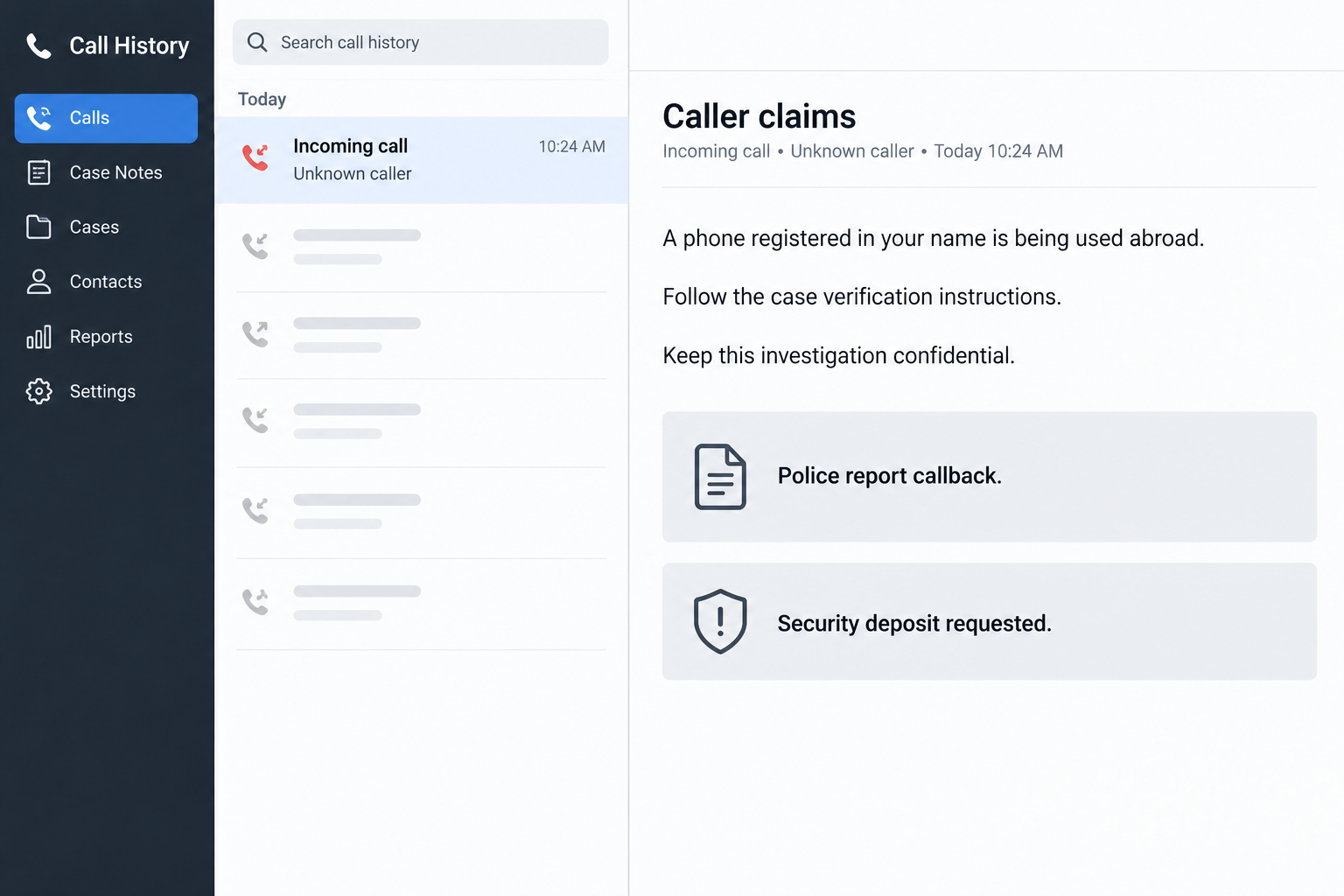
The illustration above summarizes the caller’s claims. It isn’t an original police record, FTC notice, or captured conversation from a victim.
The pressure eventually reaches your identity and money
- An unexpected caller claims FTC authority and alleges overseas phone misuse.
- A deactivation threat makes the matter feel urgent.
- The caller introduces a police-report process or directs an online search.
- The supposed police contact asks for identity information and secrecy.
- A later threat involving arrest abroad leads to a security-deposit demand.
Don’t pay that deposit or send identification through this chain. A caller-directed search isn’t independent verification merely because you typed the words yourself.
This is a government-impersonation scam. The genuine FTC isn’t operating the fake call, threatening your phone service, or requesting that payment.
How the FTC Phone Deactivation Scam Works
Step 1: The caller attaches a crime to your phone number
The story begins with something personal and practical: a phone registered in your name. The alleged activity is overseas, making it difficult to check immediately.
You may respond that you’ve never used a phone there. That denial can keep the conversation going because you want the apparent mistake corrected.
The caller doesn’t need you to believe the whole story instantly. They need you to accept that their process is the way to resolve it.
Pause before providing more details. An unexpected allegation isn’t a reason to give an unknown person your identification, account information, or a list of numbers you use.
If you’re concerned about your actual mobile account, contact your carrier through an established app, statement, or official website after ending the call.
Step 2: A supposed badge and deactivation threat keep you engaged
The impersonator claims to be an FTC official and may provide a badge number. That creates the appearance of a named person with an official responsibility.
A number supplied by the caller doesn’t authenticate them. It is another statement within the same unverified conversation.
The threat to deactivate your phone adds a deadline without giving you time to think. Losing service can sound disruptive even before any arrest threat appears.
Don’t let that pressure decide the next step. Hang up and use an official channel you choose, rather than remaining available for the caller’s proposed solution.
Step 3: The caller offers a police check that appears independent
You may be told that a police report is needed. If you sound doubtful, the caller can suggest searching online for a police contact.
This is where a sensible instinct can be redirected. You want to verify the claim, but the person being checked is choosing your search instructions.
Typing those instructions yourself doesn’t break the connection. The FTC says scammers answer the resulting call, continuing the same story under another claimed role.
The warning doesn’t establish that a search engine was breached or that every result for a police query is fraudulent.
It shows why the source of your verification route matters. Start from an established agency website or contact information you obtained independently of the incoming caller.
If necessary, step away completely before searching. Someone who stays on the line can steer your choices and explain away anything that looks wrong.
Step 4: The supposed report collects information and isolates you
The next contact asks for personal information or identification and tells you to keep the matter confidential. A helpful-sounding report becomes another point of exposure.
Don’t send an ID photo because the caller says it will clear your name. You haven’t established who will receive or retain it.
Secrecy also stops you checking the story with someone who might recognize the pattern. Talk to a trusted person through a separate channel.
Keep your real carrier and bank outside the caller’s instructions. Don’t hide the reason for a proposed account change or payment from the genuine provider.
Step 5: An overseas arrest threat makes the deposit seem necessary
The FTC describes further pressure involving travel abroad and a claimed risk of arrest. The supposed solution is a security deposit.
That isn’t an established debt simply because an impersonator gives it an official label. The same people introduced the allegation, the verification, and the payment demand.
Don’t negotiate a reduced deposit or send a first installment while you decide. Stop the conversation before moving money or authorizing anything.
The published warning doesn’t specify one universal amount, currency, or foreign country for every incident. Recognize the sequence rather than waiting for an exact figure.
The genuine FTC says it won’t demand money, secrecy, or an ID photo through this process. Treat those requests as reasons to end the contact.
What an Independent Check Actually Looks Like
Independent verification begins after leaving the conversation. You choose the organization and its established contact route without using details supplied in the disputed call.
For a real phone-service question, speak to your carrier. For an alleged police matter, find the appropriate agency through its genuine official website.
If the caller names a specific agency, don’t accept a transfer as confirmation. Don’t use a search phrase, contact card, or replacement number they provide.
Explain the incoming claim to the genuine organization. Ask whether there is an actual matter you need to address, without sending documents to the original contact.
The FTC’s impersonation guidance explains why threats and demands for money should trigger a separate check.
You don’t need to convince the impersonator that their story is false. The useful outcome is ending their influence over your next call and financial decision.
A caller who calls back with more details still hasn’t been authenticated. Details from your earlier conversation can make a second attempt sound unusually informed.
Don’t confuse persistence with authority. Continue through the genuine channels you established, keeping the original caller’s messages as evidence.
What to Do if You Have Fallen Victim to This Scam
-
End the call and stop the proposed police-report process. Don’t send a deposit, another document, or a code while the story is being independently checked.
Stop following any online search instructions from the caller as well. You can close the pages and choose a fresh route without their assistance.
If you haven’t provided information or money, recognizing the approach now can prevent the next stage. You don’t need to keep talking to confirm the diagnosis.
-
Contact the provider that handled any payment. Tell your bank or payment service that an FTC and police impersonator pressured you into a security-deposit payment.
Ask whether the transaction can be stopped, recalled, disputed, or otherwise investigated. Provide the recipient, amount, time, and transaction reference.
Use the provider’s genuine app or established contact number. A refund contact supplied by the impersonator can continue the same fraud.
-
List the identity information you disclosed. Note whether you sent an ID photo, address, account number, password, or other sensitive information.
US readers can use IdentityTheft.gov for an official recovery plan when identity theft has occurred. Follow the actions appropriate to the actual exposure.
If a document was shared, contact its issuing authority where appropriate. Don’t assume a scanner or a changed phone number invalidates a copied identity document.
For any password you disclosed, set a replacement through the genuine service. Replace reused versions on other accounts and review their active sessions.
-
Check your real phone account through your carrier. Ask about genuine service changes, additional accounts, or account-security concerns if the incident gives you a reason to worry.
Describe the allegation as something an impersonator claimed, unless the carrier confirms actual misuse. This helps separate a frightening story from an established account problem.
Don’t approve a new SIM, transfer, or account change at the original caller’s direction. A promised fix can create a separate problem.
-
Preserve the communication trail. Save call times, displayed numbers, messages, supposed badge details, search instructions, URLs, and payment records.
The number displayed on an incoming call may be misleading. Record it as displayed information, not as a proven identification of the person behind the fraud.
Don’t call again to obtain a confession or better evidence. Keep what you already have and give full details through genuine reporting channels.
-
Report the impersonation to the real authorities. Use the FTC’s official ReportFraud service and contact local police where appropriate.
Include how the apparent verification was arranged. The suggested search and supposed police callback are important parts of the story, not incidental details.
If you live outside the United States, use the relevant local reporting route and your own financial provider. The FTC name doesn’t change where you need immediate help.
-
Warn someone you trust and reject recovery fees. Explain the full chain so they can help assess any follow-up call or message.
A supposed supervisor may claim the deposit can be refunded after another payment. Don’t use that promise as a reason to send more money.
Keep monitoring affected accounts and follow the bank’s instructions. Recovery depends on the actual transaction and response, not an official-sounding assurance from a stranger.
If You Already Made the Supposed Police Call
Making that call doesn’t mean you’ve lost the chance to stop. End the interaction and write down how you obtained the number or website.
Did the first caller give you the exact search words? Did they stay on the line? Did the next person immediately know the same account story?
Those details help explain why the check felt convincing. They also help genuine investigators understand how the impersonation moved between contacts.
Don’t judge yourself for attempting verification. The fraud described by the FTC specifically anticipates hesitation and offers a route that appears to answer it.
The correction is to choose another route independently, not to ask the same supposed police contact whether the first caller was genuine.
If you sent no payment, focus on any information already shared. If you did pay, contact the payment provider before spending time reconstructing every conversation.
Save sensitive records privately. A public warning can describe the tactic without publishing your identification, bank information, or a number that may have been spoofed.
Frequently Asked Questions
Is the FTC calling to deactivate my phone number?
No. The FTC identifies this as an impersonation scam. An incoming caller using that threat isn’t establishing a genuine FTC action against your service.
Check actual account concerns with your carrier through its established channel.
What if the caller gives a badge number?
A number supplied in the same conversation doesn’t authenticate the caller. It can make a false introduction sound specific without providing independent confirmation.
End the call and use a genuine official contact route you choose yourself.
Why wasn’t searching for the police enough?
In the FTC’s warning, the scammers tell victims what to search and answer the resulting call. The apparent check stays within the fraudulent process.
Use an established agency website or independently obtained contact, rather than instructions from the person you’re trying to verify.
Does this prove my identity was used to open a phone account overseas?
No. That is the caller’s allegation. Treat it as unverified unless a genuine provider or authority independently establishes an actual account problem.
If you sent identity information during the call, address that new exposure separately.
Should I pay the security deposit to avoid trouble while I check?
No. Don’t send money to satisfy this impersonation demand. Paying first doesn’t establish that the claimed investigation, threat, or recipient is genuine.
Speak to your bank and appropriate official agencies outside the caller’s control.
Do I need a malware scan after receiving the call?
A call alone doesn’t establish infection. This documented approach concerns impersonation, personal information, and payment pressure rather than a specified malware installation.
If you also installed software or granted remote access, seek technical help for that additional exposure while handling financial and identity risks.
The Bottom Line
A police callback isn’t independent when the suspicious caller chooses how you reach it. Leave the conversation and establish your own route to the genuine organization.
Don’t send the security deposit or identification. If you already paid, contact the payment provider immediately and report the full impersonation chain.

Join the discussion
0 commentsShare your experience or ask a question about this article.
Discussion
Start the conversation
Have a question or something useful to share? Add the first comment.