

A bottle promising stronger circulation can catch your attention quickly, especially when its name includes a precise enzyme strength. Henoura Nattokinase looks built for that search.
Follow the product beyond its title, though, and the details become unusually difficult to reconcile. The important questions begin before anyone takes a capsule.
Overview
The name says nattokinase, but the description says SipCheck
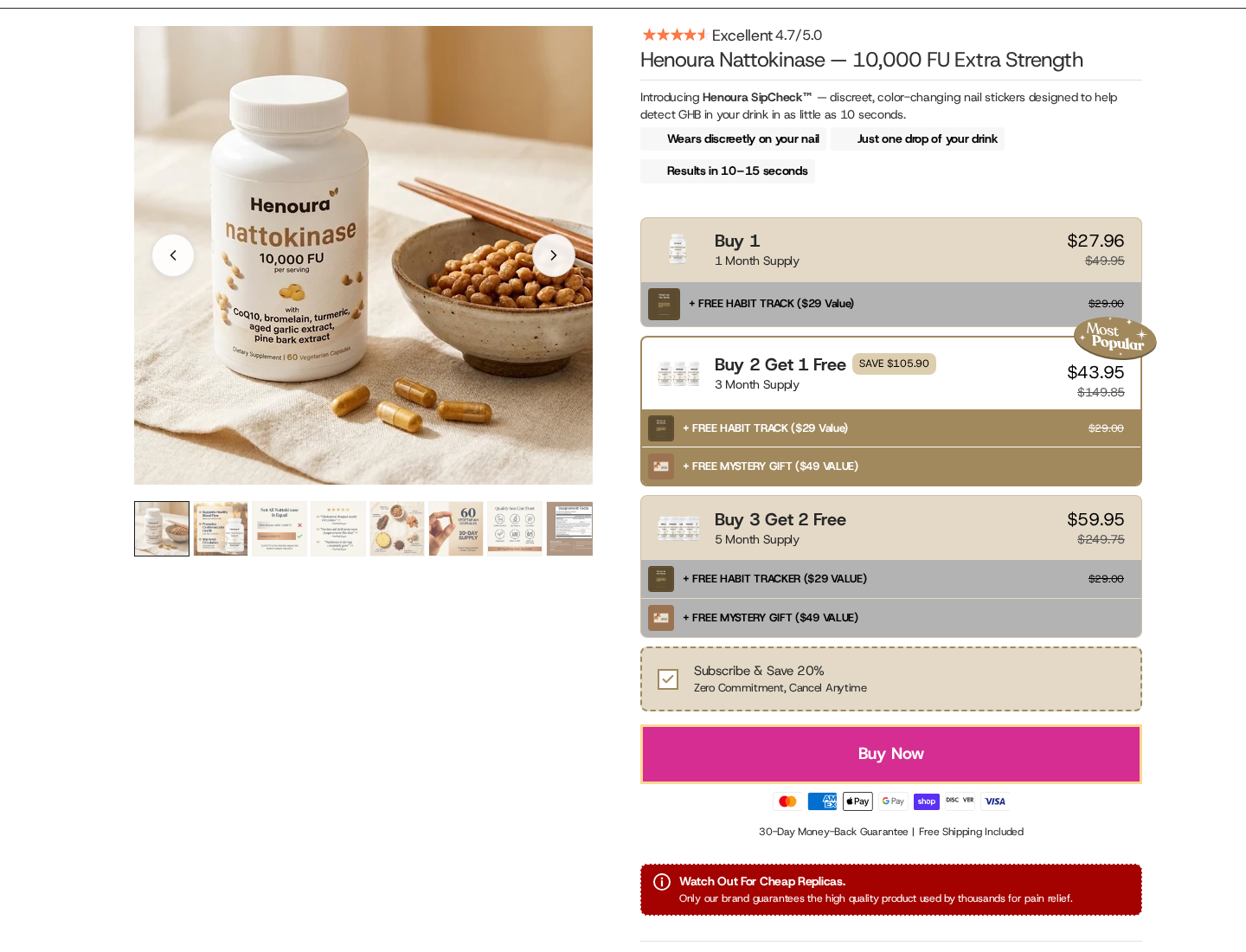
Henoura’s nattokinase URL still presents a supplement bottle and the title Henoura Nattokinase, 10,000 FU Extra Strength.
Immediately below, the description introduces SipCheck, a nail sticker intended to detect GHB in drinks. Much of the remaining page discusses that completely different product.
This is a live product-identity mismatch, not just an old search result. A shopper cannot sensibly judge an order when its picture and description disagree.
A repeat-order control appears beside the mixed offer
The initial capture shows a checked Subscribe & Save 20% control. Around it are one-, three-, and five-month package descriptions with supplement bottle thumbnails.
- A one-month offer displays $27.96.
- Buy Two, Get One Free displays $43.95.
- Buy Three, Get Two Free displays $59.95.
- The recurring option is accompanied by cancel-anytime reassurance.
These are visible offer figures, not a verified final payment total or renewal schedule. No purchase was completed to determine what would be supplied.
The refund instructions introduce another mismatch
The return policy gives 60 days, requires unused merchandise, and contains the literal placeholder [INSERT RETURN ADDRESS]. The product page separately mentions 30 days and 90 days.
Its longer guarantee text even refers to returning an Inner Bloom book. That is not a clear promise applying to nattokinase capsules.
Do not order through this unresolved offer. The strongest warning is the seller’s own inconsistent transaction, not speculation about the contents of a bottle.
Why Product Identity Comes Before Supplement Claims
Imagine ordering a heart-health supplement and receiving a confirmation describing a drink-testing accessory. Which instructions, quantity, and guarantee would you expect the seller to honor?
That uncertainty should be settled before payment. A product title, photograph, written specification, and order summary should all identify the same merchandise.
Here, the bottle image says nattokinase, while the surrounding explanation describes ten stickers per pack and a color change after a drink sample.
The two items are not alternate formulations or different bottle sizes. They have different intended uses, safety considerations, and sensible units of purchase.
Even the free-item presentation needs reconciliation. The selector uses supplement-style monthly supplies, while surrounding sticker instructions describe single tests rather than a daily capsule routine.
A clear confirmation should therefore list the precise product and unit count, not merely repeat a package nickname such as a three-month supply.
That matters later if a parcel differs from expectations. A specific order line can support a meaningful merchandise complaint; an ambiguous bundle label leaves more to dispute.
A temporary editing mistake is possible. It would still be a reason not to place an order until corrected, especially with recurring purchasing presented nearby.
The mismatch does not establish that anyone has received stickers instead of capsules. It establishes that this sales page cannot currently communicate a dependable specification.
Keep that distinction in mind if you already bought. Your own receipt and parcel establish your transaction more directly than today’s changed promotional description.
The Older Plaque-Removal Pitch Needs a Separate Reality Check
Search-indexed Henoura material has described nattokinase as a Japanese enzyme capable of reducing arterial plaque by about 36%.
That indexed description is not the current SipCheck-focused page body. It should not be used to pretend the present offer still displays the complete earlier supplement explanation.
The number nevertheless has a research context. A published trial of nattokinase and carotid atherosclerosis used 6,000 FU daily for 26 weeks.
Of 82 participants enrolled, 76 completed it. The nattokinase group showed a reported 36.6% reduction in measured carotid plaque size.
That was not a trial of Henoura’s currently pictured finished formula. Nor does a 10,000 FU product title make a different dose or combination equivalent.
Researchers measuring an artery are also doing something different from a customer noticing warmer hands. A feeling cannot establish a percentage change in plaque.
If a seller borrows a precise clinical result, it should explain the tested preparation, participants, duration, comparison, and limits. A percentage alone skips all five.
Do not use that marketing number to decide whether to stop a prescribed cardiovascular medicine. Take questions about supplements to the clinician managing your treatment.
How the Henoura Ordering Page Creates Confusion
Step 1: Arrive expecting a particular enzyme supplement
The nattokinase address, heading, bottle, and strength create a coherent first impression. A visitor arriving from a supplement search has little reason to expect another category.
That makes the first lines of descriptive text important. They introduce a drink-test sticker rather than explaining the capsules visible alongside them.
Reading only the product name or trusting a thumbnail would miss the contradiction. Reading further does not resolve it, because the mixed references continue.
Step 2: Compare packages without a stable unit
The selector labels packages as months of supply and illustrates them with bottles. Elsewhere, the page describes packs of ten single-use stickers.
Without a consistent specification, the package count is ambiguous. Three months of what, at which serving size, and how many physical units per shipment?
The listed bundle prices should therefore be treated as unverified offer amounts, not an invitation to select whichever appears cheapest per month.
Step 3: Encounter a subscription before the item is clear
The checked 20% saving option introduces an additional question: whether the displayed amount is a one-time price or part of a recurring plan.
An initial checked control is evidence of a preset. It does not prove that a charge occurred, that consent was legally adequate, or that every buyer was enrolled.
Before accepting any recurring offer, the next charge, delivery quantity, interval, cancellation route, and applicable product should be unmistakable. This page already fails the product-identity test.
Step 4: Lean on guarantees that describe different purchases
The buying area advertises a 30-day money-back guarantee. An expanded section offers 90 days but discusses an Inner Bloom book in excellent condition.
The separate policy starts a 60-day return window on receipt and requires unused goods. These are materially different promises.
A shopper should not need to infer which guarantee survives after payment. Ask for one written policy tied to the exact item and order.
Step 5: Discover an unfinished return destination
The refund policy tells customers to request authorization and wait for instructions. Where a return address should appear, it contains a template placeholder.
That is a practical obstacle to estimating return cost. You cannot compare domestic and international postage without knowing the authorized destination.
Never post a parcel to a guessed company address or copy another buyer’s destination. A return label and written authorization should match your own order.
Read the Guarantee Before Treating the Price as a Bargain
The promise of free shipping and a discount can make a small first payment feel harmless. But resolving an unclear order can cost time and postage.
The detailed return policy excludes sale items, requires original packaging, and says merchandise must remain unused. Those conditions matter on a heavily discounted supplement page.
Even if a seller later grants an exception, that is different from publishing a clear satisfaction guarantee before purchase.
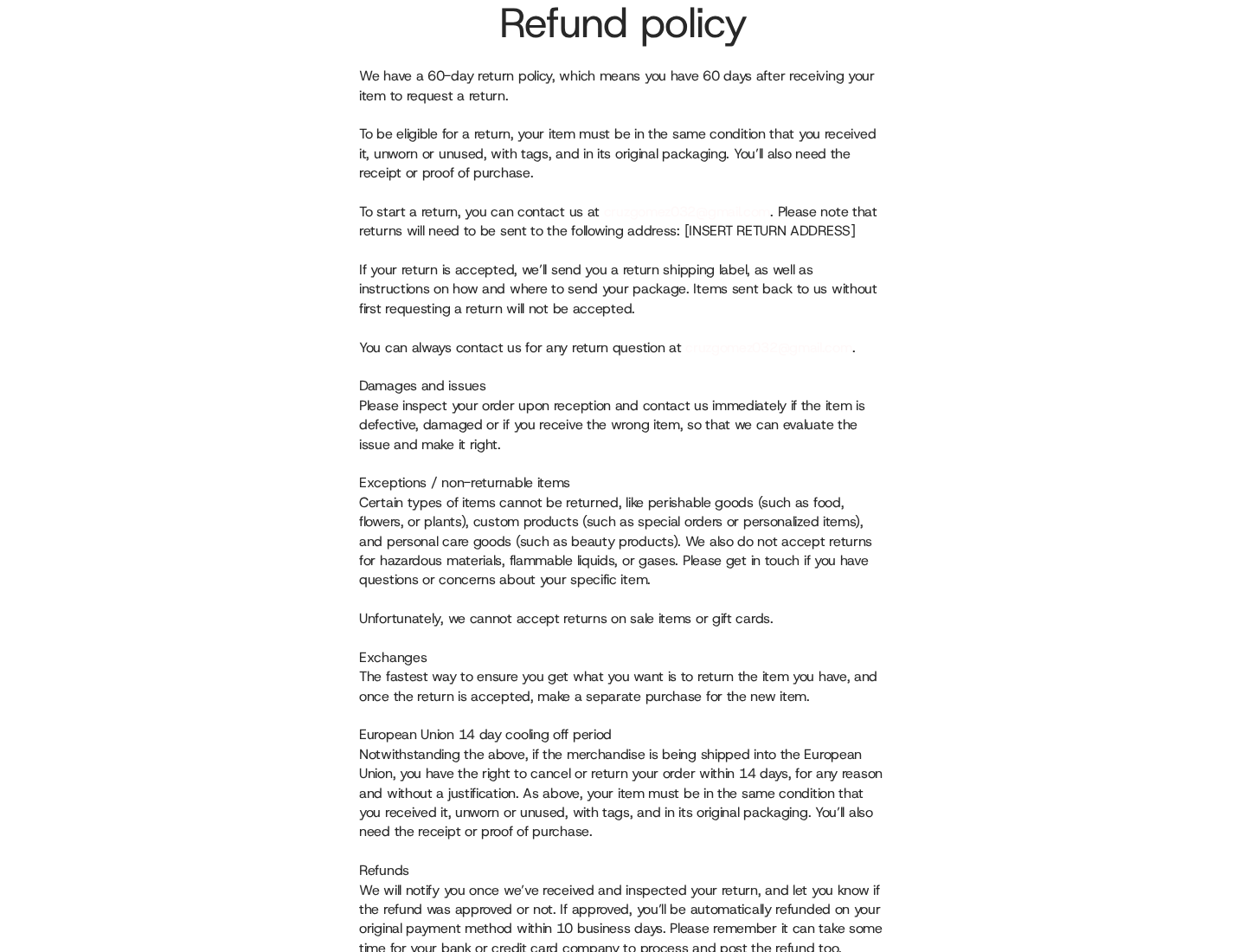
The policy publishes a Gmail address for return requests. An ordinary email provider does not make a business fake, but it does not solve the missing destination.
A contact form also exists. Its presence is a contact option, not proof that refund requests receive a useful response.
The linked Shipping Info page returned a 404 during access. Meanwhile, product-page text described three-to-five-day processing followed by roughly seven-to-ten-day shipping.
A broken policy link is not evidence of nondelivery. It does leave shoppers relying on incomplete, scattered instructions when timing or cancellation becomes important.
Henoura Business Contacts, Returns, and Bottle Identification
The brand name does not identify the accountable supplier
Henoura appears throughout the storefront. The inspected product and contact pages do not clearly identify a legal supplement manufacturer behind the pictured bottle.
Use the business name on your confirmation, payment record, and package when requesting help. Do not assume that a payment processor manufactured the capsules.
The return-address placeholder is not a warehouse
[INSERT RETURN ADDRESS] is unfinished policy text, not an address anyone can verify or use. It cannot identify headquarters, a fulfillment depot, or a factory.
The seller needs to supply the actual destination and eligibility instructions. Until then, any claim about a particular country’s return costs would be guesswork.
Refund support is published, but responsiveness remains untested
The written policy lists cruzgomez032@gmail.com for returns. The contact form does not demonstrate a telephone support operation or a completed cancellation process.
No support messages were sent for this investigation. Readers with an order should preserve their own response times and any promised refund date.
A bottle needs more than a front-label photograph
If you received capsules, retain the full ingredient panel, lot, expiry date, seal, and supplier details. Compare those with the confirmation, not the unrelated SipCheck instructions.
The front image’s enzyme strength cannot establish independent testing, batch potency, or suitability with medication. Those are separate questions requiring the actual label and relevant documentation.
Two Safety Questions That Should Never Be Mixed
Nattokinase is an enzyme supplement. SipCheck is presented as a chemical test for a drink. Neither category’s instructions can safely substitute for the other’s.
For nattokinase, Memorial Sloan Kettering flags bleeding concerns, particularly with blood-thinning medicines. Its discussion also notes limits in the human evidence.
That is ingredient-level guidance, not a finding that this Henoura bottle caused harm. Anyone taking anticoagulants or antiplatelet treatment should seek professional advice before using it.
For a drink-testing accessory, a negative result would not establish that every possible harmful substance is absent. Henoura’s own SipCheck wording limits the claimed detection to GHB.
No assessment here validates that sticker’s detection performance. If a drink seems unsafe, do not use an ambiguous shopping page or a negative test as reassurance.
What to Do If You Bought Through the Henoura Page
-
Establish exactly what your order names. Download the confirmation and note the SKU, item description, quantity, total, and merchant descriptor.
Capture the current mixed page separately. An older order may have different terms, so keep both rather than assuming today’s text describes the earlier purchase.
-
Inspect the recurring-payment details. Look for a subscription confirmation, next delivery, and next charge. The checked promotion makes this worth reviewing immediately.
Cancel any unwanted repeat plan through the merchant’s documented account route, then request a written acknowledgment. A request to refund one parcel may leave future renewals active.
-
Request clarification or cancellation before dispatch. Explain whether you intended to buy nattokinase capsules and whether the order record instead names another product.
Ask the seller to identify the merchandise and applicable guarantee in writing. Do not provide full card details to resolve an ordinary order query.
-
Keep unopened goods and packaging while resolving a return. Photograph the shipping label and product condition, then request a complete authorized address.
The current policy requires unused merchandise and excludes sale items. Attach the guarantee shown when you paid if it promised a broader remedy.
-
Separate health advice from the refund conversation. If capsules arrived, have a pharmacist review the complete formula before use, particularly alongside cardiovascular medication.
Do not interpret a label that differs from the website as permission to improvise a serving size. Ask the supplier to resolve the discrepancy.
-
Bring unresolved merchandise or billing problems to your payment provider. Describe what was advertised, what was ordered, and what actually happened.
The FTC’s online-shopping guidance explains the value of receipts and payment disputes. Ask your provider about deadlines before waiting through further promises.
Frequently Asked Questions
Is Henoura Nattokinase currently described consistently?
No. The inspected nattokinase page retained the supplement heading and bottle while presenting extensive SipCheck nail-sticker copy and unrelated book-guarantee wording.
Does that prove customers received the wrong item?
It proves a misleadingly inconsistent page, not the contents of every shipment. Individual order records and delivered packages are needed to establish fulfillment problems.
Was Subscribe & Save selected initially?
The final capture showed the 20% subscription control checked. The payment stage was not completed, so actual enrollment, renewal amount, and schedule remain unverified.
Which Henoura guarantee should I rely on?
The page and policy displayed different periods and product references. Preserve the promise accompanying your purchase and request an order-specific written explanation.
Does a 36% plaque claim prove the pictured formula works?
No. The cited research context concerns a different nattokinase preparation and dose. An indexed marketing claim is not a clinical trial of this finished bottle.
Can I send a return to the policy’s address?
The policy showed a placeholder, not a usable destination. Obtain authorization and the complete return address before arranging postage.
The Bottom Line
Do not buy Henoura Nattokinase through this mixed offer. A supplement picture, drink-test description, checked recurring option, and incompatible guarantees do not make a dependable purchase.
Already paid? Identify the actual order, stop unwanted renewals, and request the appropriate remedy. Keep capsule safety decisions with a qualified healthcare professional.

Join the discussion
0 commentsShare your experience or ask a question about this article.
Discussion
Start the conversation
Have a question or something useful to share? Add the first comment.